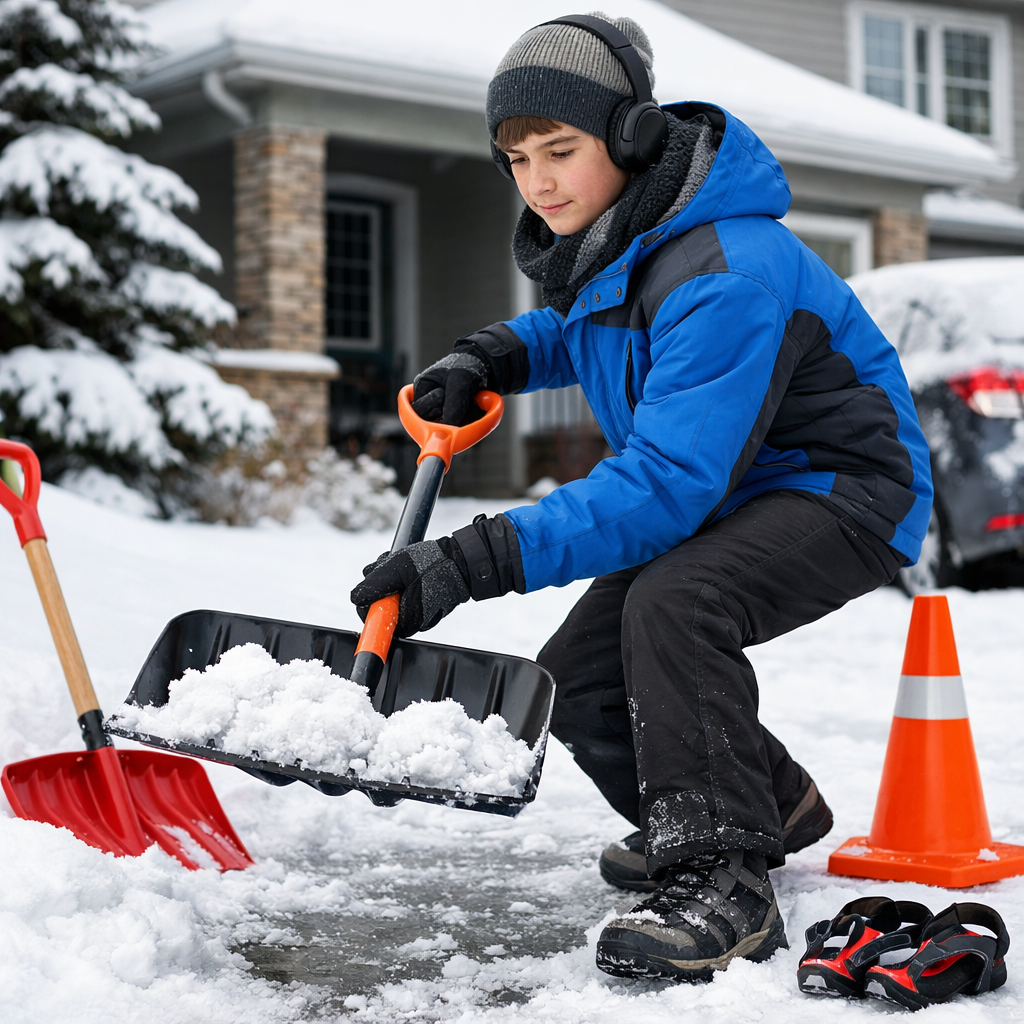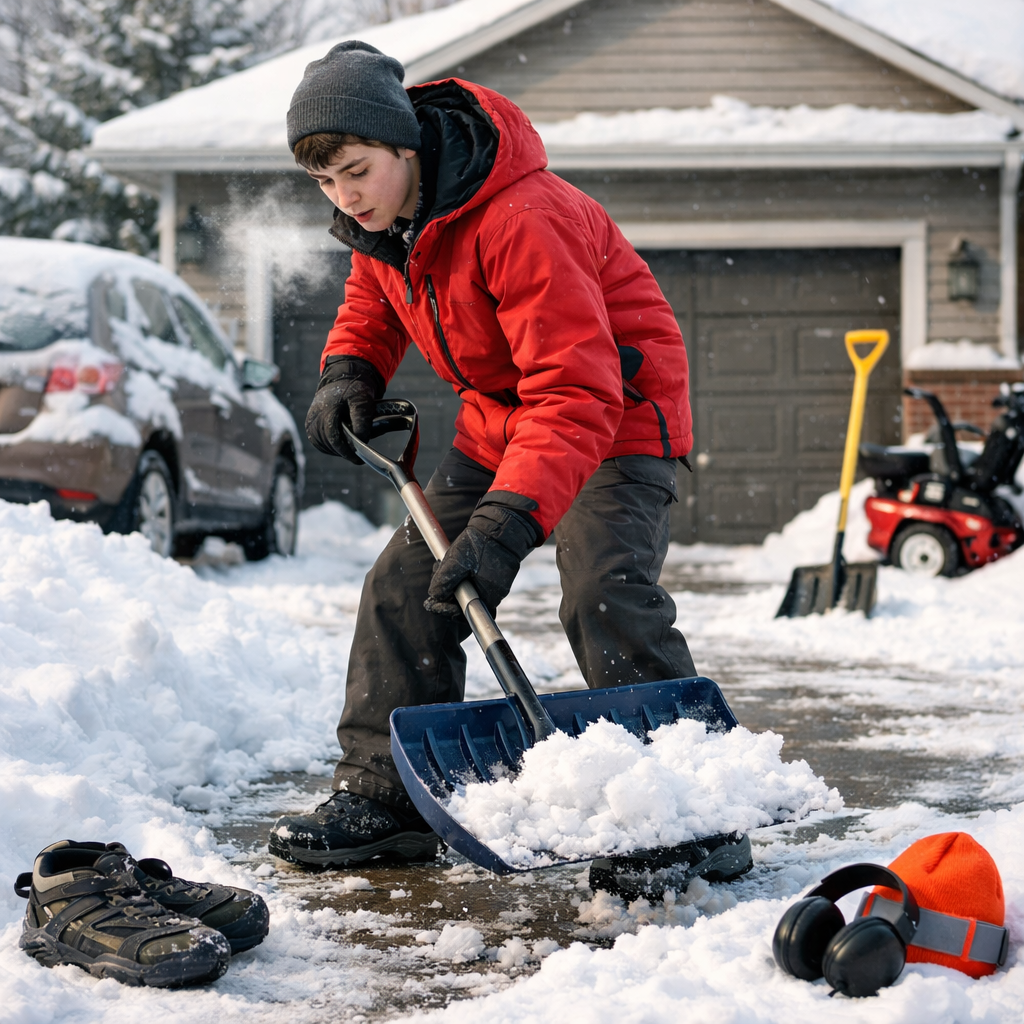


Snow shoveling safety for teens starts with understanding that clearing snow is physical work, not just a quick winter chore. For Canadian students, young workers, and families, the risks are real: strained muscles, sore backs, slips on ice, cold exposure, and doing too much too fast.
Whether a teen is helping at home, clearing a school walkway, or doing neighbourhood jobs for extra money, safe habits matter. A practical approach can help prevent injuries and make snow removal more manageable in Ontario and across Canada. For general workplace and health guidance, families and schools can also review resources from CCOHS, Ontario.ca, and Parachute.
Why snow shoveling safety for teens matters
Teens may be strong and energetic, but that does not make them injury-proof. Snow can be heavy, uneven, packed, or hiding ice underneath. Repetitive lifting and twisting can strain the lower back, shoulders, wrists, and legs.
Cold weather adds extra challenges. Bulky clothing can limit movement, gloves may reduce grip, and wind or wet snow can make hands numb and surfaces slippery. If a teen rushes to finish quickly, the chance of overexertion goes up.
In some situations, snow clearing may also be part of a job or volunteer task. That means schools, employers, supervisors, and families should treat it as real physical work. Clear expectations, proper tools, and age-appropriate supervision are part of prevention. More practical safety guidance for youth and workplaces is available through OHSE.ca.
Prepare properly before lifting a shovel
Choose the right clothing and footwear
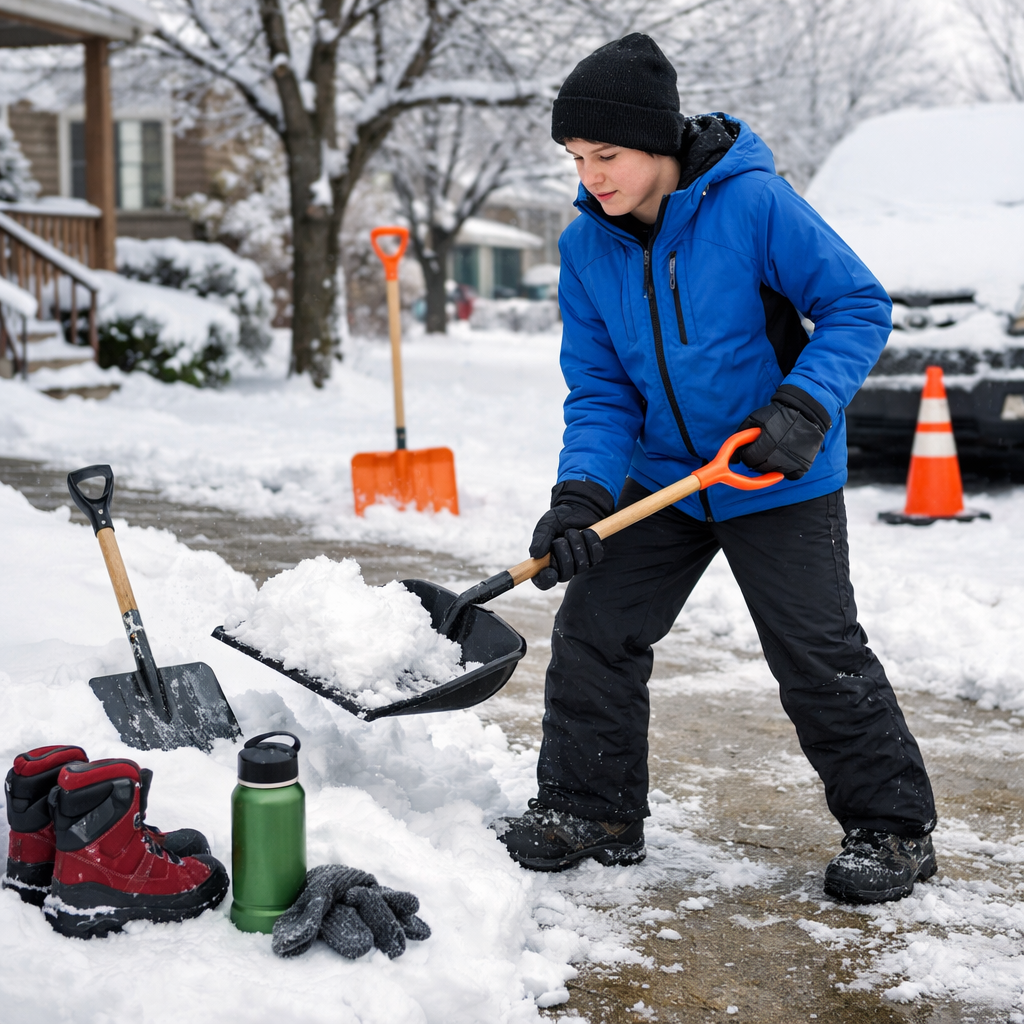
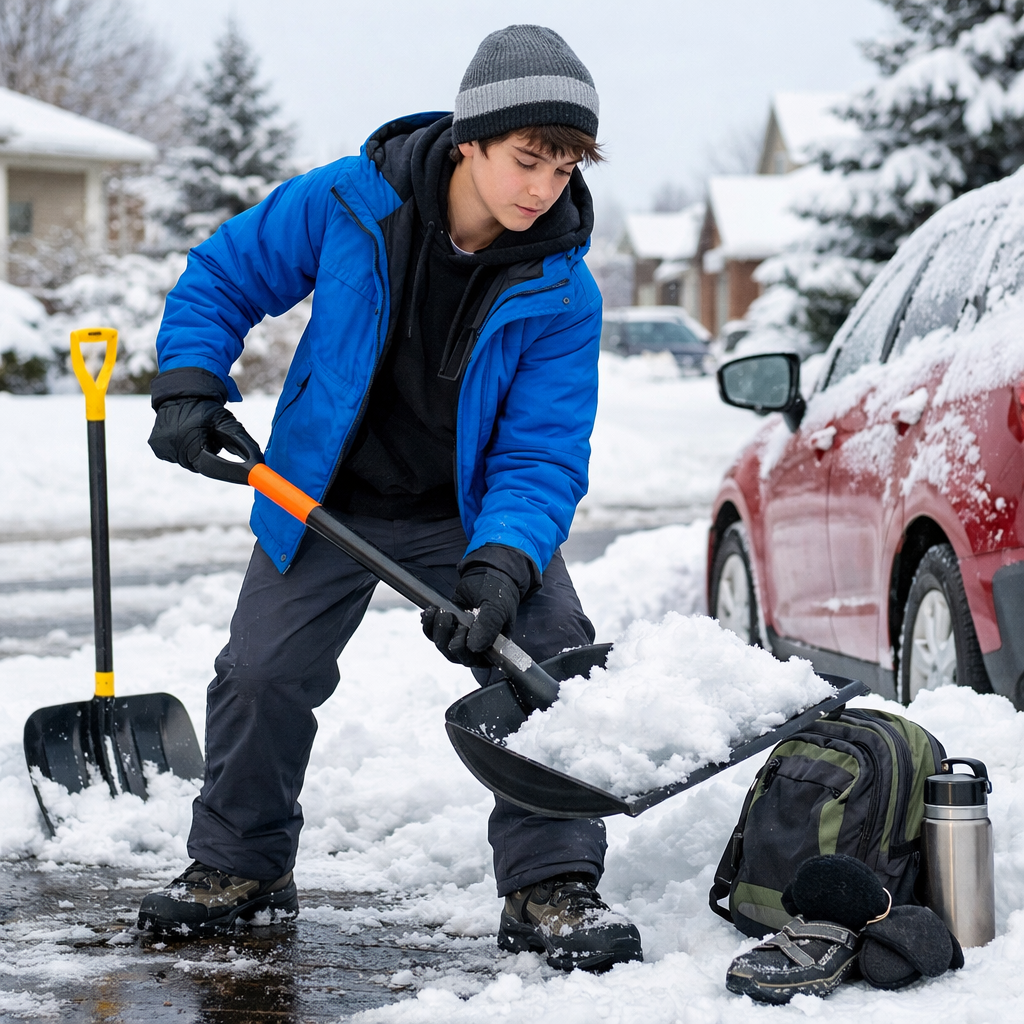
Warm, layered clothing helps teens stay comfortable without overheating. Outer layers should allow easy movement. Waterproof boots with good traction are important because sneakers and smooth-soled footwear increase the risk of slipping.
Gloves should keep hands warm while still allowing a secure grip on the shovel handle. If visibility is poor, bright or reflective outerwear is a smart choice, especially near roads, driveways, or parking areas.
Use the right shovel and plan the task
A lightweight shovel is usually best for teens. A shovel that is too long, too short, or too heavy can place more stress on the body. A smaller blade can actually be safer because it encourages lighter loads.
Before starting, check the area for hazards such as ice patches, uneven pavement, hidden objects, parked vehicles, snowbanks near roads, and overhead dripping that could refreeze. It also helps to decide where the snow will go so teens do not need to re-shovel or throw snow into unsafe areas.
- Warm up for a few minutes before starting.
- Wear boots with traction and gloves with grip.
- Use a lightweight shovel with a manageable blade size.
- Clear a route for safe footing before moving faster.
- Know where snow will be piled to avoid extra lifting.
Snow shoveling safety for teens: safer lifting and pacing
Lift small amounts and avoid twisting
The safest technique is to push snow when possible instead of lifting it. Pushing generally places less strain on the back and shoulders. When lifting is necessary, teens should scoop smaller loads, bend at the knees, keep the shovel close to the body, and lift with the legs rather than the back.
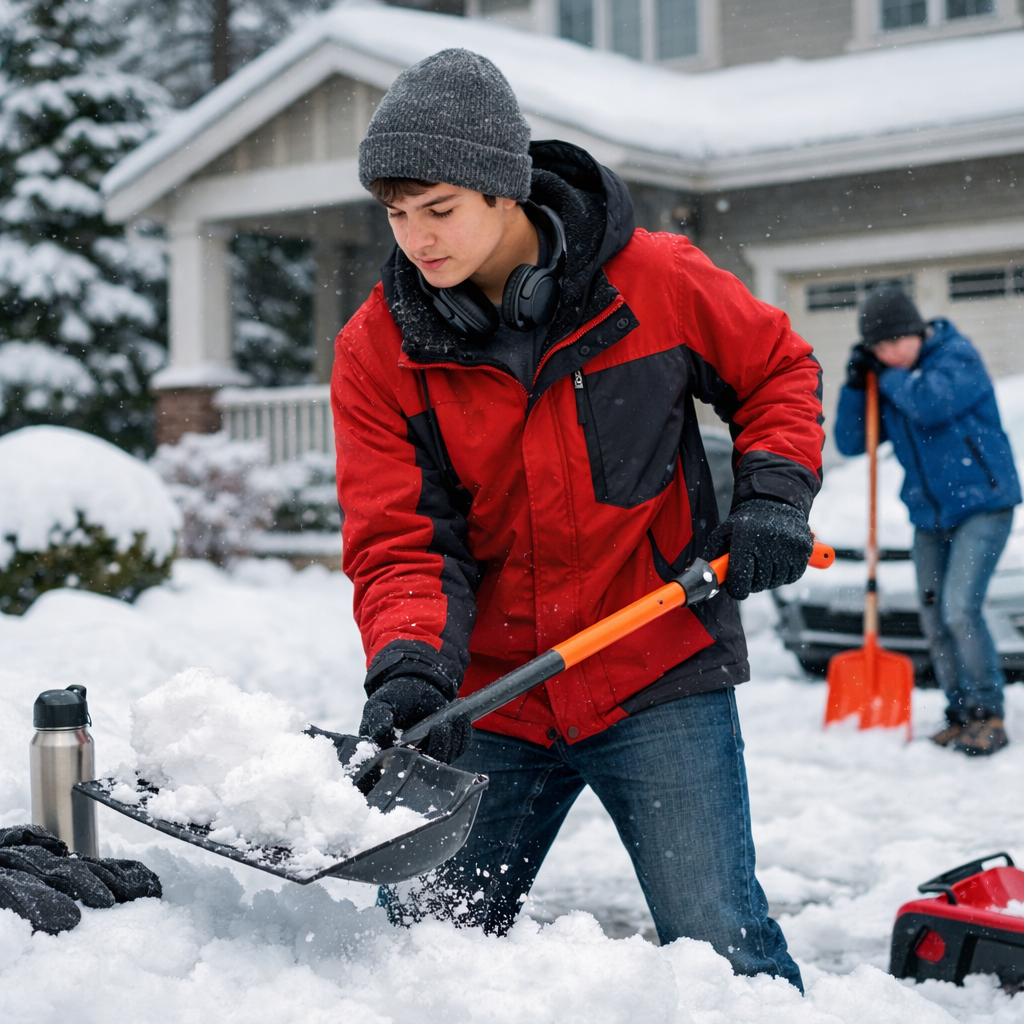
Twisting while lifting or throwing snow is a common cause of strain. It is safer to turn the whole body with the feet rather than twisting the spine. Tossing heavy, wet snow over high banks should be avoided if possible.
Work at a steady pace
Many injuries happen when someone tries to finish too fast. Snow removal should be done at a steady pace with short breaks, especially during deeper snowfall or colder weather. Teens should pause if they feel unusually tired, dizzy, short of breath, or sore.
Hydration still matters in winter. Drinking water before and after shoveling can help, even when the weather is cold and thirst is less obvious.
| Task | Safer approach | What to avoid |
|---|---|---|
| Light snowfall | Push snow in small passes | Waiting until it packs down |
| Lifting snow | Use small loads and bend knees | Overloading the shovel |
| Throwing snow | Turn with feet and face the pile | Twisting the back |
| Long driveway or walkway | Take regular breaks and switch tasks | Rushing without rest |
Prevent slips, cold stress, and overexertion
Watch surface conditions closely
Snow often hides hazards. Ice under a light layer of snow can cause a sudden fall, especially on steps, sloped driveways, and sidewalk edges. Teens should test their footing, take short steps, and avoid carrying loads that block their view.
If conditions are very icy, another control may be better than shoveling alone. In OHSE terms, this reflects the hierarchy of controls: choose safer methods first where possible. For example, de-icing a path, using traction aids, or waiting for support may reduce risk better than forcing a task in unsafe conditions.
Know when conditions are too much
Heavy, wet snow is much harder to move than light, dry snow. Strong winds, poor visibility, extreme cold, or traffic exposure can also change a simple chore into a higher-risk task. Teens should not work alone in isolated conditions if help may be needed.
Parents, supervisors, and schools should consider whether a teen is physically ready for the task, whether the area is safe, and whether mechanical snow removal or adult assistance is the better option. If snow clearing is part of work duties, appropriate orientation and safety training are important. Additional learning options may be found at learn.ohse.ca.
A practical snow shoveling safety for teens checklist
Use this quick checklist before and during snow removal:
- Dress in layers and wear boots with good traction.
- Choose a lightweight shovel and keep loads small.
- Warm up briefly before starting.
- Push snow when possible instead of lifting it.
- Lift with the legs and avoid twisting.
- Take breaks and drink water.
- Watch for ice, vehicles, hidden objects, and poor visibility.
- Stop if there is pain, numbness, dizziness, or unusual fatigue.
- Follow local school, workplace, family, manufacturer, or emergency guidance where applicable.
Snow shoveling safety for teens is about preparation, pacing, and knowing personal limits. With the right shovel, proper winter footwear, safer lifting technique, and a calm approach, teens can help clear snow while reducing the risk of strains, slips, and overexertion. For families, schools, and young workers in Canada, making snow removal safer is a simple but important part of winter injury prevention.