 Skip to content

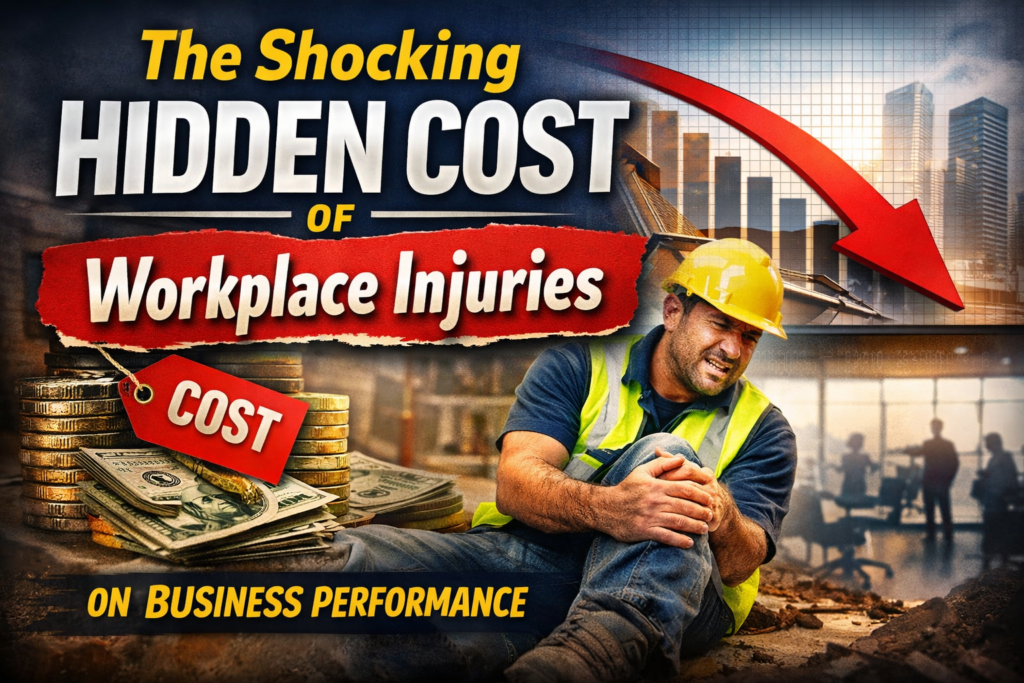
The Hidden Cost of Workplace Injuries on Business Performance is far greater than most organizations realize.
Workplace injuries are often viewed only through the lens of medical bills or compensation claims, but the true impact runs much deeper. From reduced productivity and increased absenteeism to damaged reputation and weakened employee morale, injuries quietly erode business performance over time.
Understanding these hidden costs is essential for leaders who want sustainable growth, operational stability, and a resilient workforce.
The Hidden Cost of Workplace Injuries on Business Performance affects every industry, regardless of size or sector. Whether the workplace is a construction site, healthcare facility, warehouse, or corporate office, injuries disrupt workflows, strain resources, and create long-term financial pressure.
Organizations that fail to recognize these hidden impacts often underestimate the return on investment of strong occupational health and safety programs.
- Direct Costs Are Only the Tip of the Iceberg
- Productivity Loss and Operational Disruption
- Absenteeism, Presenteeism, and Workforce Strain
- Employee Morale, Engagement, and Retention
- Reputation Damage and Loss of Business Opportunities
- Management Time and Administrative Burden
- Psychological Impact and Workplace Culture
- Prevention as a Strategic Investment
- Measuring What Truly Matters
- Conclusion: Making the Invisible Visible
Direct Costs Are Only the Tip of the Iceberg
When a workplace injury occurs, direct costs are the most visible. These include medical treatment, rehabilitation expenses, workers’ compensation claims, and insurance deductibles.
While these costs are significant, they represent only a small portion of The Hidden Cost of Workplace Injuries on Business Performance.
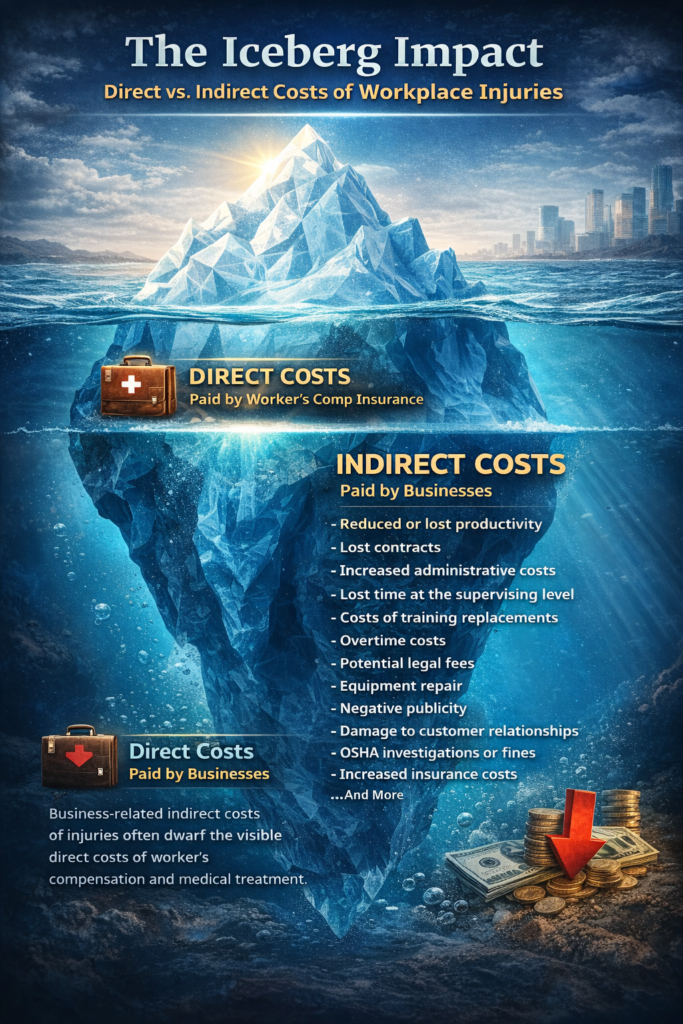
Insurance premiums often increase following injury claims, especially for organizations with poor safety records. Over time, higher premiums reduce competitiveness and limit budget flexibility.
Businesses may also face regulatory penalties, legal fees, and fines if investigations reveal non-compliance with occupational health and safety requirements. These expenses are immediate and measurable, but they do not capture the full financial burden.
Direct costs are predictable and documented, which is why they receive attention. However, organizations that focus solely on these expenses often miss the more damaging indirect costs that silently undermine performance.
Productivity Loss and Operational Disruption
One of the most damaging aspects of The Hidden Cost of Workplace Injuries on Business Performance is lost productivity. When an employee is injured, work does not simply pause.
Tasks are delayed, production schedules are disrupted, and deadlines are missed. In many cases, remaining workers must absorb additional responsibilities, increasing fatigue and the risk of further incidents.
Temporary replacements or overtime may be required to maintain operations. These solutions often come at a premium cost and may reduce quality or efficiency. New or reassigned workers typically need time to reach full productivity, further slowing output. Even minor injuries can cause significant operational disruption if they affect key roles or specialized positions.
Over time, repeated disruptions reduce overall efficiency and make it difficult for businesses to meet customer expectations. This productivity drain is a core element of The Hidden Cost of Workplace Injuries on Business Performance that is rarely reflected in financial statements.
Absenteeism, Presenteeism, and Workforce Strain
Workplace injuries contribute directly to increased absenteeism, but the impact does not stop there. Injured employees who return to work too early may experience pain, limited mobility, or psychological stress. This leads to presenteeism, where workers are physically present but unable to perform at full capacity.
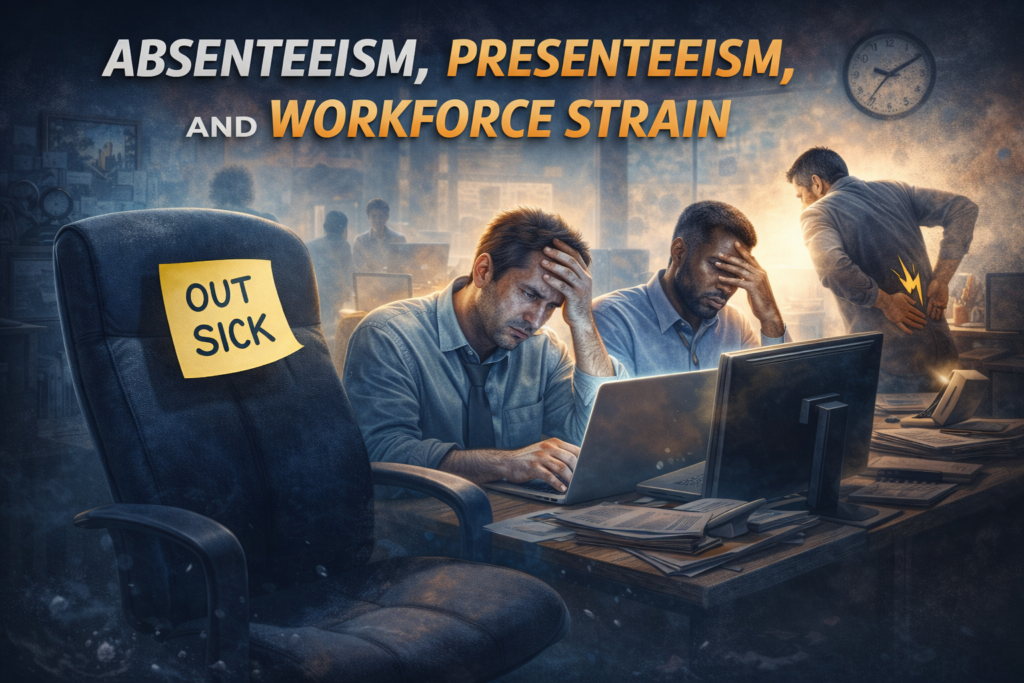
Presenteeism is particularly damaging because it is difficult to measure. Employees may struggle to concentrate, work more slowly, or make errors that affect quality and safety. Co-workers may also experience increased stress as they compensate for reduced performance, creating a ripple effect across teams.
High injury rates can also lead to burnout among supervisors and managers who must constantly adjust schedules, manage claims, and address staffing gaps. These human factors amplify The Hidden Cost of Workplace Injuries on Business Performance in ways that are often overlooked.
Employee Morale, Engagement, and Retention
A workplace with frequent injuries sends a powerful message to employees. It signals that safety may not be a priority, which can erode trust in leadership.
Low morale is a significant contributor to The Hidden Cost of Workplace Injuries on Business Performance, as disengaged employees are less productive, less innovative, and more likely to leave.
High turnover following workplace injuries is common, especially in physically demanding or high-risk industries. Recruiting and training new employees is expensive and time-consuming. New workers are also statistically more likely to be injured, increasing risk during onboarding periods.
When employees feel safe and valued, engagement improves. Conversely, a poor safety record damages organizational culture and creates a cycle of low morale, high turnover, and increased injury risk that directly impacts long-term business performance.
Reputation Damage and Loss of Business Opportunities
The Hidden Cost of Workplace Injuries on Business Performance extends beyond internal operations to external perception.
Clients, partners, and investors increasingly consider safety performance when making decisions. A reputation for frequent injuries can result in lost contracts, reduced partnerships, and limited growth opportunities.

In regulated industries, poor safety performance may disqualify organizations from bidding on projects or working with large clients. Publicized incidents can attract negative media attention, damaging brand credibility and stakeholder confidence. Rebuilding trust after a serious incident is costly and often takes years.
Strong safety performance, on the other hand, enhances reputation and positions organizations as responsible and reliable. This competitive advantage highlights why addressing The Hidden Cost of Workplace Injuries on Business Performance is not just a compliance issue but a strategic priority.
Management Time and Administrative Burden
Another often underestimated component of The Hidden Cost of Workplace Injuries on Business Performance is the time spent by management on injury-related activities. Supervisors and leaders must investigate incidents, complete reports, attend meetings, coordinate return-to-work plans, and communicate with insurers and regulators.
This administrative burden pulls leaders away from core business functions such as planning, innovation, and customer engagement. Over time, excessive focus on injury management reduces leadership effectiveness and slows organizational progress.
When injuries are frequent, management becomes reactive rather than proactive. This shift limits the organization’s ability to focus on continuous improvement and long-term performance goals.
Psychological Impact and Workplace Culture
Workplace injuries do not only cause physical harm. Witnessing incidents or working in an unsafe environment can create fear, anxiety, and stress among employees. These psychological effects are a significant but hidden element of The Hidden Cost of Workplace Injuries on Business Performance.
A culture of fear discourages reporting, communication, and collaboration. Employees may hesitate to raise concerns or suggest improvements, increasing the likelihood of future incidents. Psychological strain also contributes to absenteeism, reduced focus, and higher error rates.
Organizations that prioritize psychological health and safety alongside physical safety are better equipped to manage risk and maintain high performance. Addressing both aspects is essential for minimizing hidden costs.
Prevention as a Strategic Investment
Reducing The Hidden Cost of Workplace Injuries on Business Performance requires a shift in perspective. Occupational health and safety should be viewed as an investment rather than an expense. Effective safety programs deliver measurable returns through reduced injuries, improved productivity, and stronger employee engagement.
Key prevention strategies include hazard identification, risk assessment, effective training, strong supervision, and continuous improvement. Leadership commitment plays a critical role in embedding safety into daily operations and decision-making.
Organizations that invest in safety often experience fewer disruptions, lower insurance costs, improved morale, and enhanced reputation. These benefits directly support sustainable business performance and long-term success.
Measuring What Truly Matters
To fully understand The Hidden Cost of Workplace Injuries on Business Performance, organizations must look beyond traditional injury statistics. Metrics such as lost productivity, turnover rates, absenteeism, employee engagement, and near-miss reporting provide a more complete picture of safety performance.
By measuring leading indicators and cultural factors, businesses can identify risks before injuries occur. This proactive approach reduces hidden costs and supports continuous improvement across operations.
Conclusion: Making the Invisible Visible
The Hidden Cost of Workplace Injuries on Business Performance is real, substantial, and often underestimated. While direct costs are easy to track, the indirect impacts on productivity, morale, reputation, and leadership effectiveness quietly undermine organizational success.
Businesses that recognize and address these hidden costs gain a powerful advantage. By investing in strong occupational health and safety systems, organizations protect their people, strengthen performance, and build resilient, high-performing workplaces.
In the long run, reducing The Hidden Cost of Workplace Injuries on Business Performance is not just about safety—it is about smart, sustainable business strategy.
No comments yet