


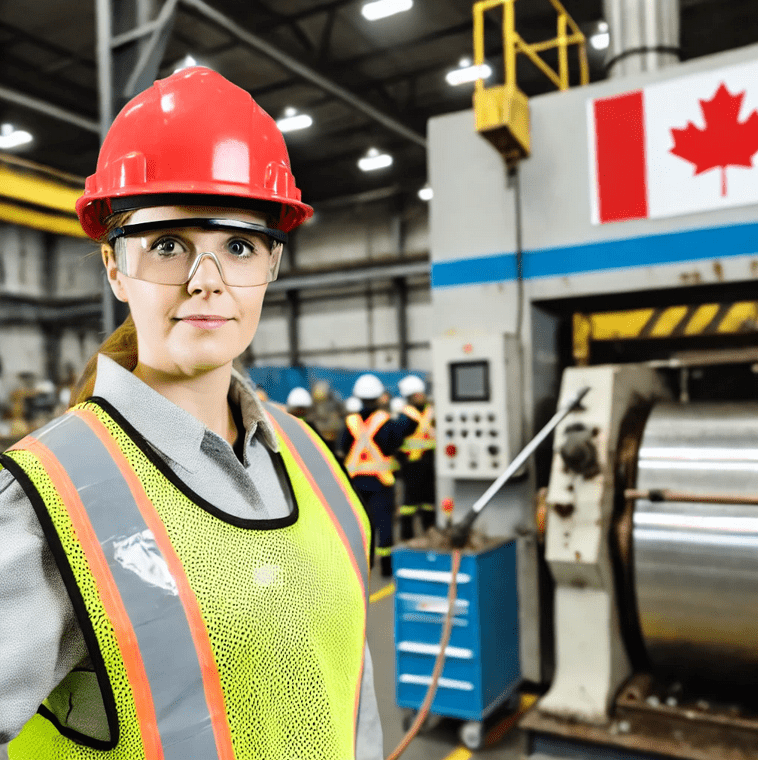
Workplace health and safety have been pivotal concerns for workers, employers, and regulatory bodies in Canada for decades. Unions, in particular, have played a critical role in advocating for better health and safety standards.
Their efforts have led to significant improvements in workplace conditions across various industries, from manufacturing to healthcare. This article examines the historical evolution, influence, and continuing role of unions in shaping health and safety standards in Canadian workplaces, often referred to as the “Union Safety Effect.”
- Historical Evolution of Workplace Safety in Canada
- The Union Safety Effect
- Examples of Union-Led Safety Initiatives
- Union Involvement in Policy and Legislation
- The Economic Impact of the Union Safety Effect
- Table: Comparative Analysis of Unionized vs. Non-Unionized Workplaces
- Case Study: The Impact of Unionized Health and Safety in British Columbia
- The Future of Unions and Workplace Safety
- Conclusion
Historical Evolution of Workplace Safety in Canada
Workplace health and safety regulations in Canada have evolved significantly over the past century, with unions often at the forefront of these changes. In the early 20th century, Canadian workplaces were rife with unsafe conditions, particularly in industries such as mining, construction, and manufacturing.
Key Historical Milestones:
- 1914: The establishment of the first workers’ compensation system in Canada (Ontario), offering financial compensation for workers injured on the job.
- 1960s: The rise of labor unions in various sectors, notably the Canadian Union of Public Employees (CUPE) and United Steelworkers, pushing for safety reforms.
- 1972: The introduction of the first comprehensive occupational health and safety (OHS) legislation in Saskatchewan, influenced heavily by union pressure. This law granted workers the right to refuse unsafe work, a landmark in OHS history.
- 1980s: Unions continued advocating for workers’ rights, including pushing for regulations on chemical exposures, ergonomics, and machinery safety.
The Union Safety Effect
The “Union Safety Effect” refers to the proven phenomenon where unionized workplaces generally have better health and safety outcomes than their non-unionized counterparts. Unions act as a strong voice for workers, demanding better working conditions, safety standards, and policies. They play a proactive role in identifying hazards, negotiating safety protocols, and ensuring compliance with health regulations.
Why Unionized Workplaces are Safer:
- Collective Bargaining Power: Unions negotiate workplace safety standards during collective bargaining agreements. These agreements often include safety-related provisions such as access to protective equipment, mandatory safety training, and regular inspections.
- Enforcement of Safety Laws: Unions help enforce compliance with provincial and federal safety regulations. Their representatives frequently conduct safety audits and report violations.
- Worker Training and Education: Unions ensure that workers receive appropriate safety training, reducing the likelihood of accidents and injuries.
- Empowerment of Workers: Unionized workers are more likely to exercise their right to refuse unsafe work without fear of retaliation.
Examples of Union-Led Safety Initiatives
Unions in Canada have been at the forefront of several notable health and safety initiatives across various industries. Below are some key examples:
1. United Steelworkers (USW):
The USW has led significant campaigns to improve safety in heavy industries such as mining and steel production. They have successfully lobbied for stricter regulations on hazardous materials, resulting in lower injury rates.
- Example: In Sudbury, Ontario, a 2008 initiative by USW led to new safety protocols in mining operations, reducing fatal accidents by over 50% in five years.
2. Canadian Union of Public Employees (CUPE):
CUPE, representing healthcare workers, has focused heavily on addressing workplace violence, chemical exposure, and infectious disease control. Their efforts in advocating for proper personal protective equipment (PPE) and violence prevention programs have led to significant improvements in safety standards in healthcare settings.
- Example: During the COVID-19 pandemic, CUPE ensured that its members received adequate PPE, training on infection control, and mental health support, significantly reducing infection rates in unionized hospitals.
3. Unifor:
Canada’s largest private-sector union, Unifor, has prioritized automotive and manufacturing safety. They have introduced ergonomics programs to reduce repetitive strain injuries (RSIs) and pushed for automation where possible to minimize human exposure to dangerous tasks.
- Example: Unifor negotiated with General Motors Canada to install advanced robotics in high-risk production areas, reducing accident rates by 35%.
Union Involvement in Policy and Legislation
Unions are not only influential at the workplace level but also in shaping national and provincial policies on health and safety. Unions frequently collaborate with the Canadian Centre for Occupational Health and Safety (CCOHS) and participate in government hearings to advocate for improved laws.
Key Legislative Achievements:
- Right to Refuse Unsafe Work: Introduced first in Saskatchewan in 1972, this provision is now part of OHS laws across all provinces, largely due to union efforts.
- Joint Health and Safety Committees (JHSCs): Unions played a crucial role in establishing JHSCs, which are now mandatory in most Canadian workplaces. These committees ensure that both employers and workers are involved in maintaining safety standards.
- Asbestos Ban: Unions lobbied tirelessly for an asbestos ban, which the Canadian government finally enacted in 2018. This ban has prevented thousands of future asbestos-related illnesses and deaths.
The Economic Impact of the Union Safety Effect
Studies have shown that investing in worker safety pays off in the long run. While implementing safety measures may initially increase costs for employers, it leads to reduced accident rates, lower insurance premiums, and higher productivity. Unionized workplaces that prioritize safety often experience fewer work stoppages due to accidents and illnesses, contributing to overall economic efficiency.
Table: Comparative Analysis of Unionized vs. Non-Unionized Workplaces
| Aspect | Unionized Workplaces | Non-Unionized Workplaces |
|---|---|---|
| Accident Rates | Lower due to proactive safety measures | Higher due to lack of safety enforcement |
| Right to Refuse Unsafe Work | Strongly enforced | Often discouraged by employers |
| Safety Training and Education | Mandatory and comprehensive | Limited or none |
| Access to PPE and Safety Equipment | Guaranteed in collective agreements | Sometimes neglected |
| Reporting of Hazards | Encouraged with union support | Often underreported |
| Workplace Audits and Inspections | Regular and enforced by union reps | Sporadic and reliant on employer |
Case Study: The Impact of Unionized Health and Safety in British Columbia
In British Columbia, the construction industry has historically been one of the most dangerous sectors. However, unionized construction sites have consistently reported lower injury rates compared to non-unionized sites.
- Event: In 2015, a large-scale review of safety standards in the construction industry found that unionized construction sites in BC reported a 30% lower rate of serious injuries compared to non-unionized sites. This difference was attributed to the presence of Joint Health and Safety Committees (JHSCs), comprehensive training programs, and the enforcement of safety protocols by union representatives.
The Future of Unions and Workplace Safety
As industries evolve, so too must the health and safety practices that govern them. Technological advancements, such as automation and AI, are reshaping the workplace, and unions will need to adapt their safety advocacy to these new environments. Additionally, mental health and workplace violence are emerging as critical concerns in modern workplaces, particularly in healthcare, education, and retail sectors. Unions are likely to expand their focus on these areas in the coming years.
Notes:
- JHSCs: Joint Health and Safety Committees are crucial for ensuring ongoing dialogue between employers and workers on safety matters.
- Right to Refuse Unsafe Work: A legal right for workers to decline to perform tasks they consider unsafe without fear of job loss or retaliation.
Conclusion
Unions have been, and continue to be, instrumental in shaping the health and safety landscape of Canadian workplaces. The “Union Safety Effect” has demonstrated that collective worker advocacy leads to safer, more productive work environments. As industries and risks evolve, unions will play a vital role in addressing new safety challenges, ensuring that the well-being of workers remains a priority in Canada’s ever-changing economy.
Unions will continue to serve as a powerful force in ensuring that the health and safety of Canadian workers are protected, advocating for progressive reforms, and fostering a culture of safety that benefits everyone.