


factory assembly line safety: Essential OHSE Practices for Safer, Smarter Production


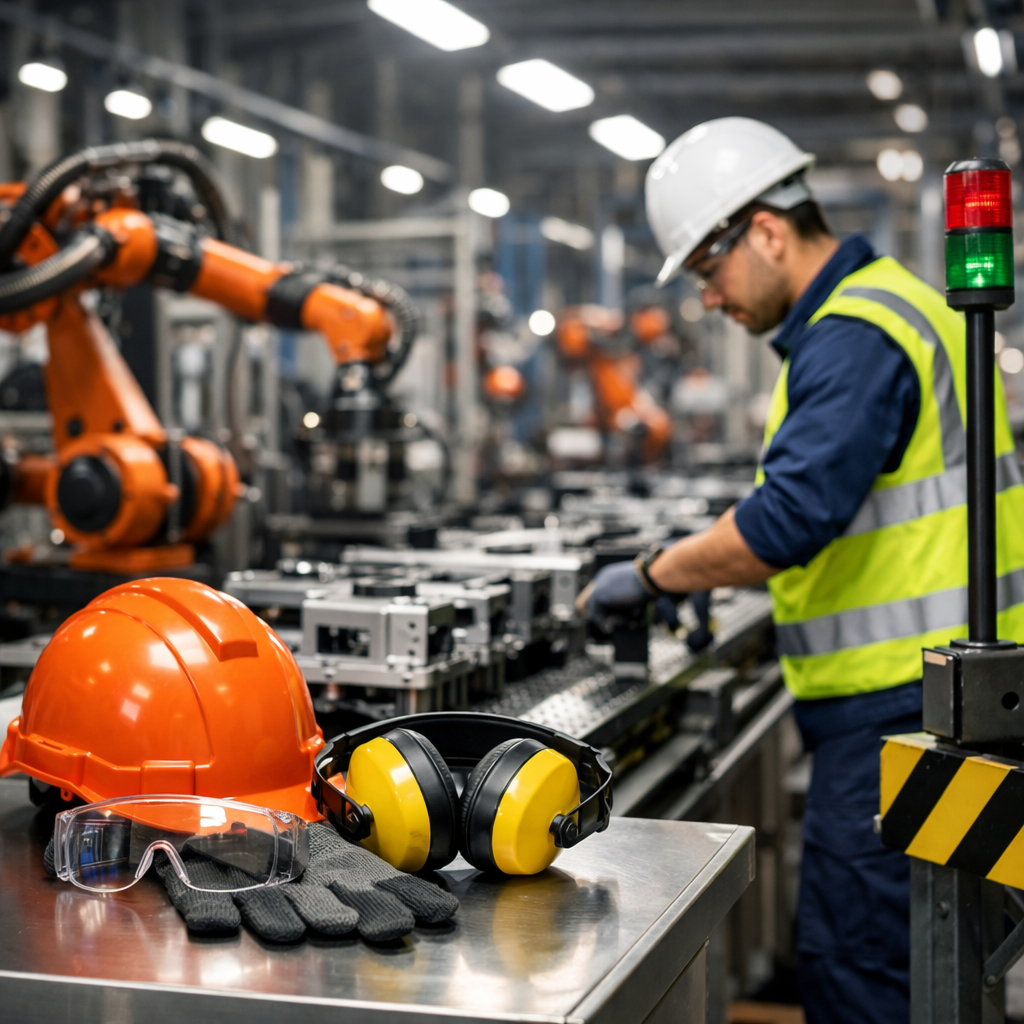
Factory assembly line safety is one of the most important foundations of productive manufacturing. When people, machinery, materials, and deadlines all come together in one fast-moving environment, even a small hazard can quickly turn into a serious incident.
A safe assembly line protects workers from injury, reduces costly downtime, and helps businesses meet their legal OHSE obligations. It also improves quality, morale, and efficiency because employees can focus on their work in a controlled and well-managed setting.
Whether a facility handles automotive parts, food packaging, electronics, or consumer goods, the same principles apply. Employers must identify risks, control exposure, train workers properly, provide suitable personal protective equipment, and continuously review performance. Practical guidance from organizations such as OSHA and CCOHS supports these efforts and helps create safer workplaces.
Understanding factory assembly line safety and why it matters
Assembly lines are designed for speed, consistency, and high output.
That efficiency, however, often brings repetitive tasks, close human-machine interaction, conveyor movement, manual handling, noise, and pressure to maintain production targets.
Without effective controls, workers may be exposed to moving parts, pinch points, awkward postures, falling objects, electrical hazards, slips, trips, or chemical exposure from lubricants, solvents, adhesives, or cleaning products. In some workplaces, fatigue and poor communication can also increase the likelihood of mistakes.
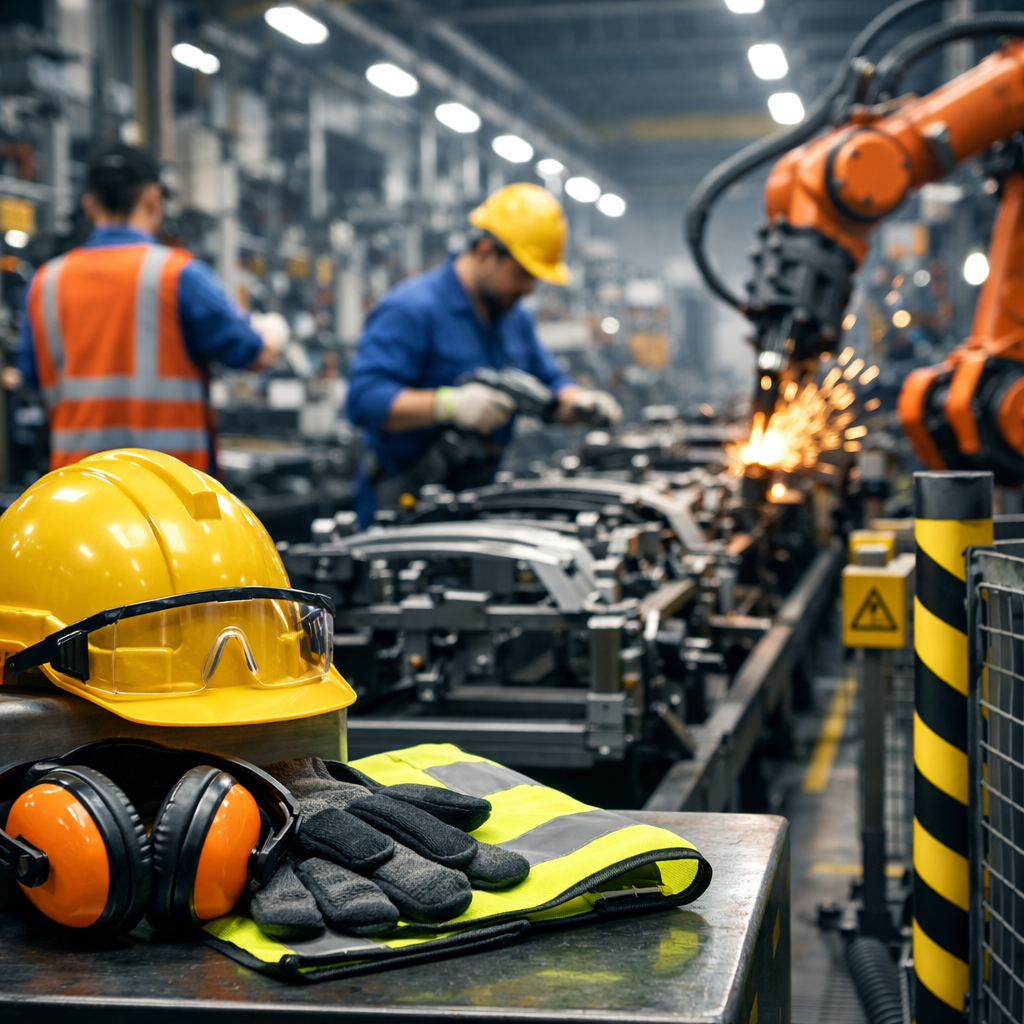
Factory assembly line safety matters because the assembly line combines multiple hazards in a shared space. One worker reaching into a jammed machine, another carrying parts through a walkway, and a supervisor trying to restore output after a stoppage can create a chain of unsafe decisions if proper procedures are not in place.
From an OHSE perspective, strong safety performance is not separate from production. It is part of operational excellence. A line that is guarded properly, organized clearly, and staffed by trained workers is usually more reliable and efficient than one that relies on shortcuts.
Common risks in factory assembly line safety
Mechanical and equipment hazards
Machinery is one of the biggest sources of risk on an assembly line. Conveyors, rotating shafts, robotic arms, presses, cutters, and packaging machines can cause crush injuries, amputations, entanglement, or impact injuries if workers come into contact with moving components.
A common practical example is a worker trying to clear a product jam without isolating the machine. If lockout/tagout is skipped, sudden start-up can cause severe injury within seconds.
Ergonomic and manual handling risks
Repetitive motion, forceful exertion, prolonged standing, and awkward reaching can lead to musculoskeletal disorders. These injuries often develop gradually, which means they may be overlooked until productivity and worker health are already affected.
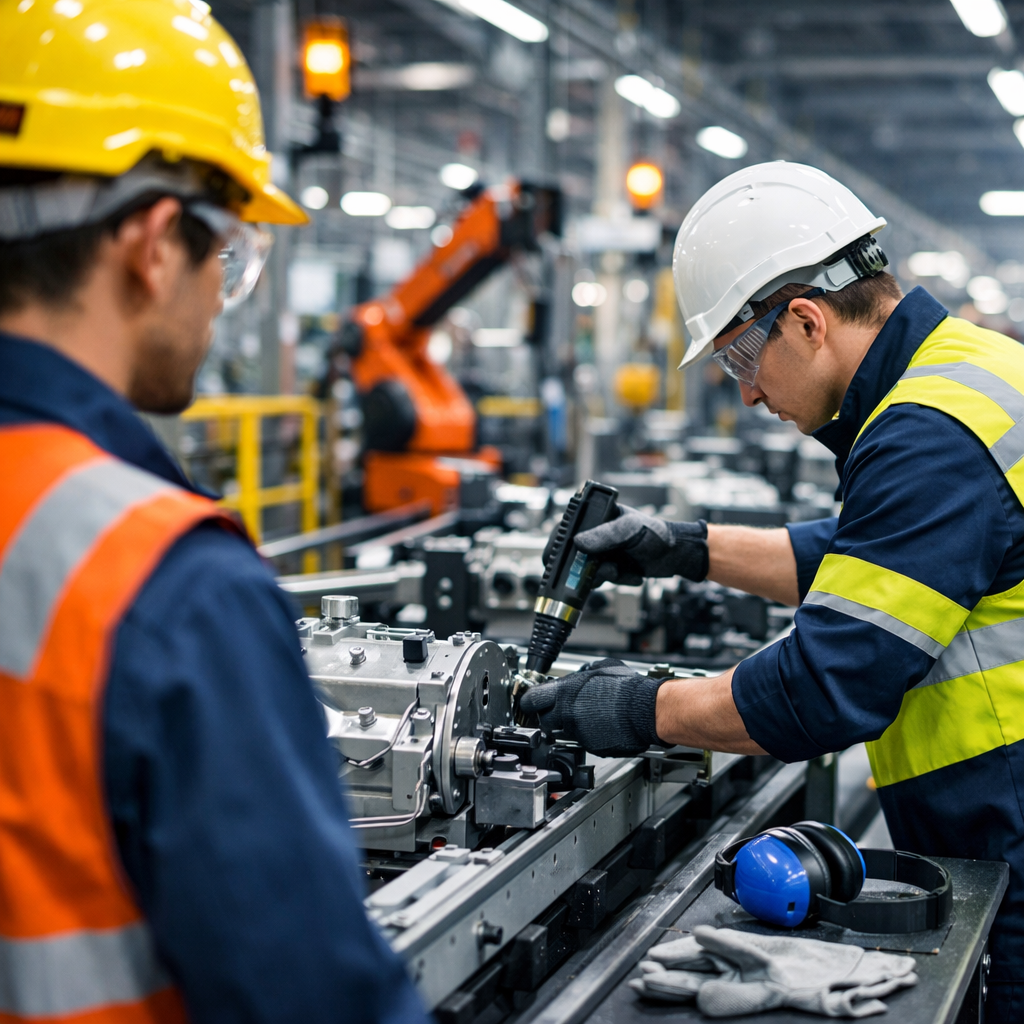
For example, an employee who twists repeatedly to pick parts from a bin placed behind the body may experience shoulder or lower back strain over time. A simple workstation redesign can often remove this risk.
Physical, chemical, and environmental hazards
Noise, heat, poor lighting, vibration, and airborne contaminants can all affect worker safety and concentration. Chemical risks may arise from paints, cleaners, oils, coolants, and fumes generated during production or maintenance activities.
Slips and trips are also common in assembly areas where spills, packaging waste, and trailing cables are not managed well. Even a minor fall near active machinery can become a high-severity incident.
- Pinch points at conveyors and transfer stations
- Unexpected start-up during cleaning or maintenance
- Repetitive strain from fast-cycle tasks
- Forklift interaction near pedestrian routes
- Noise exposure affecting hearing and communication
- Inadequate housekeeping causing slips and blocked exits
Prevention strategies for better factory assembly line safety
Apply the Hierarchy of Controls
The most effective way to improve factory assembly line safety is to follow the Hierarchy of Controls. This means controlling hazards at the source before relying only on worker behavior or PPE.
| Control Level | How it applies on an assembly line |
|---|---|
| Elimination | Remove unnecessary manual clearing tasks by redesigning the process |
| Substitution | Use less hazardous cleaning chemicals or quieter equipment |
| Engineering Controls | Install guards, barriers, light curtains, interlocks, local exhaust ventilation |
| Administrative Controls | Safe work procedures, job rotation, signage, inspections, permit systems, training |
| PPE | Safety glasses, gloves, hearing protection, safety footwear, high-visibility clothing |
Engineering controls are especially important in manufacturing. Fixed guards, emergency stop systems, presence-sensing devices, and proper machine isolation can significantly reduce exposure to dangerous motion.
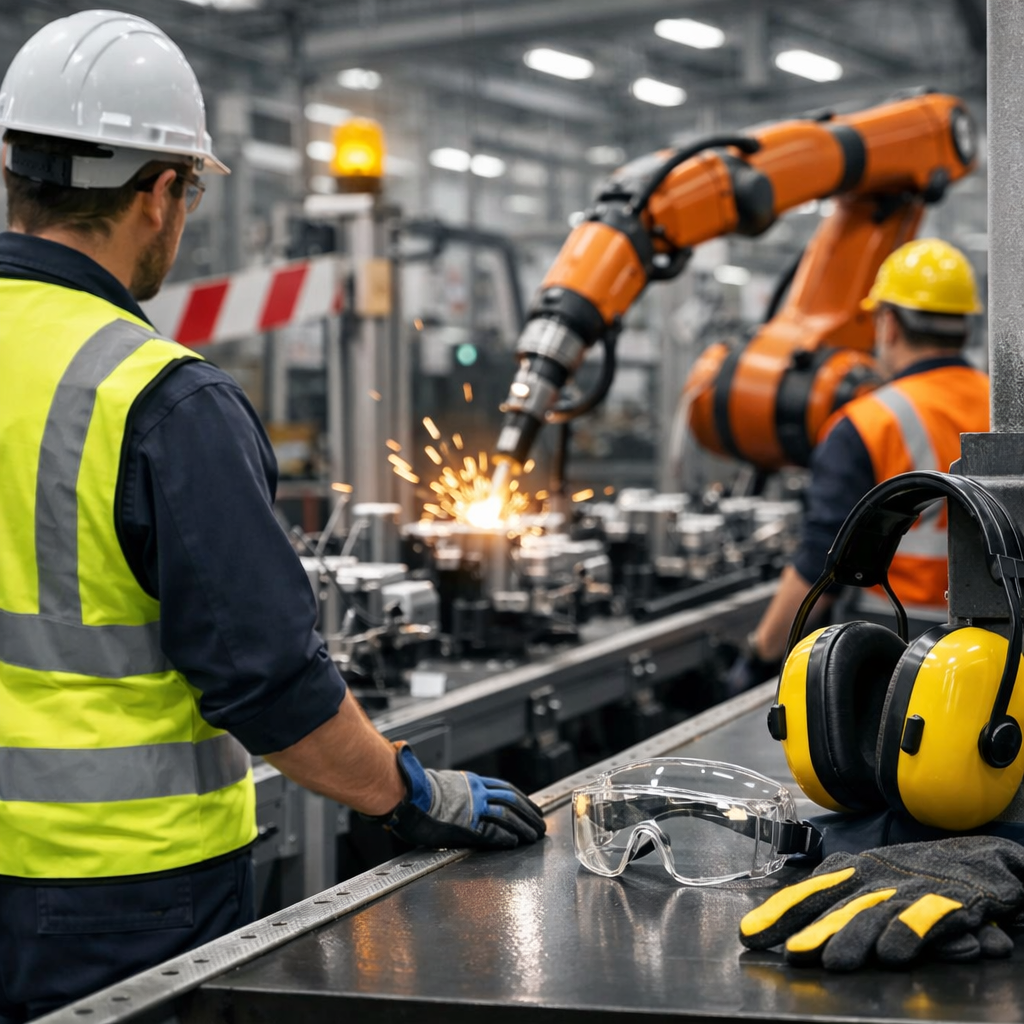
Administrative controls also support safe behavior. Clear standard operating procedures, pre-start inspections, incident reporting, and scheduled preventive maintenance help prevent small issues from becoming major hazards. If your facility is reviewing broader risk programs, resources on workplace risk assessment and lockout/tagout best practices can strengthen assembly line controls.
Training, supervision, and communication
Workers should be trained not only on how to do the job, but also on what can go wrong and how to respond. Training should cover machine guarding, emergency stops, lockout/tagout, manual handling, hazard reporting, and the proper use of PPE.
Supervisors play a critical role by reinforcing expectations on the floor. In many incidents, the written procedure existed, but real-time supervision and communication were weak. Toolbox talks, shift handovers, and visual work instructions can reduce confusion and improve consistency.
Housekeeping and line organization
Good housekeeping is a simple but powerful safety control. Clean aisles, marked pedestrian routes, organized tools, and prompt spill response all reduce day-to-day risk.
A practical example is a packaging area where discarded plastic wrap accumulates near conveyor supports. Removing this waste regularly can prevent slips, reduce fire load, and improve access to emergency stops.
PPE, compliance, and practical examples of factory assembly line safety
Choosing the right PPE for the task
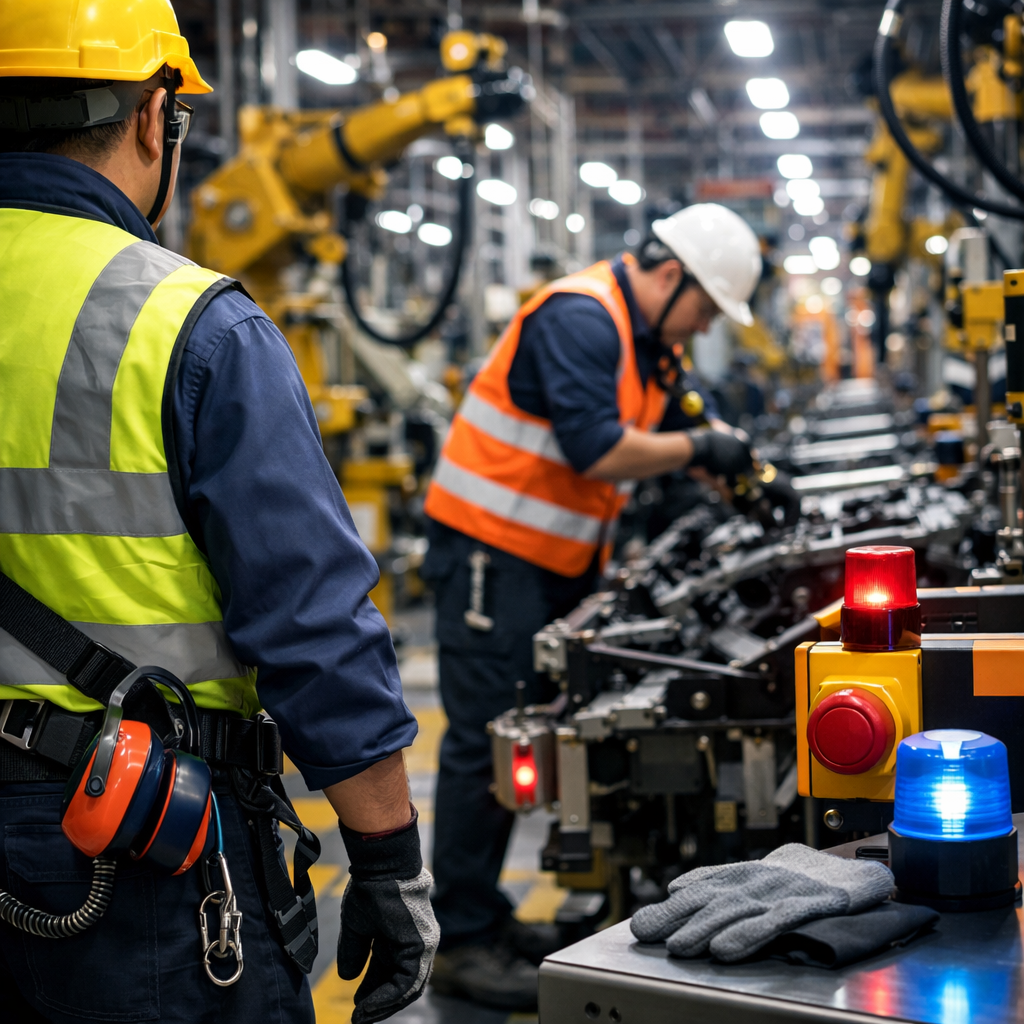
PPE should match the actual hazards present on the line. Safety glasses may protect against flying particles, while cut-resistant gloves may be needed for handling sharp-edged components. Hearing protection is essential in high-noise environments, and slip-resistant safety footwear can reduce fall risks on smooth or contaminated floors.
That said, PPE should never be the only control. Gloves, for instance, may protect against cuts but can create entanglement hazards around certain rotating equipment if not selected carefully. Hazard assessment must guide PPE decisions.
Compliance and OHSE responsibilities
Compliance is a core part of factory assembly line safety. Employers are generally required to provide safe equipment, proper guarding, training, maintenance, emergency preparedness, and access to relevant safety information. Workers are expected to follow procedures, use equipment correctly, wear PPE as required, and report hazards promptly.
Standards and guidance from OSHA machine guarding resources and CCOHS can help organizations benchmark their programs. Regular audits, documented inspections, and incident investigations are important for demonstrating due diligence and identifying improvement opportunities.
Practical examples from the workplace
Consider a beverage bottling line where workers previously climbed over a conveyor to save time. After a risk assessment, the company installed designated crossover platforms, improved floor markings, and retrained staff. The result was fewer near misses and smoother traffic flow.
In another example, an electronics assembly facility noticed a rise in wrist and shoulder complaints. The employer introduced adjustable workstations, part feeders positioned within easy reach, anti-fatigue mats, and task rotation. Injury reports decreased, and output became more stable because workers could sustain performance more comfortably.
A third example involves maintenance work during line cleaning. A food manufacturer strengthened its lockout/tagout process by using standardized isolation points, checklist verification, and supervisor sign-off. This reduced the risk of accidental energization during sanitation and servicing.
The most effective programs treat factory assembly line safety as an ongoing process, not a one-time fix. Hazards change with new equipment, production targets, staffing levels, and product types. Reviewing risks regularly, involving workers in solutions, and acting on near-miss reports are essential for long-term success.
In conclusion, factory assembly line safety depends on practical risk identification, strong prevention measures, proper PPE, legal compliance, and a workplace culture that never normalizes shortcuts. When manufacturers combine the Hierarchy of Controls with training, supervision, maintenance, and worker involvement, they create assembly lines that are not only safer, but also more efficient and resilient.