


gps distraction risks while driving: Workplace Hazards, OHSE Controls, and Safer Navigation Practices


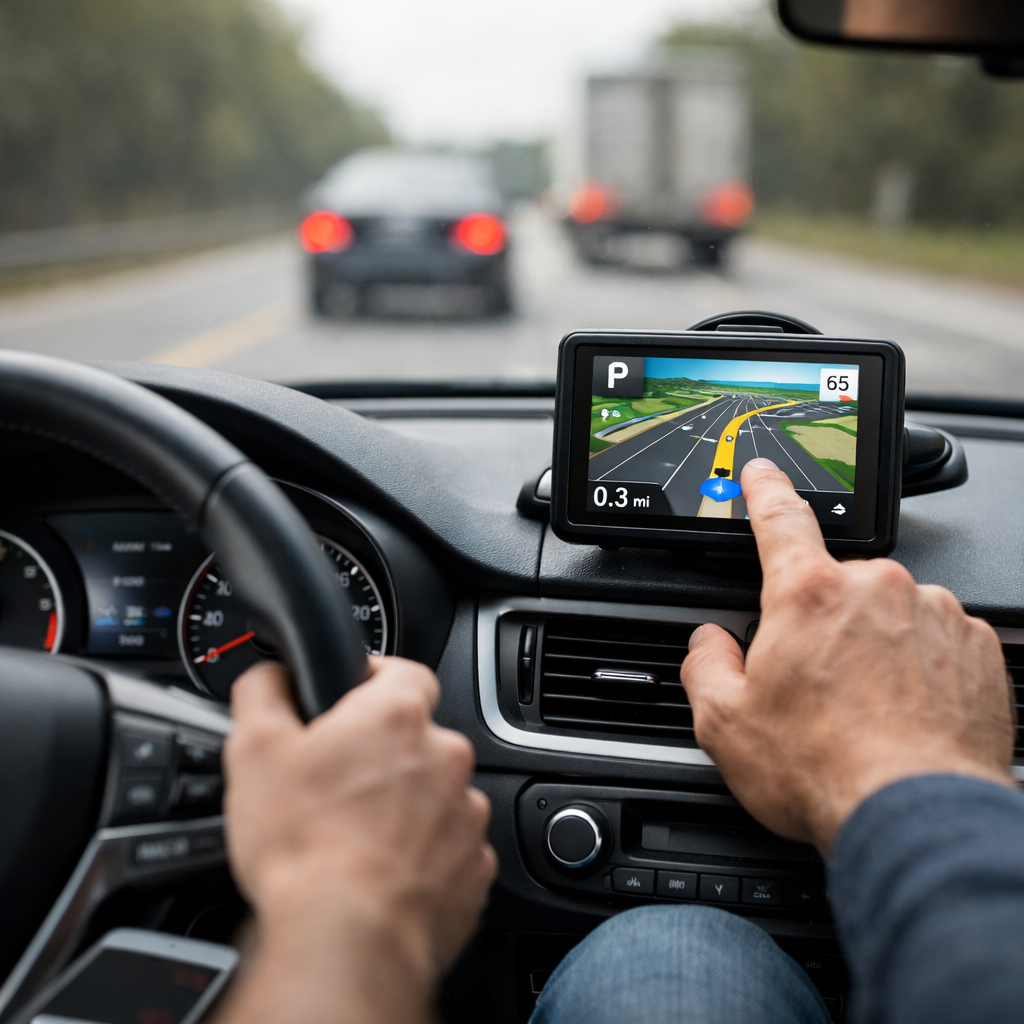
gps distraction risks while driving are a serious road safety and occupational health concern, especially for workers who rely on navigation systems during daily travel.
From delivery drivers and field technicians to supervisors traveling between sites, GPS tools can improve efficiency, but they can also create dangerous distractions when used poorly.
In OHSE settings, distracted driving is not just a personal safety issue. It can lead to crashes, injuries, property damage, workers’ compensation claims, legal liability, and regulatory breaches.
Employers should treat navigation-related distraction as a workplace hazard that requires assessment, controls, training, and ongoing monitoring.
This article explains the main gps distraction risks while driving, practical prevention measures, PPE considerations, compliance expectations, and examples that apply to real workplaces.
Understanding gps distraction risks while driving in the workplace
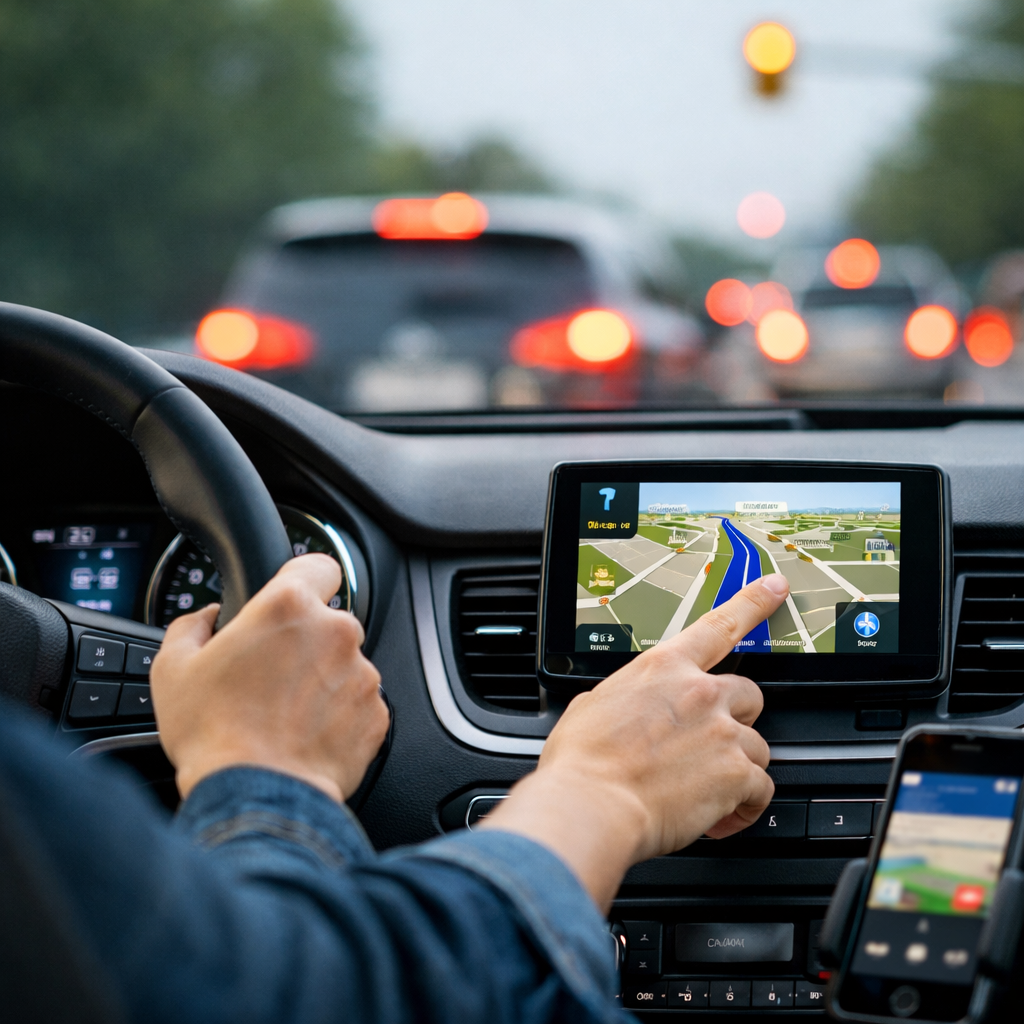
GPS devices and navigation apps are designed to help drivers reach destinations safely and efficiently.
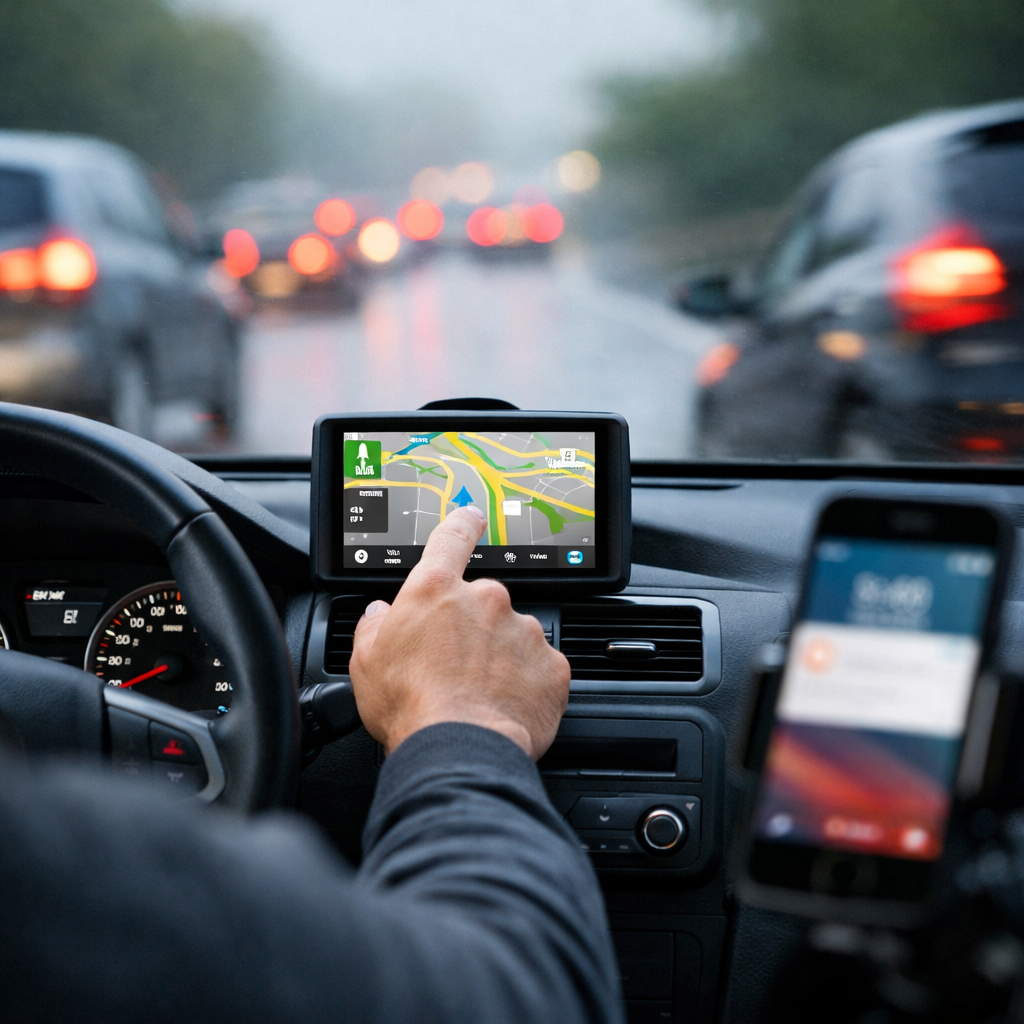
However, they can also demand visual, manual, and cognitive attention at the exact time a driver should be focused on the road.
In occupational driving, the hazard often increases because workers may be under time pressure, navigating unfamiliar locations, answering dispatch calls, or coordinating deliveries.
How GPS creates distraction
There are three common forms of distraction linked to navigation systems.
- Visual distraction: taking eyes off the road to read the screen, lane guidance, or route changes.
- Manual distraction: touching the device, typing an address, zooming the map, or adjusting settings while the vehicle is moving.
- Cognitive distraction: concentrating on spoken instructions, rerouting, estimated arrival times, or confusing directions instead of traffic conditions.
These hazards may seem minor on their own, but they can combine quickly.
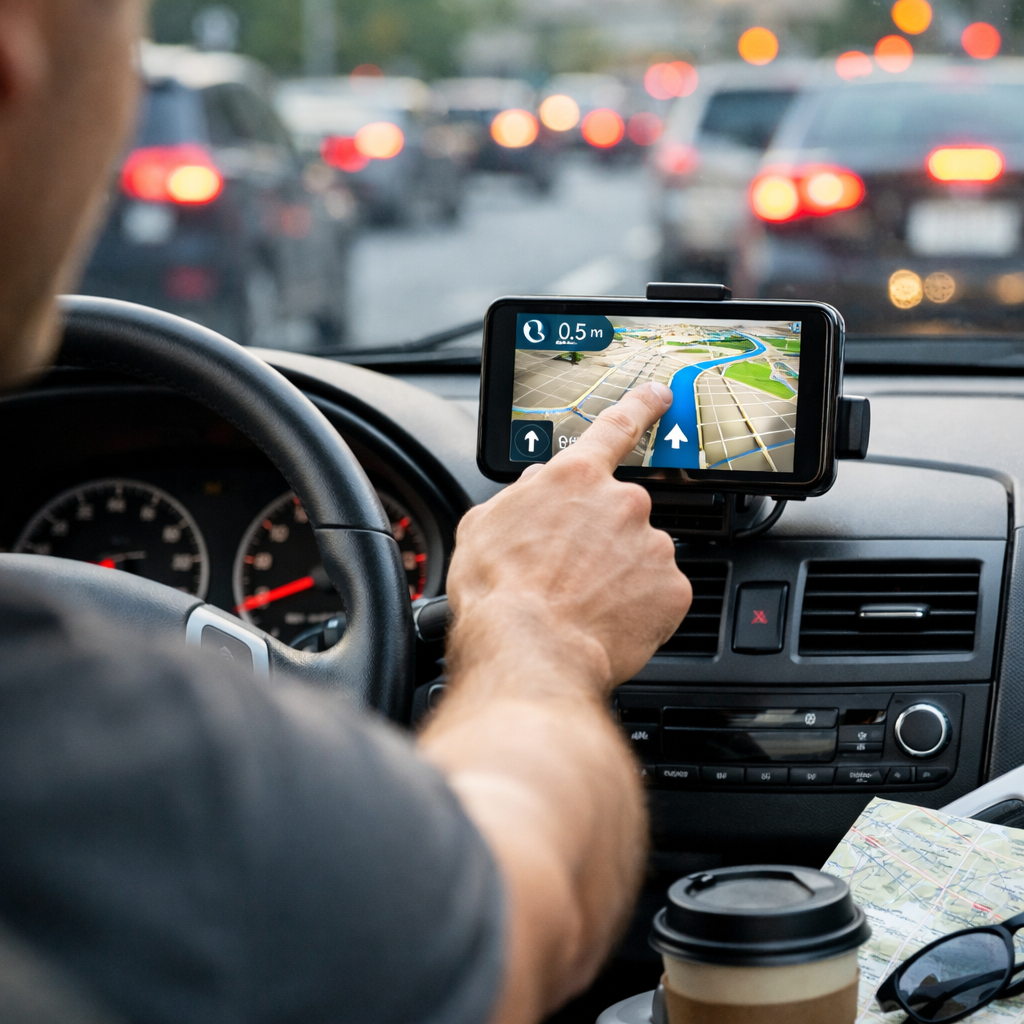
A worker who glances down for only a few seconds at highway speed may travel a significant distance without full situational awareness.
Why work-related driving increases the risk
In many jobs, driving is part of the task, even if the worker is not hired as a full-time driver.
Construction supervisors, utility crews, home-care staff, sales representatives, inspectors, and couriers often use GPS throughout the workday.
Frequent stops, changing schedules, and unfamiliar routes increase reliance on devices.
At the same time, fatigue, weather, deadlines, and traffic congestion can make mistakes more likely.
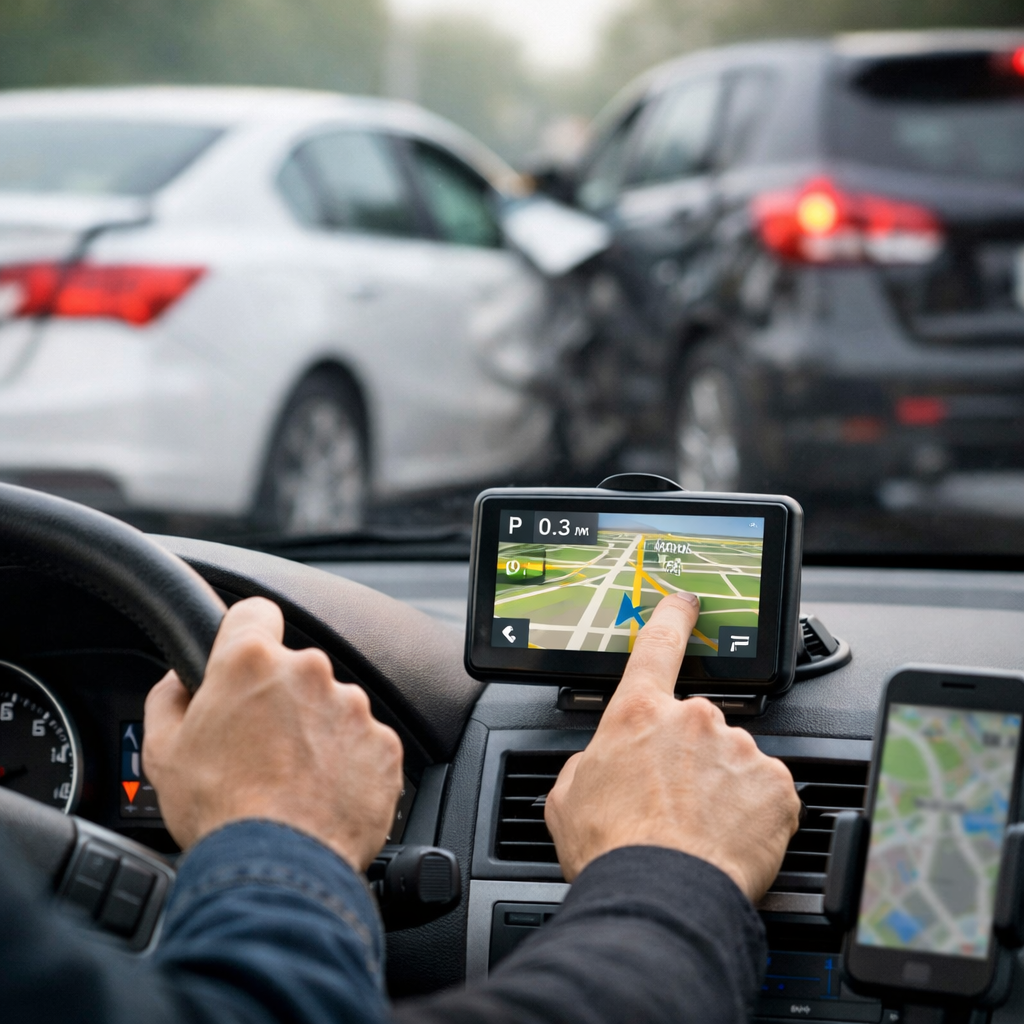
This is why organizations should include navigation distraction in fleet safety programs and vehicle hazard assessments.
Key gps distraction risks while driving and their consequences
The most obvious outcome is a road collision, but the consequences go well beyond vehicle damage.
In an OHSE context, a GPS-related distraction event can trigger injuries to workers, passengers, pedestrians, cyclists, and other road users.
Common risk scenarios
- Missing a traffic light or stop sign while checking the route.
- Sudden braking or unsafe lane changes after a late turn instruction.
- Entering restricted, unsuitable, or hazardous roads based on blind reliance on GPS.
- Looking down to reroute in heavy traffic or work zones.
- Handling a phone-mounted GPS while also responding to calls or messages.
- Following directions into loading areas, rail crossings, tunnels, or low-clearance zones not suitable for the vehicle.
Operational and legal impacts
The impact of gps distraction risks while driving can include lost productivity, damaged company vehicles, interrupted service, insurance increases, and reputational harm.
Where a serious injury or fatality occurs, investigators may review policies, training records, device use practices, and supervision.
Employers may also face scrutiny under road safety laws and general duty obligations.
For guidance on workplace driving hazards, organizations often refer to resources from the Canadian Centre for Occupational Health and Safety (CCOHS) and OSHA.
Simple risk overview
| Hazard | Typical Cause | Possible Outcome |
|---|---|---|
| Screen glance | Reading map or lane guidance | Rear-end collision or missed hazard |
| Manual input | Typing address while moving | Loss of vehicle control |
| Confusing reroute | Unexpected traffic diversion | Sudden lane change or wrong turn |
| Overreliance on GPS | Ignoring road signs or site rules | Entry into unsafe or prohibited area |
Preventing gps distraction risks while driving with OHSE controls
The best way to reduce this hazard is to apply the Hierarchy of Controls.
Although GPS cannot always be eliminated, the risk can be reduced through planning, engineering measures, administrative rules, and driver behavior expectations.
Applying the Hierarchy of Controls
Elimination: Remove the need to interact with GPS while driving by planning routes before departure.
Supervisors can provide pre-trip directions, customer notes, gate access details, and hazard alerts in advance.
Substitution: Use fleet-approved navigation systems with simple interfaces and voice guidance instead of handheld phone use.
Engineering controls: Fit secure mounts at safe viewing height, enable hands-free audio prompts, and use vehicle systems that lock manual input while the vehicle is in motion.
Administrative controls: Create clear distracted driving policies, require drivers to pull over safely before changing routes, and schedule travel to reduce time pressure.
PPE: PPE does not remove distraction, but it still has a role in reducing injury severity in some work settings.
Practical prevention measures
- Enter destinations before starting the vehicle.
- Use voice navigation instead of visual checking where possible.
- Pull over in a safe, legal location before adjusting the route.
- Avoid combining GPS use with phone calls, messaging, or dispatch typing.
- Train workers to follow road signs and site rules over app directions when there is a conflict.
- Review recurring route issues and update journey plans.
- Set realistic schedules so workers are not rushed into unsafe decisions.
Organizations can also build these controls into broader road safety procedures such as fleet safety policies and driver risk assessments.
PPE and related protective measures
In vehicle safety, PPE is secondary to hazard control, but it remains important.
Seat belts are essential and should be worn at all times.
High-visibility clothing may be needed if a worker must stop and exit the vehicle near traffic, work zones, or delivery areas.
Safety footwear may also be relevant for drivers who move between vehicles and active job sites.
Still, it is important to stress that PPE does not prevent gps distraction risks while driving; it only helps reduce harm after exposure to other hazards.
Compliance, training, and real examples of gps distraction risks while driving
Compliance starts with recognizing that work-related driving is a managed activity, not an informal task.
Employers should review local traffic laws, occupational safety duties, insurance requirements, and internal fleet standards.
Many jurisdictions prohibit handheld device use while driving, even when the device is being used for navigation.
Safe work procedures should reflect those rules and be reinforced through supervision and incident review.
What a compliant workplace approach should include
- A written distracted driving policy covering GPS, phones, and in-cab technology.
- Driver orientation and refresher training.
- Pre-trip planning requirements for unfamiliar routes.
- Rules for safe stopping before route changes or data entry.
- Incident and near-miss reporting related to navigation confusion or distraction.
- Monitoring of high-risk roles such as delivery, field service, and long-distance travel.
Useful reference material on distracted driving and employer responsibilities can also be found through the National Safety Council.
Practical workplace examples
Example 1: Delivery driver in urban traffic. A driver misses a turn, looks down to reroute, and nearly enters a crosswalk while pedestrians are crossing.
A control measure would be to require voice guidance, route setup before departure, and a safe pull-over rule for rerouting.
Example 2: Field technician heading to a remote site. The GPS directs the worker onto a road unsuitable for the vehicle.
A better process would include pre-approved routes, site access instructions, and supervisor review for remote travel.
Example 3: Construction supervisor between multiple locations. Running late, the supervisor adjusts the phone map by hand in moving traffic.
Administrative controls such as realistic scheduling, no-touch driving policies, and hands-free mounted devices would reduce the risk.
Training points drivers should remember
Drivers should understand that GPS is a tool, not a substitute for judgment.
If directions conflict with signs, traffic control devices, weather conditions, or site-specific safety instructions, the safer option must come first.
Workers should also know how to report recurring map errors, confusing customer directions, and high-risk approach routes so the organization can improve future planning.
In conclusion, gps distraction risks while driving deserve the same level of attention as any other workplace hazard involving vehicles, travel, and public exposure.
By identifying the risks, applying the Hierarchy of Controls, reinforcing legal compliance, using PPE appropriately, and training workers with real-world examples, employers can reduce preventable incidents.
A strong safety culture makes it clear that no route update, delivery target, or arrival time is worth compromising attention behind the wheel, and that is the most effective way to control gps distraction risks while driving.