


mining worker fatigue risks: Why They Matter and How to Control Them


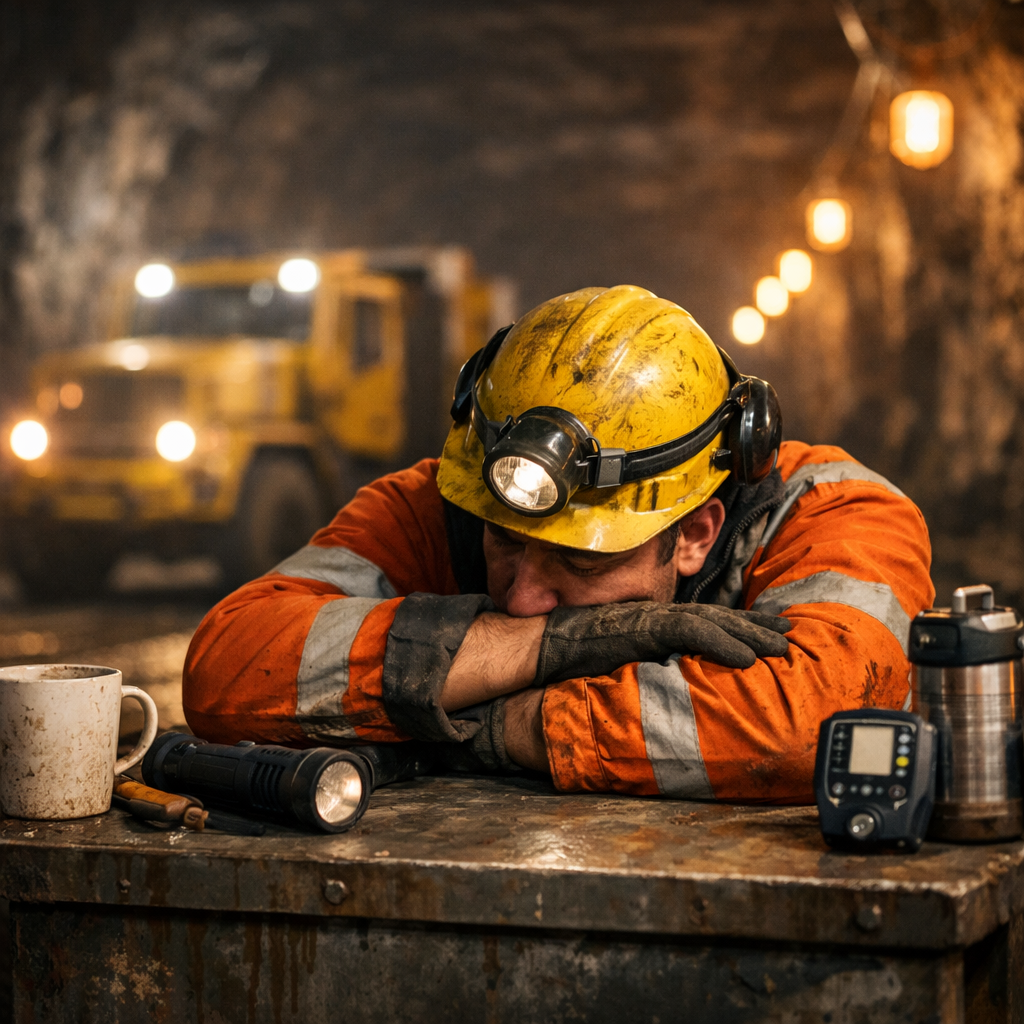
mining worker fatigue risks are a serious occupational health and safety issue in surface and underground operations. Fatigue affects alertness, reaction time, decision-making, and physical coordination, which can quickly turn routine mining tasks into high-risk events.
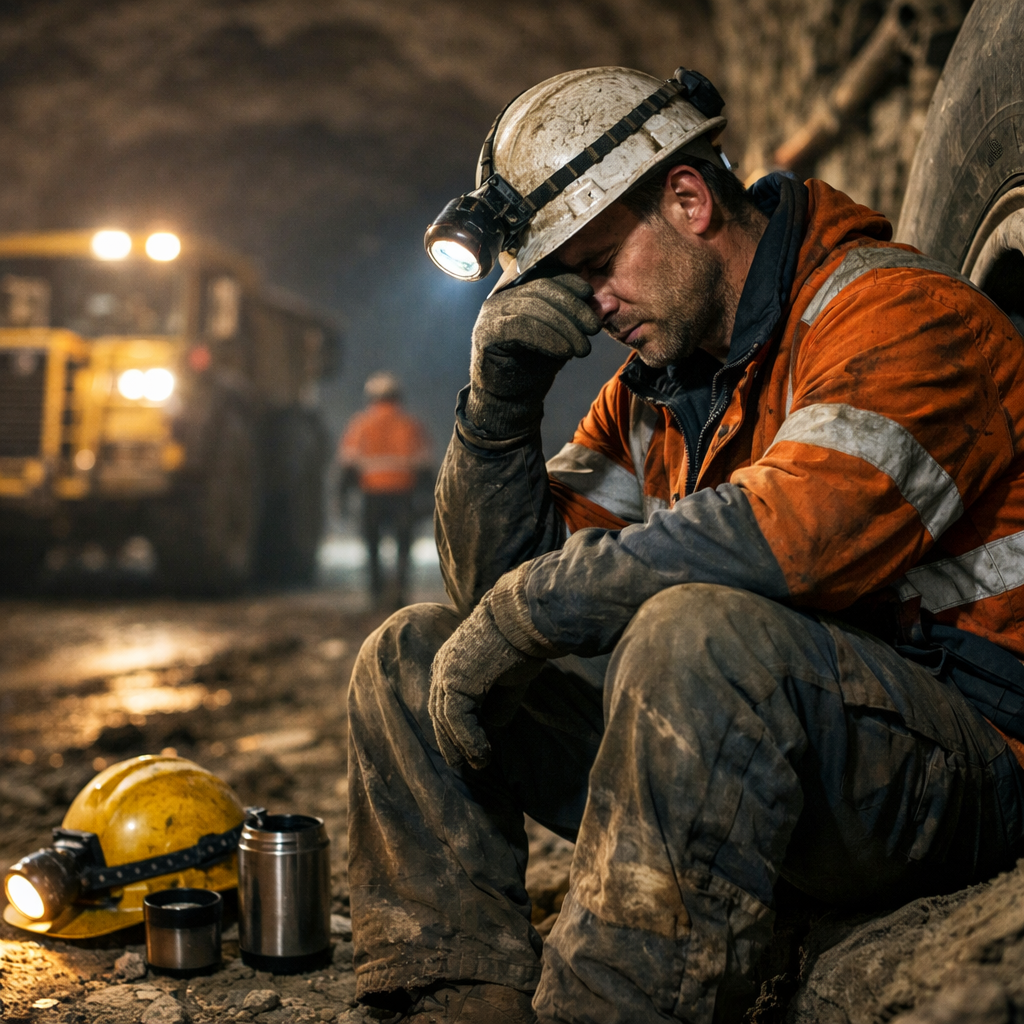
In mining, long shifts, night work, remote rosters, heat, vibration, noise, physically demanding tasks, and mental stress can combine to create dangerous levels of tiredness. When fatigue is not managed properly, the result can be vehicle incidents, equipment contact, falls, poor communication, and critical mistakes during maintenance, blasting, or confined work.
For employers, supervisors, and workers, understanding mining worker fatigue risks is essential to building a safer workplace. Effective fatigue management should cover hazard identification, practical controls, PPE, training, incident reporting, and compliance with legal OHSE duties. Guidance from organizations such as OSHA and CCOHS supports a structured approach to reducing fatigue-related harm.
Understanding mining worker fatigue risks in real operations
Fatigue is more than simply feeling sleepy. In mining, it can be physical, mental, or both. Physical fatigue often develops after repetitive work, manual handling, climbing, tool use, or extended time in harsh conditions. Mental fatigue may result from constant monitoring, long periods of concentration, stress, isolation, and overnight work.
Mining worker fatigue risks increase when several factors occur together. A worker on a 12-hour night shift in a hot environment, travelling long distances to site, and then performing inspection tasks near mobile plant is exposed to a much higher level of risk than someone working a shorter, daytime shift with adequate rest breaks.
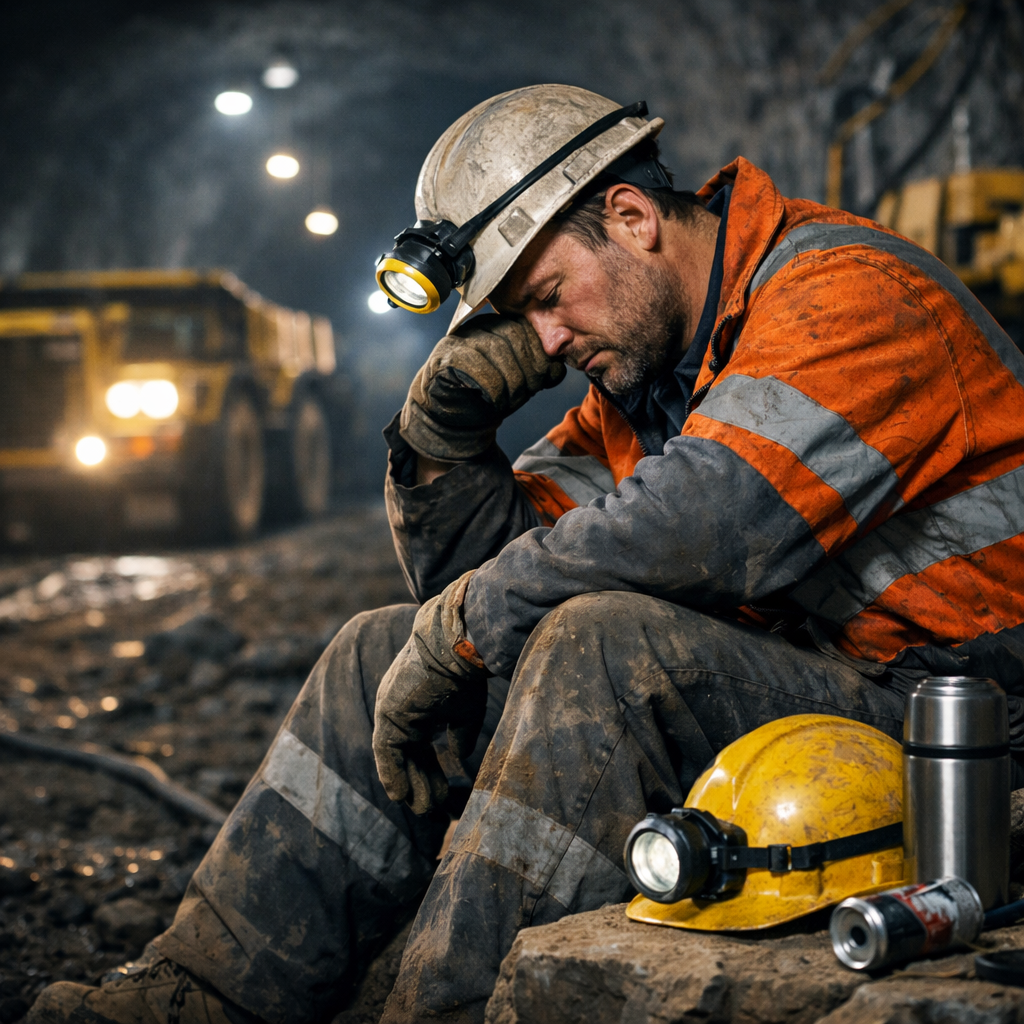
Common fatigue triggers in mining include:
- Extended shifts and overtime that reduce recovery time
- Night shifts and rotating rosters that disrupt natural sleep cycles
- Remote site travel including long drives or fly-in fly-out schedules
- Heat, dust, noise, and vibration that place extra stress on the body
- Physically demanding work such as lifting, shovelling, scaling, and climbing
- Monotonous tasks like long equipment haul routes or continuous monitoring
- High-pressure work during shutdowns, breakdowns, and production deadlines
- Poor sleep quality caused by camp conditions, stress, or medical issues
Practical examples show how fatigue develops on site. A haul truck operator on the fourth consecutive night shift may microsleep for just a few seconds while approaching an intersection. A maintenance fitter working overtime may overlook lockout details during a repair. A driller exposed to heat and dehydration may lose concentration and misread controls.
These are not minor issues. In high-hazard environments, even a brief lapse can cause serious injury, fatality, equipment damage, or environmental release. Businesses that already manage safety management systems should ensure fatigue is treated as a specific and active hazard, not just a wellbeing topic.
Key risks and warning signs linked to mining worker fatigue risks
How fatigue affects safety performance
Mining worker fatigue risks are closely linked to slower reactions and reduced situational awareness. Workers may fail to notice alarms, moving equipment, unstable ground, or changes in ventilation, pressure, or machine condition. Judgment can also become impaired, leading to shortcuts, poor communication, and reduced compliance with procedures.
Fatigue can contribute to:
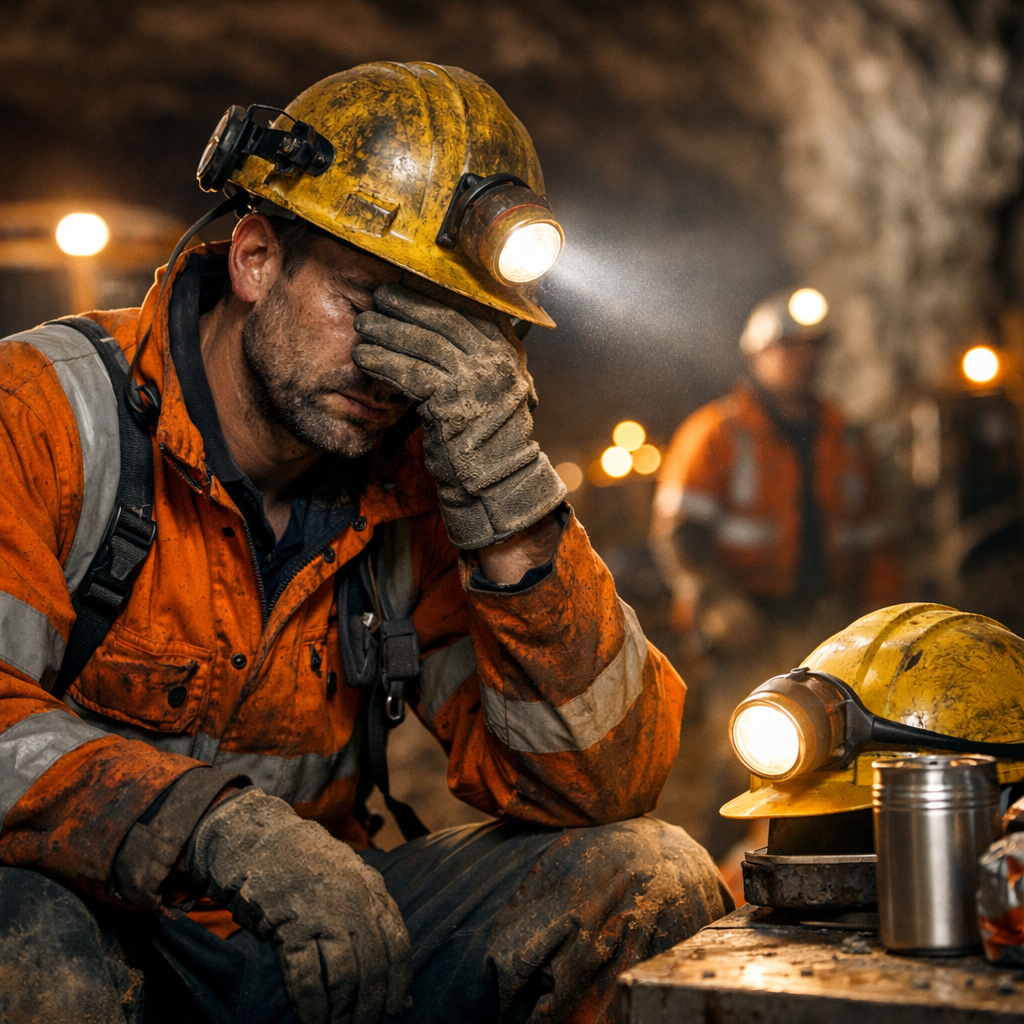
- Vehicle collisions and mobile plant incidents
- Slips, trips, and falls during access or egress
- Errors during isolation, maintenance, and repairs
- Incorrect use of tools and machinery
- Reduced emergency response capability
- Strains and sprains due to poor body mechanics
- Exposure incidents involving dust, chemicals, or noise
- Mental health strain and reduced morale
Recognizing fatigue before an incident
Early recognition is one of the strongest controls available. Supervisors and workers should know the signs and act before performance drops further. Fatigue indicators can be subtle at first, especially when workplace culture rewards pushing through exhaustion.
| Fatigue sign | What it may look like in mining |
|---|---|
| Slower reaction time | Delayed braking, slow response to radio calls, missed alarms |
| Poor concentration | Forgetting steps, repeating checks, losing track of tasks |
| Microsleeps or drowsiness | Nodding off in vehicles, control rooms, or during monitoring tasks |
| Irritability or low mood | Short temper, poor teamwork, reduced communication |
| Physical signs | Yawning, heavy eyes, slower movement, headaches |
Workers should be encouraged to report these warning signs without fear of blame. A healthy reporting culture makes it easier to pause work, rotate duties, or arrange transport before fatigue causes harm. This is also a good place to align fatigue reporting with existing incident reporting procedures.
Preventing mining worker fatigue risks using the Hierarchy of Controls
The most effective way to reduce mining worker fatigue risks is to apply the Hierarchy of Controls. While fatigue cannot always be eliminated entirely, its causes and consequences can be reduced through better planning, work design, and supervision.
Elimination and substitution
At the top of the hierarchy, organizations should ask whether high-fatigue tasks or schedules can be removed or redesigned. For example, non-urgent maintenance can be rescheduled from overnight hours to day shift. Long commute requirements may be reduced through transport arrangements or on-site accommodation closer to work areas.
Engineering and administrative controls
Engineering controls may include operator alertness systems in vehicles, improved lighting, better cabin ergonomics, reduced vibration, cooling systems, and quieter rest areas. These changes support attention and recovery, especially during extended operations.
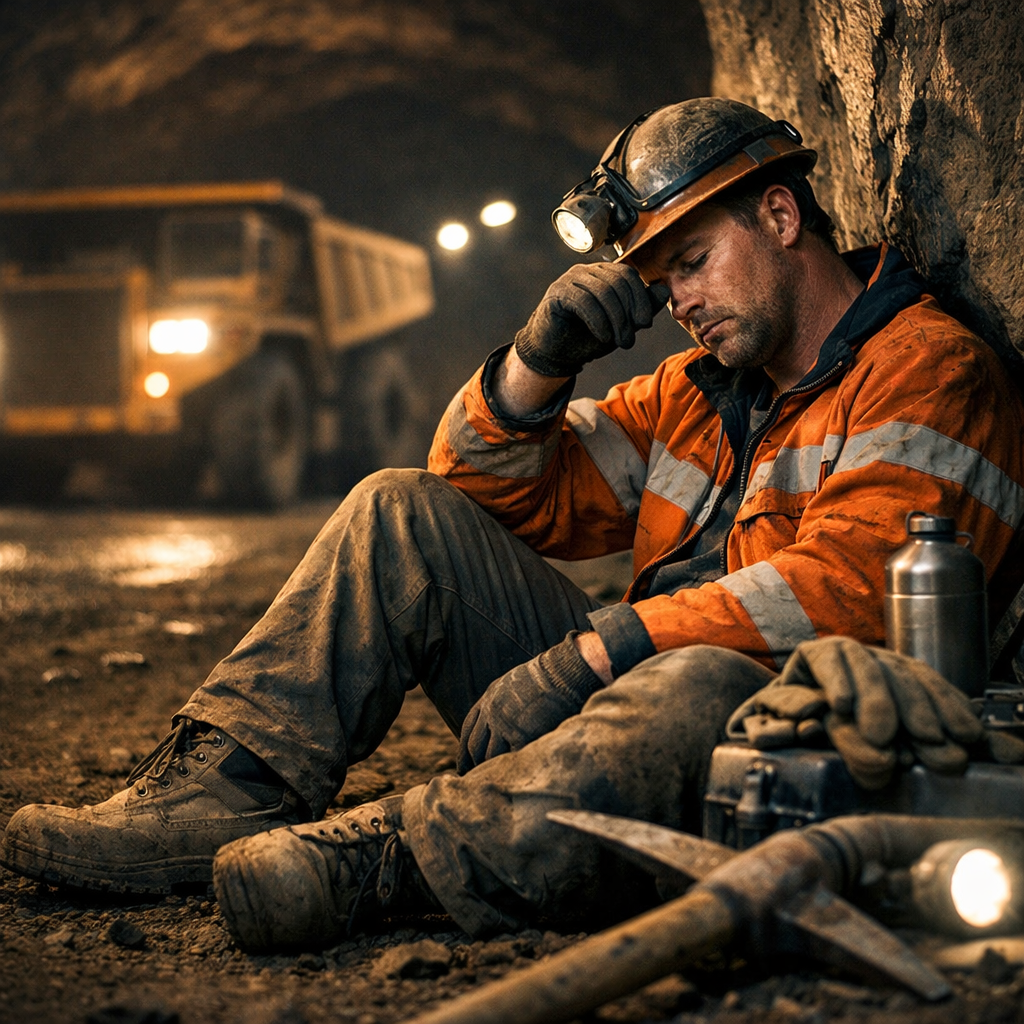
Administrative controls are often the backbone of fatigue management in mining. Strong examples include:
- Setting limits on shift length, overtime, and consecutive night shifts
- Scheduling regular rest breaks and meal breaks
- Monitoring hours worked, travel time, and on-call duties
- Providing hydration stations and heat stress controls
- Using fit-for-work checks before safety-critical tasks
- Rotating workers between high-focus and lower-demand tasks
- Training supervisors to identify and respond to fatigue symptoms
- Investigating fatigue as a contributing factor after incidents and near misses
A practical example would be a site that notices an increase in reversing incidents during the final two hours of night shift. In response, the employer changes the roster pattern, introduces an additional break, increases supervision in haul areas, and uses in-cab fatigue detection technology. That is a realistic, layered response to mining worker fatigue risks.
PPE and its role
PPE does not remove fatigue, but it still plays an important supporting role. Correctly selected PPE can reduce physical strain and improve worker comfort in challenging conditions. Lightweight helmets, anti-fog eye protection, hearing protection suited to long wear, gloves that maintain dexterity, cooling garments for hot environments, and high-visibility clothing for low-light work can all help workers perform more safely.
However, PPE should never be the main fatigue control. Heavy, poorly fitted, or overly restrictive PPE can actually add to fatigue. This is why PPE selection should be assessed alongside task demands, environmental conditions, and worker feedback.
Compliance, consultation, and practical site actions
Compliance with OHSE laws generally requires employers to provide a safe workplace, assess hazards, and implement reasonable controls. In mining, that means fatigue should be formally addressed in risk assessments, safe work procedures, roster planning, training, supervision, and contractor management. Regulators expect businesses to manage foreseeable harm, and fatigue is clearly foreseeable in many mining environments.
Useful guidance can be drawn from NIOSH Mining, OSHA resources, and CCOHS materials on fatigue and workplace scheduling. Sites should also check local mining legislation, codes of practice, and specific regulator expectations for hours of work, fitness for duty, and health monitoring.
Consultation is equally important. Workers often know which tasks, locations, and roster patterns are causing the most fatigue. Toolbox talks, pre-start meetings, and health and safety committee discussions can uncover practical issues such as poor sleep in camp accommodation, inadequate break timing, or excessive paperwork at the end of long shifts.
Simple site actions that make a real difference include reviewing shift design, improving access to drinking water, ensuring meal breaks are protected, checking that vehicle seating reduces vibration, and providing quiet recovery areas. Supervisors should also have authority to stop or modify work when fatigue signs are present, especially for safety-critical activities like blasting, lifting, working at heights, and operating heavy mobile plant.
In conclusion, mining worker fatigue risks are a major OHSE concern because they affect attention, judgment, coordination, and overall fitness for work. The best results come from a planned approach that combines hazard assessment, roster control, rest opportunities, practical supervision, suitable PPE, worker consultation, and legal compliance. By treating mining worker fatigue risks as a serious operational hazard rather than a personal weakness, mining businesses can reduce incidents, protect workers, and build a safer, more reliable site.