


working near power lines safety: Essential OHSE Practices for Safer Job Sites


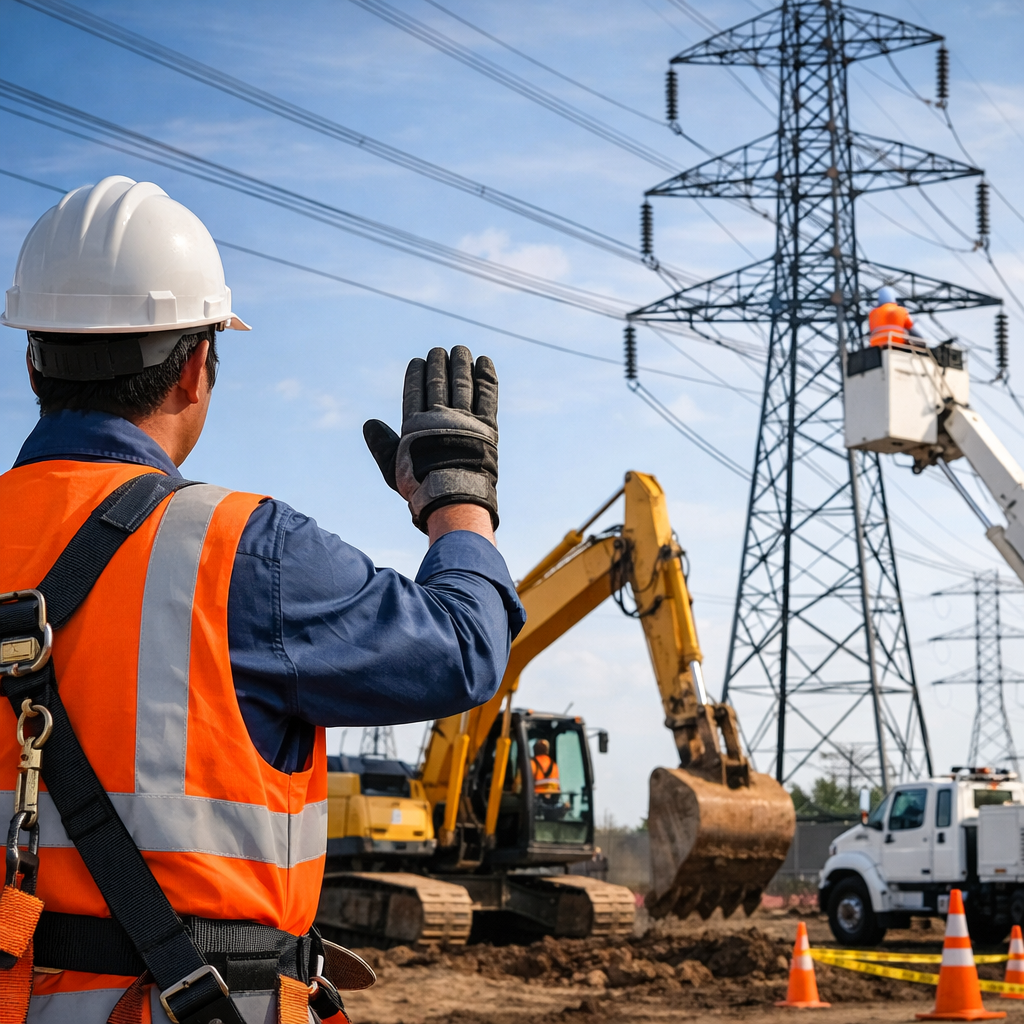
working near power lines safety is a critical concern for anyone operating equipment, handling materials, or performing maintenance near overhead or underground electrical assets.
A single mistake can lead to electric shock, arc flash, burns, equipment damage, service disruption, or a fatal incident.
Whether the work involves construction, tree trimming, roofing, scaffolding, agriculture, or utility support, employers and workers need clear procedures, competent supervision, and strong hazard controls.
In occupational health, safety, and environment programs, power line hazards demand special attention because electricity can injure without direct contact.
Voltage can arc across gaps, metal components can become energized, and mobile plant can enter exclusion zones before an operator realizes the danger.
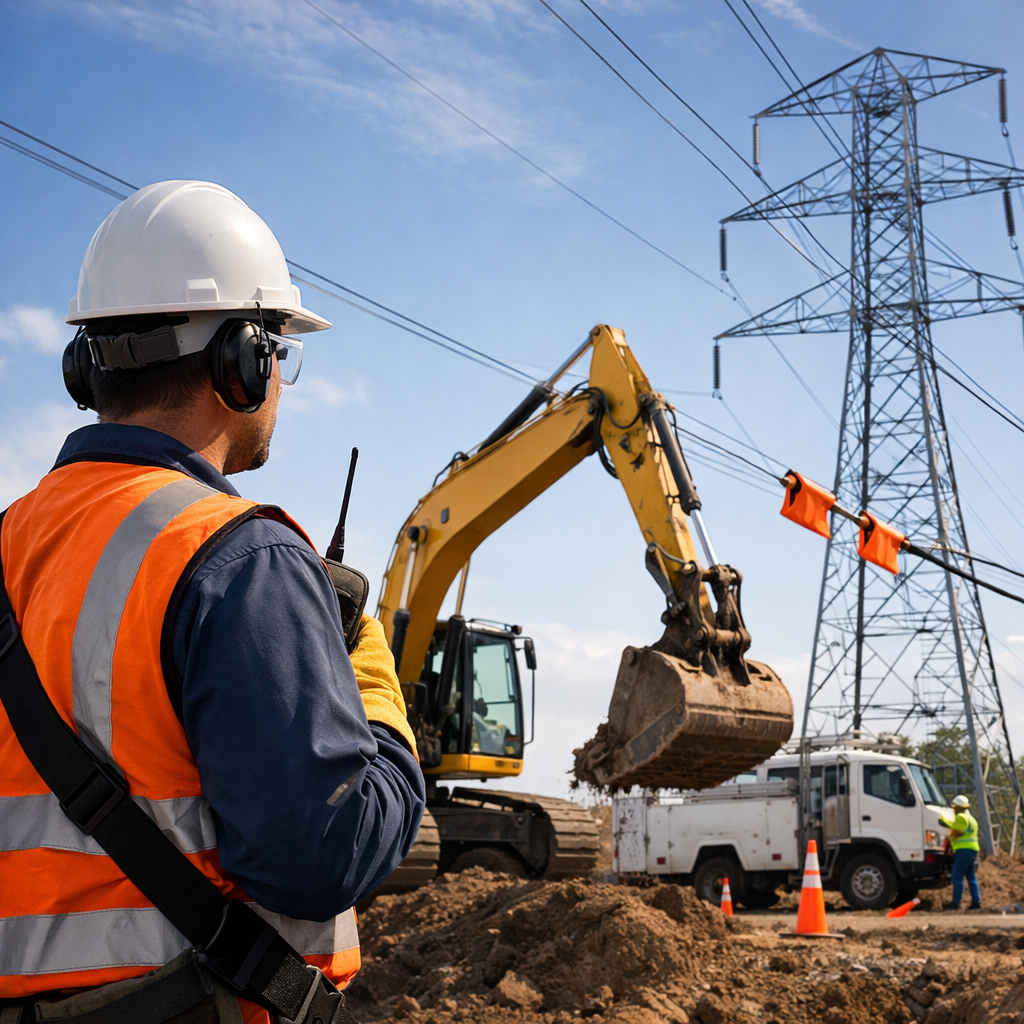
This article explains the main risks, prevention strategies, PPE considerations, compliance duties, and practical examples that make working near power lines safety more effective in real workplaces.
Understanding working near power lines safety risks
The first step in working near power lines safety is recognizing where the hazards come from.
Overhead lines are often visible, but workers may still misjudge their distance, voltage, or movement in windy conditions.
Underground electrical services can be equally dangerous during excavation, drilling, trenching, and post installation.
Common workplace hazards
- Direct contact with overhead conductors by ladders, booms, cranes, scaffolds, pipes, or long tools
- Electrical arcing when equipment or materials come within unsafe approach distances
- Step and touch potential if a machine becomes energized and current flows through the ground
- Hidden underground services struck during excavation or directional drilling
- Loss of control from load swing, poor visibility, unstable ground, or sudden equipment movement
- Weather-related exposure from rain, wind, lightning, reduced visibility, or wet conductive surfaces
These risks are present in many industries.
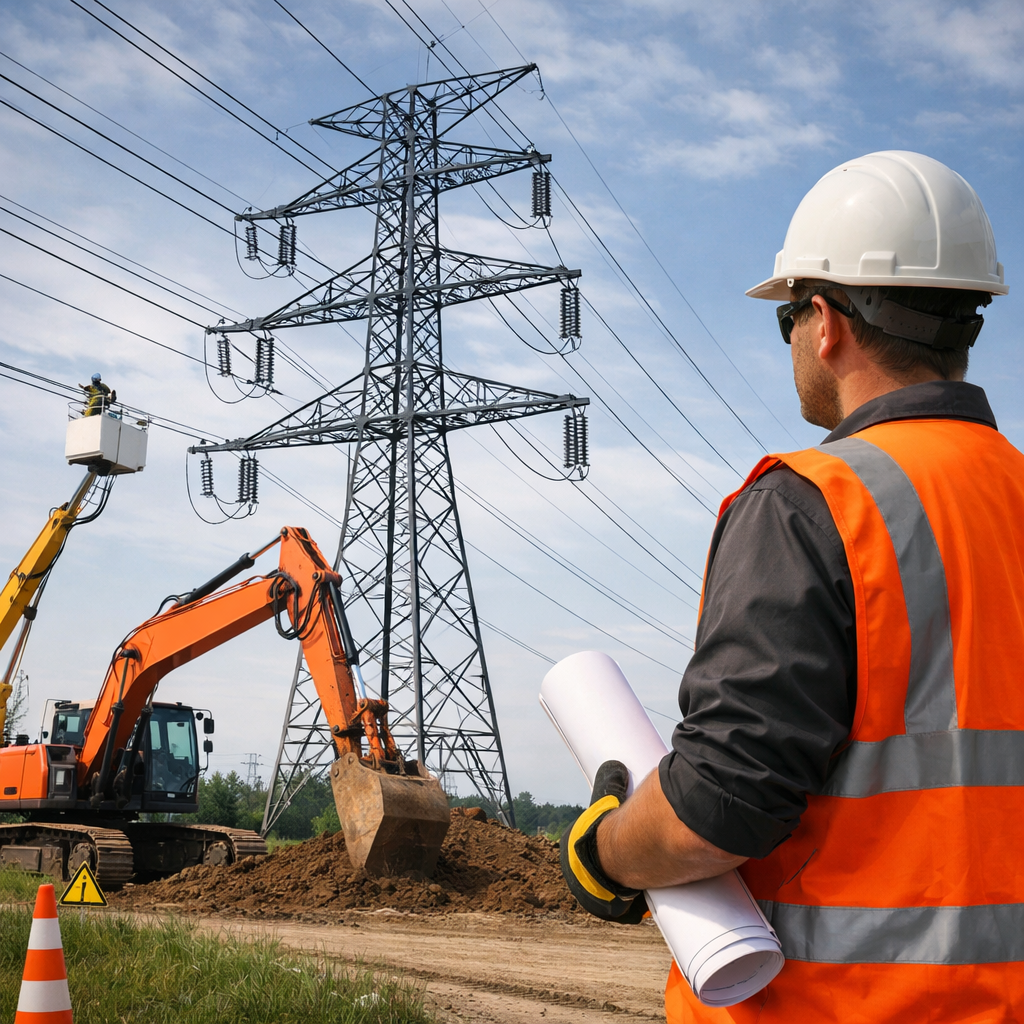
A dump truck bed raised under distribution lines, a painter moving an aluminum extension ladder, or an arborist trimming branches near energized conductors can all face life-threatening exposure within seconds.
Another major issue is assumption.
Workers sometimes believe lines are insulated, de-energized, or far enough away to be safe.
In reality, only the utility owner can confirm line status, voltage, and required clearances.
Guidance from OSHA electrical safety resources and CCOHS electrical safety guidance reinforces the need for planning and distance control whenever electrical hazards exist.
Prevention measures for working near power lines safety
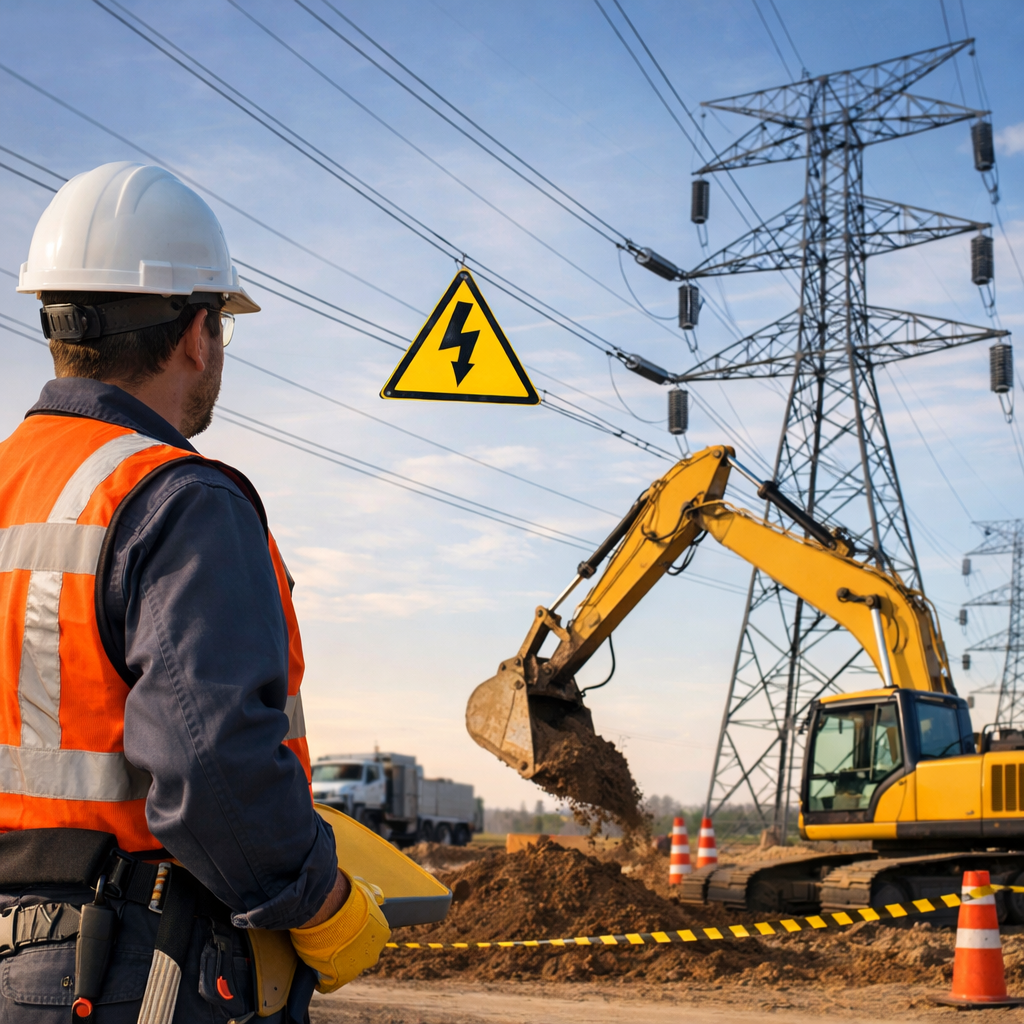
Effective working near power lines safety depends on prevention, not last-minute reactions.
The best programs use the Hierarchy of Controls to reduce exposure before work begins.
Apply the Hierarchy of Controls
Elimination is the most effective control.
If possible, redesign the job so the task is completed away from power lines or during a shutdown arranged with the utility.
Substitution may include using shorter non-conductive tools, alternative access methods, or equipment with lower reach profiles.
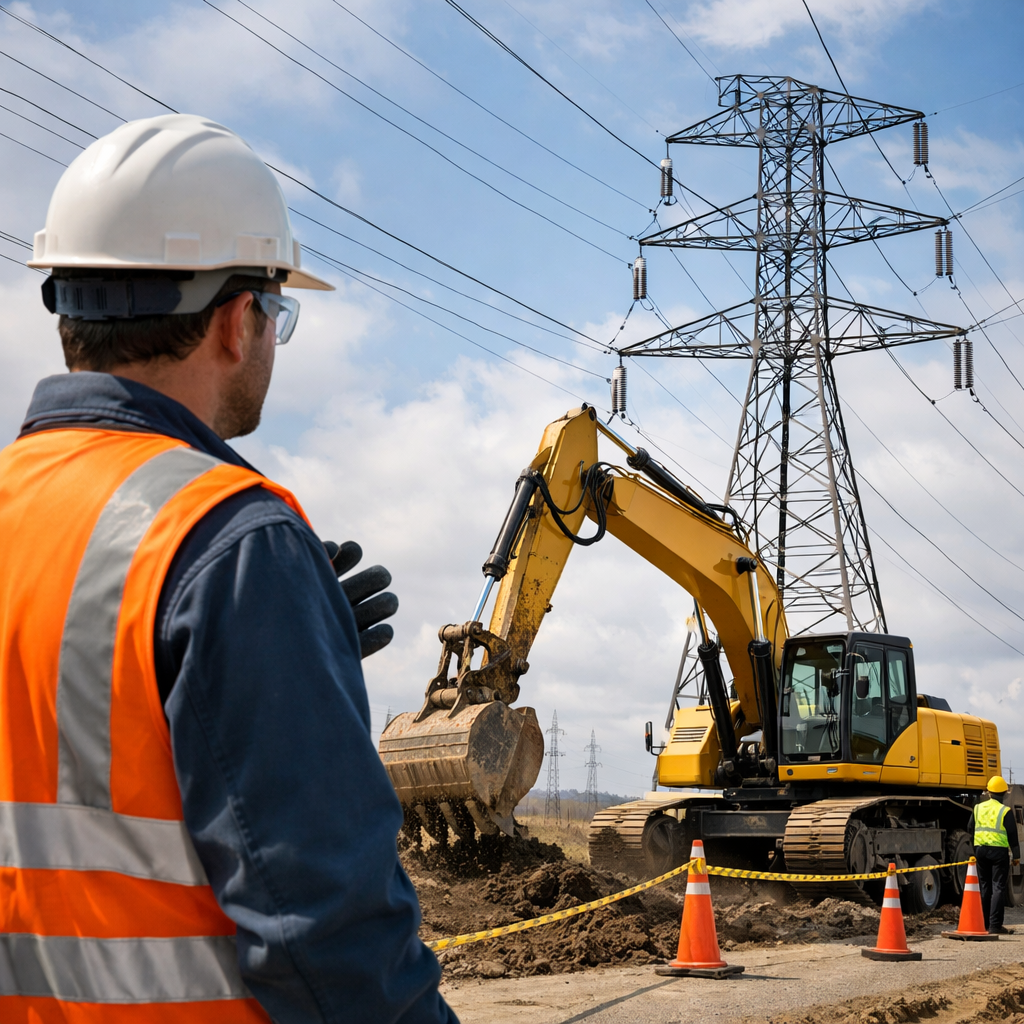
Engineering controls can involve physical barriers, insulated line covers installed by authorized parties, proximity alarms, height limiters, designated exclusion zones, and route planning for plant movement.
Administrative controls include permits, utility coordination, spotters, signage, pre-start briefings, safe work method statements, and training on minimum approach distances.
PPE is important, but it is the last line of defense and cannot replace proper clearance from energized lines.
Safe planning before work starts
- Identify all overhead and underground electrical services during site assessment
- Confirm voltages, ownership, and minimum approach distances with the utility
- Request line locating before excavation and respect marked service corridors
- Establish no-go zones and clearly mark them on site
- Use a dedicated observer or spotter when moving high-risk plant
- Brief all workers, subcontractors, and visitors on power line hazards
- Stop work during unsafe weather or poor visibility
A practical example is crane setup near overhead lines.
Before lifting begins, the supervisor should confirm the line location, set a barricaded exclusion zone, assign a trained spotter, brief the operator, and verify that boom movement will remain outside the required clearance at all times.
If that cannot be guaranteed, the lift should not proceed until the utility provides a safer arrangement.
For excavation work, prevention includes reviewing service drawings, obtaining utility locates, potholing where required, and using non-destructive methods near identified electrical infrastructure.
Our job hazard analysis guide and excavation safety basics are useful starting points for integrating these controls into field planning.
PPE and safe work practices in working near power lines safety
PPE supports working near power lines safety, but it must be selected based on the task, hazard level, and regulatory requirements.
Standard site PPE may reduce secondary injury, yet it does not make contact with energized lines safe.
Important PPE considerations
- Hard hats rated for electrical environments where required
- Arc-rated clothing for tasks with potential arc flash exposure
- Dielectric footwear where appropriate for the work and environment
- Insulated gloves and sleeves for authorized electrical work
- Eye and face protection against arc flash or flying debris
- High-visibility clothing for workers acting as spotters or ground crew
Only qualified and authorized personnel should perform electrical work within regulated approach limits.
General construction workers, drivers, landscapers, and laborers should focus on staying outside exclusion zones rather than relying on PPE for protection against energized conductors.
Safe work practices that matter most
Use non-conductive tools where practical, maintain equipment properly, and inspect booms, ladders, and attachments before use.
Keep loads low during travel, avoid carrying long conductive materials upright, and never store materials beneath overhead lines.
If equipment contacts a power line, the operator should usually remain inside the cab, warn others to stay away, and call emergency services and the utility immediately.
If fire or another immediate hazard forces evacuation, the worker should jump clear without touching the equipment and ground at the same time, then shuffle or hop away to reduce step potential.
| Work activity | Main power line risk | Key control measure |
|---|---|---|
| Crane or boom operation | Contact or arcing to overhead lines | Exclusion zone, spotter, lift planning, utility coordination |
| Excavation or drilling | Striking underground electrical services | Utility locates, drawings, potholing, permit controls |
| Roofing or painting | Ladder contact with conductors | Non-conductive ladders, repositioning, distance checks |
| Tree trimming | Branch or tool contact with energized lines | Qualified personnel, utility involvement, work zone control |
Compliance, training, and practical examples for working near power lines safety
Compliance is a core part of working near power lines safety.
Employers are typically required to assess hazards, provide instruction, ensure competent supervision, and maintain safe systems of work.
Specific legal duties vary by jurisdiction, but most OHSE frameworks require controls for electrical hazards, documented procedures, and worker participation.
Organizations such as OSHA and CCOHS provide valuable guidance, while utility companies often publish local minimum clearance rules, notification requirements, and emergency procedures.
Always verify which standards apply to your project, especially when contractors, temporary works, or public areas are involved.
Training and competency expectations
Workers should be trained to recognize overhead and underground electrical hazards, understand warning signs, know emergency response actions, and follow permit or exclusion zone requirements.
Supervisors and equipment operators need additional competency in line-of-fire awareness, plant limitations, communication protocols, and stop-work authority.
Consider a practical roadside example.
A crew installs signage using a truck-mounted elevating platform near roadside distribution lines.
Without planning, the platform could drift into the danger area during positioning.
With proper working near power lines safety controls, the team first contacts the utility, confirms clearances, isolates the work zone with barriers, uses a trained spotter, checks weather conditions, and repositions the vehicle so the boom path stays outside the no-go zone.
The job takes longer, but the risk drops significantly.
Another example involves farm work during harvest.
Large augers, irrigation pipes, and moving machinery can easily reach overhead lines, especially in low light or when workers are fatigued.
Marking hazards on routes, lowering equipment before movement, and discussing power line risks at the start of each shift are simple actions that prevent serious incidents.
In the end, working near power lines safety is about distance, planning, control, and discipline.
When employers identify electrical hazards early, apply the Hierarchy of Controls, provide the right PPE, and train workers in site-specific procedures, they create safer jobs and stronger compliance outcomes.
No deadline, delivery, or production target is worth exposing people to energized lines.
A consistent approach to working near power lines safety protects workers, equipment, and the public while supporting a more reliable and professional safety culture.