


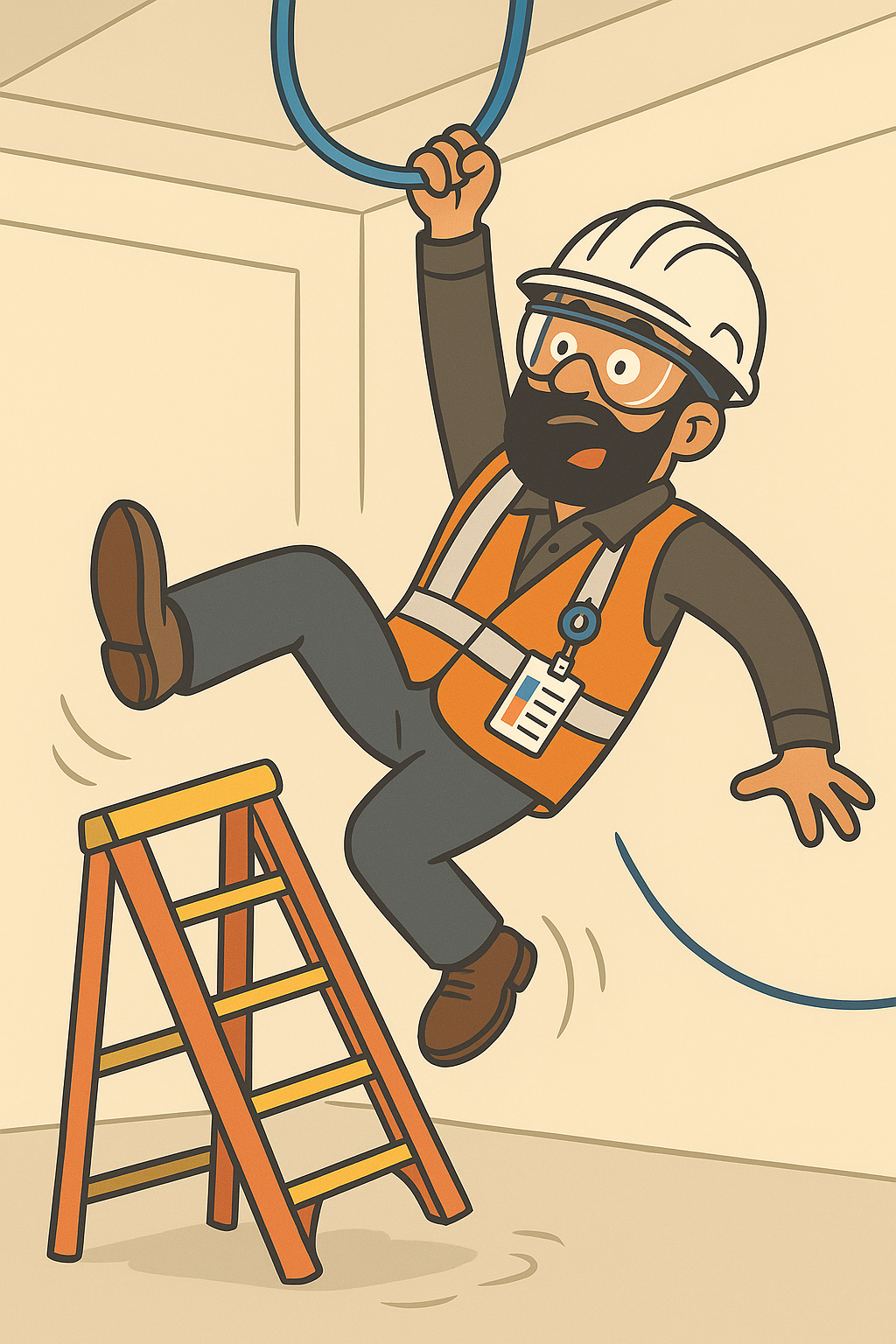
Vendor safety on site should start before a contractor, technician, or delivery driver walks through your door. Whenever a vendor enters your workplace, they are exposed to your hazards and may introduce new ones of their own.

From an OHSE perspective, you owe them a comparable level of protection as your own workers, and regulators increasingly expect employers to manage the safety of anyone on their premises, including contractors and visitors.
- Why vendor safety on site matters
- Step 1 – Prequalify vendors before they arrive
- Step 2 – Plan the work and assess the risks
- Step 3 – Control vendor safety on site at check-in
- Step 4 – Use permits and supervision for high-risk tasks
- Step 5 – Coordinate vendor safety on site with your own staff
- Step 6 – Incident reporting and emergency response
- Step 7 – Evaluate vendor performance and close the loop
- Practical quick-reference sheet
- Final note
Why vendor safety on site matters
Vendors often perform high-risk work: equipment installation, IT cabling, construction, maintenance, or chemical deliveries. If this work is not well controlled, the consequences can include:
- Injuries or fatalities to vendors, employees, or the public
- Property damage and equipment downtime
- Disruption of critical services (e.g., healthcare, production lines)
- Fines, legal claims, and reputational harm

Most safety legislation requires employers to protect all persons who may be affected by the work, not just their direct employees. Treating vendor safety on site as part of your core OHSE management system is therefore both a moral duty and a legal expectation.
Step 1 – Prequalify vendors before they arrive
A structured prequalification process filters out vendors with weak safety practices and sets clear expectations.


Key elements of prequalification
- Request evidence of:
- Confirm the vendor can meet your site-specific requirements (e.g., vaccination, security checks, confined space training).
- Define who will be the prime contractor or constructor where applicable, and how responsibilities will be shared.
| Item | Vendor provides | Verified by (host) | Notes |
|---|---|---|---|
| OH&S policy and program | ☐ Yes ☐ No | ||
| WSIB / insurance certificate | ☐ Yes ☐ No | ||
| Relevant training records | ☐ Yes ☐ No | ||
| Recent incident history | ☐ Yes ☐ No | ||
| Emergency contacts | ☐ Yes ☐ No |
Note: Keep this table as a standard form in your contractor management package so supervisors have a consistent way to review vendor safety on site.
Step 2 – Plan the work and assess the risks
Before any boots hit the ground, carry out a joint risk assessment covering the vendor’s tasks and the interaction with your operations.
Questions to ask during planning
- What hazardous energy, chemicals, or equipment will be involved?
- Will work occur at heights, in confined spaces, or near traffic or the public?
- Could vendor work affect life-safety systems (sprinklers, fire alarms, medical gases, IT networks)?
- Are there simultaneous operations (SIMOPS) where vendor work overlaps with production, patient care, or other projects?
Translate this planning into a Job Hazard Analysis (JHA) or similar document that both your team and the vendor sign off on.
Simple JHA structure
- List each step of the job.
- Identify hazards for each step.
- Define controls (engineering, administrative, PPE).
- Assign responsibility for each control.
- Communicate the JHA in the pre-job briefing.
Step 3 – Control vendor safety on site at check-in
The reception or security desk is often where the process breaks down. Make sure the front line understands that vendor safety on site is part of their job.

Good check-in procedures
- Verify identity and company; match to approved vendor list.
- Confirm work order, location, and responsible internal contact.
- Check that required documentation (JHA, permits, hot-work plan) is complete.
- Issue visitor or contractor badges clearly indicating their status.
- Provide a short safety orientation (in person, video, or e-module) covering:
- Emergency alarms and evacuation routes
- Must-wear PPE areas
- Smoking, housekeeping, and restricted areas
- How to report an incident or near miss
Tip: Maintain a one-page “Contractor Safety Information” sheet and store it centrally (for example on your OHSE intranet or a public resource such as OHSE.ca). Link to it in work orders and purchase requisitions to keep vendor safety on site visible for all departments.
Step 4 – Use permits and supervision for high-risk tasks
Some categories of vendor work call for formal permit-to-work systems and tighter oversight.
Common permit types
- Hot work (welding, grinding, open flame)
- Confined space entry
- Lockout/Tagout (LOTO) for mechanical or electrical systems
- Working at heights or roof access
- Excavation or trenching
| Permit type | Issued by (host) | Completed by (vendor) | Key controls |
|---|---|---|---|
| Hot work | Safety / Facilities | Qualified welder | Fire watch, spark containment, gas test |
| Confined space | Entry supervisor | Entry team | Atmospheric testing, standby, rescue |
| LOTO | Equipment owner | Authorized worker | Isolation verification, group locks |
Supervisors should routinely:
- Visit the work area to verify controls are in place.
- Check PPE (e.g., harness, eye protection) and housekeeping.
- Confirm that vendor employees understand the scope and hazards.
- Stop work if conditions change or if unsafe acts are observed.
Note: The authority to stop work must be clearly communicated. All parties—your employees and vendors—should know that safety overrides schedule.
Step 5 – Coordinate vendor safety on site with your own staff
Vendor work rarely happens in isolation. Poor communication with your staff can create new risks.

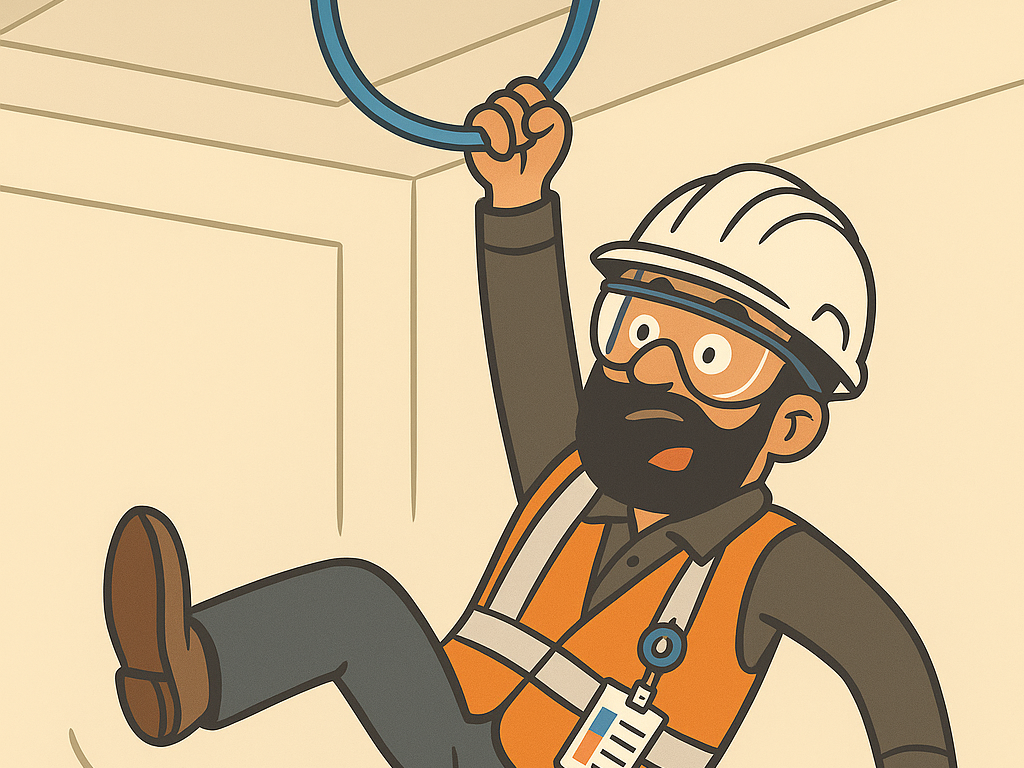
Best practices for coordination
- Include vendor activities in your daily or weekly toolbox talks.
- Post notices or send emails describing:
- Areas affected
- Times of noisy, dusty, or disruptive work
- Any temporary closures (stairs, washrooms, entrances)
- For healthcare, laboratories, and similar environments, coordinate with clinical leads or lab managers to protect patients and sensitive processes.
Encourage your people to treat vendor safety on site exactly the same way they treat internal work: if they see something unsafe, they report it or intervene.
Step 6 – Incident reporting and emergency response
When an incident involves a vendor, confusion about reporting and investigation responsibilities can delay corrective actions.
Make it clear that:
- Vendors must report all incidents, first-aid cases, property damage, and near misses to both:
- Their own employer, and
- Your designated site contact or safety department.
- Your internal incident reporting system accepts vendor reports (create a specific category like “Contractor/Vendor”).
- Emergency procedures (fire, medical, violence) apply equally to vendors and visitors.
Incident follow-up checklist
- Provide immediate care and secure the area.
- Notify internal leadership and the vendor’s supervisor.
- Preserve evidence (photos, equipment tags, witness names).
- Conduct a joint investigation; share findings with the vendor company.
- Update risk assessments, JHAs, and training as needed.
Step 7 – Evaluate vendor performance and close the loop
After the work is finished, take a few minutes to evaluate how vendor safety on site was managed.

Post-job review questions
- Did the work stay within the agreed scope?
- Were there any deviations from safe work procedures?
- Did the vendor follow site rules, PPE requirements, and permit conditions?
- Were there near misses, property damage, or repeated reminders?
- What would we change next time?
You can use a simple rating table:
| Criteria | Rating (1–5) | Comments |
|---|---|---|
| Compliance with site rules | ||
| Quality of communication | ||
| Permit and documentation | ||
| Housekeeping and professionalism | ||
| Overall safety performance |
Keep these ratings in your preferred vendor list. Vendors with strong OHSE performance may be prioritized for future work, while chronic issues may trigger corrective action plans or removal from the list.
Practical quick-reference sheet
Vendor safety on site – one-page summary
- Prequalify vendors for safety, insurance, and competence.
- Plan the work with joint risk assessments and JHAs.
- Control entry with check-in, orientation, and clear badges.
- Use permits and supervision for high-risk work.
- Coordinate with your own staff; communicate disruptions.
- Require incident and near-miss reporting for all vendors.
- Review performance and update your preferred vendor list.
Final note
When you embed vendor safety on site into purchasing, facilities management, IT, construction, and project planning, it stops being an afterthought and becomes a normal part of how your organization does business.
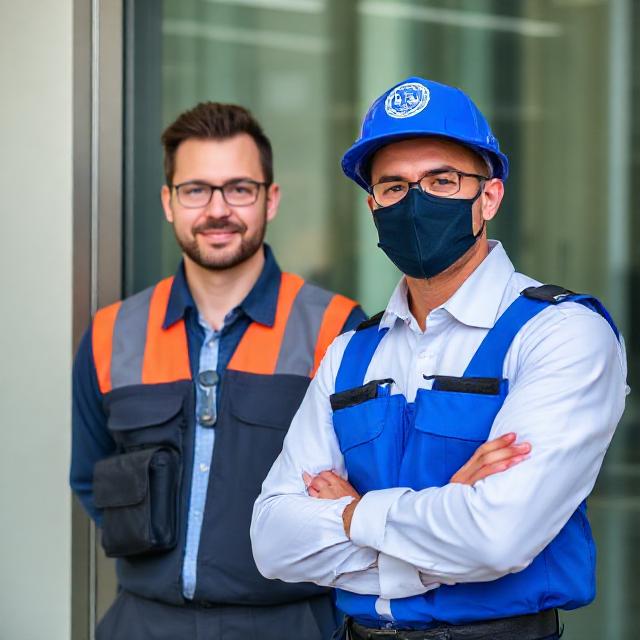
Vendors then experience your workplace as a well-organized, safety-focused environment—one where they can do their best work without unnecessary risk, and where everyone, internal or external, goes home safe at the end of the day.