


Welding Fume Exposure Prevention: Practical Tips Every Fabrication Shop Can Use


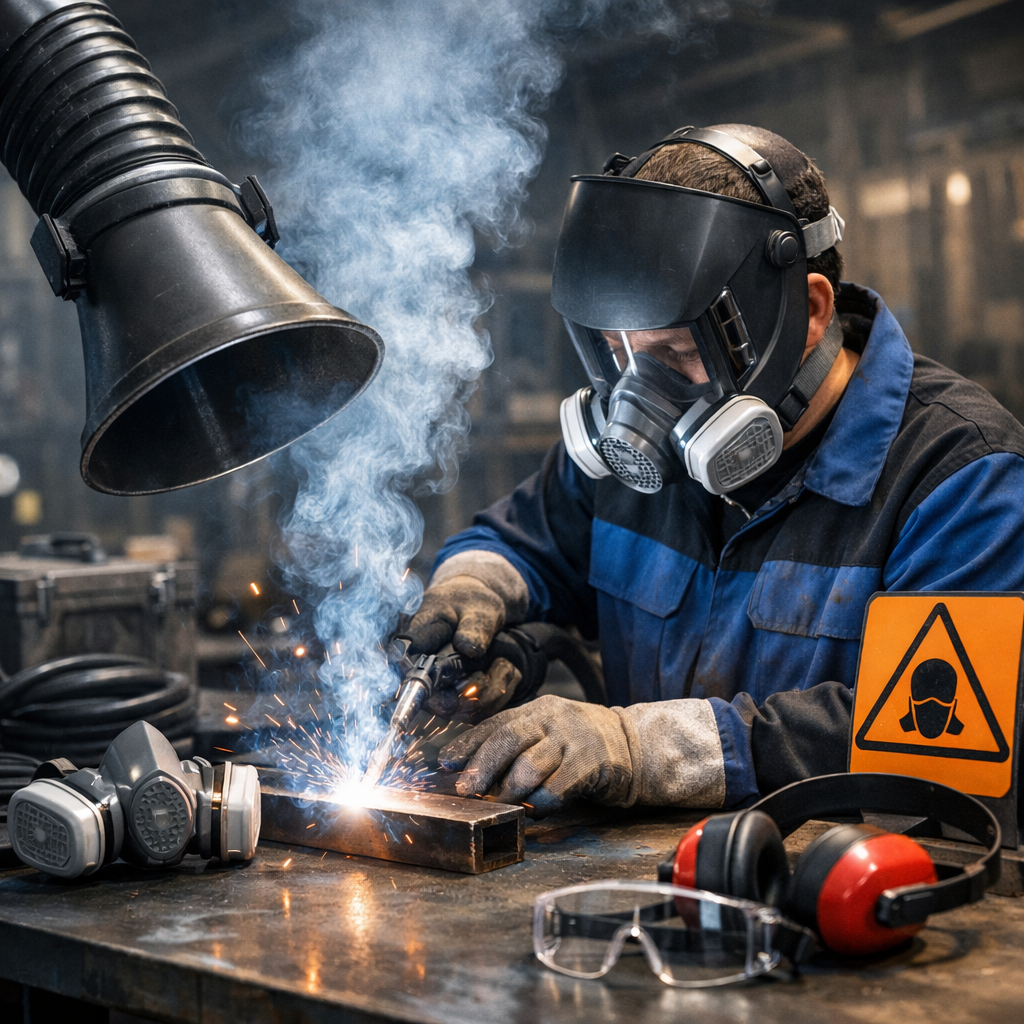
Welding fume exposure prevention should be a daily priority in every fabrication shop because welding fumes can contain hazardous metals and gases that put workers at risk over time.
From stainless steel work and flux-cored welding to cutting, gouging, and rework, the amount of airborne contamination in a shop can rise quickly if controls are weak or inconsistent.
Strong prevention starts with understanding that fumes are not just a nuisance. Depending on the process and material, exposure may involve manganese, hexavalent chromium, nickel, ozone, nitrogen oxides, and other contaminants linked to respiratory irritation and serious long-term health effects.
That is why practical controls matter. Guidance from organizations such as OSHA and the CCOHS supports a layered approach built around the hierarchy of controls. For fabrication shops, that means improving ventilation, changing processes where possible, positioning workers out of the fume plume, and using the right PPE when other controls cannot fully reduce exposure. If your shop is updating procedures, our shop safety checklist and PPE program guide can help reinforce day-to-day expectations.
Welding Fume Exposure Prevention Starts with Hazard Recognition
The first step in effective welding fume exposure prevention is recognizing where and when the highest exposures happen.
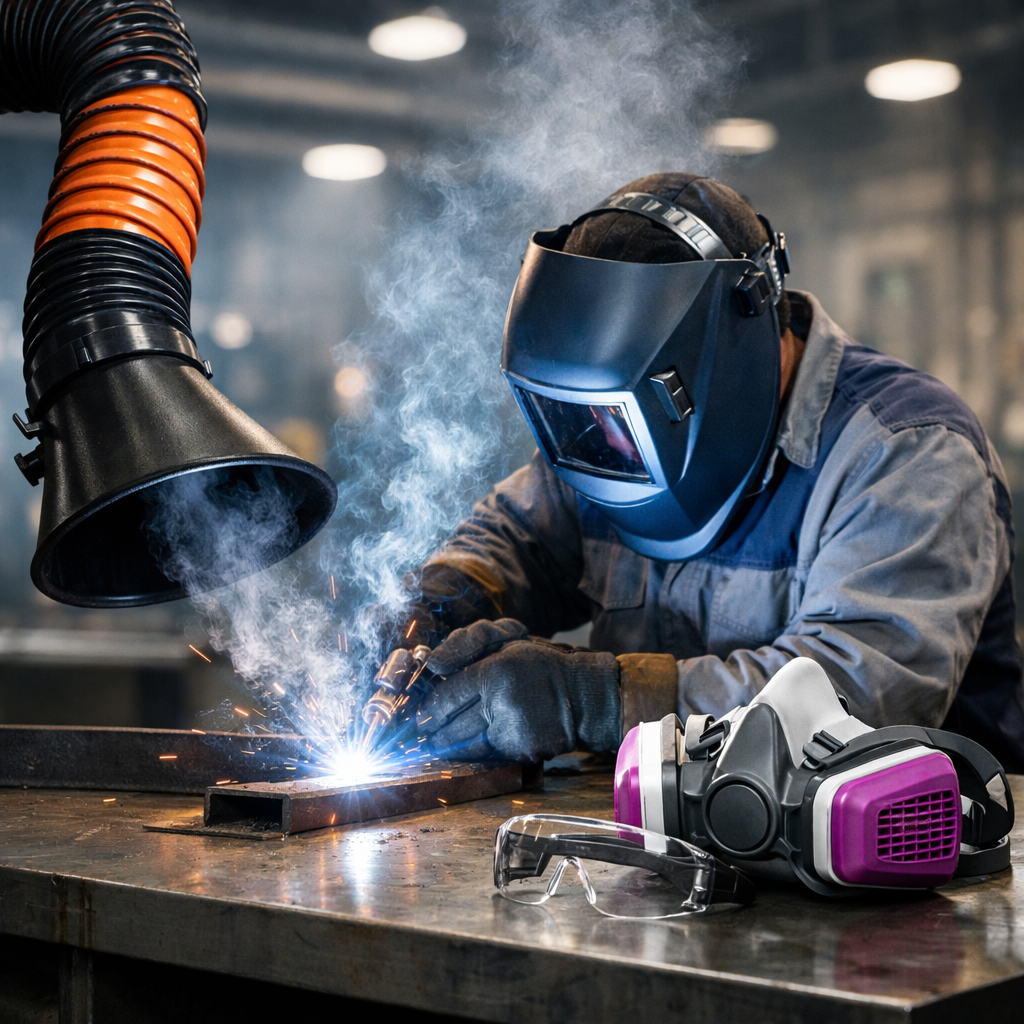
Fume levels often increase during long production runs, work inside tanks or tight corners, overhead welding, and jobs that involve coated metals, stainless steel, or poor general airflow. A welder doing short tack welds in an open bay may face very different exposure conditions than a worker completing full-penetration welds inside a partially enclosed assembly.
Supervisors should look at the full task, not just the arc itself. Surface contaminants, anti-spatter products, paint, galvanizing, and cleaning chemicals can all change the exposure profile. If workers are reporting headaches, throat irritation, metal fume fever symptoms, or visible haze lingering in the breathing zone, that is a sign controls need review.
Air monitoring can help confirm which contaminants are present and whether exposure limits may be exceeded. It also gives shops a better basis for selecting controls rather than relying on assumptions. A simple written assessment covering process, base metal, filler metal, duration, location, and current controls can make prevention more consistent across shifts.
Ventilation Controls for Better Welding Fume Exposure Prevention
Ventilation is often the most important engineering control in welding fume exposure prevention.
General building ventilation helps dilute contaminants, but it is rarely enough on its own for higher-fume welding tasks. Fabrication shops usually get better results when they combine make-up air and air movement planning with local exhaust ventilation that captures fumes close to the source.
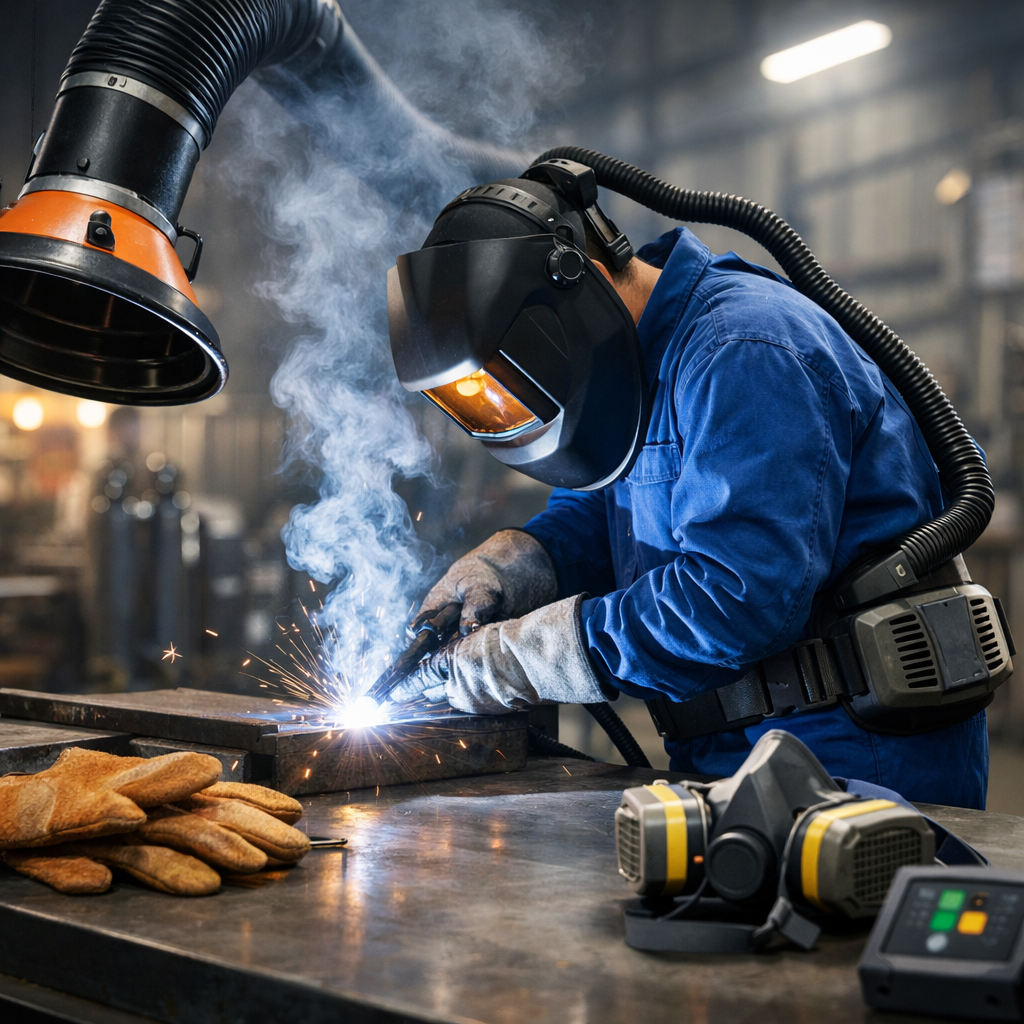
Use local exhaust as close to the arc as possible
Capture works best when extraction hoods, fume arms, downdraft tables, or on-torch extraction are positioned near the point where fumes are generated. The farther the hood is from the arc, the less effective it becomes.
A common mistake is installing good equipment but placing the hood too far away because it seems more convenient. Even a few extra inches can let the plume pass directly through the welder’s breathing zone before it is captured.
Match the ventilation method to the job
Different tasks call for different ventilation setups. A fixed welding booth may work well with backdraft or side-draft systems, while large assemblies may require movable extraction arms. Confined or enclosed spaces need a more formal ventilation plan and closer hazard assessment.
| Shop Task | Typical Fume Risk | Useful Ventilation Option |
|---|---|---|
| Bench welding of small parts | Moderate and consistent | Downdraft table or fixed hood |
| Large fabrication assembly | Variable and often high | Movable extraction arm near the arc |
| Stainless steel welding | High due to chromium and nickel concerns | Local exhaust plus respiratory protection if needed |
| Confined space welding | Very high | Planned mechanical ventilation with permit controls |
Maintenance matters too. Dirty filters, damaged ducting, poor airflow, and blocked inlets can make a system look operational while delivering little real protection. Regular inspections and airflow verification should be part of preventive maintenance, not something done only after complaints.
Process Changes That Support Welding Fume Exposure Prevention
One of the most effective ways to improve welding fume exposure prevention is to reduce fume generation before it starts.
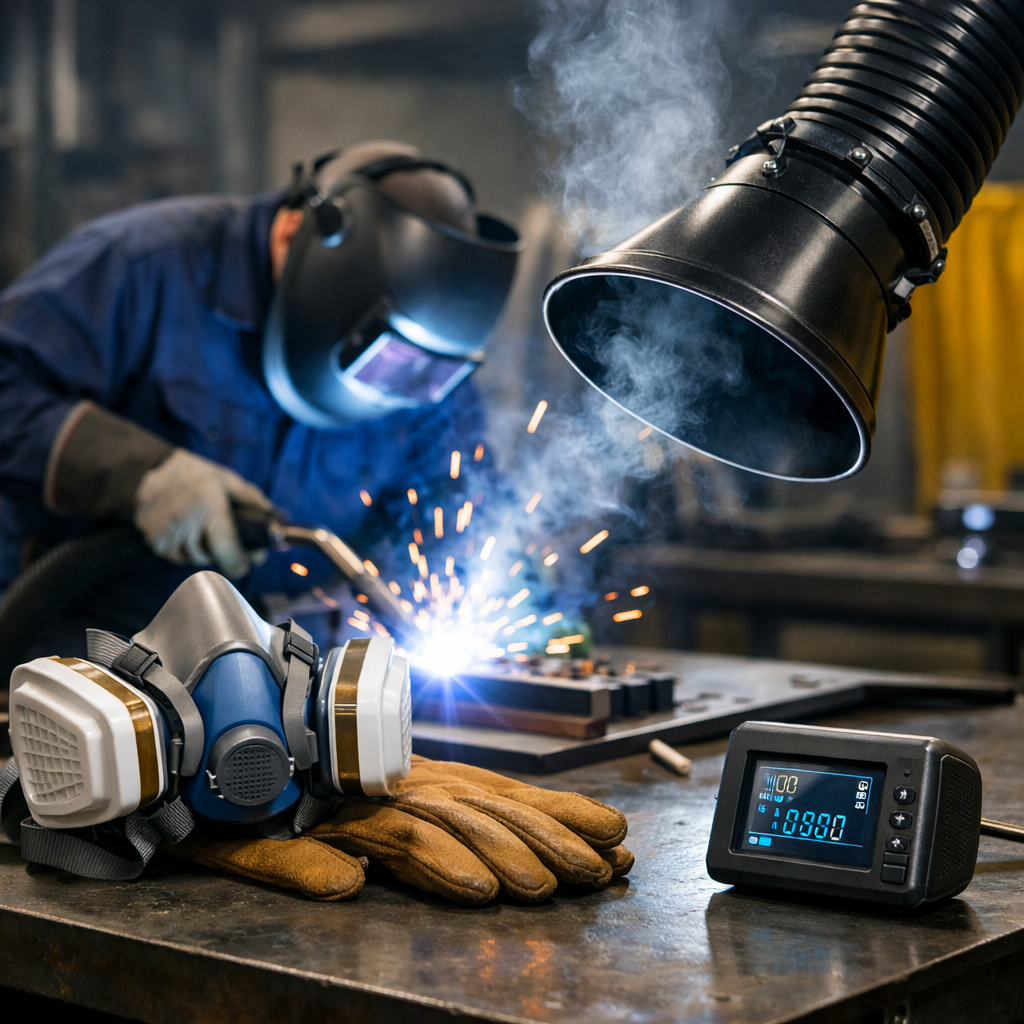
This aligns with the hierarchy of controls: eliminate, substitute, engineer, administrate, and then rely on PPE. Not every process can be changed in a busy shop, but even small adjustments can lower exposure without slowing production.
Review process, consumables, and settings
Some welding processes and consumables generate more fumes than others. Reviewing whether a lower-fume process is practical for certain jobs can make a real difference. The same goes for selecting consumables designed to reduce emissions where product requirements allow.
Settings also matter. Excessive voltage, poor shielding gas selection, and unstable parameters can increase fume generation. Standardizing qualified procedures and training welders to avoid unnecessary over-welding can improve both quality and air conditions.
Prepare materials properly
Removing coatings, oils, solvents, and residues before welding can reduce the release of harmful byproducts. A shop that cleans galvanized or painted surfaces in a designated prep area before welding often sees better control than one that leaves prep to the last minute on the production floor.
- Use the lowest-fume process that still meets engineering and quality requirements.
- Choose lower-emission consumables where approved.
- Clean base materials before welding to remove coatings and residues.
- Avoid unnecessary rework by improving fit-up and procedure control.
- Document process changes so safe practices stay consistent across crews.
Administrative controls support these changes. Rotating tasks, limiting time in higher-exposure areas, and scheduling fume-intensive jobs when fewer workers are nearby can help reduce total exposure, especially while permanent engineering upgrades are being implemented.
Worker Positioning and Work Practices Matter
Even with good equipment, welding fume exposure prevention can fail if workers place their heads directly in the plume.
The fume plume rises from the arc and often moves straight through the welder’s breathing zone if body position is not considered. Training workers to recognize plume direction and adjust posture, part orientation, or hood placement can produce immediate improvement.
Keep the breathing zone out of the plume
Whenever possible, welders should position themselves to the side of the plume rather than above it. Tilting the workpiece, changing approach angle, or repositioning the extraction arm before starting can be enough to keep fumes away from the face.
This is especially important during awkward welds, inside frames, or when working overhead. Supervisors should observe real production tasks rather than assuming standard booth training automatically carries over to field conditions inside the shop.
Build good habits into daily setup
Simple work practices can reinforce safer exposure control:
- Check airflow before striking an arc.
- Place local exhaust between the plume and the worker when practical.
- Reposition parts to avoid welding in enclosed corners when possible.
- Keep bystanders out of the fume path.
- Report ventilation problems immediately rather than working around them.
These habits are easy to overlook in high-output environments, but they often separate a well-controlled shop from one that relies too heavily on PPE alone.
PPE as the Final Layer in Welding Fume Exposure Prevention
PPE is essential, but it should be the last line of defense in welding fume exposure prevention, not the first.
When ventilation and process controls cannot fully reduce exposure, respiratory protection may be necessary. The right choice depends on the contaminants, exposure level, and work environment. For some routine tasks, a properly selected tight-fitting respirator may be suitable. For more demanding jobs, workers may need higher-protection options such as powered air-purifying respirators.
Respirators only work when the full program is in place. That includes hazard assessment, fit testing, medical evaluation where required, training, cleaning, storage, and cartridge change schedules. Shops should follow applicable regulatory requirements and manufacturer instructions closely. OSHA’s respiratory protection resources at osha.gov are a useful reference.
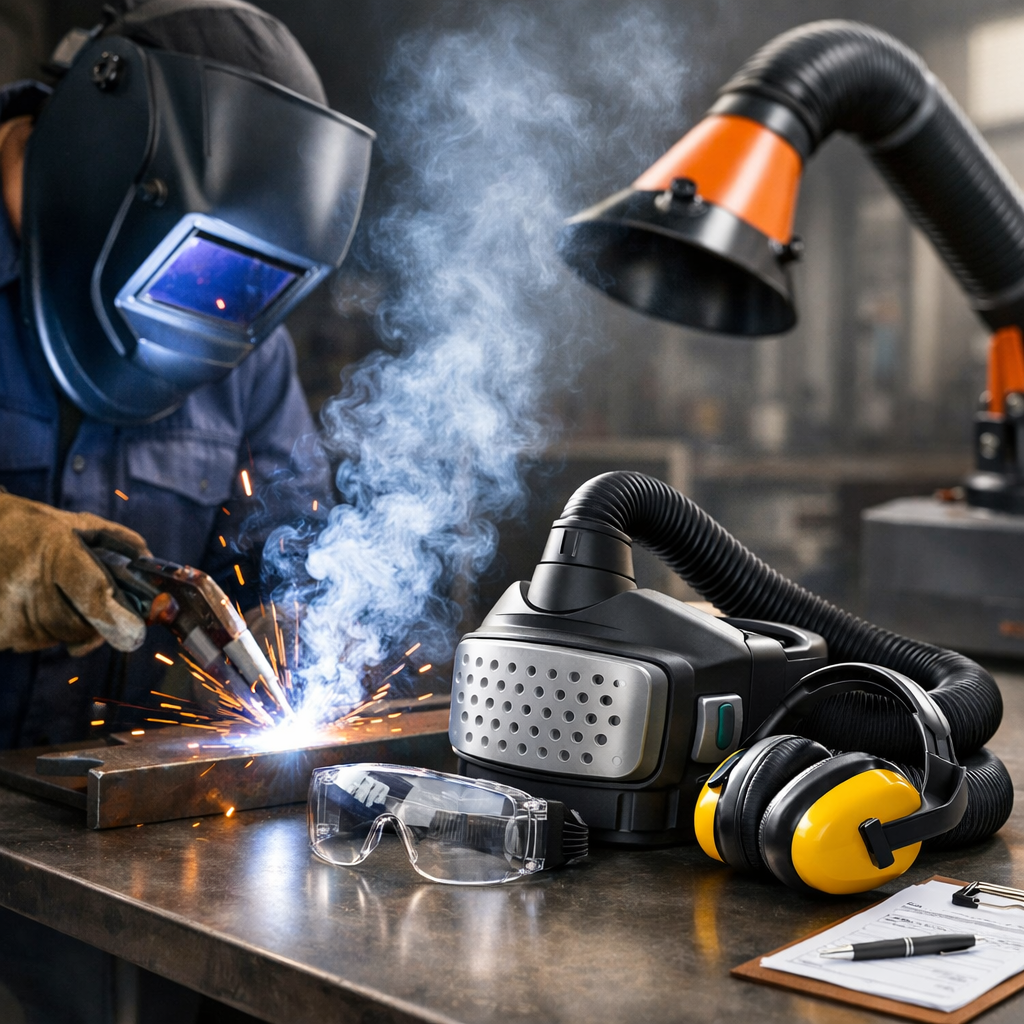
Other PPE still matters as well. Welding helmets, eye protection, gloves, flame-resistant clothing, and hearing protection support overall safety, especially where ventilation systems create background noise or where sparks and hot metal are part of the task. However, no combination of standard PPE will compensate for poor ventilation or uncontrolled fume generation.
In the end, the strongest fabrication shops treat welding fume exposure prevention as a system rather than a single product or rule. They assess hazards, improve ventilation, reduce fume at the source, train workers on positioning, and use PPE to close the remaining gaps. That approach protects health, supports compliance, and creates a cleaner, more reliable workplace for everyone on the floor.