


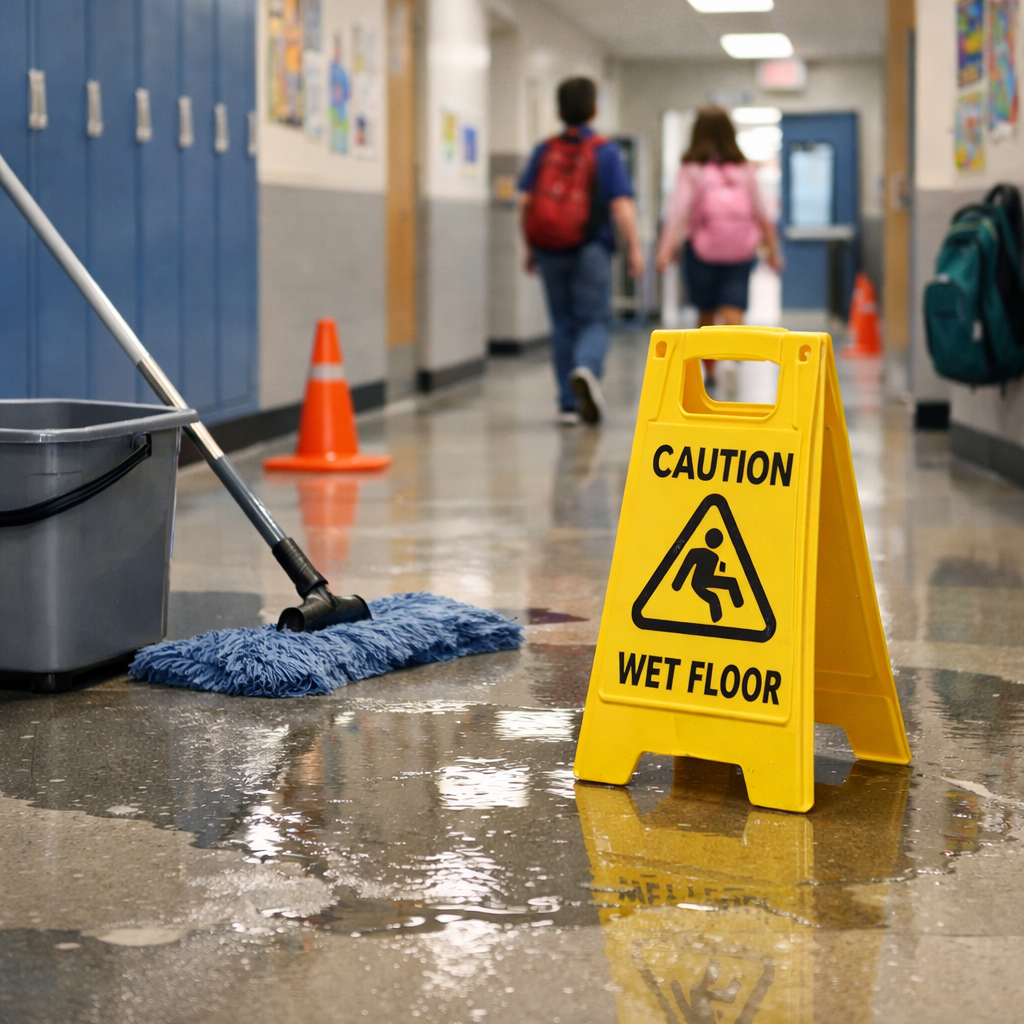

Wet floor safety at school becomes especially important in winter, when snow, slush, and road salt are tracked into entrances, hallways, and stair landings throughout the day.
For Canadian schools, these conditions can quickly turn busy walking routes into slip hazards for students, staff, families, and visitors. A calm, practical prevention plan helps reduce falls, keeps traffic moving safely, and supports a stronger safety culture across the school community.
In Ontario and across Canada, schools can benefit from a simple approach: identify where water builds up, control the hazard early, assign clear responsibilities, and remind everyone to walk carefully during bad weather. Guidance from organizations such as the Canadian Centre for Occupational Health and Safety and the Government of Ontario can support school safety planning, while practical resources from OHSE.ca can help reinforce everyday prevention habits.
Why wet floor safety at school matters in winter
Winter creates repeat slip risks in areas that are normally safe. Students rush in from recess, buses unload large groups at once, and caregivers enter with wet boots, umbrellas, and strollers. Even a small amount of melted snow can spread across smooth flooring and create an unexpected loss of traction.
Entrances are only the start. Water often gets carried into office areas, washroom approaches, change rooms, stair edges, and corridors leading from exterior doors. When floors look shiny or blends of salt and water reduce grip, slips can happen without warning.
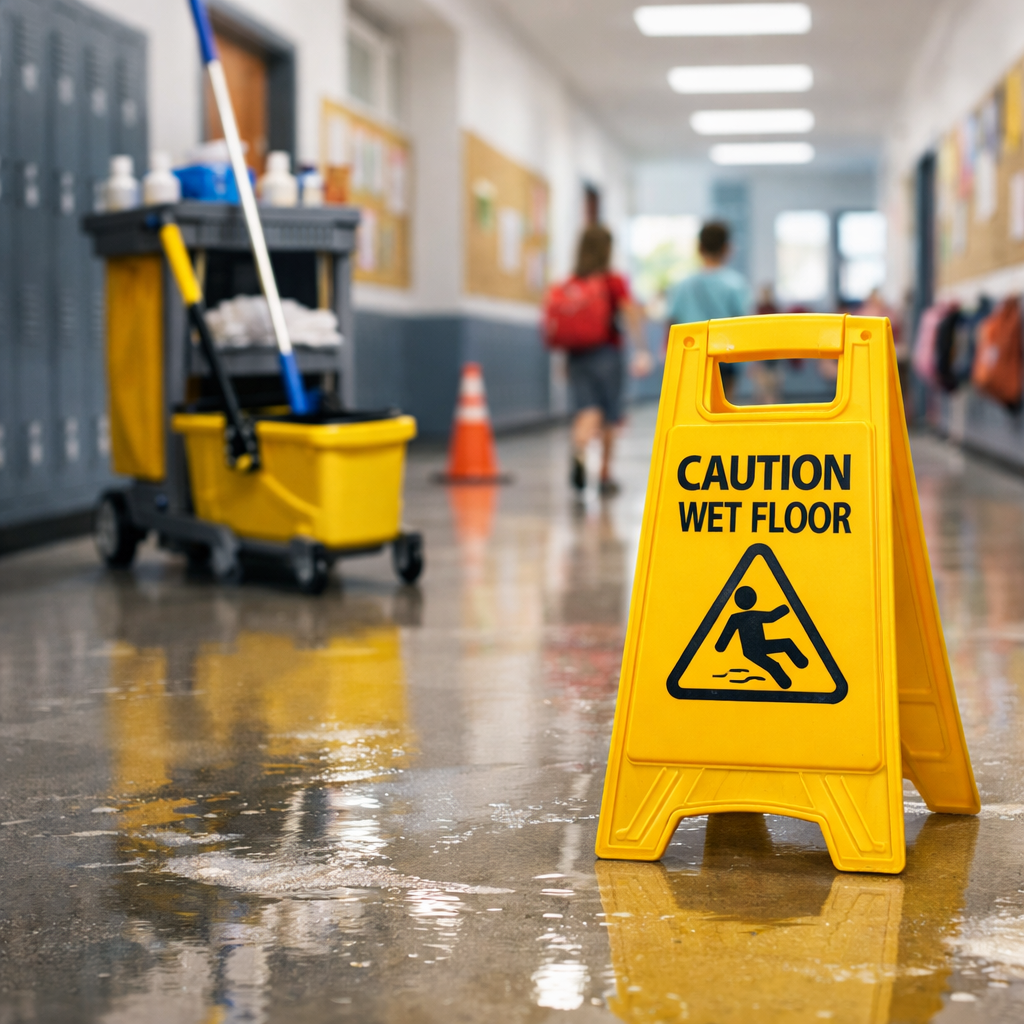
Wet floor safety at school also matters because children and teens do not always recognize hazards in the same way adults do. Younger students may run indoors to get warm. Older students may be distracted by phones, backpacks, sports equipment, or crowded hallways. Staff members may be carrying supplies, supervising groups, or responding quickly to a situation. In each case, the hazard is the same, but exposure increases when people are moving fast or not watching the floor surface.
Schools should also remember that slips affect more than students. Custodians, educational assistants, teachers, office staff, contractors, volunteers, and parents may all pass through the same wet zones. For older students in co-op placements, technical programs, or part-time work, learning good floor safety habits at school also supports safer behaviour in workplaces later on.
Wet floor safety at school starts with hazard assessment and control
The most effective way to improve wet floor safety at school is to focus on prevention before puddles spread. This means identifying high-risk areas, reviewing cleaning routines, and making sure controls are practical for real school traffic patterns.
Common winter wet-floor trouble spots
- Main entrances and vestibules
- Secondary doors near school yards and portable classrooms
- Hallways just beyond entrance mats
- Stair landings and ramps
- Areas near fountains, washrooms, and locker rooms
- Office reception floors during morning drop-off
- Gym and change room access points after outdoor activities
A useful way to organize controls is the hierarchy of controls. In schools, elimination may not be possible because winter weather cannot be removed, but exposure can still be reduced. For example, schools can limit how far water travels by improving mat placement, managing entry flow, and cleaning more often during storms.
Engineering and physical controls may include absorbent entrance matting, floor surfaces with better traction, umbrella bag stations if appropriate, and barriers that guide people across drier walking paths. Administrative controls include inspection schedules, assigned mopping response times, weather-based cleaning adjustments, and reminders for students and staff. Personal protective measures can include practical winter footwear for staff and encouraging families to send students with shoes or boots that provide grip.
| Hazard Area | Typical Winter Risk | Practical Control |
|---|---|---|
| Main entrance | Tracked-in snow and slush | Long absorbent mats, frequent checks, wet floor signs during active cleanup |
| Hallway beyond doors | Water carried past mat edges | Extend mat coverage and inspect between class changes |
| Stairs and landings | Slippery step edges | Immediate drying, controlled traffic, clear reporting process |
| Washroom approach | Mixed moisture sources | Routine checks and prompt cleanup |
Practical winter strategies for hallways and entrances
Good wet floor safety at school relies on systems that are easy to follow during busy periods. The goal is not simply to clean up after a hazard appears, but to reduce how often the hazard forms and how long it stays in place.
Entrance management
Use mats that are large enough for several steps so moisture is removed before people reach polished or sealed flooring. Mats should lie flat, stay in position, and be replaced when saturated. If mats bunch up or curl, they can become a trip hazard themselves.
Where possible, schools can stagger and monitor high-traffic entry points during severe weather. If one doorway creates constant pooling, redirecting some traffic to another supervised entrance may help reduce crowding and moisture buildup.
Cleaning and inspection routines
Winter cleaning should match weather conditions, not just the regular daily schedule. During snowfall or freeze-thaw days, entrances may need repeated inspection and drying between classes, at lunch, and after recess. A spill or puddle should be addressed as soon as it is noticed.
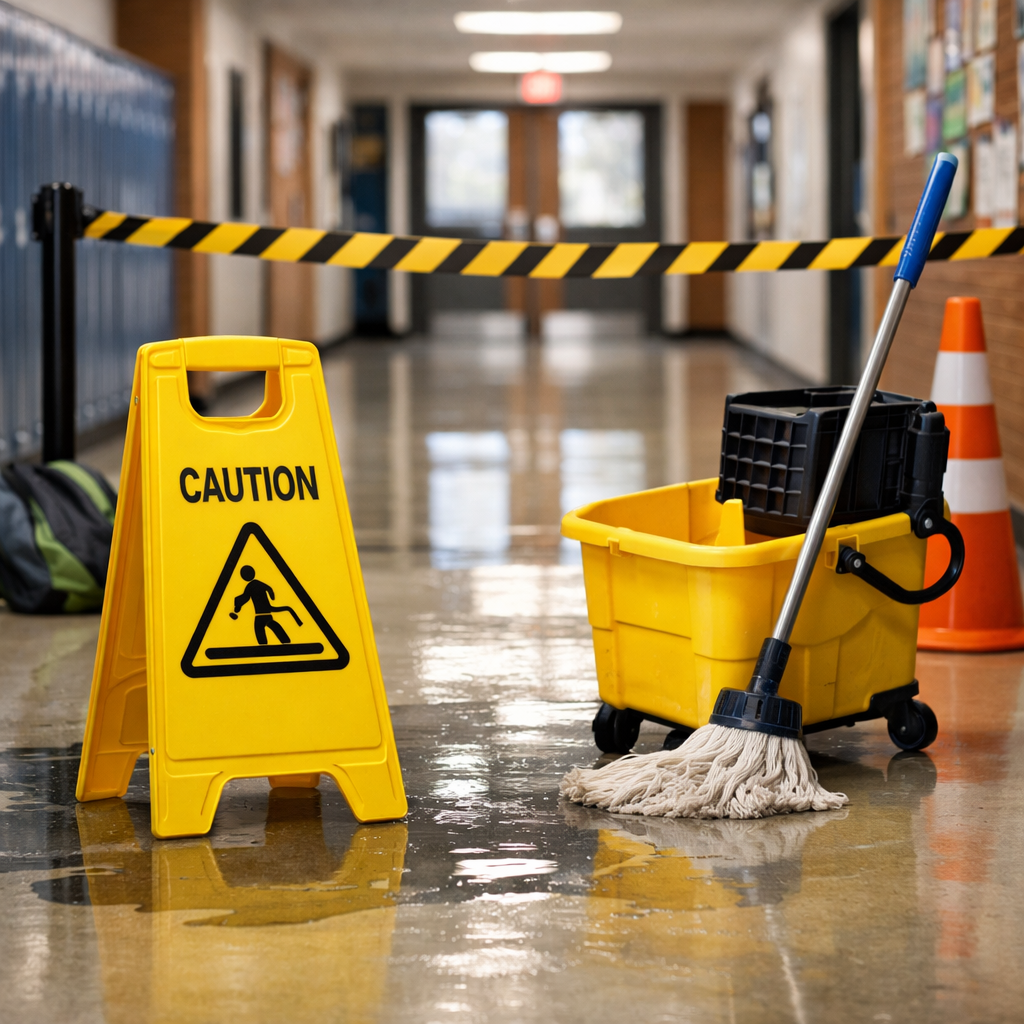
Wet floor signs are helpful, but they are not the control by themselves. A sign should support active cleanup, not replace it. Staff should also avoid leaving signs in place long after the floor is dry, because people may stop paying attention to them.
Communication with students, staff, and families
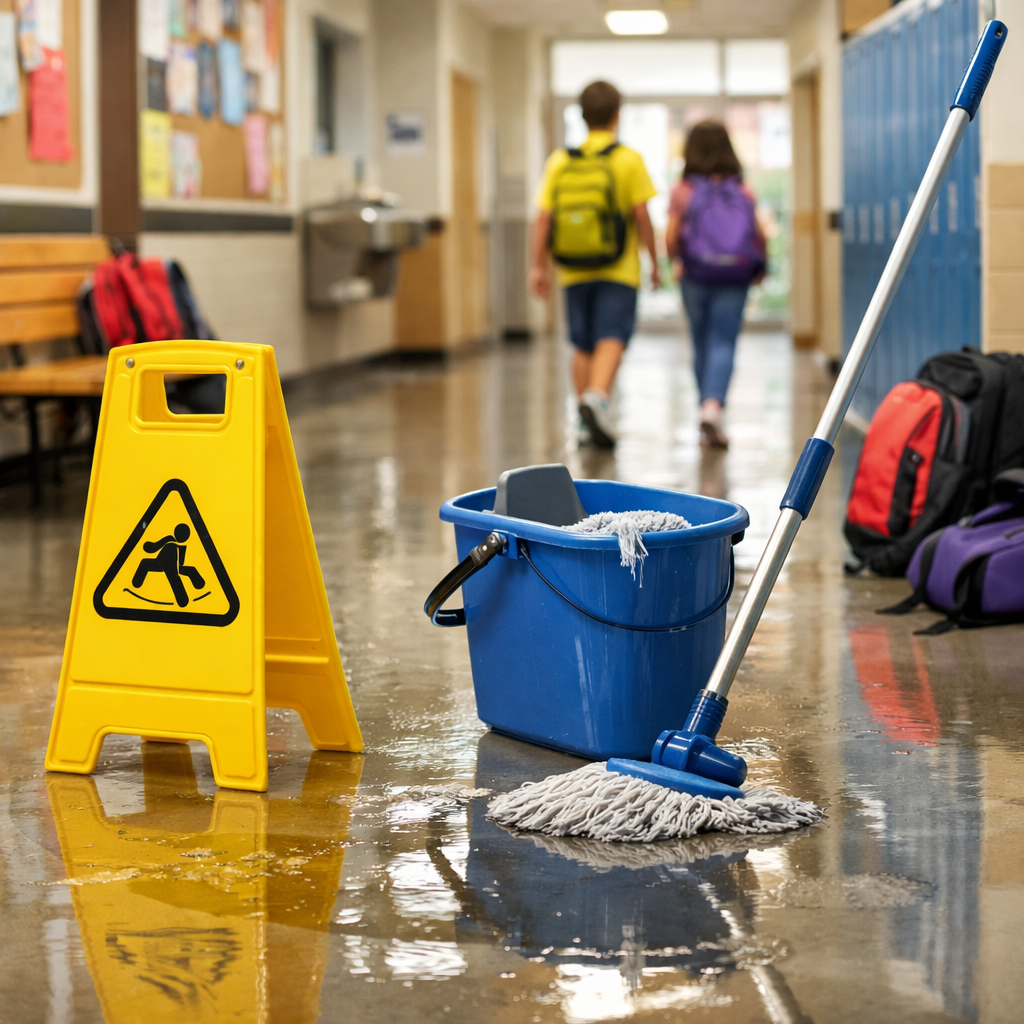
Short reminders can make a big difference. Students can be told to walk, wipe boots carefully, and report puddles to a staff member. Staff can be reminded to monitor known trouble spots and keep bags, cords, or bins away from alternate walking paths used to avoid wet areas.
Families can support wet floor safety at school by sending children with suitable winter boots and indoor shoes where required by school policy. This reduces tracked moisture and may improve traction inside the building.
Wet floor safety at school: roles, training, and a simple checklist
Everyone in the school has a part to play. Administrators can support reporting, staffing, and supplies. Custodial teams can lead inspections and floor care. Teachers and education staff can reinforce safe walking habits and report hazards quickly. Students can learn to slow down, use handrails, and speak up when they see a problem.
Training is especially helpful for staff who respond to spills, maintain floors, or supervise high-traffic zones. Schools looking to strengthen everyday hazard awareness may find useful resources at learn.ohse.ca. Broader injury prevention information may also be found through Parachute and health guidance from Health Canada.
Short actionable checklist
- Inspect entrances, mats, and hallways more often during snow, slush, or freezing rain.
- Replace soaked mats promptly and make sure all mats lie flat.
- Clean up puddles right away and use signs only during active hazard control.
- Pay extra attention to stairs, ramps, and hallway corners near doors.
- Remind students to walk, wipe boots, and report slippery spots.
- Review who responds to wet-floor hazards and how concerns are reported.
- Follow school procedures, manufacturer directions for floor products, and local emergency guidance where applicable.
Wet floor safety at school is not complicated, but it does require consistency. Small actions taken early in the day can prevent bigger problems later, especially during storms and rapid temperature changes. With better mats, clear responsibilities, quick reporting, and steady reminders, schools can reduce winter slip risks in hallways and entrances and create a safer environment for students, staff, and families.
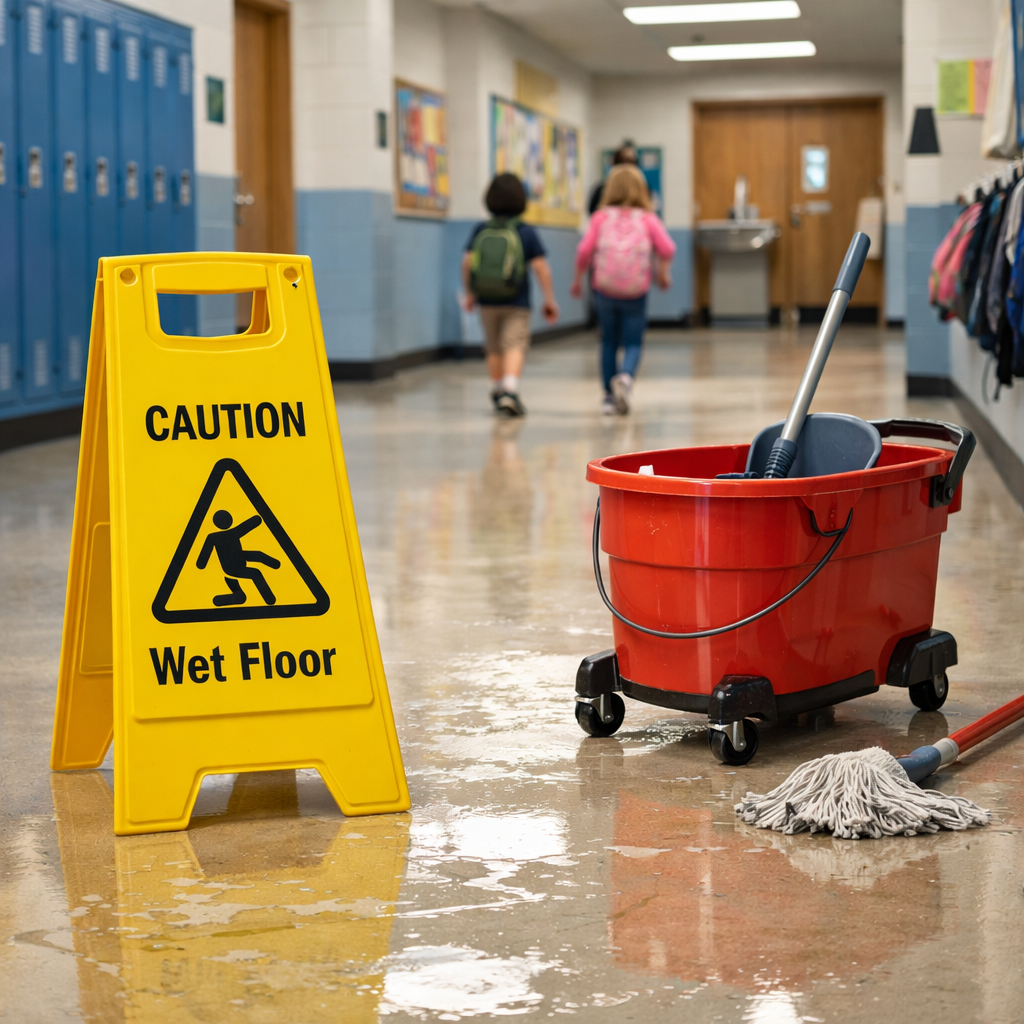
For Canadian schools, the best results come from practical prevention: watch the weather, monitor high-risk areas, clean promptly, and keep communication simple. By making wet floor safety at school part of everyday winter routines, schools can help prevent avoidable slips and support a calmer, safer learning environment for everyone.