

The term “hazardous” is often used to describe substances or situations that pose a threat to health, safety, or the environment. However, understanding what constitutes hazardous requires a nuanced exploration of hazards, risks, and the conditions under which they interact.


A material of relatively low hazard can present a substantial risk, while a material with a high hazard might present no measurable risk in specific scenarios. This article explores the distinctions, factors influencing hazardousness, and strategies for effective risk management.
- 1. Hazard vs. Risk: Key Concepts
- 2. Factors That Influence Hazardousness
- 3. Examples of Low-Hazard and High-Hazard Materials
- 4. Types of Hazards
- 5. Measuring and Quantifying Hazards
- 6. Risk Control Strategies
- 7. Case Study: Ammonia in Refrigeration
- 8. The Role of Regulation and Standards
- 9. Conclusion
1. Hazard vs. Risk: Key Concepts
- Hazard: The inherent property of a material or situation that has the potential to cause harm. Hazards are fixed and do not depend on exposure or context. Examples include:
- Toxic chemicals.
- Flammable materials.
- Explosive substances.
- Risk: The likelihood that a hazard will result in harm under specific conditions. Risk is dynamic and depends on factors like:
- Exposure duration.
- Concentration of the hazardous material.
- Environmental and individual susceptibility.
Equation for Risk Assessment:


This relationship highlights that even a highly hazardous material may pose negligible risk if exposure is well-controlled.
2. Factors That Influence Hazardousness
| Factor | Description |
|---|---|
| Concentration | Higher concentrations of a hazardous material generally increase the risk of harm. |
| Exposure Pathway | The route through which exposure occurs (inhalation, ingestion, skin contact) influences risk. |
| Duration of Exposure | Short-term vs. long-term exposure can determine the severity of effects. |
| Environment | Factors like temperature, humidity, and ventilation affect how hazards manifest. |
| Individual Susceptibility | Age, genetics, health conditions, and sensitivity influence how a person reacts to hazards. |
3. Examples of Low-Hazard and High-Hazard Materials
Low-Hazard Material: Table Salt (Sodium Chloride)
- Hazard: Non-toxic in typical dietary amounts.
- Risk Example:
- Low Risk: Used in food seasoning.
- High Risk: Excessive consumption leading to hypertension or kidney damage.
High-Hazard Material: Cyanide
- Hazard: Extremely toxic to humans and animals.
- Risk Example:
- High Risk: Direct ingestion or inhalation in industrial accidents.
- Low Risk: Inert in properly contained industrial settings.
4. Types of Hazards
| Type | Examples | Effects |
|---|---|---|
| Chemical | Acids, alkalis, solvents | Burns, toxicity, organ damage |
| Physical | Noise, radiation, extreme temperatures | Hearing loss, burns, cancer |
| Biological | Viruses, bacteria, fungi | Infections, allergies |
| Ergonomic | Repetitive movements, poor posture | Musculoskeletal disorders |
| Psychosocial | Stress, violence, bullying | Mental health issues, reduced productivity |
5. Measuring and Quantifying Hazards
To evaluate hazards effectively, scientific methods and tools are employed:
1. Dose-Response Relationship
The effect of a hazardous substance depends on the dose received.
- Equation for Dose:


- Graph: Dose-Response Curve

2. Threshold Limit Values (TLVs)
TLVs define safe exposure levels for chemicals:
- Time-Weighted Average (TWA): Average exposure over a workday.
- Short-Term Exposure Limit (STEL): Maximum exposure for short periods.
6. Risk Control Strategies

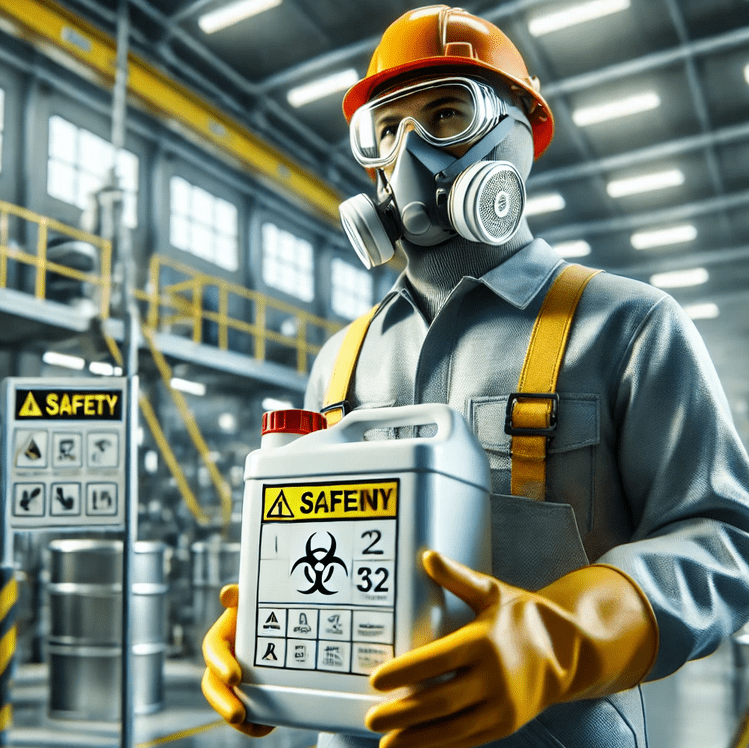
The hierarchy of controls helps prioritize risk reduction:
| Control Level | Example Measures |
|---|---|
| Elimination | Remove the hazardous material entirely. |
| Substitution | Replace with a less hazardous material. |
| Engineering Controls | Install ventilation systems or containment barriers. |
| Administrative Controls | Limit exposure time, provide training, enforce safety policies. |
| Personal Protective Equipment (PPE) | Use gloves, respirators, goggles, and other safety gear. |
7. Case Study: Ammonia in Refrigeration
Ammonia is widely used in industrial refrigeration and provides a good example of varying risks:
Properties:
- High-hazard substance due to toxicity and flammability.
- TLV-TWA: 25 ppm (parts per million).
Risk Scenarios:
- Controlled Use:
- Proper containment and ventilation reduce exposure to nearly zero, minimizing risk.
- Accidental Leak:
- Lack of safeguards can lead to high-risk scenarios involving toxic exposure.
| Risk Factor | Mitigation Measures |
|---|---|
| Leak Potential | Regular maintenance, leak detectors. |
| Worker Exposure | PPE, emergency drills. |
8. The Role of Regulation and Standards
Government and industry standards ensure consistent hazard management. Key organizations include:
- OSHA (Occupational Safety and Health Administration): Enforces workplace safety regulations.
- NIOSH (National Institute for Occupational Safety and Health): Researches and recommends safety measures.
- EPA (Environmental Protection Agency): Manages environmental hazards.
9. Conclusion
The concept of hazardousness cannot be understood in isolation from the context of exposure and risk. By evaluating hazards, measuring risks, and implementing robust control measures, individuals and organizations can create safer environments. Whether dealing with table salt or cyanide, understanding the dynamics between hazard and risk is essential for effective safety management.