


boiler operation safety guidelines: Essential OHSE Practices for Safe and Compliant Workplaces


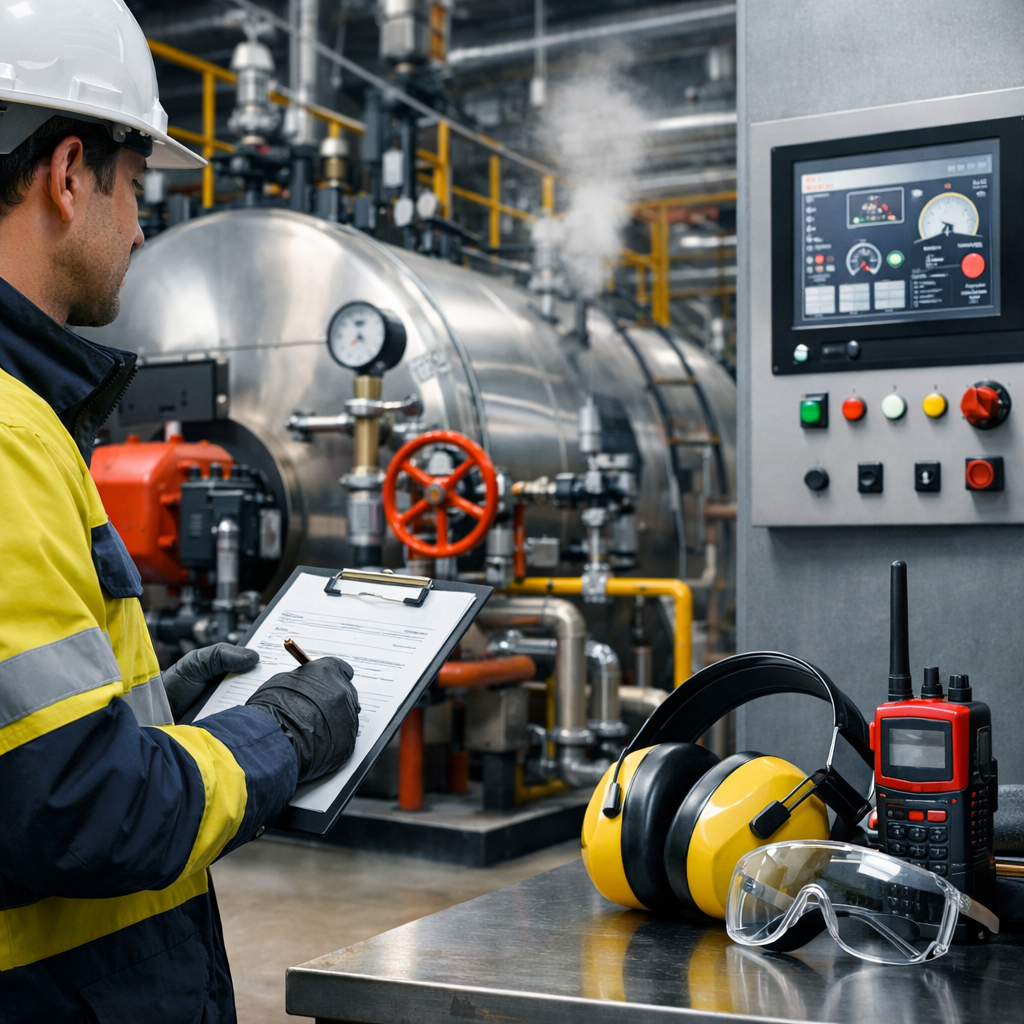
boiler operation safety guidelines are critical for protecting workers, equipment, and facilities from fires, explosions, toxic exposure, and costly downtime.
In industrial plants, commercial buildings, food processing facilities, hospitals, and manufacturing sites, boilers operate under high pressure and temperature.
When they are poorly maintained or incorrectly used, the results can be severe.
A strong boiler safety program should combine hazard identification, preventive maintenance, operator training, emergency preparedness, and legal compliance.
It should also reflect the hierarchy of controls by eliminating hazards where possible, reducing exposure through engineering measures, strengthening administrative controls, and ensuring suitable personal protective equipment.
This article explains practical boiler operation safety guidelines, including the main risks, prevention methods, PPE, compliance expectations, and workplace examples that support safer day-to-day operations.
Why boiler operation safety guidelines matter in the workplace
Boilers are powerful systems designed to generate steam or hot water for production, heating, sanitation, and energy transfer.
Because they contain pressurized fluids and combustion components, even a single failure can escalate quickly.
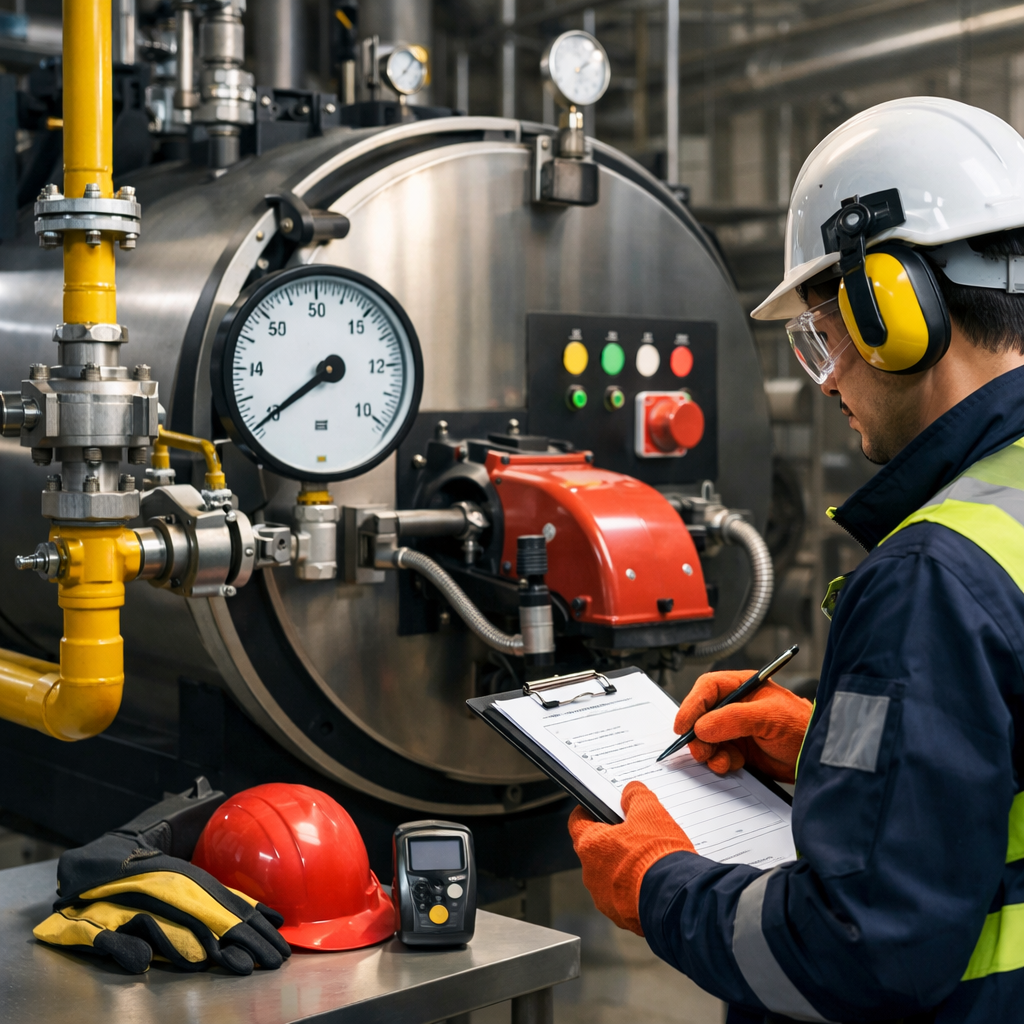
Common incidents include pressure explosions, burner malfunctions, fuel leaks, scalding from steam release, electrical shock, confined space hazards, and carbon monoxide exposure.
Workers may also face slips and falls from water leaks, manual handling injuries during maintenance, and burns from hot surfaces.
OHSE teams should assess both routine and non-routine activities.
Normal operation may appear controlled, but risks often increase during startup, shutdown, blowdown, inspection, cleaning, and repair tasks.
Main boiler hazards
- Overpressure: Failure of pressure controls, blocked lines, or defective safety valves can lead to catastrophic rupture.
- High temperatures: Contact with hot pipes, valves, and boiler surfaces can cause serious burns.
- Fuel-related risks: Gas, oil, or solid fuel systems may create fire, explosion, or inhalation hazards.
- Water level failure: Low-water conditions can overheat boiler tubes and damage the vessel.
- Steam release: Leaking or sudden discharge steam can reduce visibility and cause scald injuries.
- Chemical exposure: Water treatment chemicals may irritate skin, eyes, and the respiratory system.
- Electrical hazards: Control panels, motors, and ignition systems can expose workers to shock or arc risks.
Organizations such as OSHA and CCOHS emphasize the need for formal procedures, worker training, and equipment maintenance to reduce these hazards.
A site-specific risk assessment remains the foundation of effective controls.
Core boiler operation safety guidelines for prevention and control
The most effective boiler operation safety guidelines focus on prevention rather than reaction.
A boiler should never be treated as routine equipment that can run without close attention.
Apply the hierarchy of controls
Use the hierarchy of controls to structure your safety strategy.
This helps employers prioritize stronger controls before relying on worker behavior alone.
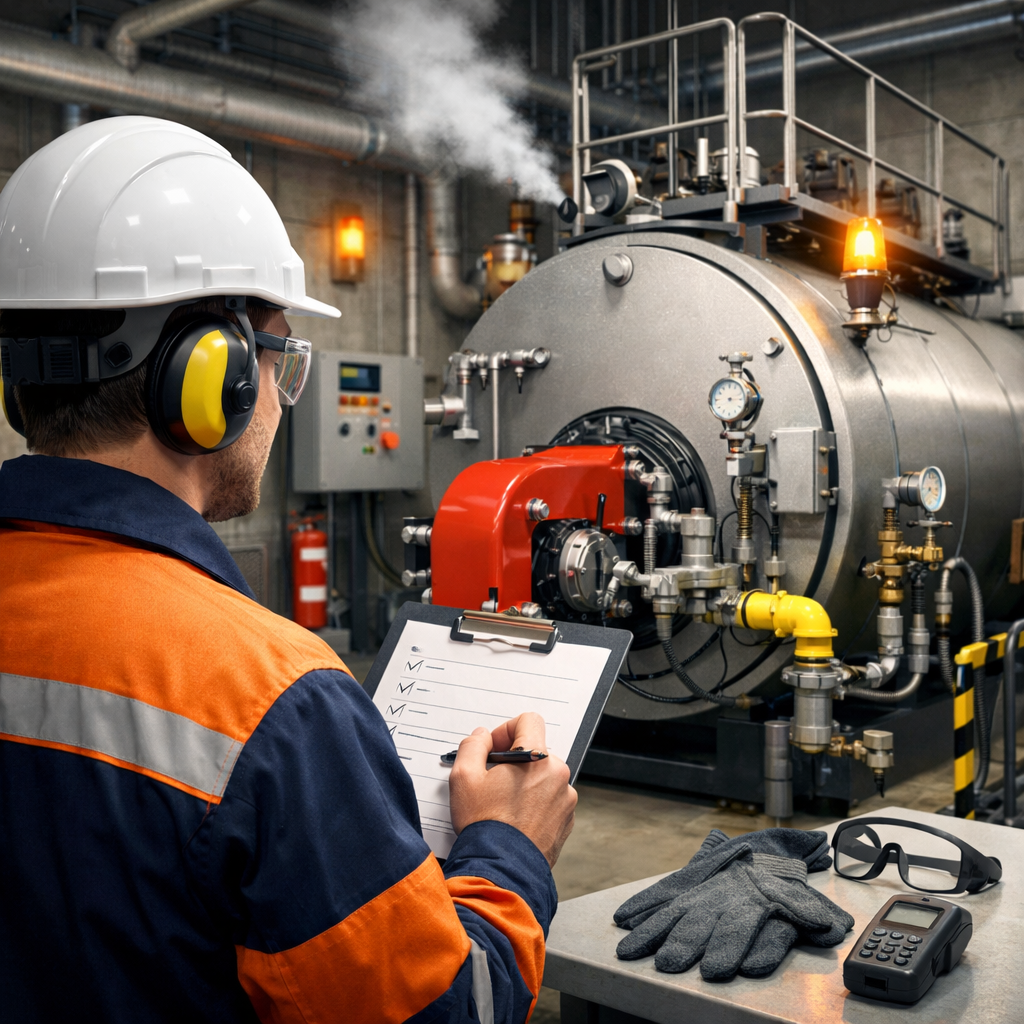
- Elimination: Remove obsolete or damaged boilers from service if they cannot be safely repaired.
- Substitution: Use safer fuel systems, less hazardous treatment chemicals, or lower-risk equipment designs where feasible.
- Engineering controls: Install pressure relief valves, flame safeguards, automatic shutdown devices, alarms, interlocks, ventilation, insulation, and guards.
- Administrative controls: Develop SOPs, permit systems, lockout/tagout procedures, inspection schedules, and emergency drills.
- PPE: Provide protective clothing, gloves, face protection, hearing protection, and respiratory protection where required.
Critical operating practices
Operators should inspect the boiler and its surroundings before each shift.
This includes checking pressure gauges, water levels, fuel supply lines, blowdown arrangements, safety devices, and visible leaks.
Startup and shutdown must follow written procedures.
Shortcuts during ignition, purging, or pressure build-up can create a dangerous chain of events.
Low-water cutoffs and pressure relief valves should be tested according to manufacturer instructions and regulatory requirements.
Never bypass alarms, interlocks, or shutdown devices to keep production moving.
Housekeeping is also part of boiler safety.
Keep the boiler room free from clutter, oil residue, stored combustibles, and blocked access points.
Where isolation is needed for maintenance, lockout/tagout should be applied to fuel, steam, electrical, and water sources.
You can reinforce this with an internal procedure such as lockout-tagout procedure guidance or a site permit-to-work system.
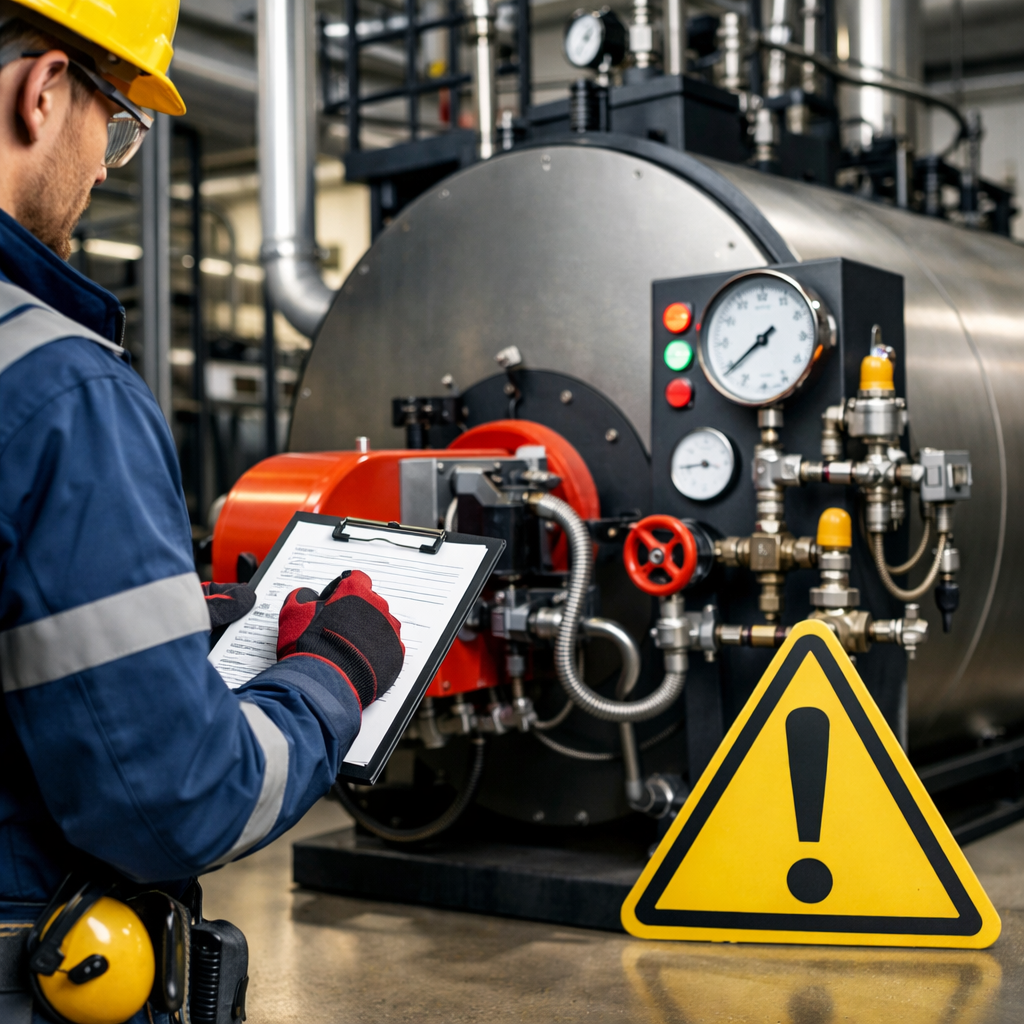
PPE, training, and practical boiler operation safety guidelines in action
PPE does not replace proper design or maintenance, but it remains an important layer of protection.
Workers must be trained not only to wear PPE, but also to understand when it is necessary and what its limits are.
Recommended PPE for boiler work
- Heat-resistant gloves for hot valves, fittings, and surfaces
- Safety glasses or chemical splash goggles
- Face shields for blowdown, chemical handling, or tasks with splash and steam exposure
- Flame-resistant clothing where ignition or flash fire risks exist
- Hearing protection in high-noise boiler rooms
- Slip-resistant safety footwear for wet or oily floors
- Respiratory protection when ventilation is inadequate or airborne contaminants are present
Training should cover normal operation, hazard recognition, alarm response, emergency shutdown, lockout/tagout, confined space awareness, and first aid reporting.
Refresher training is especially important after incidents, equipment changes, or procedural updates.
Practical workplace examples
In a food processing plant, an operator notices the boiler water level sight glass fluctuating abnormally during a shift check.
Instead of ignoring the issue, the operator follows reporting procedures, isolates the equipment, and maintenance finds a faulty feedwater control valve before tube damage occurs.
In a hospital boiler room, a contractor begins servicing a burner assembly without full energy isolation.
A supervisor stops the task, verifies lockout/tagout, and prevents an accidental ignition event.
In a manufacturing facility, repeated floor leaks near condensate piping create a slip risk.
The site installs improved drainage, replaces a deteriorated seal, updates the inspection checklist, and reduces both fall hazards and unplanned downtime.
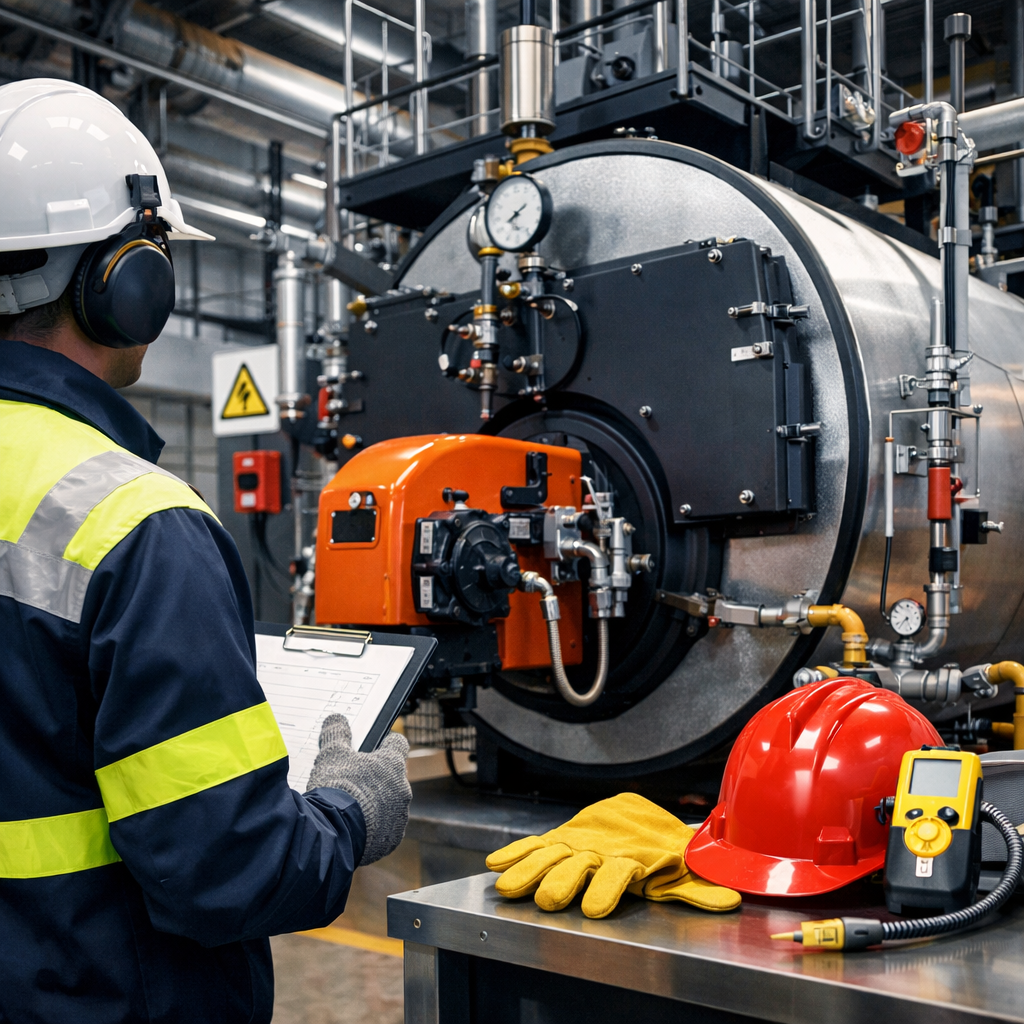
These examples show how good boiler operation safety guidelines depend on both technical controls and human decision-making.
A safe outcome often begins with a worker recognizing that a “small” abnormality may signal a major failure.
Inspection, maintenance, and compliance requirements
Routine inspection and preventive maintenance are essential to long-term boiler safety.
Without them, hidden defects can develop into serious incidents.
Maintenance programs should include internal and external inspections, burner tuning, gauge calibration, testing of controls and alarms, cleaning of heat-transfer surfaces, feedwater quality checks, and verification of relief devices.
Records should be accurate, current, and easy to review during audits or investigations.
Simple boiler safety inspection checklist
| Inspection Item | What to Check | Why It Matters |
|---|---|---|
| Water level controls | Proper level, cutoff function, visible sight glass | Prevents overheating and tube failure |
| Pressure gauges | Readable, accurate, within operating range | Helps detect unsafe pressure conditions |
| Safety valves | No blockage, tested as required, correct setting | Reduces explosion risk |
| Fuel system | Leaks, corrosion, secure connections, ventilation | Prevents fire and explosion |
| Boiler room condition | Clear access, clean floor, no combustibles stored nearby | Supports emergency response and housekeeping |
Compliance requirements vary by location, industry, and boiler type, but employers generally must follow occupational safety laws, pressure vessel codes, manufacturer instructions, and insurance inspection conditions.
References may include OSHA requirements, local boiler and pressure vessel regulations, and standards from bodies such as the NFPA.
Competency is a major compliance issue.
Only trained and authorized personnel should operate, inspect, or maintain boilers.
Contractors should be managed to the same standard as employees, with clear communication on hazards, permits, isolation, and emergency arrangements.
Incident reporting and investigation also support compliance.
If a near miss occurs, such as a pressure spike or burner trip, the event should be reviewed promptly to identify root causes and prevent recurrence.
Emergency preparedness and conclusion
Emergency planning is a core part of boiler operation safety guidelines.
Workers should know how to respond to alarms, fuel leaks, steam discharge, fire, chemical splashes, and medical emergencies.
Emergency shutdown procedures must be documented, accessible, and practiced.
Access routes, isolation points, communication systems, eyewash stations, fire extinguishers, and first aid resources should be easy to locate and maintain.
Supervisors should also confirm that evacuation plans account for boiler room hazards such as heat, noise, reduced visibility, and restricted space.
After any emergency event, the boiler should not return to service until inspection, repair, and formal authorization are complete.
In summary, boiler operation safety guidelines help organizations control high-consequence risks through planning, engineering safeguards, competent operation, PPE, maintenance, and regulatory compliance.
When employers combine OHSE leadership with practical worker action, boilers can be operated reliably and safely in demanding environments.
For any workplace that depends on steam or hot water systems, investing in clear boiler operation safety guidelines is not just a compliance step.
It is a direct investment in worker safety, business continuity, and responsible operations.