


Cleaning Staff Chemical Safety: Essential OHSE Practices for Safer Workplaces

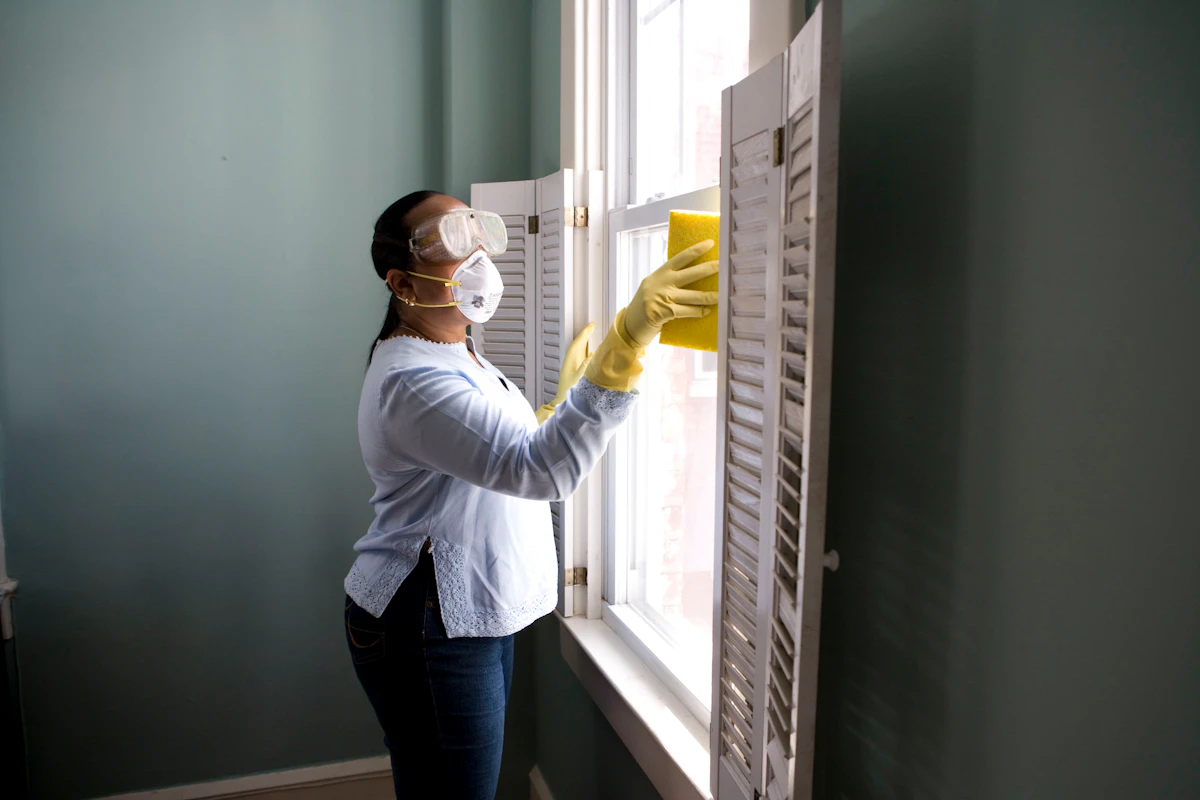
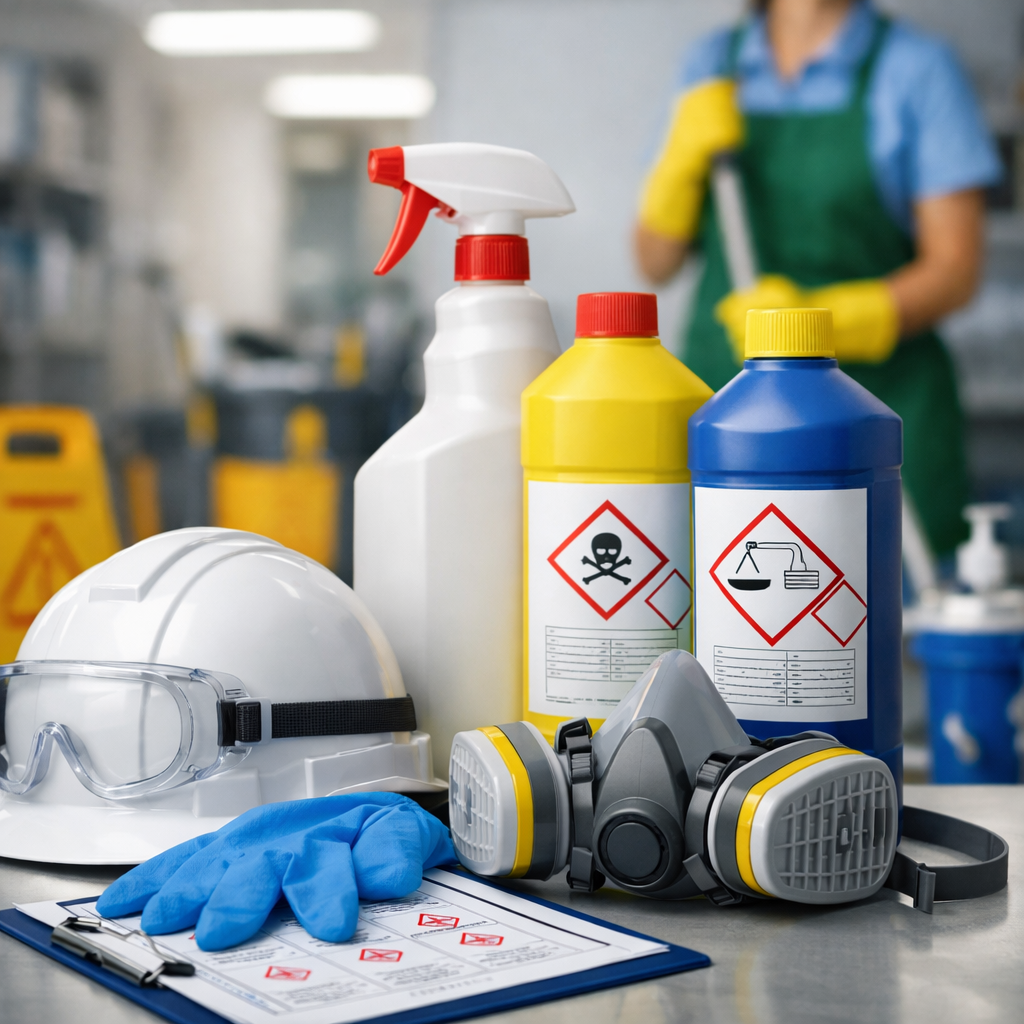
Cleaning staff chemical safety is a critical part of occupational health, safety, and environmental management in every workplace.
From offices and schools to hospitals, factories, and retail sites, cleaning teams routinely handle products that can burn skin, irritate lungs, trigger allergies, or create dangerous chemical reactions if used incorrectly.
Because these hazards are often part of everyday work, they can be underestimated.
Yet even common products such as bleach, disinfectants, degreasers, descalers, and glass cleaners can cause serious harm without proper training, labeling, storage, and supervision.
A strong approach to cleaning staff chemical safety protects workers, supports legal compliance, reduces incidents, and helps maintain a healthy environment for everyone in the building.
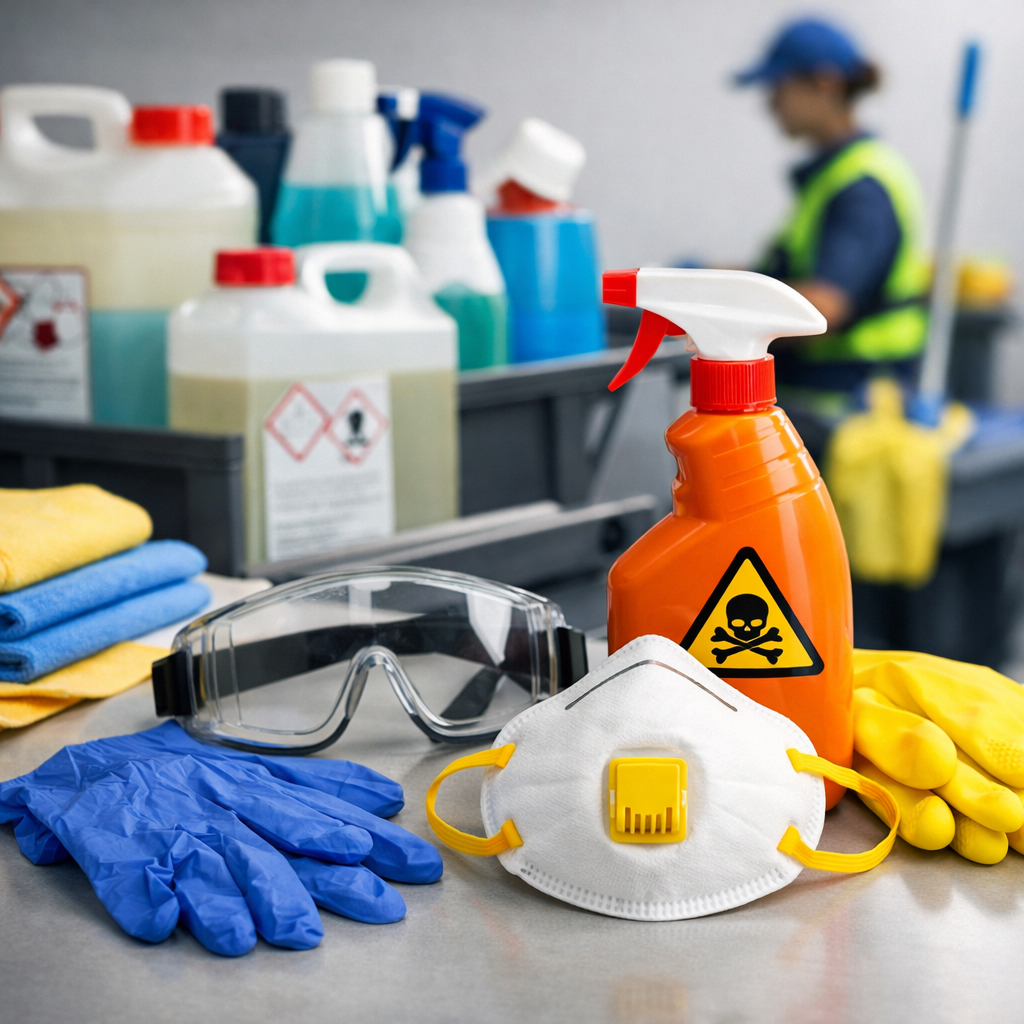
It also strengthens broader workplace systems such as incident reporting, hazard communication, and safe work procedures.
For employers, supervisors, and contractors, the goal is not only to provide chemicals for the job, but to make sure they are selected, used, stored, and disposed of safely every time.
Why cleaning staff chemical safety matters in daily operations
Cleaning staff are exposed to a wide range of chemical hazards during normal duties.
These include corrosive products that can damage eyes and skin, irritants that affect breathing, flammable liquids, and incompatible substances that can release toxic gases when mixed.
One of the most well-known examples is mixing bleach with ammonia or acidic cleaners, which can generate hazardous fumes and create an immediate emergency.
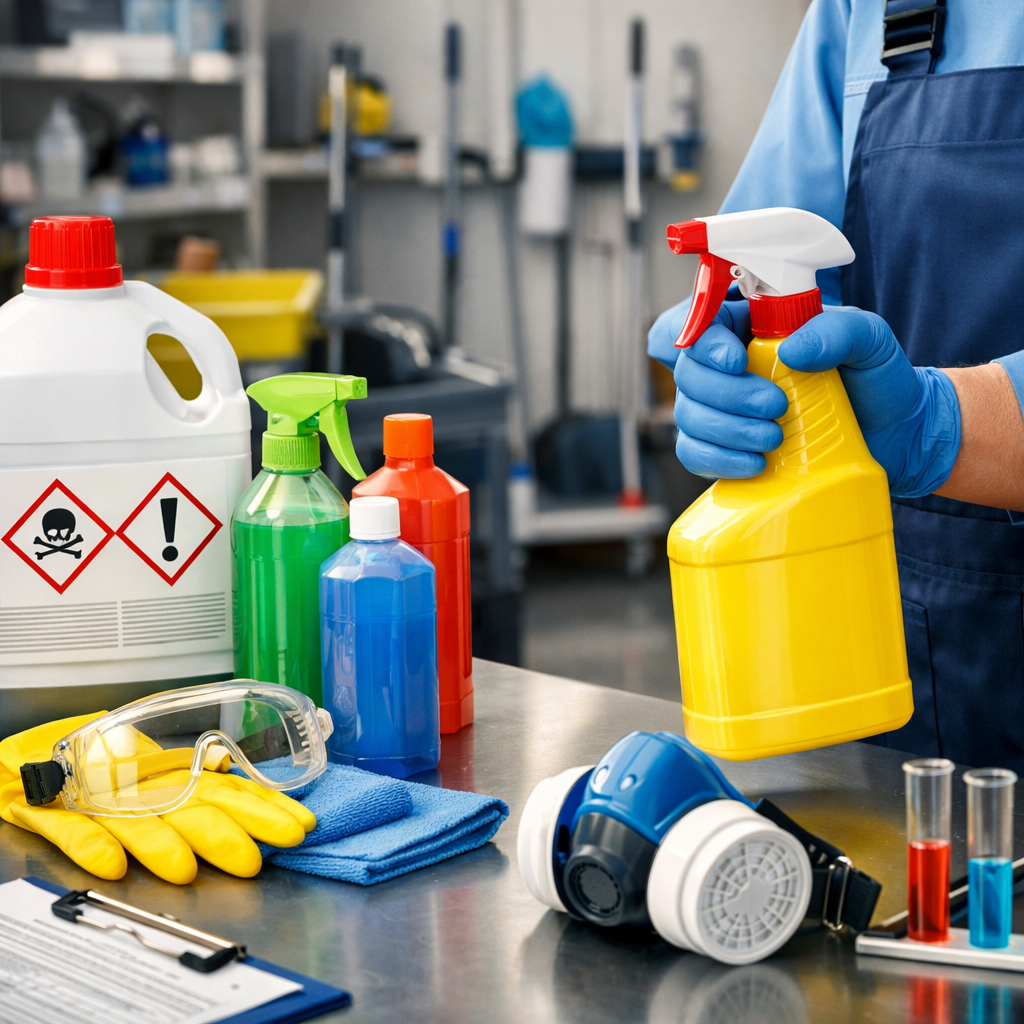
Even low-level exposure over time matters.
Repeated contact with cleaning chemicals can contribute to dermatitis, asthma symptoms, chronic respiratory irritation, and sensitization.
Spray application in poorly ventilated spaces can make exposure worse, especially in washrooms, kitchens, healthcare areas, and windowless rooms.
Workers may also face secondary risks such as slips from spills, manual handling strains when transporting chemical containers, and exposure from leaking or damaged bottles.
In some workplaces, language barriers, high staff turnover, and rushed schedules increase the chance of mistakes.
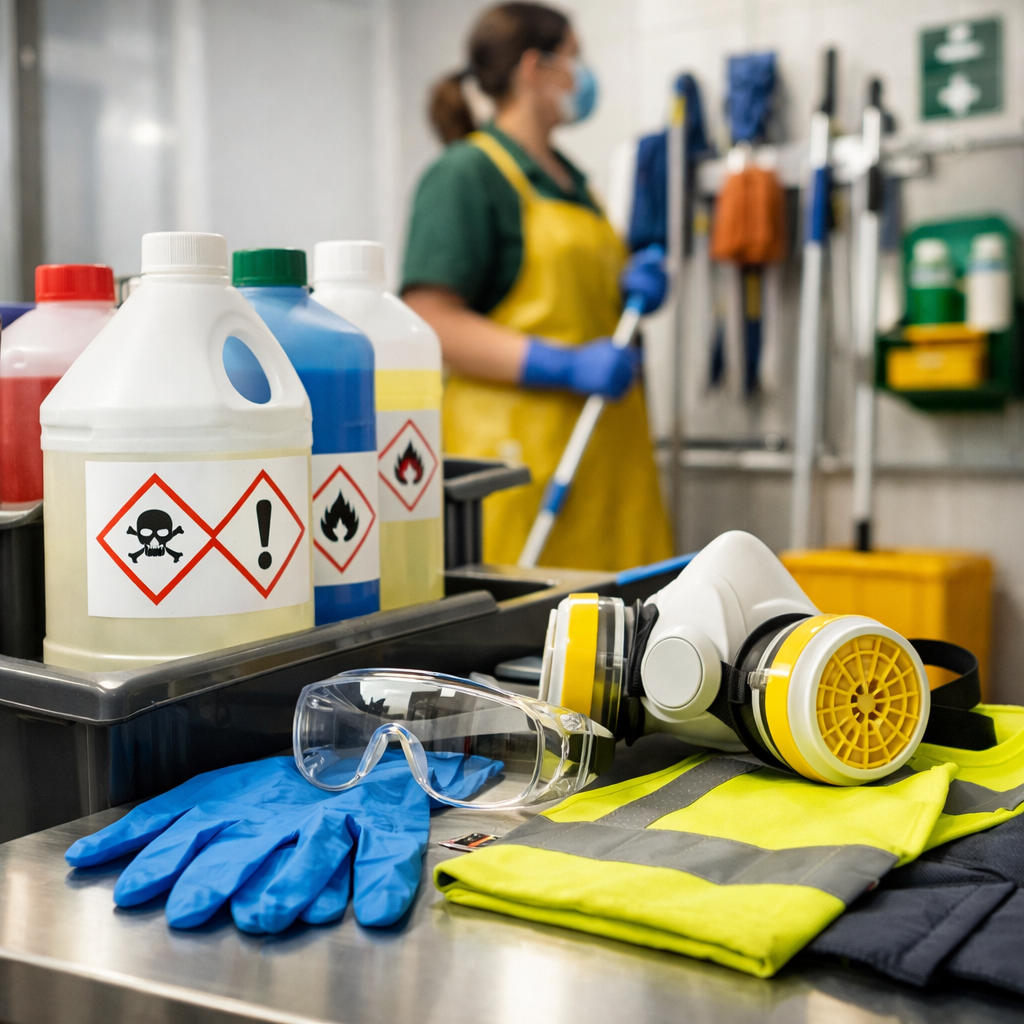
That is why cleaning staff chemical safety should be treated as a frontline OHSE issue rather than a minor housekeeping concern.
Guidance from OSHA’s Hazard Communication Standard and resources from CCOHS make it clear that employers must communicate hazards effectively and provide workers with the information they need to work safely.
Common chemical risks for cleaning teams
- Skin and eye burns: Caused by corrosive cleaners, oven products, descalers, and concentrated disinfectants.
- Respiratory irritation: Triggered by vapors, mists, aerosols, and poor ventilation.
- Toxic gas release: Can result from mixing incompatible products such as bleach and acids.
- Fire hazards: Linked to flammable solvents stored or used near ignition sources.
- Ingestion risks: Increased when chemicals are transferred into food or drink containers.
- Environmental harm: Occurs when chemicals are overused, spilled, or disposed of incorrectly.
Risk assessment and prevention for cleaning staff chemical safety
Effective cleaning staff chemical safety starts with identifying the actual tasks workers perform.
A proper risk assessment should look at which chemicals are used, where they are used, how often, in what quantity, by whom, and under what conditions.
This should include routine work as well as non-routine tasks such as deep cleans, spill response, washroom descaling, carpet treatment, and after-hours disinfecting.
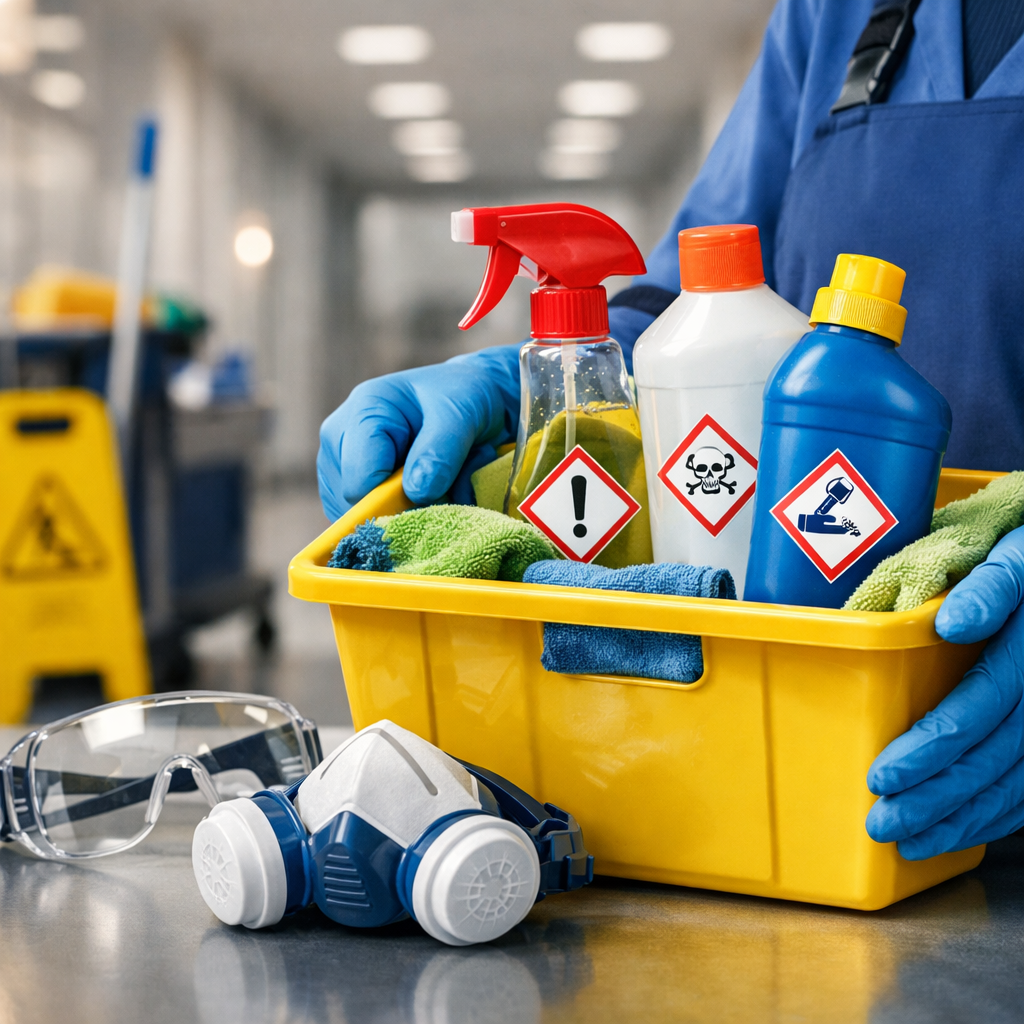
Employers should apply the Hierarchy of Controls wherever possible.
The first step is elimination or substitution.
If a harsh chemical is not necessary, replace it with a safer product.
For example, ready-to-use neutral cleaners may reduce exposure compared with highly concentrated corrosive substances.
Using automated dilution systems can also lower the chance of overexposure and manual mixing errors.
Applying the Hierarchy of Controls
- Elimination: Remove unnecessary chemical tasks or products from the process.
- Substitution: Choose lower-toxicity, non-aerosol, or less corrosive alternatives.
- Engineering controls: Improve ventilation, install dilution stations, and use closed dispensing systems.
- Administrative controls: Provide training, safe work procedures, signage, supervision, and scheduling that limits exposure.
- PPE: Use gloves, goggles, face shields, aprons, and respiratory protection where required.
Administrative controls are particularly important in cleaning operations.
Clear instructions should cover dilution rates, contact times, prohibited chemical combinations, spill response, and first aid actions.
Color-coded bottles, standardized labels, and accessible Safety Data Sheets help reduce confusion.
Simple systems often work best.
For instance, a cleaning cart should carry only the products needed for the shift, each in correctly labeled containers, with no decanted chemicals in unmarked bottles.
Many organizations also reinforce these controls through regular safety training programs and routine workplace risk assessments.
PPE and safe handling practices for cleaning staff chemical safety
Personal protective equipment plays an important role, but it should never be the only control.
For cleaning staff chemical safety, PPE must match the specific product and task.
General-purpose gloves may not protect against all chemicals, and the wrong material can fail quickly.
Workers need guidance on selecting, inspecting, using, and replacing PPE correctly.
Eye protection is essential where splashing is possible, especially during dilution, bathroom cleaning, drain treatment, or disinfectant handling.
Aprons or protective clothing may be needed for corrosive products or high-splash tasks.
Respiratory protection should only be used when necessary and as part of a proper respiratory protection program, particularly where ventilation and substitution cannot adequately control airborne exposure.
Practical safe handling steps
- Read the label and Safety Data Sheet before first use.
- Never mix chemicals unless the procedure specifically requires it and confirms compatibility.
- Add chemicals exactly as instructed, using the correct dilution method.
- Keep lids closed when not in use to limit spills and vapor release.
- Store chemicals away from heat, sunlight, and incompatible substances.
- Wash hands after handling products, even when gloves are worn.
- Report leaks, damaged containers, missing labels, or symptoms of exposure immediately.
A practical example is a cleaner assigned to sanitize washrooms at the end of a busy shift.
If the worker uses a bleach-based disinfectant in a small room with poor airflow and then applies an acidic toilet cleaner, the risk of inhalation exposure rises sharply.
A safer system would separate the products by task, prohibit mixing, improve ventilation, and provide gloves and splash-resistant eye protection.
Another example is a school custodian using a concentrated floor stripper.
Without a dilution unit, the worker may pour directly from a large container, increasing splash and overuse risks.
A dispensing station, clear instructions, and chemical-resistant gloves would significantly improve cleaning staff chemical safety in that scenario.
Storage, compliance, and incident response in cleaning staff chemical safety
Storage and compliance are often where otherwise good chemical safety programs break down.
Chemicals should be stored in designated areas with suitable ventilation, restricted access, and clear segregation of incompatible products.
Secondary containment may be needed for liquids that could leak.
Containers should remain in their original packaging where possible, and every transferred product must be labeled correctly.
Food containers should never be used for chemical storage.
Emergency eyewash access, spill kits, and first aid arrangements should reflect the types of chemicals on site.
Workers also need to know how to respond if exposure occurs.
This includes flushing skin or eyes immediately, moving to fresh air, isolating the area if fumes are present, and notifying supervisors without delay.
Exposure incidents should be investigated to identify root causes such as poor ventilation, weak supervision, unclear procedures, or unsuitable product selection.
Employers should also review local legal requirements covering chemical inventory, training records, hazard communication, and disposal.
Useful technical information is available through NIOSH, along with national and regional regulations.
Simple compliance checklist
| Control Area | What Good Practice Looks Like |
|---|---|
| Chemical inventory | Current list of all cleaning chemicals on site |
| Safety Data Sheets | Accessible, up to date, and understood by workers |
| Labeling | All containers clearly labeled with product identity and hazards |
| Training | Task-specific instruction with refresher sessions |
| PPE | Correct type, proper fit, and replacement process in place |
| Storage | Secure, ventilated, and segregated by compatibility |
| Incident response | Spill procedures, first aid, and reporting system established |
In the end, cleaning staff chemical safety depends on practical systems that work in real conditions.
When employers choose safer products, assess risks carefully, train workers properly, provide the right PPE, and maintain compliance with OHSE requirements, they reduce injuries and create a more reliable cleaning operation.
Whether the setting is a hospital, warehouse, office tower, or school, cleaning staff chemical safety should be built into everyday work, not treated as an afterthought.
A safer chemical program protects people first, while also improving quality, consistency, and trust across the workplace.