


Construction Site Traffic Control: Essential OHSE Measures for Safer Work Zones
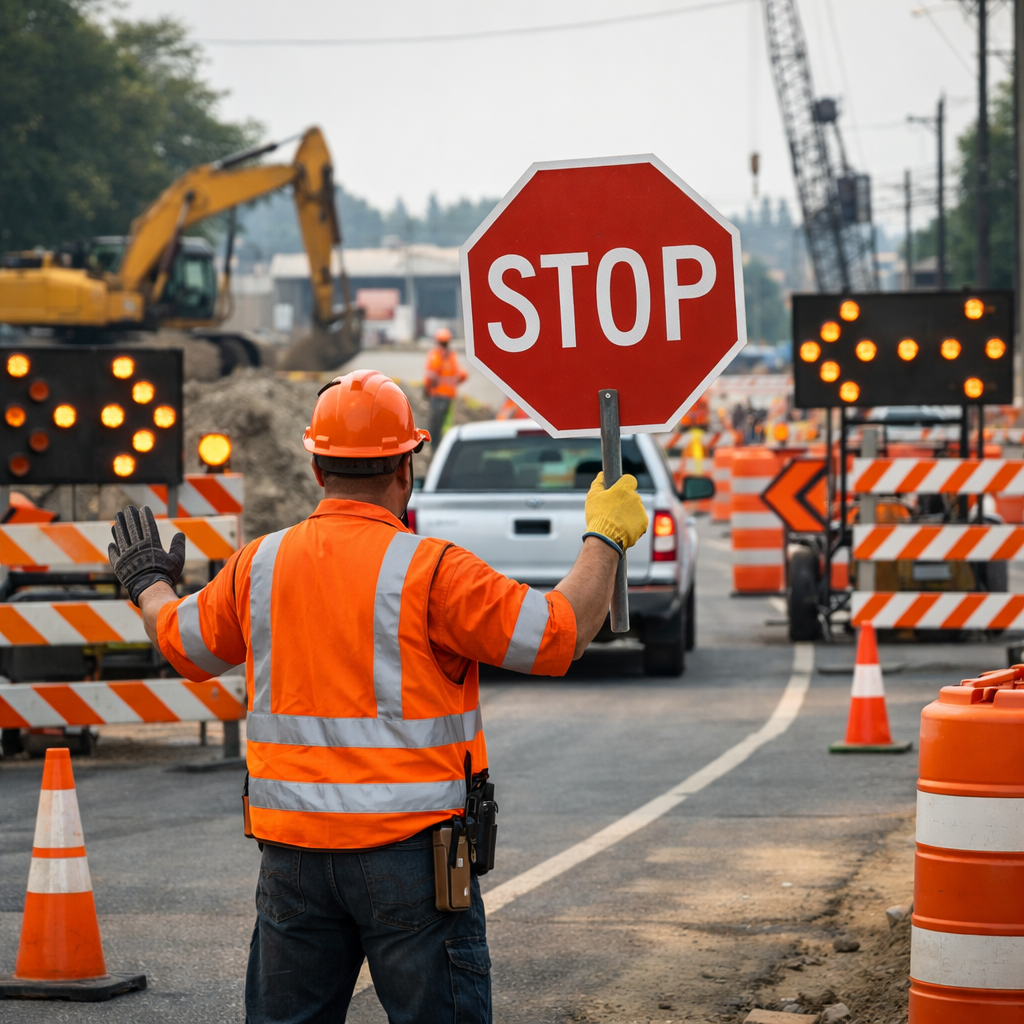


construction site traffic control is a critical part of occupational health, safety, and environment management on any active project. From small residential builds to major civil works, the movement of trucks, forklifts, mobile plant, delivery vehicles, and pedestrians creates serious risks that must be controlled from day one.
Without a clear traffic management system, sites can quickly become hazardous. Reversing incidents, blind spot collisions, struck-by injuries, congestion at access points, and poor pedestrian separation are among the most common causes of harm. Effective planning not only protects workers and visitors, but also supports compliance, productivity, and smoother day-to-day operations.
Why construction site traffic control matters
Construction environments are constantly changing. Access routes shift, materials are delivered at different times, subcontractors come and go, and heavy equipment often operates close to workers on foot. These changing conditions mean traffic risks can escalate quickly if controls are not reviewed and maintained.
Construction site traffic control aims to separate people from moving plant, reduce vehicle interactions, manage entry and exit points, and provide clear direction for everyone on site. It is not just about cones and signs. It involves planning, supervision, communication, training, and physical controls that work together.
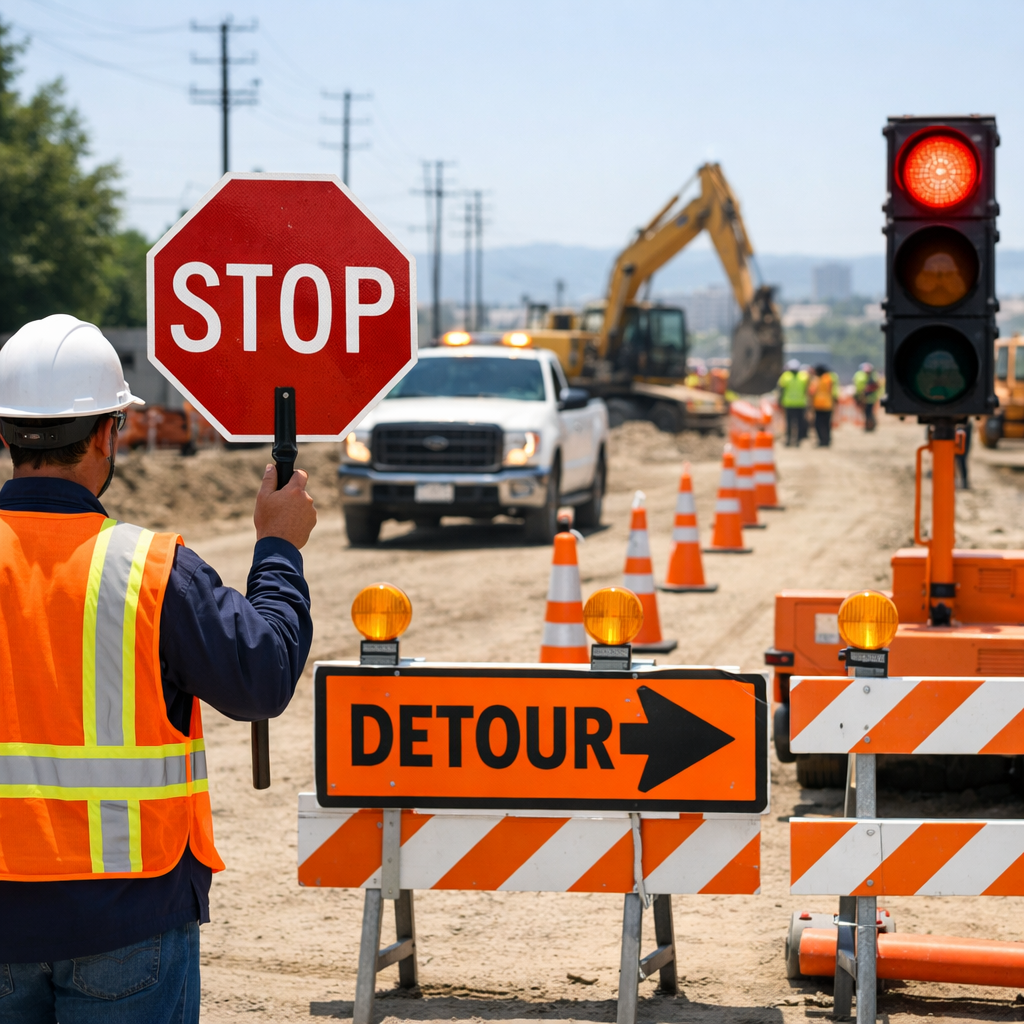
According to guidance from OSHA and CCOHS, mobile equipment and vehicle movement remain a major source of workplace injury and fatality in construction and industrial settings. This is why traffic control should be integrated into the broader OHSE management system, alongside hazard reporting, incident investigation, inductions, and site inspections.
Common traffic movement areas on site
- Site entry and exit gates
- Loading and unloading zones
- Reversing areas for trucks
- Pedestrian walkways near plant routes
- Material storage and laydown zones
- Temporary roadways and haul routes
- Public interface areas bordering roads or footpaths
Key risks in construction site traffic control
The main risks associated with construction site traffic control involve interaction between vehicles, plant, and people. Even experienced operators can be affected by limited visibility, poor surface conditions, fatigue, noise, weather, and rushed schedules. On a busy site, one weak control can lead to a serious event.
Some of the most significant risks include workers being struck by reversing vehicles, collisions between plant and light vehicles, and pedestrians entering exclusion zones. Uneven ground, mud, poor lighting, and unmarked routes also increase the likelihood of loss of control and near misses.
There are also external risks where construction traffic affects members of the public. Delivery trucks entering from public roads, plant crossing shared accessways, and queueing vehicles near schools, shops, or neighboring businesses can create danger beyond the site boundary.
Typical hazards and consequences
| Hazard | Example | Possible consequence |
|---|---|---|
| Reversing plant | Dump truck backing into a work area | Struck-by injury or fatality |
| Blind spots | Excavator slewing near pedestrians | Crush injury |
| Poor segregation | Workers sharing routes with forklifts | Collision or near miss |
| Inadequate signage | Visitors entering active haul road | Unauthorized exposure to moving plant |
| Surface hazards | Muddy, uneven internal roadway | Vehicle rollover or skidding |
| Public interface | Concrete truck blocking footpath | Risk to pedestrians and road users |
Prevention measures and the Hierarchy of Controls
The best approach to construction site traffic control follows the Hierarchy of Controls. Instead of relying only on driver care or high-visibility clothing, sites should first look for stronger measures such as elimination, substitution, engineering controls, and administrative controls.
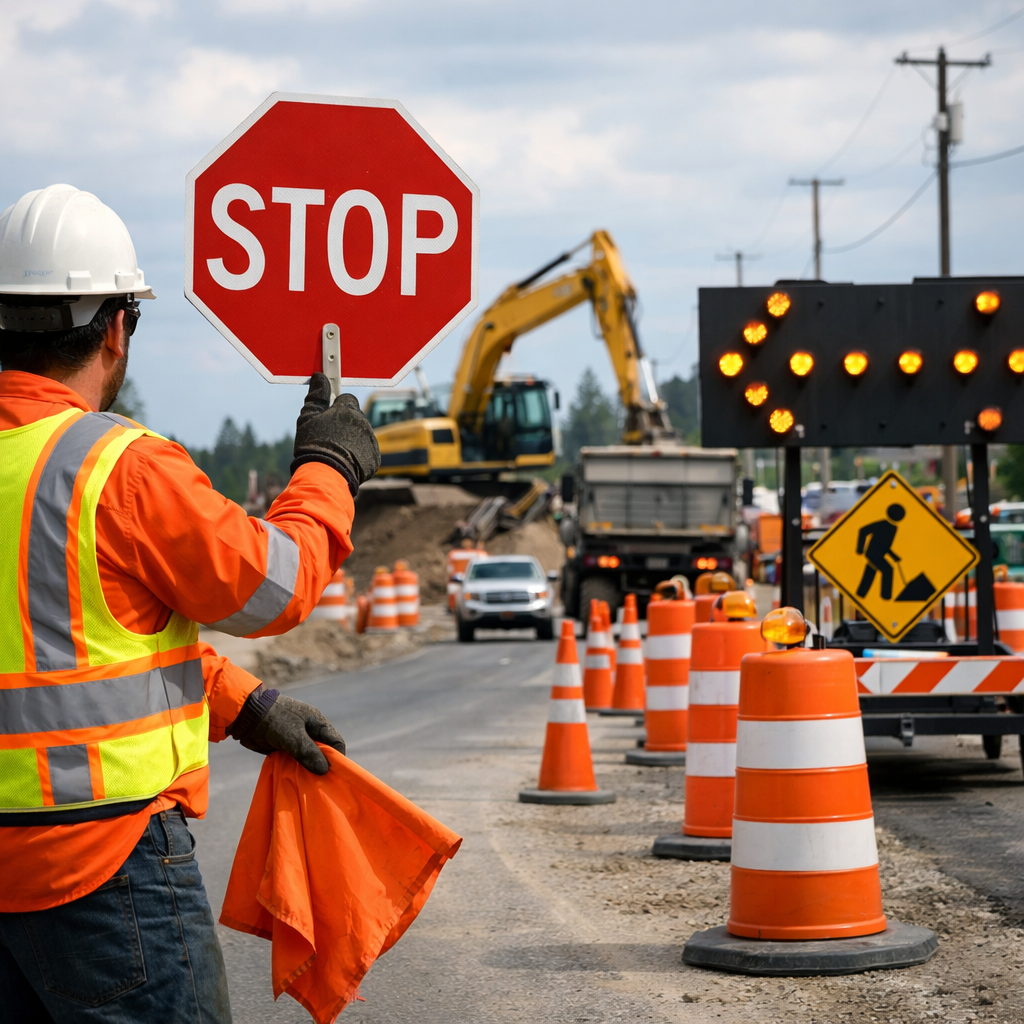
Elimination may involve removing the need for certain vehicle movements altogether. For example, preplanning material storage can reduce repeated plant trips across the site. Substitution could involve using smaller equipment in tighter areas where large plant creates unnecessary exposure.
Engineering controls are often the most effective practical solutions on active projects. These include physical barriers, dedicated pedestrian pathways, one-way traffic systems, speed humps, wheel stops, convex mirrors, lockable gates, and designated turning circles. Reversing should be eliminated where possible through drive-through layouts and planned delivery routes.
Administrative controls then support the physical setup. These include traffic management plans, spotter procedures, delivery scheduling, permit systems for vehicle entry, signage, site inductions, radio communication, and daily coordination meetings. You can support these systems through routine safety checks and documented inspections, similar to the approach outlined in our site safety inspection checklist and construction risk assessment guide.
Practical prevention measures for construction site traffic control
- Develop a site-specific traffic management plan before work starts
- Separate pedestrians and vehicles with barriers, fencing, and marked walkways
- Use one-way systems to reduce crossing and reversing conflicts
- Assign trained spotters or traffic controllers for high-risk maneuvers
- Schedule deliveries outside peak worker movement periods
- Set site speed limits and enforce them consistently
- Install adequate lighting for early morning, night, or enclosed work areas
- Keep routes clear of waste, stored materials, and standing water
- Review traffic routes whenever site conditions change
- Control public access at boundaries, gates, and shared roads
A practical example is a mid-rise commercial project where concrete trucks, telehandlers, and pedestrians all need access to a narrow frontage. A good construction site traffic control plan would create a booking system for deliveries, place barriers along pedestrian paths, allocate a trained gate marshal during peak periods, and prohibit reversing into the main unloading area unless a spotter is present. These simple changes can dramatically reduce risk.
PPE, training, and worker responsibilities
Personal protective equipment is an important part of construction site traffic control, but it should never be the first or only control. High-visibility vests or shirts, hard hats, safety boots, gloves, and eye protection can improve visibility and protection, but they do not stop vehicles from entering unsafe areas.
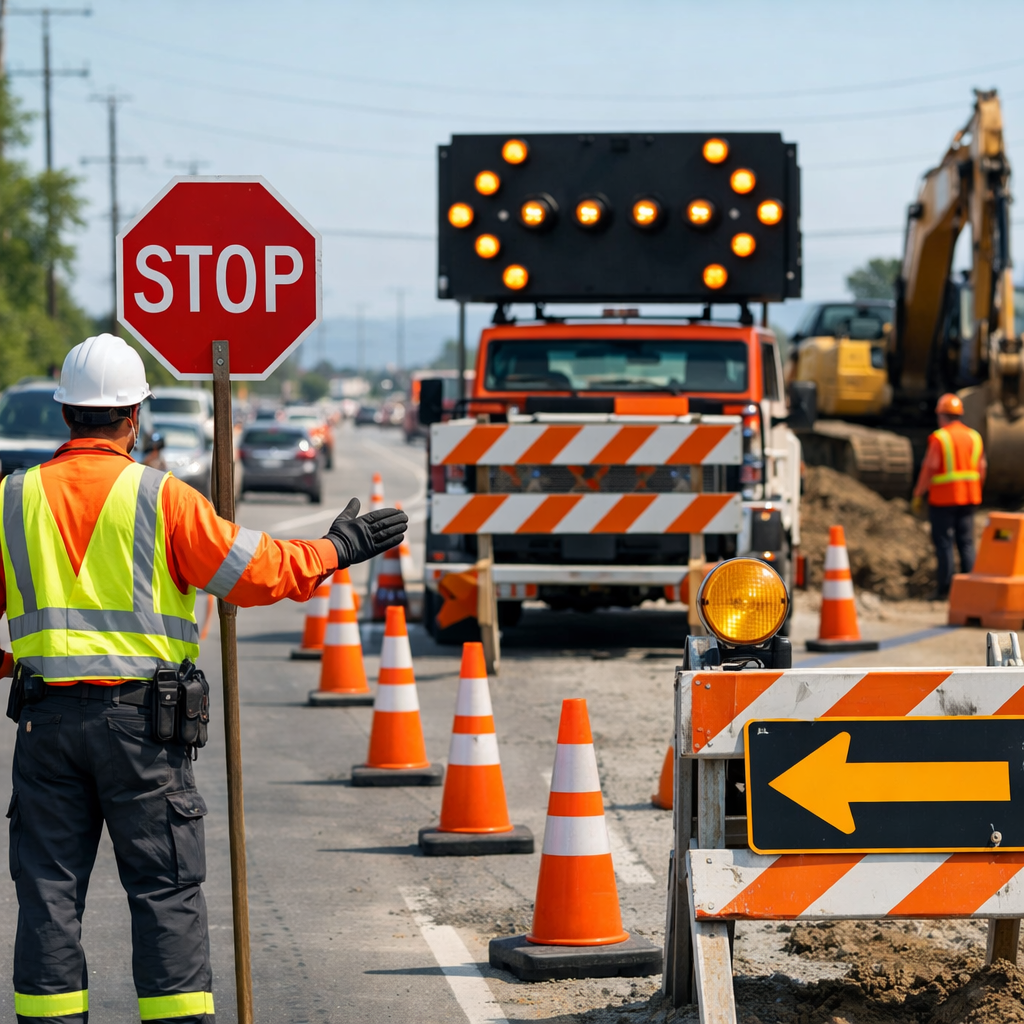
In some work zones, hearing protection may also be necessary, although it creates an additional challenge because workers may not hear reversing alarms or verbal warnings clearly. This means sites should combine PPE with visual signals, physical barriers, and clear communication methods.
Essential PPE in traffic-risk areas
- High-visibility clothing suited to day and night conditions
- Hard hats for all personnel in plant operating zones
- Safety boots with slip-resistant soles
- Gloves suitable for the task
- Eye protection where dust or debris is present
- Hearing protection where required, supported by non-auditory warning systems
Training is just as important as equipment. Operators must be competent, licensed where required, and familiar with the specific site rules. Pedestrian workers need to know designated walkways, exclusion zones, and what to do around moving plant. Visitors and delivery drivers should receive a brief induction before entering active areas.
Supervisors play a central role by monitoring compliance, correcting unsafe behavior, and stopping work when controls are not effective. Workers also have responsibilities: use marked routes, obey signage, maintain eye contact with operators when appropriate, and never assume a driver has seen them.
Compliance, monitoring, and real-world examples
Construction site traffic control should be documented, communicated, and regularly reviewed to meet OHSE obligations. Regulatory expectations differ by location, but the general duty remains the same: employers must identify hazards, assess risks, implement controls, and maintain a safe workplace. Guidance from HSE, OSHA, and CCOHS all emphasize the need for planned vehicle and pedestrian management.
Key compliance steps include completing risk assessments, preparing a traffic management plan, inspecting plant and access routes, maintaining signs and barriers, and investigating incidents and near misses. If the project interfaces with public roads, additional permits, trained traffic controllers, or road authority approvals may be required.
Monitoring should be ongoing, not just a one-time exercise at site establishment. Conditions change as structures go up, trades overlap, and access areas become tighter. Weekly OHSE inspections, toolbox talks, and consultation with operators and workers can identify issues early. Near misses, such as a pedestrian entering a forklift route or a truck clipping a barrier, should trigger immediate review.
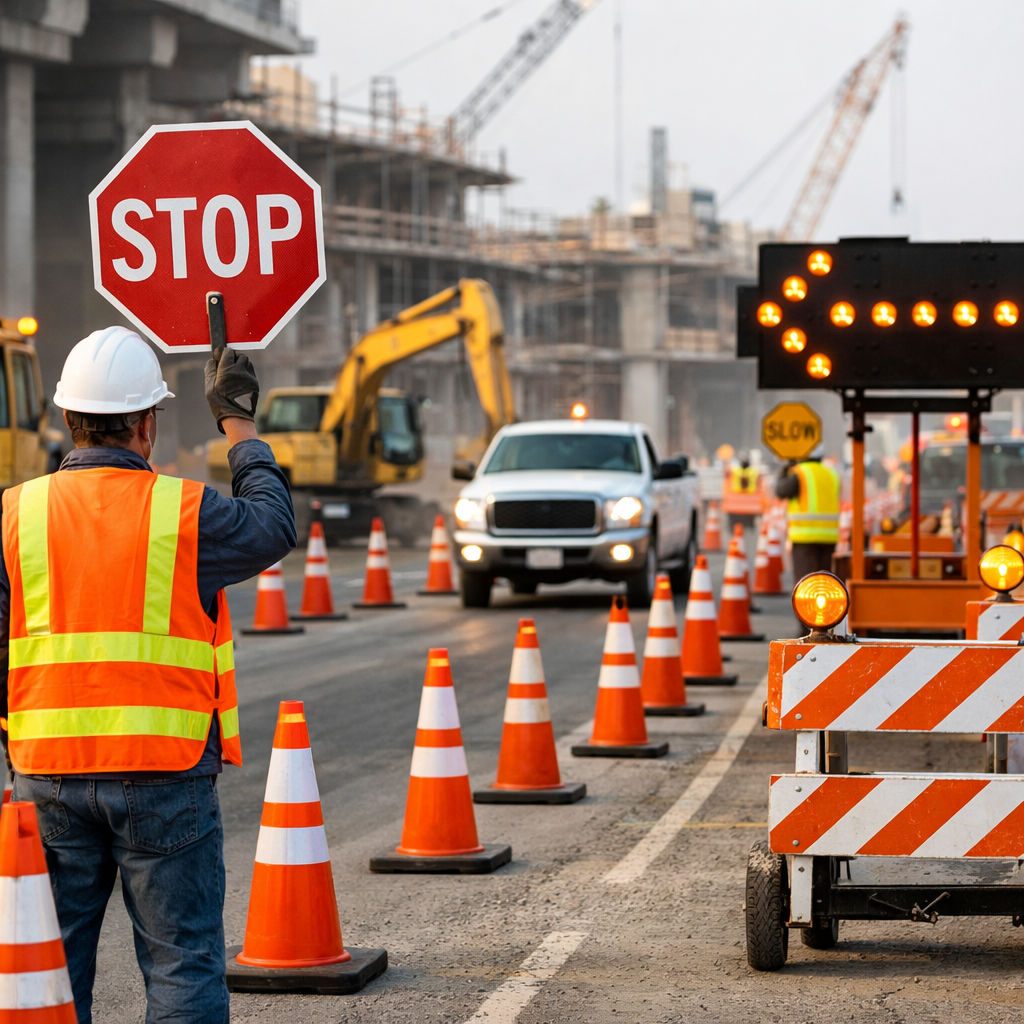
Consider a road upgrade project where dump trucks, rollers, and subcontractor vehicles operate alongside live public traffic. Effective construction site traffic control in this setting may include temporary barriers, reduced public speed zones, designated crossing points, trained traffic controllers, clear signage in advance of the work area, and strict communication protocols between crews. In another example, a warehouse build may reduce risk by creating color-coded pedestrian routes, installing fixed barriers around loading areas, and requiring all delivery drivers to report to a holding point before unloading.
Construction site traffic control is most effective when it is planned early, backed by strong supervision, and updated as site conditions evolve. By focusing on risks, prevention, PPE, compliance, and practical worksite realities, contractors can reduce incidents and create safer, more efficient projects. A well-managed construction site traffic control system protects workers, visitors, and the public while supporting legal compliance and a stronger overall safety culture.