


Corrective Action Tracking: Important Methods After Safety Findings



Corrective action tracking is one of the most important steps after a safety finding because it turns an inspection, audit, incident review, or near-miss report into real risk reduction.
Without a reliable system, hazards may be logged but never fixed, deadlines can slip, and teams may assume a problem is closed when the underlying cause is still present.
In every workplace, from warehouses and construction sites to laboratories and manufacturing plants, the quality of follow-up matters as much as the original finding. A strong process creates accountability, sets realistic deadlines, verifies that controls are actually working, and ensures closure quality before an item is marked complete.
Organizations often use guidance from OSHA and CCOHS to strengthen their programs, but the day-to-day success of corrective action tracking depends on practical execution. The best methods are clear, measurable, and easy for supervisors, safety teams, and frontline workers to follow.
Why corrective action tracking matters after safety findings
A safety finding is only the starting point. It may come from a formal audit, a routine inspection, an incident investigation, a behavior observation, or employee feedback. If the issue is not tracked to a verified conclusion, the same hazard can continue exposing workers to injury, illness, equipment damage, or operational disruption.
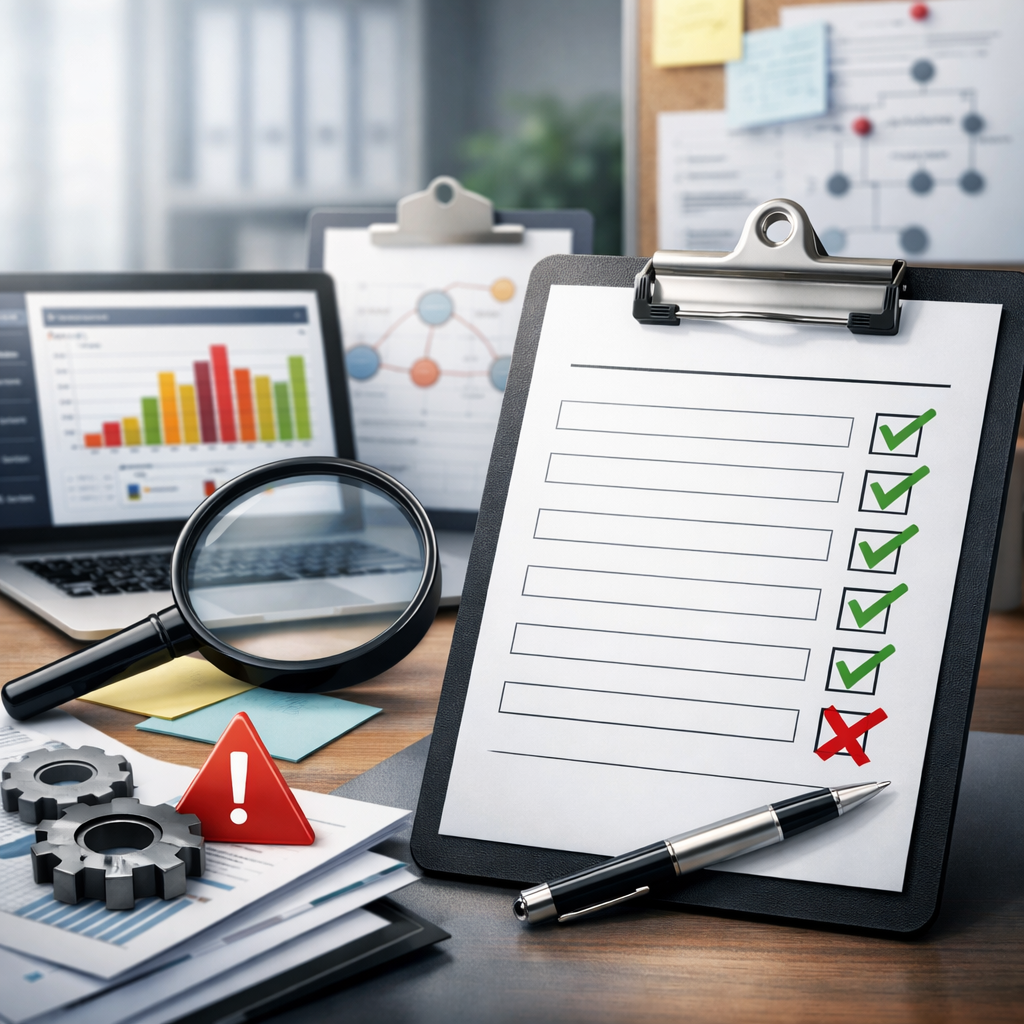
Effective corrective action tracking prevents this gap by assigning each action to a responsible person, defining what must be done, and setting a due date based on risk. This is especially important for high-potential events, where a near miss today could become a serious injury tomorrow.
Strong tracking also supports the Hierarchy of Controls. For example, if a machine guarding issue is identified, the preferred corrective action may be an engineering control rather than relying only on retraining or warning signs. Tracking should show not just that something was done, but that the chosen control was appropriate for the hazard level.
Well-managed systems also create defensible records. If a regulator, client, or internal leadership team asks how findings are handled, documented corrective action tracking shows whether the organization responds consistently and responsibly. For teams building broader safety systems, this works well alongside resources such as a safety audit checklist or an incident investigation process.
Core corrective action tracking methods that improve accountability
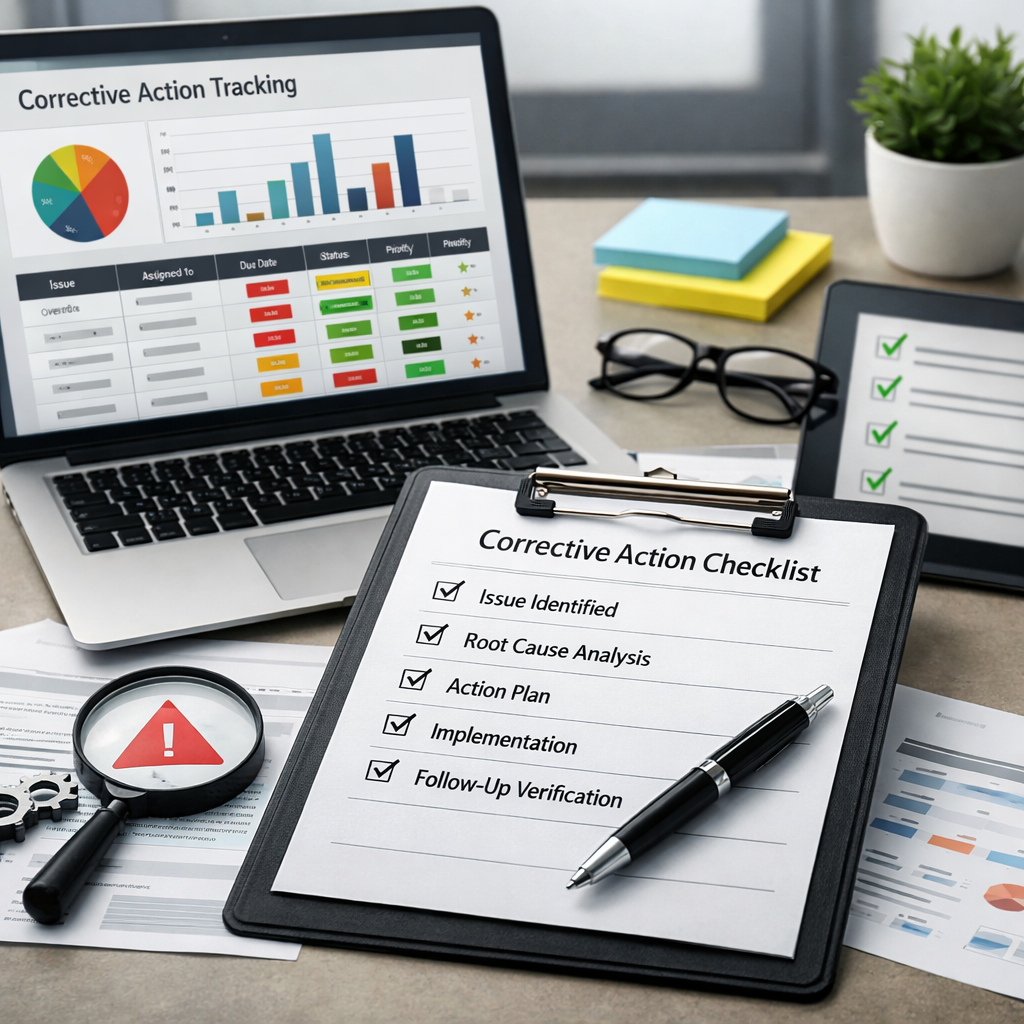
Assign one owner for every action
The most common reason actions stall is vague ownership. “Maintenance,” “operations,” or “the site team” is not enough. Every action should have one named owner who is responsible for coordination and completion, even if several departments help.
This does not mean one person does all the work. It means one person is accountable for progress, communication, and evidence submission. Clear ownership reduces confusion and makes escalation easier when deadlines are at risk.
Use risk-based deadlines
Not every finding should have the same completion timeline. A missing handrail, exposed wiring, or failed lockout control may require immediate interim measures and rapid correction. A lower-risk documentation issue may be scheduled within a longer, controlled timeframe.
Risk-based scheduling improves corrective action tracking because it aligns urgency with actual exposure. A simple and practical method is to classify findings by severity and likelihood, then assign due dates accordingly.
| Risk Level | Example Safety Finding | Typical Action Timing |
|---|---|---|
| High | Bypassed machine guard or uncontrolled energy source | Immediate interim control, permanent fix within days |
| Medium | Inconsistent PPE compliance in a defined task area | Correct within 1 to 2 weeks |
| Low | Minor labeling or recordkeeping gap | Correct within 30 days or next review cycle |
Define the action clearly
Poorly written actions are hard to complete and even harder to verify. “Improve housekeeping” or “remind staff” is too vague. Instead, actions should describe the exact change expected, where it applies, and how success will be measured.
A better example would be: “Install designated storage racks in the receiving area, remove floor-stored pallets, mark pedestrian lanes, and inspect weekly for 30 days.” This makes corrective action tracking more useful because the owner and verifier know exactly what completion looks like.
Best practices for deadlines, escalation, and follow-up
Deadlines should be visible, realistic, and actively monitored. Many organizations fail not because they lack a tracking tool, but because they do not review open items often enough. A weekly review for high-risk actions and a monthly review for all open actions is a practical baseline.

Escalation rules should also be defined in advance. If an action becomes overdue, the process should automatically trigger supervisor review, department manager notification, or leadership escalation depending on the risk and delay length. This keeps overdue findings from quietly disappearing into a spreadsheet.
- Status categories: Open, in progress, pending verification, closed, overdue
- Required fields: finding source, hazard description, root cause, owner, due date, interim controls, final controls, verification method
- Review cadence: weekly for critical items, monthly for broader trend review
- Escalation trigger: overdue high-risk items reviewed by site leadership immediately
Interim controls are another essential method. If the permanent fix cannot be completed right away, temporary protections must be recorded and monitored. For example, if damaged flooring creates a trip hazard but repairs are scheduled for next week, interim controls may include barricading, alternate routing, and visible warning signage. In strong corrective action tracking, the temporary control is not treated as full closure. It is only a short-term risk reduction measure.
Practical examples make this easier to understand. After a forklift near miss, a site may identify poor pedestrian separation. The corrective action should not stop at “retrain drivers.” Under the Hierarchy of Controls, stronger options may include installing barriers, redesigning traffic routes, improving visibility at blind corners, and adjusting delivery timing. Training may still play a role, but it should support stronger controls rather than replace them.
Verification methods that strengthen closure quality
Verification is where many systems become weak. A task may be marked complete because someone says it is done, but no one confirms whether the hazard is actually controlled. High-quality corrective action tracking requires evidence-based verification before closure.
Use more than one verification method
Depending on the issue, verification may include photos, inspection records, work orders, training sign-in sheets, revised procedures, or direct field observation. For significant findings, a follow-up inspection is often the best choice because it tests whether the change works in the real environment.
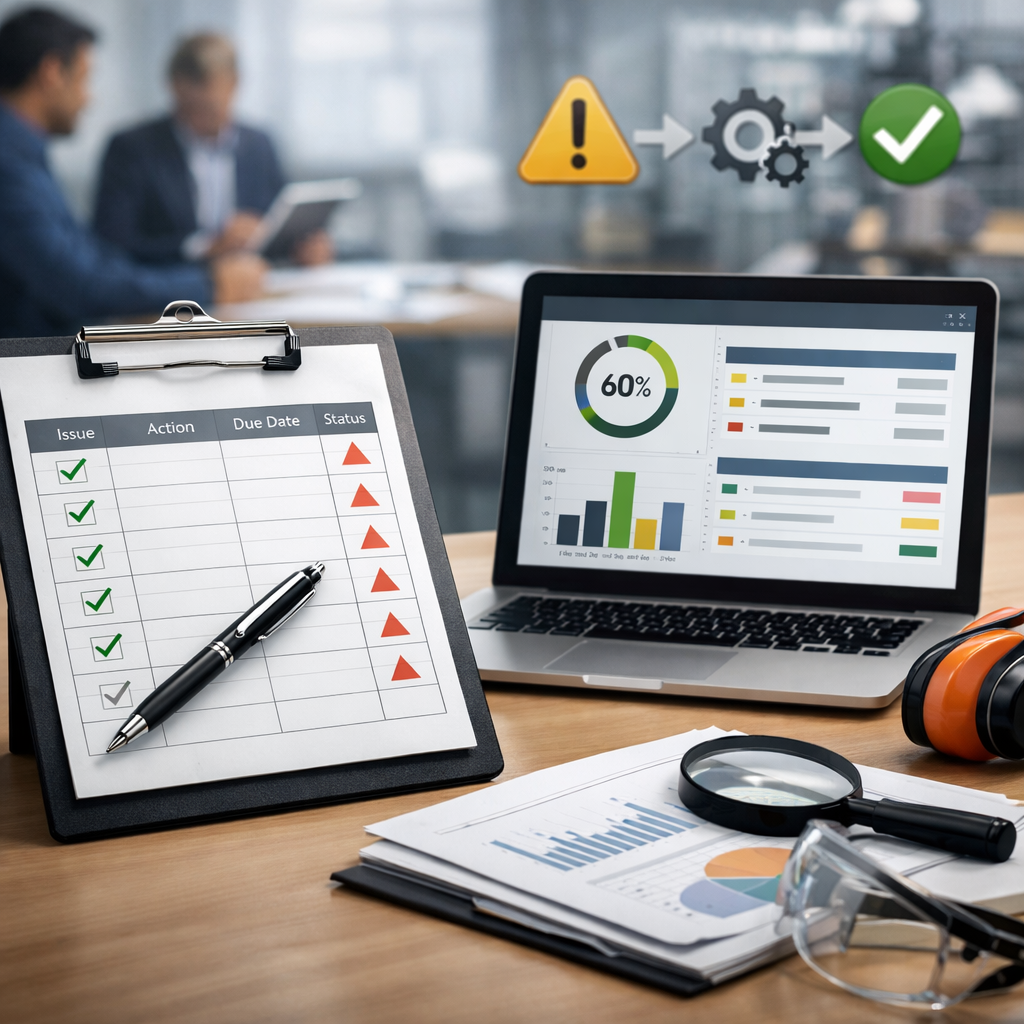
For example, if a chemical storage finding led to new cabinets and segregation rules, the verifier should not rely only on a purchase receipt. The better approach is to inspect the storage area, confirm compatibility requirements are met, and check whether workers are following the updated process. Relevant references from OSHA standards or company procedures can help confirm that controls meet expectations.
Check for root cause effectiveness
Closure quality improves when verification asks a simple question: did the action fix the root cause, or only the visible symptom? If a worker slipped because of recurring fluid leaks, cleaning the floor is not enough. The true closure may require equipment repair, preventive maintenance changes, and inspection frequency updates.
This is why corrective action tracking should connect findings to root causes whenever possible. A system that only tracks surface-level fixes can show lots of closed actions while the same issues keep returning. Trend analysis of repeat findings is a strong indicator of closure quality.
Separate completion from closure
One useful method is to treat “action completed” and “action closed” as different stages. Completion means the assigned work has been performed. Closure means the organization has reviewed the evidence, verified effectiveness, and accepted that the risk has been reduced to an acceptable level.
This distinction is simple but powerful. It prevents rushed closeouts and strengthens management confidence in the process.
Building a sustainable corrective action tracking process
The most effective systems are simple enough to use consistently. Whether the organization uses safety software, a shared database, or a structured spreadsheet, the process should be standardized across sites and departments. Everyone should know how findings are entered, prioritized, assigned, reviewed, verified, and closed.
Leadership visibility is also essential. When supervisors and managers regularly review open actions, ask for evidence, and challenge weak closeouts, teams understand that safety findings are operational priorities, not paperwork exercises. Worker involvement matters too, especially when employees can confirm whether a fix is practical and still working in the field.
Good programs also look at metrics beyond total closures. Useful indicators include percentage of overdue actions, average days to close by risk category, repeat findings, and percentage of actions verified in the field. These measures reveal whether corrective action tracking is producing real improvement or just administrative activity.
In the end, the goal is not simply to close findings quickly. It is to close them well. Strong corrective action tracking builds accountability through clear ownership, keeps momentum with risk-based deadlines, confirms effectiveness through solid verification, and protects closure quality by requiring evidence before an item is finalized. After any safety finding, that disciplined follow-up is what turns lessons identified into hazards controlled and workers better protected.