


Crane Operation Safety Guidelines: Essential OHSE Practices for Safer Lifting


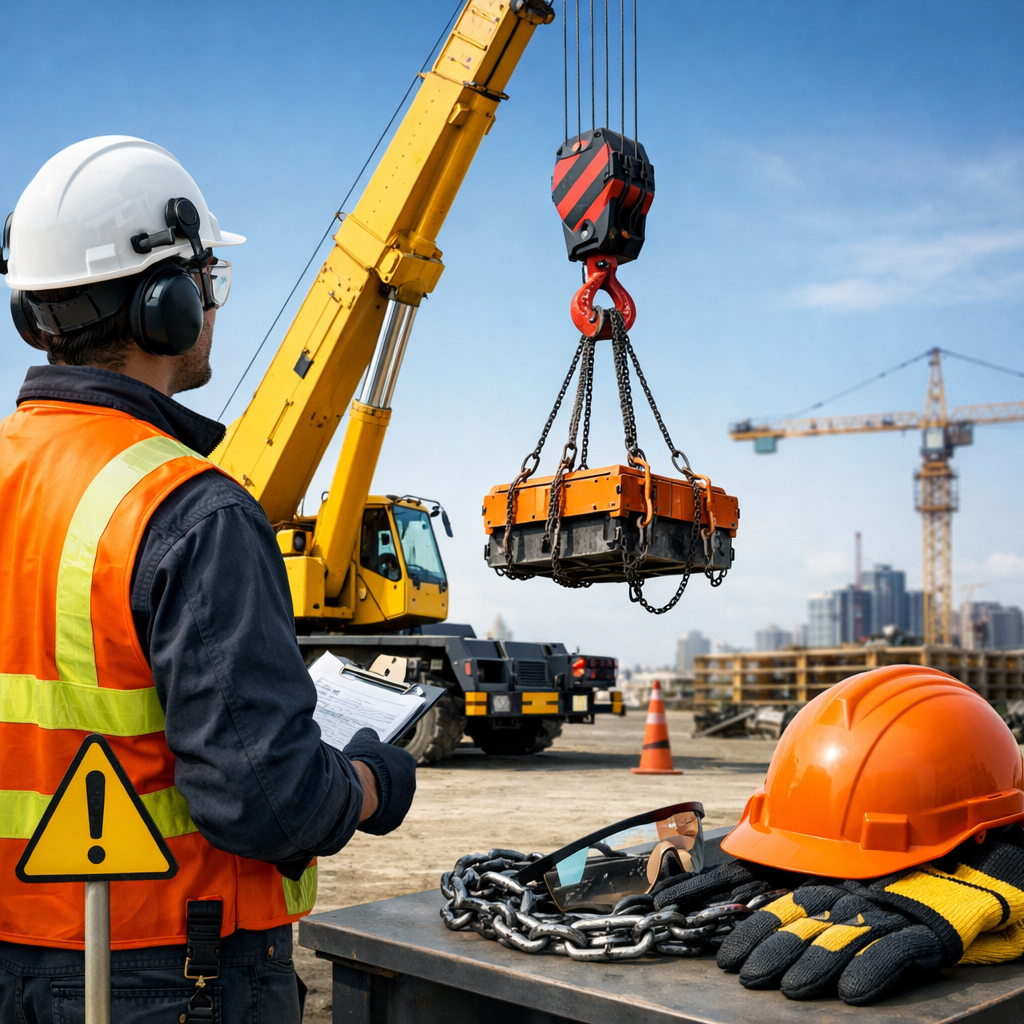
Crane operation safety guidelines are critical for preventing serious injuries, equipment damage, and costly project delays on construction, industrial, and logistics sites.
Because cranes lift heavy loads in dynamic environments, even a small mistake can lead to dropped materials, struck-by incidents, structural failure, or contact with power lines. A strong OHSE approach helps employers and workers manage these hazards before a lift begins.
Whether the crane is mobile, tower, overhead, or crawler-mounted, safe operation depends on planning, training, communication, inspection, and compliance. When these elements work together, lifting tasks become more controlled, predictable, and efficient.
Why crane operation safety guidelines matter in the workplace
Crane-related incidents often have severe consequences because of the size of the load, the height of the lift, and the number of workers involved in the lifting zone.
A failed sling, unstable ground condition, or misread load chart can quickly escalate into a fatal event. This is why employers must treat lifting operations as high-risk work and build controls around every stage of the job.

In practical terms, crane operation safety guidelines protect workers on the hook, workers on the ground, nearby contractors, pedestrians, and property. They also support legal compliance under occupational health and safety laws and industry standards.
Organizations such as OSHA and the CCOHS provide guidance on crane hazards, operator competency, inspections, and safe lifting practices. Employers can also strengthen internal performance by aligning crane procedures with site-specific safe work method statements, lift plans, and permit systems.
For companies building broader programs, resources on workplace risk assessment and personal protective equipment at work can support a more complete OHSE strategy.
Common risks addressed by crane operation safety guidelines
Most crane accidents can be traced back to a limited set of hazards. Recognizing them early is the first step in preventing harm.
Load instability and dropped loads
Loads can swing, shift, or fall when rigging is incorrect, the center of gravity is misjudged, or the load exceeds the crane’s rated capacity.

A common example is a steel bundle lifted with the wrong sling angle, creating uneven tension and causing the load to tilt unexpectedly during hoisting.
Crane overturning or structural failure
Mobile cranes are especially vulnerable to tipping if outriggers are not fully deployed, ground conditions are weak, or the lift radius changes beyond the planned limit.
On busy construction sites, underground voids, trenches, or recently backfilled areas may not support the crane’s load. Without a ground-bearing assessment, the risk of collapse increases significantly.
Power line contact
Electrocution remains one of the most serious crane hazards. Booms, loads, and rigging can all come too close to energized lines.
Even experienced operators can misjudge clearance when visibility is reduced or when spotters are not used effectively.
Struck-by and caught-between incidents
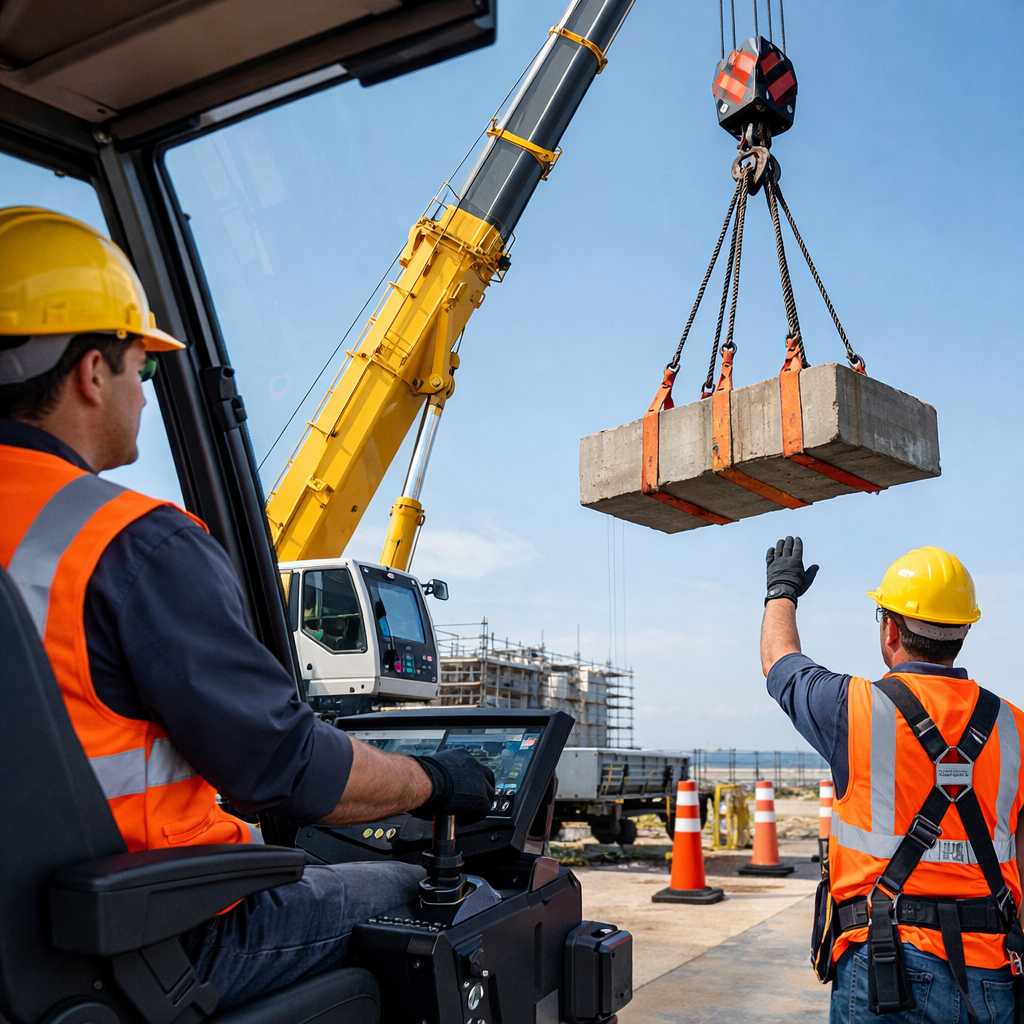
Workers guiding loads by hand, standing under suspended loads, or moving through exclusion zones are at risk of being crushed or struck.
This often happens when lifting paths are not controlled or when unauthorized persons enter the work area.
- Overloading beyond the crane’s load chart
- Poor communication between operator, dogger, rigger, and signal person
- Inadequate pre-start inspections
- High winds or changing weather conditions
- Mechanical defects such as worn hooks, damaged wire ropes, or hydraulic leaks
- Fatigue, inattention, or lack of training
Prevention measures using the hierarchy of controls
The most effective crane operation safety guidelines apply the hierarchy of controls rather than relying on PPE alone. This means eliminating hazards where possible, reducing exposure through engineering and administrative controls, and then supporting workers with the right protective equipment.
Elimination and substitution
Before scheduling a crane lift, ask whether the task can be avoided or done another way. Can materials be delivered closer to the point of installation? Can lighter components be used? Can a different lifting method remove the need for a high-risk pick near power lines?
For example, using prefabricated sections positioned at ground level before final placement may reduce the number of complex overhead lifts required.
Engineering controls
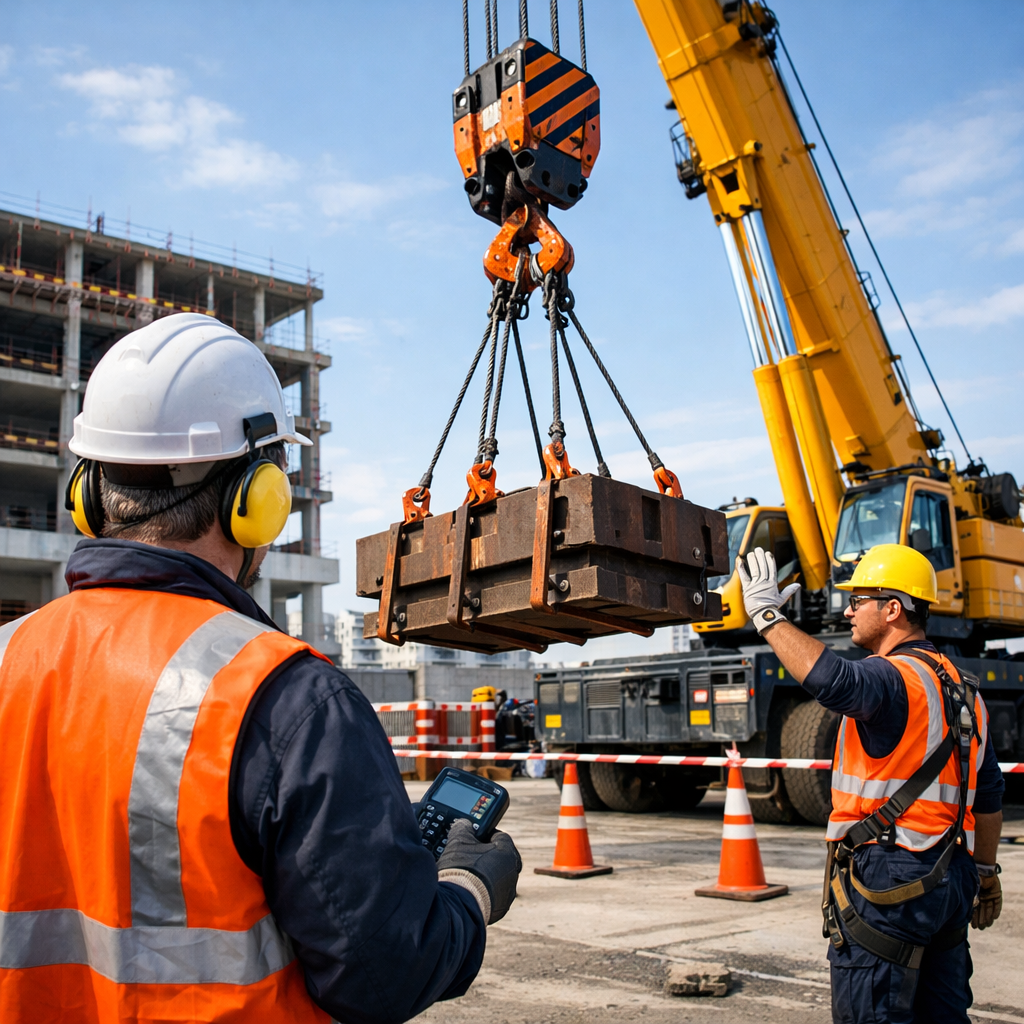
Engineering measures include crane load moment indicators, anti-two-block devices, outrigger mats, rated lifting accessories, and physical barriers around the lifting zone.
These controls help reduce the chance of human error leading directly to an incident.
Administrative controls
Administrative systems are central to safe crane work. They include lift planning, operator licensing or certification, supervision, weather monitoring, traffic control, exclusion zones, and pre-lift briefings.
Every critical lift should have a documented plan that identifies load weight, radius, lift path, landing area, communication methods, and emergency arrangements. A competent person should verify that the crane configuration matches the job.
Inspection routines are equally important. Pre-operational checks should cover hooks, hoists, ropes, brakes, alarms, outriggers, hydraulic systems, and safety devices. Periodic inspections and maintenance should follow manufacturer requirements and regulatory expectations, including those outlined by OSHA crane inspection requirements.
PPE for crane operations
PPE does not remove lifting hazards, but it remains an essential layer of defense. Workers involved in crane activities should wear task-appropriate PPE based on the site risk assessment.
- Hard hats to protect against falling or shifting objects
- High-visibility clothing so operators and vehicle drivers can see ground workers
- Steel-toe boots for foot protection
- Gloves suitable for rigging and material handling
- Eye protection where debris, dust, or cutting tasks are present
- Hearing protection in high-noise environments
If workers are connecting loads at height, fall protection may also be required under the site’s working-at-heights procedure.
Compliance, competency, and practical crane operation safety guidelines
Compliance is not just paperwork. In OHSE terms, compliance means ensuring that competent people, suitable equipment, and safe systems of work are in place before lifting begins.
Employers should confirm that operators are trained and authorized for the specific crane type, and that riggers and signalers understand load control, hand signals, and hazard zones. Refresher training is important when equipment changes, work conditions become more complex, or an incident reveals a knowledge gap.
Simple practical examples from real worksites
On a commercial building project, a mobile crane was scheduled to lift HVAC equipment onto a rooftop. During the pre-lift meeting, the supervisor identified that overnight rain had softened the ground near one outrigger position.
Instead of proceeding, the team paused the task, reassessed the location, installed suitable outrigger mats, and adjusted the crane setup. That simple decision aligned with good crane operation safety guidelines and likely prevented a tip-over event.
In another example, a warehouse used an overhead crane to move heavy metal dies. Workers had developed a habit of walking under suspended loads to save time. After a near miss, the employer introduced marked exclusion zones, retrained staff, and enforced a strict no-go area under any suspended load.
This is a strong reminder that procedures only work when they are communicated, monitored, and consistently followed.
Key compliance checks before a lift
| Safety Area | What to Check | Why It Matters |
|---|---|---|
| Operator competency | Valid training, authorization, familiarity with crane type | Reduces unsafe decisions and operating errors |
| Lift plan | Load weight, radius, route, landing zone, communication method | Improves coordination and hazard control |
| Equipment condition | Inspection records, hooks, wire ropes, brakes, alarms, outriggers | Prevents failure during lifting |
| Work area | Ground stability, overhead services, weather, exclusion zones | Controls environmental and site-specific risk |
| PPE and supervision | Correct PPE, spotters, signal person, emergency readiness | Supports safe execution of the task |
Effective crane safety also depends on reporting and learning. Near misses, equipment defects, and communication failures should be recorded and reviewed so the same weaknesses do not reappear on future lifts.
Crane operation safety guidelines are most effective when they are built into daily work, not treated as a checklist completed after the fact. By identifying risks, applying the hierarchy of controls, using suitable PPE, and meeting compliance obligations, employers can create safer lifting operations across every site. In any workplace where cranes are used, strong crane operation safety guidelines protect people first while also improving reliability, productivity, and legal performance.