


Explosives Handling Safety: Essential OHSE Practices for High-Risk Workplaces
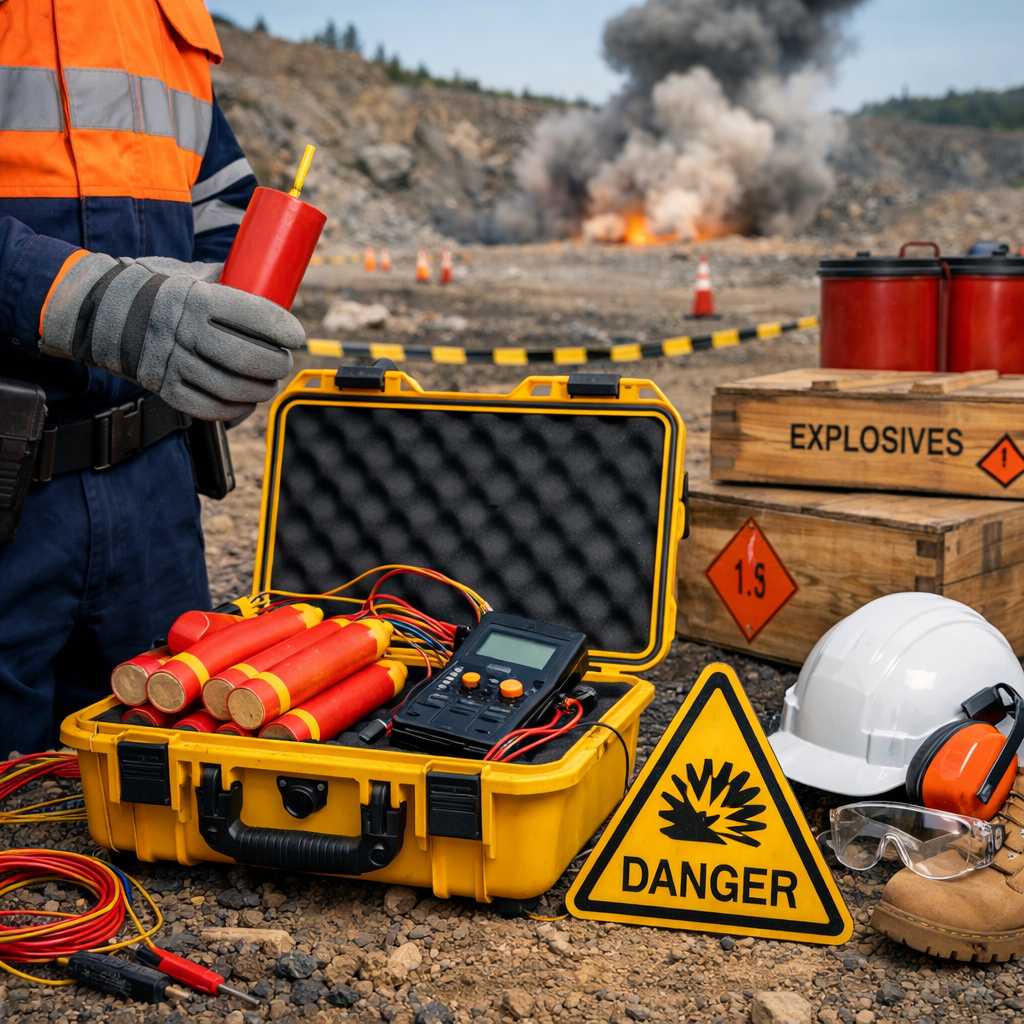


explosives handling safety is a critical part of occupational health, safety, and environmental management in mining, construction, quarrying, demolition, and defense-related operations.
Where explosive materials are stored, transported, prepared, or used, even a small error can lead to catastrophic injury, fatalities, structural damage, environmental harm, and serious legal consequences.
A strong explosives handling safety program protects workers, contractors, nearby communities, and business continuity. It also supports compliance with recognized standards and guidance from organizations such as OSHA and CCOHS.
This article explains the main risks, practical prevention measures, personal protective equipment, compliance expectations, and real-world examples that help build safer explosive operations. It also shows how the Hierarchy of Controls applies to this high-hazard work and why planning matters as much as execution.
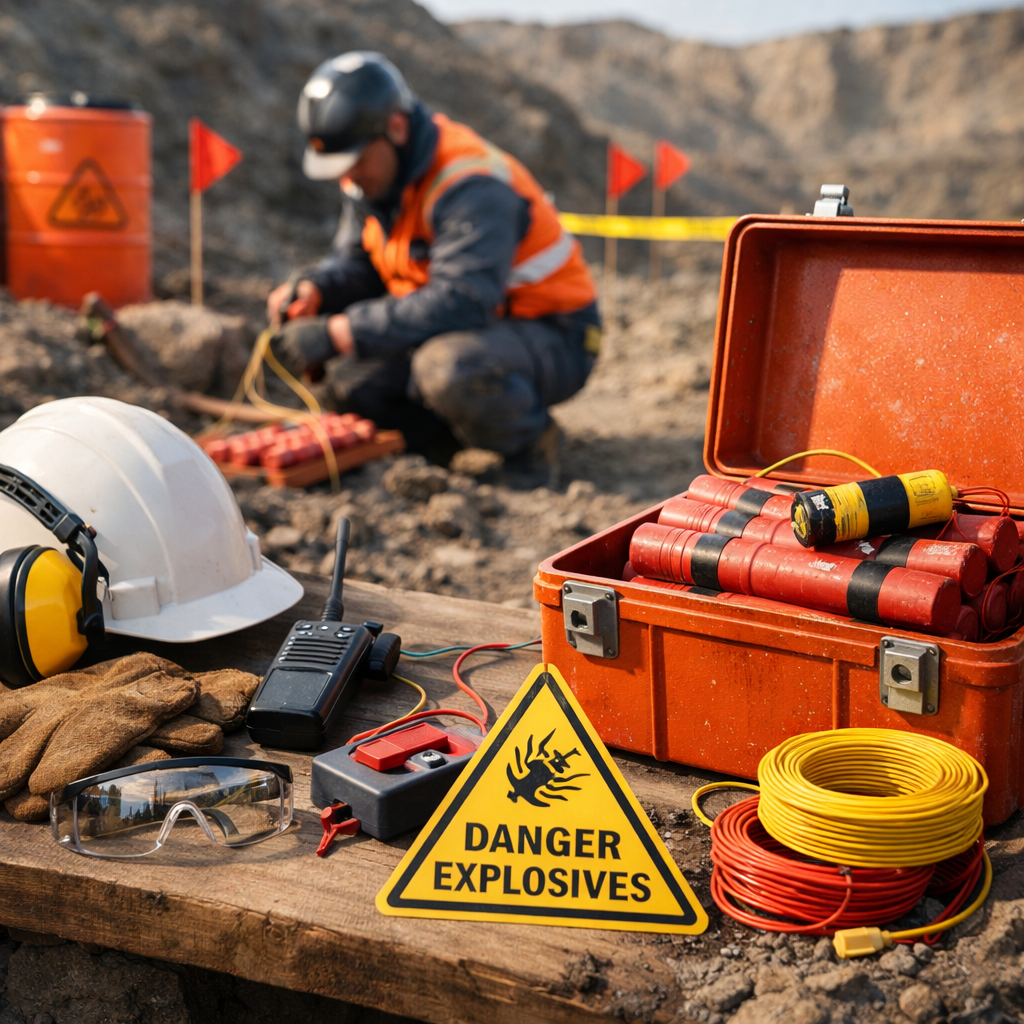
Why explosives handling safety matters in the workplace
Explosive substances are designed to release energy rapidly. That makes them useful for blasting rock, demolition, seismic work, and specialized industrial tasks, but it also means they can become deadly if mishandled.
Incidents can happen during receipt, storage, mixing, transfer, loading, firing, disposal, or post-blast inspection. Hazards may also be triggered by heat, friction, impact, static electricity, incompatible materials, poor housekeeping, equipment failure, or unauthorized access.
Effective explosives handling safety goes beyond the blast itself. It includes site layout, traffic movement, communication systems, emergency readiness, environmental conditions, and worker competency.
In practical terms, workplaces must consider:
- Unintended detonation from shock, spark, heat, or contamination
- Fire during storage or transport
- Misfires and delayed explosions
- Flyrock, overpressure, and ground vibration
- Toxic fumes after blasting
- Manual handling injuries during cartridge or equipment movement
- Security threats, theft, or unauthorized access
- Damage to nearby structures, utilities, or public areas
For many employers, these hazards connect directly with broader OHSE goals such as workplace risk assessment and incident investigation best practices. Explosives work cannot be isolated from the rest of the safety management system.
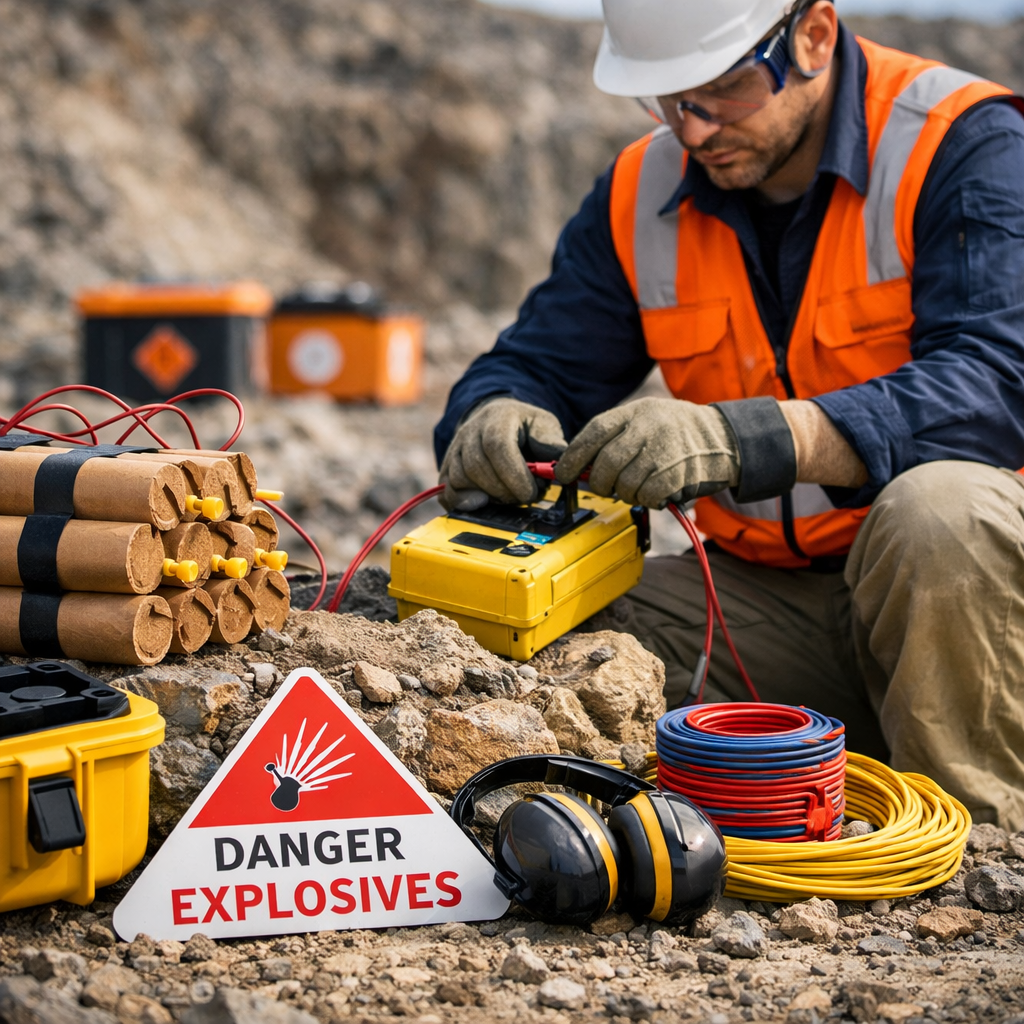
Common risks and how explosives handling safety reduces them
Physical and operational risks
The most obvious risk is accidental initiation. This may result from dropping materials, using damaged detonators, exposure to open flame, or conducting work near unprotected ignition sources.
Operational mistakes also increase risk. Examples include loading the wrong product into a blast hole, failing to maintain separation distances, poor tie-in sequencing, or allowing untrained personnel to enter exclusion zones.
Weather can make conditions worse. Lightning, extreme heat, and strong winds can all affect explosives handling safety by changing the likelihood of ignition or interfering with safe firing procedures.
Health and environmental risks
Explosives work may expose workers to fumes, dust, and chemical residues. After blasting, gases such as carbon monoxide or nitrogen oxides can accumulate, especially in confined or poorly ventilated areas.
Environmental impacts can include noise, air pollution, vibration-related complaints, and contamination from improper disposal or spills. These issues can damage community trust and create regulatory action.
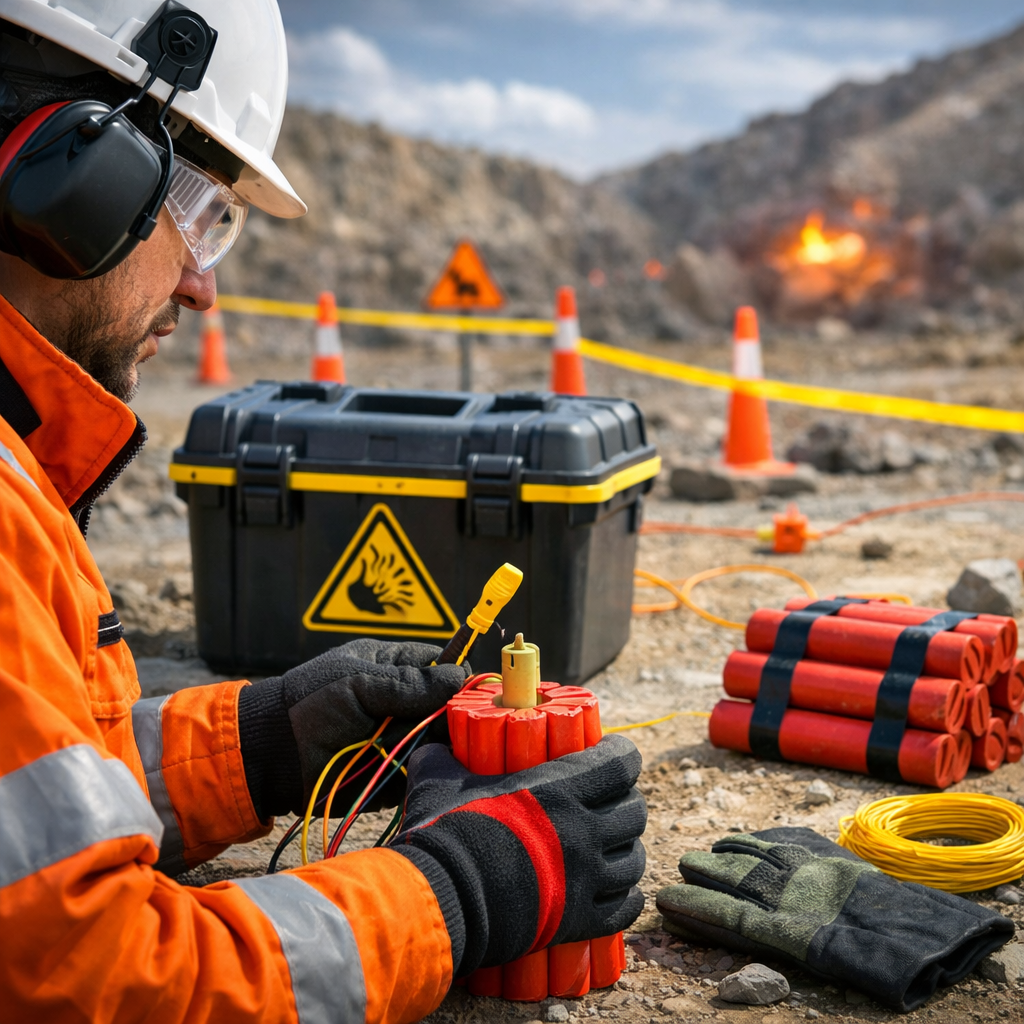
Human factors and security risks
Fatigue, complacency, poor supervision, and rushed schedules are common contributors to serious incidents. Workers who perform repetitive blasting tasks may underestimate changing conditions.
Security is another major concern. Missing stock, poor inventory control, or weak magazine protection can lead to theft, misuse, or inability to account for dangerous materials.
A basic risk-control summary is shown below.
| Hazard | Typical Cause | Potential Outcome | Key Control |
|---|---|---|---|
| Accidental detonation | Impact, heat, static, contamination | Fatal injury, fire, damage | Approved handling procedures and ignition control |
| Misfire | Faulty connection or damaged component | Delayed blast, worker exposure | Inspection, testing, exclusion zones |
| Toxic fumes | Incomplete detonation or poor ventilation | Respiratory harm, poisoning | Re-entry controls and atmospheric assessment |
| Theft or loss | Poor stock control or unsecured storage | Criminal misuse, legal breach | Inventory checks and secure magazines |
Prevention measures: applying the hierarchy of controls to explosives handling safety
The Hierarchy of Controls provides a practical way to strengthen explosives handling safety. While PPE remains important, the most effective protection starts with eliminating hazards where possible and reducing exposure through engineered and administrative safeguards.
Elimination and substitution
In some projects, blasting can be reduced or avoided through alternative methods such as hydraulic breaking, mechanical demolition, or different excavation techniques. Where explosive work is essential, selecting less sensitive products or safer initiation systems can lower risk.
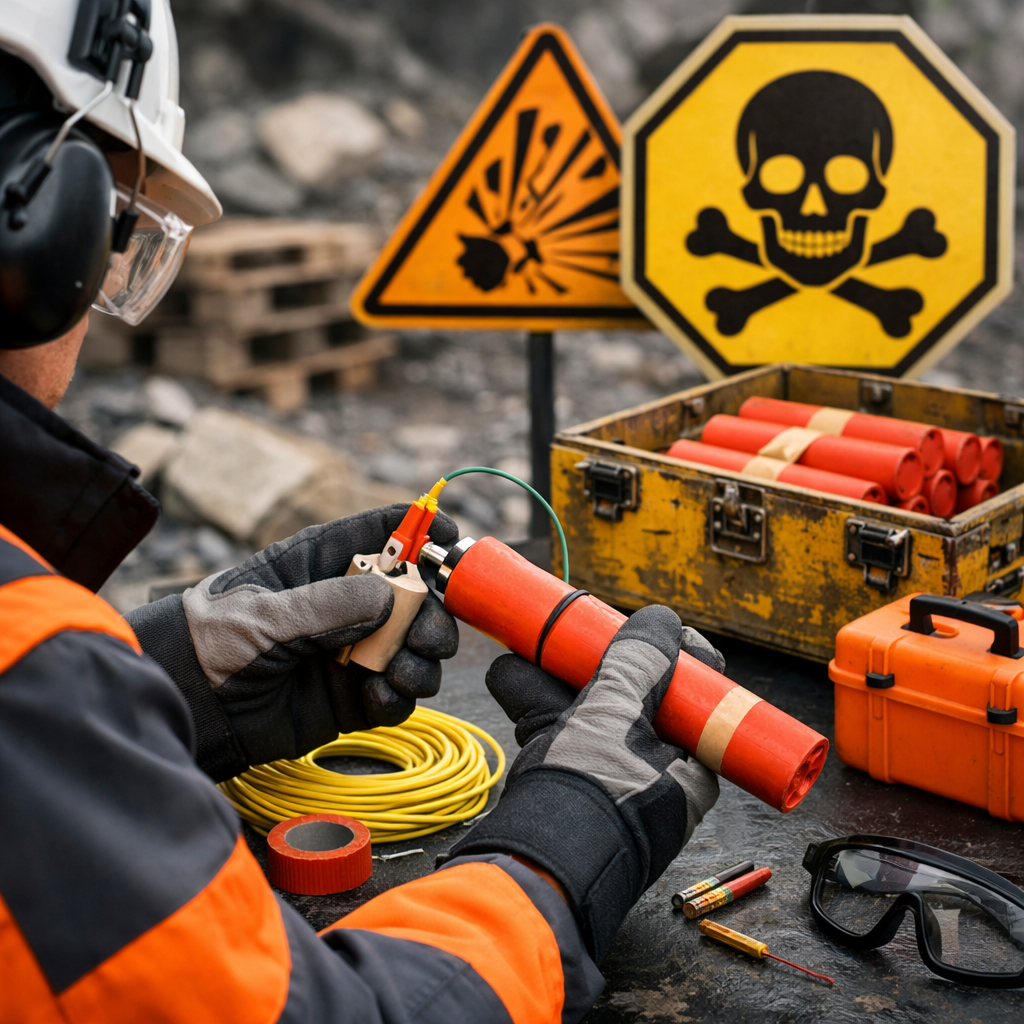
Substitution decisions should always be led by qualified personnel and supported by manufacturer guidance and site-specific assessments.
Engineering controls
Engineering controls are central to explosives handling safety. These include approved storage magazines, grounding and bonding systems, blast barriers, separation distances, remote initiation systems, ventilation, and purpose-designed transport containers.
Equipment must be suitable for hazardous environments. Non-sparking tools, intrinsically safe communication devices, and maintained vehicles reduce the chance of ignition.
Administrative controls
Administrative controls set the rules for safe work. They include standard operating procedures, permits, training, supervision, restricted access, weather monitoring, pre-blast meetings, signage, and emergency drills.
Strong administrative systems also cover inventory management, shift handover, contractor coordination, and incident reporting. Every movement of explosive material should be documented and verified.
Practical administrative measures include:
- Allowing only authorized and trained personnel to handle explosives
- Inspecting materials before use for damage, contamination, or expiry issues
- Keeping ignition sources, radios, and smoking materials out of restricted areas where prohibited
- Maintaining clear blast zones and accountability for all persons on site
- Using formal misfire procedures and never improvising corrective action
- Monitoring weather, especially lightning risk, before loading or firing
- Securing magazines with controlled access and daily stock reconciliation
These controls align with guidance published by authorities such as OSHA explosives and blasting standards.
PPE, compliance, and practical examples of explosives handling safety
PPE for explosives handling safety
Personal protective equipment is the last line of defense, but it is still essential. The exact PPE depends on the task, the explosive type, and the environment.
Typical PPE may include flame-resistant clothing, anti-static garments where required, hard hats, safety boots, gloves suited to the task, eye protection, hearing protection, and respiratory protection when fumes or dust are present.
PPE should never create a new hazard. For example, workers should avoid carrying items that can generate sparks, and clothing should be selected to reduce static buildup where relevant.
Compliance and legal responsibilities
Explosives handling safety is heavily regulated, and employers must know the laws that apply in their jurisdiction. Requirements often cover licensing, storage design, transport, separation distances, training, recordkeeping, disposal, and emergency response.
Compliance also means following manufacturer instructions, national fire and blasting codes, and site-specific procedures. Supervisors must verify that workers are competent, fit for duty, and adequately briefed before any explosive task begins.
Documentation is especially important. Risk assessments, blast plans, stock logs, inspection records, and incident reports provide proof that controls are active and reviewed. They also support learning after near misses or operational changes.
Practical workplace examples
Consider a quarry preparing for a routine blast. A competent blasting crew reviews the blast plan, checks weather conditions, inspects detonators and bulk delivery equipment, confirms exclusion boundaries, and verifies radio protocols. During loading, unauthorized vehicles are kept out of the area, and the firing point remains secured. After detonation, the team waits for the required clearance period, checks for fumes, and follows a formal post-blast inspection before allowing re-entry. This is explosives handling safety in practice.
In another example, a construction contractor finds a suspected misfire during rock excavation. Instead of trying to remove material quickly, the crew stops work, isolates the area, notifies the licensed blaster, and follows the approved misfire procedure. That decision prevents secondary exposure and demonstrates how procedure-based controls save lives.
A third example involves storage. A mining site notices discrepancies in explosive stock counts during end-of-shift reconciliation. Because inventory controls are strict, the issue is identified immediately, the magazine is locked down, and management begins an investigation before materials can be misplaced or misused. Good explosives handling safety depends on this level of discipline.
Ultimately, explosives handling safety is built on planning, competence, control, and accountability. When organizations understand the risks, apply the Hierarchy of Controls, provide suitable PPE, and maintain compliance with recognized standards, they greatly reduce the chance of devastating incidents. In every blasting or explosive-material task, explosives handling safety must remain the first priority, from preparation to final site clearance.