


food industry hygiene and safety: essential OHSE practices for safer food production


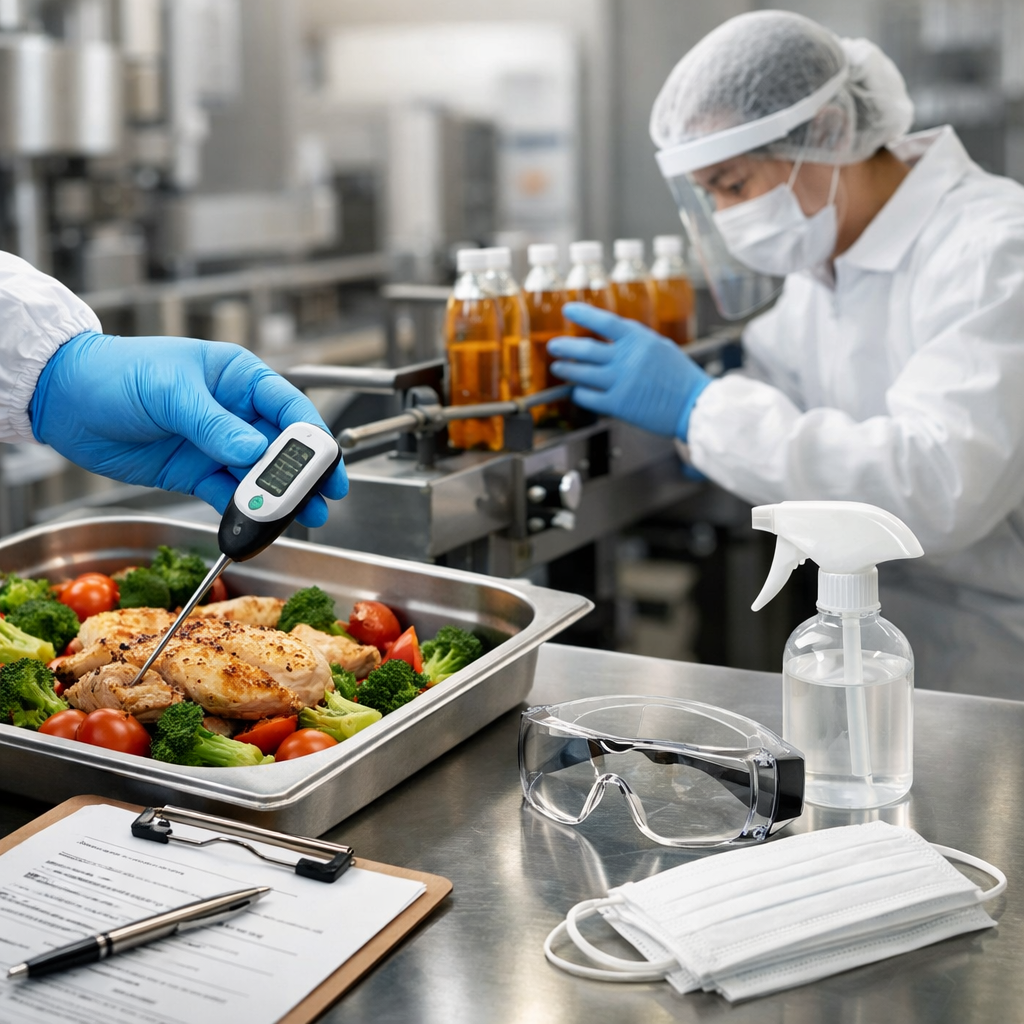
food industry hygiene and safety is the foundation of every safe, efficient, and legally compliant food workplace.
From processing plants and commercial kitchens to packaging lines and cold storage rooms, strong hygiene and safety systems protect workers, prevent contamination, and maintain consumer trust.
In occupational health, safety, and environment (OHSE) terms, the food sector faces a unique overlap of hazards. Employees may be exposed to biological contaminants, sharp tools, slippery floors, hot surfaces, moving machinery, chemicals, and repetitive manual tasks, often within the same shift.
That is why food industry hygiene and safety must be treated as a daily operational priority rather than a one-time checklist.
When businesses embed proper cleaning, personal hygiene, risk controls, and regulatory compliance into routine work, they reduce injuries, avoid product recalls, and build a safer culture across the site.
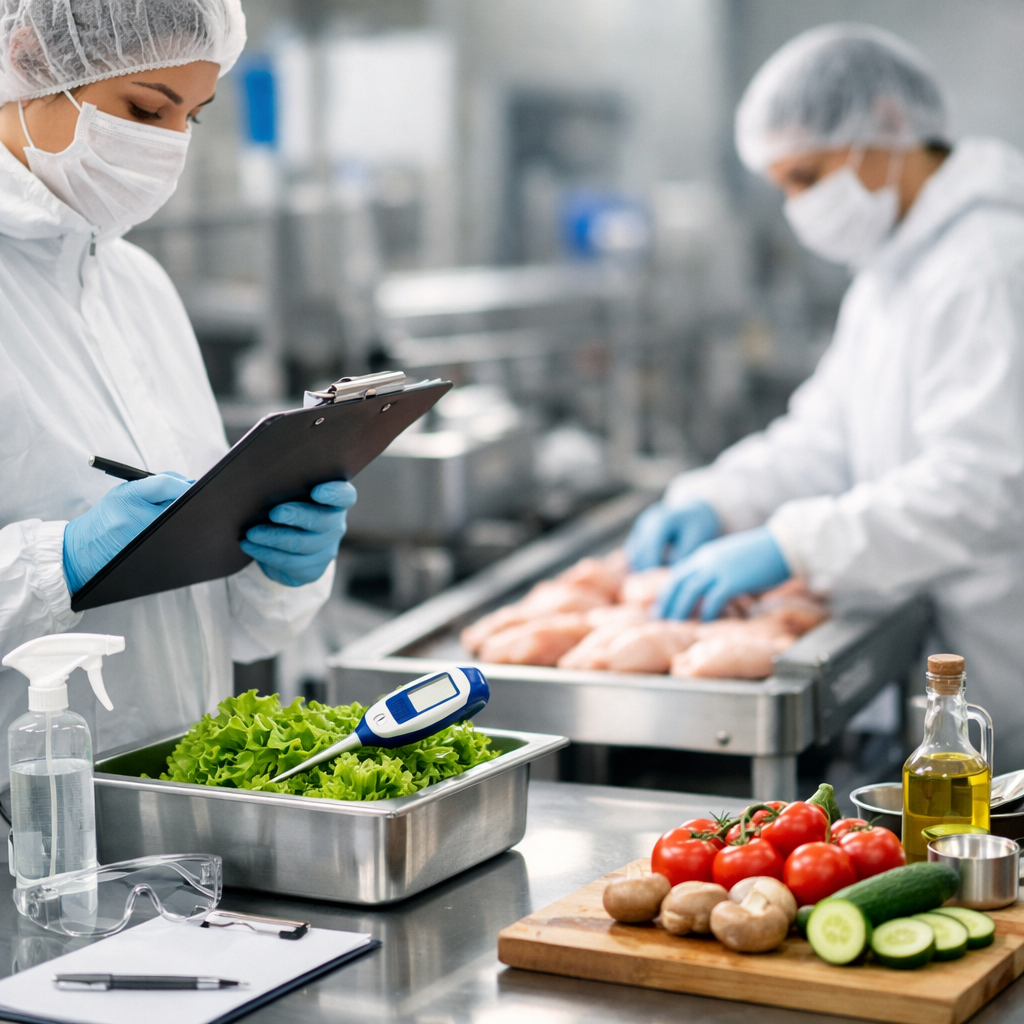
Why food industry hygiene and safety matters in every workplace
Food businesses operate in environments where a small mistake can lead to major consequences.
Poor handwashing, inadequate equipment sanitation, or cross-contamination between raw and ready-to-eat products can trigger foodborne illness outbreaks. At the same time, unsafe work practices can injure employees and disrupt operations.
Food industry hygiene and safety is not only about meeting customer expectations. It also supports OHSE goals by controlling hazards before they cause harm.
This includes protecting workers from infection, burns, cuts, chemical exposure, and musculoskeletal strain while ensuring that food remains safe throughout handling and processing.
Practical workplace examples show how closely hygiene and safety are linked. A worker rushing to clean a slicer without lockout procedures may suffer a serious hand injury.
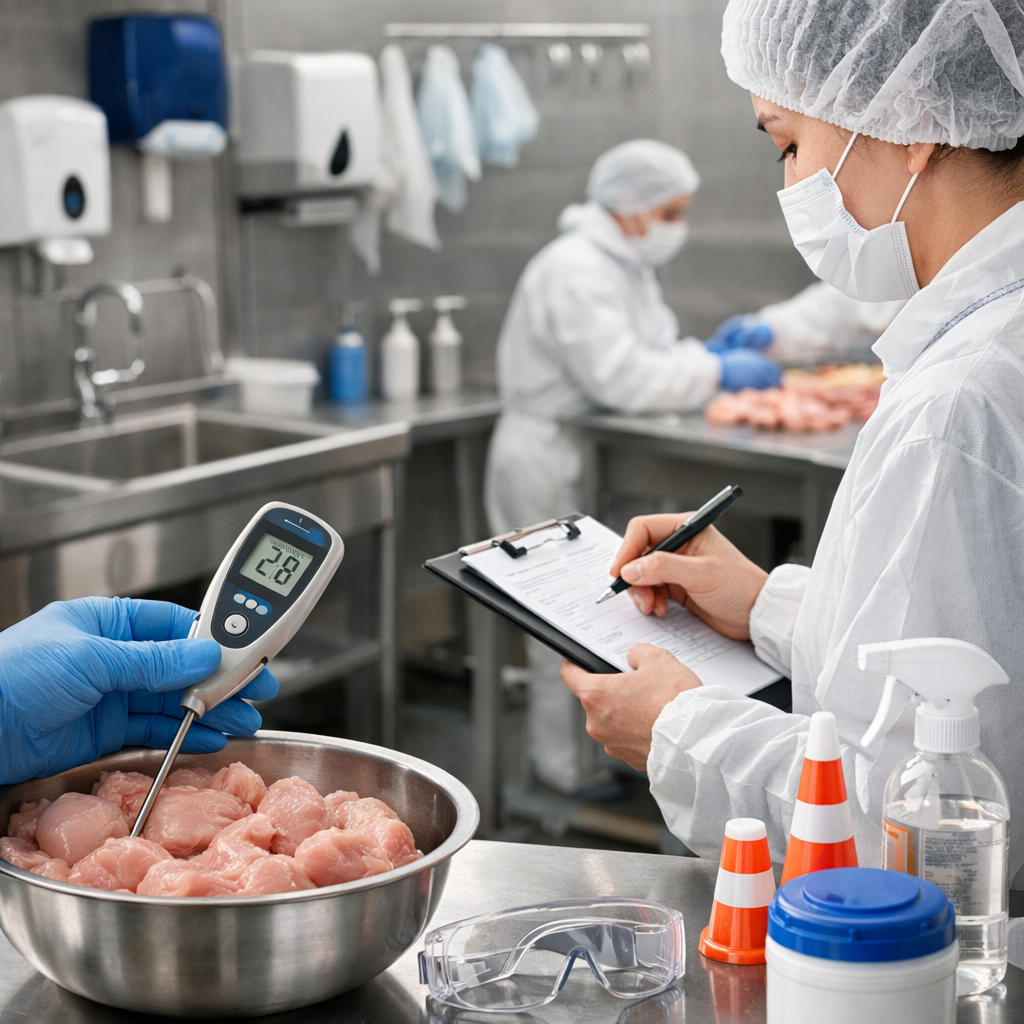
A poorly drained washdown area may create slip hazards while also spreading contamination through standing water. A mislabeled sanitizing chemical may harm an employee and taint a production batch.
These examples demonstrate why management systems must address both food safety and worker safety together.
Guidance from organizations such as OSHA and CCOHS supports this integrated approach, especially for hazard communication, sanitation, slips and falls, and machine safety.
Common risks in food industry hygiene and safety
Biological, chemical, and physical hazards
Biological hazards include bacteria, viruses, molds, and parasites that can spread through contaminated hands, raw materials, tools, and surfaces.
Common risks involve Salmonella, Listeria, and E. coli, especially in meat, dairy, seafood, and ready-to-eat environments.
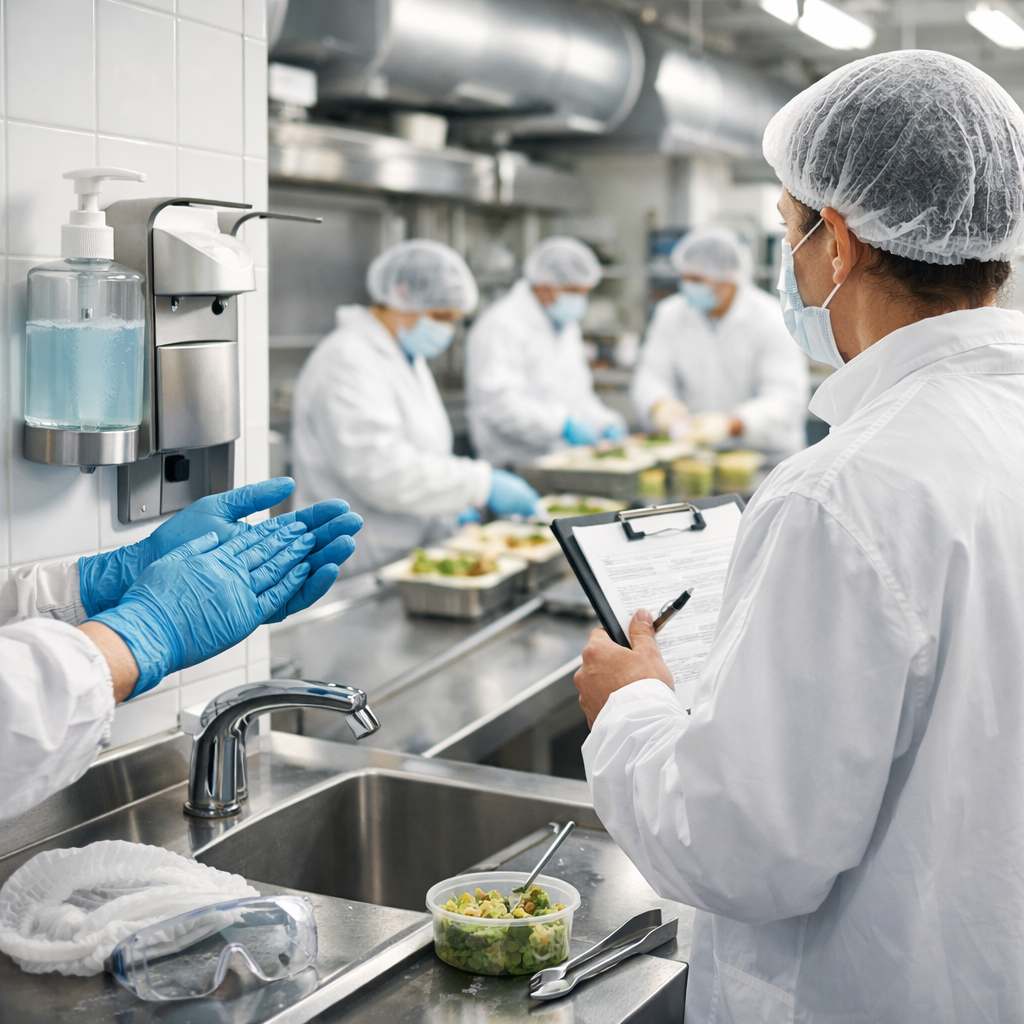
Chemical hazards may come from cleaning agents, disinfectants, pesticides, allergens, and maintenance materials. If chemicals are stored incorrectly or used at the wrong concentration, they can create respiratory irritation, skin burns, or unsafe residues on food-contact surfaces.
Physical hazards include broken glass, metal fragments, plastic pieces, and damaged equipment parts.
These hazards threaten both product quality and worker wellbeing.
Workplace safety hazards for employees
Food industry hygiene and safety also involves traditional OHSE risks that are common in fast-paced production settings.
- Slips, trips, and falls caused by grease, water, food waste, hoses, or uneven flooring
- Cuts and lacerations from knives, blades, grinders, and can-opening equipment
- Burns and scalds from ovens, steam lines, fryers, and hot liquids
- Manual handling injuries from lifting ingredient bags, moving crates, and repetitive packing tasks
- Machine entanglement involving conveyors, mixers, slicers, and packaging equipment
- Cold stress in refrigerated rooms and freezer environments
- Occupational dermatitis from frequent wet work, detergents, and glove use
For a fuller approach to hazard identification, many employers also connect food-specific controls with broader workplace programs such as incident reporting, inspections, and workplace risk assessment.
Preventing hazards through controls, hygiene, and PPE
Applying the Hierarchy of Controls
The most effective food industry hygiene and safety programs use the Hierarchy of Controls to reduce risk systematically.
This means starting with stronger control measures before relying only on worker behavior or PPE.
| Control Level | How It Applies in Food Workplaces |
|---|---|
| Elimination | Remove damaged tools, discard contaminated stock, and redesign processes to remove unnecessary hazard points |
| Substitution | Use safer chemicals, lower-risk cleaning products, or ergonomic tools instead of more hazardous alternatives |
| Engineering Controls | Install machine guards, ventilation, splash barriers, drainage systems, and hands-free wash stations |
| Administrative Controls | Use sanitation schedules, color-coded equipment, training, allergen procedures, signage, and safe work instructions |
| PPE | Provide gloves, aprons, face shields, hairnets, beard covers, slip-resistant footwear, and hearing protection where needed |
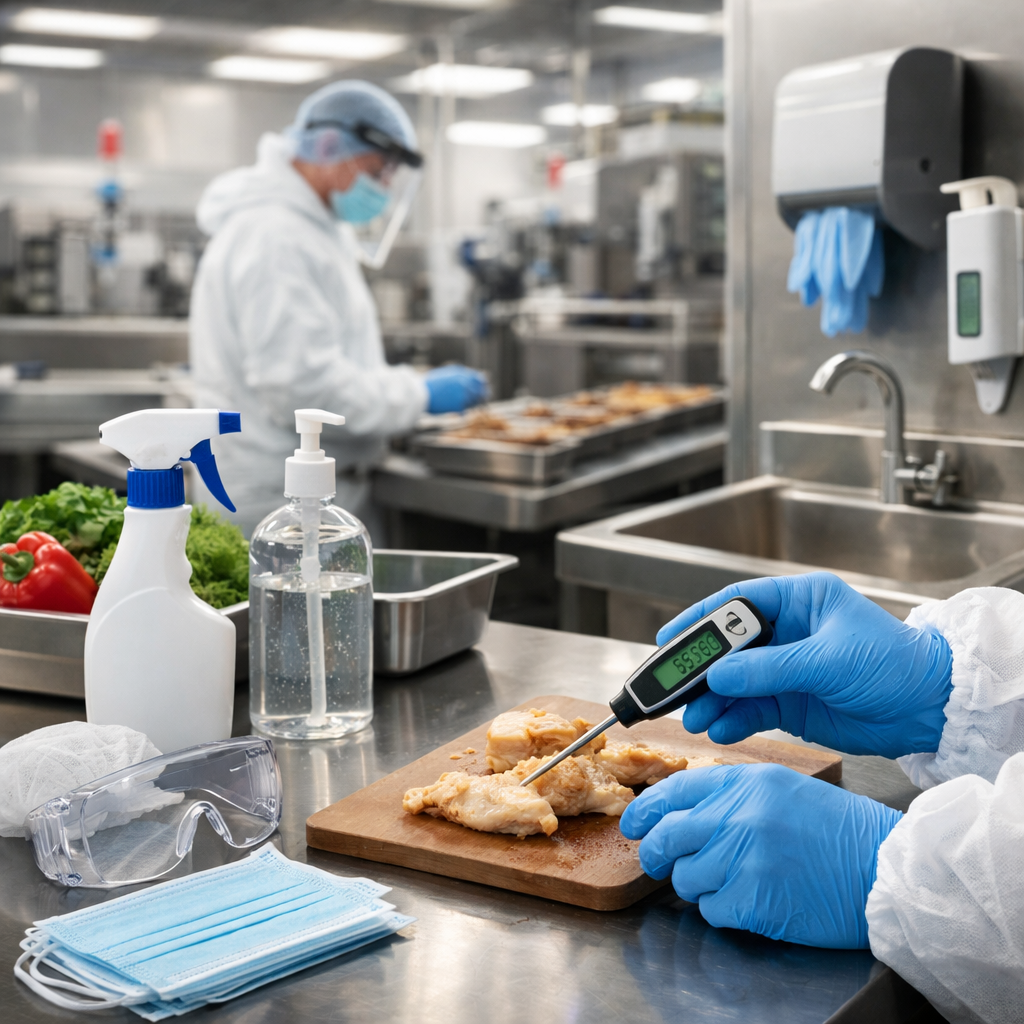
In practice, a raw poultry processing area may use separate zones, dedicated tools, temperature monitoring, and hand hygiene rules to prevent contamination, while also requiring cut-resistant gloves and lockout procedures during maintenance.
Personal hygiene and sanitation essentials
Personal hygiene remains one of the most important parts of food industry hygiene and safety.
Workers should wash hands thoroughly before starting work, after handling raw food, after breaks, after using the restroom, and after touching waste or contaminated surfaces.
Uniforms must be clean, illness reporting should be mandatory, and jewelry policies should be enforced to prevent contamination and entanglement hazards.
Cleaning and sanitation programs should clearly define what must be cleaned, how often, with which chemicals, and by whom.
Food-contact surfaces need validated cleaning methods, while high-touch non-food surfaces such as door handles and control panels should also be disinfected regularly.
Facilities often strengthen these practices through documented safety training programs and routine verification checks.
PPE for food industry hygiene and safety
PPE is essential, but it should support rather than replace stronger controls.
Appropriate PPE depends on the task and environment.
- Hairnets and beard covers to reduce contamination risks
- Disposable or task-specific gloves for food handling and sanitation work
- Cut-resistant gloves where blades and knives are used
- Waterproof aprons and sleeves for washdown or high-moisture tasks
- Slip-resistant footwear for wet processing and cleaning areas
- Eye and face protection when handling chemicals or high-pressure wash systems
- Hearing protection in noisy production zones
PPE must fit properly, be maintained in hygienic condition, and be replaced when damaged or contaminated.
Training is equally important so workers understand when PPE is required, how to wear it correctly, and where its limitations begin.
Compliance, monitoring, and practical examples of food industry hygiene and safety
Meeting legal and industry requirements
Compliance is a major part of food industry hygiene and safety.
Employers must meet food safety laws, worker safety regulations, sanitation standards, and often customer or certification requirements.
Depending on the country and operation, this may include HACCP-based systems, hazard communication, lockout/tagout, chemical safety, emergency planning, and documented training.
Resources from the U.S. Food and Drug Administration, OSHA, and CCOHS can help employers align food safety controls with OHSE duties.
Good compliance is visible in records and routines. This includes cleaning logs, temperature checks, pest control reports, incident investigations, PPE inspections, and supervisor audits.
It also requires active leadership. When supervisors correct unsafe shortcuts, respond to near misses, and encourage reporting without blame, the whole system becomes stronger.
Practical examples from the workplace
A bakery may reduce flour dust exposure by improving local exhaust ventilation, housekeeping, and storage methods while still requiring respiratory protection only for specific cleaning tasks.
A seafood plant may use color-coded knives and cutting boards to separate raw and cooked products, combined with anti-slip mats and cold-environment PPE for workers in chilled rooms.
A beverage facility may introduce automated chemical dosing to reduce splash risks, supported by eyewash stations, face shields, and clear sanitation instructions.
In a ready-to-eat meal operation, management may schedule hand hygiene observations and environmental swabbing, while also redesigning traffic flow so waste carts never cross clean packing areas.
Each of these examples shows that food industry hygiene and safety works best when practical controls match the real conditions of the site.
Food industry hygiene and safety is ultimately about prevention, accountability, and consistency.
When businesses identify risks early, apply the Hierarchy of Controls, provide the right PPE, and maintain strong compliance systems, they protect both people and products. In a sector where safety failures can affect employees, customers, and brand reputation at the same time, investing in food industry hygiene and safety is one of the most important decisions any food operation can make.