


heavy equipment safety in mining: Essential Risks, Controls, PPE, and Compliance Best Practices


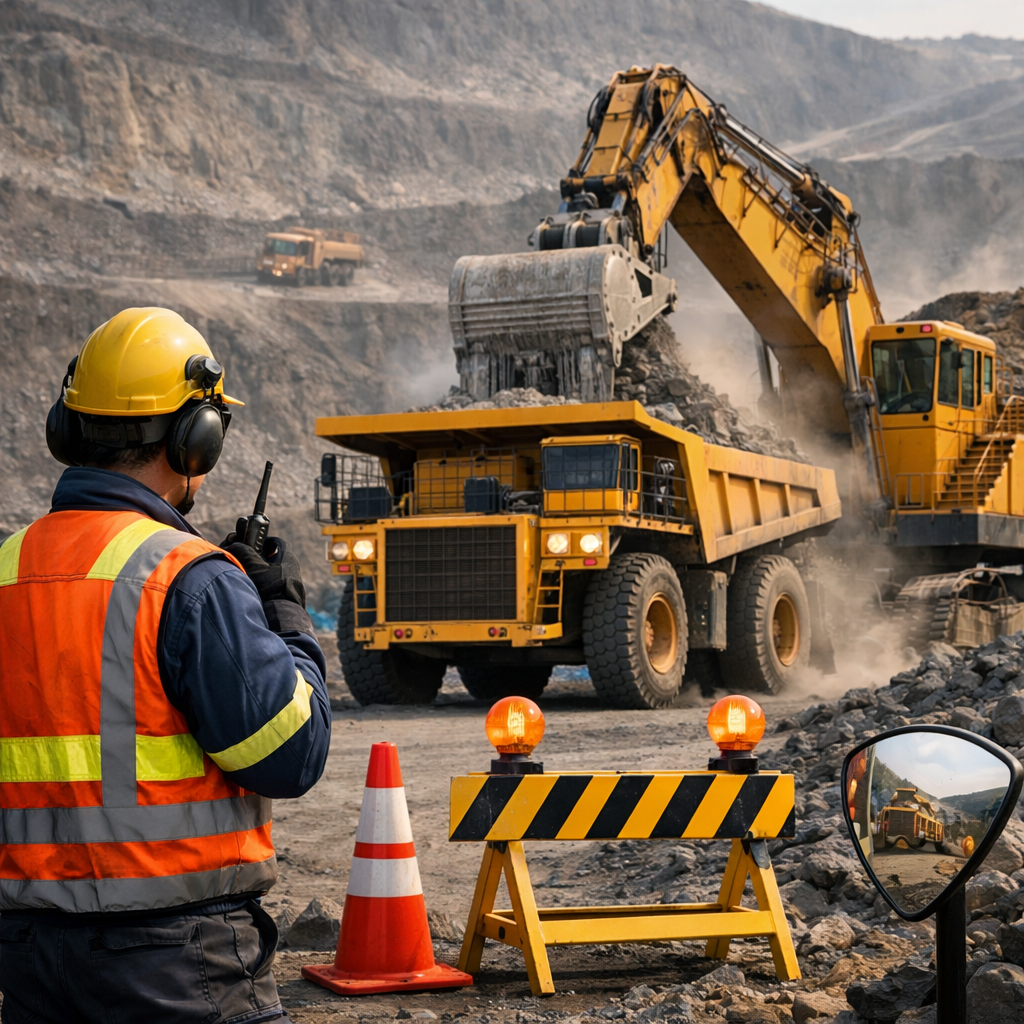
heavy equipment safety in mining is a critical part of protecting workers, maintaining production, and reducing the likelihood of serious incidents on mine sites.
From haul trucks and loaders to dozers, excavators, and drilling rigs, mining equipment operates in harsh conditions where visibility, ground stability, fatigue, and interaction with people can quickly turn routine tasks into high-risk events.
An effective safety program does more than remind operators to be careful. It combines hazard identification, engineering controls, training, supervision, maintenance, personal protective equipment, and regulatory compliance into one practical system.
When these elements work together, mines can lower injury rates, prevent equipment damage, and improve operational reliability without sacrificing productivity.
- Why heavy equipment safety in mining matters
- Key risks and the hierarchy of controls for heavy equipment safety in mining
- Heavy equipment safety in mining: practical prevention measures on site
- Training, PPE, and compliance requirements for heavy equipment safety in mining
- Building a stronger safety culture around mining equipment
Why heavy equipment safety in mining matters
Mining environments are dynamic and unforgiving. Equipment often works on steep grades, uneven haul roads, narrow benches, and in low-light or dusty conditions.
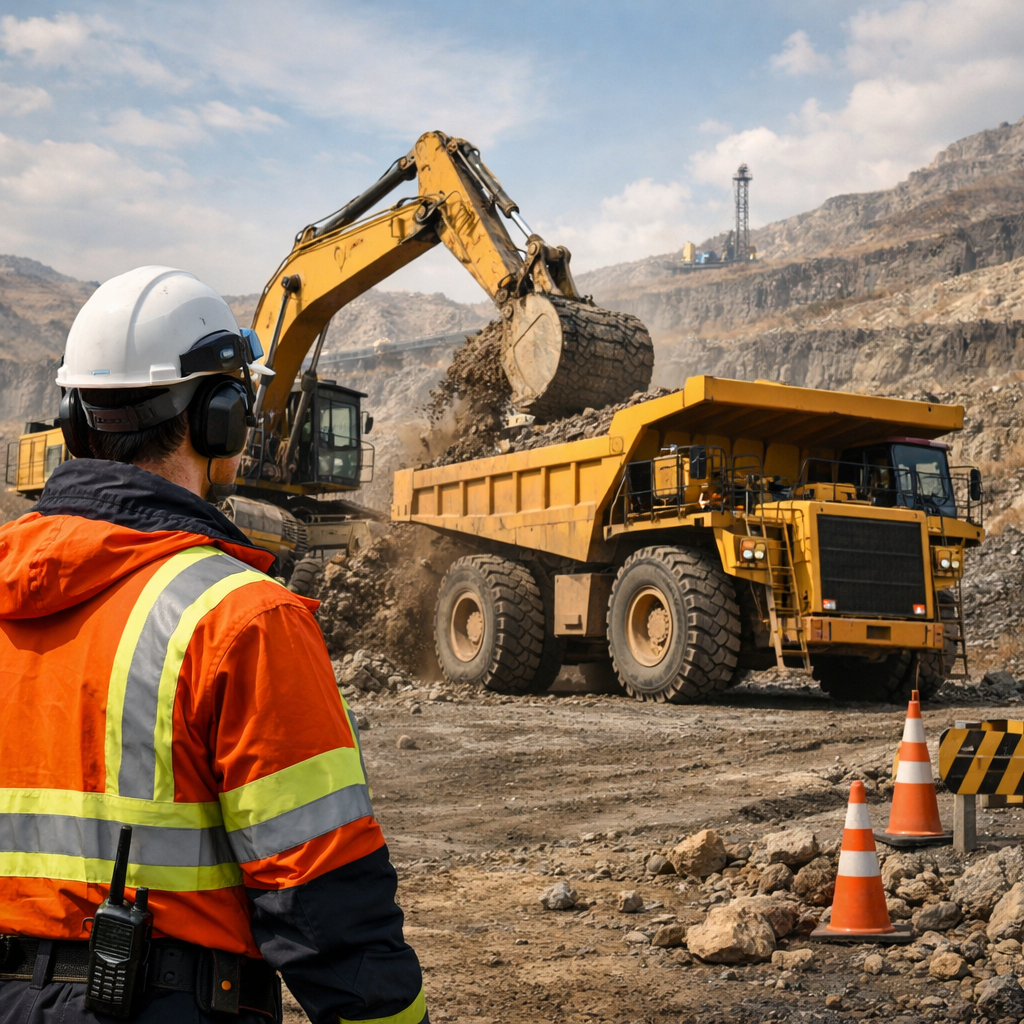
At the same time, large mobile plant can have blind spots, long stopping distances, and limited maneuverability, which makes collisions, rollovers, and struck-by incidents a constant concern.
The most common risks linked to heavy equipment safety in mining include vehicle-to-vehicle collisions, interaction between pedestrians and mobile plant, rollovers on unstable ground, mechanical failure, and entanglement during servicing.
Other major hazards include exposure to noise, whole-body vibration, diesel exhaust, hydraulic pressure, and stored energy during maintenance or shutdown tasks.
Practical examples show how quickly risk can escalate. A haul truck reversing near a shovel may not detect a light vehicle in a blind area.
A loader operating too close to an edge may trigger a ground collapse. A mechanic working beneath unsupported equipment may be exposed to crushing hazards if lockout procedures are not followed.
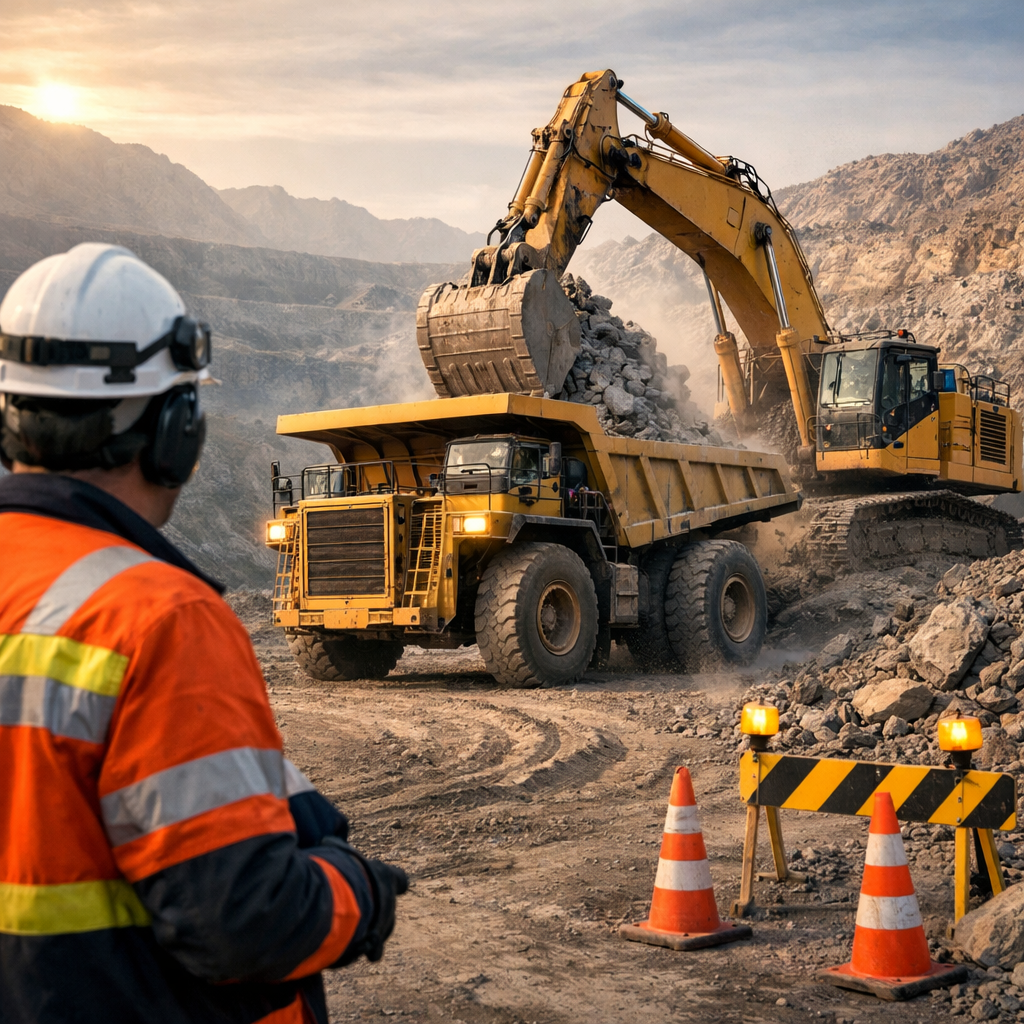
These are not rare or theoretical issues. Guidance from organizations such as OSHA and CCOHS consistently emphasizes vehicle interaction, maintenance controls, and worker competence as essential priorities in mining and other heavy industries.
Key risks and the hierarchy of controls for heavy equipment safety in mining
The best way to manage mining hazards is to apply the hierarchy of controls. This means starting with the most effective measures before relying on worker behavior alone.
Elimination and substitution
In some tasks, hazards can be removed entirely. For example, eliminating unnecessary pedestrian access in active loading zones reduces the chance of people interacting with mobile plant.
Substitution may involve using remote-controlled equipment in unstable areas or selecting lower-emission machinery to reduce diesel exposure in enclosed or underground settings.
Engineering controls
Engineering controls are among the most effective tools for heavy equipment safety in mining. These include collision-avoidance technology, proximity detection systems, reversing cameras, radar, seatbelt interlocks, speed limiters, and fatigue monitoring systems.
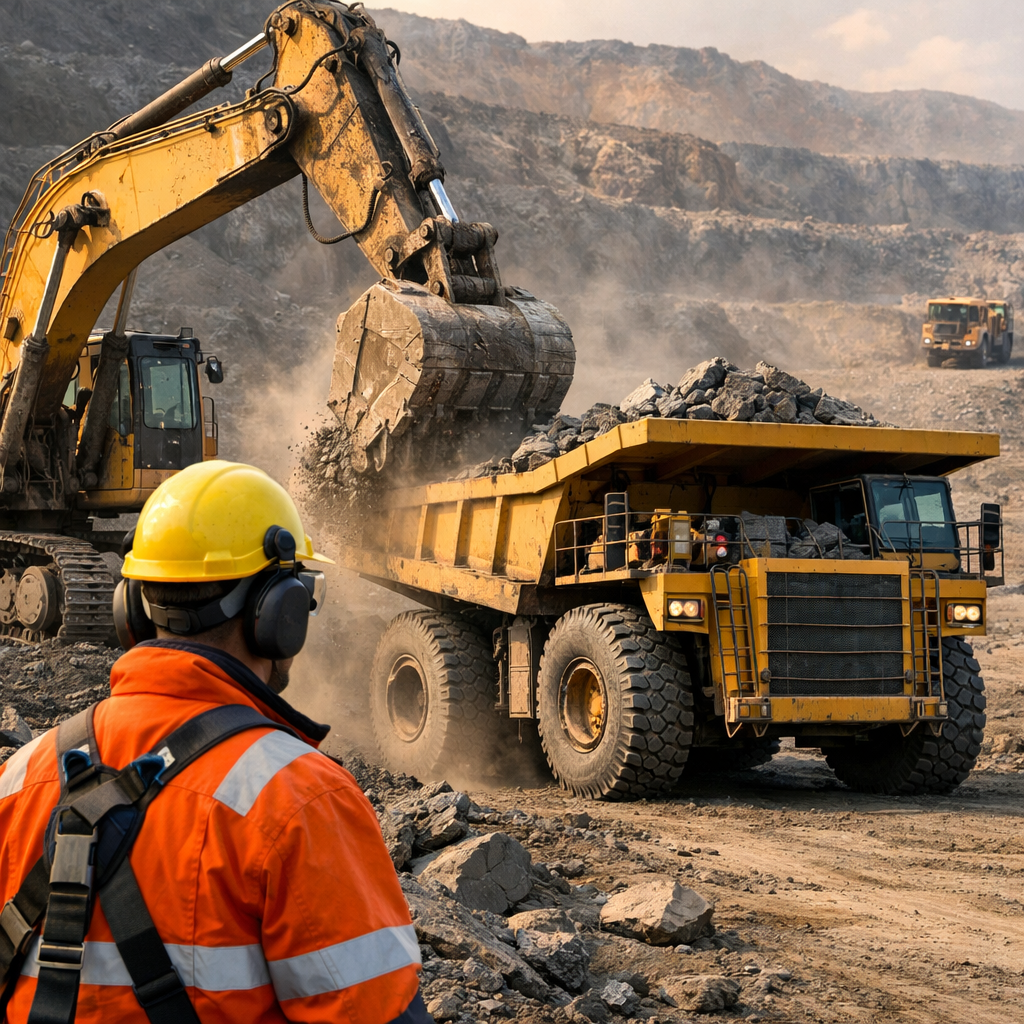
Road design also matters. Well-maintained haul roads, berms, drainage systems, signage, lighting, and designated crossing points can significantly reduce equipment incidents.
Physical guarding on moving parts, access systems with slip-resistant steps, and fall protection around service points all help control risk at the source.
Administrative controls
Administrative measures support engineering controls through safe work systems. These include traffic management plans, permit-to-work systems, pre-start inspections, spotter rules, lockout and tagout procedures, maintenance schedules, and clear radio communication protocols.
Training is especially important. Operators must be competent not only in machine operation but also in hazard recognition, load limits, slope awareness, emergency response, and safe shutdown practices.
Supervisors should reinforce these expectations through field observations, toolbox talks, and incident reviews. Mines often strengthen these systems through internal programs such as safety training programs and mobile plant risk assessments.
Personal protective equipment
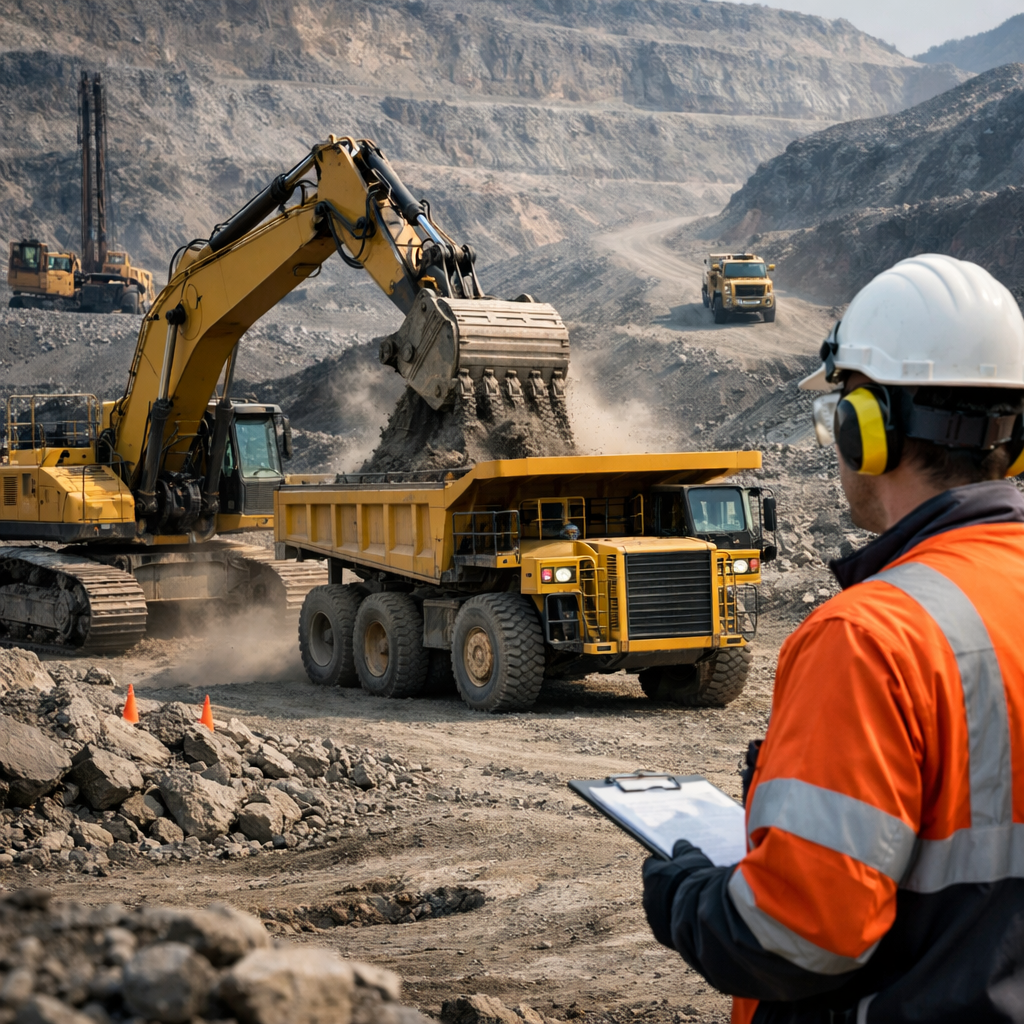
PPE is the last line of defense, not the first. Even so, it remains essential for workers around heavy equipment.
- Hard hats to protect against falling or flying objects
- High-visibility clothing for improved detection by operators
- Steel-toe boots with slip-resistant soles
- Safety glasses or goggles for dust and debris
- Hearing protection in high-noise zones
- Gloves suited to the task, especially during maintenance
- Respiratory protection where dust or diesel particulate exposure is present
PPE selection should match the task, environmental conditions, and specific site hazards. It should also be inspected, maintained, and replaced when damaged or worn.
Heavy equipment safety in mining: practical prevention measures on site
Prevention works best when it is built into daily operations. Every shift should begin with a structured pre-start check covering brakes, steering, tires or tracks, lights, alarms, mirrors, fire suppression systems, fluid leaks, and communication devices.
If a defect affects safe operation, the equipment should be removed from service until repaired.
Traffic management is another core element of heavy equipment safety in mining. Mines should separate pedestrians from operating plant wherever possible.
One-way systems, designated parking areas, exclusion zones around loading and dumping points, and strict right-of-way rules can reduce confusion and unsafe interactions.
Ground conditions must be monitored continuously. Water accumulation, loose material, erosion, and poor bench integrity can increase rollover and collapse risk.
Operators need clear instructions on edge distances, dumping procedures, and speed limits, especially during wet weather or reduced visibility.
Maintenance safety deserves special attention. Servicing heavy equipment often exposes workers to pinch points, pressurized hydraulic lines, hot surfaces, rotating parts, and stored energy.
Before maintenance begins, equipment should be isolated, lowered to a safe position where possible, chocked if needed, and locked out in accordance with site procedures. Unsupported raised components should never be relied on without proper stands or mechanical locking devices.
Examples of practical controls
| Hazard | Typical mining example | Practical control measure |
|---|---|---|
| Blind spots | Light vehicle near reversing haul truck | Exclusion zones, cameras, proximity detection, radio call-ups |
| Rollover | Loader operating near unstable edge | Berms, geotechnical checks, edge limits, seatbelt use |
| Mechanical failure | Brake loss on downhill haul road | Preventive maintenance, pre-start checks, safe grades, emergency ramps |
| Maintenance crush injury | Mechanic under raised dump body | Lockout, body props, isolation, permit and supervision |
Training, PPE, and compliance requirements for heavy equipment safety in mining
Competency-based training is one of the strongest predictors of safe equipment operation. New operators should receive formal instruction, supervised practical experience, and authorization before working independently.
Refresher training is also important after incidents, equipment changes, extended leave, or when unsafe behaviors are observed.
Training should cover machine-specific controls, safe approach distances, load handling, visibility limitations, fatigue awareness, weather-related hazards, and emergency procedures. Contractors should meet the same standards as permanent employees.
Heavy equipment safety in mining also depends on fit-for-purpose PPE and consistent compliance monitoring. High-visibility garments must remain visible despite dirt and wear.
Hearing protection should be selected based on actual noise exposure, and respirators should only be used where proper selection, fit testing, and maintenance programs are in place.
Compliance requirements vary by jurisdiction, but the principle is consistent: employers must identify hazards, assess risk, implement controls, provide training, inspect equipment, and document safety performance.
Mine operators should review legal duties under applicable mining and occupational health and safety laws, as well as guidance from regulators and industry bodies. Useful references include the NIOSH Mining Program, OSHA, and CCOHS.
Audits, inspections, and incident investigations help confirm whether controls are actually working. Near-miss reporting is especially valuable because it reveals weaknesses before a serious injury occurs.
If several near misses involve reversing equipment, for instance, the mine may need to redesign traffic flow, improve lighting, or introduce technology rather than simply reminding drivers to be more cautious.
Building a stronger safety culture around mining equipment
Strong procedures alone are not enough. Heavy equipment safety in mining improves most when workers, supervisors, maintenance teams, and managers all take ownership of risk control.
That means encouraging operators to report defects early, empowering workers to stop unsafe work, and making sure production targets never override critical safety rules.
Leading indicators can help mines stay proactive. These may include completion rates for pre-start inspections, seatbelt compliance, maintenance backlog levels, training currency, and the number of field safety interactions completed by supervisors.
When a site reviews these indicators regularly, it becomes easier to identify trends before they develop into serious incidents.
Practical success often comes from simple habits repeated consistently: walking around equipment before use, keeping windows and mirrors clean, wearing the right PPE, maintaining communication discipline, and staying out of line-of-fire positions during servicing and loading.
These actions may seem routine, but they are the foundation of safe performance in high-risk mining environments.
In the end, heavy equipment safety in mining is about controlling predictable hazards with disciplined systems, competent people, and well-maintained equipment. By combining risk assessment, the hierarchy of controls, proper PPE, and compliance with recognized OHSE standards, mining operations can better protect workers while sustaining reliable production.