
Incident Reporting Procedures for Faster Corrective Action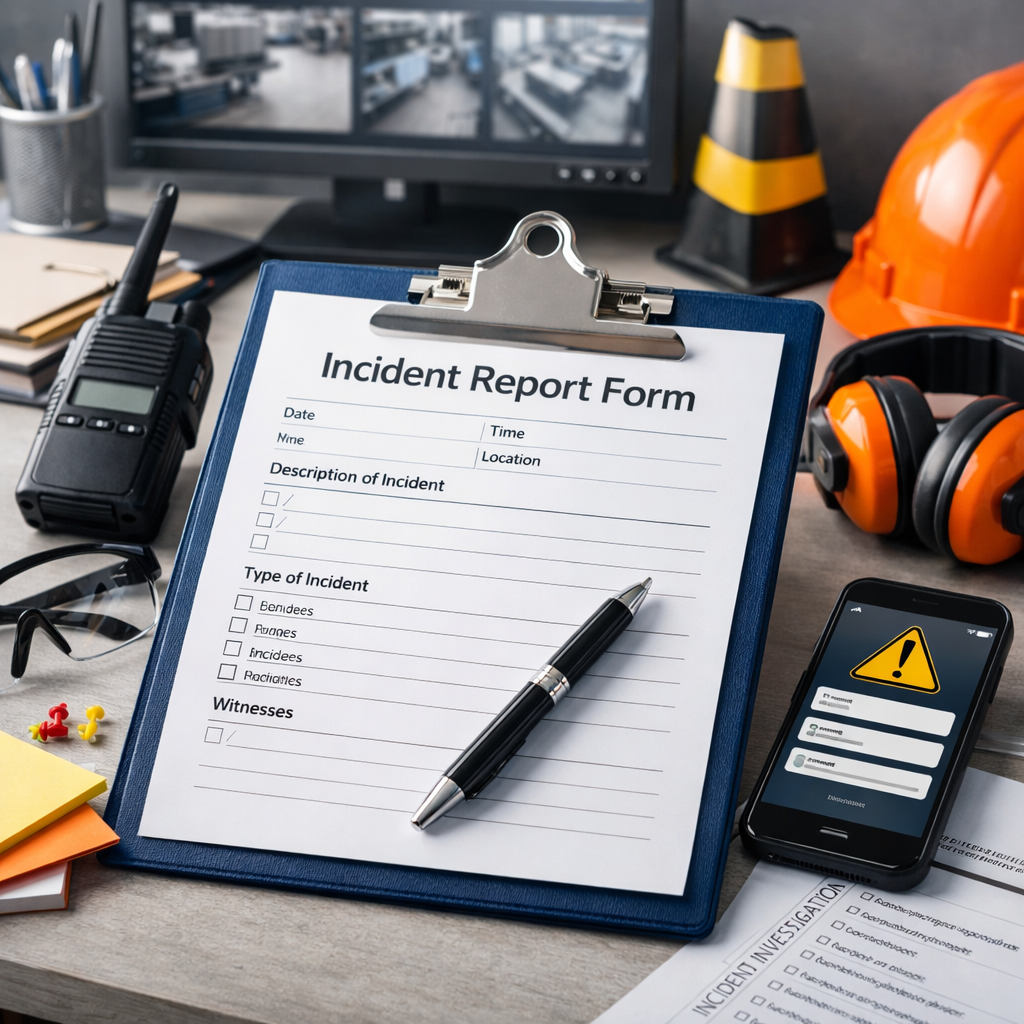

Incident reporting procedures are one of the most effective tools for identifying hazards early, reducing repeat events, and speeding up corrective action in any workplace.
When reports are clear, timely, and consistent, supervisors and safety teams can investigate root causes, control risks, and prevent similar incidents from happening again.
Strong reporting does more than document injuries. It helps organizations capture near misses, unsafe conditions, equipment failures, and process gaps before they turn into serious harm.
Whether the setting is construction, manufacturing, healthcare, warehousing, or office operations, effective incident reporting procedures support compliance, accountability, and continuous improvement.
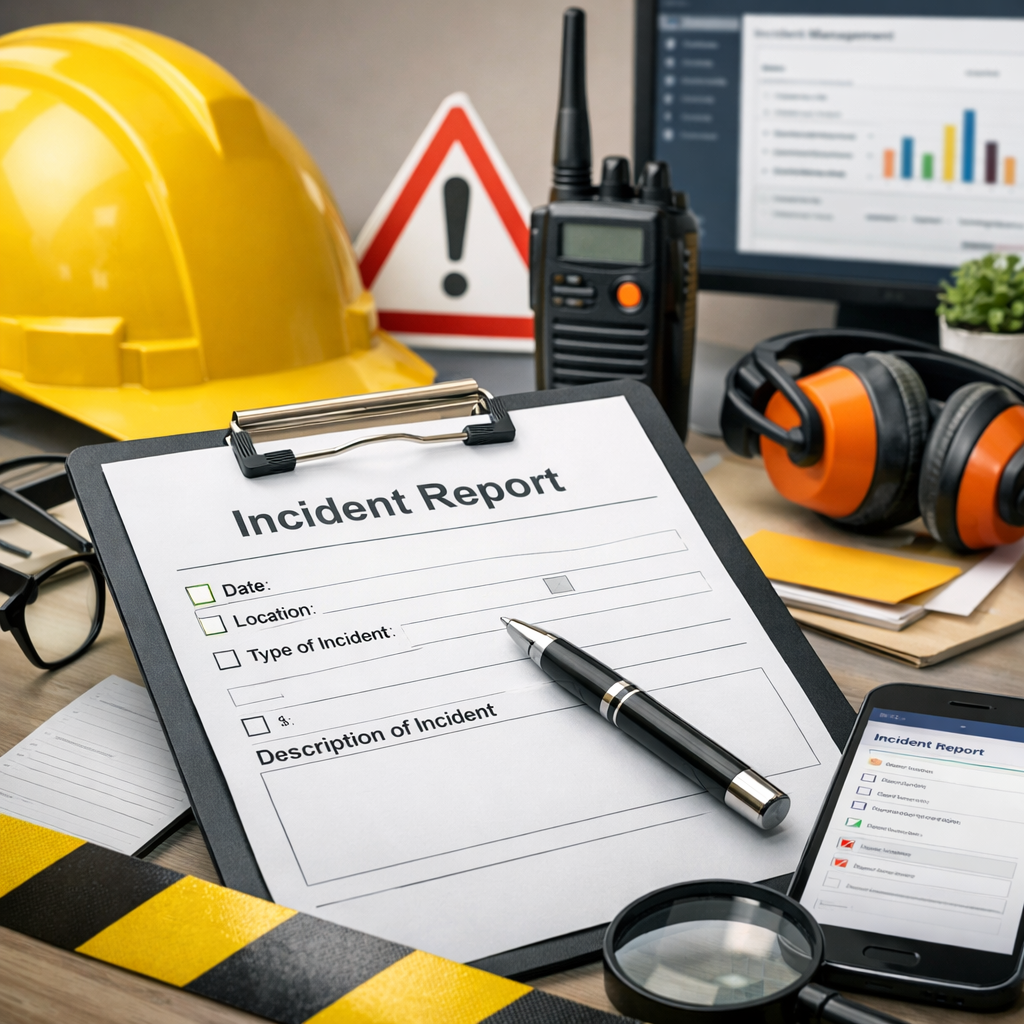
Why incident reporting procedures matter in real workplaces
Every incident provides information.
A worker slip, a chemical splash, a forklift near miss, or a damaged guardrail can all reveal weaknesses in training, supervision, maintenance, or risk controls.
Without effective incident reporting procedures, these warning signs are often missed. Problems may be patched temporarily instead of being corrected at the source.
That can lead to repeat incidents, lost productivity, legal exposure, and preventable injuries.
Fast reporting helps employers respond while facts are still fresh. Witness details are easier to confirm, physical evidence is easier to inspect, and hazardous conditions can be controlled before someone else is exposed.
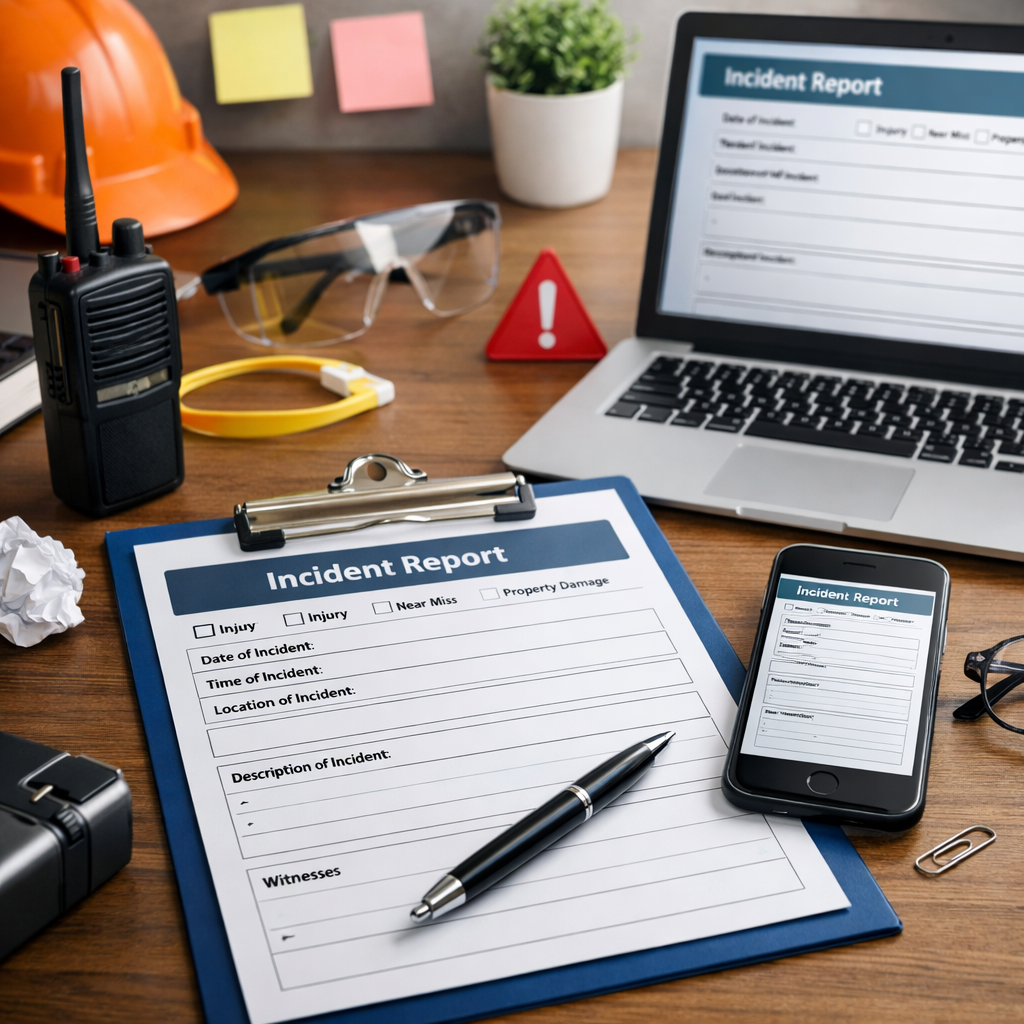
This is especially important when applying the Hierarchy of Controls, which prioritizes stronger measures such as elimination, substitution, engineering controls, administrative controls, and personal protective equipment.
For example, if workers repeatedly report cuts from a packaging station, the best corrective action may not be another reminder to “be careful.”
It may be to eliminate the sharp edge, substitute safer materials, install a guard, revise the work method, and confirm proper glove use.
Guidance from organizations such as OSHA and CCOHS consistently reinforces the value of prompt reporting, investigation, and corrective action as part of an effective occupational health and safety program.
What to report under incident reporting procedures
One common weakness in incident reporting procedures is defining incidents too narrowly.
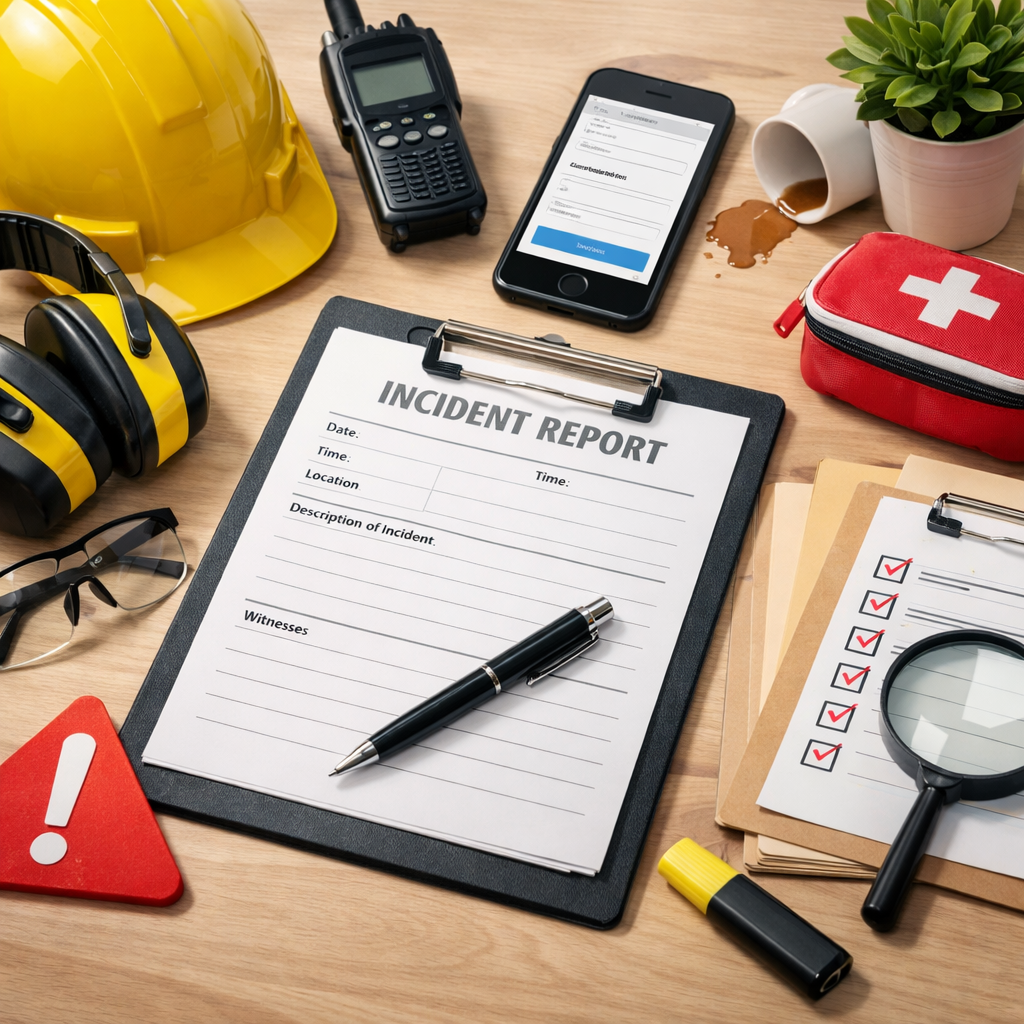
If workers believe only serious injuries should be reported, the organization loses valuable chances to control risk early.
Events and conditions that should be reported
- Work-related injuries and illnesses, including minor first-aid cases and symptoms that may worsen over time
- Near misses, where no one was harmed but the potential for injury, damage, or loss was present
- Unsafe acts or behaviors, such as bypassing guards, improper lifting, or not following lockout procedures
- Unsafe conditions, including spills, poor lighting, blocked exits, damaged flooring, or missing signage
- Equipment and vehicle incidents, such as brake failures, tool malfunctions, or collisions with structures
- Environmental releases, including chemical spills, dust exposure, or gas leaks
- Property damage that may indicate broader system failures
- Security and violence-related incidents, including threats, aggressive behavior, or unauthorized access
Clear incident reporting procedures should also explain what information to include in every report.
This allows managers and investigators to compare cases consistently and act faster.
Key details every report should capture
| Report Element | Why It Matters |
|---|---|
| Date, time, and location | Helps verify conditions, shift patterns, and environmental factors |
| People involved and witnesses | Supports fact-finding and follow-up interviews |
| Description of what happened | Provides the sequence of events for investigation |
| Injury, exposure, or damage details | Helps assess severity and immediate response needs |
| Immediate actions taken | Shows what was done to stabilize the situation |
| Hazards or contributing factors | Supports root cause analysis and corrective action |
| Photos or attachments | Improves accuracy and speeds decision-making |
A good report should focus on facts, not blame.
Instead of writing “the worker was careless,” it is more useful to document that a walkway was wet, no warning sign was in place, and the task required carrying materials with limited visibility.

Who should report and how responsibilities should work
Effective incident reporting procedures depend on shared responsibility.
Reporting should not be limited to supervisors or safety personnel.
Who should report workplace incidents
Workers should report injuries, near misses, hazards, and unsafe conditions as soon as possible.
They are often the first to see what actually happened and can provide essential details.
Supervisors should ensure immediate response, secure the area when needed, gather preliminary facts, and escalate the report according to company policy.
They also play a key role in starting temporary controls while a full investigation is underway.
Managers and employers should make sure reporting systems are accessible, timelines are defined, and corrective actions are tracked to completion.
They are responsible for ensuring legal requirements are met and resources are available.
Contractors, visitors, and temporary workers should also be included in incident reporting procedures.
If they can be exposed to workplace hazards, they need a clear way to report what they see.
To support this, many organizations create a simple reporting path:
- Report the incident immediately to a supervisor or designated contact
- Address urgent medical or safety needs first
- Complete the incident report form the same shift when possible
- Notify health and safety personnel for review and investigation
- Assign corrective actions with deadlines and responsible persons
- Verify completion and communicate lessons learned
Internal safety pages such as safety training checklist or near miss reporting guide can reinforce these expectations and help employees understand the process before an event occurs.
How to make incident reporting procedures faster and more effective
Speed matters, but speed alone is not enough.
The goal is to create incident reporting procedures that lead directly to high-quality corrective action.
Remove reporting barriers
If forms are too long, systems are confusing, or workers fear blame, incidents will go unreported.
Use simple forms, mobile-friendly tools, and clear instructions.
Allow verbal notification first when immediate action is needed, followed by documented details.
This helps organizations respond quickly without delaying medical care or hazard control.
Focus on root causes, not just symptoms
Corrective action is often delayed when investigations stop at the obvious cause.
If a worker fell, the deeper questions may involve housekeeping standards, floor maintenance, production pressure, footwear selection, or supervision.
Methods such as the five whys, cause mapping, or formal root cause analysis can improve the quality of findings.
The stronger the analysis, the stronger the corrective action.
Use the Hierarchy of Controls in corrective action
Good incident reporting procedures should connect findings to better controls.
For example:
- Elimination: remove an unnecessary hazardous step from the process
- Substitution: replace a harsh chemical with a less hazardous product
- Engineering controls: install guards, ventilation, barriers, or ergonomic aids
- Administrative controls: revise procedures, training, scheduling, or supervision
- PPE: use appropriate gloves, eye protection, hearing protection, or respirators
Corrective actions should also be specific, measurable, and assigned to named individuals with due dates.
A vague action such as “review safety” is rarely effective.
A stronger action would be “install anti-slip flooring in receiving area by June 15 and retrain all receiving staff on spill response by June 20.”
How to improve reporting culture for long-term results
The best incident reporting procedures will still fail if workplace culture discourages reporting.
People need to believe that raising concerns leads to action, not punishment.
Build trust and consistency
Employees are more likely to report when leaders respond respectfully, investigate fairly, and share outcomes.
If workers repeatedly submit reports and never hear what changed, reporting rates usually drop.
Supervisors should thank employees for reporting, especially near misses and hazards that prevented harm.
This shows that reporting is a contribution to safety performance, not an admission of failure.
Train everyone on what good reporting looks like
Do not assume workers know what should be reported or how much detail is needed.
Include incident reporting procedures in orientation, refresher training, toolbox talks, and contractor onboarding.
Real examples help.
Show workers the difference between a weak report and a strong one, explain how investigations work, and clarify when regulatory notification may be required.
Track trends and share lessons learned
Reporting should lead to insight.
Review incident data regularly to identify recurring hazards, high-risk tasks, problem equipment, and common contributing factors.
For example, if multiple reports involve hand injuries during maintenance, that may point to inadequate isolation, poor tool selection, or unclear procedures.
Sharing these trends during meetings helps workers see the value of reporting and supports faster preventive action.
Effective incident reporting procedures are not just about compliance paperwork. They are a practical system for identifying risk, learning from failure, and implementing corrective action before injuries escalate.
When organizations define what to report, make responsibilities clear, remove barriers, and build a strong reporting culture, they create safer workplaces and more reliable operations.
In the end, incident reporting procedures work best when they are simple, trusted, and tied directly to action. Faster reporting leads to faster investigation, better controls, and stronger prevention, which is exactly why incident reporting procedures should remain a core part of every workplace safety program.
No comments yet