


industrial robot safety awareness: Reducing Risk in Automated Workplaces


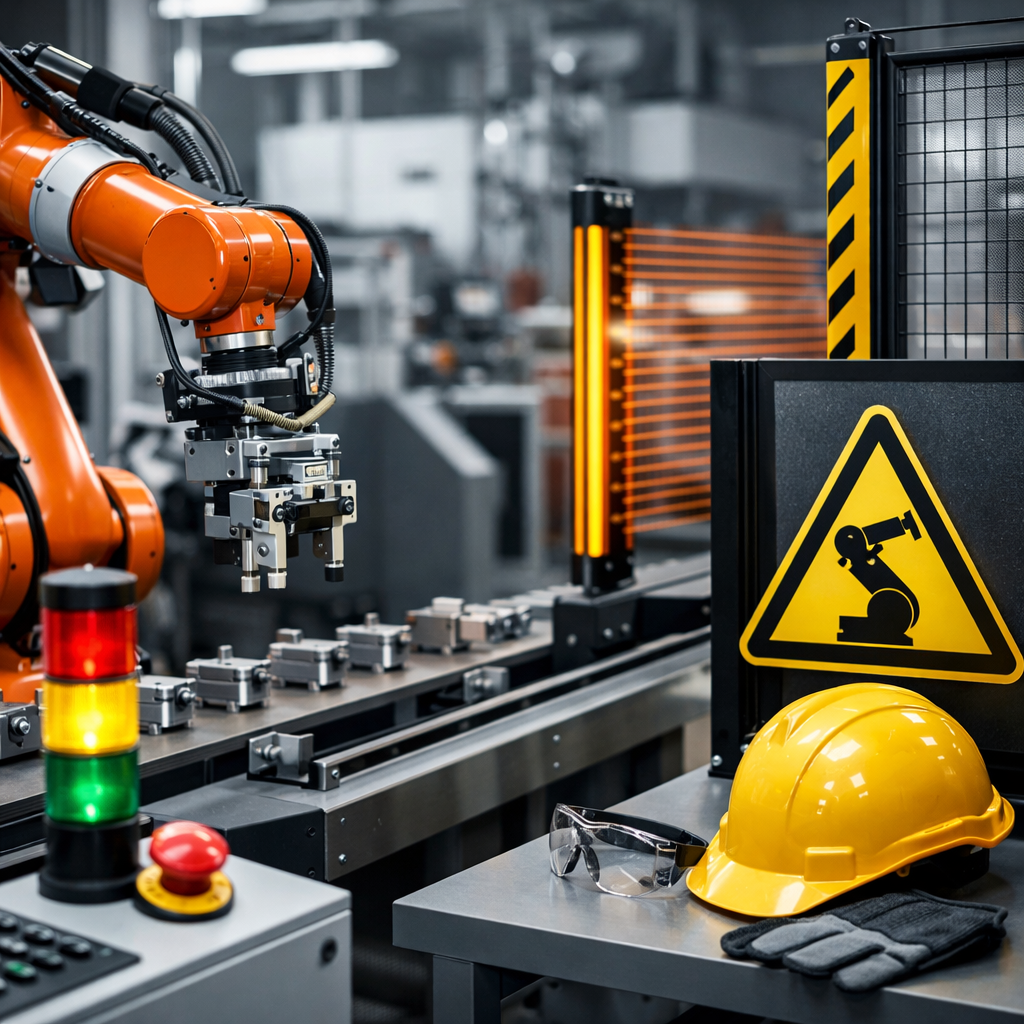
industrial robot safety awareness is essential in any workplace where automated systems, robotic arms, and collaborative robots operate near people.
As more manufacturers adopt robotics to improve speed, precision, and consistency, safety awareness must grow at the same pace to prevent injuries, downtime, and compliance failures.
Robots can weld, lift, cut, package, and assemble with impressive efficiency, but they also introduce serious hazards if workers are not trained to recognize risks and follow safe procedures.
In occupational health, safety, and environment programs, industrial robot safety awareness is not only about avoiding contact with moving equipment.
It also includes understanding energy isolation, guarding, emergency stops, programming risks, maintenance controls, personal protective equipment, and legal duties under recognized standards.
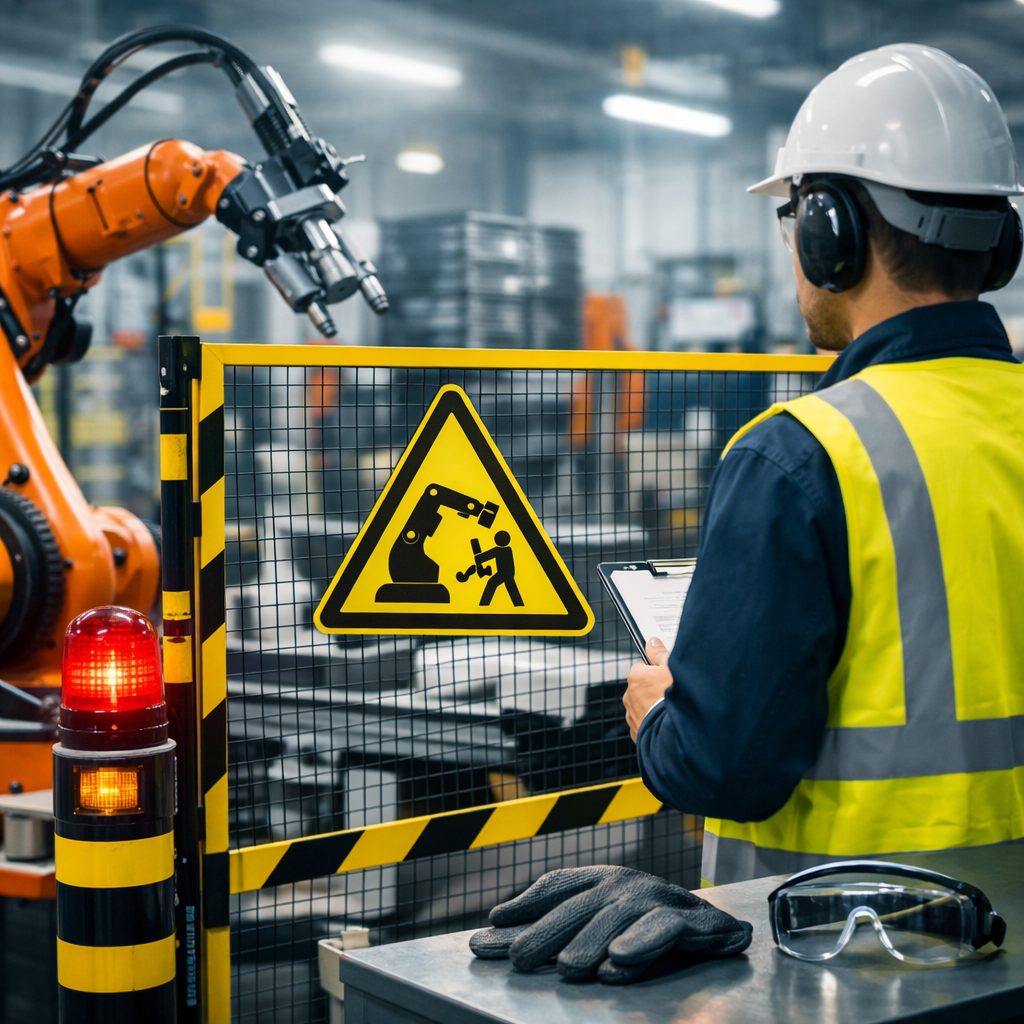
This article explains the main risks, prevention methods, PPE considerations, compliance requirements, and practical workplace examples that support safer robotic operations.
Why industrial robot safety awareness matters in OHSE programs
Robotic systems are often installed to reduce manual handling, repetitive work, and exposure to dangerous tasks.
However, robots do not automatically eliminate risk.
Instead, they change the type of risk workers face.
Employees may be exposed to impact hazards, pinch points, crushing zones, unexpected startup, electrical energy, stored pneumatic or hydraulic pressure, and even flying debris from automated tools.
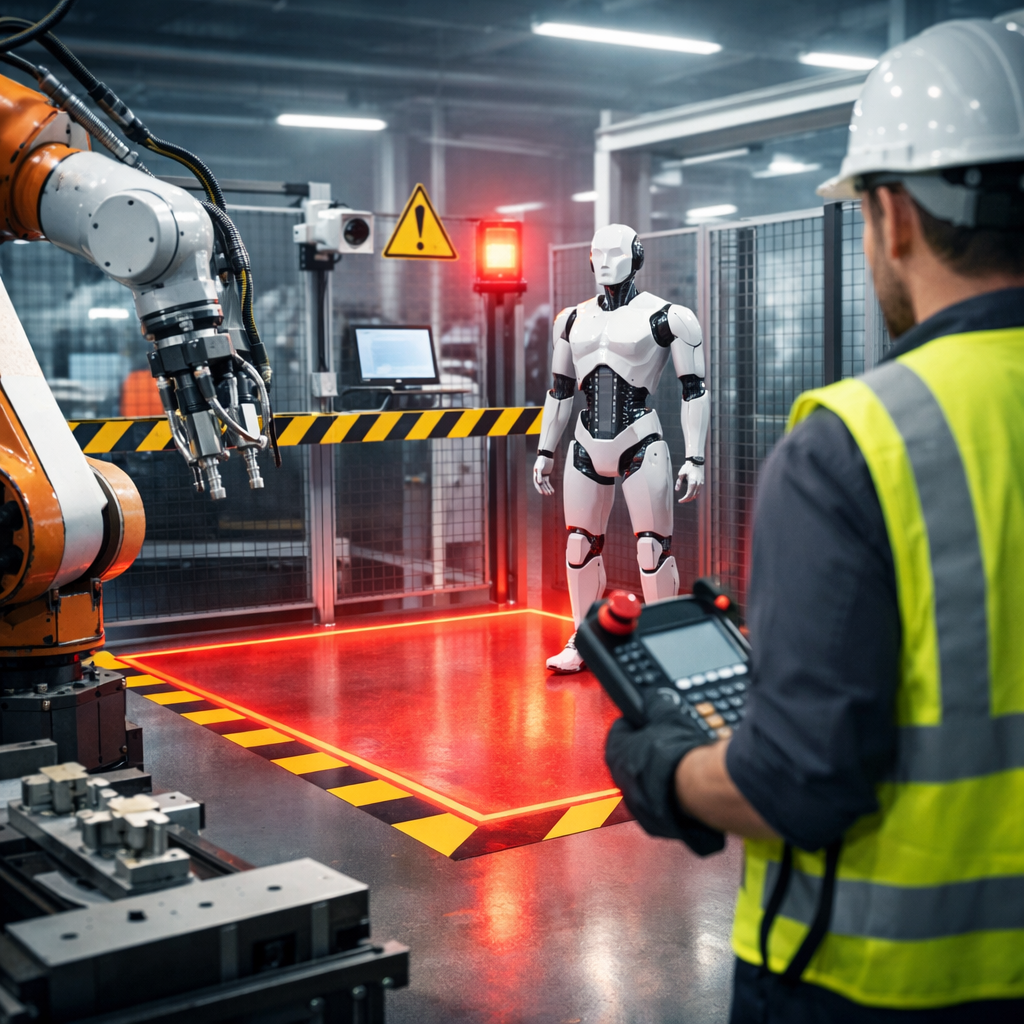
Industrial robot safety awareness helps workers, supervisors, and maintenance teams understand these hazards before an incident occurs.
It also supports stronger safety culture by making people more alert to exclusion zones, warning systems, lockout procedures, and safe behavior around programmed equipment.
In a busy production environment, workers can become comfortable around robots and begin to underestimate danger.
That is when near misses become more likely.
A robot can continue moving based on a programmed path without recognizing a person in its range unless sensors, barriers, or interlocks are functioning correctly.
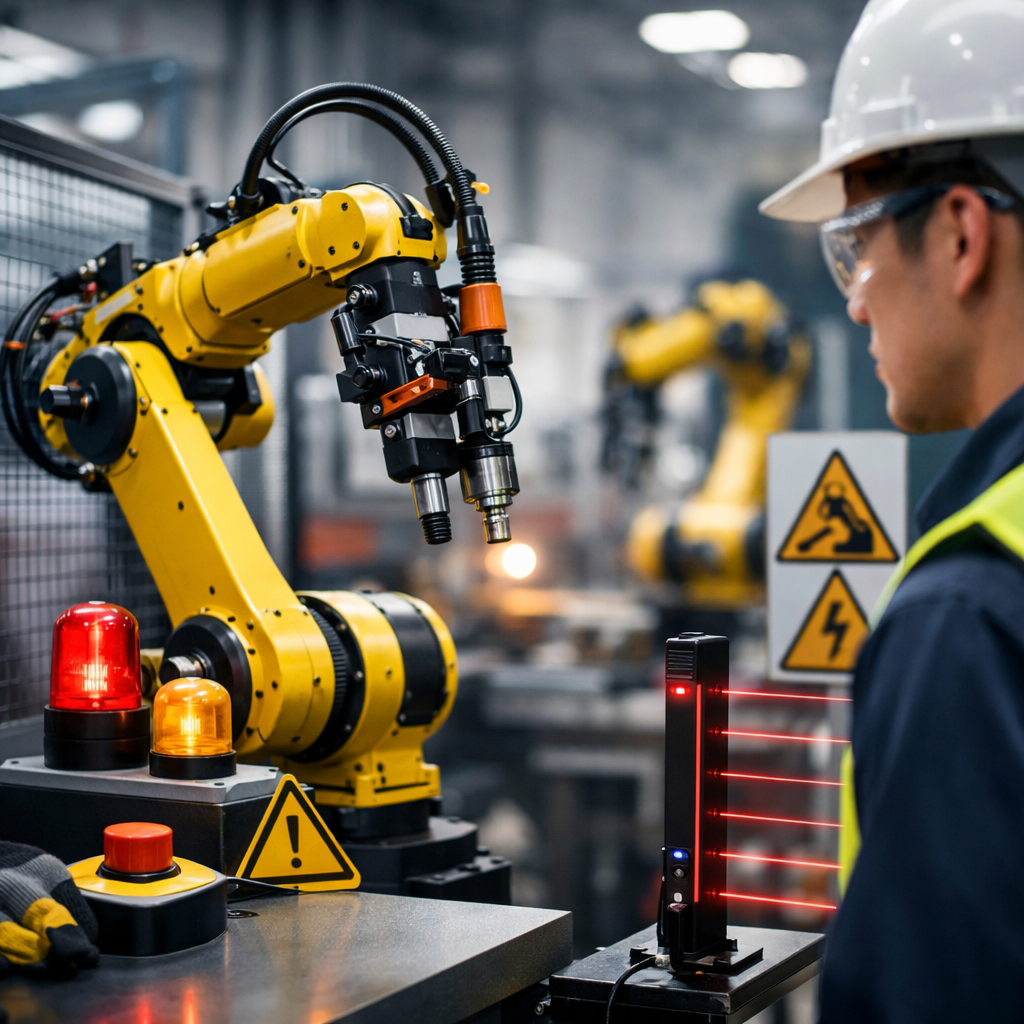
This is especially important during troubleshooting, cleaning, setup changes, or recovery after a jam.
OHSE programs should treat robotic equipment as a high-priority hazard area.
Resources from OSHA and CCOHS are useful for building procedures, training content, and inspection routines.
Companies can also improve performance by aligning robot safety procedures with their broader safety training programs and lockout-tagout best practices.
Common risks linked to industrial robot safety awareness
Mechanical and operational hazards
The most obvious risk is physical contact with a moving robot.
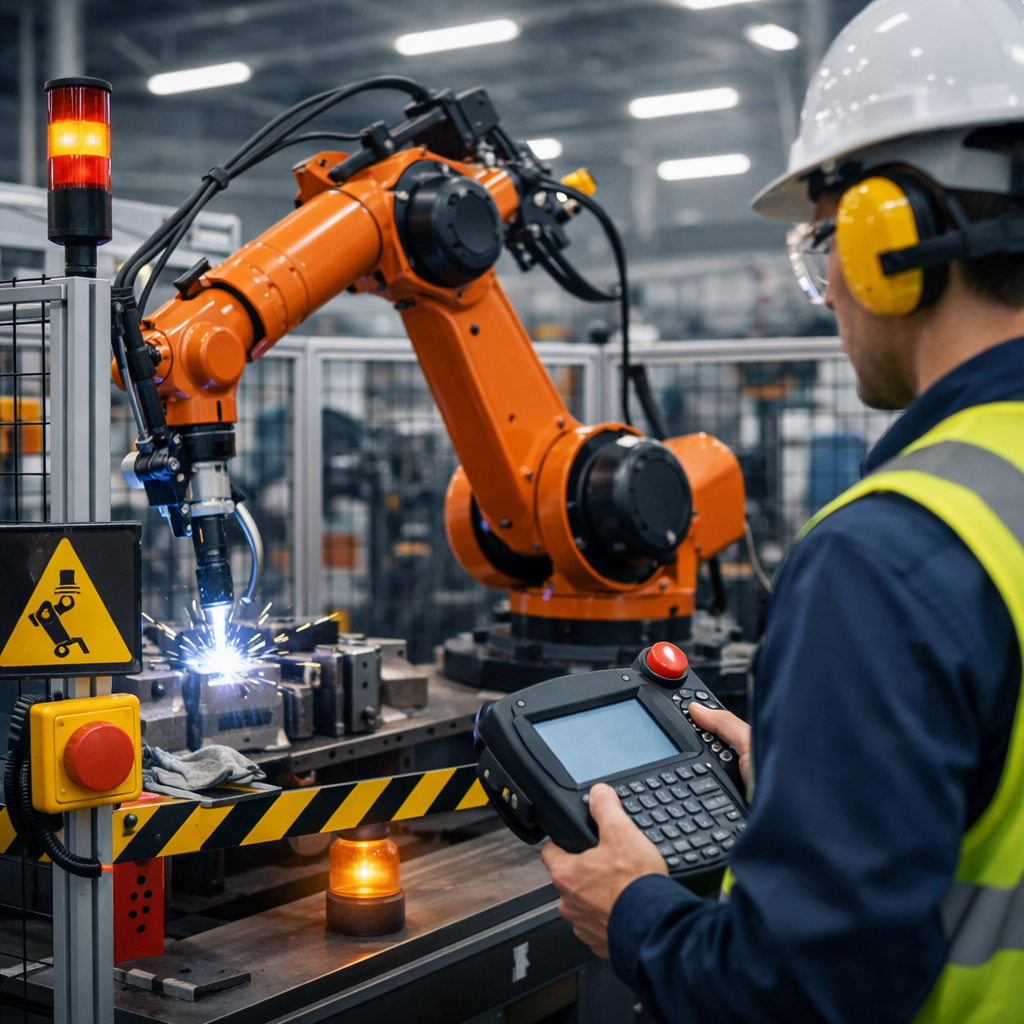
A worker can be struck by a robotic arm, trapped between the robot and a fixed object, or caught by end-of-arm tooling.
Automated cells also create danger through conveyors, rotating parts, clamps, grippers, and pallets.
These hazards are more severe when robots move at high speed or carry sharp, hot, or heavy loads.
Electrical, energy, and maintenance hazards
Many incidents happen during maintenance rather than normal production.
Workers may enter a cell to clear faults, inspect sensors, replace tooling, or restart the system.
If stored energy is not isolated, the robot may move unexpectedly.
Electrical shock, release of compressed air, and accidental activation during programming are all serious concerns.
Programming and human-factor risks
Industrial robot safety awareness also includes errors caused by poor communication or human behavior.
Examples include bypassing interlocks, standing inside restricted zones, failing to verify zero energy, or restarting a line before all personnel are clear.
Changes to robot programming can introduce new movement paths that create previously unknown hazards.
For this reason, any modification should trigger a fresh risk assessment.
- Impact hazards: collision with robotic arms or moving parts
- Crushing hazards: trapping between the robot and structures, fixtures, or loads
- Caught-in hazards: grippers, clamps, conveyors, and rotating equipment
- Electrical hazards: live circuits, damaged cables, and control panel exposure
- Stored energy hazards: pneumatic, hydraulic, spring, or gravitational force
- Tool-related hazards: heat, sparks, cutting edges, sharp components, and flying particles
- Human-factor hazards: distraction, complacency, poor training, and unauthorized access
Prevention strategies using the Hierarchy of Controls
The strongest approach to industrial robot safety awareness is prevention through the Hierarchy of Controls.
This framework helps employers choose the most effective controls rather than relying only on PPE or warning signs.
Elimination and substitution
Where possible, design the process to remove unnecessary human entry into robotic cells.
Automatic clearing systems, remote monitoring, or safer tooling can reduce direct exposure.
In some cases, replacing a hazardous end effector with a less dangerous option lowers injury potential.
Engineering controls
Engineering controls are critical in robotic environments.
These include perimeter fencing, fixed guards, light curtains, pressure-sensitive mats, interlocked gates, presence-sensing devices, emergency stop systems, and clearly marked exclusion zones.
Collaborative robots may operate with built-in force limiting, but they still require task-specific risk assessment.
Not every cobot application is automatically safe.
Administrative controls
Safe work procedures, permits for maintenance access, competency-based training, signage, inspections, and supervised startup all support industrial robot safety awareness.
Workers should know how to identify normal and abnormal robot behavior, report faults immediately, and never bypass safety devices.
Job hazard analyses and pre-task briefings are especially important during non-routine tasks.
PPE as the final layer
PPE does not replace guarding or isolation, but it remains necessary for many robot-related tasks.
The right PPE depends on the process and surrounding hazards.
For example, a robot welding cell may require eye protection, welding PPE, gloves, hearing protection, and protective clothing, while a packaging cell may mainly require safety glasses and protective footwear.
| Hazard | Example | Control Measure | PPE Consideration |
|---|---|---|---|
| Robot movement | Worker enters active cell | Interlocked gate and lockout procedure | Safety shoes, hard hat if required |
| Flying particles | Robotic cutting or grinding | Machine guarding and enclosed process | Safety glasses, face shield |
| Electrical exposure | Control panel maintenance | Energy isolation and qualified access only | Task-specific electrical PPE |
| Hot work | Robotic welding | Screens, ventilation, spark containment | Welding gloves, flame-resistant clothing |
PPE, compliance, and practical examples of industrial robot safety awareness
PPE selection in robot-assisted workplaces
PPE should be selected through hazard assessment, not habit.
Basic site PPE may include safety footwear, safety glasses, high-visibility clothing, gloves suited to the task, and hearing protection where noise is elevated.
Additional protection may be needed for welding, cutting, chemical application, or battery handling.
PPE must fit correctly and be compatible with the work.
Loose gloves or clothing can create entanglement risks around moving equipment, so task-specific selection matters.
Compliance and recognized standards
Industrial robot safety awareness is also a compliance issue.
Employers have a duty to identify hazards, assess risk, provide training, maintain equipment, and enforce safe systems of work.
OSHA guidance, CCOHS publications, and relevant robotic safety standards such as those developed by ISO and ANSI provide useful benchmarks.
Employers should maintain documented risk assessments, inspection records, lockout-tagout procedures, training logs, incident reports, and change-management reviews.
For detailed regulatory guidance, many safety professionals refer to OSHA robotics resources and recognized standards used within their sector.
Practical workplace examples
Consider a palletizing robot at the end of a production line.
During normal operation, guarding and light curtains prevent access.
One day, boxes begin to jam near the conveyor transfer point.
A worker steps around the barrier to clear the jam quickly instead of using the approved stop-and-isolate process.
The robot resumes motion and narrowly misses the worker.
This near miss shows how industrial robot safety awareness depends not just on equipment design, but also on supervision, training, and rule enforcement.
In another example, a maintenance technician enters a robotic welding cell after pressing stop but without applying full lockout-tagout.
Residual energy remains in the system, and the arm shifts position during troubleshooting.
No injury occurs, but the event reveals a gap in energy isolation procedures and verification steps.
A corrective action plan may include retraining, revised permits, and improved zero-energy checks.
A stronger safety program would also review whether the layout encourages risky shortcuts.
Clear walkways, better access points, visible alarms, and practical response procedures can make compliance easier for workers under production pressure.
Industrial robot safety awareness works best when safe behavior is designed into the job, not added as an afterthought.
In conclusion, industrial robot safety awareness is a core part of modern OHSE performance wherever automation and people share the workplace.
By recognizing key risks, applying the Hierarchy of Controls, selecting PPE carefully, and following OSHA, CCOHS, and internal safety procedures, organizations can reduce injuries and improve reliability.
Training, guarding, lockout-tagout, and regular risk review are all essential.
When industrial robot safety awareness becomes part of everyday decision-making, automated workplaces become safer, more compliant, and more productive for everyone.