


laboratory chemical storage safety: Essential Practices for a Safer Lab


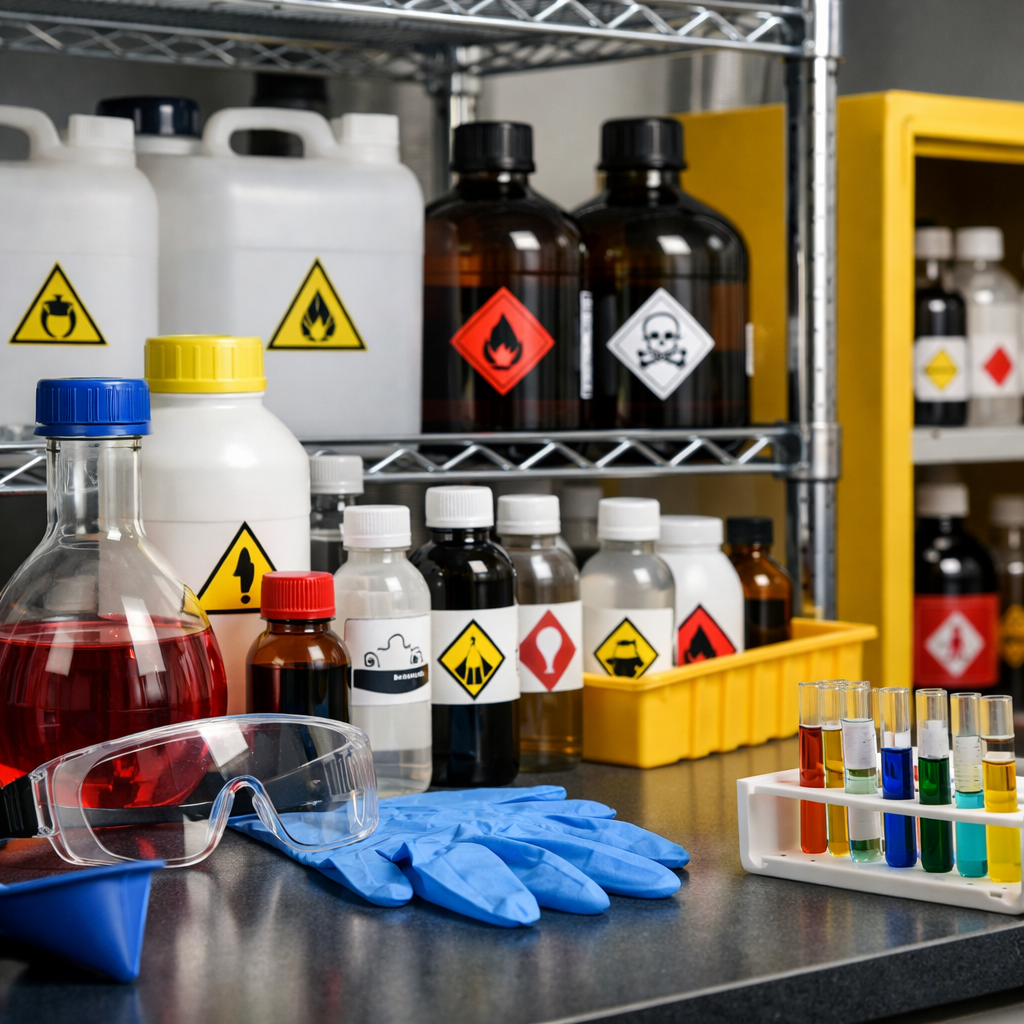
laboratory chemical storage safety is a critical part of occupational health, safety, and environmental protection in any research, education, medical, or industrial setting.
When chemicals are stored incorrectly, the result can be fires, toxic releases, harmful reactions, injuries, environmental contamination, and regulatory breaches. Good storage practices do far more than keep a lab tidy. They protect workers, preserve chemical integrity, reduce waste, and help organizations meet legal and professional obligations.
From flammable solvents and corrosive acids to oxidizers and compressed gases, every chemical brings its own storage requirements. A safe system relies on proper segregation, clear labeling, suitable cabinets, spill control, worker training, and routine inspection. In practical terms, that means matching each substance to the right location and making sure everyone in the workplace knows how to handle it safely.
- Why laboratory chemical storage safety matters in real workplaces
- Core principles of laboratory chemical storage safety
- Prevention measures using the Hierarchy of Controls
- PPE, inspections, and everyday storage practices
- Compliance, training, and practical examples of laboratory chemical storage safety
Why laboratory chemical storage safety matters in real workplaces
Laboratories often contain many incompatible substances in a relatively small area. If nitric acid is placed beside organic solvents, or if bleach is stored near acids, a simple spill can quickly become a dangerous chemical reaction. Even common materials can create major hazards when the storage arrangement is poor.
Real workplace incidents show that chemical storage failures are rarely caused by one mistake alone. More often, they involve a combination of factors such as overcrowded shelves, old containers, missing labels, poor ventilation, and weak housekeeping. In schools, hospitals, university labs, and manufacturing facilities, these issues can expose workers, students, contractors, and emergency responders to avoidable risk.
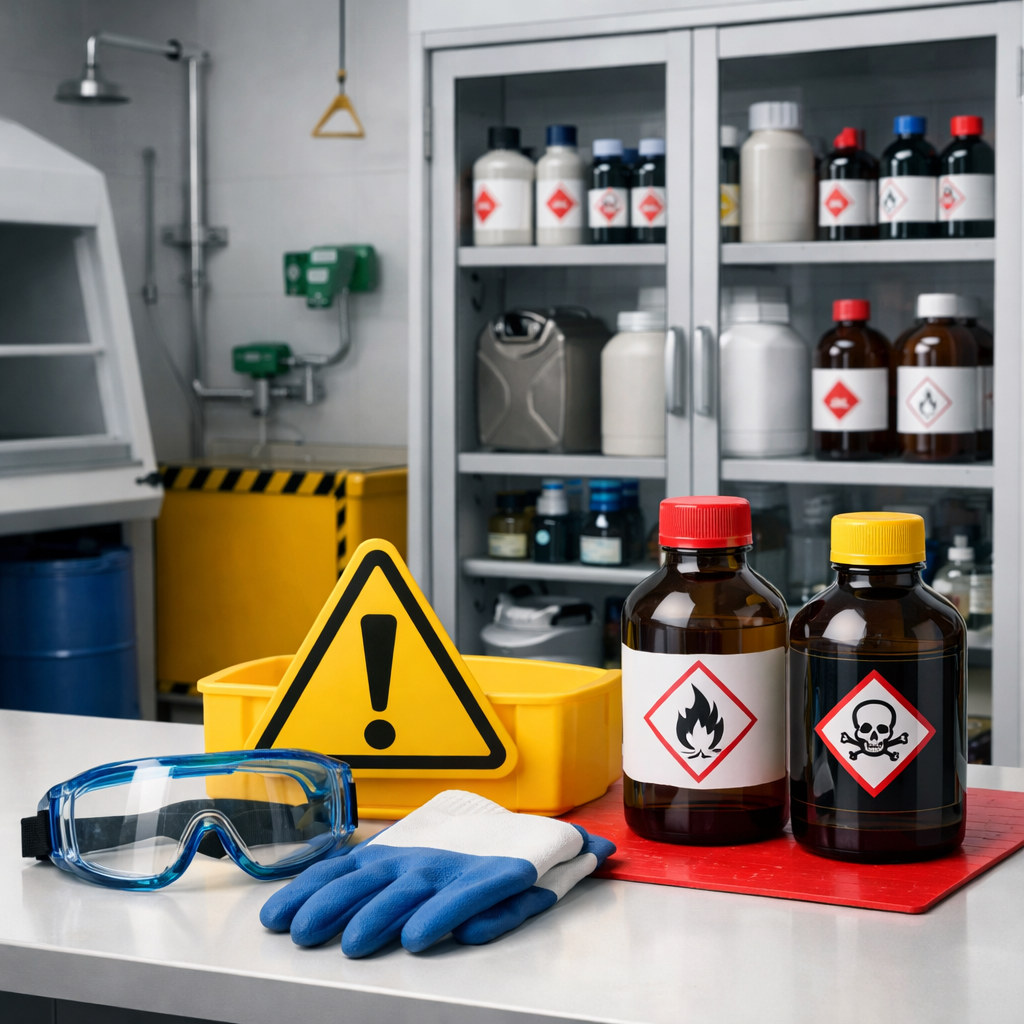
The most common risks linked to poor storage include:
- Fire and explosion from flammables stored near ignition sources
- Toxic gas generation from incompatible chemicals mixing
- Chemical burns from leaking corrosives
- Inhalation exposure from volatile substances in unventilated spaces
- Environmental releases from damaged containers or inadequate spill containment
- Injuries during handling because of unstable shelving or overloaded cabinets
Organizations such as OSHA and CCOHS emphasize that safe storage is a basic control measure within any chemical management program. It is also closely tied to broader systems such as hazard communication, emergency planning, and exposure prevention.
Core principles of laboratory chemical storage safety
Segregate chemicals by hazard class, not alphabetically
One of the most important rules in laboratory chemical storage safety is to separate chemicals according to compatibility. Alphabetical order may seem efficient, but it can place incompatible materials side by side. Storage should instead be based on hazard class, with a secondary alphabetical arrangement only within compatible groups.
Typical segregation groups include flammables, corrosive acids, corrosive bases, oxidizers, toxics, water-reactive substances, and compressed gases. Special attention should be given to highly reactive chemicals such as peroxide-forming solvents, pyrophorics, and substances with strict temperature requirements.
Use appropriate cabinets, containers, and locations
Flammable liquids should be stored in approved flammable storage cabinets where required. Acids and bases should be placed in corrosion-resistant cabinets, with acids separated from alkalis and incompatible acid types stored apart where necessary. Gas cylinders must be secured upright and protected from impact, heat, and uncontrolled movement.
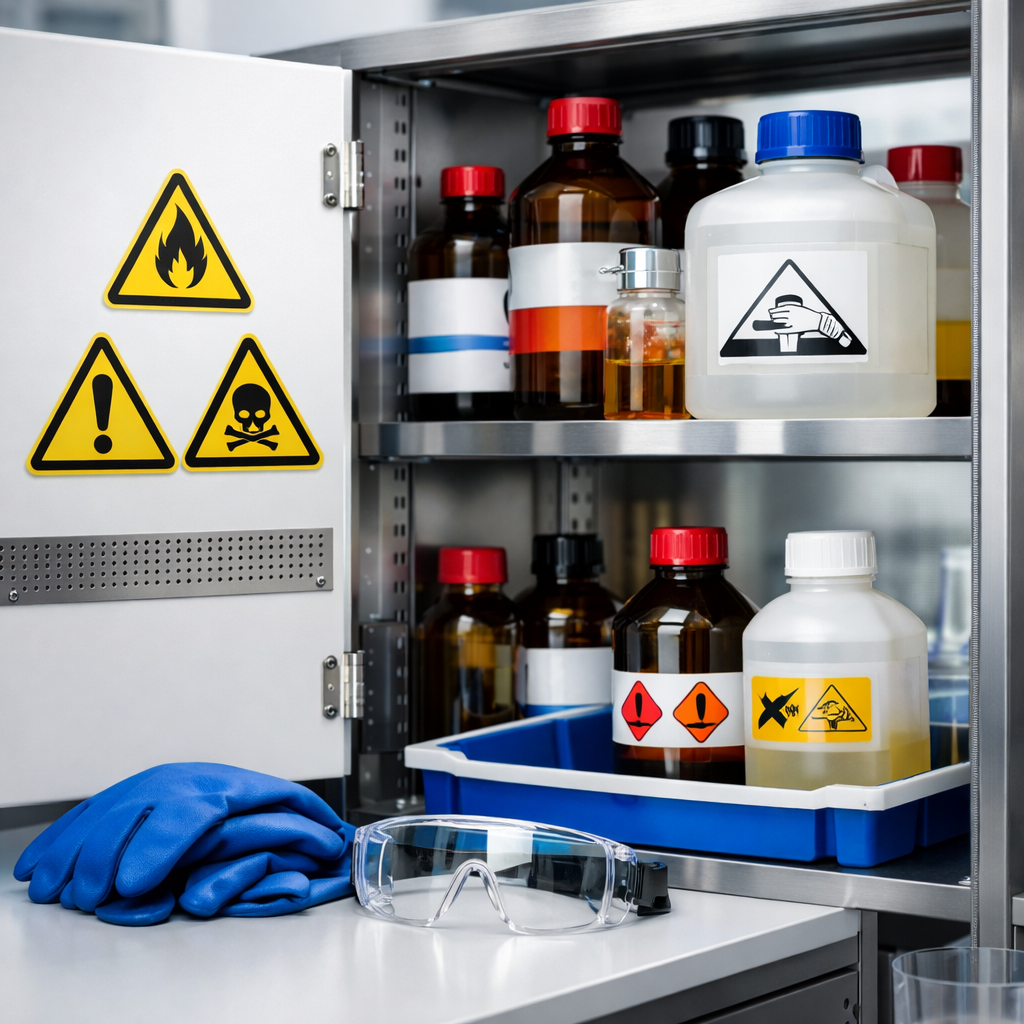
Chemicals should always remain in compatible, clearly labeled containers with intact lids. Decanting into unmarked bottles, food containers, or unsuitable plastics creates unnecessary danger. Secondary containment trays are also useful for controlling leaks and preventing spills from spreading across shelves.
Control quantity and reduce clutter
Safe storage is easier when labs keep only the chemicals they need. Overstocking increases fire load, complicates segregation, and makes inspections harder. Small working quantities should be kept at benches, while bulk stock should be moved to designated storage areas.
As part of good housekeeping, expired, degraded, or unknown chemicals should be identified and removed using approved disposal procedures. A simple inventory review can prevent years of risk buildup. Many workplaces strengthen this process through a chemical inventory management system and routine workplace safety audits.
Prevention measures using the Hierarchy of Controls
The Hierarchy of Controls is highly relevant to laboratory chemical storage safety because it helps employers choose the most effective safeguards first. Personal protective equipment matters, but it should support stronger controls rather than replace them.
Elimination and substitution
Where possible, eliminate chemicals that are no longer required. Replace highly hazardous substances with lower-risk alternatives when the process allows. For example, a lab may substitute a less volatile solvent to reduce both storage and exposure hazards.
Engineering controls
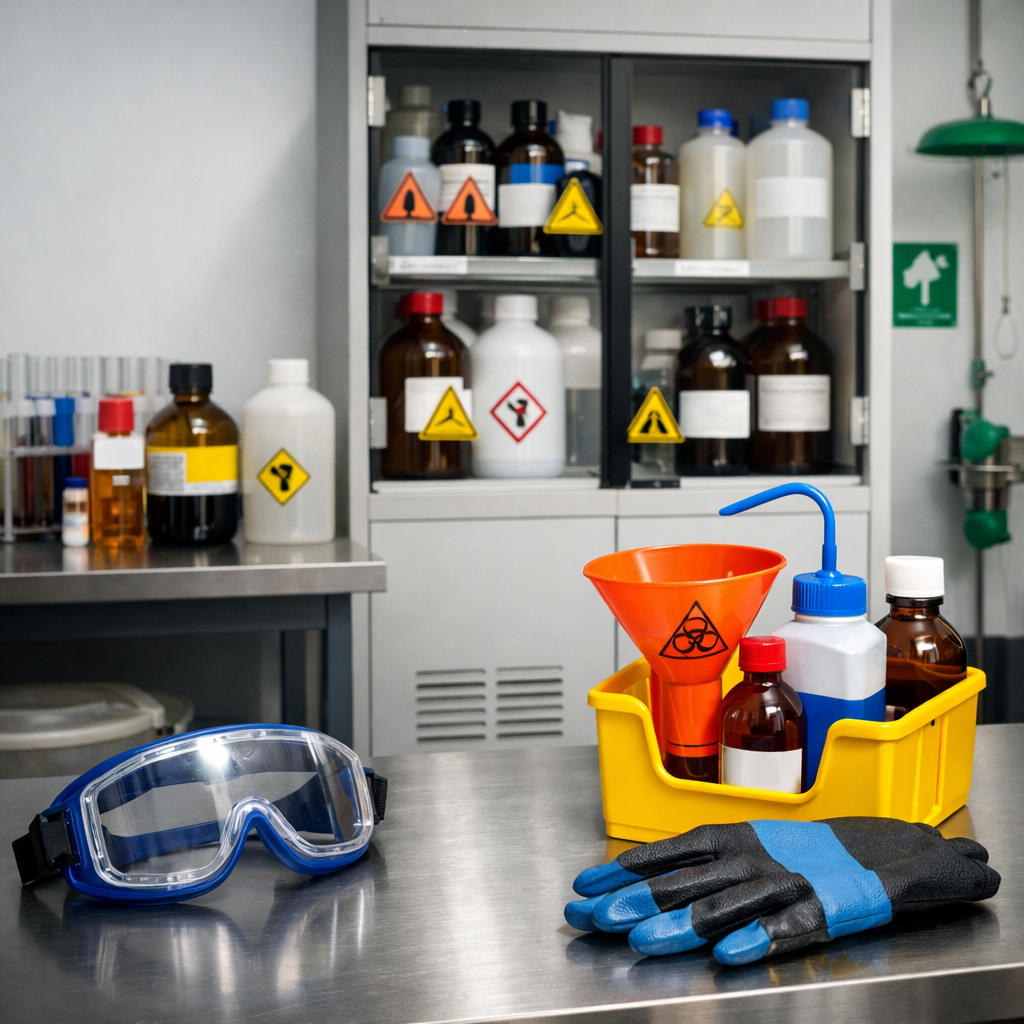
Engineering controls include purpose-built cabinets, spill containment systems, secure shelving with lips, adequate ventilation, explosion-proof refrigeration for flammable chemicals, and temperature-controlled storage for unstable compounds. These controls physically reduce the chance of release, ignition, or contact.
Administrative controls
Administrative controls include written storage procedures, Safety Data Sheet access, compatibility charts, training, restricted access, emergency signage, and routine inspections. Workers should know where chemicals belong, what must never be stored together, and how to respond to leaks or damaged containers.
A practical example is a university laboratory that color-codes cabinet zones by hazard class and requires monthly checks for labeling, container condition, and expiration dates. This low-cost step can significantly reduce storage errors and improve compliance.
PPE as the last line of defense
PPE is essential during chemical handling, storage inspections, transfer tasks, and spill response support. Depending on the hazard, this may include chemical-resistant gloves, splash goggles, face shields, laboratory coats, aprons, and suitable respiratory protection where risk assessment identifies a need.
However, PPE does not make unsafe storage acceptable. A worker wearing gloves is still at risk if incompatible chemicals are stored together or if a shelf collapses because it is overloaded.
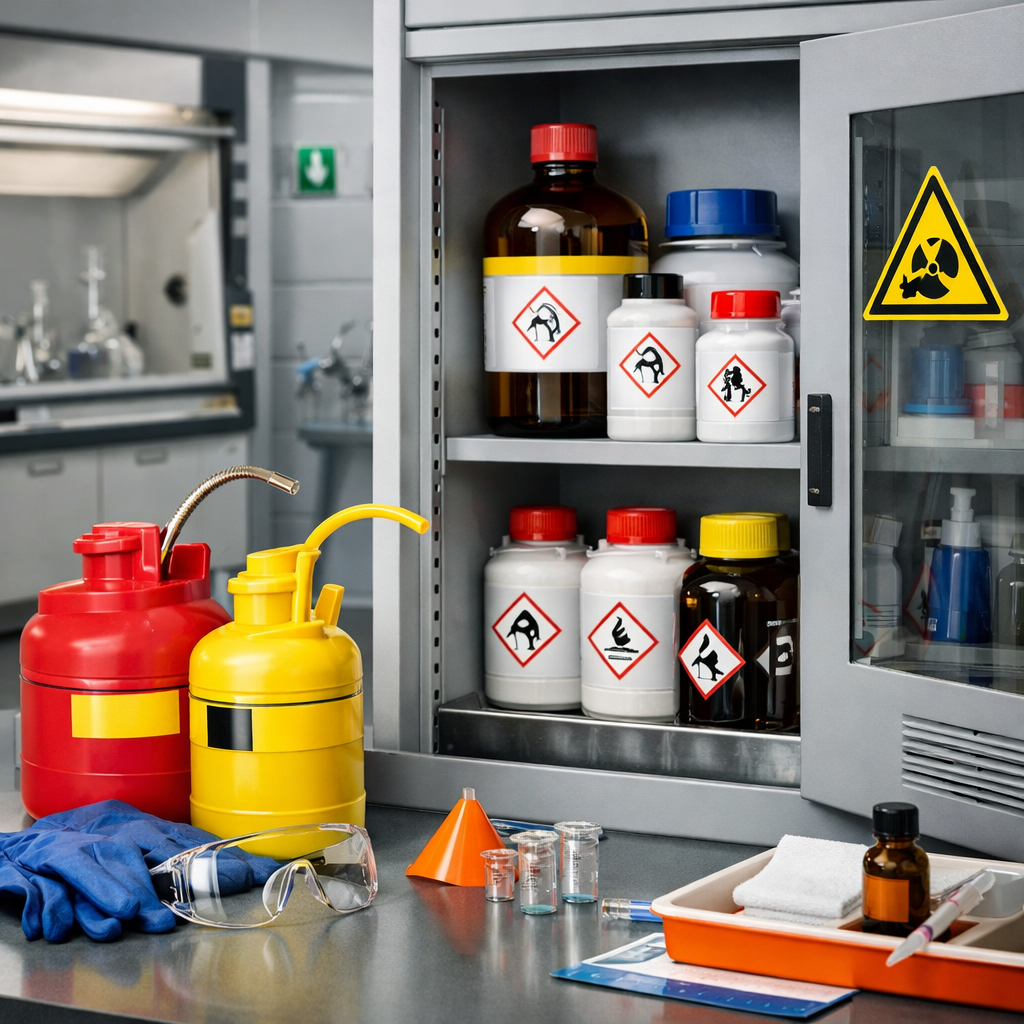
PPE, inspections, and everyday storage practices
Strong laboratory chemical storage safety depends on daily habits. Workers should inspect chemical containers before moving them, check for crystallization around lids, confirm labels are legible, and avoid storing materials on the floor, under sinks, or above eye level if the container is heavy or hazardous.
Practical everyday controls include:
- Keeping aisles, exits, and emergency equipment clear
- Storing heavy containers on lower shelves
- Using secondary containment for liquids
- Separating oxidizers from fuels and organics
- Keeping flammables away from heat and ignition sources
- Checking temperature-sensitive chemicals regularly
- Securing gas cylinders with chains or straps
- Removing damaged or unidentifiable containers immediately
Inspections should be documented and assigned to competent personnel. A checklist can cover labels, segregation, cabinet condition, PPE availability, spill kit readiness, ventilation status, and emergency eyewash or shower access. In high-risk environments, weekly visual checks combined with formal monthly inspections are often appropriate.
| Chemical Group | Key Storage Requirement | Main Risk if Stored Incorrectly |
|---|---|---|
| Flammable liquids | Approved flammable cabinet, away from ignition sources | Fire or explosion |
| Corrosive acids | Corrosion-resistant cabinet, separate from bases and incompatibles | Chemical burns or toxic reaction |
| Oxidizers | Store away from organics, combustibles, and reducers | Accelerated fire or violent reaction |
| Compressed gases | Secure upright with valve protection as required | Projectile hazard or gas release |
Compliance, training, and practical examples of laboratory chemical storage safety
Compliance is a major part of laboratory chemical storage safety. Employers are generally expected to maintain current chemical inventories, provide access to Safety Data Sheets, train workers in hazard communication, assess risks, and keep storage systems aligned with applicable legislation, codes, and standards. Depending on the jurisdiction and industry, this may include OSHA requirements, WHMIS obligations, fire code provisions, and environmental controls.
Training should be specific to the workplace. General chemical awareness is helpful, but staff also need to understand the exact cabinet layout, emergency contacts, spill procedures, and segregation rules used in their facility. Contractors, cleaners, students, and temporary workers should not be overlooked if they may enter storage areas or handle chemical stock.
Consider two practical examples. In a pathology lab, formalin and xylene are stored in approved cabinets with spill trays and clear volume limits, reducing inhalation and fire risks. In a teaching laboratory, sodium metal is kept in a dedicated compatible storage area away from sinks and water sources, with staff trained to recognize water-reactive hazards before practical classes begin.
Another useful step is reviewing near misses. If a worker finds an acid bottle stored beside bleach, that event should trigger corrective action, not just a quick relocation. Root causes might include poor induction, unclear labels, cabinet overcrowding, or gaps in supervision. Addressing those causes helps prevent a more serious incident later.
In conclusion, laboratory chemical storage safety is not a one-time setup but an ongoing OHSE responsibility that combines risk awareness, proper segregation, engineering controls, PPE, training, and compliance. When labs store chemicals by compatibility, inspect regularly, maintain clear procedures, and follow guidance from bodies such as OSHA and CCOHS, they create safer workplaces for everyone. Effective laboratory chemical storage safety protects people, property, research quality, and the environment every day.