
Machine Guarding Basics: Essential Safety Rules for Safer Manufacturing Floors

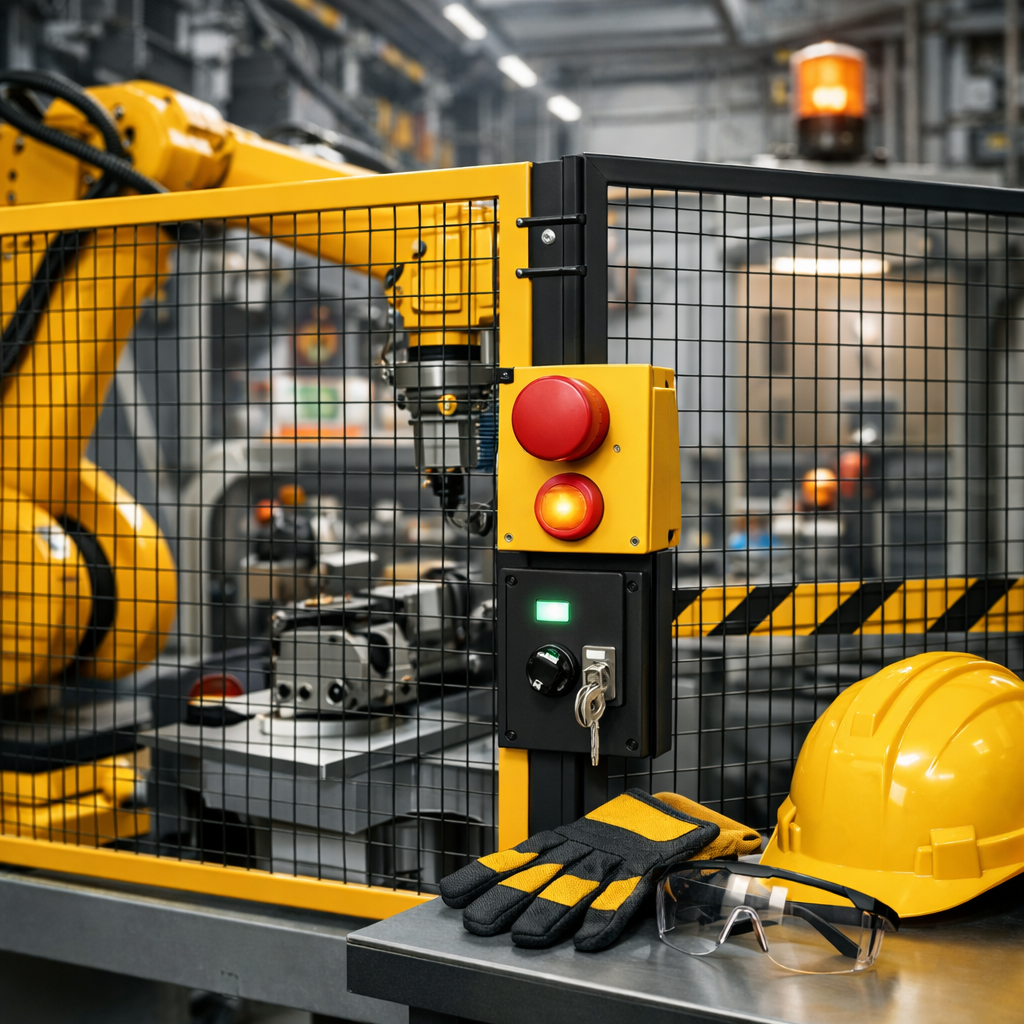
Machine guarding basics are one of the most important foundations of workplace safety in manufacturing.
Where moving parts, rotating shafts, cutting edges, and pinch points exist, effective guarding helps prevent life-changing injuries such as amputations, crush injuries, lacerations, and entanglement.
On busy production floors, it is easy for familiar equipment to seem less dangerous over time.
That is exactly why employers, supervisors, and workers need a clear understanding of machine guarding basics, including guard types, common hazards, inspection practices, and the serious risks created when guards are removed or bypassed.
Organizations such as OSHA and CCOHS consistently emphasize that machinery must be properly safeguarded to protect workers from hazardous motion and points of operation.
When guarding is selected, installed, and maintained correctly, it supports both safety and productivity by reducing incidents, downtime, and costly disruptions.
Why machine guarding basics matter on manufacturing floors
Manufacturing equipment can expose workers to several types of hazards at once.
These include rotating parts, reciprocating motion, flying chips, sparks, in-running nip points, and areas where material is cut, bent, stamped, pressed, or shaped.
Machine guarding basics focus on controlling access to those danger zones.
A good guard creates a physical or controlled barrier between the worker and the hazard without creating a new risk or making normal work unnecessarily difficult.
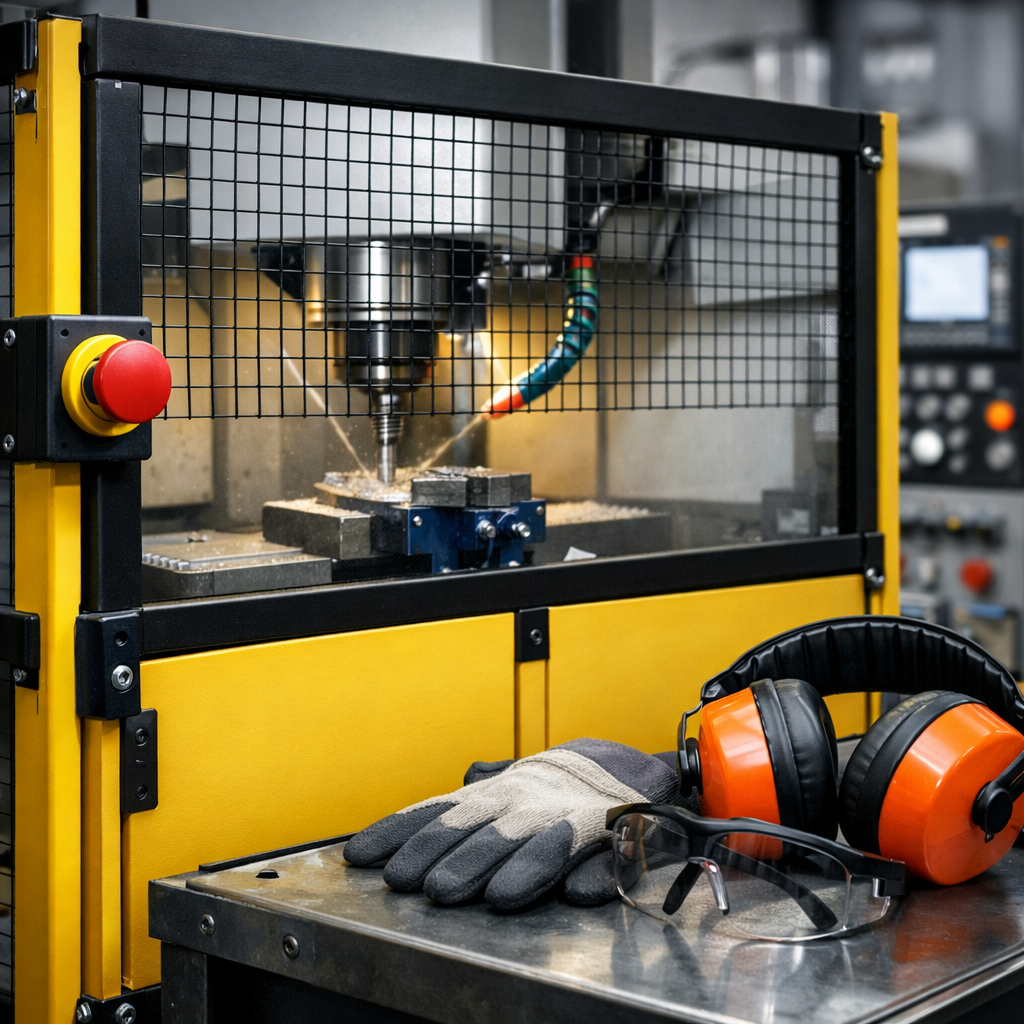
Common machine hazards that require guarding
- Point of operation hazards where the machine performs work on the material
- Power transmission hazards such as belts, pulleys, chains, gears, and couplings
- Rotating and reciprocating parts that can catch clothing, gloves, hair, or hands
- Flying materials including chips, sparks, fragments, and broken tooling
- Pinch and crush points found between moving machine components
From a safety management perspective, machine guarding basics also connect to the Hierarchy of Controls.
While some hazards can be reduced through elimination, substitution, or engineering redesign, guarding itself is a critical engineering control that helps isolate people from danger when hazardous motion cannot be eliminated.
For example, a conveyor system may still require moving rollers to function.
Since the hazard cannot be removed entirely, guarding, emergency stops, lockout procedures, and safe work practices must work together to reduce risk.
Machine guarding basics: understanding the main guard types
Choosing the right type of guard depends on the machine, the task, the exposure point, and maintenance requirements.
The best solution is usually one that protects workers reliably while still allowing efficient operation, cleaning, and servicing under controlled conditions.
Fixed guards
Fixed guards are permanent barriers attached to the machine structure.
They are one of the most dependable safeguarding methods because they do not rely on worker action during normal operation.
These guards are commonly used over gears, chains, belts, fan blades, and other routine hazard points.
When designed properly, they are durable, difficult to remove without tools, and ideal for areas that do not need frequent access.
Interlocked guards
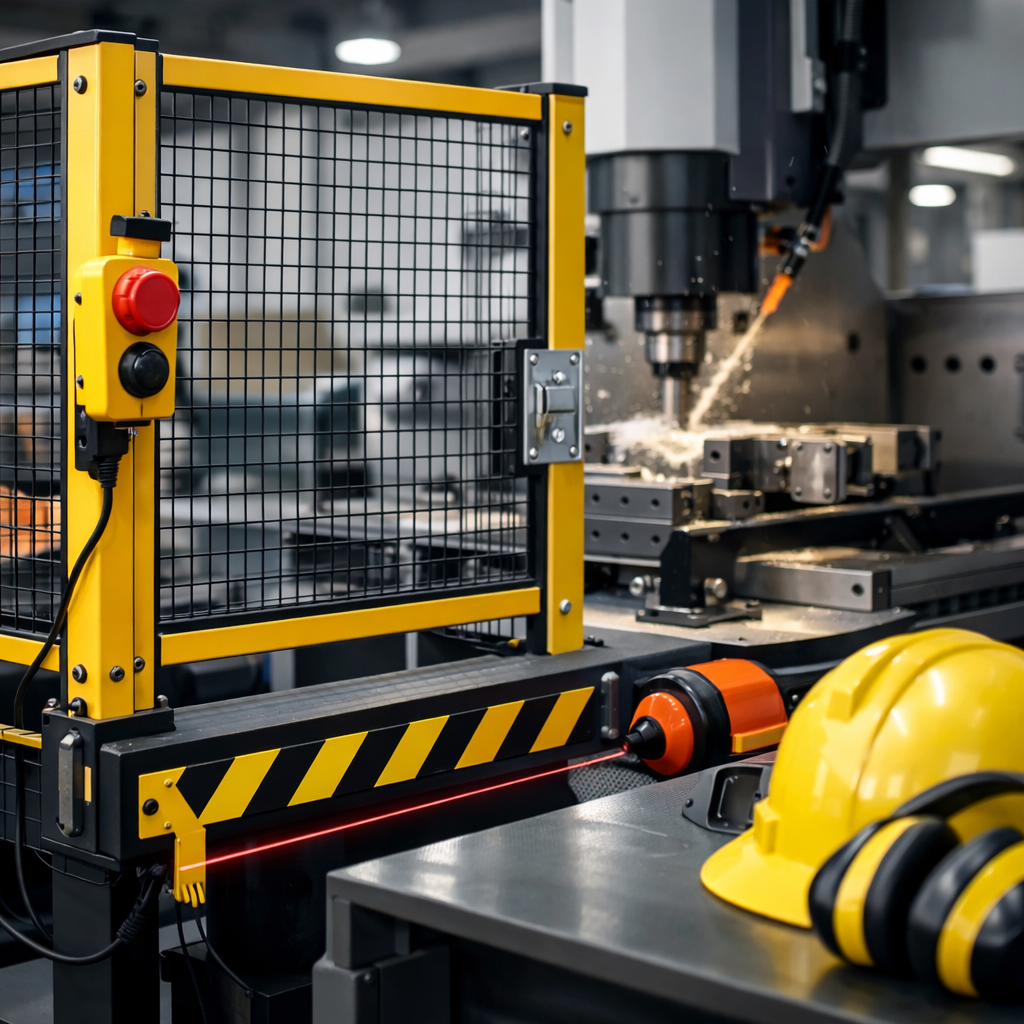
Interlocked guards are connected to the machine control system.
If the guard is opened or removed, the machine automatically stops or cannot start until the guard is back in place.
This type of protection is often used where operators need regular access, such as packaging lines, robotic cells, or automated equipment enclosures.
However, interlocks must be tested regularly because failure, wear, or tampering can undermine their protective value.
Adjustable and self-adjusting guards
Adjustable guards can be repositioned to fit different materials or job sizes.
Self-adjusting guards move according to the size of the stock entering the point of operation.
These are often seen on saws, woodworking equipment, and some cutting machines.
They can be effective, but they depend on correct setup and maintenance, so training and inspection are especially important.
Presence-sensing devices and safeguarding systems
Some machines use light curtains, pressure-sensitive mats, two-hand controls, or other safeguarding devices instead of a traditional barrier.
These systems can stop or prevent hazardous motion when a person enters the danger zone.
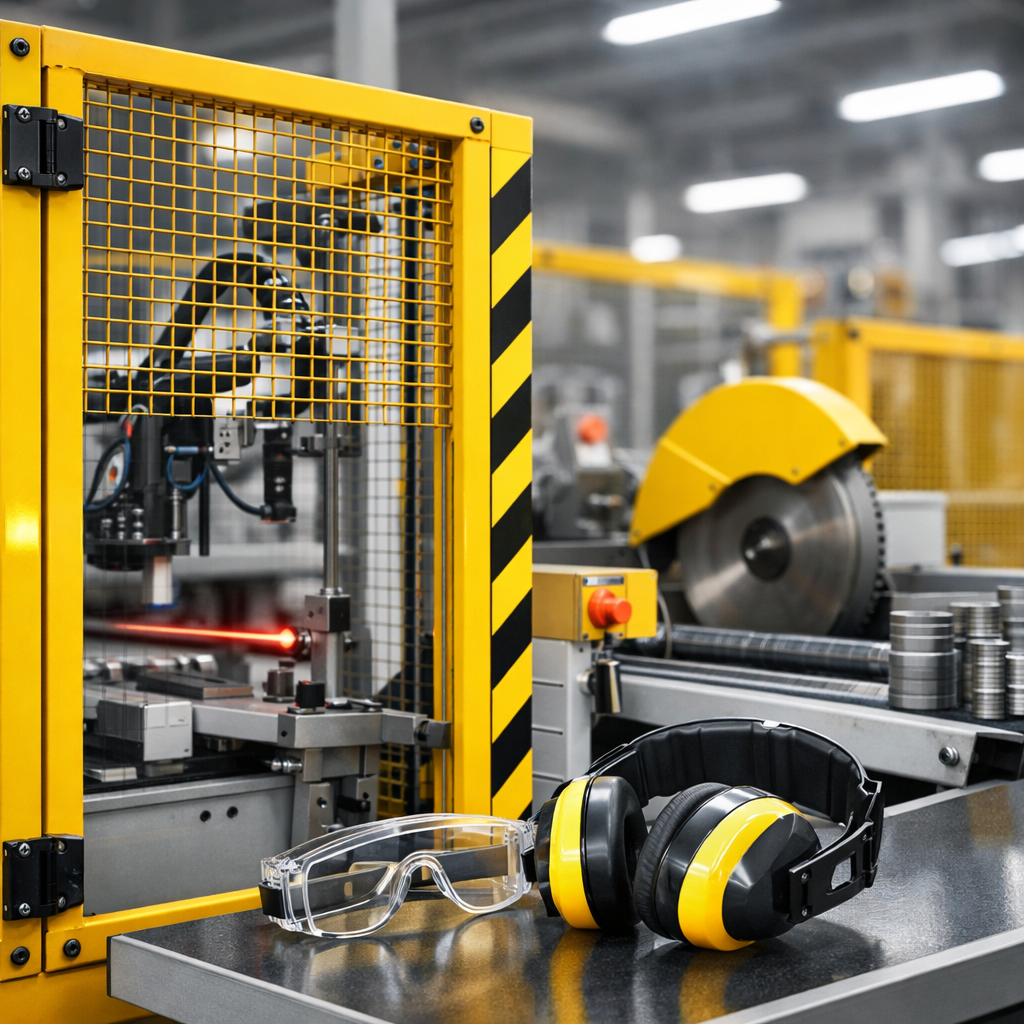
They are useful in operations where material handling makes fixed guards impractical.
Still, they must be carefully designed, validated, and integrated with lockout/tagout procedures for servicing tasks.
For more on broader workplace safeguards, see our workplace risk assessment guide and lockout/tagout best practices.
| Guard Type | Best Use | Main Advantage | Key Limitation |
|---|---|---|---|
| Fixed guard | Permanent hazard points | Reliable and simple | Requires tools for access |
| Interlocked guard | Frequent operator access | Stops machine when opened | Can be defeated if poorly managed |
| Adjustable guard | Varying material sizes | Flexible for changing work | Depends on correct setup |
| Presence-sensing device | Automated or open access areas | Allows access control without full enclosure | Needs testing and proper integration |
Why bypassing guards creates major risk
One of the most serious failures in machine safety is bypassing or defeating a guard.
This can include tying back a gate, taping an interlock switch, removing a barrier for convenience, or operating machinery after a guard has been damaged.
Workers sometimes bypass guards because they believe it saves time, improves visibility, clears jams faster, or makes setup easier.
In reality, this decision removes the very control designed to prevent catastrophic contact with moving parts.
When machine guarding basics are ignored, the margin for error disappears.
A split-second reach into a danger zone can lead to irreversible injury, especially on presses, conveyors, rollers, cutters, and automated systems that cycle quickly.
What makes guard bypass so dangerous
- Unexpected motion can occur even when the machine appears idle
- Fast cycling equipment gives workers little or no time to react
- Loose clothing or gloves can be pulled into rotating components
- Routine tasks like clearing jams often create a false sense of control
- Repeated shortcuts normalize unsafe behavior across the team
Bypassing guards also creates legal and operational consequences.
Employers may face regulatory action, compensation costs, downtime, equipment damage, and reputational harm if safeguarding systems are intentionally defeated or poorly enforced.
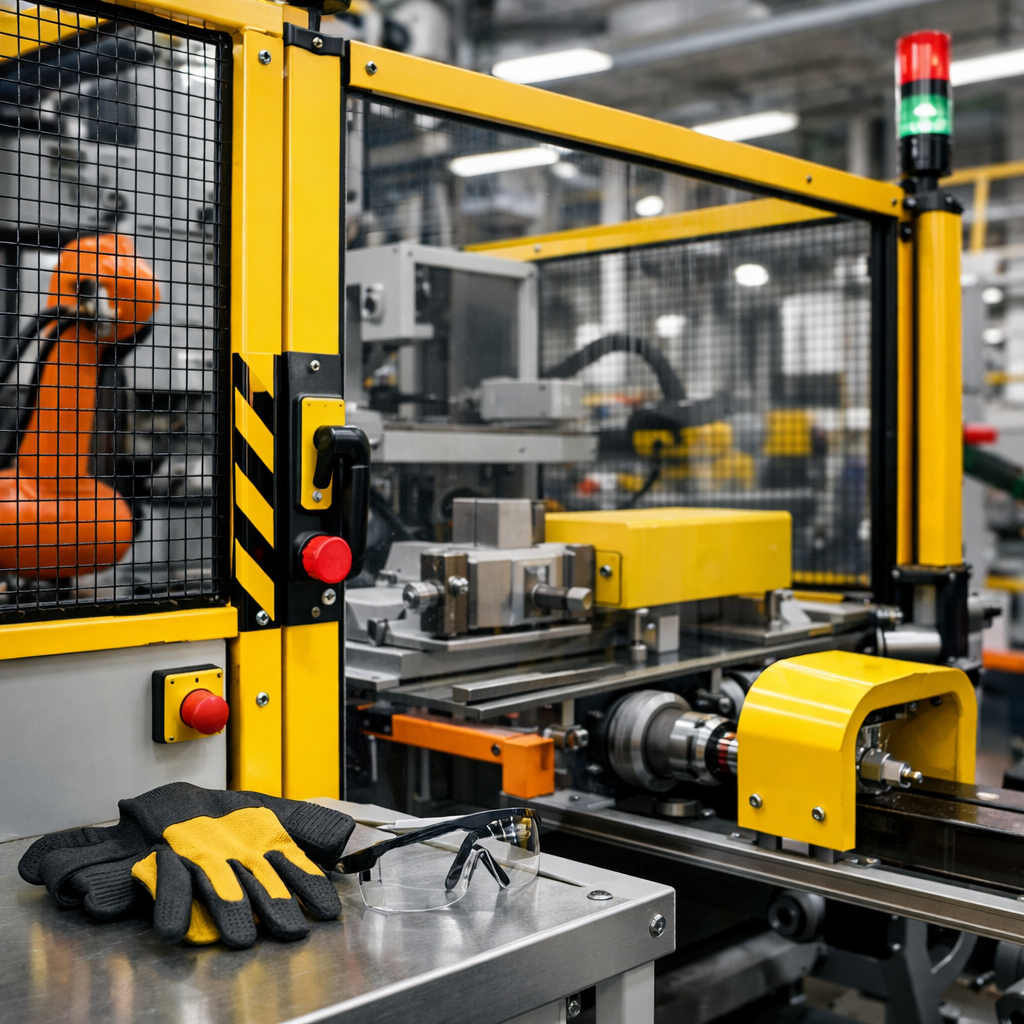
A strong safety culture makes it clear that no production target justifies operating unguarded machinery.
Supervisors should respond quickly to missing or defeated guards, and workers should feel empowered to report problems without fear of blame or delay.
Applying machine guarding basics through inspection, training, and control measures
Effective safeguarding does not end with installation.
Machine guarding basics must be reinforced through regular inspections, maintenance, training, and safe work procedures tailored to real production conditions.
What good guarding programs include
A practical guarding program starts with identifying machine hazards and matching safeguards to each exposure point.
It should also define who inspects guards, how often they are checked, and what happens when damage or tampering is found.
- Pre-use inspections to confirm guards are present, secure, and functional
- Preventive maintenance to repair wear, damage, and misalignment
- Operator training on hazards, safe use, and reporting requirements
- Lockout/tagout controls before cleaning, servicing, or clearing jams
- Change management when machines, tooling, or workflows are modified
Training should be practical rather than generic.
Workers need to know where the hazards are on the exact machine they use, how the safeguarding works, what warning signs to watch for, and when to stop work.
For example, if an interlocked door no longer stops a machine immediately, that is not a minor issue.
The equipment should be removed from service until qualified personnel inspect and correct the fault.
Manufacturers should also review guarding whenever production changes occur.
A new product size, faster line speed, or altered maintenance method can create new access points and unexpected risks.
Guidance from OSHA lockout/tagout resources can help support safe servicing practices alongside guarding requirements.
Machine guarding basics are not just about compliance.
They are about preventing workers from being exposed to hazardous motion in the first place.
When guards are chosen carefully, kept in good condition, and never bypassed, manufacturing floors become safer, more reliable, and better prepared for everyday operations.
In the end, machine guarding basics remain one of the simplest and most effective ways to protect people from serious harm.
No comments yet