


office air quality and health: Why Clean Indoor Air Matters for Safer, Healthier Workplaces
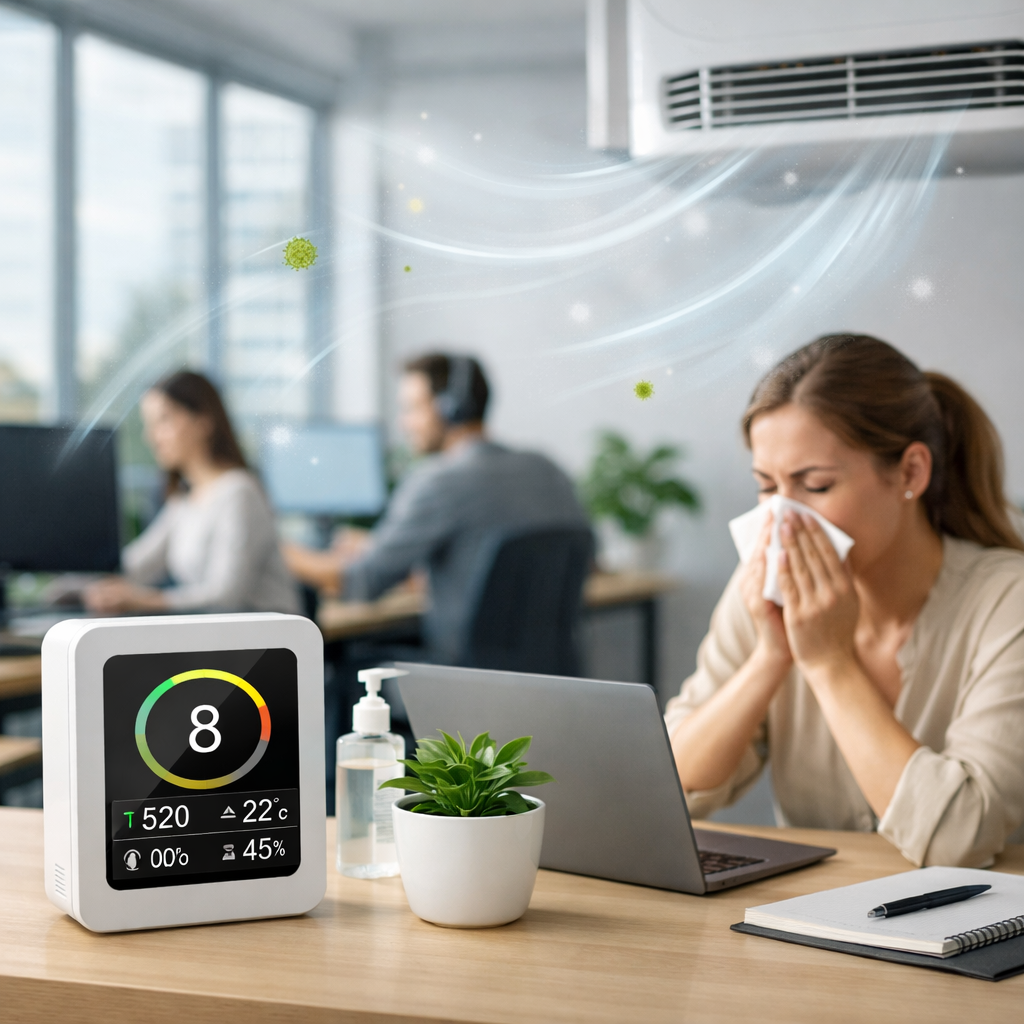


office air quality and health are closely linked in every workplace, from small administrative offices to large corporate buildings.
When indoor air is poorly managed, workers can experience headaches, fatigue, eye irritation, respiratory discomfort, and reduced concentration.
Because many employees spend most of their day indoors, office air quality should be treated as a core occupational health, safety, and environment issue.
Good ventilation, clean HVAC systems, proper housekeeping, and effective hazard controls help lower exposure to airborne contaminants and support productivity, wellbeing, and compliance.
Why office air quality and health should be an OHSE priority
Indoor office environments may appear low risk compared with industrial worksites, but they can still contain meaningful health hazards.
Dust, cleaning chemicals, printer emissions, mold, carbon dioxide buildup, volatile organic compounds, and inadequate fresh air can all affect workers over time.
Poor office air quality and health outcomes often show up gradually.
A worker may first notice dry eyes or mild throat irritation, then later develop frequent headaches, poor sleep, or worsening asthma symptoms while at work.
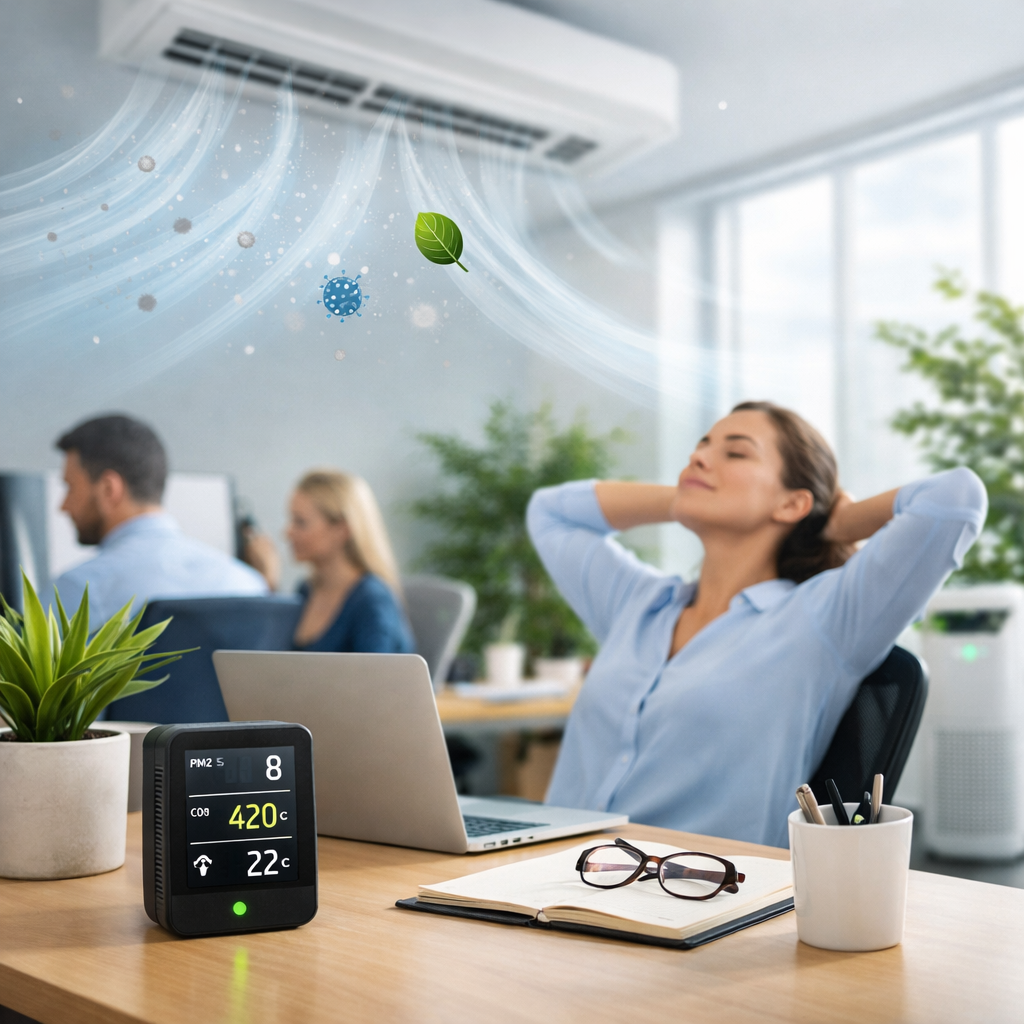
These issues can also affect business performance.
Absenteeism, presenteeism, complaints, reduced morale, and lower concentration are common consequences when air quality problems are ignored.
Guidance from organizations such as OSHA and CCOHS supports a preventive approach.
Employers should identify sources of contaminants, assess exposure risks, and apply practical controls before symptoms become widespread.
Common signs of poor indoor air quality
- Stuffy rooms and noticeable odors
- Frequent headaches or fatigue during the workday
- Eye, nose, or throat irritation
- Coughing, wheezing, or aggravated asthma
- Symptoms that improve away from the office
- Visible dust buildup, dampness, or mold growth
Key risks that connect office air quality and health
Several workplace factors can undermine office air quality and health if they are not properly controlled.
Understanding these risks is the first step in effective prevention.
Ventilation failures
Insufficient outdoor air exchange allows contaminants to build up indoors.
Blocked vents, poorly balanced systems, overdue filter changes, and malfunctioning HVAC equipment can all reduce air movement and increase discomfort.
Biological contaminants
Moisture intrusion from roof leaks, plumbing failures, or condensation can support mold and bacterial growth.
These contaminants may trigger allergic reactions, respiratory symptoms, and ongoing complaints in affected areas.
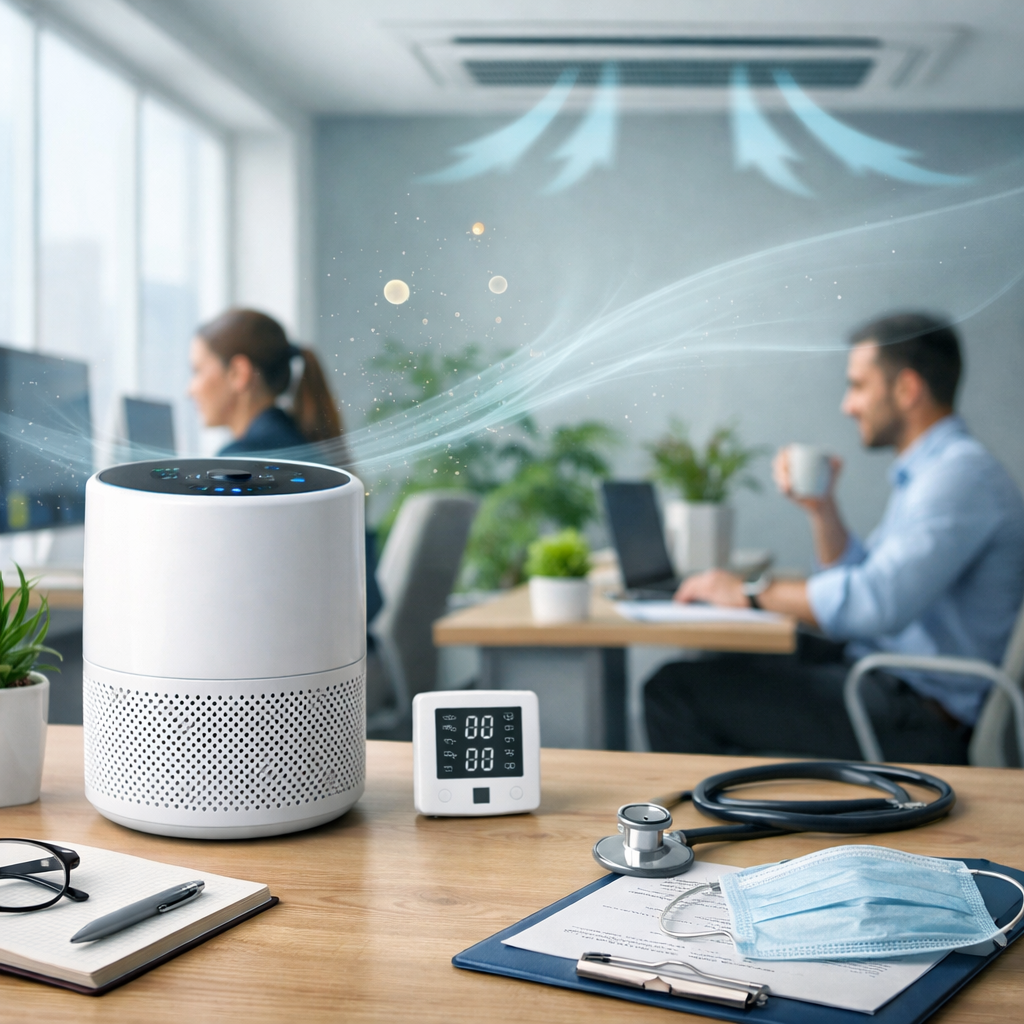
Chemical exposure
Offices can contain VOCs from paints, carpets, furniture, adhesives, and cleaning products.
Printers and photocopiers may also release particles and ozone, especially in poorly ventilated rooms.
Particulate matter and dust
Dust can accumulate in carpets, ceiling spaces, ducts, and workstations.
Renovation work, nearby traffic, and inadequate cleaning can increase airborne particles and worsen symptoms for sensitive workers.
Carbon dioxide and occupancy load
High occupancy meeting rooms often become stuffy when ventilation is inadequate.
While carbon dioxide at typical office levels is not usually the main toxic hazard, elevated levels can indicate poor ventilation and correlate with drowsiness and reduced focus.
A practical example is a busy call center where staff report afternoon fatigue, headaches, and stale air.
An inspection finds crowded work areas, dirty filters, and limited fresh air intake.
After HVAC servicing and airflow adjustments, complaints drop significantly within weeks.
Prevention and control measures for office air quality and health
The best way to protect office air quality and health is to follow the Hierarchy of Controls.
This means focusing first on removing hazards and improving systems, rather than relying only on individual behavior.
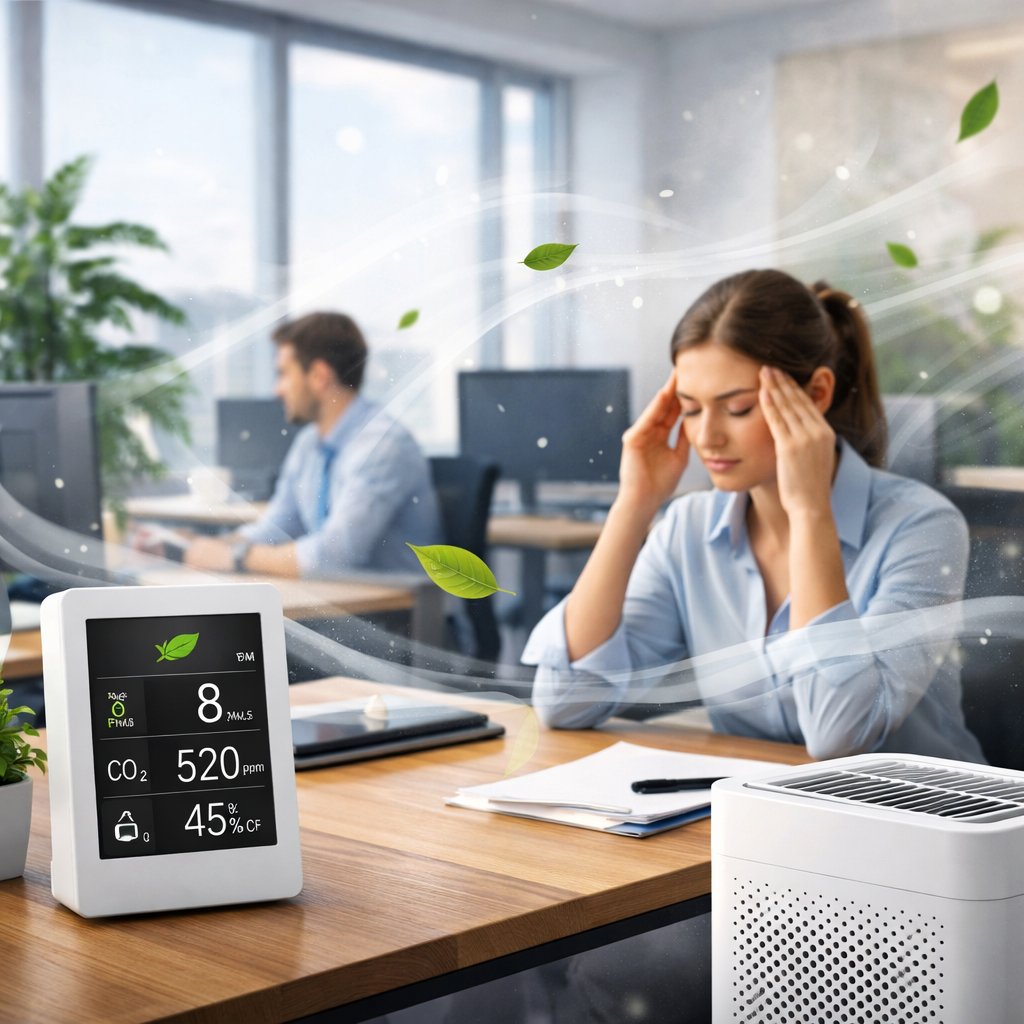
Elimination and substitution
Remove unnecessary sources of indoor pollution whenever possible.
Replace high-VOC products with low-emission alternatives, select low-odor cleaning chemicals, and isolate renovation activities from occupied areas.
Employers can also reduce contaminant sources by creating equipment rooms for high-use printers and copiers.
If a product regularly causes irritation complaints, review whether a safer substitute is available.
Engineering controls
Engineering controls are often the most effective solution for office air quality problems.
These include properly designed HVAC systems, adequate outdoor air supply, local exhaust where needed, humidity management, and routine preventive maintenance.
Air filtration should match building needs, and filters should be inspected and changed on schedule.
Leaks must be repaired quickly to prevent mold growth, and water-damaged materials should be removed if they cannot be cleaned safely.
Administrative controls
Administrative measures support day-to-day prevention.
These include air quality complaint procedures, scheduled inspections, housekeeping programs, occupancy management, and contractor controls during maintenance or construction.
Training also matters.
Workers and supervisors should know how to report odors, leaks, visible mold, or recurring symptoms early.
A simple incident reporting process can prevent a small problem from becoming a larger health issue.
PPE in office settings
Personal protective equipment is usually the last line of defense and should not replace source control or ventilation improvements.
However, PPE can be necessary during specific tasks such as mold cleanup, filter replacement, dust-generating maintenance, or post-flood remediation.
Examples may include gloves, eye protection, and appropriate respiratory protection for trained personnel.
If respirators are required, employers should follow applicable respiratory protection requirements, including fit testing, training, and medical assessment where needed, as outlined by OSHA respiratory protection guidance.
- Use low-emission products and materials
- Maintain HVAC systems and replace filters regularly
- Repair leaks and control humidity promptly
- Separate high-emission equipment from occupied work areas
- Train workers to report symptoms and environmental concerns
- Use PPE for maintenance, remediation, or other higher-risk tasks
Compliance, monitoring, and practical workplace examples
Managing office air quality and health also involves compliance with general OHSE duties.
Employers are typically required to provide a workplace that is safe and without foreseeable health risks, which includes controlling indoor environmental hazards.
While regulations vary by jurisdiction, recognized guidance from OSHA, CCOHS, public health agencies, and building standards can help shape a compliant program.
Employers should document inspections, maintenance records, complaint investigations, and corrective actions.
Simple monitoring and response framework
| Issue | Possible Cause | Practical Response |
|---|---|---|
| Stale air in meeting rooms | Low fresh air supply, overcrowding | Adjust HVAC settings, limit occupancy, inspect vents |
| Musty smell near windows | Moisture intrusion or hidden mold | Inspect building envelope, repair leak, assess damaged materials |
| Headaches near printers | Particle or ozone buildup | Relocate equipment, improve ventilation, service devices |
| Eye irritation after cleaning | Strong chemical products | Substitute safer products, review cleaning schedule, increase airflow |
A practical example is an office undergoing refurbishment while employees continue working nearby.
Without barriers and ventilation planning, dust and odors spread into occupied areas.
A better OHSE approach would isolate the work zone, schedule high-emission tasks after hours, use negative air control where needed, and communicate clearly with staff.
Another example is a shared office where recurring allergy complaints are traced to water-damaged ceiling tiles above a workstation cluster.
The immediate control is to restrict access and investigate.
The long-term solution includes fixing the leak, replacing damaged materials, cleaning the area safely, and verifying that the HVAC system did not spread contamination.
Workplaces can strengthen their programs by linking air quality management with broader safety systems, such as workplace risk assessments and office safety checklists.
This helps ensure indoor air concerns are reviewed alongside ergonomics, emergency preparedness, and general housekeeping.
In the end, office air quality and health should never be treated as a minor comfort issue.
They are essential parts of occupational health protection, legal due diligence, and everyday workplace performance.
By identifying risks early, applying the Hierarchy of Controls, using PPE where tasks require it, and following recognized guidance, employers can create offices that are safer, healthier, and more productive for everyone.
A consistent, documented approach to office air quality and health protects both people and business operations over the long term.