


Rockfall Prevention Techniques: Practical OHSE Strategies to Reduce Risk on Hazardous Sites


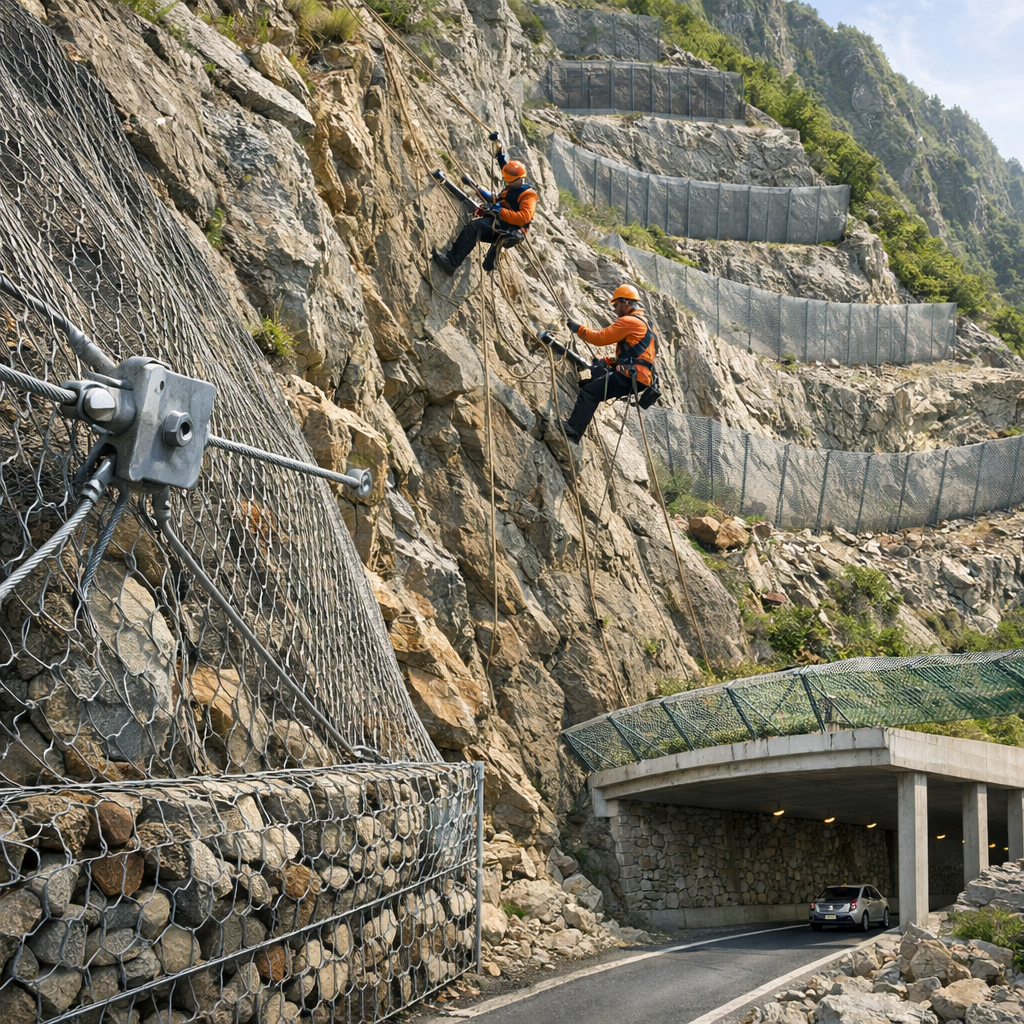
Rockfall prevention techniques are essential for protecting workers, equipment, roads, and nearby communities in mining, quarrying, construction, rail, and roadside operations.
When loose rock detaches from a slope or high wall, the outcome can be severe, ranging from minor property damage to fatal injuries and prolonged shutdowns.
From an OHSE perspective, rockfall hazards demand a structured approach that combines hazard identification, engineering controls, safe work procedures, personal protective equipment, and legal compliance.
Effective planning does not rely on one control alone. It uses layered protection based on site conditions, geology, weather, traffic, and the tasks being performed below or beside unstable ground.
Because every slope behaves differently, the best rockfall prevention techniques begin with a careful site assessment.
This includes reviewing rock type, fracture patterns, water infiltration, freeze-thaw effects, blasting history, vibration sources, and evidence of previous rock movement.
Practical site teams also benefit from clear reporting pathways and training.
A worker who notices scaling debris, fresh cracks, bulging mesh, or unusual drainage should know exactly how to isolate the area and report the issue before work continues.
Why rockfall hazards are a major OHSE concern
Rockfall is not limited to mountainous roads or large mines.
It can occur on cut slopes, excavation faces, tunnel portals, retaining walls, and temporary work areas where ground conditions have changed rapidly.
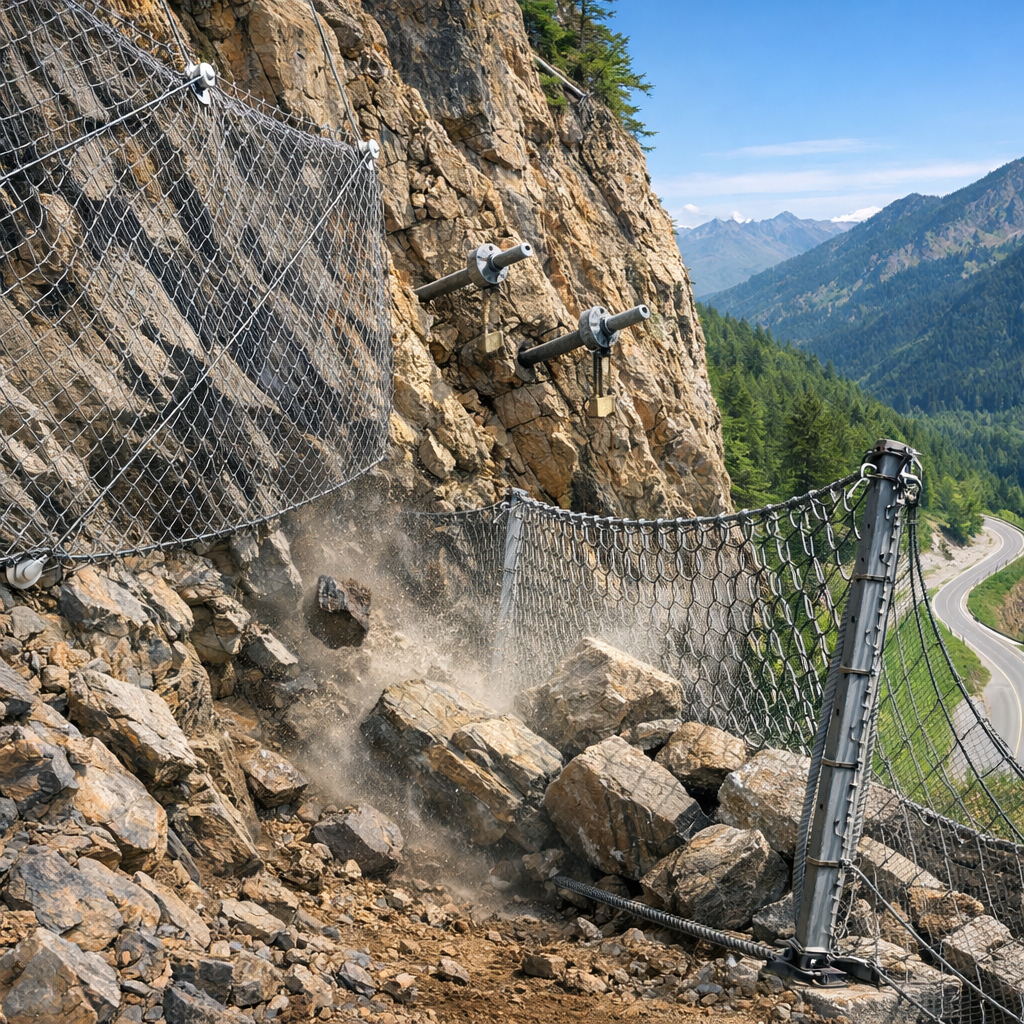
The main risks include struck-by injuries, vehicle impact, structural damage, blocked escape routes, and secondary incidents such as equipment rollover or uncontrolled access into unstable zones.
Even small rocks can be dangerous when they fall from height or gain speed on steep terrain.
Common factors that increase risk include:
- Weathering and erosion that weaken exposed rock
- Heavy rainfall and poor drainage that increase instability
- Freeze-thaw cycles that widen joints and fractures
- Blasting, drilling, or vibration from mobile plant
- Inadequate slope inspection or delayed maintenance
- Workers entering exclusion zones without authorization
In workplaces regulated under occupational health and safety legislation, employers must identify these hazards, assess the level of risk, and apply controls that are suitable for the site.
Guidance from organizations such as OSHA and the CCOHS supports hazard assessment, worker training, and control selection.
It is also important to connect rockfall management to broader site safety systems.
For example, a high-risk slope may affect traffic management, emergency response routes, permit-to-work systems, and contractor induction requirements.
Rockfall prevention techniques based on the Hierarchy of Controls
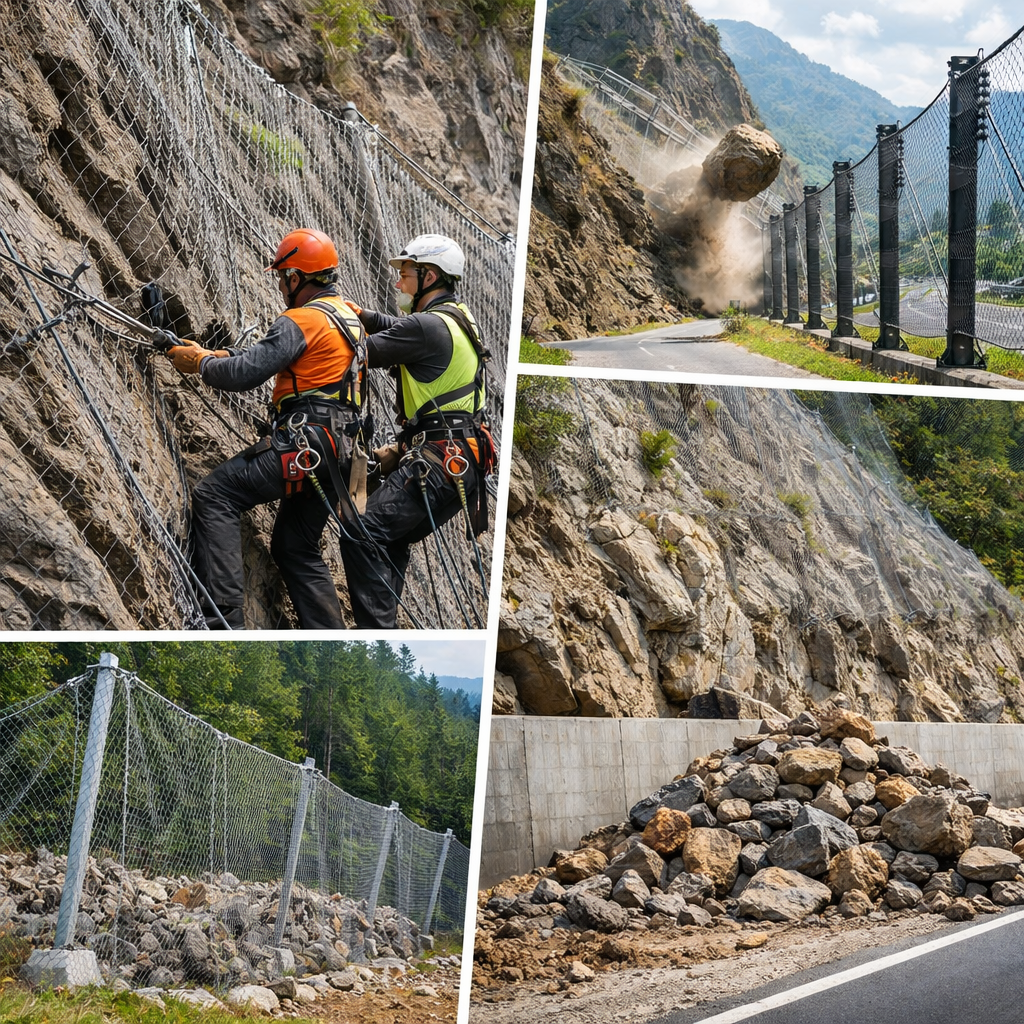
The most effective rockfall prevention techniques follow the Hierarchy of Controls.
This means giving priority to elimination and engineering solutions before relying heavily on administrative controls or PPE.
Elimination and substitution
Where possible, remove the need for workers to operate beneath unstable slopes.
This may involve changing the work sequence, relocating storage areas, rerouting access roads, or using remote equipment instead of placing workers directly in the hazard zone.
In some projects, redesigning the slope angle or bench configuration can reduce the likelihood of rock detachment.
Substituting high-vibration methods with lower-impact alternatives may also help where vibration is contributing to instability.
Engineering controls
Engineering measures are often the backbone of rockfall prevention.
These controls are designed to stabilize the source, contain falling rock, or stop it before it reaches workers or assets.
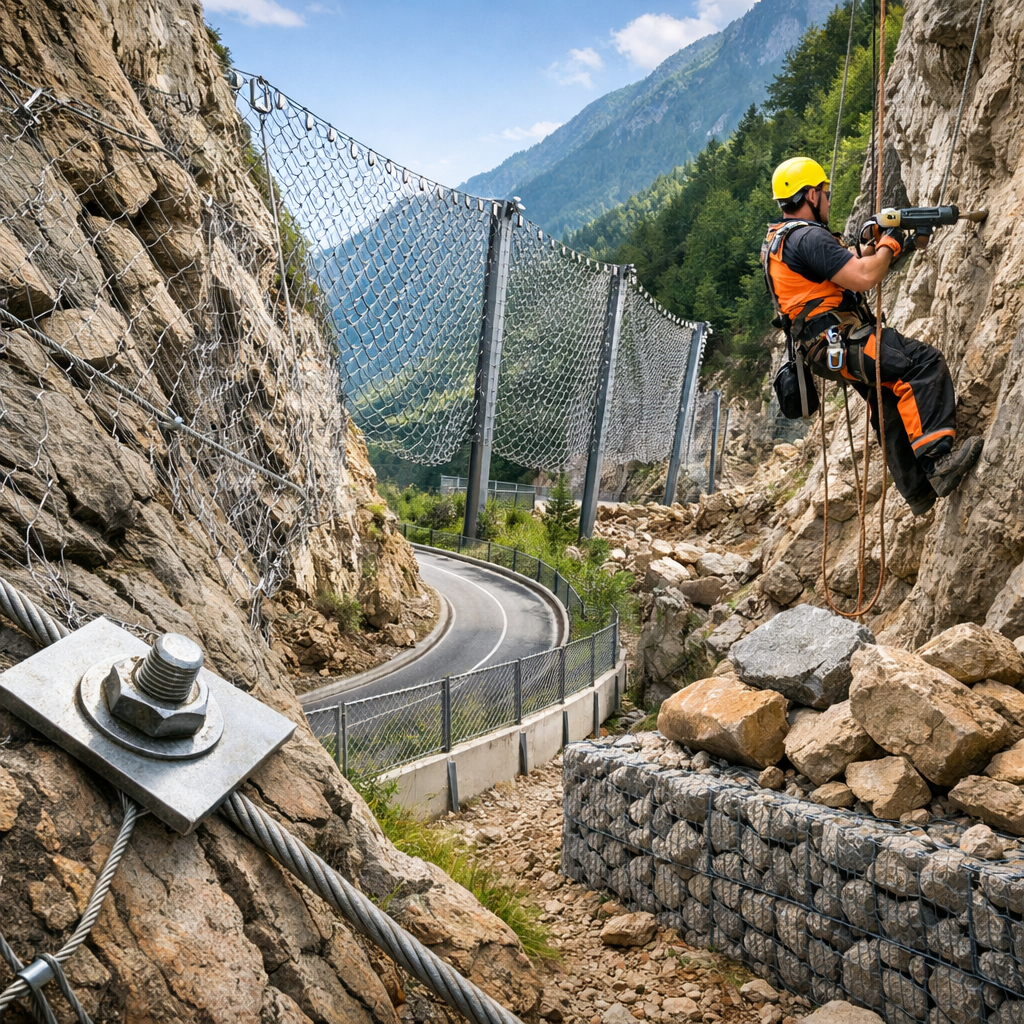
- Scaling: removing loose rock manually or mechanically from the slope face
- Rock bolting and anchoring: securing unstable blocks to more competent rock
- Wire mesh and netting: containing smaller rock fragments and surface instability
- Shotcrete: binding weathered surfaces and reducing raveling
- Catch fences and barriers: intercepting falling material downslope
- Ditches and berms: absorbing energy and limiting rock travel
- Drainage controls: reducing water pressure and erosion behind the slope face
A simple comparison of common controls is shown below.
| Control | Main Purpose | Best Use |
|---|---|---|
| Scaling | Removes loose rock before it falls | Active workfaces and fresh cut slopes |
| Rock bolts | Stabilizes fractured rock masses | Steep slopes with identifiable blocks |
| Mesh or netting | Contains small to medium rock fragments | Weathered surfaces and roadside cuts |
| Catch fences | Stops or slows falling rock | Areas above roads, rail lines, or walkways |
| Drainage | Reduces water-driven instability | Slopes affected by seepage or rainfall |
Administrative controls
Administrative controls support engineering work by controlling exposure.
These include exclusion zones, spotters, inspection schedules, geotechnical review, weather triggers, signage, and permit controls for slope-adjacent work.
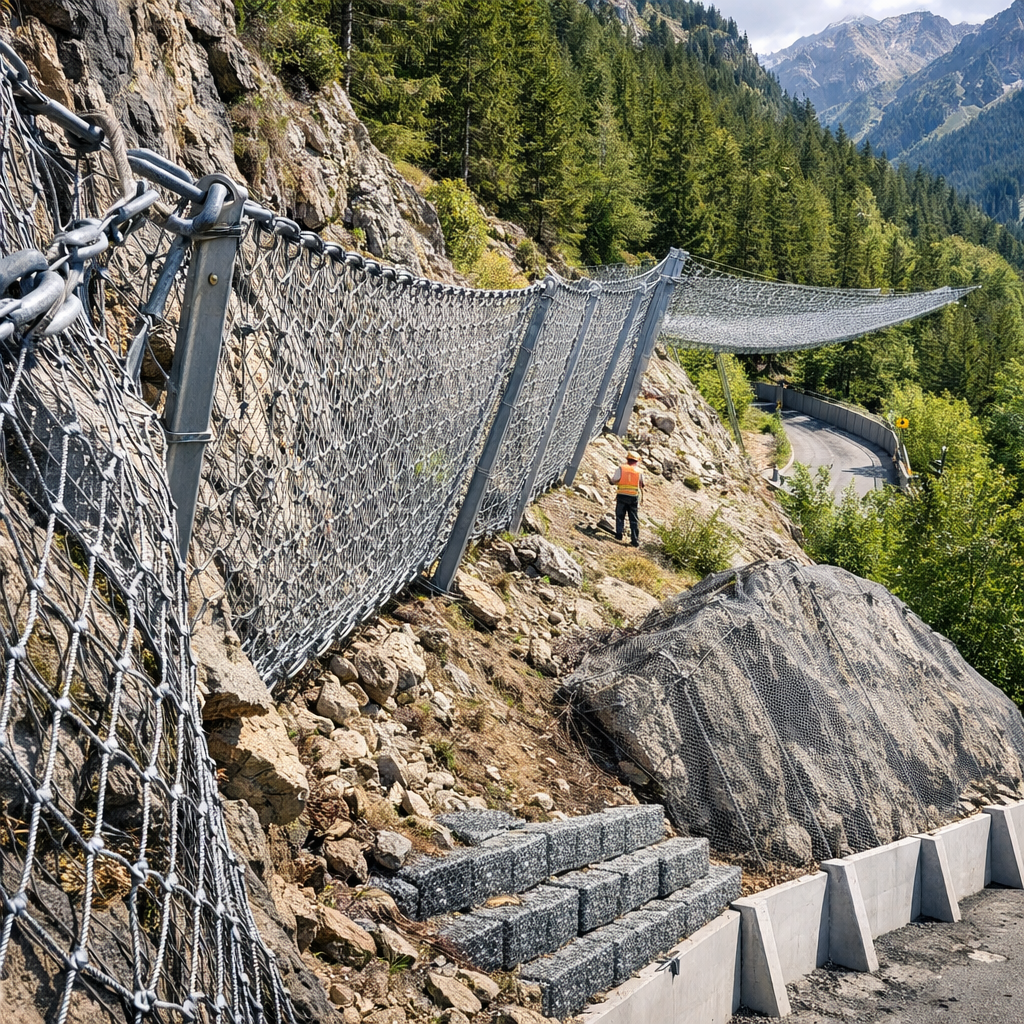
For example, a site may stop work below a rock face after intense rainfall until a competent person completes an inspection.
Another practical control is restricting vehicle parking, break areas, and material laydown zones from the runout path of falling rock.
Sites should also maintain clear procedures for scaling, drilling near slopes, blasting coordination, and re-entry after geotechnical events.
Internal resources such as safety inspection checklists and hazard reporting procedures help reinforce consistent field practice.
PPE, worker responsibilities, and day-to-day safe work practices
Although PPE is the lowest level in the Hierarchy of Controls, it still plays an important role in reducing injury severity.
PPE should never be the only protection against rockfall, but it is necessary when exposure cannot be fully eliminated.
Essential PPE for rockfall exposure
- Hard hats or safety helmets appropriate for impact hazards
- High-visibility clothing for work around mobile equipment and traffic
- Safety boots with ankle support and slip-resistant soles
- Eye protection against dust and flying fragments
- Gloves suited to scaling tools, mesh handling, or rough ground conditions
- Fall protection where workers must operate near edges or on steep terrain
Worker behavior matters just as much as equipment.
Employees should never enter a barricaded rockfall zone, remove barriers without approval, or assume that a quiet slope is a stable slope.
Daily pre-start inspections are one of the most practical rockfall prevention techniques used in the field.
Supervisors and crews should check for fresh debris at the toe of the slope, visible cracks, water seepage, vegetation movement, damaged barriers, and signs that previous controls are no longer effective.
Communication is especially important on dynamic sites.
If excavators, haul trucks, drill rigs, or scaling crews are working in the same area, all parties need to understand exclusion distances, radio channels, travel routes, and emergency stop procedures.
Compliance, inspections, and practical examples of rockfall prevention techniques
OHSE compliance for rockfall hazards usually involves a combination of general duty requirements, site-specific geotechnical controls, training records, inspection evidence, and emergency planning.
Employers should be able to show that hazards were identified, competent persons were involved, controls were selected appropriately, and workers were informed of the risks.
Regular inspections should be documented and should increase in frequency when conditions change.
That includes after blasting, heavy rain, seismic activity, major excavation, or reports of new movement.
Practical examples show how rockfall prevention techniques work in real settings:
- Road construction project: A steep cut slope above a temporary access road was scaled after blasting, covered with mesh, and protected with a catch ditch. Traffic was restricted during rainfall events until inspections were completed.
- Quarry operation: Workers identified recurring rock spalls near a loading zone. The employer installed exclusion barriers, revised the loading position, added rock bolts, and scheduled geotechnical reviews every week.
- Rail corridor maintenance: A section of weathered slope above the track was monitored after storms. Crews used spotters, controlled access windows, and a contractor installed drapery mesh to contain loose fragments.
These examples highlight a key OHSE principle: no single measure is enough on its own.
Strong programs combine inspection, engineering, supervision, training, and PPE with responsive decision-making when site conditions change.
In conclusion, rockfall prevention techniques are a critical part of workplace safety wherever people work below or beside unstable ground.
By understanding the risks, applying the Hierarchy of Controls, selecting the right PPE, and meeting OHSE compliance expectations, employers can significantly reduce the chance of injury and disruption. Effective rockfall prevention techniques are not just about stopping falling rock; they are about building a safer, more disciplined workplace where hazards are identified early and controlled before they become incidents.