


Roofing Fall Protection Systems: Essential OHSE Controls for Safer Roof Work


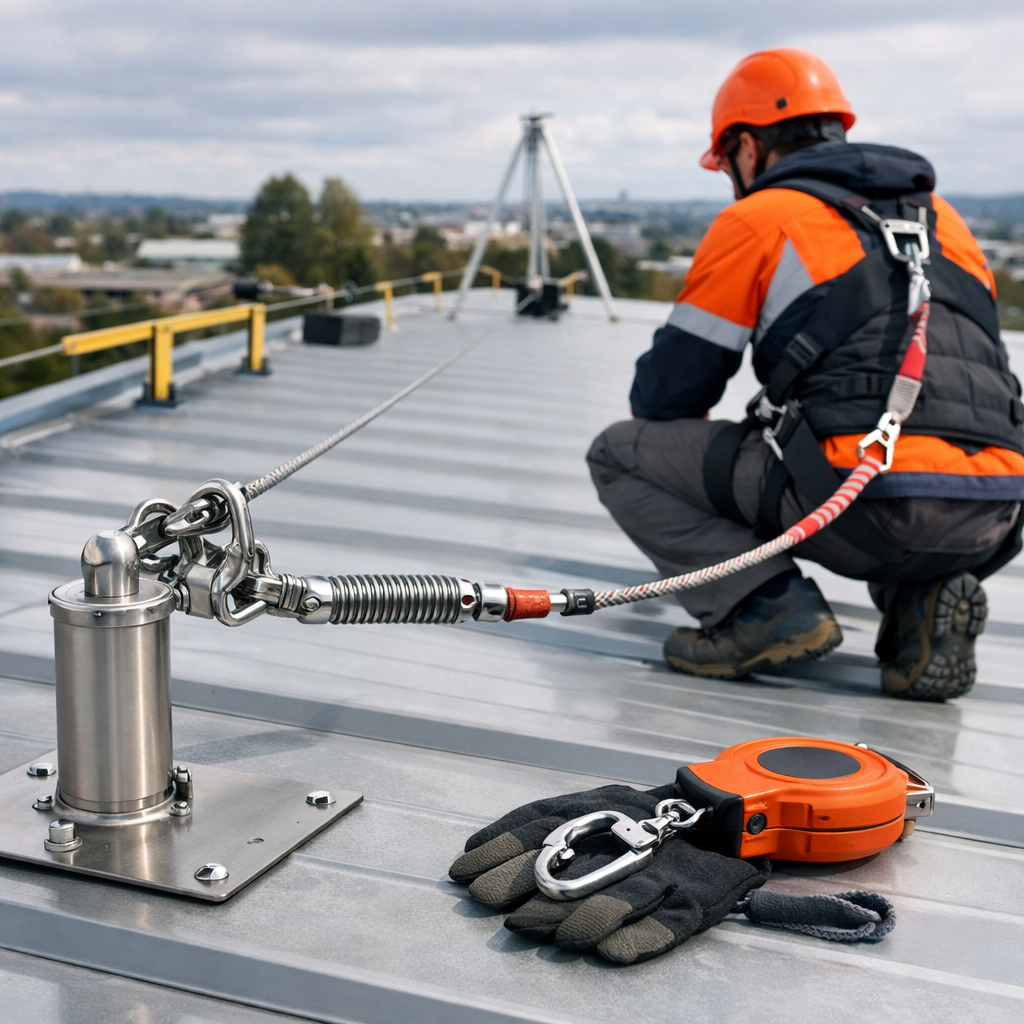
Roofing fall protection systems are one of the most important safety controls for any project that involves working at height.
Whether the job is a small residential repair or a large commercial installation, falls from roofs remain a leading cause of serious injury and death in construction.
An effective OHSE approach combines planning, training, equipment, supervision, and compliance so workers can complete roofing tasks without unnecessary exposure to fall hazards.
Because roofing work often takes place on sloped, fragile, wet, or unfinished surfaces, the risk profile can change quickly.
That is why employers, supervisors, and workers need a clear understanding of how roofing fall protection systems work, when they are required, and how to use them properly in real workplace conditions.
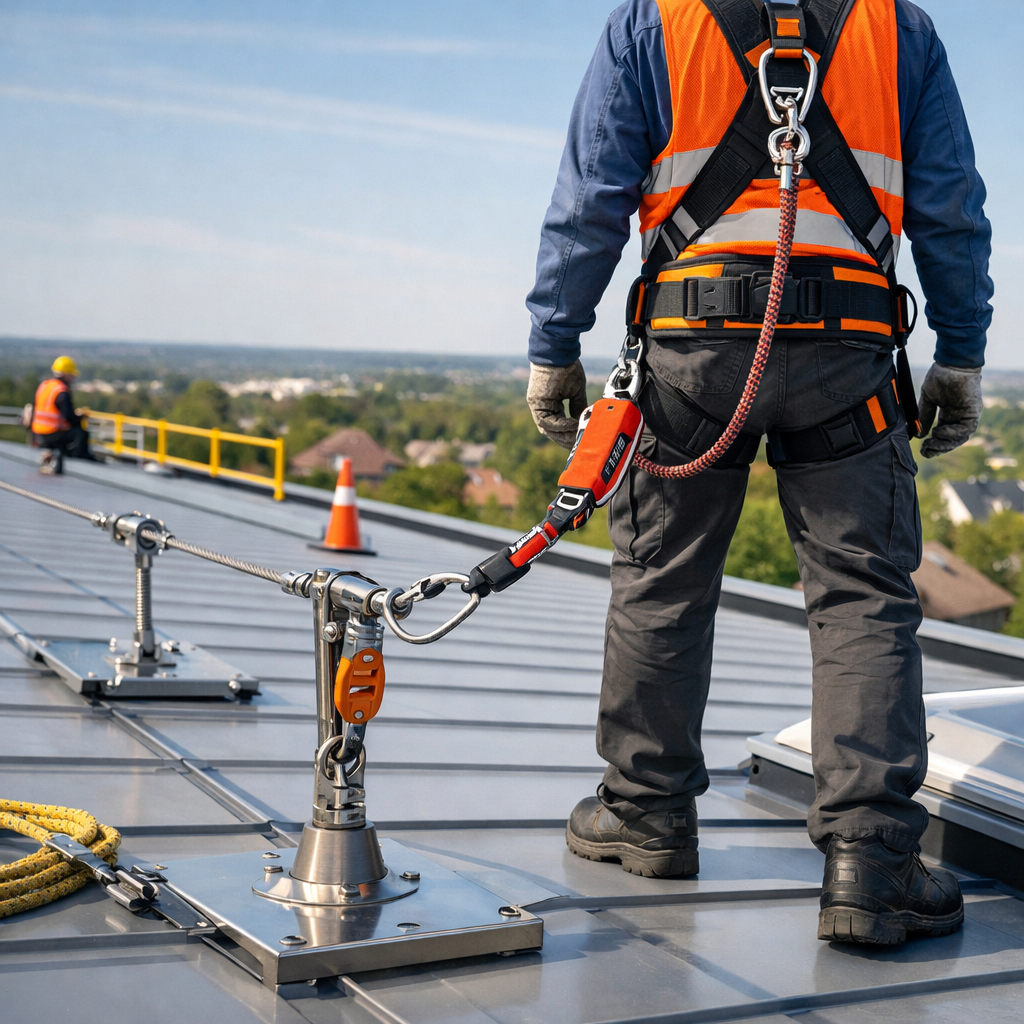
This article covers key risks, practical prevention methods, PPE, compliance obligations, and examples of safe roof work practices.
- Why roofing fall protection systems matter in OHSE
- Choosing roofing fall protection systems using the Hierarchy of Controls
- PPE, inspection, and practical use of roofing fall protection systems
- Training, compliance, and rescue planning for roofing fall protection systems
- Building a safer roof work culture with roofing fall protection systems
Why roofing fall protection systems matter in OHSE
Roofing work creates multiple fall hazards at the same time.
Workers may be exposed to unprotected edges, skylights, roof openings, unstable ladders, brittle materials, changing weather, and manual handling demands while carrying tools or materials.
Even a short fall can lead to fractures, spinal injuries, traumatic brain injury, or fatal outcomes.
In OHSE terms, roof work requires a task-based risk assessment before work starts and ongoing monitoring while the work is underway.
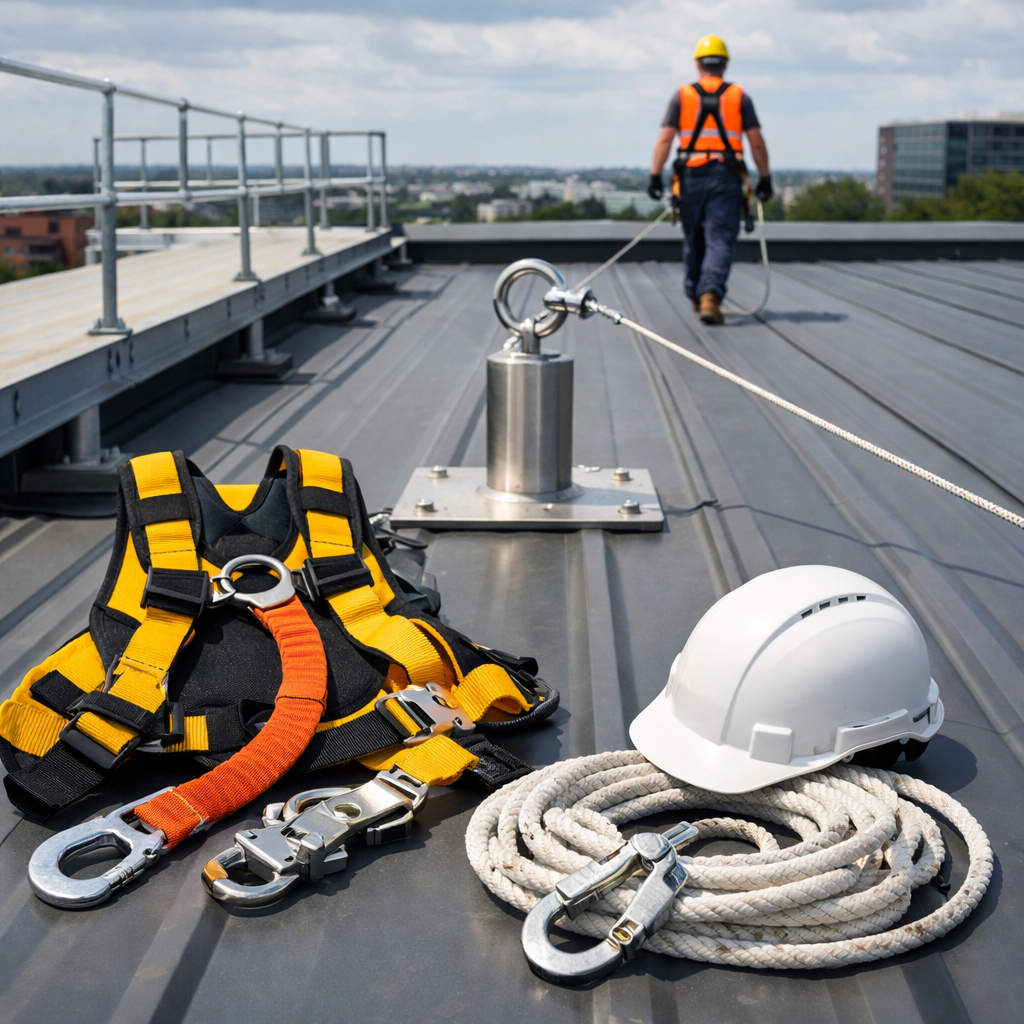
According to guidance from OSHA and the CCOHS, fall prevention and fall arrest measures should be selected based on the specific conditions of the job site.
That means there is no single solution for every roof.
Low-slope roofs, steep-slope roofs, metal roofs, residential roofs, and roofs with openings may all require different combinations of controls.
Main risks during roof work
- Falls from roof edges or eaves
- Falls through skylights, roof hatches, or fragile roofing materials
- Slips caused by rain, frost, dust, loose granules, or poor housekeeping
- Trips over tools, cables, anchor lines, and stored materials
- Loss of balance while lifting or positioning roofing products
- Ladder access incidents at roof entry and exit points
- Swing falls caused by poorly positioned anchors
These hazards show why roofing fall protection systems should never be treated as a simple equipment issue alone.
They are part of a wider safe work system.
Choosing roofing fall protection systems using the Hierarchy of Controls
The best OHSE programs apply the Hierarchy of Controls rather than relying only on personal protective equipment.
When planning roofing fall protection systems, employers should first ask whether the hazard can be removed or reduced through design, work methods, or temporary engineering solutions.
1. Elimination and substitution
In some cases, work can be done from the ground using extendable tools, drones for inspection, or prefabricated roof components assembled at lower levels.
While elimination is not always possible in roofing, it should still be considered during planning.
2. Engineering controls
Engineering controls are often the most reliable roof safety option because they do not depend entirely on worker behavior.
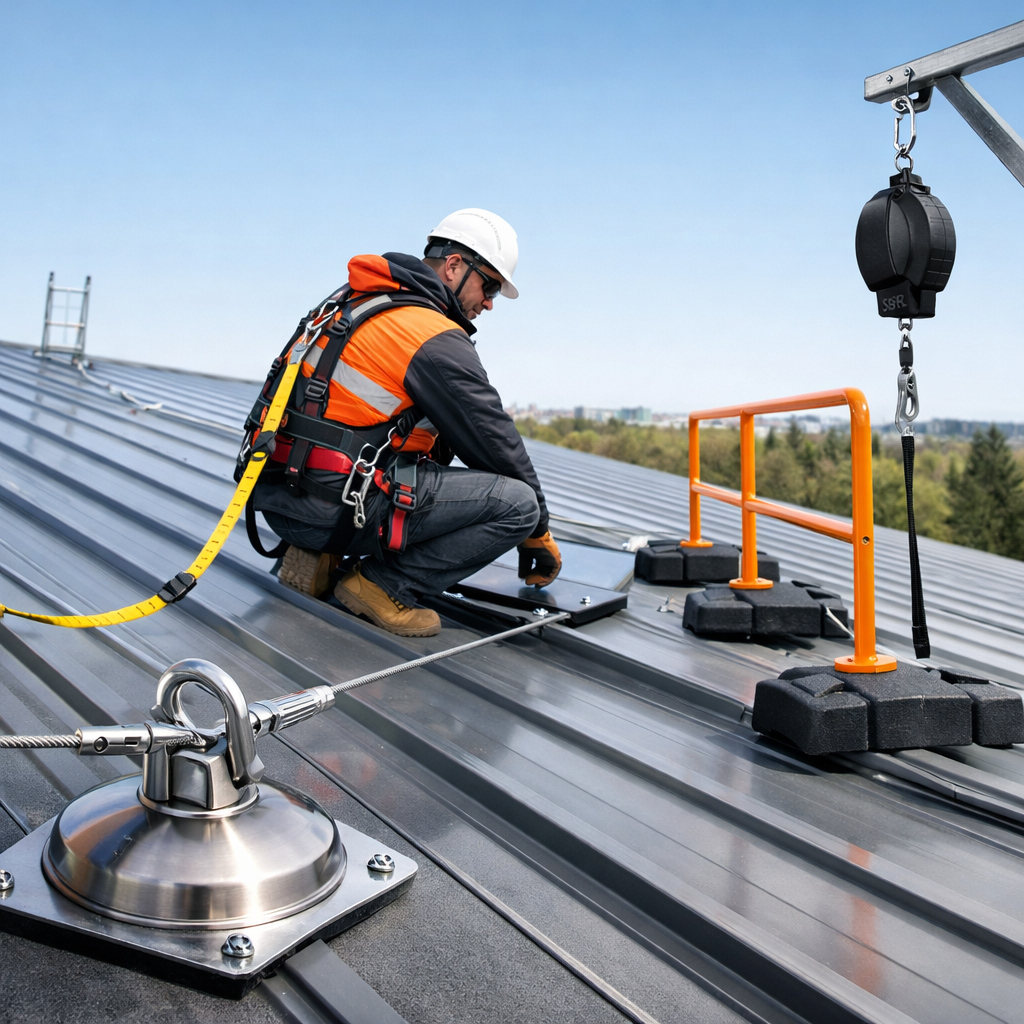
Examples include guardrails, covers over openings, scaffolds, work platforms, perimeter protection, and fixed anchor systems designed by qualified persons.
On many sites, temporary edge protection offers a higher level of control than a personal fall arrest system alone.
3. Administrative controls
Administrative measures include safe work procedures, rescue planning, roof access restrictions, weather monitoring, toolbox talks, supervision, and permit systems.
Administrative controls also include checking worker competency and ensuring subcontractors follow the same standards.
4. PPE and personal fall arrest
PPE is critical, but it is the last line of defense.
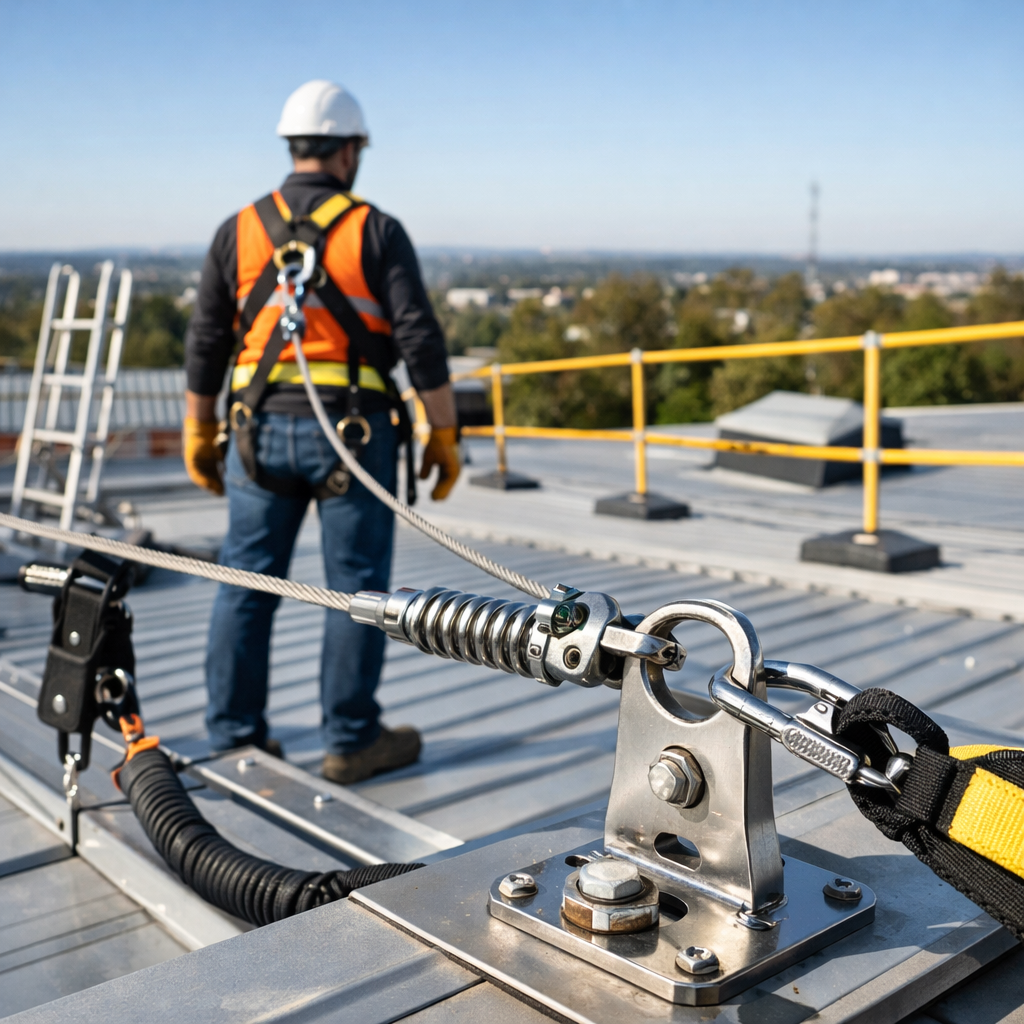
This includes full-body harnesses, lanyards, lifelines, rope grabs, shock absorbers, and compatible anchor points.
For many roofing tasks, roofing fall protection systems rely on personal fall arrest equipment that must be correctly fitted, inspected, and connected before exposure begins.
| Control type | Example on roofing jobs | Main benefit |
|---|---|---|
| Elimination | Ground-based inspection tools | Removes need to access roof for some tasks |
| Engineering | Guardrails or skylight covers | Provides passive protection |
| Administrative | Weather rules and exclusion zones | Reduces exposure through procedures |
| PPE | Harness, lanyard, anchor, lifeline | Arrests a fall when other controls cannot fully prevent it |
PPE, inspection, and practical use of roofing fall protection systems
Personal protective equipment for roof work must be suitable for the task and compatible across all components.
A harness connected to an unsuitable anchor, for example, does not provide effective protection.
Every part of the system matters.
Core PPE and system components
- Full-body harness sized to the worker
- Shock-absorbing lanyard or self-retracting lifeline
- Certified anchor point with adequate strength
- Vertical or horizontal lifeline where required
- Non-slip safety footwear appropriate for roof surfaces
- Hard hat, gloves, eye protection, and weather-appropriate clothing
Before each shift, workers should inspect harness webbing, stitching, D-rings, snap hooks, labels, and connectors for wear or damage.
Anchors and lifelines should also be checked, and damaged equipment must be removed from service immediately.
Manufacturers’ instructions must always be followed, especially for anchor installation and clearance requirements.
A practical example is a crew installing membrane roofing on a commercial building with several skylights.
In this case, the employer may use guardrails at the perimeter, rigid covers over skylights, and a travel restraint or fall arrest setup for workers operating near specific edges.
That layered approach is stronger than relying on harnesses alone.
Another example is steep residential roof replacement.
Here, roof brackets, scaffolding, ladder stabilizers, and a personal fall arrest system connected to a properly rated anchor can work together.
If rain begins or wind speeds rise beyond safe limits, work should stop until conditions improve.
For more guidance on site controls, businesses often align roof safety planning with their safety training and risk assessment services processes.
Training, compliance, and rescue planning for roofing fall protection systems
Compliance is a legal and moral requirement.
Roofing contractors must understand applicable national, state, provincial, or local rules for fall protection, equipment selection, and worker training.
In many jurisdictions, specific trigger heights determine when protection is required, but good OHSE practice does not wait for the minimum legal threshold if serious risk is already present.
Authorities such as OSHA construction fall protection standards and guidance from CCOHS emphasize hazard assessment, competent supervision, and proper training.
Training should cover hazard recognition, equipment use, limitations of systems, anchor selection, inspection routines, emergency response, and incident reporting.
Why rescue planning is essential
One of the most overlooked parts of roofing fall protection systems is rescue planning.
Arresting a fall is not the end of the emergency.
A worker suspended in a harness may face suspension trauma if rescue is delayed.
For that reason, every roof work plan should identify:
- How a fallen worker will be reached quickly
- Who is trained to perform the rescue
- What rescue equipment is available on site
- How emergency services will access the area
- How communication will be maintained during the incident
Documentation also matters.
Inspection records, training records, rescue plans, toolbox talks, and incident reviews help demonstrate due diligence and support continuous improvement.
If a near miss occurs, the system should be reviewed immediately to identify root causes and stronger controls.
Building a safer roof work culture with roofing fall protection systems
The most effective OHSE outcomes come from combining equipment with culture.
When supervisors enforce standards consistently, workers report hazards early, and management invests in the right controls, roof work becomes far safer and more predictable.
Shortcuts, poor planning, and rushed schedules are often behind serious falls.
By contrast, well-managed roofing fall protection systems support safer access, safer movement, and safer task completion across the entire project.
In practical terms, that means starting each job with a site-specific risk assessment, selecting controls through the Hierarchy of Controls, using appropriate PPE, verifying compliance, and preparing for rescue before work begins.
It also means adjusting the plan when roof conditions change.
A dry roof at 8 a.m. can become a slip hazard by noon.
Roofing fall protection systems are not just a regulatory checkbox.
They are a critical part of protecting lives, reducing injuries, and improving overall construction performance.
For any employer or contractor involved in roof work, investing in strong roofing fall protection systems is one of the clearest and most practical steps toward a safer workplace.