


Safe Concrete Pouring Practices: Reducing Risks and Improving Site Safety


safe concrete pouring practices are essential on any construction site where workers handle wet concrete, reinforcing materials, pumping systems, formwork, and finishing tools.
When concrete pours are not properly planned and controlled, the result can be serious injuries, chemical burns, struck-by incidents, slips, falls, or structural failure.
In occupational health, safety, and environment management, concrete work must be treated as a high-risk activity rather than a routine task.
From site preparation to final curing, every stage of the pour needs clear procedures, competent supervision, suitable personal protective equipment, and compliance with recognized standards from organizations such as OSHA and CCOHS.
This article explains safe concrete pouring practices in a practical way, covering common hazards, prevention methods, PPE, legal compliance, and real workplace examples.
Whether you are a contractor, site supervisor, safety officer, or crew member, these controls can help reduce incidents and keep the pour efficient and compliant.
- Why Safe Concrete Pouring Practices Matter on Construction Sites
- Planning and Prevention: The Foundation of Safe Concrete Pouring Practices
- PPE Requirements for Safe Concrete Pouring Practices
- Compliance, Supervision, and Real Examples of Safe Concrete Pouring Practices
- Building a Safer Culture Through Safe Concrete Pouring Practices
Why Safe Concrete Pouring Practices Matter on Construction Sites
Concrete pouring may seem straightforward, but it combines chemical exposure, moving equipment, changing weather, and time pressure.
Workers often operate close to pump hoses, vibrating tools, edges, embedded steel, and unstable ground conditions, which means a small mistake can escalate quickly.
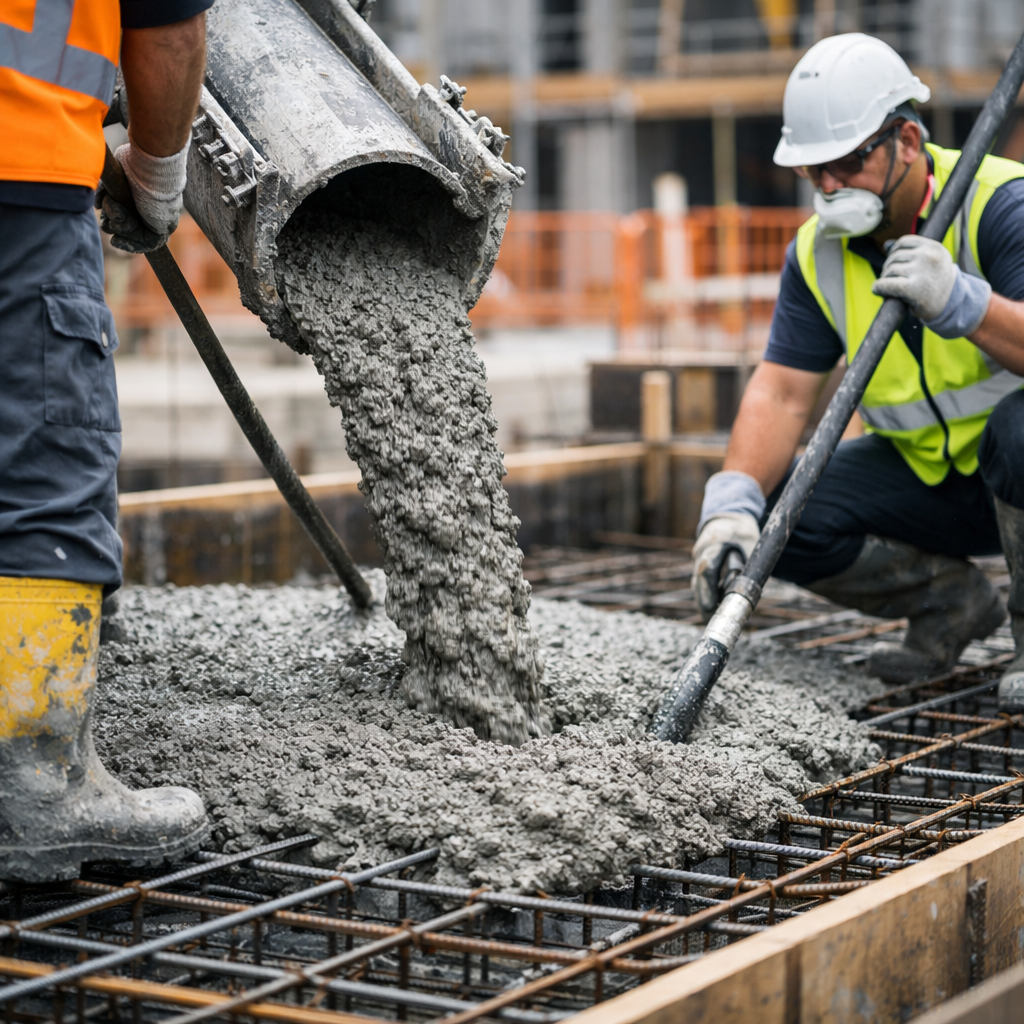
Wet concrete is highly alkaline and can cause cement burns, dermatitis, and serious eye injuries.
At the same time, concrete trucks, boom pumps, and power trowels introduce mechanical hazards that can lead to crush injuries, entanglement, and contact incidents.
There are also structural risks.
If formwork, bracing, or shoring is inadequate, the pressure of fresh concrete can cause collapse, exposing workers to falling materials, engulfment, or multiple casualties.
Safe concrete pouring practices support more than injury prevention.
They also help maintain product quality, prevent delays, reduce rework, improve crew coordination, and demonstrate due diligence during inspections or incident investigations.
Main Risks Associated with Concrete Pouring
- Chemical exposure: skin contact with wet concrete, cement dust inhalation, and eye splashes.
- Slip and trip hazards: hoses, uneven ground, wet surfaces, and scattered tools.
- Struck-by hazards: moving trucks, swinging pump booms, hose whip, and falling objects.
- Caught-in or collapse hazards: failed formwork, trench wall failure, and shifting reinforcement.
- Manual handling injuries: lifting screeds, moving wheelbarrows, and repetitive shoveling.
- Environmental conditions: heat stress, cold stress, lightning, poor visibility, and wind affecting boom stability.
- Electrical hazards: pump booms or equipment operating near overhead power lines.
Planning and Prevention: The Foundation of Safe Concrete Pouring Practices
The most effective safe concrete pouring practices start before the first truck arrives.
A pre-pour plan should identify the work area, sequence of operations, responsible persons, emergency controls, weather concerns, access routes, and communication methods.
A proper risk assessment should review ground stability, excavation edges, formwork design, overhead services, traffic movement, and the location of pedestrians or nearby trades.
This is also the right time to confirm that workers are trained for their assigned tasks and that supervisors understand the load limits and manufacturer instructions for pumps, vibrators, and temporary structures.
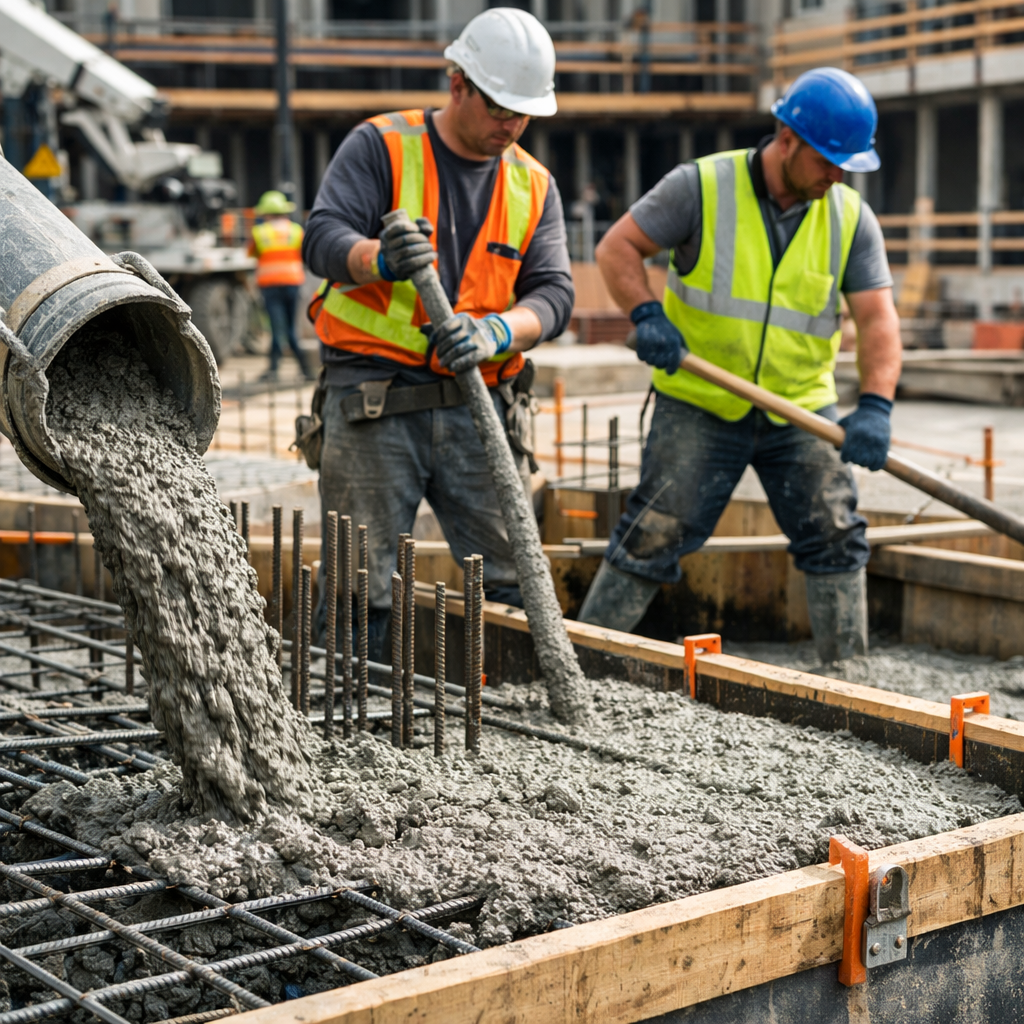
Apply the Hierarchy of Controls
Using the Hierarchy of Controls makes safe concrete pouring practices more effective because it prioritizes stronger protections over reliance on worker behavior alone.
- Elimination: remove unnecessary personnel from the pour zone.
- Substitution: use safer access equipment or lower-risk delivery methods where possible.
- Engineering controls: install guardrails, stable formwork, hose restraints, washout stations, and traffic barriers.
- Administrative controls: use pre-start briefings, spotters, exclusion zones, permits, and safe work method statements.
- PPE: provide gloves, eye protection, boots, and protective clothing as the final layer of defense.
Practical Prevention Steps Before the Pour
Before work begins, crews should inspect formwork, falsework, and rebar placement to confirm that everything is secured and built according to design.
Any signs of instability, missing bracing, or overloaded platforms must be corrected before pouring starts.
Access and housekeeping are equally important.
Walkways should be clear, lighting should be adequate, and hose routes should be planned to reduce trips and sudden movements.
Traffic control should separate concrete trucks, pumps, and workers on foot, especially on tight urban sites.
Communication can prevent many pouring incidents.
A toolbox talk should cover pour sequence, hazard zones, hand signals, emergency stop procedures, washout areas, and the location of first aid supplies.
If your organization uses internal procedures, it is good practice to align the job with your safety training programs and construction risk assessment guide.
PPE Requirements for Safe Concrete Pouring Practices
Personal protective equipment is a critical part of safe concrete pouring practices, particularly because wet concrete can quickly damage skin and eyes without immediate warning.
PPE should be task-specific, well maintained, and worn consistently throughout the pour and cleanup process.
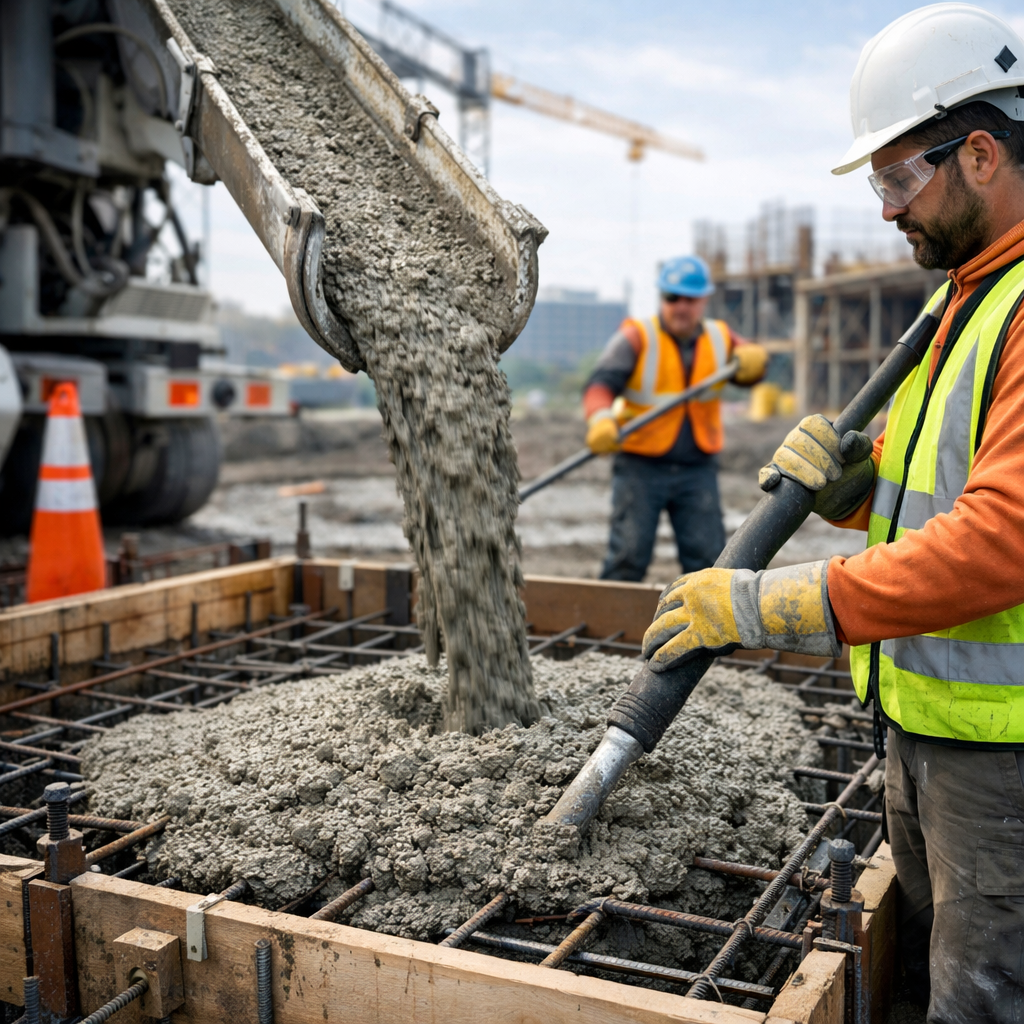
Recommended PPE for Concrete Work
- Gloves: waterproof, alkali-resistant gloves that extend far enough to protect wrists and forearms.
- Eye protection: safety glasses with side shields or chemical splash goggles when there is a risk of splashing.
- Foot protection: waterproof safety boots with slip-resistant soles and toe protection.
- Body protection: long sleeves, long pants, and durable clothing to reduce direct skin contact.
- High-visibility clothing: especially where trucks, pumps, or mobile plant are operating.
- Hearing protection: when noise from plant and tools exceeds exposure limits.
- Respiratory protection: when dry cement dust or silica-containing materials create inhalation hazards.
PPE must be supported by hygiene controls.
Workers should never allow wet concrete to remain trapped inside gloves, sleeves, or boots.
Clean water, skin-washing facilities, and emergency eyewash access should be available so contamination can be removed immediately.
A common mistake on site is assuming that ordinary work gloves or standard boots are enough.
In reality, concrete-specific exposure requires waterproof and chemical-resistant protection, particularly during pumping, screeding, and finishing where splashes are frequent.
Compliance, Supervision, and Real Examples of Safe Concrete Pouring Practices
Compliance is a major part of safe concrete pouring practices because regulatory bodies expect employers to identify hazards, provide training, maintain equipment, and enforce safe systems of work.
Local legal requirements vary, but the general duty to protect workers remains consistent across jurisdictions.
Useful guidance can be found through OSHA’s concrete and masonry construction resources and publications from CCOHS.
These sources emphasize planning, fall protection, hazard communication, PPE, equipment safety, and emergency response.
Simple Compliance Checklist
| Safety Area | What to Check | Why It Matters |
|---|---|---|
| Formwork and shoring | Designed, inspected, and braced before pouring | Prevents collapse and structural failure |
| PPE | Workers equipped with waterproof gloves, boots, eye and skin protection | Reduces burns, splashes, and impact injuries |
| Equipment | Pumps, hoses, vibrators, and tools inspected before use | Prevents mechanical failure and hose whip |
| Training | Crew briefed on hazards, controls, and emergency actions | Improves awareness and response |
| Site control | Exclusion zones, traffic routes, and housekeeping maintained | Reduces struck-by and slip hazards |
Practical Workplace Examples
Consider a slab pour on a commercial building site.
Without a defined exclusion zone, workers from another trade walk near the pump line and one is nearly struck when the hose shifts unexpectedly.
A safer approach is to barricade the pour area, assign a spotter, and allow only essential personnel inside the zone.
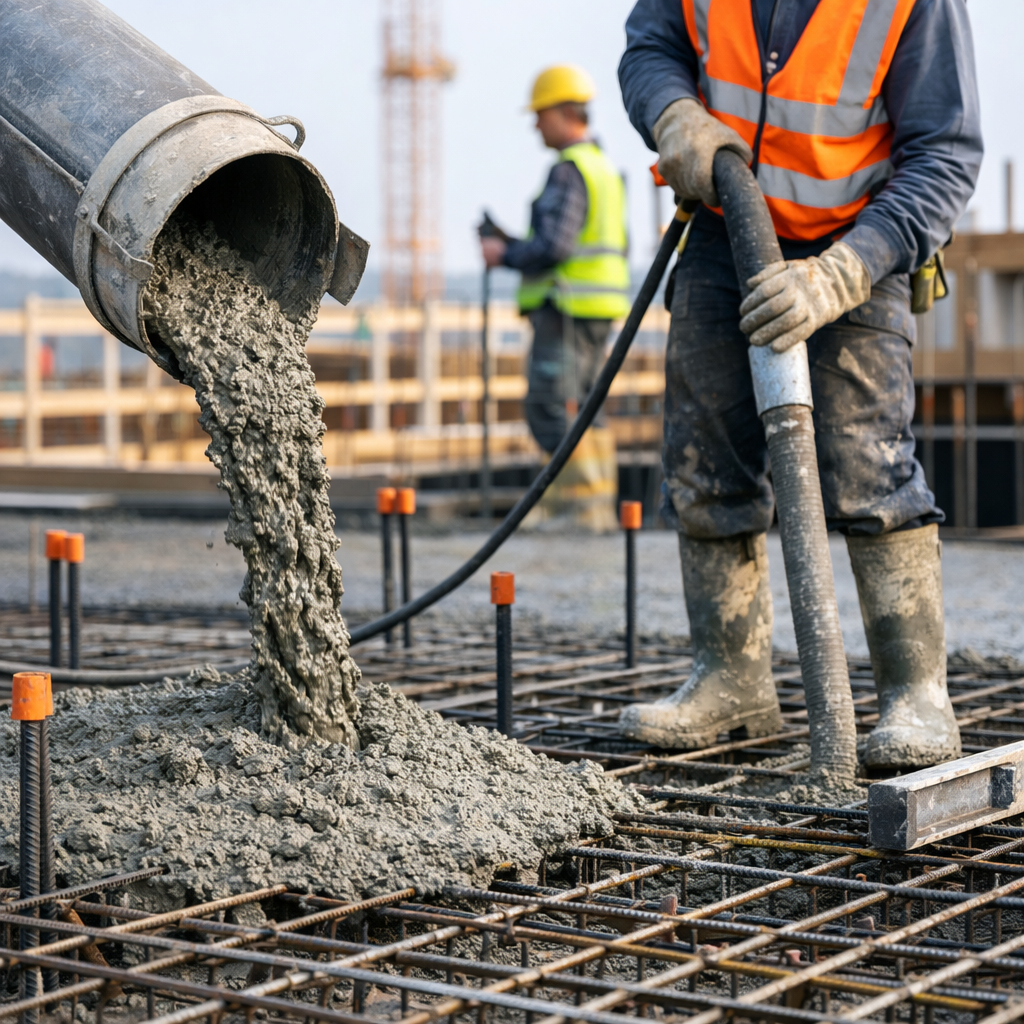
In another example, a worker finishes concrete while kneeling in wet material with soaked clothing and standard gloves.
Hours later, the worker develops a serious alkali burn.
This incident could be prevented through proper waterproof PPE, immediate wash facilities, supervisor checks, and worker training on delayed-onset cement burns.
A third example involves a wall pour where formwork was modified on site without engineering review.
Under concrete pressure, a panel fails and material spills into the work area.
Safe concrete pouring practices require design approval, pre-pour inspections, and authority for workers to stop the job when conditions are not right.
Strong supervision makes a visible difference.
When forepersons actively monitor pour rate, worker positioning, access, weather, and cleanup, crews are more likely to follow procedures and raise concerns early rather than work around them.
Building a Safer Culture Through Safe Concrete Pouring Practices
Safe concrete pouring practices are most effective when they become part of everyday site culture rather than a checklist completed only for compliance.
Crews should feel confident reporting defective formwork, damaged hoses, missing PPE, or unsafe sequencing without fear of blame or delay pressure.
Short pre-task discussions, routine inspections, and post-pour reviews can help identify what worked and what needs improvement on the next job.
This feedback loop is valuable because no two pours are exactly the same in terms of weather, access, crew experience, or structural design.
Ultimately, safe concrete pouring practices protect people first, while also improving productivity, quality, and legal compliance.
By recognizing the real risks, applying the Hierarchy of Controls, using the right PPE, and following established guidance from OSHA, CCOHS, and company procedures, construction teams can complete pours more safely and with fewer disruptions.
Every successful pour should be the result of planning, communication, and disciplined execution.
When safe concrete pouring practices are built into the job from start to finish, the site becomes safer, the work becomes more reliable, and everyone goes home in better condition at the end of the day.