


safe knife handling in kitchens: OHSE Risks, Prevention, PPE, and Compliance


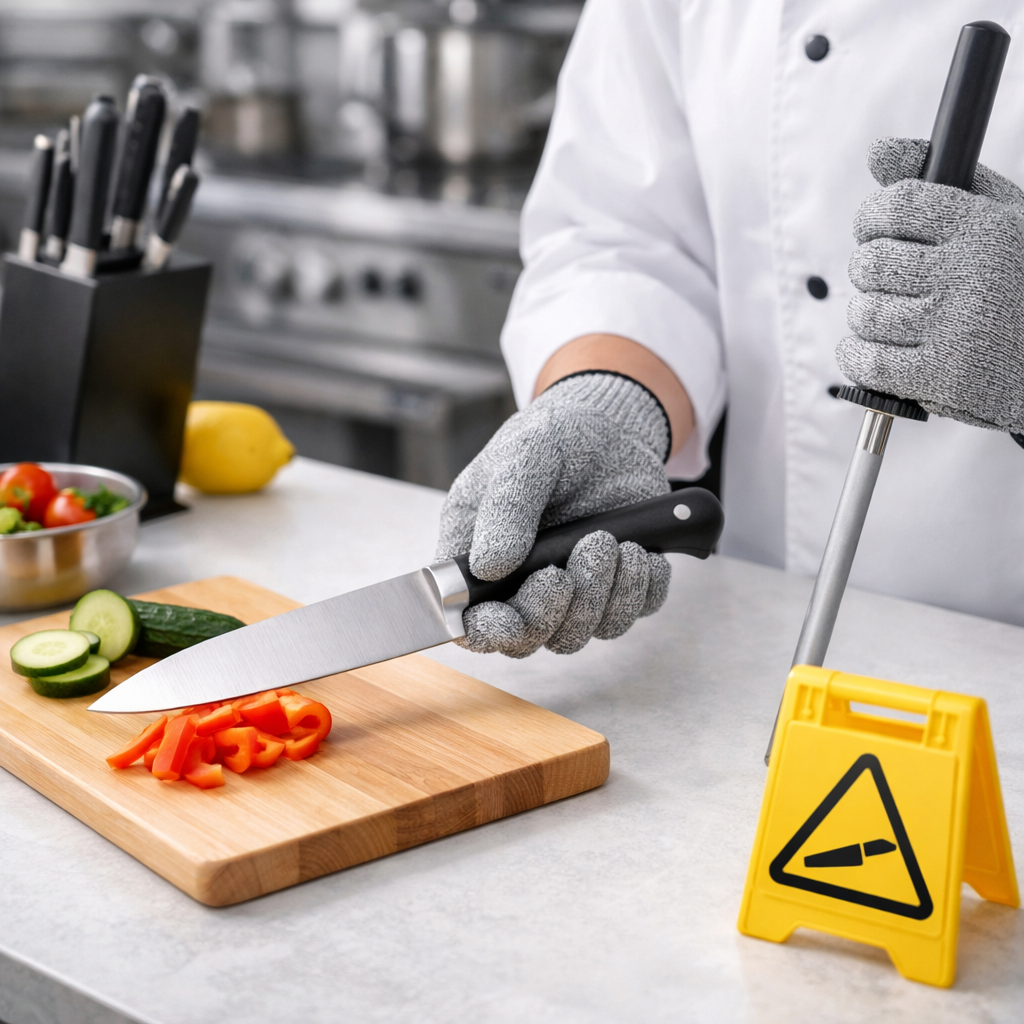
safe knife handling in kitchens is a core OHSE priority in restaurants, catering businesses, school canteens, hospitals, and home kitchens alike. Knives are essential tools, but they can quickly cause serious cuts, puncture wounds, infections, lost work time, and long-term hand injuries when they are used carelessly or maintained poorly.
From an occupational health and safety perspective, knife safety is not only about individual technique. It also depends on training, supervision, equipment condition, workspace design, cleaning procedures, and compliance with workplace safety standards. Guidance from organizations such as OSHA and CCOHS supports a practical approach: identify hazards, control risks, train workers, and review incidents before they happen again.
Whether the setting is a fast-paced commercial kitchen or a small food preparation room, safe knife handling in kitchens reduces injuries, improves efficiency, and supports a stronger safety culture. The sections below explain the main risks, the most effective prevention measures, the role of PPE, and the compliance steps every kitchen should follow.
Why safe knife handling in kitchens matters
Knife injuries are among the most common kitchen incidents. A small slip while chopping vegetables, trimming meat, or washing a blade can lead to lacerations that require first aid, stitches, or emergency treatment. In busy workplaces, the risk rises when workers rush, use dull knives, carry blades improperly, or work in cramped areas with wet floors and poor lighting.
There are several common hazards linked to knife use. The blade itself is obvious, but many incidents happen because of indirect factors such as fatigue, distraction, poor storage, unsuitable cutting boards, and unsafe hand positions. A worker reaching into a sink full of soapy water may not see a submerged knife. Another may try to catch a falling knife by reflex, turning a minor mistake into a severe hand injury.
Common knife-related risks in kitchen workplaces
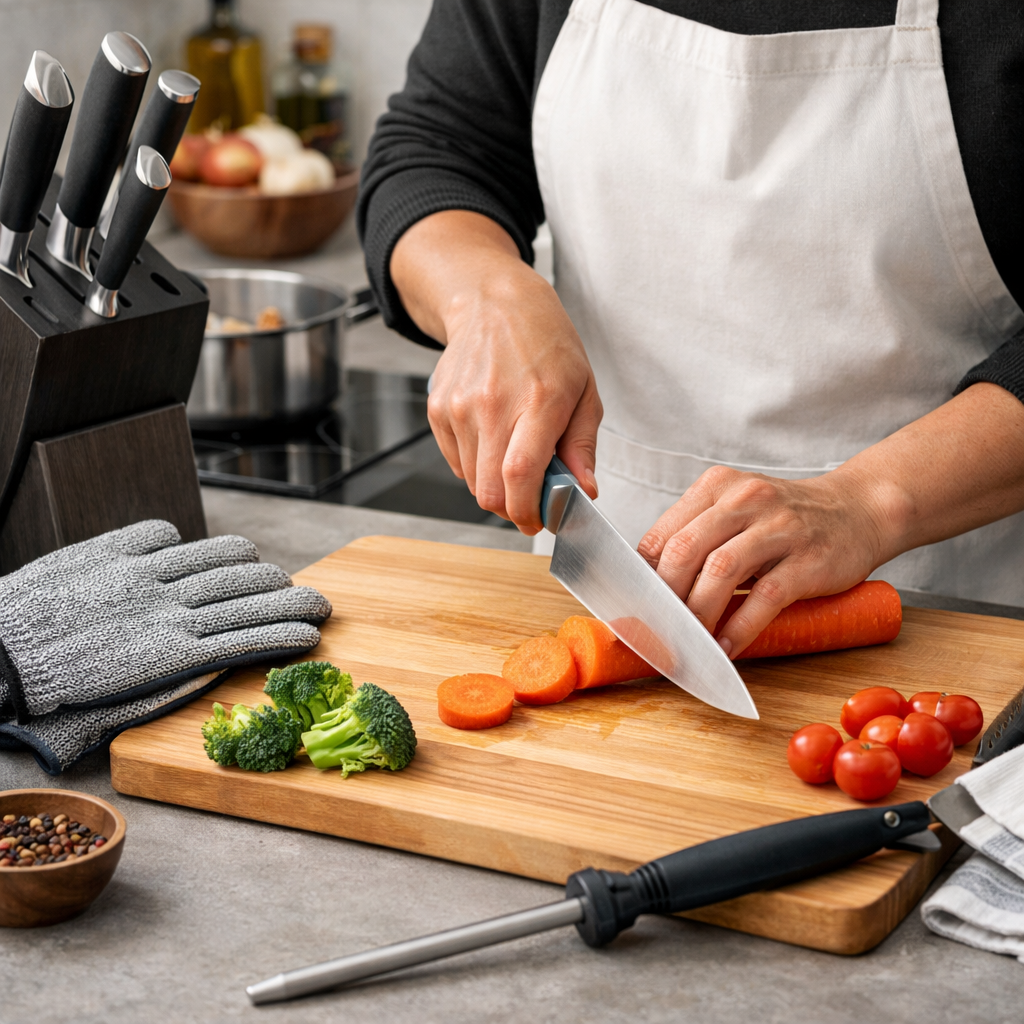
- Lacerations and puncture wounds: often caused by slips during cutting, deboning, slicing, or opening packaging.
- Injuries during cleaning: especially when knives are washed in crowded sinks or left hidden under cloths or food waste.
- Manual handling issues: awkward posture, repetitive cutting, and forceful exertion can contribute to strain injuries.
- Cross-contamination risks: unsafe cleaning and storage practices can affect food safety as well as worker safety.
- Slip and trip interactions: carrying a knife through a wet or obstructed kitchen increases the consequence of a fall.
A practical example is a prep cook using a blunt chef’s knife to dice onions at speed. Because the knife requires more downward force, it slips off the food and cuts the worker’s supporting hand. In another example, a kitchen hand reaches into a sink and grabs the sharp edge of a paring knife hidden in suds. Both incidents are preventable through better systems of work.
Prevention measures and the Hierarchy of Controls
The best way to improve safe knife handling in kitchens is to apply the Hierarchy of Controls. While knives cannot be eliminated from most kitchen tasks, the risks around them can be reduced significantly by changing tools, processes, training, and supervision.
Applying the Hierarchy of Controls
Elimination: Remove unnecessary knife tasks where possible. For example, buy pre-portioned or pre-cut ingredients for selected high-risk tasks during peak production periods.
Substitution: Use safer equipment where suitable. Mandolines with guards, safety cutters for boxes, or pre-set slicing equipment may reduce direct blade handling in some tasks.
Engineering controls: Provide stable cutting boards, non-slip mats, magnetic wall strips or secure knife racks, adequate lighting, and well-designed workstations with enough space between staff.
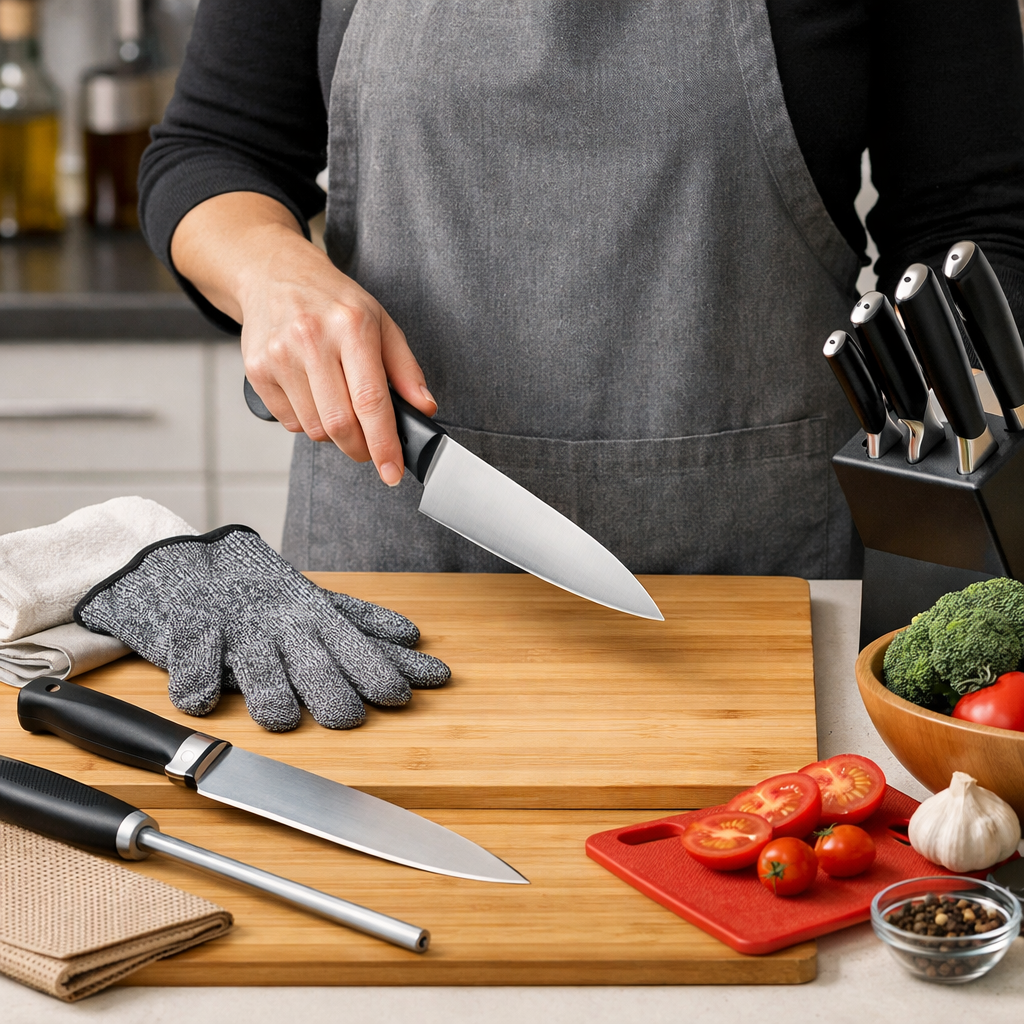
Administrative controls: Develop safe work procedures for cutting, sharpening, transporting, cleaning, and storing knives. Schedule training, supervise new workers, report near misses, and separate busy walkways from prep zones.
PPE: Use cut-resistant gloves or mesh gloves for specific high-risk jobs, along with aprons and closed, slip-resistant footwear where appropriate. PPE is important, but it should support safe systems, not replace them.
Prevention also depends on simple, repeatable habits:
- Keep knives sharp and in good condition.
- Use the right knife for the task.
- Cut on a stable board placed on a damp cloth or non-slip base.
- Use the “claw grip” to protect the guiding hand.
- Carry a knife pointed down by your side, never waving it or holding it upward.
- Never leave knives loose in sinks, drawers, or under towels.
- Pass a knife handle-first or place it down for another worker to pick up.
- Stop work if you are rushed, tired, or distracted.
For more general workplace safety planning, a kitchen may also align knife procedures with its broader incident reporting and hazard management process, such as those described in a company’s workplace risk assessment or food safety and OHSE checklist.
PPE, training, and safe work practices
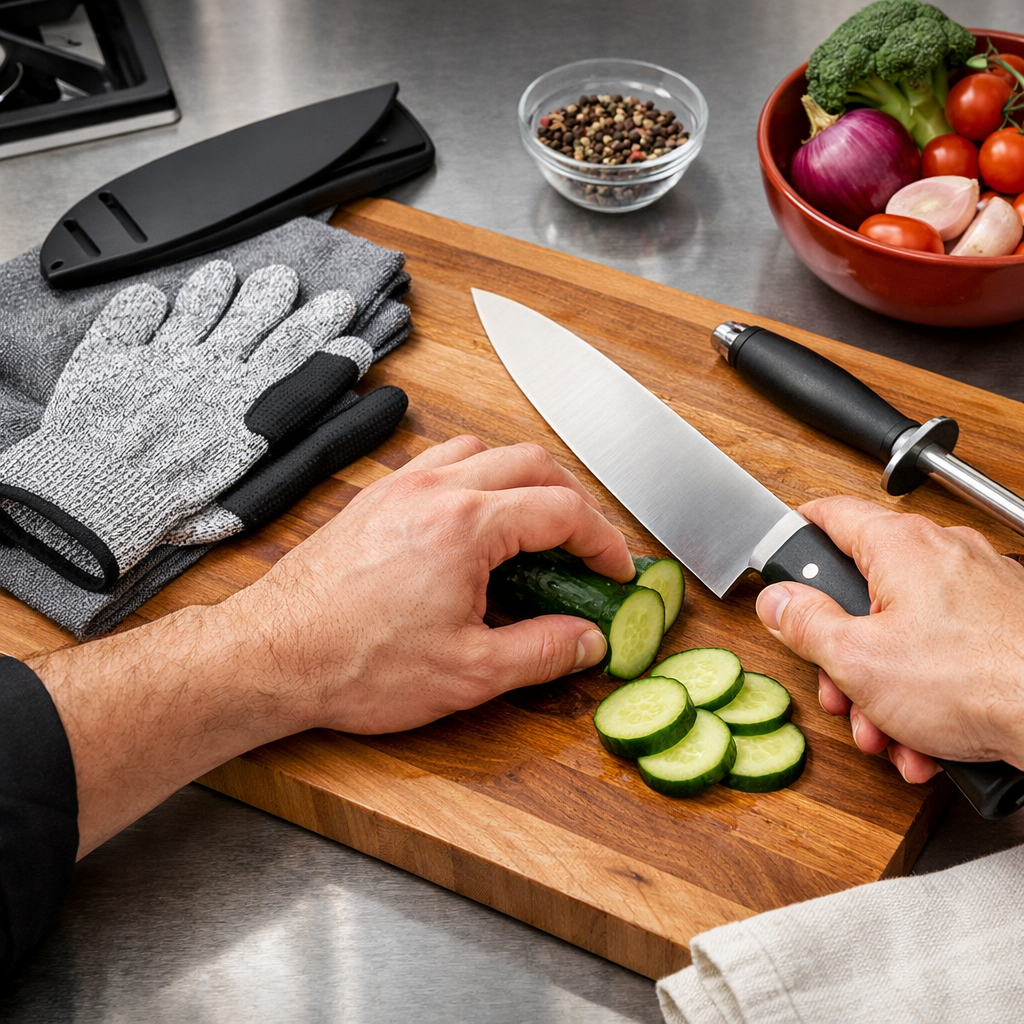
PPE has a clear role in safe knife handling in kitchens, especially in commercial food preparation where repetitive cutting, meat processing, or fish filleting takes place. However, PPE must be chosen correctly. A cut-resistant glove can help reduce injury severity on the non-knife hand, but it does not make careless work safe. Workers still need correct technique, awareness, and supervision.
Recommended PPE for knife-related tasks
| PPE | Best use | Key limitation |
|---|---|---|
| Cut-resistant glove | Protecting the guiding hand during repetitive slicing or trimming | Does not protect against all blade angles or force levels |
| Metal mesh glove | High-risk butchery or deboning tasks | May reduce dexterity if not correctly fitted |
| Apron | Added protection during food prep and cleaning | Does not replace correct blade handling |
| Slip-resistant footwear | Reducing fall risk while carrying or using knives | Must be maintained and suitable for wet floors |
Training should cover more than basic cutting skills. Workers need to know how to inspect knives before use, how to sharpen blades safely, how to store them securely, and what to do if an injury occurs. Induction training for new starters should include knife hazards, emergency response, first aid reporting, and housekeeping expectations.
Practical examples make training more effective. A supervisor can demonstrate how a dull knife is actually more dangerous than a sharp one because it needs more force and is more likely to slip. Another useful exercise is to show the correct method for cleaning a knife separately from other utensils, rather than dropping it into a sink. Resources from NIOSH and local food safety authorities can also support kitchen-specific training programs.
Compliance, incident response, and continuous improvement
Compliance is a major part of safe knife handling in kitchens. Employers have a duty to provide a safe workplace, safe systems of work, appropriate equipment, and training that matches the level of risk. In many jurisdictions, this duty sits under occupational health and safety law, while food businesses must also meet hygiene and sanitation requirements that affect knife cleaning and storage.
A compliant kitchen should have documented procedures for knife use, maintenance, washing, and incident response. Supervisors should check that knives are fit for purpose, first aid kits are accessible, and staff know how to respond to a cut injury. Even minor cuts should be reported because they can reveal deeper issues such as poor workflow, unsuitable PPE, inadequate staffing, or weak training.
What good compliance looks like in practice
- Knife safety included in inductions and refresher training.
- Routine inspection of blades, handles, storage racks, and cutting boards.
- Clear rules for carrying, passing, cleaning, and sharpening knives.
- First aid response and incident reporting for all cuts and near misses.
- Review of staffing levels, production pressure, and fatigue risks.
- Regular consultation with workers about hazards and safer methods.
Consider a catering kitchen preparing hundreds of meals in a short timeframe. Management notices several minor hand cuts over one month. Instead of treating them as isolated events, the team reviews the incidents and finds common causes: blunt knives, overcrowded prep benches, and inconsistent glove use. After replacing damaged knives, changing the prep layout, and running refresher training, the injury rate drops. This is a strong OHSE outcome because it combines hazard identification, corrective action, and follow-up monitoring.
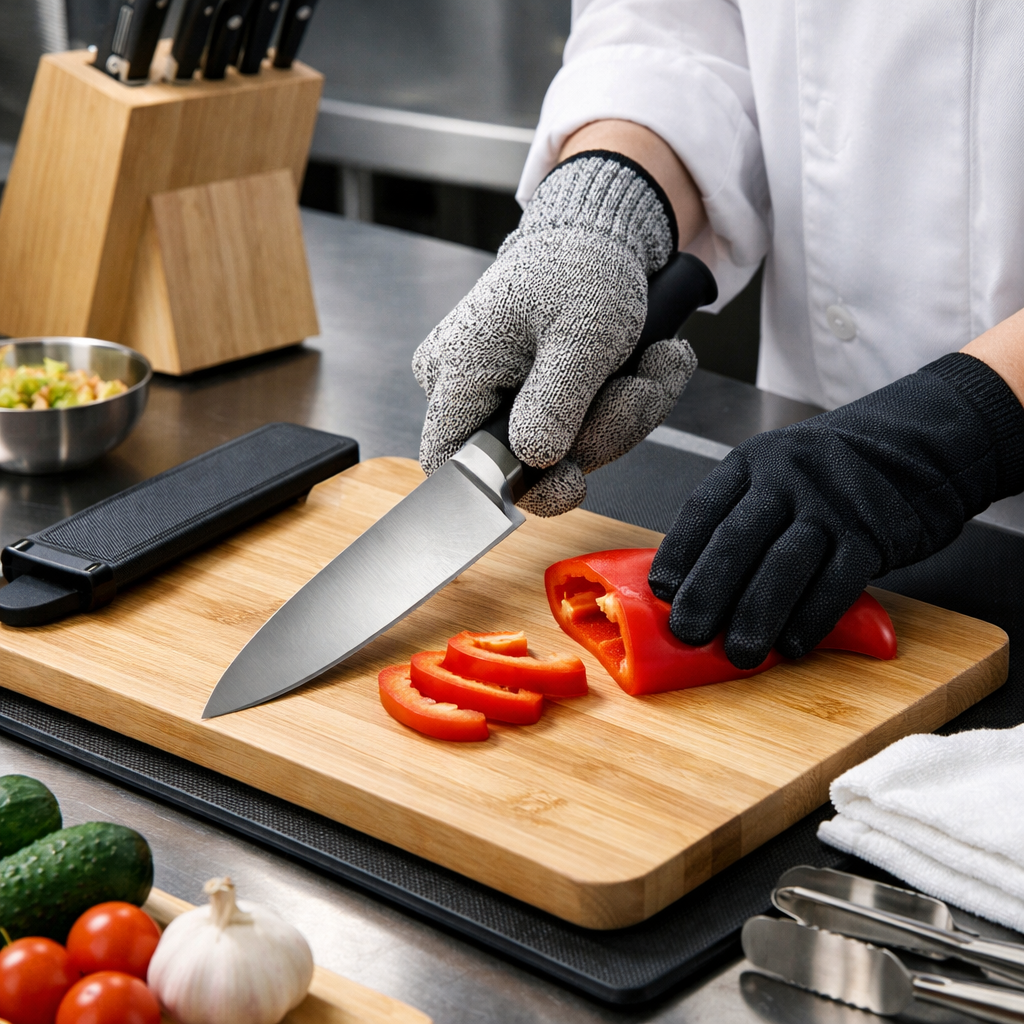
In the end, safe knife handling in kitchens is about creating a workplace where skill and safety work together every day. By understanding the risks, applying the Hierarchy of Controls, selecting PPE carefully, and following OHSE guidance from bodies such as OSHA and CCOHS, kitchens can reduce injuries and improve confidence across the team. Safe habits, good supervision, and regular review turn safe knife handling in kitchens from a rule on paper into a practical standard that protects workers and supports efficient food preparation.