


safe lab waste segregation: Protecting People, Research, and Compliance


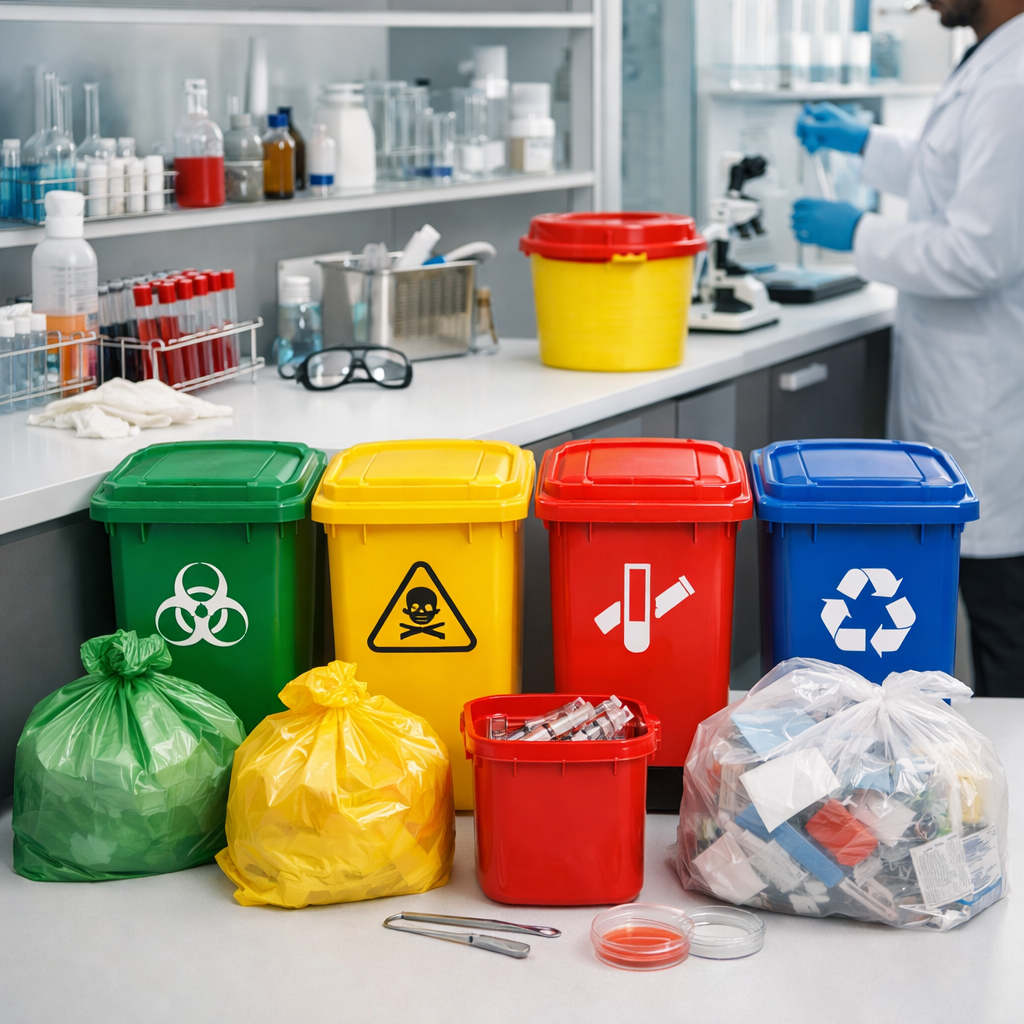
safe lab waste segregation is one of the most important parts of laboratory health, safety, and environmental management.
When waste is sorted correctly at the point of generation, laboratories reduce exposure risks, prevent contamination, protect cleaners and waste handlers, and support legal compliance.
In research, diagnostic, educational, and industrial labs, waste streams can include sharps, chemicals, biological materials, contaminated PPE, broken glass, and general refuse.
If these materials are mixed, the result can be injuries, spills, fires, toxic exposure, failed audits, and avoidable disposal costs.
An effective waste program is not only about choosing the right bin.
It also depends on training, clear labeling, suitable containers, supervision, and consistent procedures that align with occupational health, safety, and environmental expectations.
This article explains the risks, control measures, PPE requirements, compliance obligations, and practical examples that make safe lab waste segregation work in real workplaces.
It also shows how the Hierarchy of Controls can be applied to reduce hazards before they become incidents.
Why safe lab waste segregation matters in every laboratory
Laboratory waste can create immediate and long-term hazards.
A needle disposed of in general waste can puncture a cleaner’s hand. A solvent placed in the wrong container can react with incompatible chemicals. Biological waste left uncontained can spread contamination across benches, equipment, and transport areas.
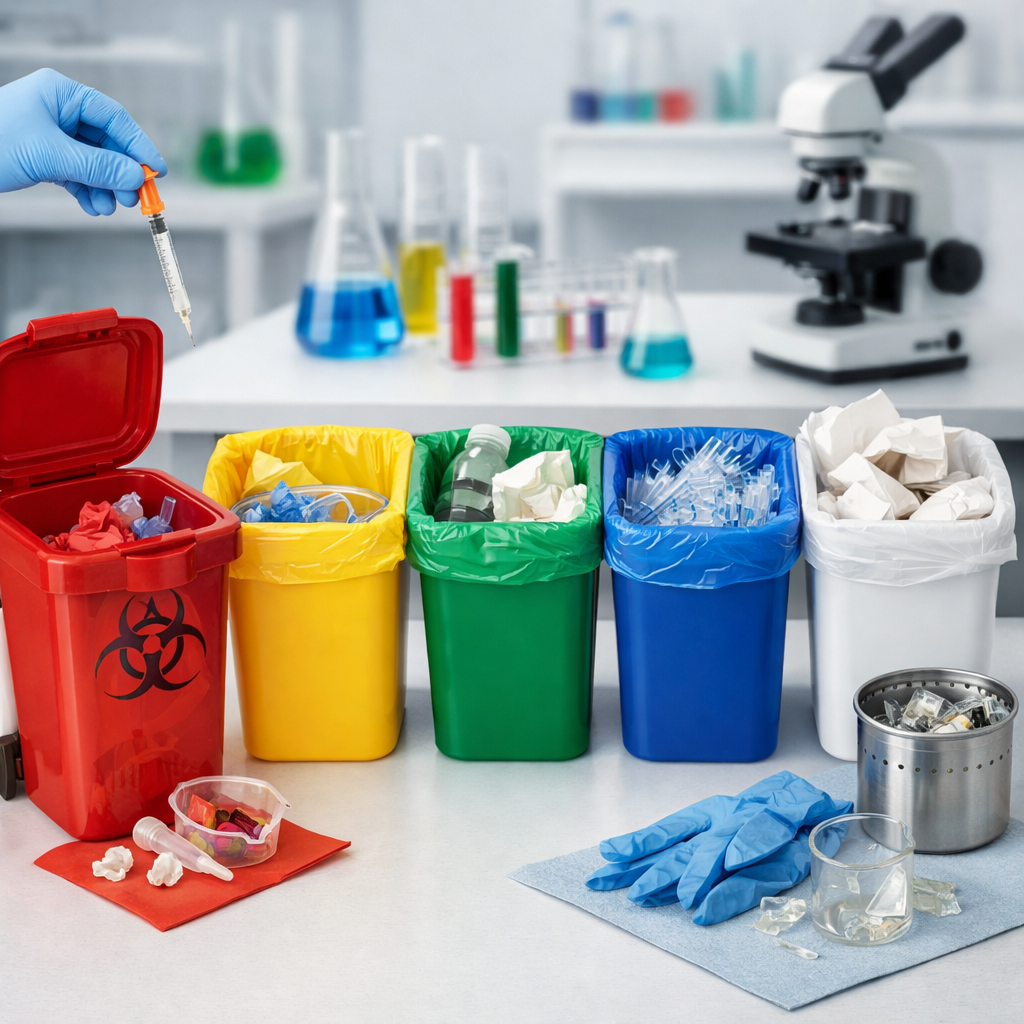
These are not minor housekeeping problems.
They are OHSE issues that can affect workers, contractors, visitors, building services staff, waste transporters, and the wider environment.
Common risks linked to poor segregation
- Sharps injuries from needles, scalpels, broken slides, or contaminated glass
- Chemical exposure through leaks, vapors, splashes, or incompatible mixing
- Biological contamination from infectious or potentially infectious materials
- Fire and explosion risks from flammable or reactive waste stored incorrectly
- Regulatory breaches caused by poor labeling, missing documentation, or improper disposal
- Increased disposal costs when non-hazardous waste is placed into hazardous waste streams
Safe lab waste segregation also protects the integrity of research and operations.
Cross-contamination can compromise samples, invalidate results, and lead to lost time, rework, and reputational damage.
From an OHSE perspective, the goal is simple: keep each waste stream separate, identifiable, contained, and handled according to its risk profile.
This is consistent with guidance from organizations such as OSHA and CCOHS, both of which stress hazard communication, training, and safe handling practices.
Types of laboratory waste and safe lab waste segregation methods
Safe lab waste segregation starts with identifying what is being discarded.
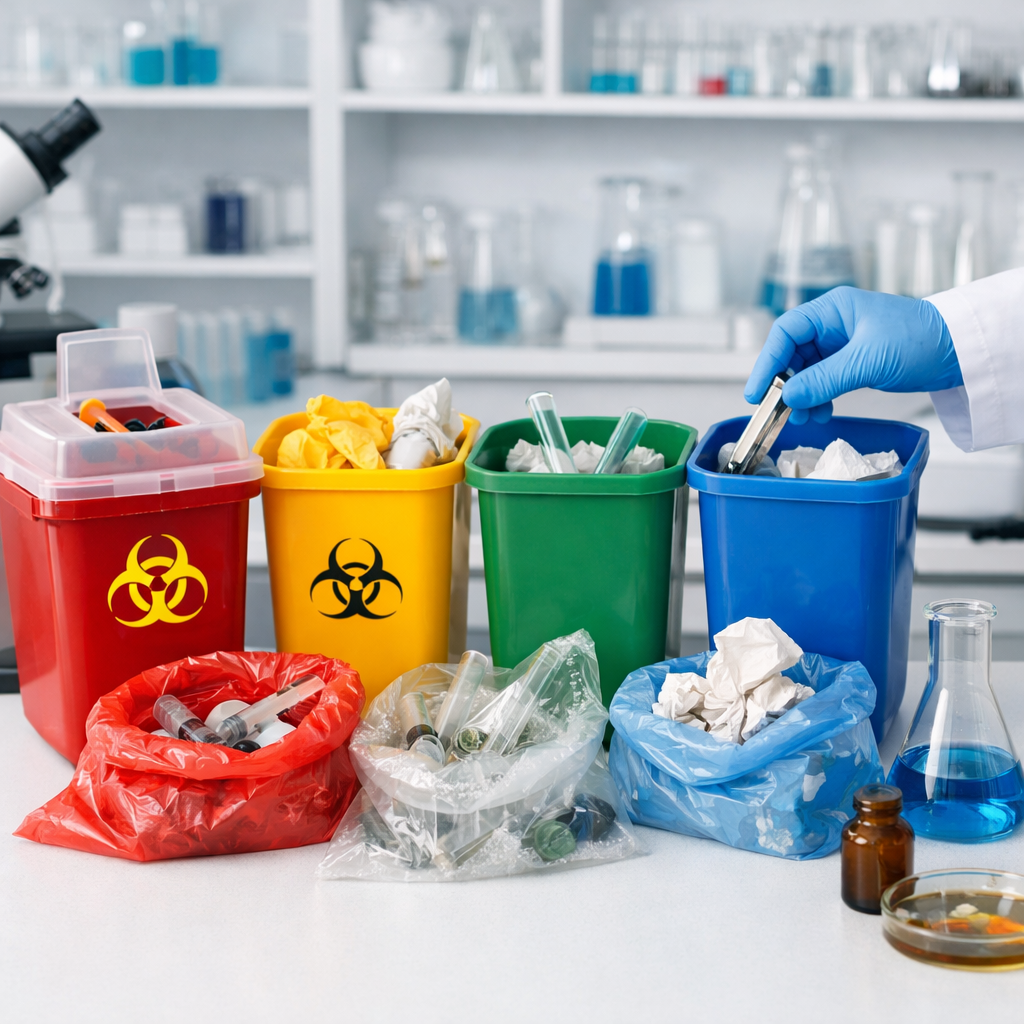
Workers should never have to guess where an item belongs. Containers must be clearly labeled, correctly colored where applicable, and positioned close to the work area.
Main laboratory waste categories
| Waste type | Examples | Segregation requirement |
|---|---|---|
| General waste | Packaging, uncontaminated paper, food-related refuse | Keep separate from all hazardous waste streams |
| Sharps | Needles, blades, lancets, broken contaminated glass | Dispose of immediately in approved puncture-resistant sharps containers |
| Chemical waste | Solvents, acids, alkalis, heavy metal solutions | Segregate by compatibility class and label contents clearly |
| Biological waste | Culture plates, swabs, tissues, contaminated consumables | Use designated biohazard containers or bags for treatment and disposal |
| Glass waste | Uncontaminated broken glass, vials, glass pipettes | Collect in rigid glass disposal containers, not general waste bags |
| Radioactive or specialized waste | Isotopes, contaminated shielding, special reagents | Follow site-specific licensed procedures and legal controls |
One of the most common failures in safe lab waste segregation is placing contaminated items into the nearest available bin.
For example, a glove used to handle a hazardous chemical should not be dropped into general waste just because it looks like ordinary trash.
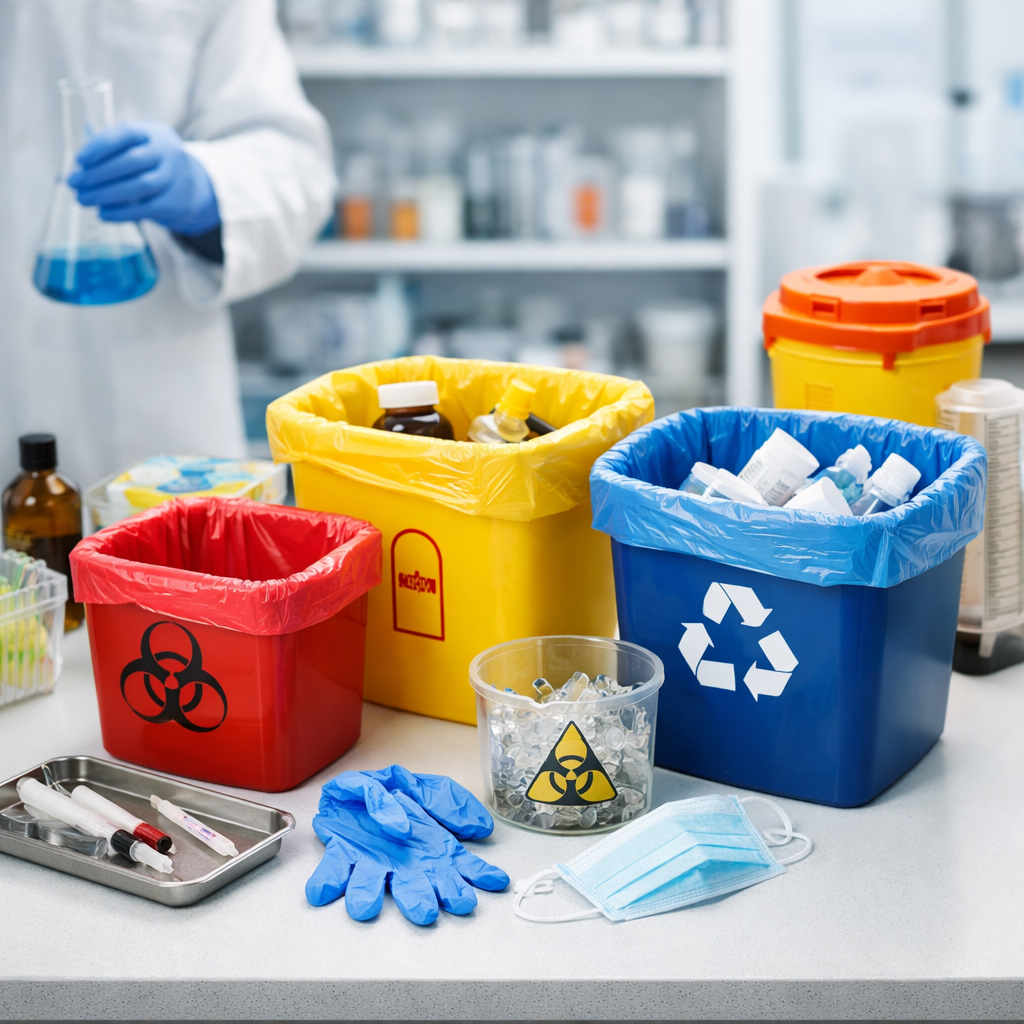
Likewise, not all chemical waste can be stored together.
Halogenated and non-halogenated solvents may require separate collection. Strong oxidizers must be kept away from organics. Acids and bases may need independent containers depending on the site procedure and waste contractor requirements.
If your laboratory is updating procedures, it helps to align waste segregation charts with your chemical inventory and risk assessments.
A simple visual guide near each workstation often improves compliance more effectively than a long written instruction alone. For broader safety planning, many labs also connect waste controls to their workplace risk assessment process and chemical safety procedures.
Risks, prevention, and the Hierarchy of Controls
The best waste programs do more than react to disposal needs.
They reduce the amount and hazard level of waste produced in the first place.
This is where the Hierarchy of Controls is useful.
Instead of relying only on workers to “be careful,” laboratories should apply higher-level controls wherever possible.
Applying the Hierarchy of Controls to safe lab waste segregation
- Elimination: Remove unnecessary hazardous materials from protocols where feasible.
- Substitution: Replace highly hazardous reagents with safer alternatives when validated and practical.
- Engineering controls: Use sealed waste containers, local exhaust ventilation, spill trays, and dedicated storage cabinets.
- Administrative controls: Create written procedures, signage, training, inspections, and waste pickup schedules.
- PPE: Provide gloves, lab coats, face protection, and other equipment matched to the waste hazard.
Prevention begins at the bench.
Waste containers should be available at the point of use, not at the far end of the room. When containers are inconvenient, staff are more likely to delay disposal or use the wrong bin.
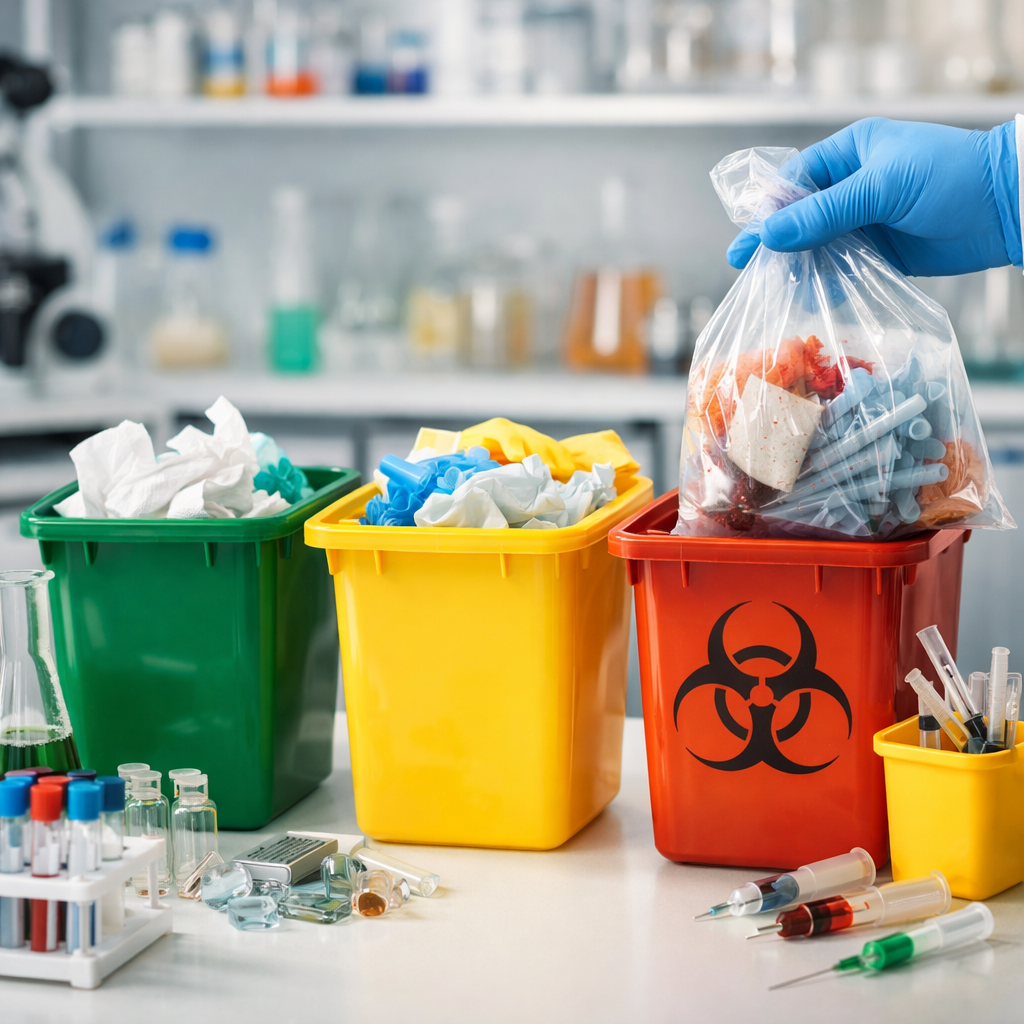
Fill limits also matter.
Sharps containers should never be overfilled, because protruding sharps increase puncture risk during closure and transport. Chemical waste bottles must have adequate headspace and secure caps to reduce leaks and pressure-related hazards.
Inspection routines are another practical control.
Supervisors or safety representatives should regularly check whether labels are legible, lids are closed, containers are intact, and incompatible wastes are not being stored together.
A practical example is a teaching laboratory where students generate pipette tips, contaminated gloves, and broken glass during one session.
Without visible segregation stations, these items often end up mixed. With color-coded bins, a short induction briefing, and staff oversight, disposal accuracy improves immediately and incidents decline.
PPE, training, and practical handling examples
PPE is the last line of defense in safe lab waste segregation, but it remains essential.
The exact PPE depends on the waste type, quantity, and task being performed.
PPE for common waste handling tasks
- Disposable gloves for routine handling of contaminated materials
- Chemical-resistant gloves when handling solvent or corrosive waste containers
- Lab coat or gown to protect skin and clothing
- Safety glasses or goggles to protect against splashes and fragments
- Face shield for higher-risk transfer tasks involving corrosives or large volumes
- Closed footwear to reduce injury from spills or dropped sharps containers
PPE must be selected through risk assessment, not habit.
For example, thin disposable gloves may be suitable for handling dry contaminated packaging, but they may not provide enough resistance when moving chemical waste bottles.
Training should cover more than bin colors.
Workers need to understand waste categories, hazard labels, emergency response, spill reporting, storage time limits, and what to do when they find incorrectly segregated waste.
Consider a realistic example from a pathology lab.
A technician finishes processing specimens and has used swabs, sample tubes, disposable pipettes, and a small volume of formalin waste. The swabs and contaminated disposables go into the biological waste stream, the sharps into an approved sharps container if applicable, and the formalin into the designated chemical waste container. The worker wears gloves, eye protection, and a buttoned lab coat, then performs hand hygiene after disposal.
Another example comes from a university chemistry lab.
Students cleaning up after an experiment may have acetone, acid residues, weighing paper, and broken glassware. Safe lab waste segregation requires the acetone to go into the solvent waste container, acid residues into the correct corrosive waste stream if site rules require separate collection, uncontaminated paper into general waste if permitted, and broken glass into a rigid glass container.
Compliance, documentation, and continuous improvement
Safe lab waste segregation is also a compliance issue.
Laboratories must meet internal policies as well as local legal requirements for hazardous waste, worker protection, transport, and environmental disposal.
Requirements vary by jurisdiction, but common expectations include proper labeling, secure storage, staff training, documented procedures, incident reporting, and use of licensed waste contractors where required.
Standards may also be influenced by biosafety rules, dangerous goods obligations, and environmental legislation.
OSHA resources on hazard communication and exposure control, along with CCOHS guidance on hazardous products and workplace safety, can support a stronger compliance framework.
For chemical classification and safety information, many workplaces also rely on supplier Safety Data Sheets and the U.S. EPA hazardous waste guidance where relevant.
Practical compliance checks
- Are all waste containers labeled with contents and hazards?
- Are incompatible wastes physically separated?
- Are biohazard and sharps containers closed and replaced before overfilling?
- Have workers been trained and refreshed at regular intervals?
- Are spills, mis-segregation events, and near misses recorded and reviewed?
- Is waste collection documented from generation to final disposal where required?
Continuous improvement is important because lab activities change over time.
New test methods, new chemicals, different sample volumes, or revised layouts can all affect waste generation patterns. A system that worked last year may not be adequate today.
Safe lab waste segregation works best when it is built into daily operations instead of treated as an afterthought.
With clear procedures, suitable PPE, practical training, compliant storage, and regular review, laboratories can reduce injuries, prevent contamination, control costs, and meet their OHSE responsibilities. In the end, safe lab waste segregation protects everyone involved, from bench scientists to cleaners to waste contractors, while supporting a safer and more responsible workplace.