
SDS Training Ideas for Better Hazard Communication in the Workplace


SDS training ideas can make hazard communication easier to understand, easier to remember, and much more effective on the job.
When employees know how to read a Safety Data Sheet and apply it during daily tasks, they are better prepared to handle chemicals safely, respond to spills, choose the right PPE, and protect co-workers.
Strong SDS training is a core part of hazard communication programs under OSHA’s Hazard Communication Standard. It also aligns with practical guidance from organizations such as CCOHS, which emphasizes clear information, worker education, and safe work procedures.
The challenge is that many workplaces treat SDS instruction as a one-time paperwork exercise. A smarter approach is to show employees how to use the document in real situations: before using a product, while storing it, during a cleanup, and in an emergency. The best sds training ideas connect the sheet to actual decisions people make every shift.
Why SDS Training Ideas Matter for Hazard Communication
An SDS contains critical information about chemical hazards, safe handling, first aid, firefighting measures, storage requirements, exposure controls, and disposal considerations.
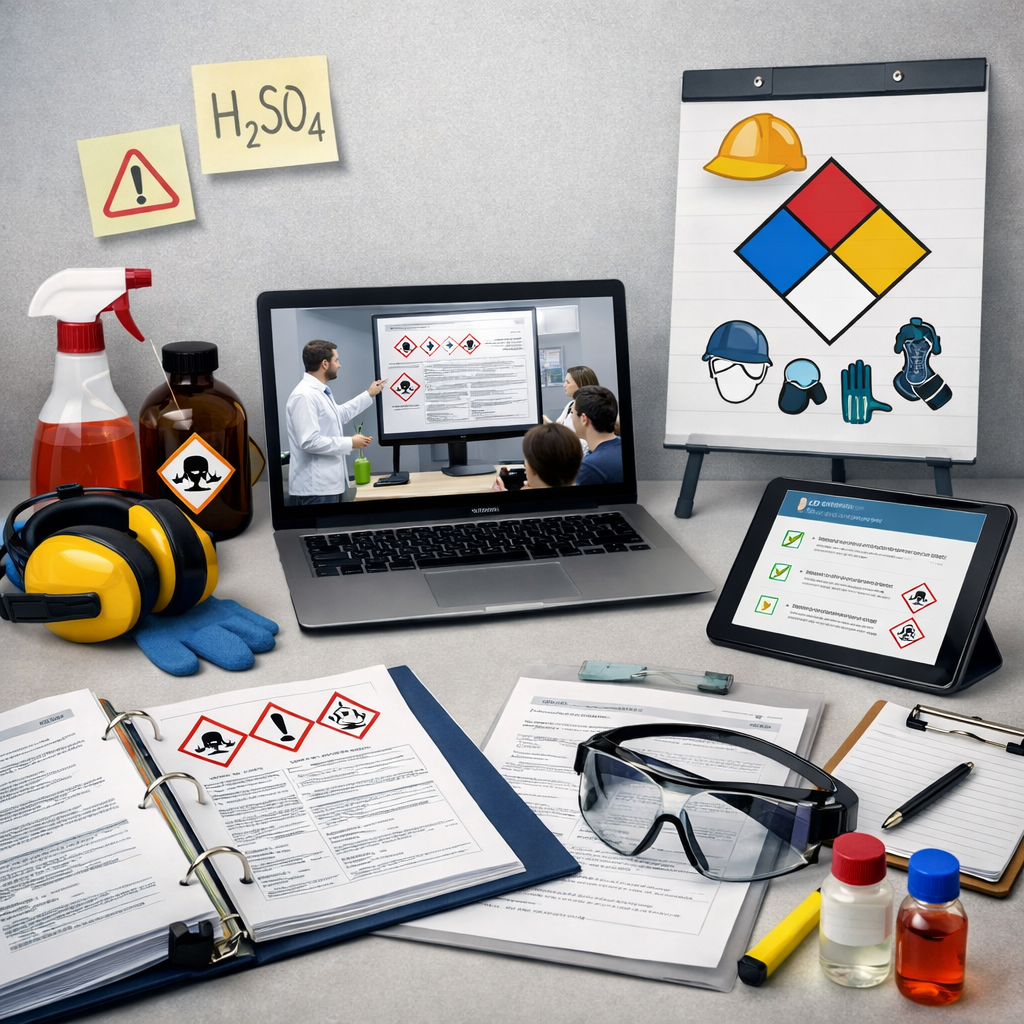
But if workers do not know where to find key details quickly, the document loses much of its value during real work.
Effective hazard communication means more than making SDS binders available. It means employees can find the correct sheet, understand the sections, and act on the information without confusion.
This is especially important in workplaces such as manufacturing, laboratories, construction, healthcare, cleaning services, and warehouses where chemical exposure may happen through inhalation, skin contact, ingestion, or fire risk.
Practical sds training ideas help reduce common failures such as:
- Using a chemical without checking required PPE
- Mixing incompatible substances
- Storing flammables near ignition sources
- Missing early signs of overexposure
- Using the wrong response during a spill or splash incident
Training should also tie SDS use to the Hierarchy of Controls. For example, if the sheet identifies inhalation hazards, the response should not stop at respirators alone. Supervisors should also consider substitution, local exhaust ventilation, enclosed systems, administrative controls, and safer handling methods.
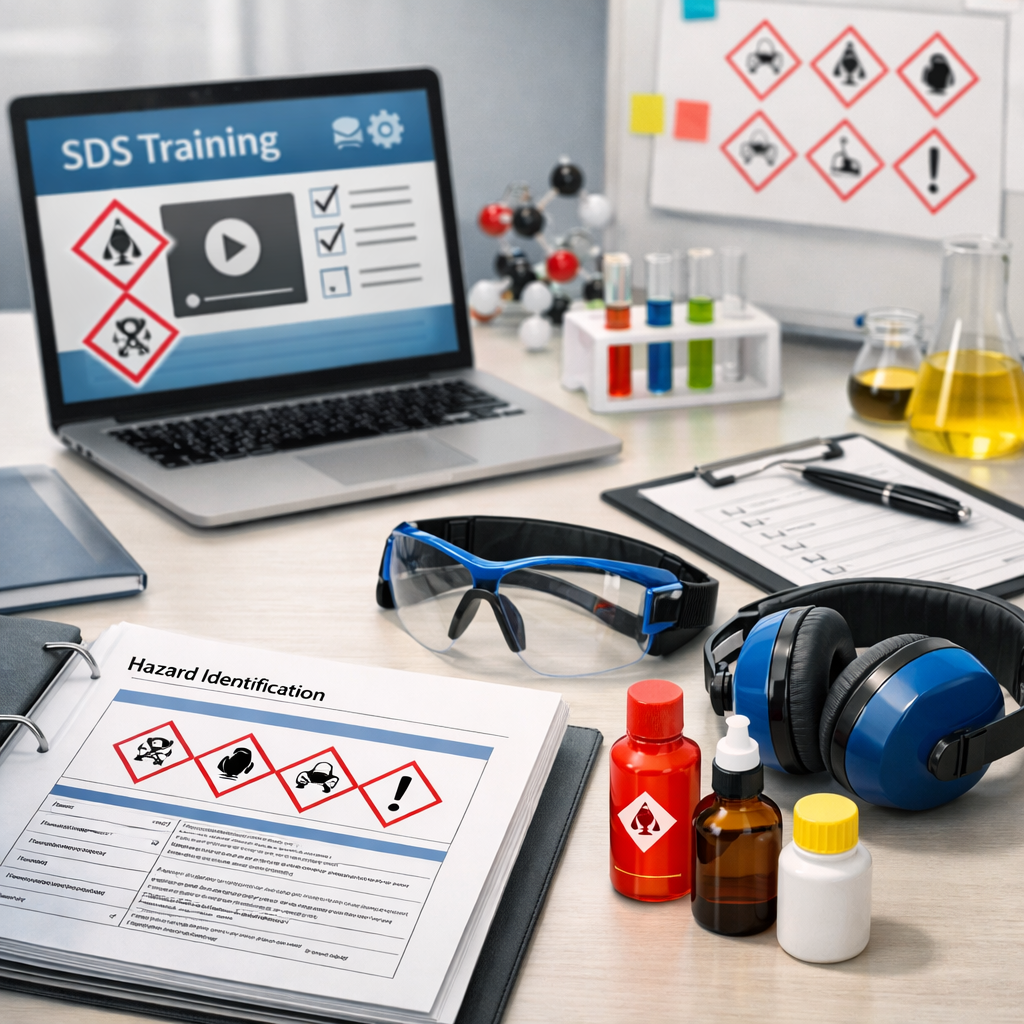
If your organization already has a broader chemical safety program, it helps to connect SDS instruction to related topics such as hazard communication program basics and workplace PPE requirements.
How to Teach Employees to Read an SDS
Focus on the Most Useful Sections First
Although a Safety Data Sheet has a standard 16-section format, employees often learn better when training starts with the sections they use most often in the field.
That usually includes identification, hazard identification, first-aid measures, accidental release measures, handling and storage, exposure controls/personal protection, and stability/reactivity.
Instead of asking workers to memorize all 16 sections at once, train them to answer practical questions such as:
- What is this product and where is it used?
- What are the main health and physical hazards?
- What PPE is required?
- What should I do if it gets in my eyes or on my skin?
- What should I do if it spills?
- How should it be stored?
- What products or conditions should it be kept away from?
Use a Simple Section-by-Section Walkthrough
A guided walkthrough works well during orientation and refresher training. Pick one chemical employees actually use and review the SDS together.
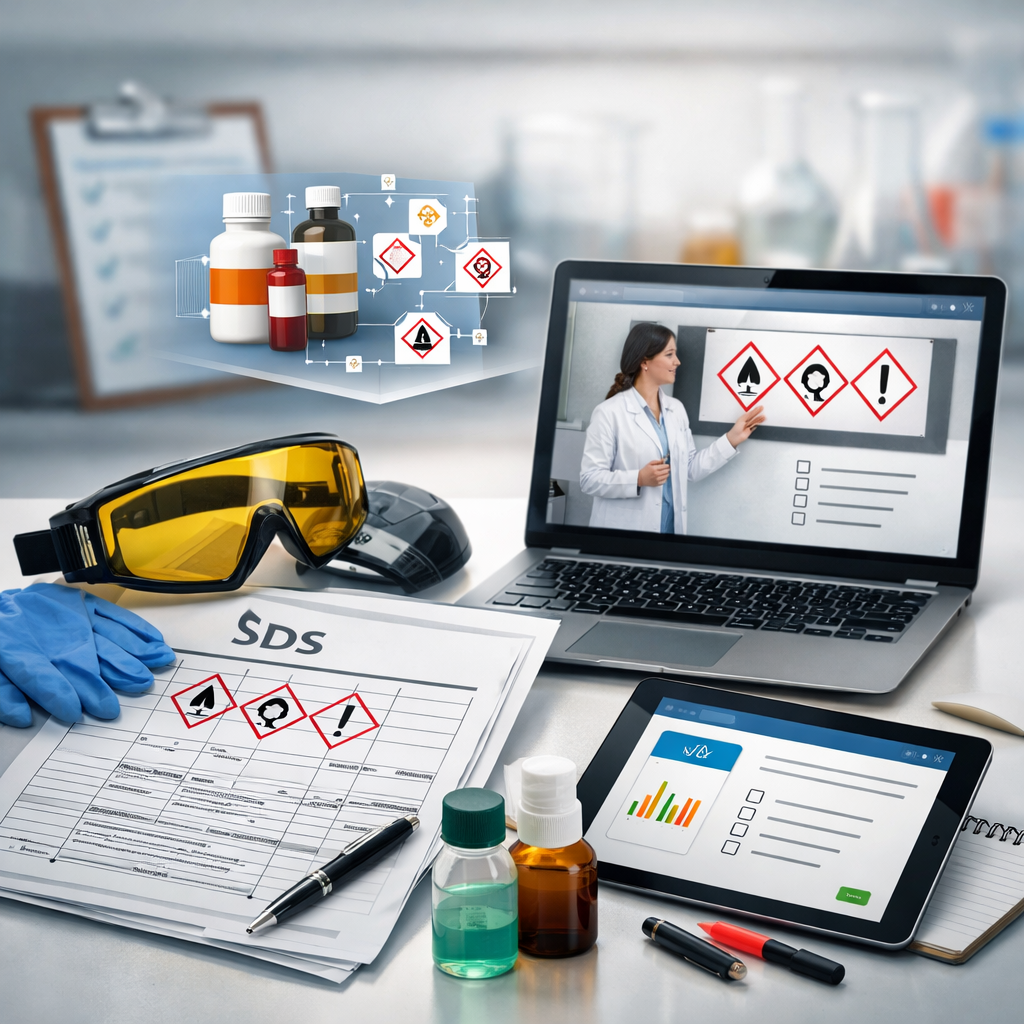
Ask workers to locate key information rather than just listening to a lecture. This keeps the session active and improves recall.
| SDS Section | What Employees Should Look For | Workplace Application |
|---|---|---|
| Section 1: Identification | Product name, supplier, emergency contact | Confirm the right chemical before use |
| Section 2: Hazard Identification | Signal word, pictograms, hazard statements | Recognize severity and main risks |
| Section 4: First-Aid Measures | Immediate treatment steps | Respond correctly after exposure |
| Section 7: Handling and Storage | Safe handling rules and storage conditions | Prevent fires, leaks, and incompatibility issues |
| Section 8: Exposure Controls/PPE | Exposure limits, gloves, eyewear, ventilation | Select controls and PPE before starting work |
This kind of exercise makes SDS content less abstract. It also helps employees understand why labels, procedures, and control measures are connected.
Smart SDS Training Ideas Employees Can Apply at Work
Build Training Around Real Tasks
One of the most effective sds training ideas is task-based learning. Instead of teaching chemicals in isolation, train workers using the actual tasks they perform.
For example, if a custodian uses a floor stripper, have the employee check the SDS before mixing, carrying, using, and storing the product. If a maintenance technician uses a solvent, review flammability, ventilation needs, glove compatibility, and spill response before the task begins.
This approach answers the most important question in training: “What does this mean for my job today?”
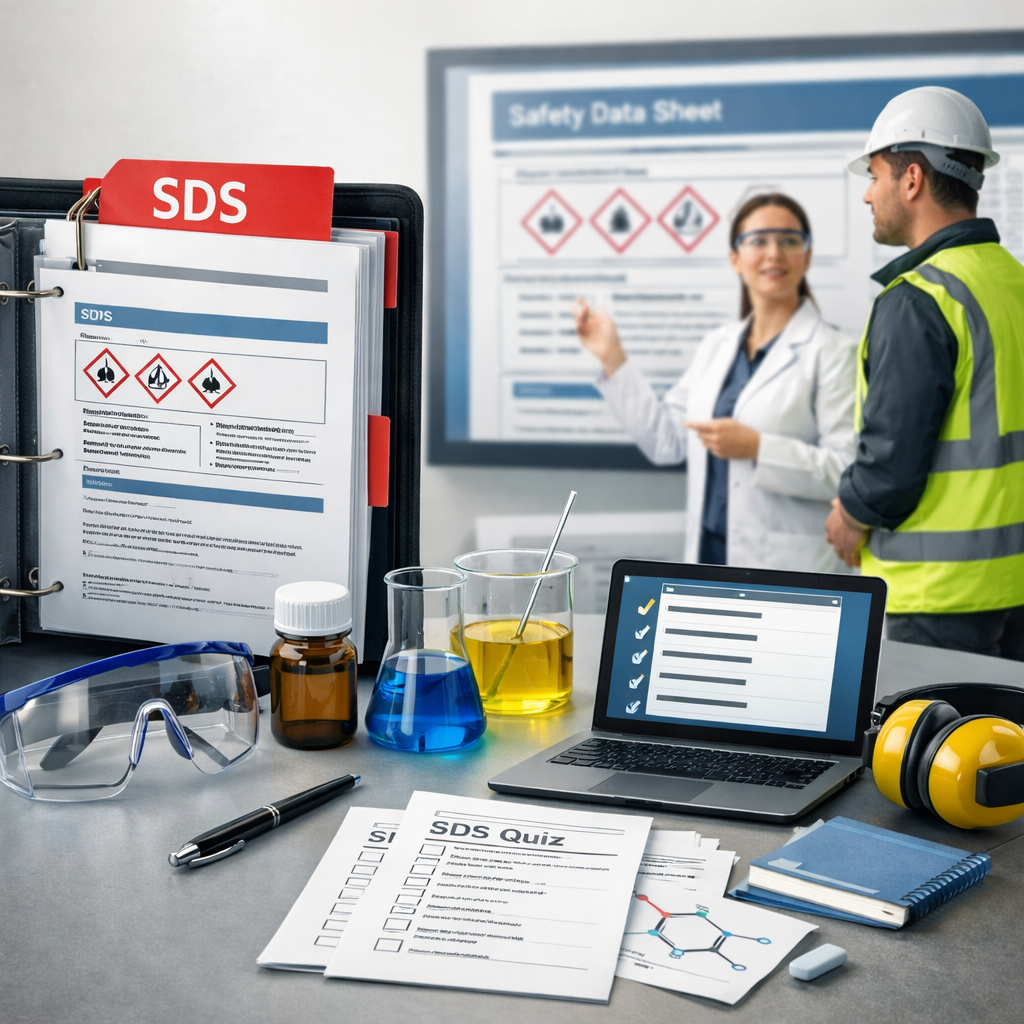
Run Quick SDS Drills
Short drills are a practical way to reinforce hazard communication without taking too much time from operations.
Supervisors can ask questions such as:
- Where on the SDS would you find required gloves?
- What does the signal word tell you about the hazard level?
- What should you do if the product splashes into someone’s eyes?
- Can this product be stored beside oxidizers or heat sources?
- What ventilation controls are recommended?
These quick activities are easy to include in toolbox talks, shift meetings, or monthly safety refreshers.
Use Spill and Exposure Scenarios
Scenario-based learning is another of the strongest sds training ideas because it moves information from paper to action.
Give employees a realistic situation, such as a leaking container in a storage room or a splash to the forearm during transfer. Then ask them to use the SDS to decide the next steps.
This helps reinforce reporting expectations, emergency eyewash use, first aid, isolation of the area, and the need to follow site procedures. It also shows where the SDS supports decision-making and where additional controls, permits, or emergency plans are required.
Turning SDS Information Into Safer Work Practices
Connect the SDS to the Hierarchy of Controls
Good training should not stop at identifying hazards. It should show employees how SDS information supports safer work planning.
If the SDS warns of respiratory irritation, training should prompt a discussion about whether the product can be substituted, whether ventilation can be improved, or whether the task can be enclosed. PPE matters, but it should be presented as one layer of protection rather than the only solution.
For example:
- Elimination: Remove unnecessary chemical use from the task
- Substitution: Replace a harsh solvent with a less hazardous product
- Engineering controls: Add local exhaust or closed transfer systems
- Administrative controls: Limit exposure time and improve procedures
- PPE: Use the gloves, goggles, face shields, or respirators listed for the job
Make SDS Access Fast and Easy
Even the best sds training ideas will fail if workers cannot access the right document quickly.
Keep SDS files current and easy to locate, whether in printed binders, digital databases, QR code systems, or station-specific folders. Employees should know where the sheets are, how to search by product name, and what to do if a sheet is missing.
Supervisors should also verify that secondary containers are labeled properly and that the product name on the container matches the SDS available on site.
According to OSHA and WHMIS-based best practice, accessibility is not optional. It is a basic requirement for effective hazard communication.
Refresh Training Regularly
SDS training should happen during onboarding, when new chemicals are introduced, when procedures change, and during periodic refresher sessions.
Brief and frequent sessions often work better than long annual presentations. A 10-minute review on one product or one SDS section can be enough to improve awareness and retention.
It is also useful to review incident reports, near misses, and inspection findings for signs that employees are not using SDS information correctly. If workers are choosing the wrong gloves or mishandling storage, the training needs to be sharper and more job-specific.
Conclusion: Practical SDS Training Ideas Create Better Hazard Communication
Better hazard communication starts when employees can read an SDS with confidence and apply it during real work. That means knowing how to identify hazards, find first-aid instructions, select controls, use proper PPE, respond to spills, and store chemicals safely.
The most effective sds training ideas are practical, task-based, and repeated often. They connect the document to daily decisions, emergency response, and the Hierarchy of Controls instead of treating the SDS as a binder that sits on a shelf.
When organizations train workers this way, they strengthen compliance, improve chemical safety, and reduce the chance of injury and exposure. In short, smart sds training ideas lead to better hazard communication and a safer workplace for everyone.
No comments yet