


Slip Trip and Fall Prevention: Smart Measures for Any Workplace


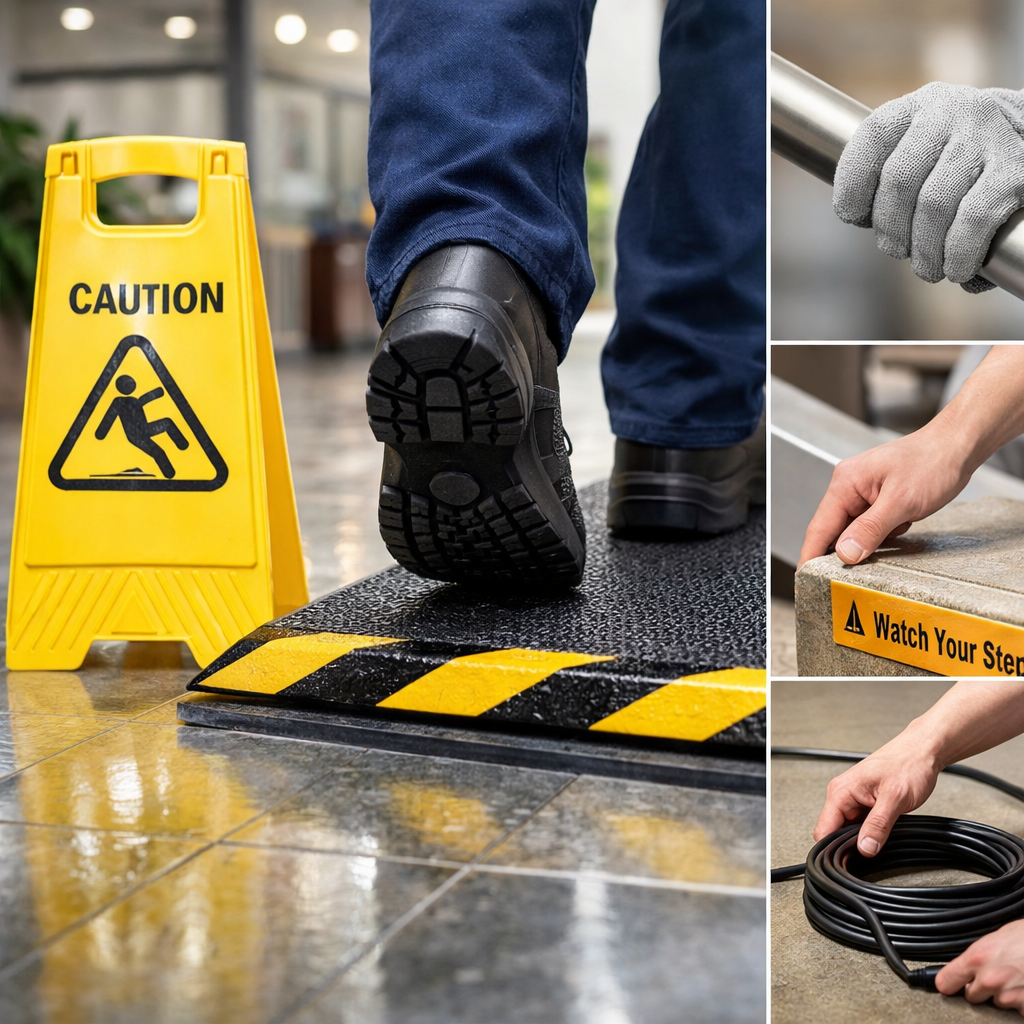
Slip trip and fall prevention should be a priority in every workplace because these incidents can happen in seconds and lead to serious injuries, lost time, and avoidable costs.
From office hallways and retail aisles to loading docks and icy walkways, hazards often build up through small oversights such as wet floors, trailing cables, poor lighting, or uneven surfaces.
A smart prevention plan focuses on practical controls, consistent housekeeping, and clear accountability. It also recognizes that different workplaces face different risks. An office may struggle with clutter and polished floors, while a shop may deal with spills and customer traffic, and outdoor areas may bring rain, mud, leaves, or ice into the picture.
Guidance from organizations such as OSHA and the CCOHS supports a proactive approach that identifies hazards early and controls them before someone gets hurt. If your business is reviewing broader safety systems, it also helps to align floor safety with your workplace risk assessment and safety training programs.
- Why slip trip and fall prevention matters in every workplace
- Common hazards and practical slip trip and fall prevention examples
- Using the hierarchy of controls for slip trip and fall prevention
- Training, inspections, and culture that support slip trip and fall prevention
- Building a safer workplace with simple, consistent action
Why slip trip and fall prevention matters in every workplace
Slips, trips, and falls are among the most common workplace incidents across many industries. They can result in sprains, fractures, back injuries, head trauma, and long recovery times. Even when an injury seems minor, it can still reduce productivity, increase absenteeism, and affect morale.
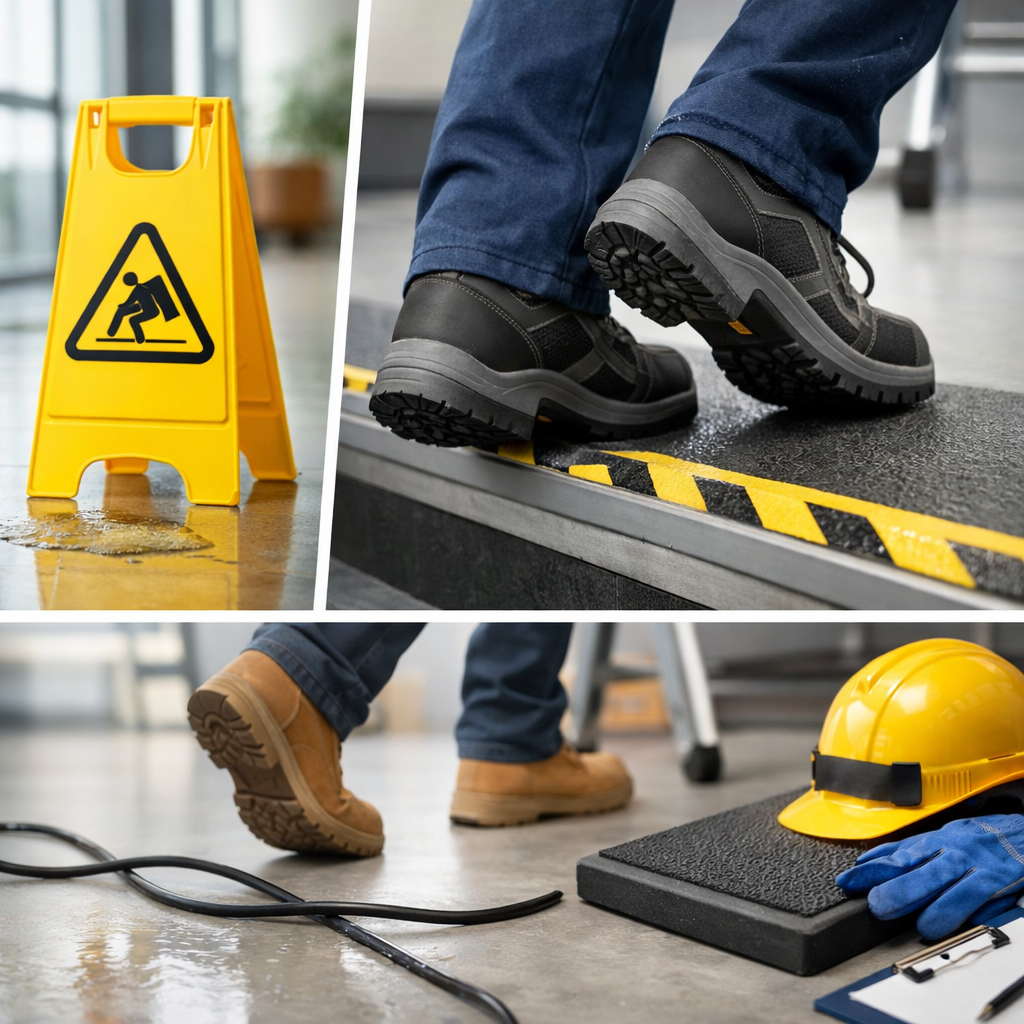
In offices, a simple box left near a printer station can create a trip hazard. In shops, product spills or freshly mopped entryways can turn into serious slipping risks. In outdoor work areas, cracked pavement, poor drainage, and seasonal weather can quickly make paths unsafe.
Effective slip trip and fall prevention is not just about reacting to incidents. It is about designing safer spaces, maintaining them properly, and making sure employees know what to do when conditions change. That means routine inspections, prompt reporting, and practical controls that fit the environment.
Common hazards and practical slip trip and fall prevention examples
Office areas
Office spaces may look low risk, but they often contain hidden hazards. Power cords stretched across walkways, curled carpet edges, overflowing storage, and recently cleaned hard floors are common examples.
Practical office controls include securing cords, keeping walkways clear, replacing worn flooring, and using non-slip entrance mats during wet weather. Staff should also be encouraged to report hazards right away rather than stepping around them and hoping someone else notices.
Shops and customer-facing spaces
Retail and service environments need a faster response because foot traffic is constant and hazards affect both workers and customers. Spilled drinks, leaking refrigeration units, loose floor tiles, and crowded stock movement areas can all increase the risk of falls.
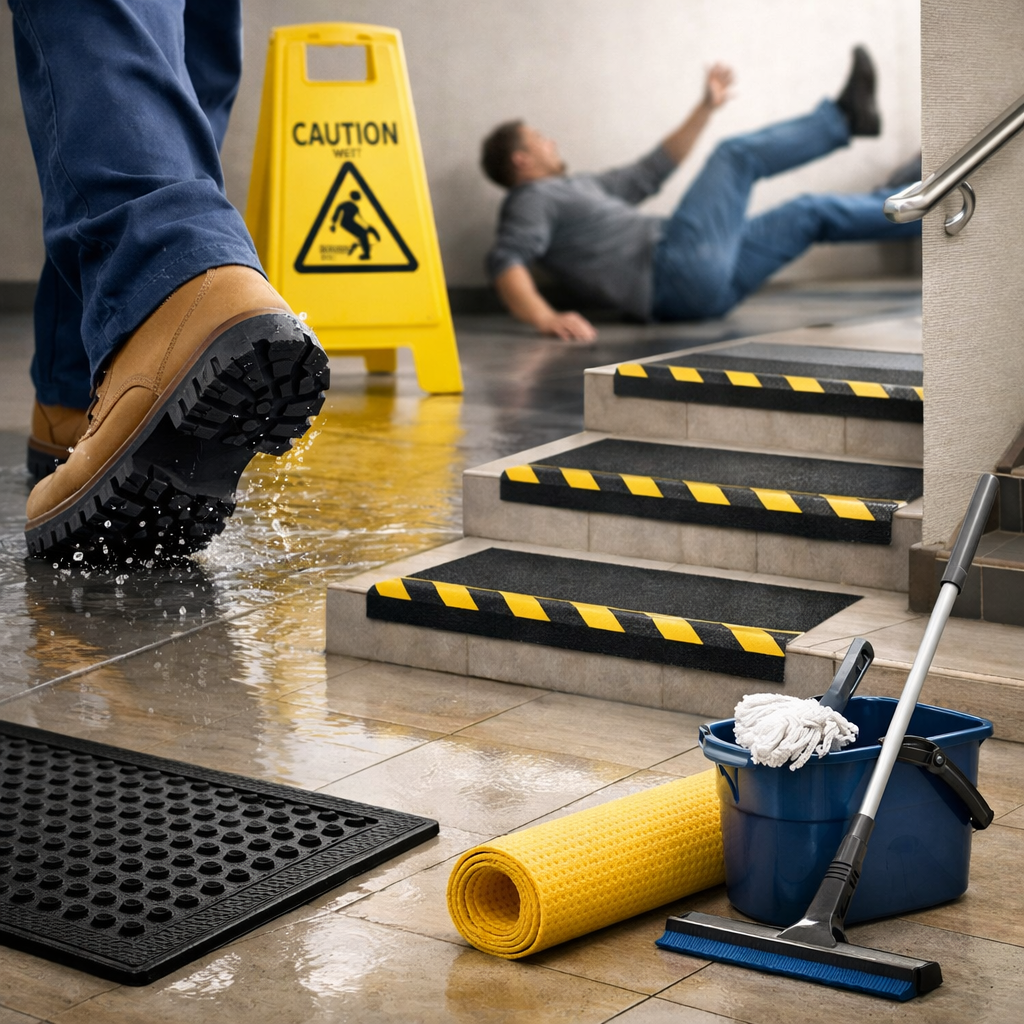
Smart slip trip and fall prevention in shops includes regular floor checks, rapid spill cleanup, warning signs during cleaning, and scheduling restocking to reduce aisle congestion. Entry points should be monitored closely during rain because moisture gets tracked inside all day.
Outdoor areas
Outdoor surfaces create a different set of challenges. Uneven pavement, potholes, moss growth, poor lighting, and bad drainage can all lead to slips and trips. In colder climates, frost, snow, and black ice can make entrances and parking areas especially dangerous.
Prevention outdoors means inspecting paths often, repairing damaged surfaces, improving lighting, clearing leaves, and using gritting or de-icing plans when needed. Covered walkways and effective drainage can also reduce the amount of water brought indoors.
- Wet floors: clean spills immediately and use barriers or signs until dry
- Cluttered walkways: remove boxes, stock, bags, and equipment from traffic routes
- Poor lighting: improve visibility in corridors, storerooms, stairs, and car parks
- Uneven surfaces: repair broken tiles, loose mats, cracked paving, and raised edges
- Weather-related risks: plan for rain, mud, ice, and debris at entrances and outdoor paths
Using the hierarchy of controls for slip trip and fall prevention
One of the most effective ways to manage risk is to apply the hierarchy of controls. Rather than relying only on signs or reminders, workplaces should start by removing hazards where possible and then work down through stronger controls.
Elimination and substitution
The best control is to remove the hazard entirely. For example, if a storage layout forces staff to leave cartons in an aisle, redesigning the storage area can eliminate the trip risk. If a floor coating becomes dangerously slippery when wet, replacing it with a more slip-resistant finish is a stronger long-term solution.
Engineering and administrative controls
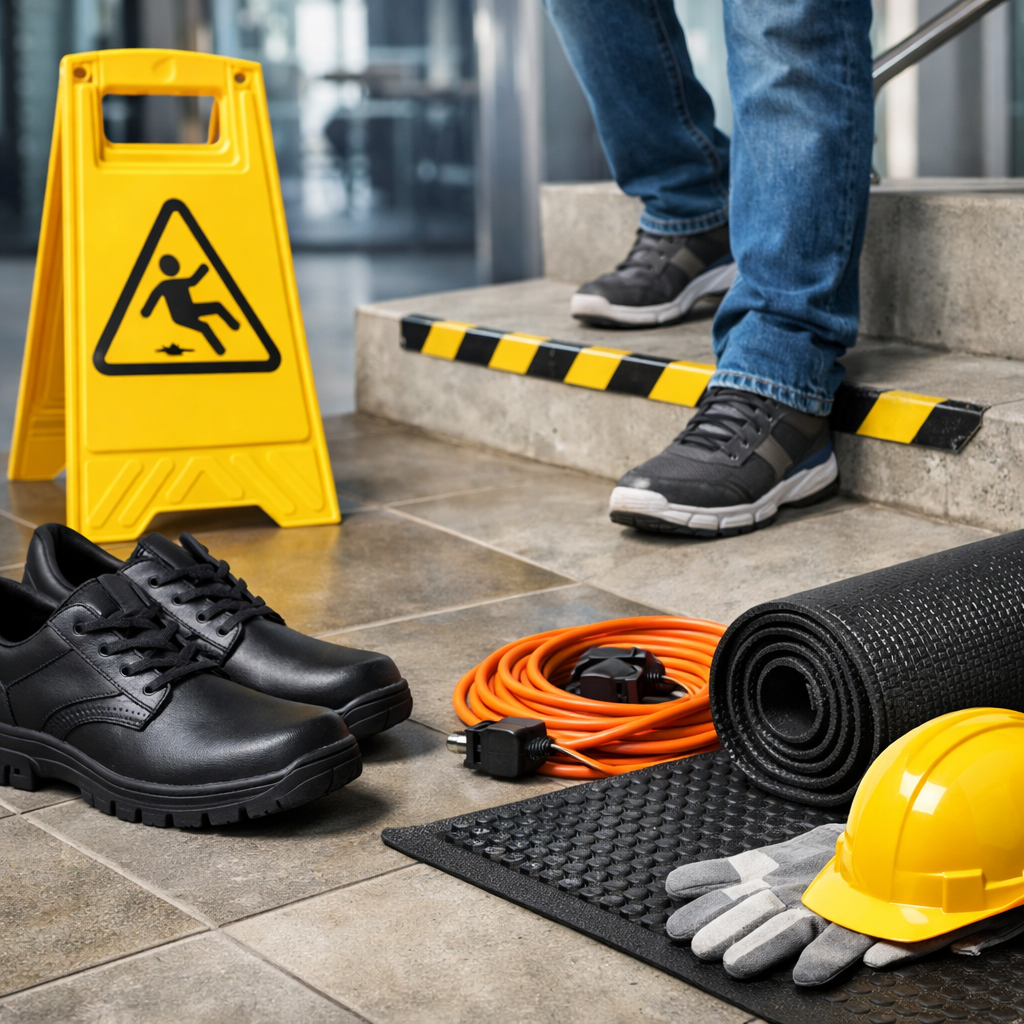
Engineering controls change the physical environment. Examples include installing anti-slip flooring, improving drainage near entrances, adding handrails on steps, or increasing lighting in dim outdoor areas.
Administrative controls support these measures through inspections, cleaning schedules, incident reporting, and clear responsibilities. For example, a shop can assign staff to inspect aisles every hour, while an office can include floor safety checks in daily opening routines. See the latest walking-working surface guidance from OSHA for practical reference.
Personal protective equipment
PPE is usually the last line of defense, but it still has value in some settings. Slip-resistant footwear can help employees who work in kitchens, stockrooms, loading areas, or outdoor maintenance zones. However, footwear should support broader slip trip and fall prevention measures, not replace them.
| Workplace area | Typical hazard | Practical control |
|---|---|---|
| Office corridor | Loose cables and clutter | Use cable covers and keep walkways clear |
| Retail entrance | Rainwater tracked inside | Install absorbent mats and inspect floors often |
| Outdoor pathway | Uneven paving and poor lighting | Repair surfaces and upgrade lighting |
| Stockroom | Spills and rushed movement | Clean spills immediately and separate storage routes |
Training, inspections, and culture that support slip trip and fall prevention
Good equipment and good flooring are only part of the answer. Lasting results come from daily habits and a workplace culture that treats hazards seriously. Employees should know how to spot risks, report them quickly, and take immediate action when safe to do so.
Training should be practical and relevant to the work area. In an office, that may mean safe housekeeping, awareness around stairs, and proper storage. In a shop, it may focus on spill response, floor checks, and customer safety. In outdoor work areas, workers should understand weather-related controls, footwear expectations, and how to isolate unsafe routes.
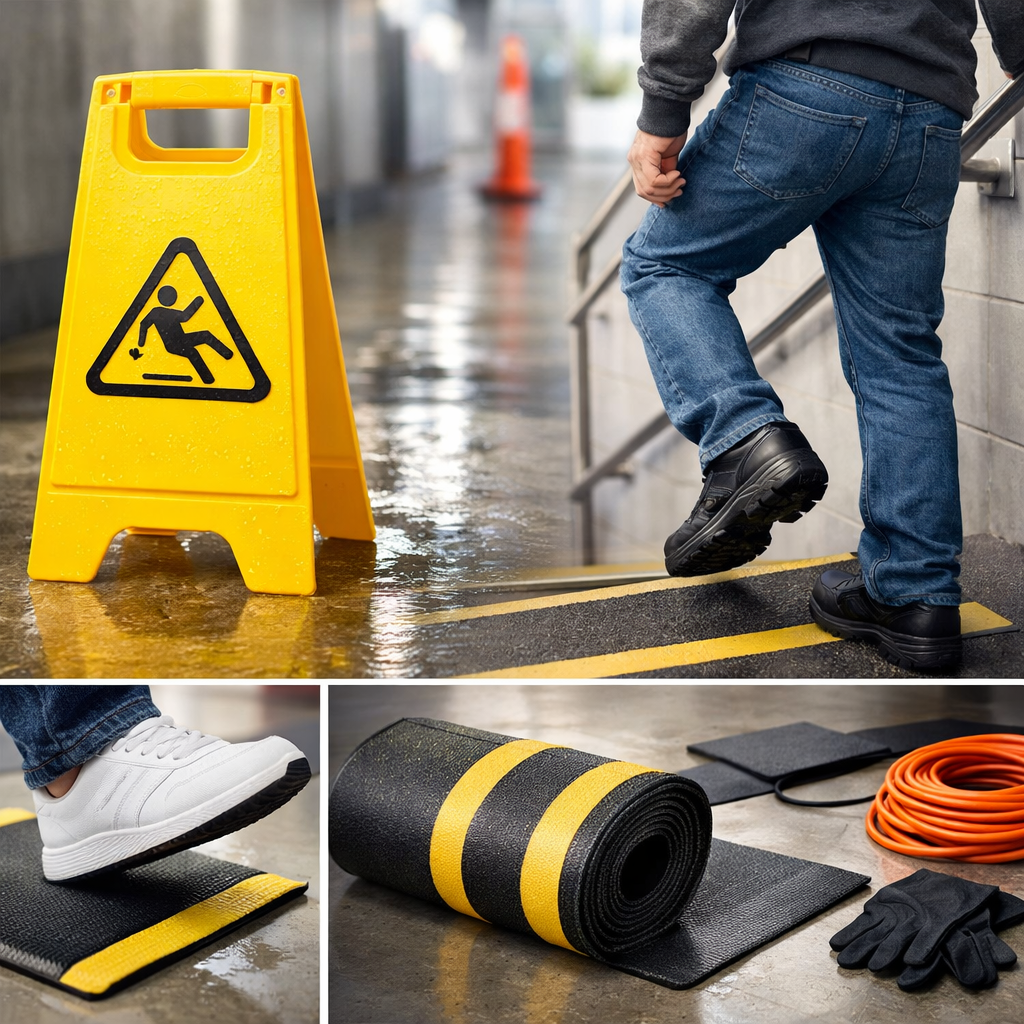
Regular inspections are equally important. A quick daily walk-through can identify blocked exits, worn mats, leaking equipment, or damaged surfaces before they cause an incident. Near-miss reporting is useful too, because it reveals patterns that may not appear in injury records alone. CCOHS offers helpful resources on prevention and hazard awareness at CCOHS OSH Answers.
Managers should also review incidents for root causes rather than stopping at the obvious. If someone slipped near an entrance, the real issue may be inadequate matting, poor drainage, delayed cleaning, or a lack of ownership for routine checks. Addressing those root causes leads to stronger slip trip and fall prevention over time.
Building a safer workplace with simple, consistent action
The most effective safety programs do not rely on one-time fixes. They combine good design, fast maintenance, staff awareness, and regular review. Small actions, such as replacing a worn mat, clearing a walkway, improving lighting, or repairing cracked pavement, can prevent serious harm.
Whether you manage an office, a retail space, or outdoor work areas, the same principle applies: identify hazards early and control them before they become injuries. Strong slip trip and fall prevention protects employees, visitors, and customers while also improving confidence and operational reliability.
In the end, slip trip and fall prevention works best when it becomes part of everyday operations rather than an occasional safety reminder. With practical controls, better housekeeping, and a clear plan based on real workplace conditions, any organization can reduce risk and create a safer environment for everyone.