


temporary structure safety compliance: A Practical OHSE Guide for Safer Worksites


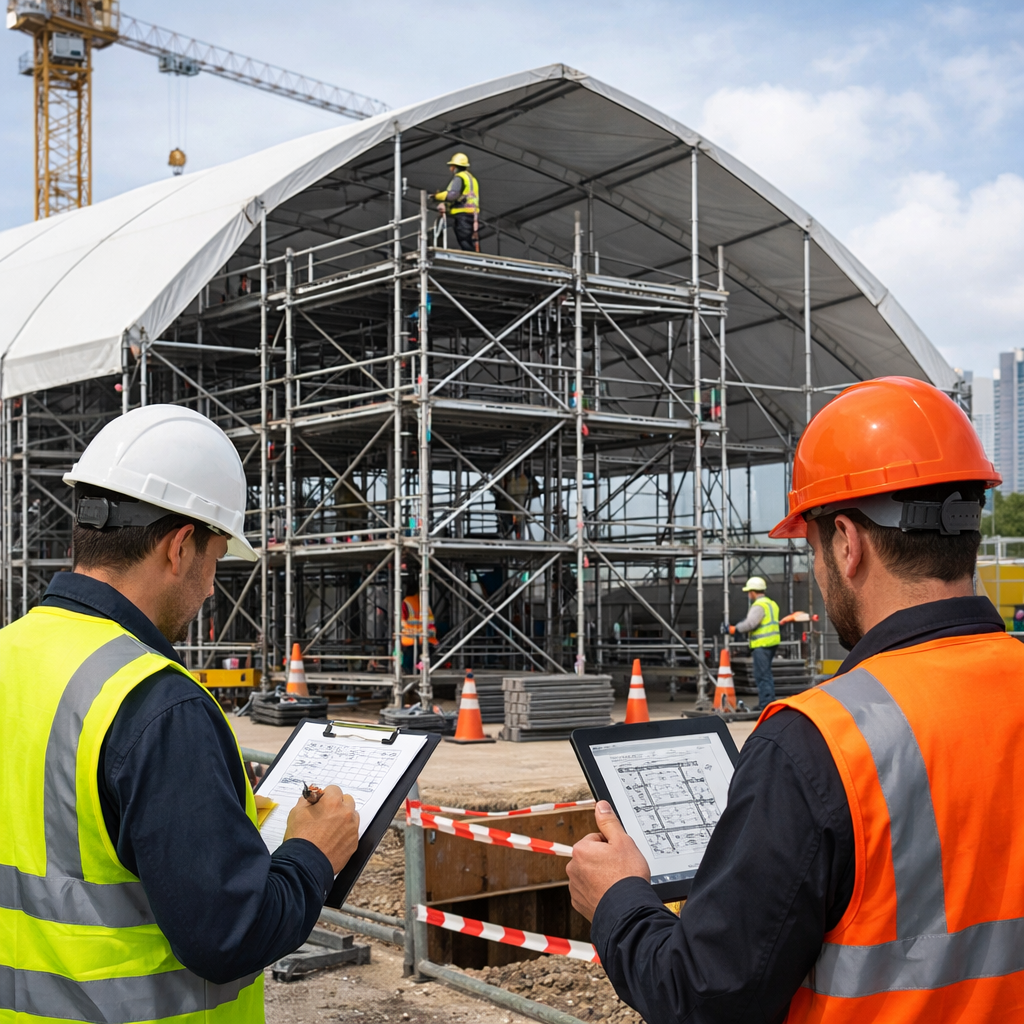
temporary structure safety compliance is essential for protecting workers, contractors, visitors, and the public wherever short-term installations are used. From scaffolding and formwork to event stages, marquees, hoardings, and temporary access platforms, these structures often support people, equipment, materials, and operations in changing environments.
Because they are not permanent, temporary structures can be wrongly treated as lower risk. In reality, they can fail quickly when design, inspection, weather planning, loading limits, or worker training are overlooked.
For OHSE professionals, site supervisors, and business owners, strong temporary structure safety compliance means more than ticking a box. It requires hazard identification, clear responsibilities, competent installation, routine checks, proper PPE, and alignment with legal duties and recognized standards.
Why temporary structure safety compliance matters in real workplaces
Temporary structures appear across construction, maintenance shutdowns, warehousing, mining, manufacturing, emergency response, and public events. Their purpose may be short term, but the risks are very real.
A scaffold erected for façade work, a temporary platform used during plant maintenance, or a tented structure installed for a public event can all create serious hazards if conditions change or controls are weak. Wind, uneven ground, overloading, unauthorized modification, poor anchoring, or rushed assembly can quickly turn a useful asset into a critical incident.
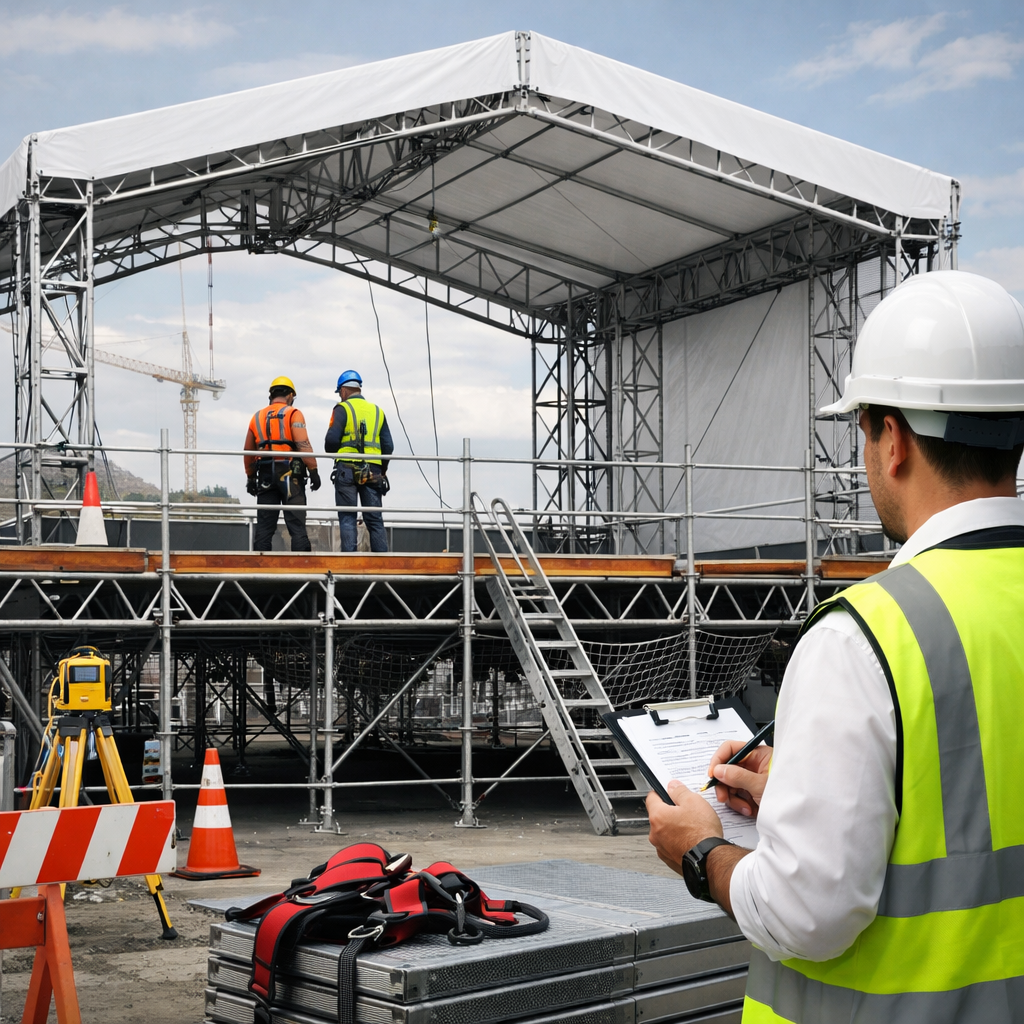
Common incidents linked to poor temporary structure safety compliance include falls from height, structural collapse, falling objects, electrical contact, trips, and injuries during assembly or dismantling. In public-facing settings, non-compliance can also lead to crowd harm, traffic interference, and reputational damage.
Regulators such as OSHA and guidance bodies such as CCOHS emphasize risk assessment, competent supervision, and inspection for temporary works. These principles apply whether the structure is used for one day or six months.
In practice, temporary structure safety compliance should be built into planning from the start. It should also connect to broader site programs such as safety risk assessment and working at height procedures.
Key risks that affect temporary structure safety compliance
Understanding risk is the foundation of effective control. The most common failures are not random. They usually result from predictable weaknesses in planning, communication, or supervision.
Structural and environmental risks
Temporary structures may be exposed to dynamic loads, shifting ground, wind uplift, rain, vibration, vehicle strikes, and material stockpiling. A scaffold that is safe in calm weather may become unsafe in high winds. A stage roof may need additional ballast. A temporary walkway may settle if soil conditions are poor.
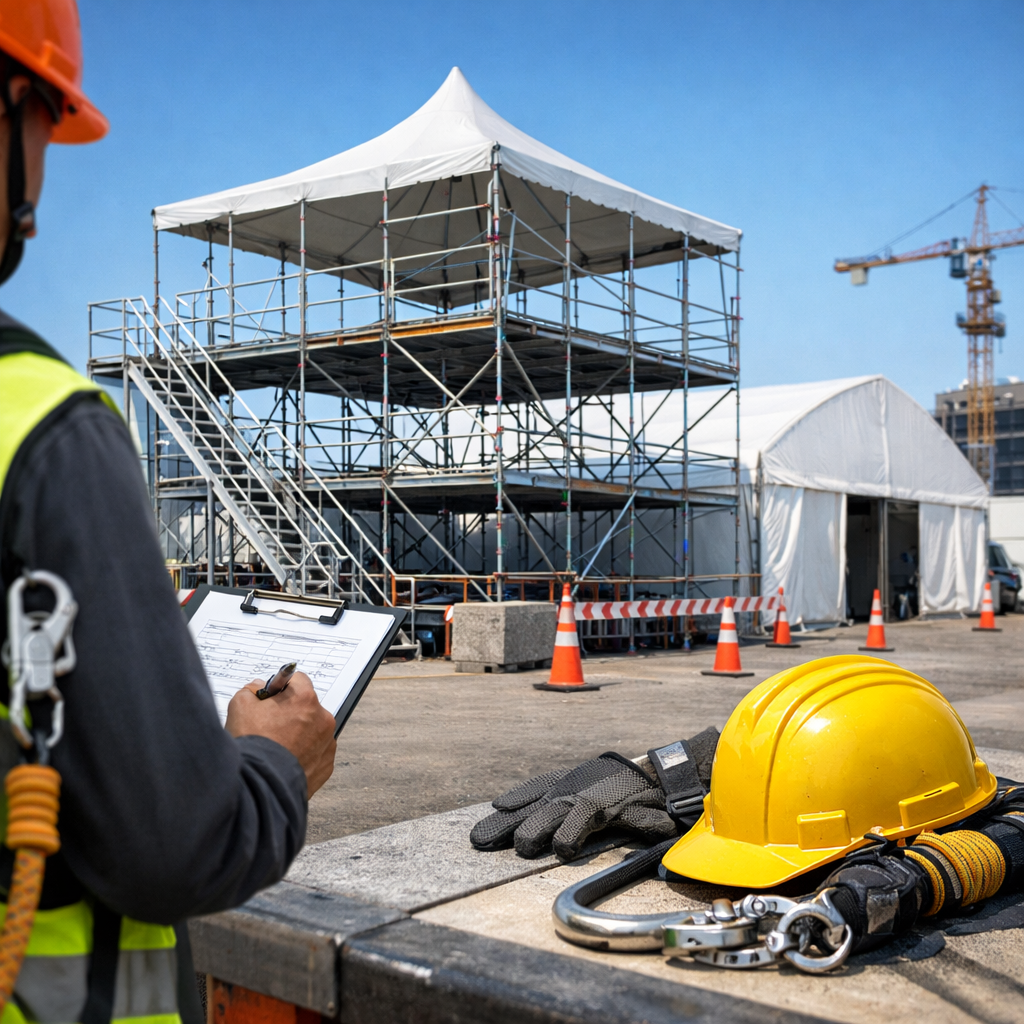
Design risk increases when structures are altered in the field without approval. Even small changes, such as removing braces, adding sheeting, or storing extra materials on a platform, can affect stability and load capacity.
Human factors and work process risks
Unsafe erection and dismantling are major concerns. Workers may rush the task, miss components, bypass ties, or use incomplete edge protection. In some cases, subcontractors assume another party has signed off the structure when no formal handover has occurred.
Communication failures also create risk. If load limits are not posted, users may overload decks or suspended systems. If exclusion zones are unclear, people may enter drop zones during assembly. If permit systems are weak, a structure may be used before inspection is complete.
Typical hazards to control
- Collapse due to incorrect design, assembly, or modification
- Falls from height from incomplete platforms or missing guardrails
- Falling tools and materials from elevated temporary work areas
- Slip and trip hazards on access stairs, ramps, and walkways
- Electrical hazards from overhead lines or temporary power systems
- Weather-related instability from wind, rain, or lightning
- Vehicle impact on barriers, hoardings, or temporary supports
- Public access to unsafe or restricted work zones
Prevention measures using the Hierarchy of Controls
Strong temporary structure safety compliance works best when control measures follow the Hierarchy of Controls. PPE is important, but it should never be the first or only line of defense.
Elimination and substitution
Start by asking whether the temporary structure is necessary at all. Can the job be redesigned to avoid work at height or reduce the need for temporary support? Can materials be prefabricated at ground level and lifted into place? Can a mobile elevating work platform be used instead of a more complex temporary platform system in certain tasks?
Engineering controls
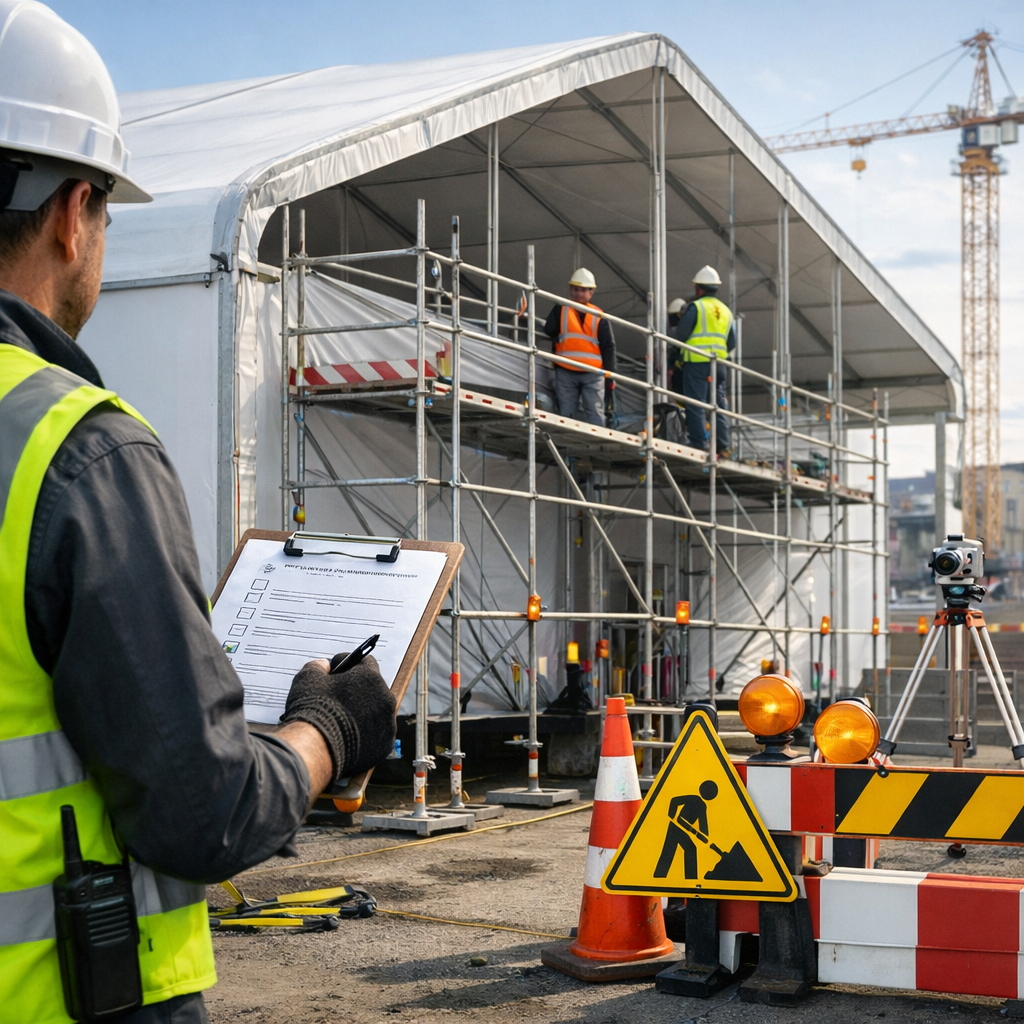
Engineering controls are central to temporary structure safety compliance. Structures should be designed or verified by competent persons, especially where loads, spans, public access, or weather exposure are significant. Base conditions, tie requirements, bracing, anchorage, and load ratings must be clearly defined.
Use engineered drawings where required. Install guardrails, toe boards, debris netting, access ladders, anti-slip surfaces, and impact protection. For outdoor structures, account for wind classification, drainage, ballast, and ground bearing pressure. Where needed, use exclusion barriers and overhead protection.
Administrative controls
Administrative measures keep the system working day to day. These include documented risk assessments, temporary works registers, permits, handover certificates, change control, weather monitoring, toolbox talks, and scheduled inspections.
Everyone should know who is responsible for design, erection, inspection, use, modification, and dismantling. Inspection frequency should increase after storms, impact, alteration, or long idle periods. Signage should show load limits, access restrictions, and emergency contacts.
Useful technical guidance can also be reviewed through bodies such as the UK HSE, especially for temporary works, falls, and construction risk management.
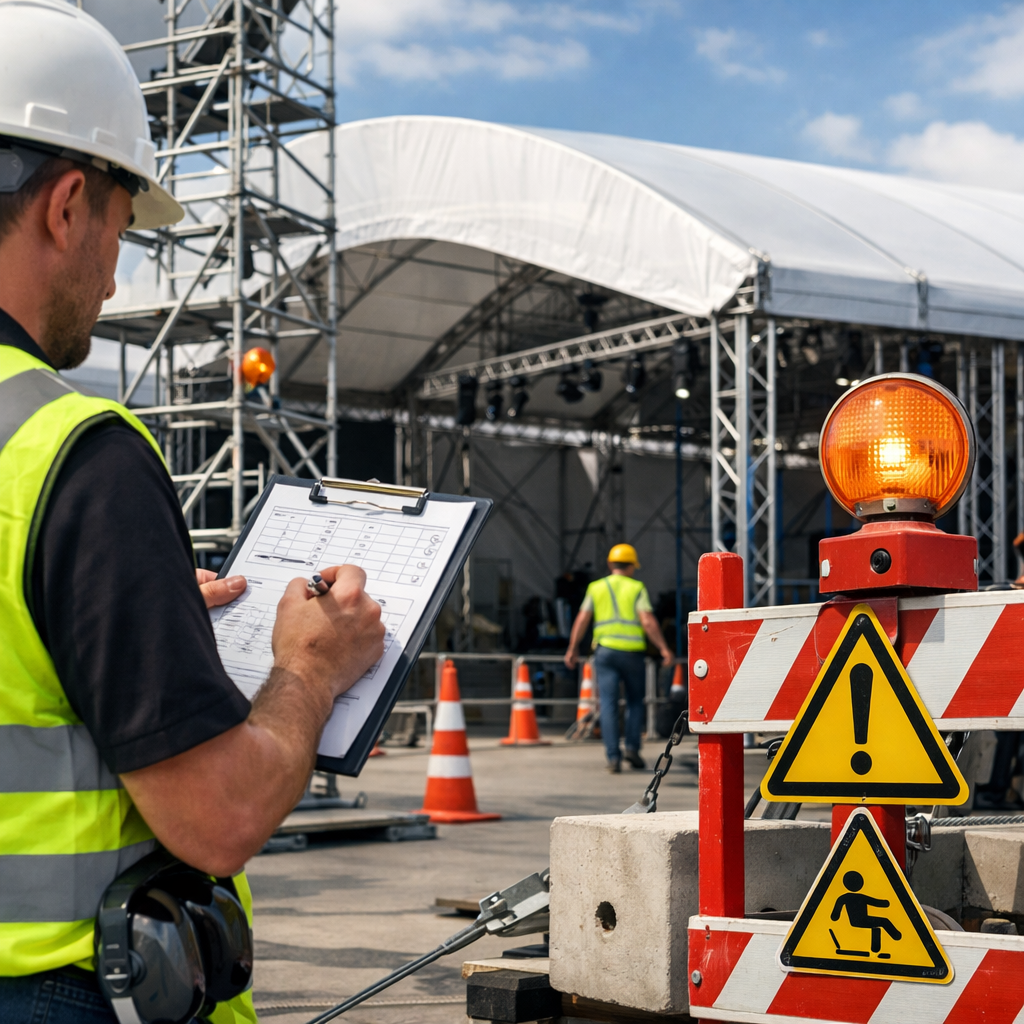
PPE for temporary structure work
PPE supports temporary structure safety compliance when selected for the task and used with training. Typical PPE may include hard hats, gloves, eye protection, high-visibility clothing, safety footwear, hearing protection, and fall arrest systems where required.
However, PPE must match the hazard. For example, a harness may be necessary during scaffold erection before collective fall protection is fully in place. Chin straps may be needed in windy conditions or during climbing tasks. Gloves should suit handling risks without compromising grip.
Inspection, compliance duties, and practical examples
Compliance depends on evidence, not assumptions. Employers and duty holders should maintain records showing the structure was properly designed, erected, checked, and used within safe limits. This is where temporary structure safety compliance moves from policy into real operational control.
What compliance should include
| Compliance area | What good practice looks like |
|---|---|
| Design and approval | Competent design, verified drawings, defined loads, approved changes |
| Installation | Trained workers, manufacturer instructions, proper foundations, correct bracing and ties |
| Inspection | Pre-use checks, routine inspections, post-weather inspections, documented findings |
| Use and access | Load signage, safe access routes, exclusion zones, no unauthorized modifications |
| PPE and training | Task-specific PPE, rescue planning, supervision, worker competence records |
Consider a practical example from construction. A bricklaying crew uses a scaffold that was safe on Monday. By Wednesday, additional blocks are stacked on the deck, a brace has been removed to improve access, and strong winds arrive overnight. Without reinspection, the structure is now at far greater risk of instability. Good temporary structure safety compliance would stop work, inspect the scaffold, restore the brace, reduce loading, and verify wind controls before reuse.
In an events setting, a temporary stage and lighting tower may be installed on a tight deadline. If the ground is soft after rain and ballast is not recalculated, the structure may shift under load. Practical compliance means checking soil and drainage, confirming manufacturer instructions, verifying anchoring, restricting access during setup, and documenting final sign-off before performers and the public enter the area.
Another example comes from industrial maintenance. A temporary platform may be built near energized systems during a shutdown. Here, temporary structure safety compliance should include isolation planning, dropped object controls, fire-resistant materials where needed, and a rescue plan if workers use fall arrest equipment.
Temporary structures are only safe when conditions, loads, and work methods remain aligned with the original plan. That is why ongoing review matters as much as initial setup.
In conclusion, temporary structure safety compliance is a critical OHSE priority that reduces collapse, fall, struck-by, and public safety risks across many industries. By identifying hazards early, applying the Hierarchy of Controls, selecting suitable PPE, assigning competent people, and maintaining strong inspection and documentation practices, organizations can manage temporary works with confidence. When temporary structure safety compliance is treated as an active safety system rather than a one-time checklist, safer outcomes follow for workers, contractors, and everyone around the site.