


vehicle breakdown emergency safety: Essential OHSE Steps to Protect Drivers and Workers


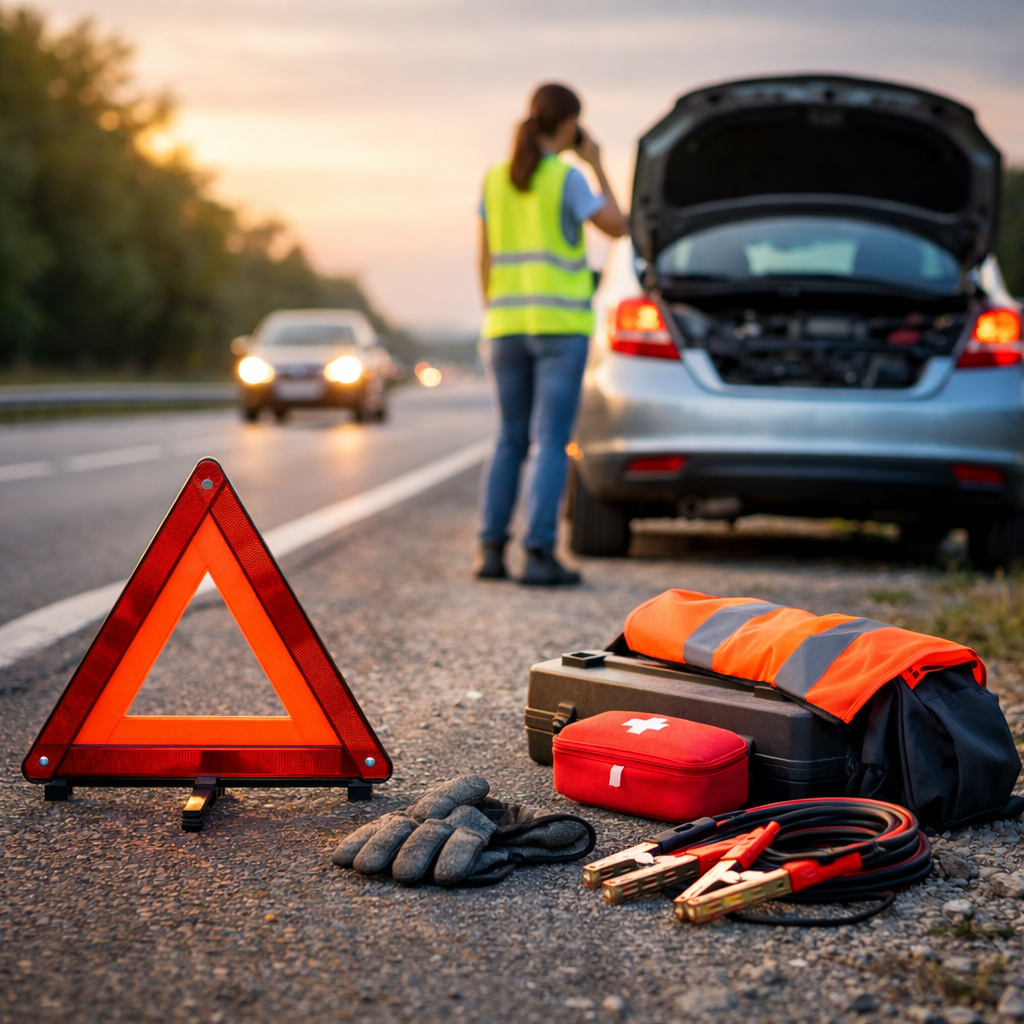
vehicle breakdown emergency safety is a critical OHSE concern for employers, fleet operators, delivery teams, field workers, and everyday drivers. A breakdown can quickly turn into a serious incident when traffic, poor visibility, fatigue, weather, or unsafe roadside conditions are involved.
Whether a vehicle stops on a highway shoulder, a rural road, or inside a worksite, the immediate priority is to protect people from secondary harm. Good planning, the right equipment, and clear procedures reduce the chance of injury and help workers respond calmly under pressure.
Why vehicle breakdown emergency safety matters in OHSE
Vehicle incidents are not limited to collisions. A simple mechanical failure can expose drivers and passengers to struck-by hazards, slips and falls, fire, manual handling injuries, and psychological stress.
For businesses, breakdowns also affect operational continuity, legal compliance, and duty of care. Under occupational health and safety principles, employers must assess travel-related risks and provide safe systems of work for anyone who drives for business purposes.
Organizations such as OSHA and the CCOHS consistently emphasize hazard identification, worker training, emergency planning, and appropriate controls. These principles apply directly to vehicle breakdown emergency safety, especially for lone workers, mobile technicians, couriers, transport drivers, and construction personnel.
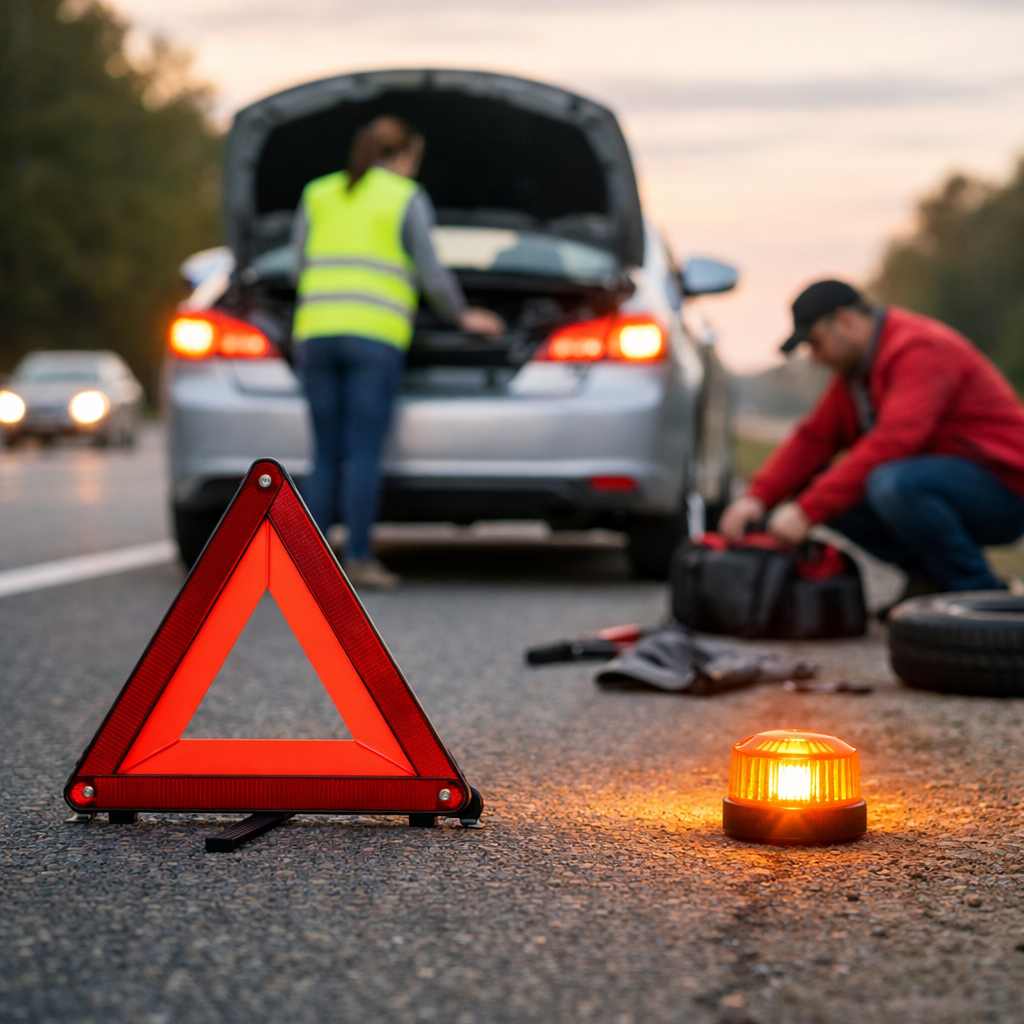
A practical example is a utility worker whose van breaks down on a narrow shoulder before sunrise. Without warning devices, high-visibility PPE, and a reporting process, the worker may step into live traffic while trying to inspect the vehicle. With a proper breakdown procedure, the worker stays inside when safe, contacts dispatch, activates hazards, and waits for trained roadside support.
Common risks during a vehicle breakdown emergency safety event
Roadside and environmental hazards
The biggest risk during a breakdown is often not the failed vehicle itself, but the surrounding environment. Fast-moving traffic, blind curves, wet pavement, fog, snow, heat, and darkness can all increase the chance of serious injury.
Vehicles stopped near intersections, bridges, embankments, or active work zones present even more danger. On worksites, breakdowns may expose people to reversing plant, uneven ground, or hazardous materials.
Personal safety and operational risks
Breakdowns can lead to rushed decisions. Drivers may attempt repairs without training, stand in unsafe positions, or leave the vehicle when it is safer to remain inside.
Other risks include:
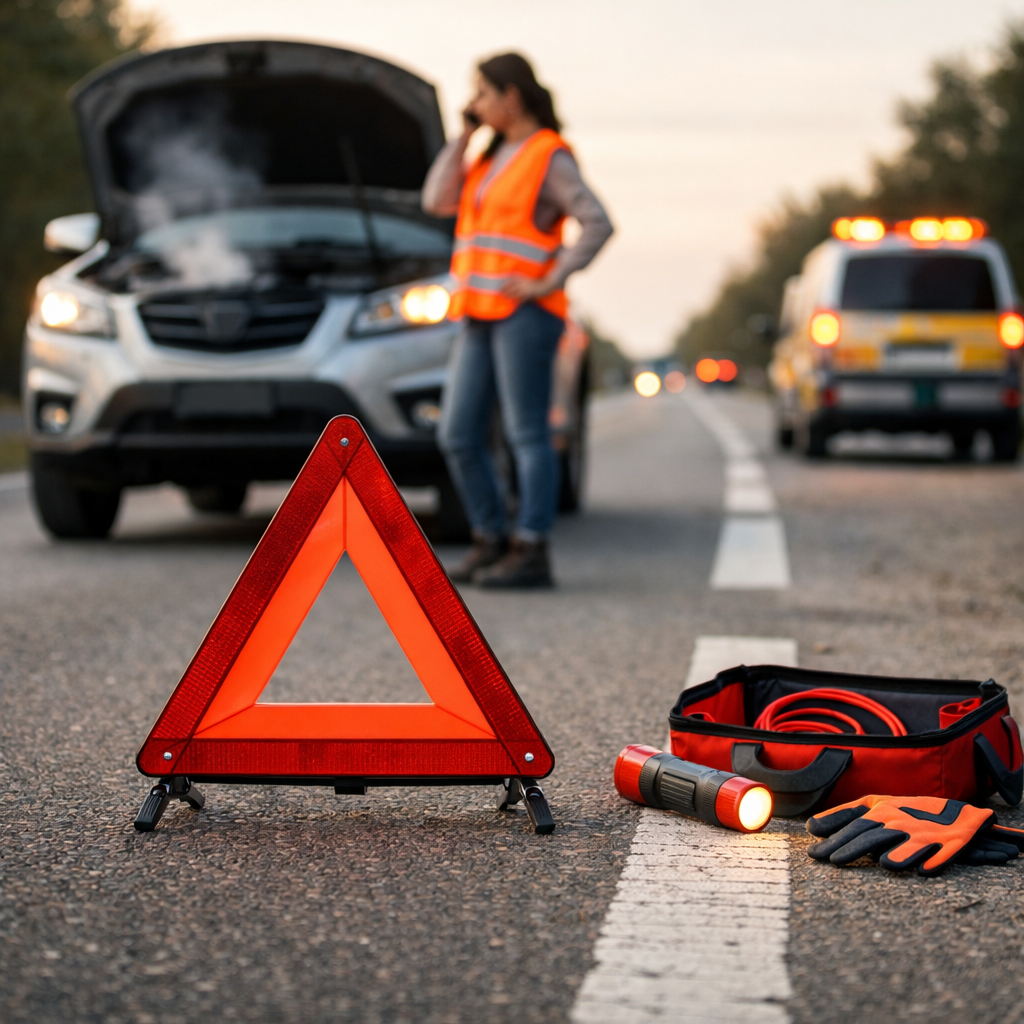
- Being struck by passing traffic
- Poor visibility during night or bad weather
- Fire from electrical or fuel system faults
- Musculoskeletal strain when pushing or lifting equipment
- Violence or theft in isolated locations
- Cold stress, heat stress, or dehydration during long waits
- Communication failure in remote areas
These hazards show why vehicle breakdown emergency safety should be treated as a formal risk management issue, not just a convenience matter. If your organization manages drivers, your fleet safety policy and lone worker procedures should address breakdown scenarios directly.
Prevention and control measures for vehicle breakdown emergency safety
Use the Hierarchy of Controls
The Hierarchy of Controls is a practical way to reduce risk before a breakdown happens. In many driving environments, elimination is not possible, but stronger upstream controls can still reduce exposure.
| Control Level | Application to Vehicle Breakdown Emergency Safety |
|---|---|
| Elimination | Remove unnecessary travel, use remote support, or reschedule trips during severe weather. |
| Substitution | Use newer, more reliable vehicles instead of aging units with frequent faults. |
| Engineering Controls | Install telematics, hazard lighting, GPS tracking, reverse cameras, and vehicle monitoring systems. |
| Administrative Controls | Pre-start inspections, maintenance schedules, journey plans, training, and emergency reporting procedures. |
| PPE | High-visibility clothing, gloves, weather protection, and safety footwear where roadside exit is necessary. |
Prevent breakdowns before they happen
The most effective control is prevention. Scheduled maintenance, daily inspections, and timely defect reporting reduce the chance of roadside failure.
Drivers should check tires, lights, brakes, fluid levels, battery condition, mirrors, fuel level, and warning lights before travel. Commercial fleets should also track recurring faults and remove unsafe vehicles from service.
Journey planning matters too. Routes should consider traffic density, mobile coverage, safe stopping areas, and weather conditions. A worker driving through a remote area with no communication plan faces a much higher level of risk than one operating with check-in points and recovery support.
Essential emergency equipment and PPE
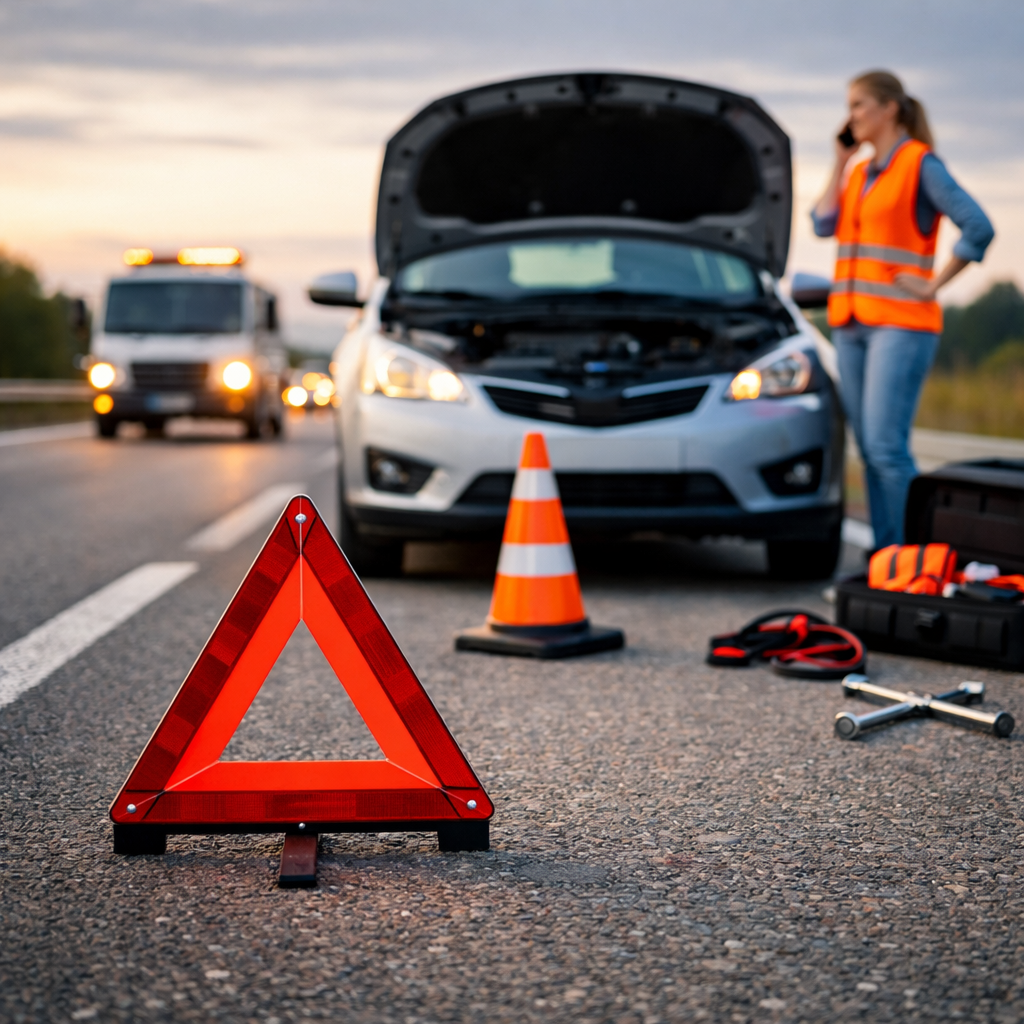
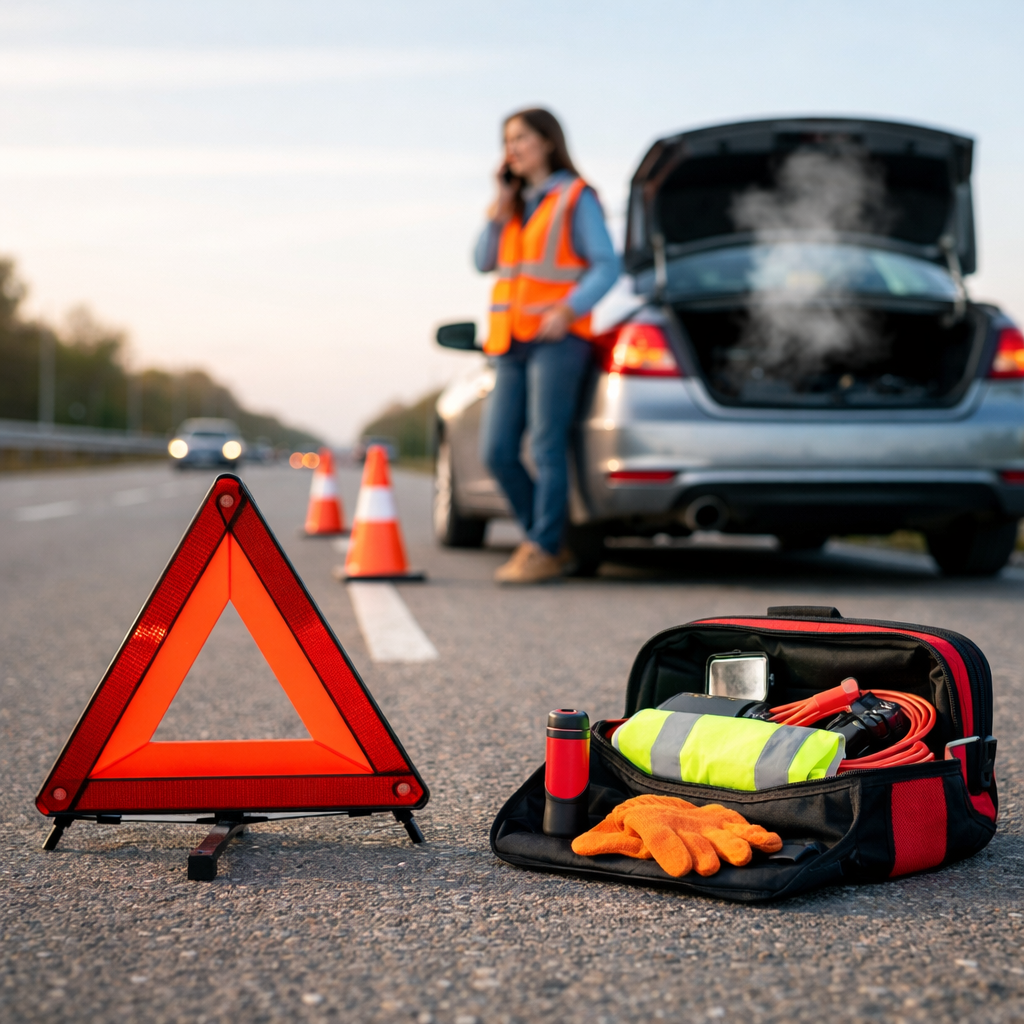
Every work vehicle should carry a breakdown kit suitable for the operating environment. The contents should match the risk assessment, climate, and journey type.
- High-visibility vest or jacket
- Warning triangle or approved warning devices where legally permitted
- Charged mobile phone or satellite communication device
- Torch with spare batteries
- First aid kit
- Fire extinguisher if required by policy or regulation
- Drinking water and weather-appropriate supplies
- Gloves and sturdy footwear
- Reflective cones for controlled worksite conditions
PPE is the last line of defense, but it still plays an important role in vehicle breakdown emergency safety. A high-visibility vest can improve visibility when a driver must exit the vehicle, while gloves and footwear help reduce minor injuries during safe, limited tasks.
Compliance, response procedures, and practical vehicle breakdown emergency safety examples
Legal and policy compliance
Employers should ensure their breakdown procedures align with local road rules, OHSE laws, and internal incident management processes. Compliance usually includes vehicle maintenance records, driver competency, emergency communication procedures, and documented risk assessments.
For some sectors, this may also involve contractor management, fatigue controls, journey approvals, and incident reporting obligations. If a breakdown causes exposure to a serious roadside hazard, the event may need formal investigation.
Training should cover when to remain in the vehicle, where to stop if possible, how to contact emergency support, and when not to attempt repairs. Guidance from NHTSA road safety resources can support broader driver safety awareness alongside workplace procedures.
Safe response steps
When a breakdown occurs, drivers should follow a simple and practiced process:
- Move to the safest possible location if the vehicle can still be controlled.
- Activate hazard lights immediately.
- Stay inside the vehicle with seatbelt fastened if roadside conditions are dangerous.
- Exit only if there is a greater risk in remaining inside, such as fire.
- Call emergency services or roadside assistance and provide exact location details.
- Inform the employer, supervisor, or dispatch contact.
- Use warning devices only when it is safe and legally appropriate to place them.
- Do not attempt complex roadside repairs without training and authorization.
A simple example is a sales representative whose car loses power on a busy motorway. The safest action is to steer to the shoulder, turn on hazard lights, call for help, and remain inside behind a barrier of vehicle protection rather than walking along the carriageway.
Another example involves a maintenance contractor in a remote mining support area. Because the business has a journey management plan, the worker checks in by radio, uses the breakdown kit, stays with the vehicle, and waits for recovery personnel. The outcome is controlled because vehicle breakdown emergency safety was planned in advance.
Building a safer workplace driving culture
Strong procedures only work when they are supported by workplace culture. Managers should encourage prompt defect reporting, avoid pressuring workers to keep driving unsafe vehicles, and review breakdown incidents for lessons learned.
Toolbox talks, refresher training, and mock emergency scenarios can improve confidence and consistency. Supervisors should also verify that contractors and temporary drivers understand the same expectations.
In the end, vehicle breakdown emergency safety is about protecting life first, then property and productivity. When employers combine prevention, PPE, compliance, and practical response planning, drivers are far better prepared to handle unexpected breakdowns without turning a mechanical problem into a serious OHSE event.