


Workplace Safety for Remote Workers: Practical OHSE Strategies for a Safer Home Office


workplace safety for remote workers is no longer a niche concern. It is now a core occupational health, safety, and environment issue for employers and workers who rely on home offices, shared workspaces, mobile work, and hybrid arrangements.
As remote work becomes standard across many industries, businesses must manage health and safety risks beyond the traditional office.
The home workspace may feel familiar, but it can still expose workers to ergonomic strain, electrical hazards, mental fatigue, slips and trips, poor air quality, and emergency preparedness gaps.
Employers have a duty to protect workers as far as reasonably practicable, even when work happens off-site.
Workers also have responsibilities to follow safe procedures, report hazards, and maintain a safe work area.
This article explains the main risks, prevention methods, PPE considerations, compliance duties, and practical examples that support stronger workplace safety for remote workers.
It also applies the Hierarchy of Controls to show how hazards can be managed effectively in real remote work settings.
Why workplace safety for remote workers matters
Remote work can create the impression that serious incidents are less likely because workers are away from factories, warehouses, and construction sites.
In reality, many injuries and health issues still occur in low-risk environments, especially where poor workstation setup and weak work routines are left unaddressed.
Common remote work injuries include neck pain, back strain, wrist discomfort, eye strain, headaches, and trip-related falls.
Psychosocial hazards are also significant, including isolation, burnout, blurred work-life boundaries, fatigue, and stress caused by constant availability.
From an OHSE perspective, workplace safety for remote workers should be treated as part of the organization’s overall safety management system.
This means remote work hazards should be identified, assessed, controlled, monitored, and reviewed just like any other work activity.
Guidance from organizations such as CCOHS and OSHA reinforces the importance of ergonomics, safe equipment use, mental health support, and clear employer-worker communication.
A remote setting changes where risks appear, but it does not remove the need for structured safety controls.
Key risks affecting workplace safety for remote workers
Ergonomic and physical hazards
Ergonomic issues are among the most frequent problems in remote work.
Many people work from dining tables, sofas, beds, or kitchen counters that were never designed for extended computer use.
Poor posture, incorrect monitor height, unsupported wrists, and non-adjustable chairs can lead to musculoskeletal disorders over time.
Unsafe cable placement, cluttered walkways, overloaded power boards, and poor lighting can also increase the chance of trips, falls, and electrical incidents.
Psychological and organizational risks
Workplace safety for remote workers is not limited to physical injury.
Mental health risks can rise when employees feel isolated, unsupported, or under pressure to stay online outside normal hours.
Remote workers may skip breaks, work longer days, or struggle to separate home life from job demands.
Over time, this can contribute to fatigue, reduced concentration, lower morale, and increased error rates.
Environmental and emergency risks
Home workspaces may have poor ventilation, excess noise, uncomfortable temperatures, or inadequate fire safety measures.
Some workers may not have smoke alarms nearby, access to a first aid kit, or a clear emergency evacuation plan.
Where remote work includes field visits, driving, lone work, or client-facing tasks, risks can expand further.
That is why workplace safety for remote workers should be assessed according to the actual tasks performed, not just the location.
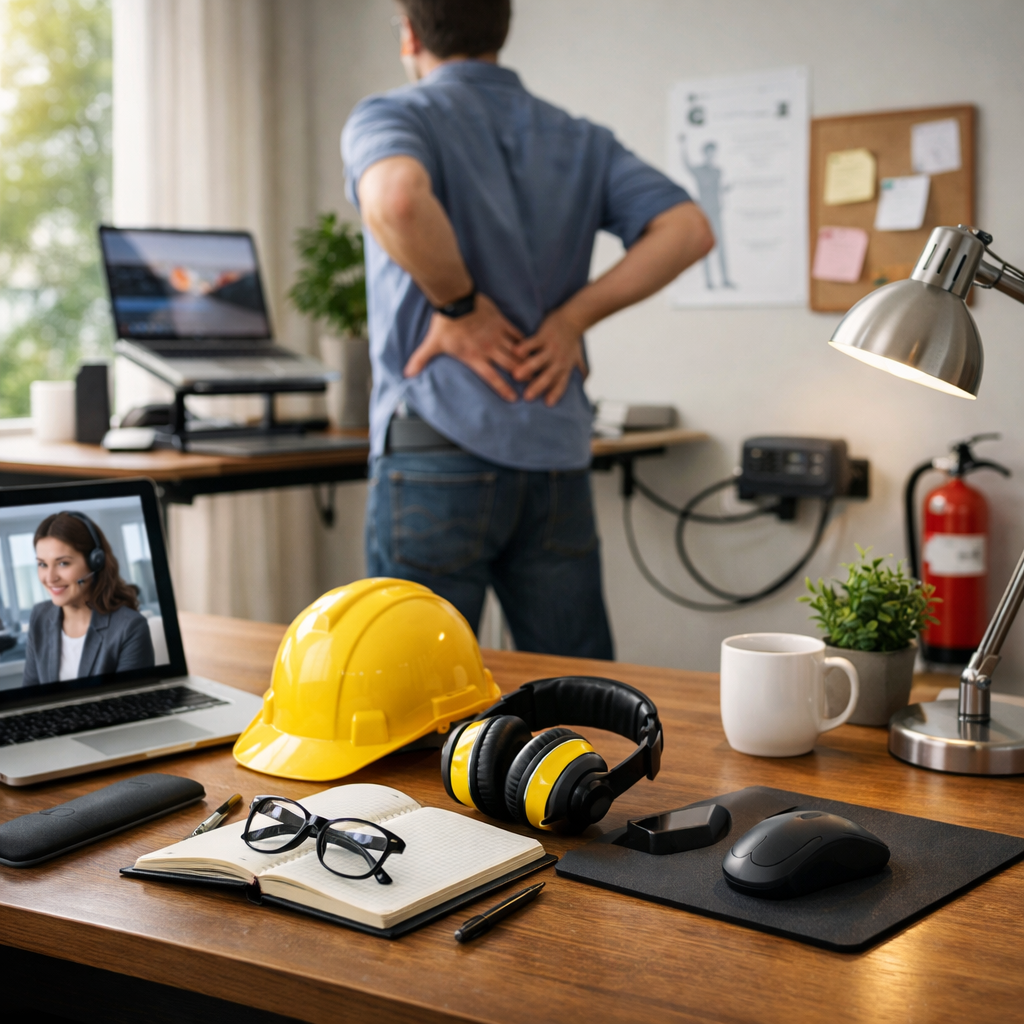
- Common remote work hazards: poor workstation ergonomics
- Electrical risks: damaged cords, overloaded outlets, unsafe charging practices
- Slip and trip hazards: loose rugs, clutter, cables across walkways
- Psychosocial hazards: stress, isolation, fatigue, blurred work hours
- Environmental issues: poor lighting, heat, noise, inadequate ventilation
- Emergency gaps: limited first aid supplies, weak fire safety planning
Prevention measures and the Hierarchy of Controls
The best way to improve workplace safety for remote workers is to apply the Hierarchy of Controls.
This approach prioritizes the most effective measures first, instead of relying only on worker behavior.
Applying the Hierarchy of Controls
| Control Level | Remote Work Example | Safety Benefit |
|---|---|---|
| Elimination | Remove unnecessary manual paperwork that requires awkward storage or repetitive handling | Reduces physical strain and clutter |
| Substitution | Replace unsafe or damaged electrical equipment with tested, modern devices | Lowers electrical and fire risk |
| Engineering Controls | Provide adjustable chairs, monitor stands, docking stations, and proper lighting | Improves ergonomics and visibility |
| Administrative Controls | Use remote work policies, training, checklists, regular breaks, and reporting systems | Strengthens safe work practices |
| PPE | Use task-specific PPE such as safety glasses, gloves, or hearing protection where remote duties require them | Adds personal protection when hazards remain |
Practical prevention steps
For most desk-based staff, prevention starts with a proper workstation assessment.
A worker’s chair should support the lower back, feet should rest flat or on a footrest, and the screen should sit at about eye level.
Keyboard and mouse placement should allow relaxed shoulders and neutral wrist posture.
Regular micro-breaks, stretching, and task variation can reduce fatigue and discomfort during long periods of screen use.
Housekeeping also matters.
Workers should keep walkways clear, secure cords, store heavy items safely, and avoid balancing equipment on unstable surfaces.
Electrical safety controls include visual inspections, safe use of surge protection, avoiding daisy-chained power boards, and removing damaged devices from service immediately.
Employers may also require self-assessment checklists and photo-based workstation reviews to improve workplace safety for remote workers.
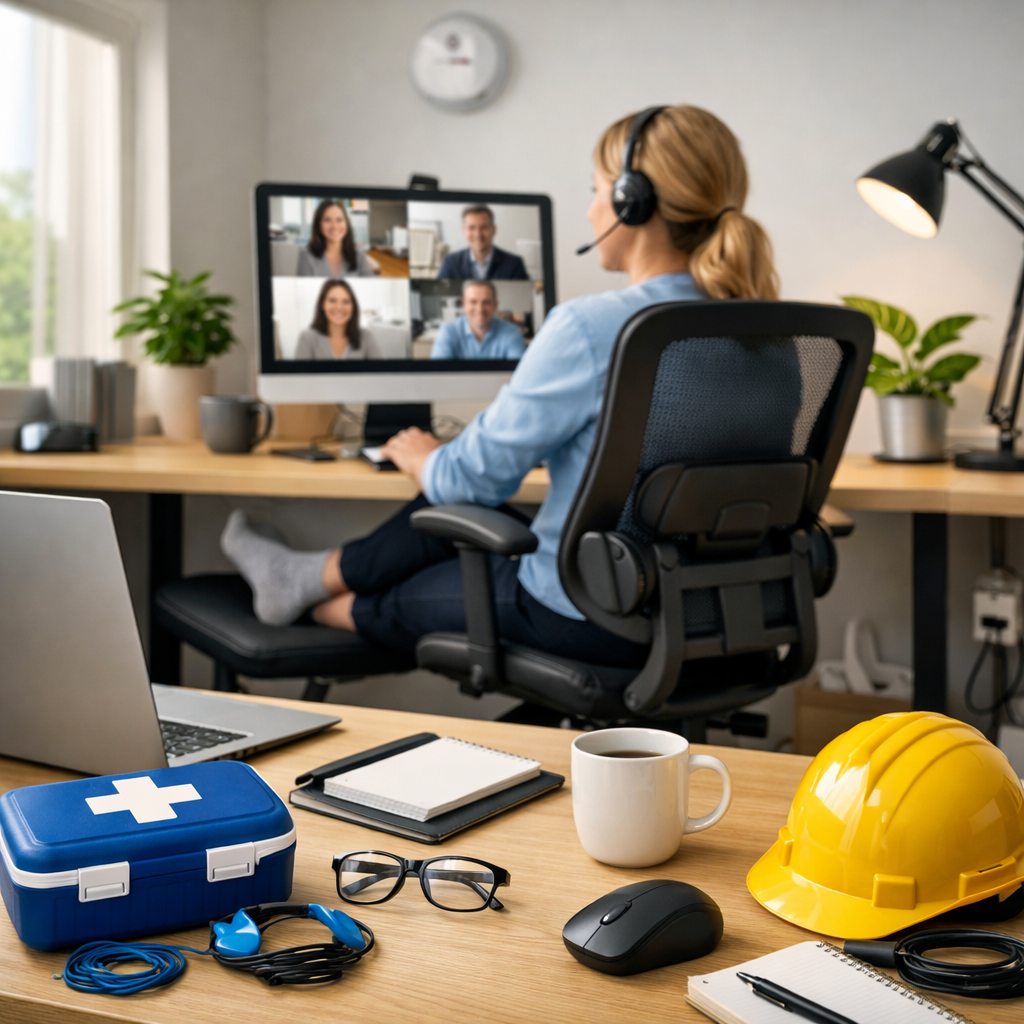
For more guidance, businesses can build these controls into their health and safety policy and risk assessment process.
These internal systems help make remote work safety consistent rather than informal.
PPE, compliance, and practical workplace examples
When PPE is relevant for remote workers
PPE is usually not the first control for office-based remote work, but it may still be necessary in some roles.
For example, a remote environmental consultant conducting occasional site inspections may need hard hats, high-visibility clothing, gloves, and safety footwear.
A technician working from home while handling chemicals, soldering equipment, or testing devices may require eye protection, gloves, or respiratory protection depending on the task.
PPE should always match the hazard and be supported by training, maintenance, and replacement procedures.
Even in lower-risk settings, simple protective items can support workplace safety for remote workers.
Examples include anti-glare screen filters in very bright environments or task lighting that reduces eye strain, though these are better viewed as supplementary controls rather than substitutes for proper workstation design.
Compliance responsibilities for employers and workers
Compliance obligations vary by jurisdiction, but the principle is consistent: employers must take reasonable steps to manage work-related risks wherever work occurs.
That includes policy development, hazard reporting, training, consultation, incident response, and periodic review.
Remote work programs should clearly define responsibilities for equipment, setup standards, working hours, confidentiality, emergency contacts, and reporting procedures.
Documentation is important because it shows that workplace safety for remote workers is being managed systematically.
Workers should follow instructions, maintain their workspace, use equipment properly, and report discomfort, hazards, or incidents early.
A minor back ache or repeated near miss may seem small, but early reporting often prevents more serious injury later.
Practical examples from real work situations
A customer service employee working from a laptop at a kitchen table develops neck and shoulder pain after several weeks.
The employer responds by providing a monitor, separate keyboard, ergonomic chair, and break schedule guidance.
This simple intervention reduces strain and improves productivity.
A hybrid project manager uses multiple chargers and extension cords in a small room with poor cable management.
During a self-inspection, the worker identifies overloaded outlets and a tripping hazard near the desk.
The issue is corrected by replacing damaged leads, reducing plug load, and securing cables along the wall.
A field-based remote inspector completes reports from home but also visits industrial locations twice a week.
The employer ensures the worker has suitable PPE, lone-worker communication procedures, vehicle safety checks, and clear rules for site access.
This is a good example of tailoring workplace safety for remote workers to the full scope of the role.
A remote administrator begins showing signs of stress and burnout after months of extended workdays.
The manager introduces clearer availability expectations, mandatory breaks, workload review meetings, and access to mental health support resources.
Psychosocial controls like these are essential to a mature OHSE program.
Workplace safety for remote workers depends on recognizing that safety is not tied to a building.
It is tied to the tasks people perform, the equipment they use, the environment they work in, and the systems their employer has in place to protect them.
By identifying hazards early, applying the Hierarchy of Controls, using PPE where tasks demand it, and following guidance from trusted sources such as CCOHS and OSHA, organizations can create safer and healthier remote work arrangements.
A well-managed program for workplace safety for remote workers protects people, supports compliance, and helps remote teams work confidently and sustainably.