


Workplace Wellness Program Ideas That Support Safety and Stronger Teams



Workplace wellness program ideas are most effective when they do more than promote healthy habits. They should also reduce risk, support alertness, strengthen morale, and make everyday work safer for everyone.
When wellness and safety are treated as separate efforts, organizations often miss simple opportunities to prevent injuries, reduce fatigue, and improve performance. A good program brings these goals together, helping workers feel better while also supporting safe decisions, strong communication, and consistent hazard awareness.
That approach matters in every setting, from offices and warehouses to healthcare, retail, construction, and remote work environments. Whether a team faces ergonomic strain, long shifts, high stress, repetitive tasks, or heat exposure, practical wellness initiatives can become part of a broader prevention strategy.
- Why workplace wellness program ideas should support safety
- Workplace wellness program ideas that reduce fatigue and physical strain
- Workplace wellness program ideas for mental health, morale, and safer behavior
- How to implement workplace wellness program ideas with real workplace controls
- Building a culture where wellness and safety reinforce each other
Why workplace wellness program ideas should support safety
Many incidents are linked to human factors such as stress, distraction, poor sleep, dehydration, burnout, and physical discomfort. These issues are often seen as personal wellness concerns, but they also affect reaction time, judgment, coordination, and attention to procedures.
That is why smart workplace wellness program ideas connect directly to safety outcomes. A fatigue management campaign can help prevent vehicle incidents. Stretch breaks can reduce musculoskeletal strain. Mental health support can improve focus and reporting. Healthier teams are often safer teams.

Employers can align wellness and safety by using the same risk-based thinking applied to other hazards. Start with the tasks, exposures, schedules, and pressures employees face. Then build wellness activities that address the causes of fatigue, stress, and strain rather than relying only on posters or one-time events.
This is also where the Hierarchy of Controls is useful. For example, if employees are tired because of excessive overtime, the best solution is not simply offering a mindfulness app. More effective controls may include schedule redesign, staffing improvements, rest break planning, job rotation, and supervisor training. Administrative controls and education still matter, but they work best when paired with stronger preventive measures.
Guidance from organizations such as OSHA and CCOHS supports this integrated view of worker well-being, hazard prevention, and psychologically safer workplaces.
Workplace wellness program ideas that reduce fatigue and physical strain
Fatigue is a major safety risk, especially in shift work, transportation, manufacturing, healthcare, field service, and jobs with long hours or repetitive tasks. It affects memory, awareness, and reaction speed, increasing the chance of errors and near misses.
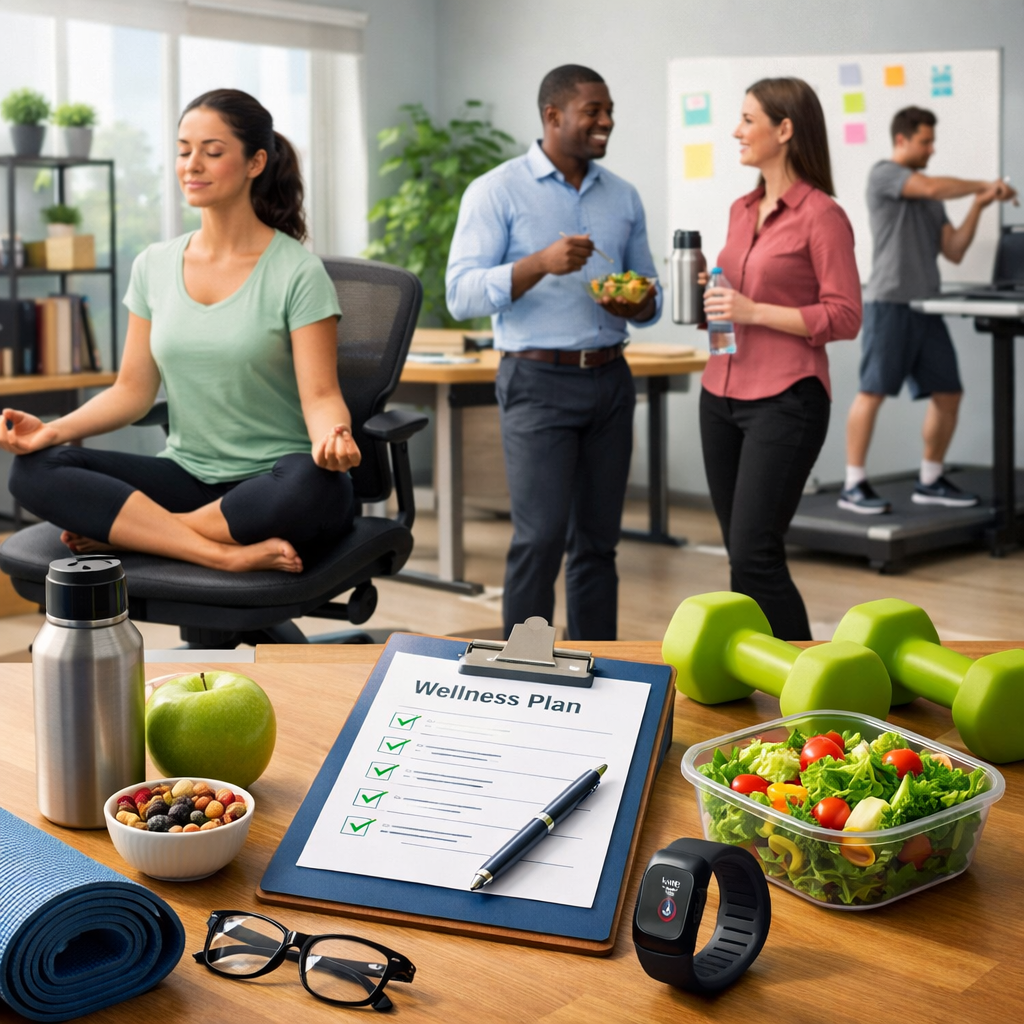
One of the most practical workplace wellness program ideas is a fatigue reduction plan built around real work demands. This can include predictable scheduling, limits on excessive overtime, education on sleep hygiene, break planning, access to drinking water, and clear reporting channels when workers are too fatigued to work safely.
Simple initiatives with strong safety value
- Micro-break programs: Short breaks every 60 to 90 minutes can reduce mental fatigue, eye strain, and repetitive motion discomfort.
- Stretch and mobility sessions: Task-specific warmups before shifts can support manual handling, lifting, and repetitive work.
- Hydration stations: Easy access to water helps reduce heat stress, headaches, and concentration loss.
- Ergonomic assessments: Workstation reviews for office and industrial settings can reduce strain injuries and improve comfort.
- Healthy shift snacks: Nutritious food options can support energy levels better than relying only on sugar and caffeine.
- Sleep education: Training on shift recovery, sleep environment, and warning signs of dangerous fatigue can improve personal readiness.
These efforts should be supported by practical controls. For example, if warehouse workers report back pain, combine wellness education with mechanical lifting aids, revised storage heights, and safer manual handling procedures. If office staff experience neck and wrist pain, pair posture awareness with monitor adjustments, suitable chairs, and keyboard positioning.
You can also build these steps into broader safety training programs and employee wellbeing strategies so wellness is not treated as an optional extra.
Workplace wellness program ideas for mental health, morale, and safer behavior
Mental health is closely tied to safety. Stress, bullying, poor communication, and heavy workloads can increase distraction, conflict, shortcuts, and underreporting of hazards. In contrast, teams with stronger morale often communicate better, follow procedures more consistently, and look out for one another.
Effective workplace wellness program ideas should therefore include psychological health measures that are practical and visible. This does not mean turning managers into therapists. It means creating conditions where people can raise concerns early, recover from pressure, and stay engaged in safe work.
Programs that improve morale and reduce risk
Start with supervisor capability. Managers should know how to recognize signs of stress, fatigue, overload, and burnout. They should also understand how workload, deadlines, role clarity, and team conflict can affect safe performance.
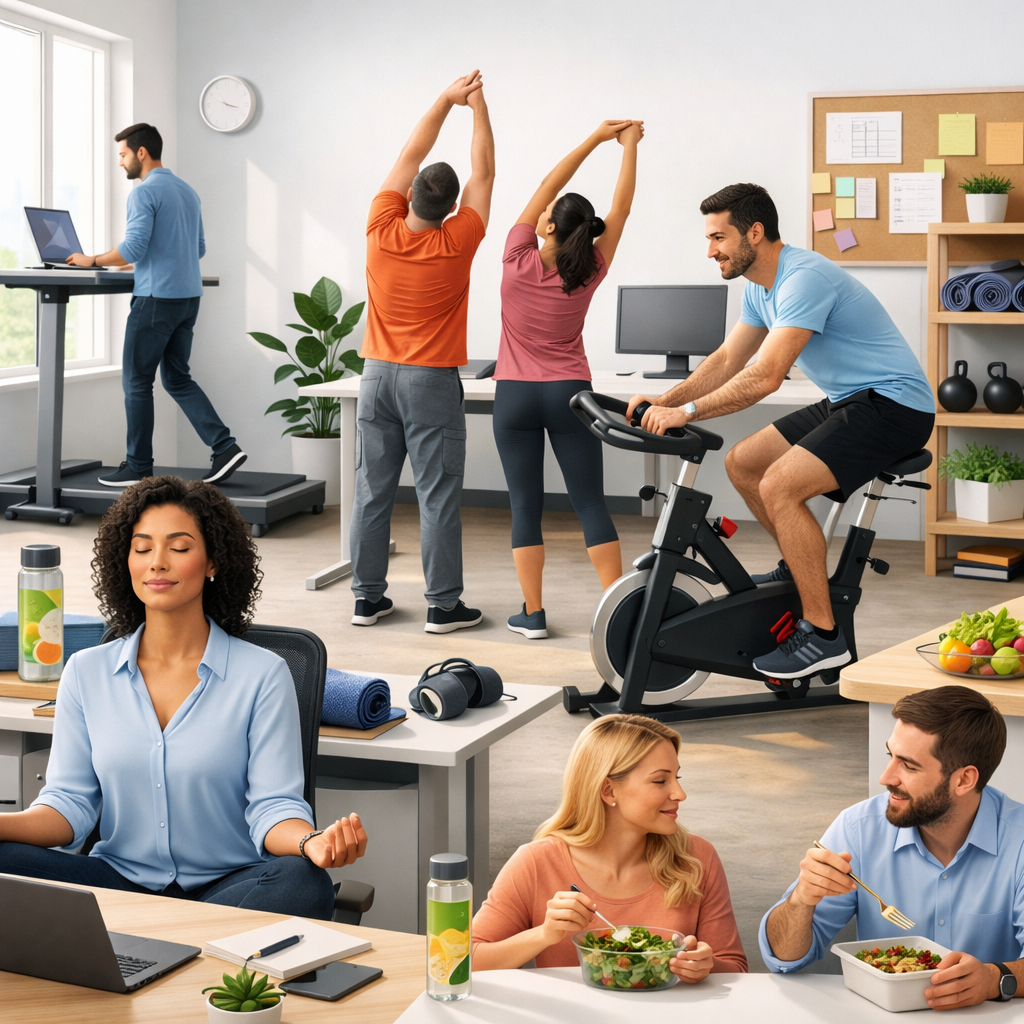
Peer support is another valuable option. Trained peer contacts can encourage early conversations, guide colleagues toward available support, and help reduce stigma around speaking up. Employee assistance programs, mental health first aid awareness, and regular wellbeing check-ins can all contribute when implemented thoughtfully.
Recognition also matters. Safety and wellness improve when employees feel respected, involved, and heard. Consider monthly recognition for safe teamwork, hazard reporting, housekeeping, or participation in wellness challenges. Morale rises when organizations notice positive actions instead of only responding when something goes wrong.
To reinforce this, include workers in planning. Ask which tasks are most draining, where fatigue builds up, and what support would make shifts safer. That feedback often leads to more useful solutions than generic wellness campaigns.
How to implement workplace wellness program ideas with real workplace controls
For wellness efforts to support safety, they need structure, accountability, and measurement. A successful rollout usually begins with basic data: incident reports, absenteeism trends, turnover, near misses, ergonomic complaints, overtime hours, and employee feedback. This shows where wellness and safety risks overlap.
Next, choose initiatives based on actual exposures. A construction employer may focus on hydration, heat stress prevention, stretching, and fatigue controls. A call center may prioritize ergonomic setup, eye strain prevention, stress management, and mental reset breaks. A healthcare provider may need violence prevention support, safe patient handling, rest spaces, and recovery after traumatic events.

A simple planning framework
| Risk area | Wellness initiative | Safety benefit |
|---|---|---|
| Fatigue from long shifts | Break scheduling, sleep education, overtime review | Better alertness and fewer errors |
| Musculoskeletal strain | Ergonomic reviews, stretching, job rotation | Lower injury risk and less discomfort |
| Stress and low morale | Supervisor check-ins, peer support, recognition | Improved focus, communication, and reporting |
| Heat and dehydration | Water access, shaded rest areas, education | Reduced heat illness and better concentration |
Training is important, but do not rely on training alone. If a worker is exhausted because staffing is too thin, a wellness poster will not fix the problem. Use the Hierarchy of Controls by first looking at elimination, substitution, engineering, and administrative improvements before placing responsibility only on individuals.
It also helps to review progress regularly. Track participation, injury patterns, employee feedback, and leading indicators such as break compliance, ergonomic corrections, and supervisor check-in frequency. If needed, adjust the program so it remains useful and relevant rather than becoming a one-time campaign.
Additional guidance on workplace health promotion and hazard prevention can also be found through the NIOSH resources, which support integrated approaches to worker health and safety.
Building a culture where wellness and safety reinforce each other
The best workplace wellness program ideas are the ones employees can feel in their daily work. They make it easier to take breaks, easier to raise concerns, easier to recover from demanding tasks, and easier to work without unnecessary strain. Over time, that leads to fewer injuries, less fatigue, stronger morale, and a more dependable safety culture.
Organizations do not need a massive budget to get started. They need relevant actions, visible leadership support, and a willingness to address root causes. Small improvements in rest, ergonomics, hydration, mental health support, and supervisor communication can have a meaningful effect on both wellbeing and safe performance.
When leaders treat wellness as part of risk management rather than a separate perk, the results are more practical and more lasting. The most successful workplace wellness program ideas help people stay healthy enough, focused enough, and supported enough to do their jobs safely every day.