


- working with press machines safely: Essential OHSE Practices for a Safer Workplace
- Understanding the risks of working with press machines safely
- Prevention strategies and the hierarchy of controls
- PPE and safe operating practices in daily production
- Training, compliance, and building a safer press machine culture
working with press machines safely: Essential OHSE Practices for a Safer Workplace


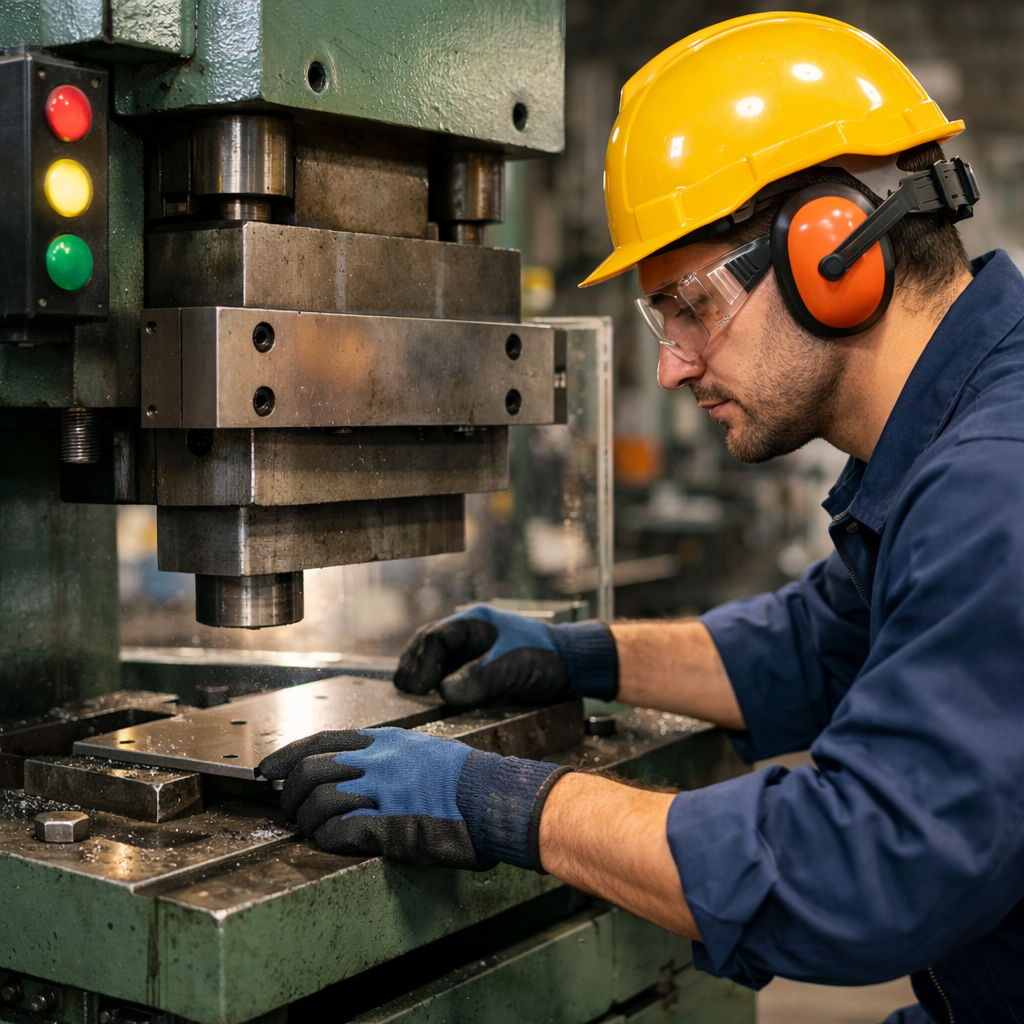
working with press machines safely is one of the most important responsibilities in any manufacturing, fabrication, stamping, or forming environment. Press machines are powerful, fast, and capable of causing severe injuries within seconds if hazards are not properly controlled.
From hand injuries and amputations to crushing incidents and ejected materials, the risks are well known across industry. A strong OHSE approach helps employers and workers reduce exposure, meet legal duties, and create a more reliable production process.
Whether the equipment is a hydraulic press, mechanical press, punch press, or brake press, the basic principle remains the same: safe systems of work must come before speed. Working with press machines safely depends on proper guarding, clear procedures, suitable training, the right personal protective equipment, and regular maintenance.
This article explains the main risks, practical prevention measures, PPE requirements, compliance expectations, and real-world examples that support safer outcomes on the shop floor.
Understanding the risks of working with press machines safely
Press machines present multiple hazards because they combine force, motion, pinch points, and repetitive operation. Workers may feed parts manually, adjust dies, clear jams, inspect finished pieces, or carry out maintenance, and each task introduces different risk levels.
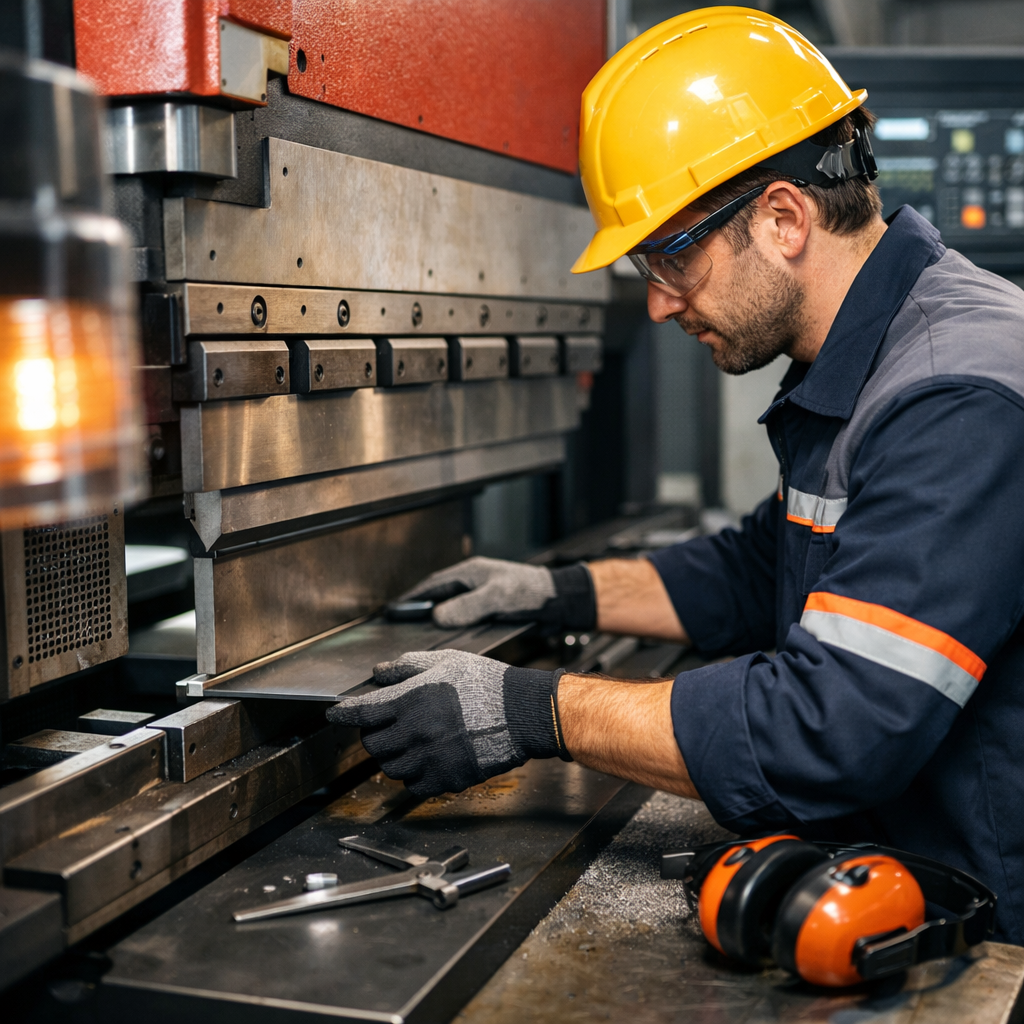
The most serious injuries usually happen at the point of operation, where hands or fingers enter danger zones during cycling. However, hazards are not limited to direct contact with the ram or die.
Common press machine hazards
- Crushing and amputation risks: hands, fingers, or arms can be caught between moving components.
- Pinch points: exposed moving parts can trap clothing, gloves, or body parts.
- Ejected materials: broken tooling, scrap metal, or poorly positioned workpieces may become projectiles.
- Unexpected start-up: stored energy, faulty controls, or poor lockout procedures can cause sudden movement.
- Noise and vibration: long-term exposure may contribute to hearing damage or fatigue.
- Ergonomic strain: repetitive feeding, awkward reaches, and manual handling can lead to musculoskeletal injuries.
- Slips and trips: oil leaks, scrap buildup, and poor housekeeping create secondary hazards around the machine.
A practical example is a worker reaching into a press to reposition a misaligned part without isolating the machine. If the foot pedal is activated accidentally or the machine cycles unexpectedly, the result can be catastrophic. Another common example involves bypassed guards during high-output work, where short-term convenience leads to long-term injury risk.
Resources from OSHA and CCOHS consistently emphasize machine guarding, training, and energy isolation as key controls. These are not optional extras. They are fundamental parts of working with press machines safely.
Prevention strategies and the hierarchy of controls
The most effective way to improve working with press machines safely is to apply the Hierarchy of Controls. This approach focuses on eliminating hazards where possible, then reducing risk through engineering and administrative controls before relying on PPE.
Applying the Hierarchy of Controls
| Control Level | How it applies to press machines |
|---|---|
| Elimination | Remove manual feeding tasks where automation can be used. |
| Substitution | Use safer equipment or tooling designs that reduce hand exposure. |
| Engineering Controls | Install guards, light curtains, interlocks, two-hand controls, and presence-sensing devices. |
| Administrative Controls | Develop safe work procedures, training, supervision, maintenance schedules, and permit systems. |
| PPE | Use eye, hearing, foot, and hand protection suited to the task and hazard. |
Engineering controls are especially important in press operations. Fixed guards prevent access to danger points. Interlocked guards stop operation when opened. Light curtains can halt machine movement when a person enters a hazardous zone. Two-hand controls reduce the chance of hands being near the point of operation during cycling.
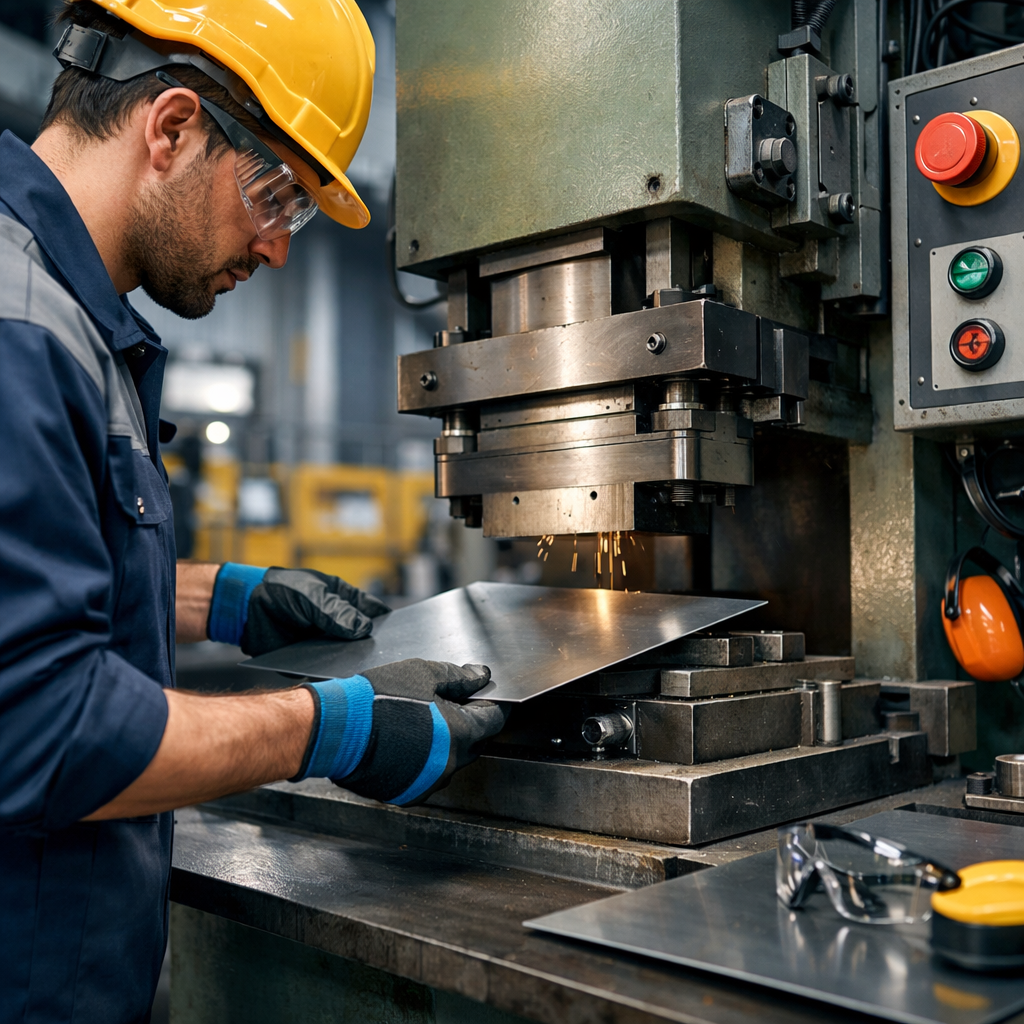
Administrative controls support these physical safeguards. Employers should create documented procedures for start-up, operation, die changes, jam clearing, maintenance, and shutdown. Workers must know what to do during normal production and what to do when something goes wrong.
Core prevention measures for working with press machines safely
- Inspect guards and safety devices before each shift.
- Never bypass, disable, or wedge open protective systems.
- Use lockout/tagout before maintenance, cleaning, adjustment, or jam removal.
- Keep hands clear by using tools, feeders, ejectors, or push sticks where suitable.
- Maintain good housekeeping to control oil, scrap, and obstructions.
- Report unusual noises, delays, double-cycling, or control failures immediately.
- Ensure only trained and authorized workers operate or service the machine.
If your workplace is reviewing machine risk controls, our safety procedures guide and lockout/tagout basics can help support internal training. Prevention works best when physical safeguards and worker behavior reinforce each other every day.
PPE and safe operating practices in daily production
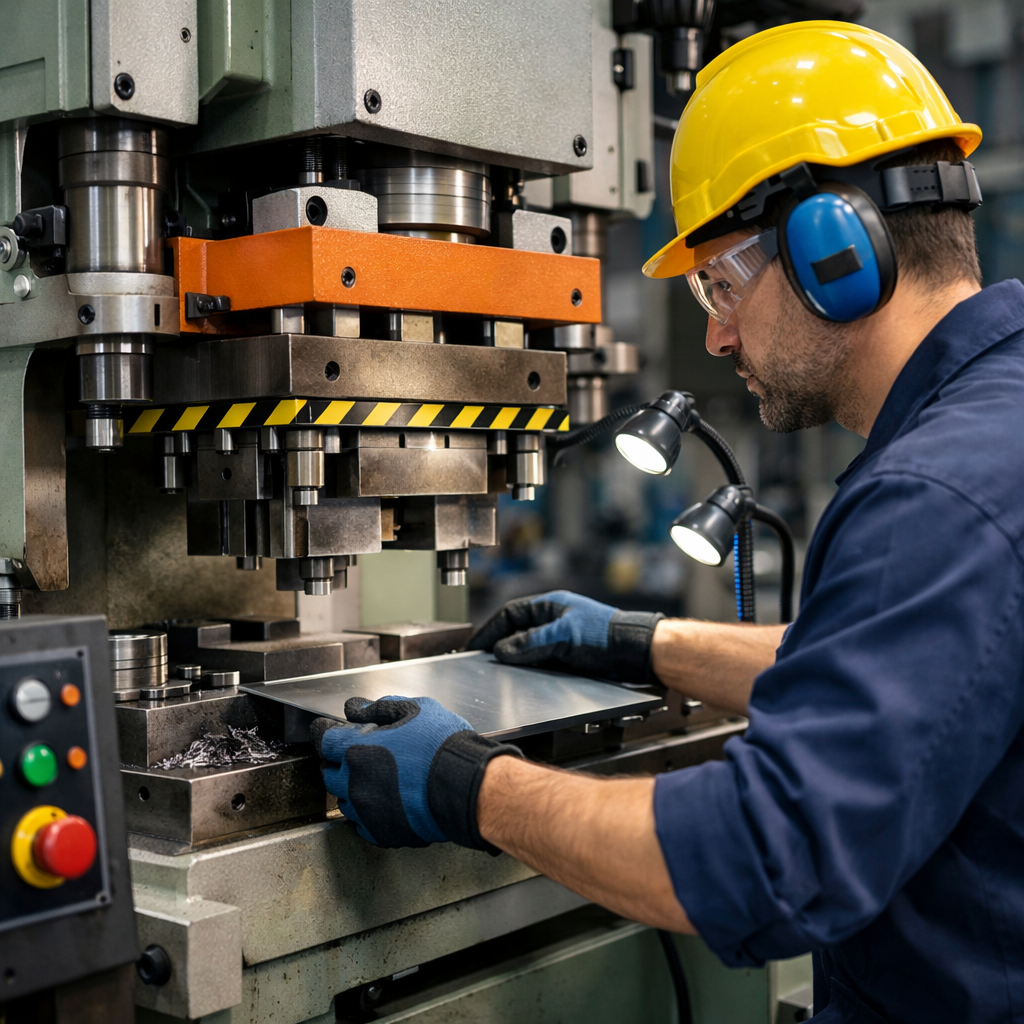
Although PPE sits lower in the Hierarchy of Controls, it remains an important part of working with press machines safely. PPE should be selected through hazard assessment and matched to the exact task, material, and machine environment.
Recommended PPE for press machine work
- Safety glasses or face shields: protect against flying particles, scrap, or broken tooling fragments.
- Hearing protection: required where noise levels exceed exposure limits.
- Safety footwear: reduces injury from dropped dies, parts, or tooling.
- Close-fitting work clothing: helps prevent entanglement in moving parts.
- Task-appropriate gloves: useful for handling sharp materials, but they must not create entanglement risks near moving components.
PPE alone cannot stop a press from crushing a hand, so it should never replace guarding or isolation. This is why supervisors must check that workers understand the limits of PPE as well as its benefits.
Daily operating discipline is equally important. Pre-start checks should confirm that guards, emergency stops, controls, lubrication systems, and work areas are in good condition. Operators should test safety devices according to site procedures and report defects before production begins.
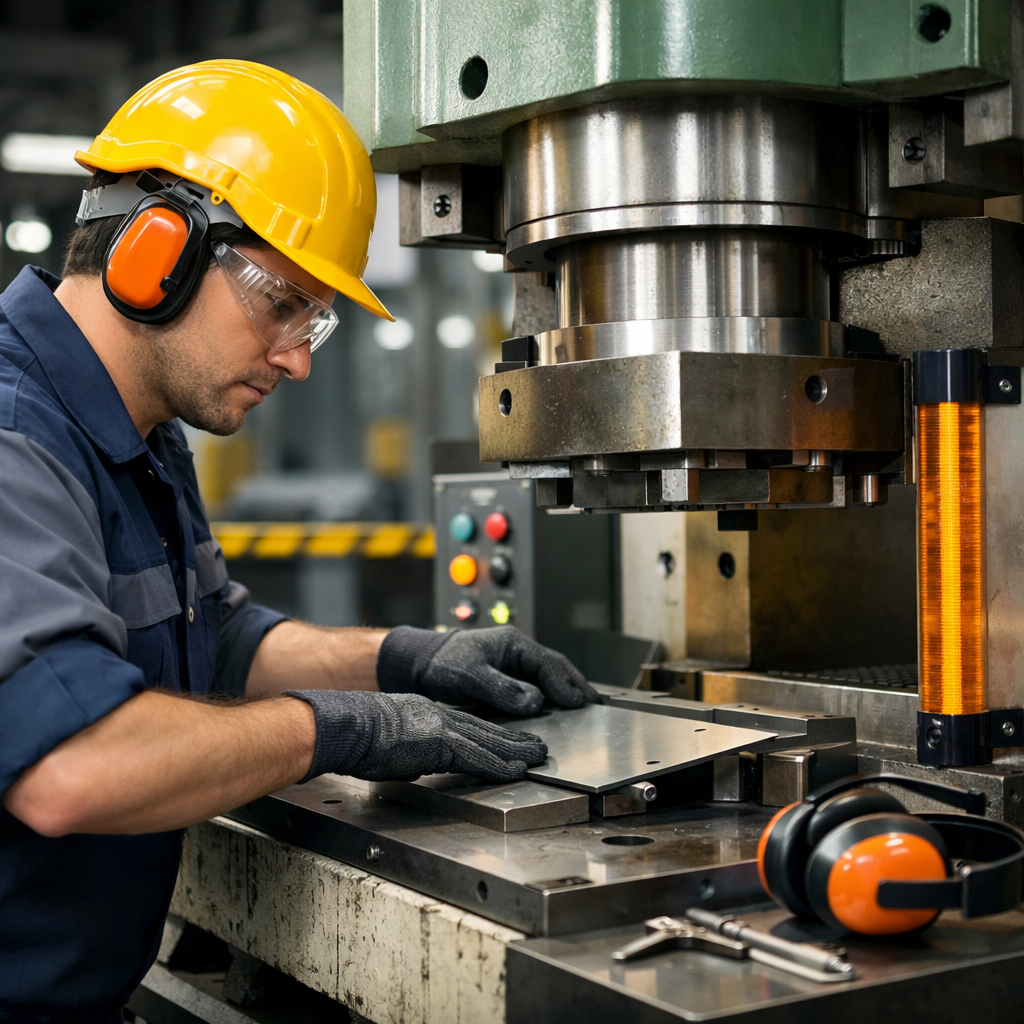
Body position matters too. Workers should avoid leaning into the machine, overreaching to place stock, or using awkward hand positions. Repetitive manual feeding should be reviewed for ergonomic improvements such as adjustable tables, part supports, or automated feeding mechanisms.
Consider a practical example from a metal stamping shop. A trained operator notices that scrap pieces are collecting near the die area. Instead of reaching in during operation, the worker stops the machine, isolates energy according to procedure, removes the obstruction with the correct tool, and reports the recurring issue for maintenance review. That is a simple but strong example of working with press machines safely in practice.
Training, compliance, and building a safer press machine culture
Compliance is a core OHSE duty, but genuine safety goes beyond meeting minimum legal standards. Employers must provide safe equipment, information, instruction, training, supervision, and maintenance. Workers must follow procedures, use controls correctly, and report hazards promptly.
Standards and guidance from OSHA, CCOHS, and local regulators all reinforce the same message: machine guarding, lockout/tagout, competency, and risk assessment are essential. A press machine should not be operated by anyone who has not been properly trained in normal use, emergency response, hazard recognition, and shutdown procedures.
What effective compliance usually includes
- Documented risk assessments for each machine and task.
- Machine-specific operating procedures and emergency instructions.
- Training records and competency checks for operators and maintenance staff.
- Preventive maintenance and inspection logs.
- Incident and near-miss reporting systems.
- Periodic audits of guarding, lockout, and operator practices.
Near misses deserve special attention. If a worker’s glove is nearly caught, if a guard does not close properly, or if a machine double-cycles once, these warning signs should trigger immediate review. Many serious incidents are preceded by smaller events that were ignored or normalized.
Supervisors help shape culture by responding quickly to concerns and refusing unsafe shortcuts. Workers are more likely to follow procedures when they see that production targets do not override safety controls. Toolbox talks, refresher training, and visible leadership support all strengthen this culture.
In conclusion, working with press machines safely requires more than caution at the moment of operation. It requires a complete OHSE system built on hazard awareness, effective guarding, lockout/tagout, training, PPE, maintenance, and compliance. When employers apply the Hierarchy of Controls and workers follow safe practices consistently, press machine tasks become more controlled, more efficient, and far less likely to end in injury. For any workplace that relies on pressing, stamping, or forming equipment, working with press machines safely should remain a daily operational priority and a shared responsibility at every level.