


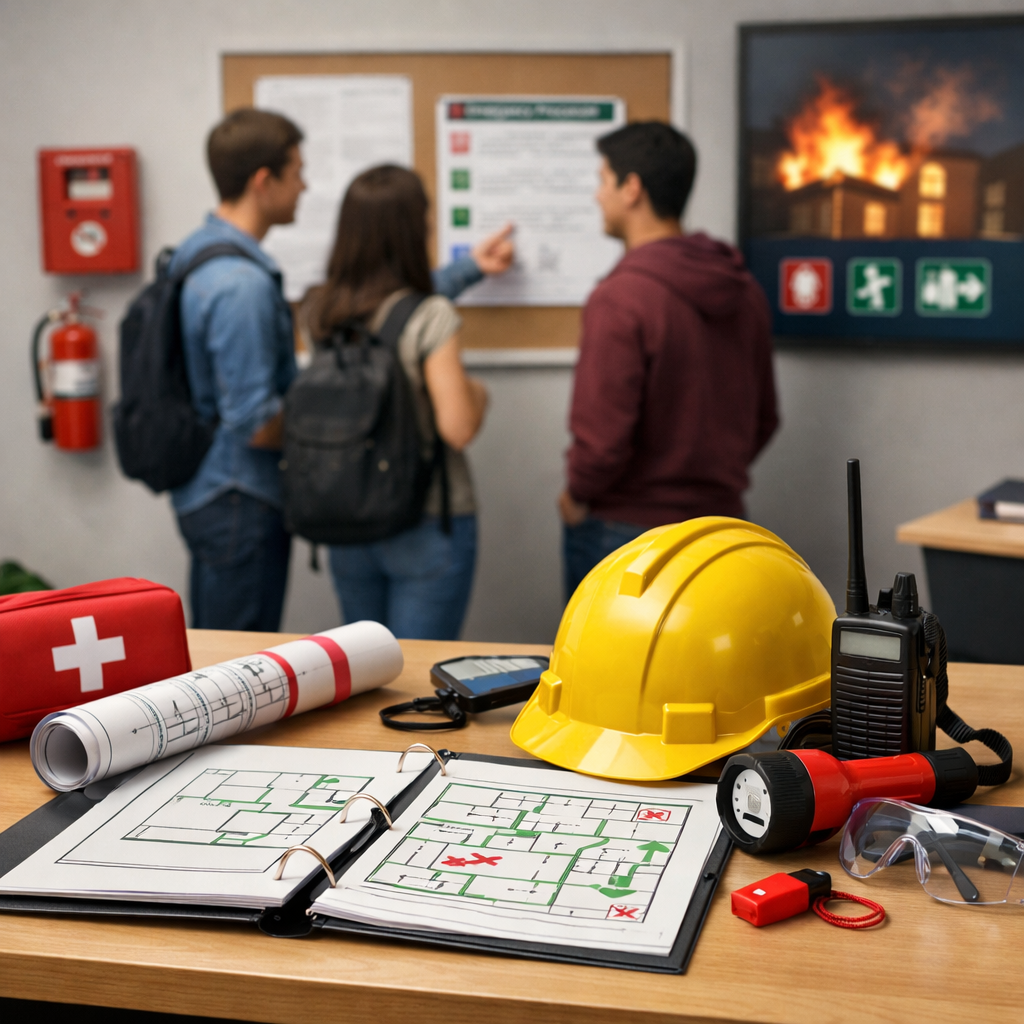

Workplace emergency plan for students is something every young worker should understand before a first shift, co-op placement, practicum, volunteer role, or part-time job begins.
For students in Ontario and across Canada, emergencies at work can include fires, chemical spills, severe weather, violence, power failures, medical events, equipment incidents, or situations that require evacuation or sheltering in place. A clear plan helps reduce confusion, protect workers, and support a faster, safer response when stress is high.
If you are a student, parent, teacher, or employer, the goal is simple: know what to do before something goes wrong. That means understanding the workplace layout, who is in charge, how to report hazards, where to go, and how to get help. Trusted Canadian guidance from CCOHS and the Government of Ontario can help workplaces build strong safety practices, while practical safety education from OHSE.ca can help young workers prepare for real situations.
Why a workplace emergency plan for students matters
Students are often new to work, new to equipment, and new to workplace routines. That can make it harder to recognize early warning signs or respond confidently during an incident.
A workplace emergency plan for students should never be treated as a formality. It is part of orientation, supervision, and day-to-day risk control. Young workers may be especially affected by unfamiliar tasks, fast-paced environments, customer pressure, or hesitation about asking questions.
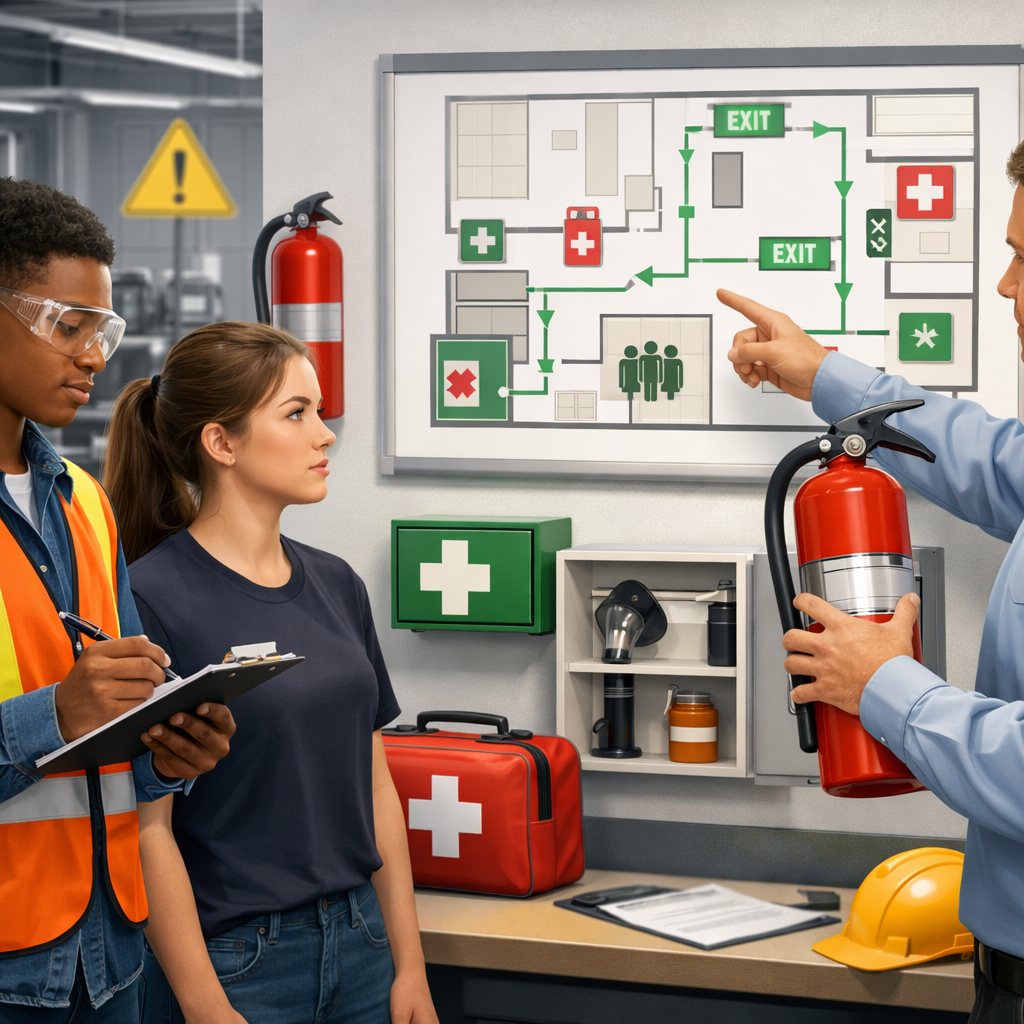
In practical terms, a good plan helps students know:
- what types of emergencies could happen in that specific workplace
- how to report an incident, hazard, injury, or near miss
- who the supervisor, first aider, fire warden, or emergency contact is
- where exits, alarms, extinguishers, first aid supplies, eyewash stations, and assembly points are located
- whether to evacuate, shelter in place, lock down, or stop work
- how to assist safely without putting themselves at greater risk
Students should also understand an important safety principle: if instructions are unclear, stop and ask. In an emergency, guessing can create more danger.
What students should learn before their first shift
Know the site, the hazards, and the chain of command
A workplace emergency plan for students should begin with orientation that is specific to the actual site. A coffee shop, warehouse, childcare centre, office, construction project, laboratory, and retail store all have different hazards and different response procedures.
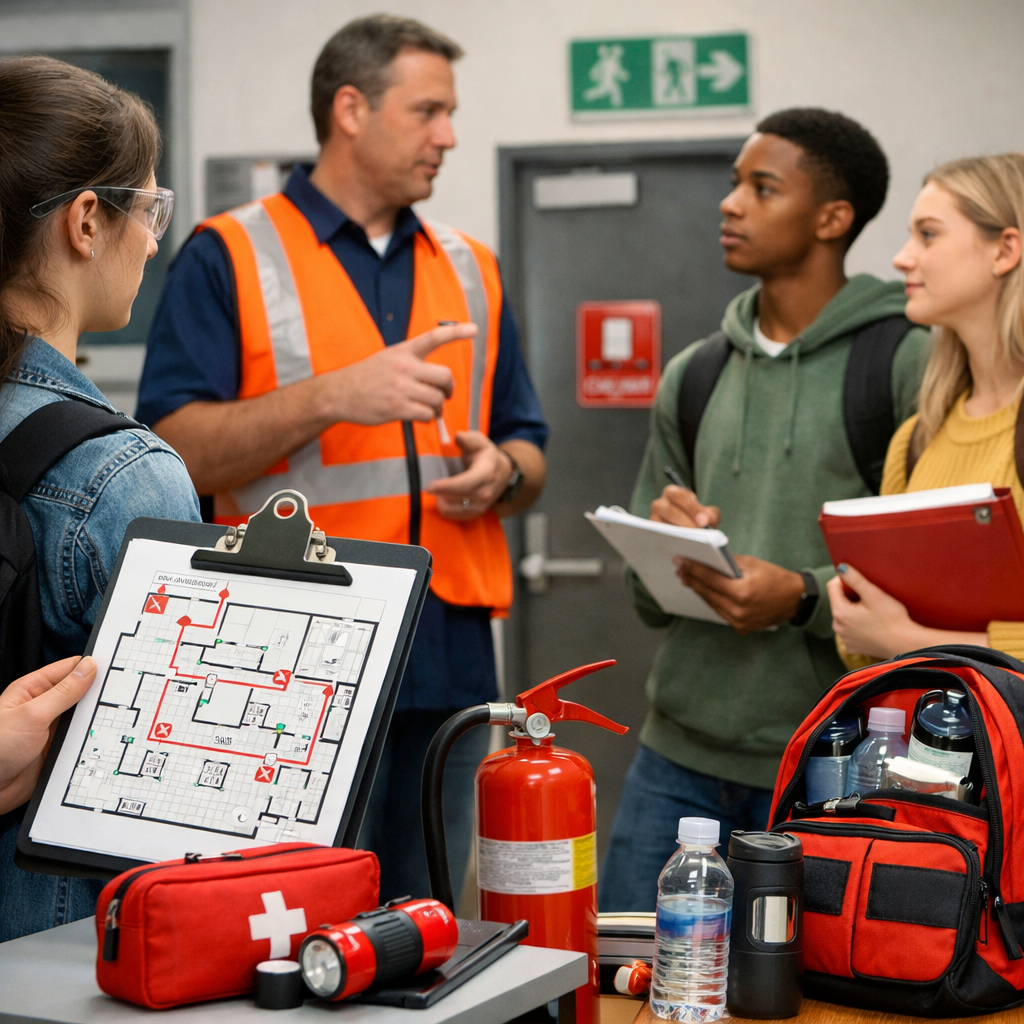
Before starting work, students should be shown the physical space and the emergency features of that space. This includes all available exits, safe routes, restricted areas, alarm pull stations if applicable, first aid supplies, and designated meeting areas outside the building.
Students should also be told who gives directions during an incident. In some settings, that may be a supervisor, manager, teacher, placement coordinator, or site lead. If an emergency happens when that person is absent, there should still be a clear backup contact.
Understand common emergency procedures
Procedures should match the workplace. Students may need to learn how to respond to fire alarms, smoke, aggressive behaviour, gas odours, hazardous product spills, electrical failure, weather warnings, or a worker collapsing on the job.
What matters most is that the instructions are clear, rehearsed, and easy to follow under pressure. Students should know the difference between:
- Evacuation: leave by the safest route and report to the assembly point
- Shelter in place: stay indoors in a safer area until instructed otherwise
- Lockdown or restricted movement: follow site-specific security directions
- Stop work: shut down the task if trained and safe to do so, then move to safety
If the workplace uses safety training, orientation records, or online learning, employers may also use resources from learn.ohse.ca to support consistent preparation.
Building a practical workplace emergency plan for students
Use simple prevention and control steps
The best emergency response starts before the emergency. Workplaces should identify hazards, reduce risk, and make the safest action the easiest action to take. The Hierarchy of Controls is useful here: remove hazards where possible, substitute safer options, use engineering controls, strengthen administrative controls, and provide appropriate personal protective equipment when required.
For student workers, that can look like safer chemical storage, restricted access to dangerous equipment, written procedures, close supervision, regular drills, and PPE that fits properly. It also means not assigning tasks that a student has not been trained to do.
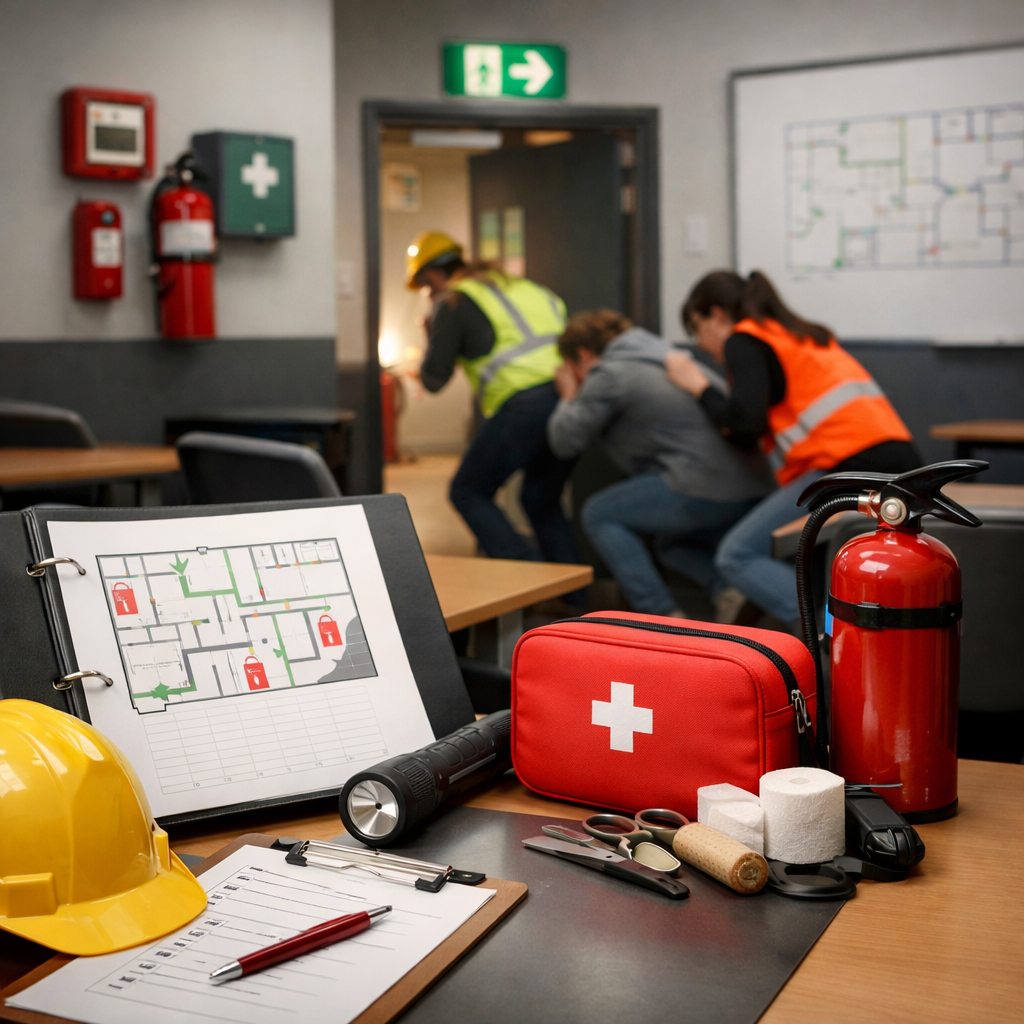
Parents and schools may want to ask whether the student has received site-specific orientation and whether emergency procedures have been reviewed in plain language. This is especially important for co-op placements, work experience, and seasonal jobs.
Keep instructions visible and realistic
A workplace emergency plan for students should not live only in a binder. Key information should be easy to find and easy to remember. Posting maps, exit routes, emergency contacts, and reporting steps in visible areas can help.
Short drills and walk-throughs are also valuable. Students are more likely to respond calmly when they have physically practiced where to go and what to do.
| Emergency situation | What a student should know | Safe first action |
|---|---|---|
| Fire or smoke | nearest exit, alarm process, assembly point | stop work, evacuate, report to supervisor |
| Chemical spill | restricted area rules, spill reporting, exposure response | move away, alert supervisor, follow site procedure |
| Violence or threatening behaviour | security process, safe room or exit options | create distance, get help, follow workplace direction |
| Medical emergency | who is trained in first aid, how to call for help | alert trained staff immediately, keep area clear |
| Power outage | equipment shutdown rules, lighting limits, exit routes | stop task safely and await direction |
Questions students should ask before an incident happens
Young workers should feel comfortable asking direct, practical questions. A strong workplace emergency plan for students includes time for those questions and clear answers from a supervisor or placement lead.
- What emergencies are most likely in this workplace?
- Who do I report to if something goes wrong?
- Where do I go if we need to evacuate?
- Is there a first aider on shift?
- What should I do if I see a spill, fire, injury, or unsafe behaviour?
- What tasks am I not allowed to do without extra training or supervision?
- What is the procedure if I feel unsafe or do not understand an instruction?
These questions are not a sign of inexperience. They are a sign of safe work habits.
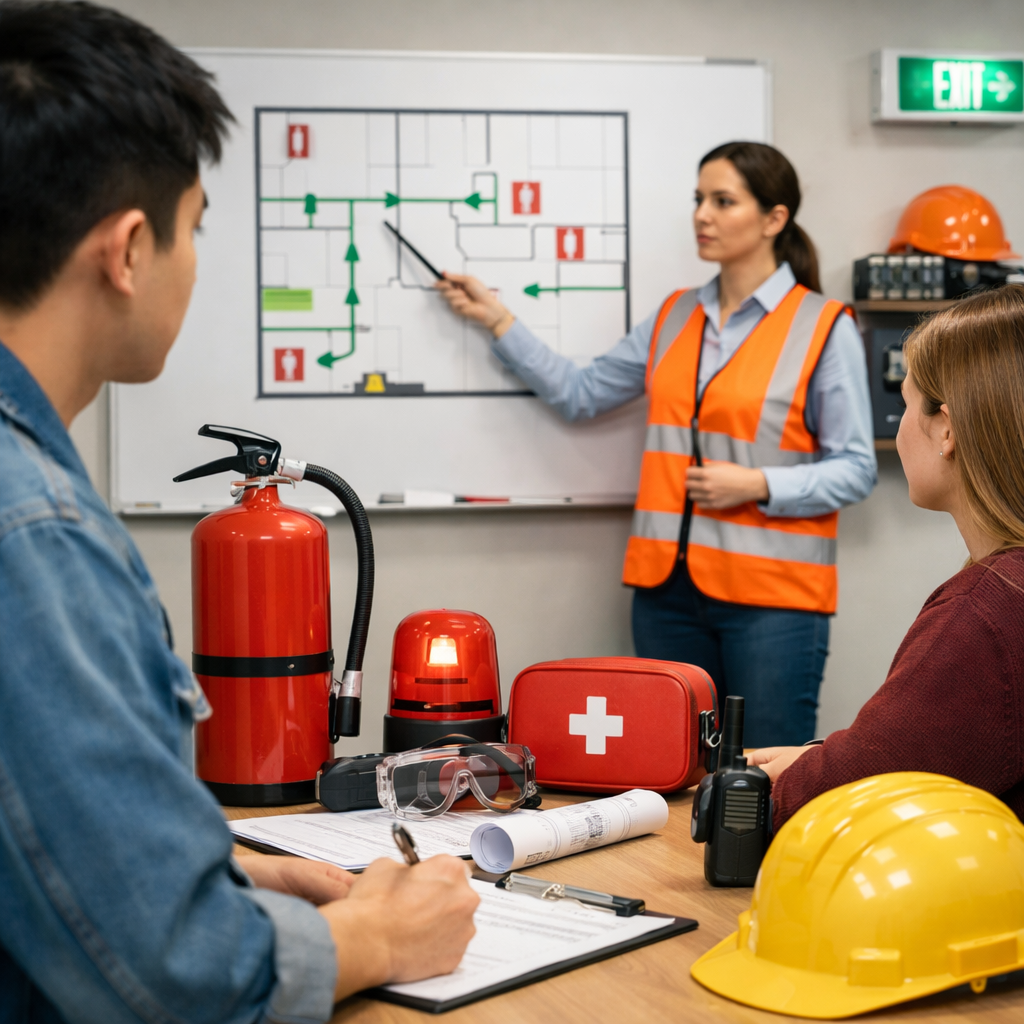
Short actionable checklist
Before the first shift or placement day, students can use this quick checklist:
- I know my supervisor and backup contact.
- I know the alarm sound or emergency notification process.
- I know at least two ways out, if available.
- I know the outdoor meeting point or safe indoor location.
- I know how to report a hazard, injury, or near miss.
- I know where first aid supplies are located.
- I know which tasks require training, permission, or PPE.
- I know I can stop and ask questions if I am unsure.
Additional public safety information for families and workplaces may also be available through Health Canada and injury prevention resources from Parachute.
Conclusion: workplace emergency plan for students starts with preparation
A workplace emergency plan for students is most effective when it is practical, site-specific, and reviewed before an incident ever occurs. Students should know the hazards, the reporting process, the emergency procedures, and the people responsible for helping them stay safe.
For Canadian workplaces, schools, and families, the message is straightforward: do not wait for a stressful moment to explain safety. Review the plan, walk the space, ask questions, and practise the response. A well-understood workplace emergency plan for students can reduce confusion, support faster decisions, and help young workers protect themselves and others while following local school, workplace, manufacturer, and emergency guidance.