
Fire Safety Checklist for Offices and Industrial Sites: A Practical Guide to Prevention and Response

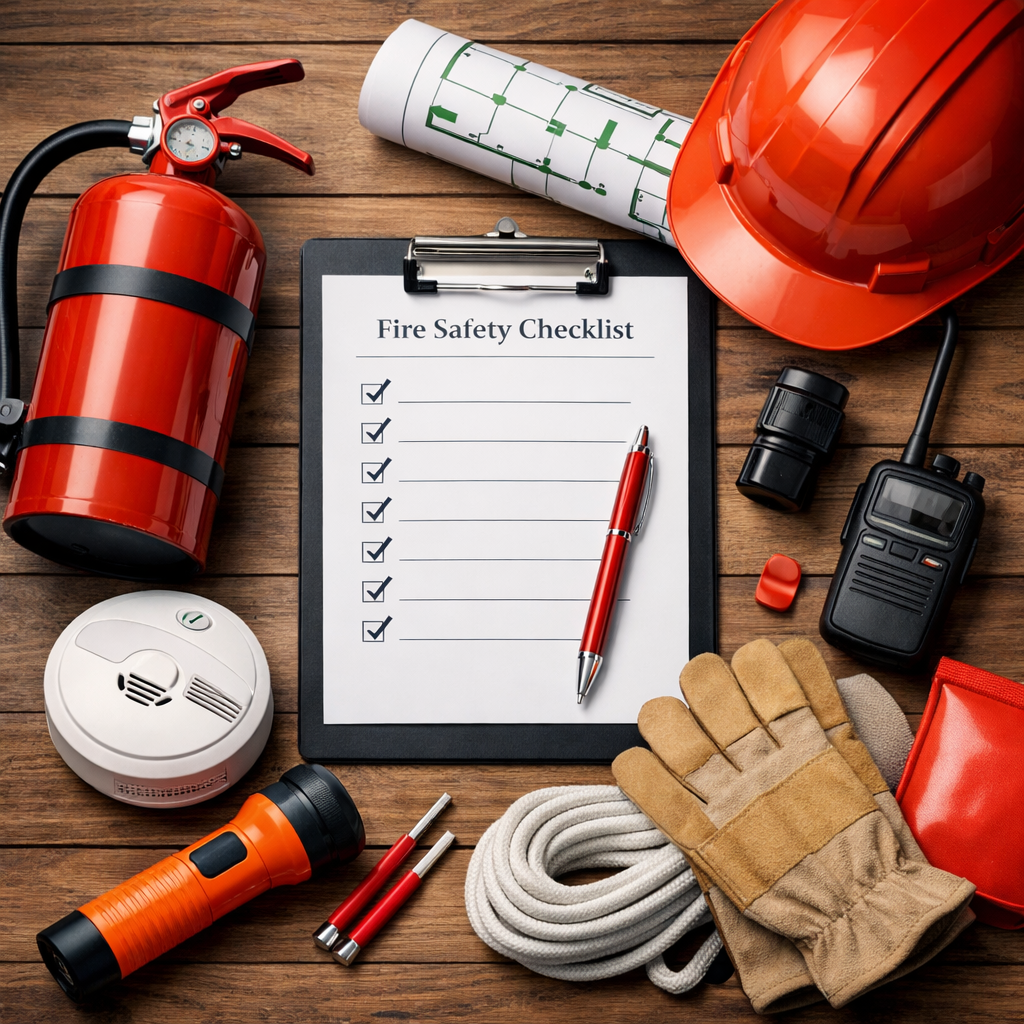
Fire safety checklist planning is one of the most important steps any business can take to protect people, property, and operations.
Whether you manage a small office, a warehouse, a manufacturing facility, or a mixed-use site, a clear checklist helps reduce risk, improve compliance, and support a faster, safer response in an emergency.
Workplaces face different fire hazards depending on their layout, equipment, and daily tasks. Offices may deal with overloaded power boards, blocked exits, and poor housekeeping around electrical equipment, while industrial sites often face higher risks from hot work, flammable liquids, machinery, dust, and compressed gases.
A practical fire safety checklist should cover prevention, inspection, and emergency response. It should also align with legal duties and recognized guidance from organizations such as OSHA and CCOHS. The goal is not just to pass an inspection, but to build a workplace where fire risks are identified early and controlled consistently.
Fire Safety Checklist Essentials for Every Workplace
A strong fire safety checklist starts with the basics. Every site should have clear fire prevention controls, working protection systems, trained staff, and a documented emergency plan.
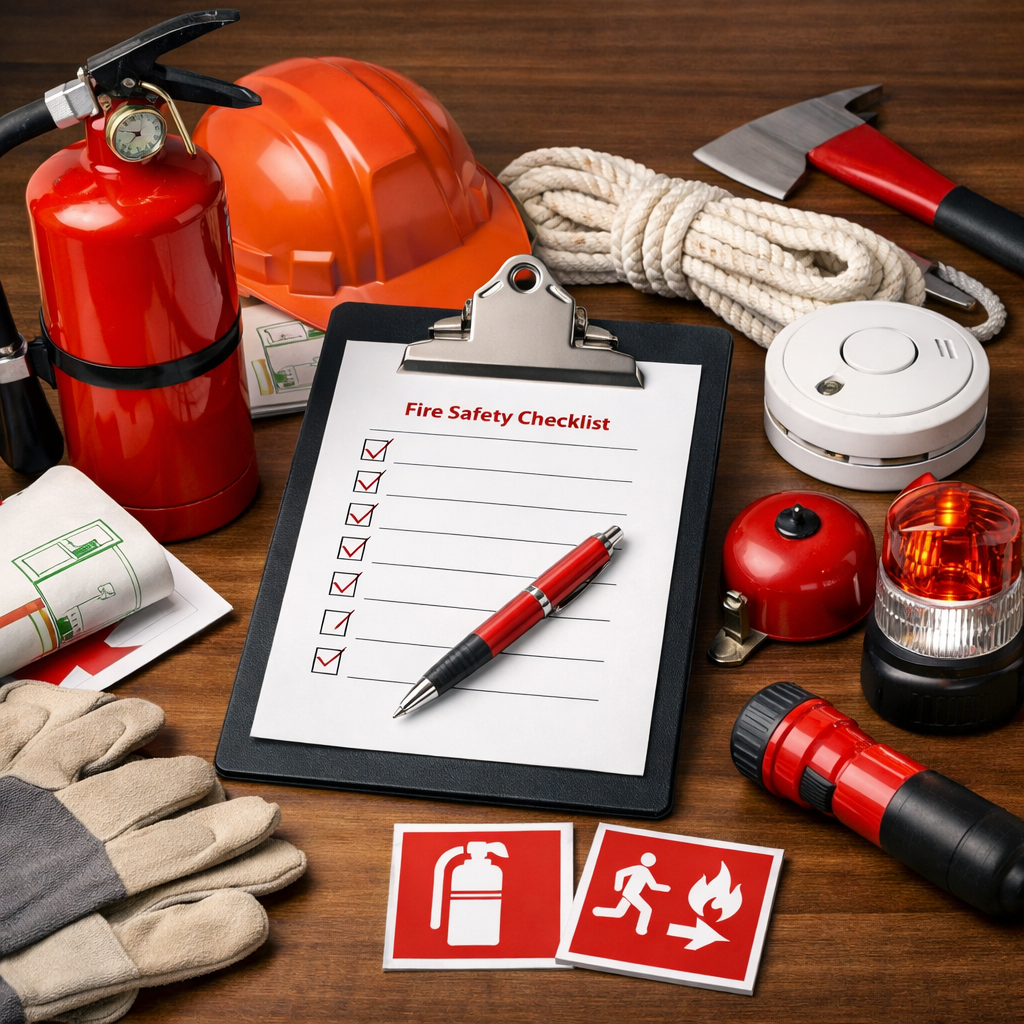
The checklist should be tailored to the site, but the following essentials apply to most offices and industrial settings:
- Fire risk assessment: Identify ignition sources, fuel sources, oxygen-rich conditions, and people at risk.
- Clear emergency exits: Keep escape routes unlocked, marked, illuminated, and free from storage or equipment.
- Alarm systems: Test fire alarms regularly and make sure they are audible in all work areas.
- Fire extinguishers: Provide suitable extinguisher types for the hazards present and inspect them routinely.
- Electrical safety: Check cords, outlets, switchboards, and portable appliances for damage or overloading.
- Housekeeping: Remove combustible waste promptly and keep workspaces tidy.
- Training and drills: Train workers in evacuation procedures, extinguisher awareness, and reporting responsibilities.
- Emergency contacts: Display contact numbers, assembly points, and reporting instructions in visible locations.
For better control, many businesses split the checklist into daily, weekly, monthly, and annual actions. This makes it easier to assign responsibilities and track completion.
If your organization is building wider safety systems, it can help to link this process with your internal workplace risk assessment guide and emergency evacuation plan template.
Prevention Points on a Fire Safety Checklist
Control ignition and fuel sources
Prevention is the most effective part of any fire safety checklist. In offices, common ignition sources include overloaded extension leads, faulty chargers, heaters placed too close to paper, and poorly maintained kitchen appliances.
On industrial sites, the list expands to welding, cutting, grinding, vehicle charging areas, process heat, static discharge, and friction from machinery. Fuel sources may include cardboard, pallets, packaging, chemicals, solvents, oils, dust, and gas cylinders.
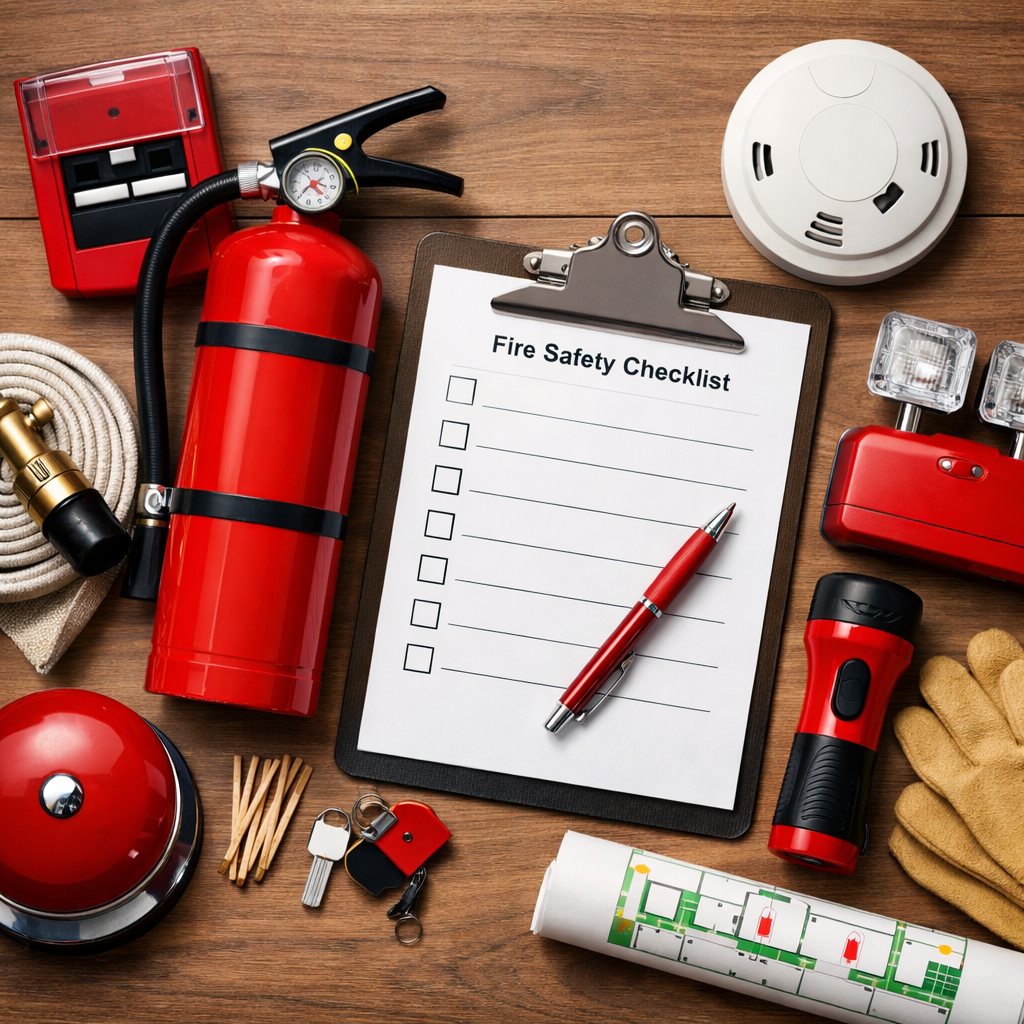
Apply the hierarchy of controls where possible. Eliminate unnecessary ignition sources, substitute safer materials, isolate hazardous processes, install engineering controls such as ventilation or spark detection, and support these with administrative controls like hot work permits and housekeeping schedules. Personal protective equipment is important, but it should not be the first or only control.
Keep storage and housekeeping under control
Poor housekeeping is a frequent factor in workplace fires. Waste should not be allowed to build up near electrical panels, plant rooms, loading docks, or exits.
Store flammable liquids in approved cabinets, separate incompatible substances, and label containers clearly. In industrial areas, dust accumulation on beams, equipment, and ventilation systems should be managed through regular cleaning because fine dust can increase fire and explosion risk.
A useful prevention section on your checklist can include questions like these:
- Are combustible materials kept away from ignition sources?
- Are electrical panels accessible with proper clearance?
- Are flammable liquids stored in suitable containers and cabinets?
- Are hot work activities controlled with a permit system?
- Are waste bins emptied regularly and safely located?
- Are smoking areas controlled and located away from hazardous materials?
Inspection Points for Offices and Industrial Sites
Regular inspection is what turns a fire safety checklist from a document into a working safety system. Visual checks can catch blocked exits, missing signage, and damaged extinguishers before they become serious problems.
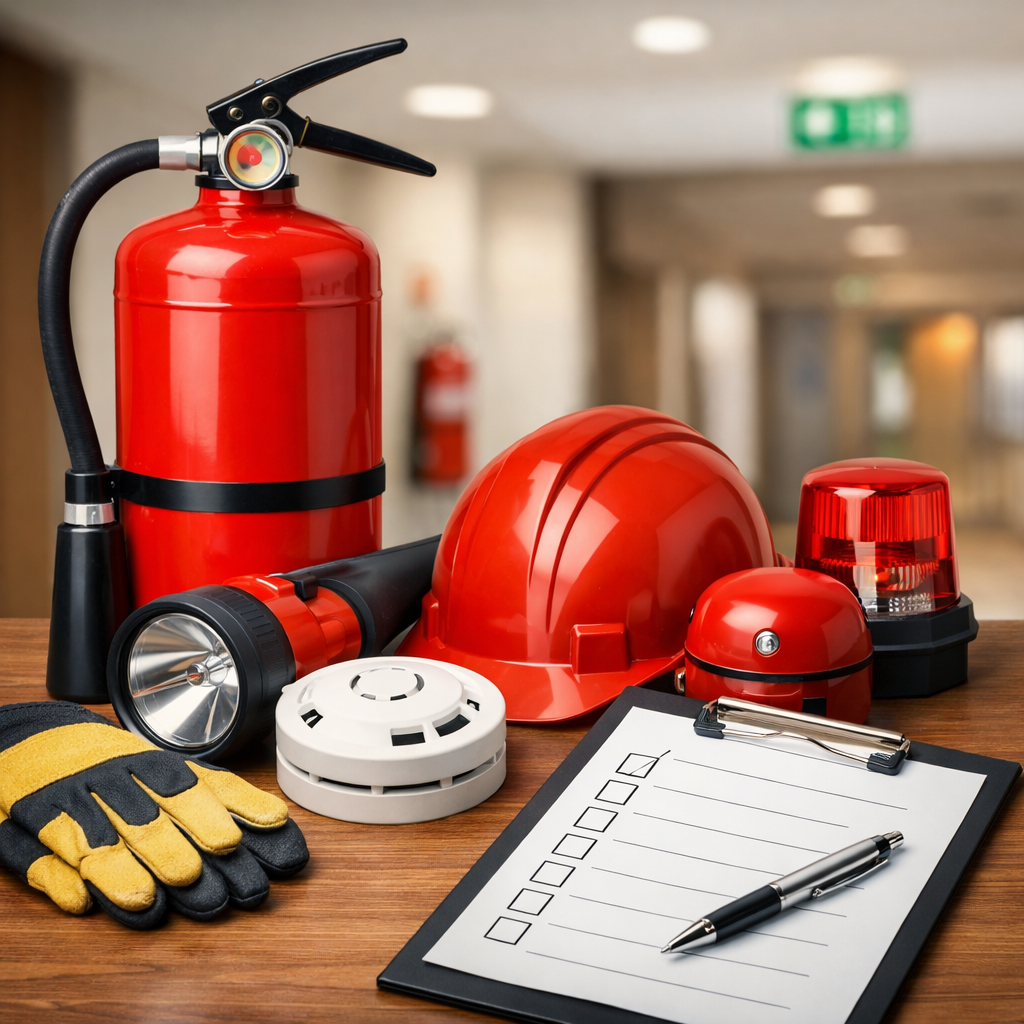
Inspections should be documented, assigned to competent persons, and reviewed by management. In higher-risk environments, specialist inspection and maintenance may also be required for alarms, sprinklers, suppression systems, fire doors, and emergency lighting.
What to inspect and how often
| Item | Typical Check | Suggested Frequency |
|---|---|---|
| Emergency exits and routes | Access clear, signs visible, doors operable | Daily or weekly |
| Fire extinguishers | In place, accessible, pressure normal, no damage | Monthly visual check |
| Fire alarm system | Test audibility and reporting function | Weekly or as required |
| Emergency lighting | Operational during power loss test | Monthly and annual |
| Electrical equipment | No frayed cords, overheating, or overloading | Routine visual checks |
| Fire doors | Close properly, not wedged open, seals intact | Weekly or monthly |
Offices may focus more on alarm audibility, evacuation signage, electrical equipment, and kitchen areas. Industrial sites often need additional checks for sprinkler valves, hydrants, gas shutoffs, dust control systems, hazardous material storage, and machinery isolation points.
It is also wise to confirm that outside contractors understand site fire rules. Maintenance work, battery charging, and temporary hot work are common triggers for incidents when controls are weak.
For detailed technical guidance, businesses can also refer to the National Fire Protection Association alongside local codes and insurer requirements.
Response and Evacuation Steps in a Fire Safety Checklist
Make emergency actions simple and clear
Even the best prevention measures cannot remove all risk. That is why every fire safety checklist should include clear response steps that employees can follow under stress.
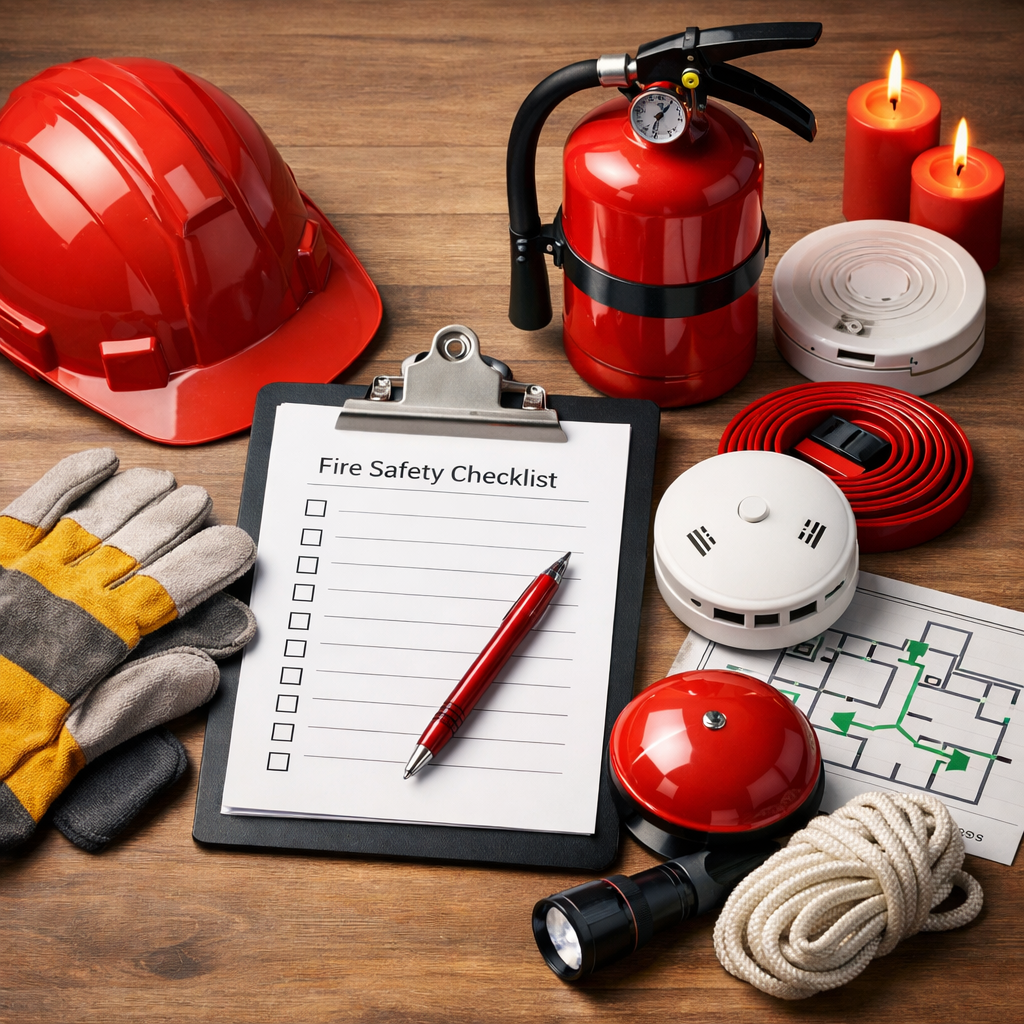
Workers should know how to raise the alarm, who to notify, where to evacuate, and when not to fight a fire. In many workplaces, portable extinguishers are intended only for trained personnel dealing with very small, early-stage fires where there is a safe exit behind them.
Simple response points include:
- Activate the nearest alarm or emergency notification system.
- Call emergency services immediately.
- Evacuate using the nearest safe exit.
- Do not use lifts unless the emergency plan specifically allows it.
- Assist visitors or workers who may need help evacuating.
- Go to the designated assembly point and report to the fire warden or supervisor.
- Do not re-enter until authorized by emergency responders.
Train people, not just paperwork
Training is where many fire programs succeed or fail. Fire wardens, supervisors, and general employees should understand their role during an emergency. Industrial sites may also require shutdown procedures for critical plant, isolation of fuel lines, or accounting for contractors in remote work zones.
Run drills often enough to keep procedures familiar. Review drill outcomes, note delays or confusion, and update the checklist if routes, staffing, or processes change. A checklist that sits unchanged while the workplace evolves quickly becomes unreliable.
Practical examples make training stronger. For instance, an office drill may reveal that a meeting room exit is regularly blocked by extra chairs. On an industrial site, an exercise might show that contractors near a loading bay cannot hear the evacuation alarm over equipment noise. These findings should lead to real corrective action.
How to Maintain a Fire Safety Checklist That Works
A useful fire safety checklist is specific, current, and easy to use. It should name responsible persons, set inspection frequencies, and include a clear method for recording issues and closing corrective actions.
Review the checklist after incidents, near misses, layout changes, new equipment installations, or updates to regulations. If your site stores dangerous goods, uses high-temperature processes, or operates around the clock, the checklist should reflect those added risks.
Management commitment matters just as much as documentation. When leaders support inspections, maintenance, training, and corrective actions, fire safety becomes part of normal operations rather than a once-a-year compliance task.
In the end, the best fire safety checklist is one that people actually use. For offices and industrial sites alike, a checklist built around prevention, inspection, and response can reduce disruption, protect lives, and strengthen legal compliance. Make your fire safety checklist a living part of workplace safety, and review it often enough to keep pace with real conditions on site.
No comments yet