
Ladder Safety Rules to Prevent Serious Injuries at Work and Home

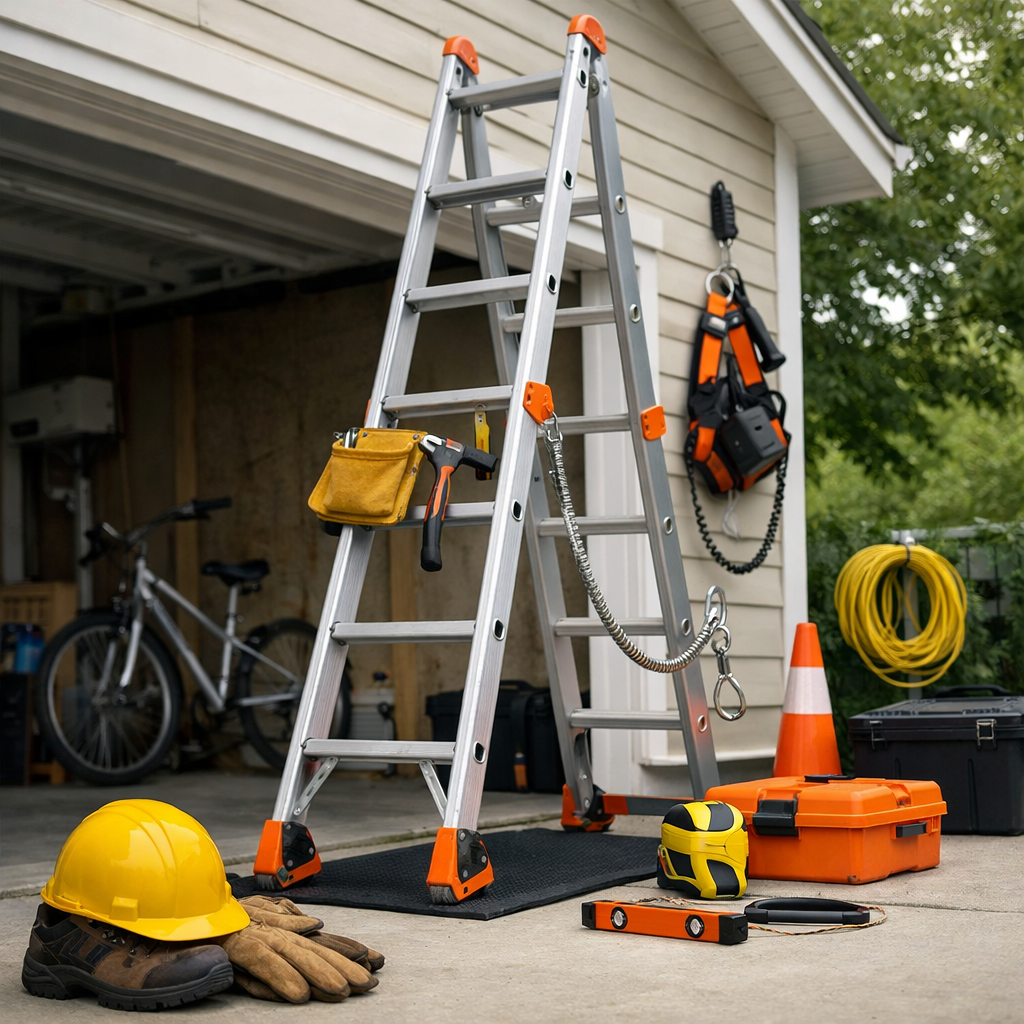
Ladder safety rules are essential because a simple mistake on a ladder can lead to broken bones, head injuries, or even a fatal fall.
Whether you are changing lights at home, accessing a roof, or doing maintenance on a job site, the same basic risks apply: poor setup, wrong ladder choice, overreaching, and rushing the task.
Many ladder injuries happen during routine work that feels familiar.
That is why prevention starts with clear habits, not just experience. Good planning, proper equipment, and regular inspection all help reduce the chance of a serious incident.
Employers should also make sure workers are trained and supervised, especially when tasks involve height, tools, weather exposure, or uneven ground.

Why ladder safety rules matter so much
Ladders are common, but they are not harmless. A short fall can still cause major harm, especially if the person lands on concrete, strikes shelving, or falls while carrying equipment.
According to guidance from OSHA and CCOHS, ladder safety depends on selecting the right equipment, using it properly, and controlling the surrounding hazards.
Common misuse that leads to injuries includes standing on the top cap of a stepladder, using a damaged ladder, placing ladders on slippery surfaces, and leaning too far to one side.
Another common problem is using a ladder when a safer option, such as a mobile platform or scaffold, would be more appropriate.
This is where the Hierarchy of Controls is useful. If the task can be done from the ground with an extension tool, that may eliminate the need to climb at all.

If work at height cannot be avoided, choose the safest equipment for the job rather than defaulting to a ladder out of convenience.
Choosing the right ladder and checking it before use
Match the ladder to the job
One of the most important ladder safety rules is to use the correct ladder type and size.
A stepladder works for many indoor tasks, while an extension ladder is often needed for roof access or exterior work. The ladder must also have the right duty rating for the worker, tools, and materials being carried.
If the ladder is too short, people are more likely to stand too high or stretch unsafely.
If it is too long for the space, setup becomes awkward and unstable.
Inspect before every use
Never assume a ladder is safe because it looked fine yesterday.
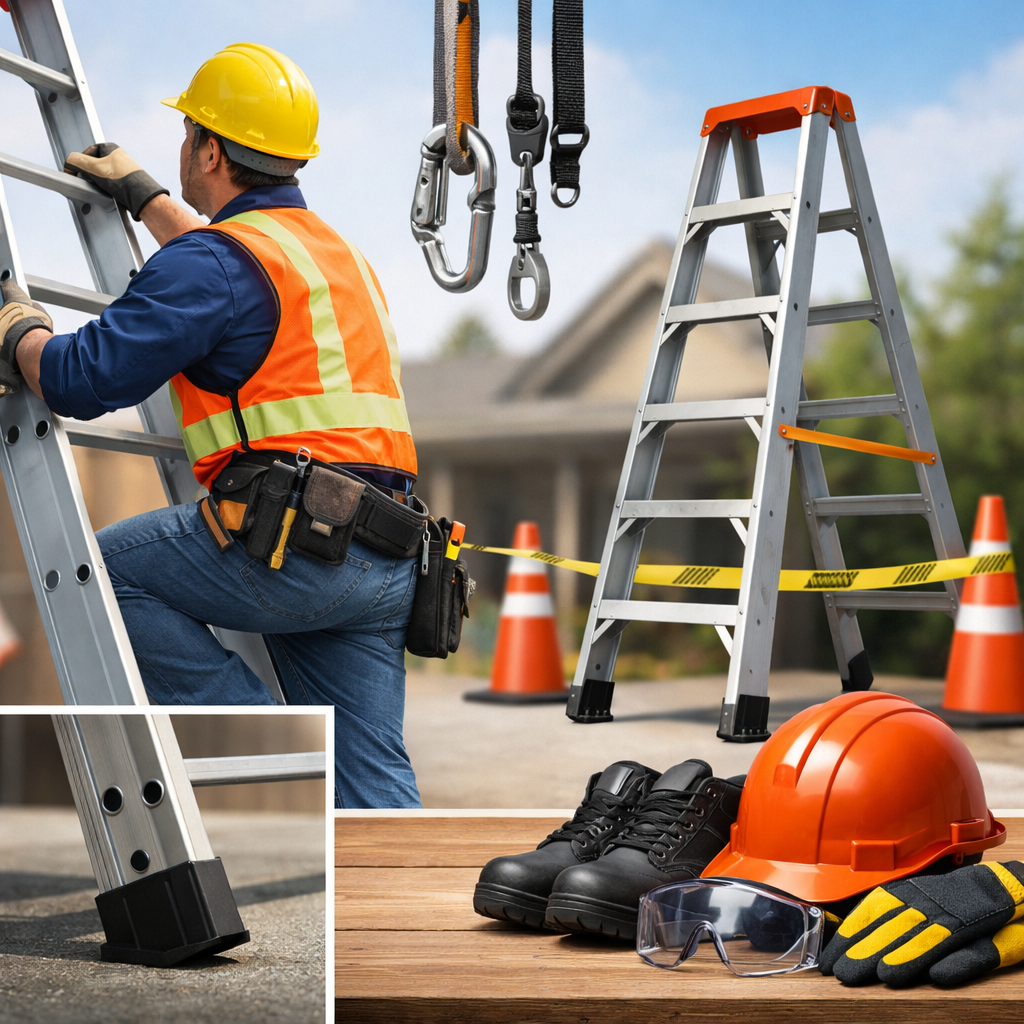
Before climbing, check for cracked rails, bent rungs, missing feet, damaged locks, loose rivets, corrosion, and contamination from oil, mud, or paint.
A ladder that wobbles, sticks, or does not lock properly should be removed from service immediately.
Workplaces should have a simple inspection process and a clear way to tag unsafe equipment. Home users should apply the same thinking.
| Inspection Point | What to Check | Action if Problem Found |
|---|---|---|
| Side rails | Cracks, bends, splits, corrosion | Do not use the ladder |
| Rungs or steps | Loose, bent, slippery, missing parts | Tag out and replace or repair if approved |
| Feet | Worn, missing, uneven contact | Remove from service |
| Locks and spreaders | Do they fully engage and hold? | Do not climb until fixed |
If your workplace has a safety program, it is smart to link ladder checks with other routine inspections. You can also review related guidance in our workplace fall protection basics and jobsite hazard assessment checklist resources.
Safe setup is one of the most important ladder safety rules
Place the ladder on a stable surface
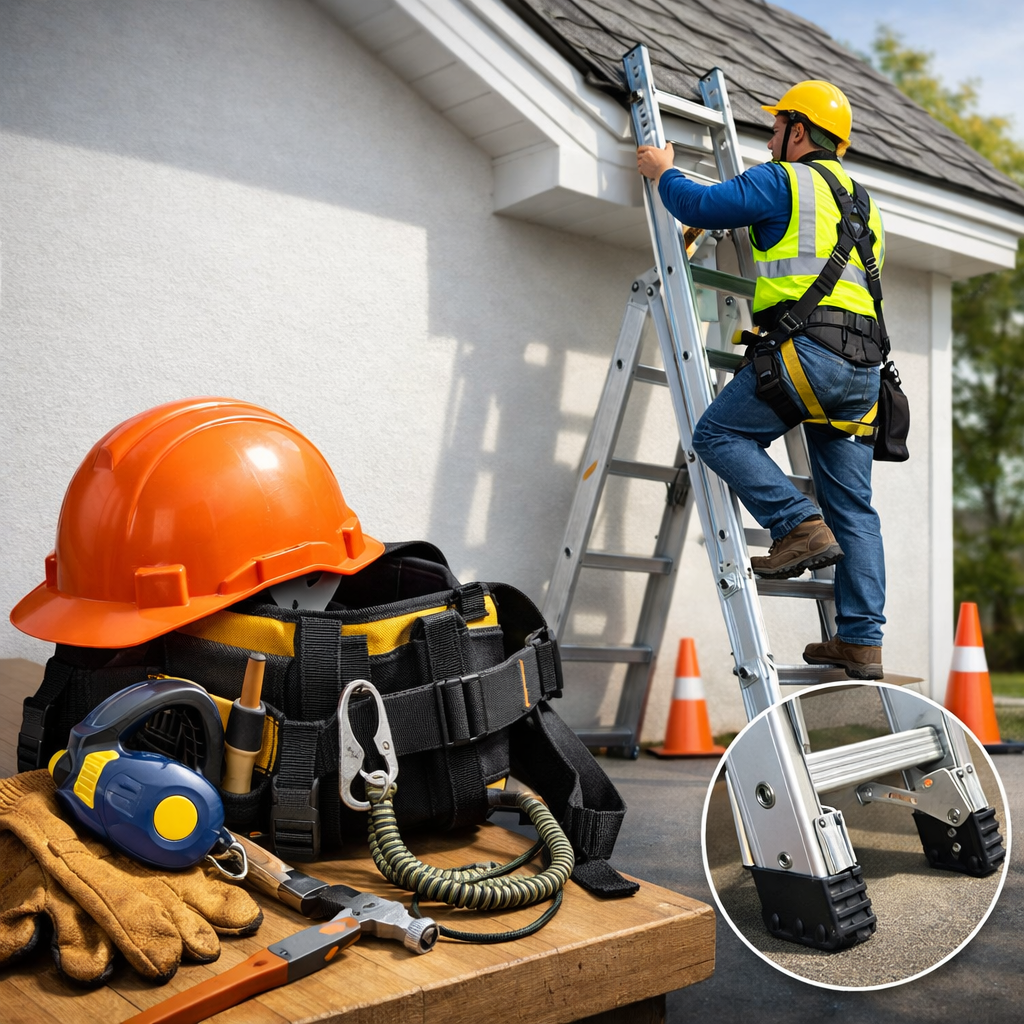
Setup errors are a major cause of ladder falls. A ladder should be placed on firm, level ground and fully opened if it is a stepladder.
Never set a ladder on boxes, pallets, bricks, or other objects to gain extra height. That shortcut creates instability and often leads to sudden tipping.
For extension ladders, a common rule is the 4-to-1 angle: for every four feet of ladder height, place the base one foot away from the wall.
This helps prevent the ladder from sliding out at the bottom or tipping backward.
Watch for environmental hazards
Good ladder safety rules also include checking the area around the ladder.
Look for doorways, vehicle traffic, overhead power lines, wet surfaces, strong winds, poor lighting, and clutter near the base. If a door could swing into the ladder, lock it, block it, or post a warning.
Outdoor users should take weather seriously. Rain, ice, and wind can turn a normally safe task into a high-risk job.
Metal ladders should never be used near energized electrical sources. In those cases, a non-conductive fiberglass ladder is often the safer choice.
- Set the ladder on level, stable ground.
- Fully open stepladders and lock the spreaders.
- Use the correct angle for extension ladders.
- Keep the base area clear of debris and traffic.
- Maintain safe distance from power lines.
- Secure the ladder when required by site conditions.
Climbing and working safely on a ladder
Maintain three points of contact
When climbing, keep two hands and one foot, or two feet and one hand, in contact with the ladder whenever possible.
This simple habit greatly improves balance and reduces the chance of slipping.
Carry tools in a belt or raise them with a hand line instead of climbing with full hands. If you are holding a drill, a box, or a bucket while climbing, you are already increasing your risk.
Do not overreach or stand too high
Some of the most ignored ladder safety rules involve body position.
Your belt buckle should stay between the side rails. If you need to reach farther, climb down and move the ladder. Overreaching is a leading cause of sideways falls.
Workers also get injured by standing on the top step of a stepladder or the top few rungs of an extension ladder where stability is reduced.
Those areas are not meant for standing, even for a quick job. A few extra seconds spent repositioning the ladder is far better than a trip to the hospital.
Face the ladder when climbing up or down, move one step at a time, and never jump off to save time.
Training, planning, and control measures that prevent injuries
Strong ladder safety rules are most effective when they are part of a wider safety system.
In workplaces, that means assessing the task before it starts, choosing the safest access method, training workers, and monitoring compliance. It also means reporting damaged equipment and near misses so the same issue does not cause the next injury.
The best control measure may be avoiding the ladder entirely. Under the Hierarchy of Controls, employers should first ask whether the job can be done from the ground, with longer tools, or with a different work platform.
If a ladder is still the right choice, then administrative controls like training, procedures, and supervision become essential.
Practical training should cover inspection, setup angle, electrical hazards, weight limits, and common misuse. It should also explain when a ladder is the wrong tool, such as for long-duration tasks, heavy materials handling, or work that requires significant side force.
For current best practices, review employer guidance from NIOSH along with OSHA and CCOHS resources.
At home, the same approach works. Plan the job, clear the area, ask for help if needed, and stop if conditions change. Serious falls often happen because someone tried to finish quickly without resetting the ladder or waiting for better conditions.
In the end, ladder safety rules are about respecting a common tool that can become dangerous when used carelessly. Choose the right ladder, inspect it before use, set it up correctly, and climb with control. These basic steps prevent many of the injuries seen on jobsites and around the home, and they make every task at height safer from start to finish.
No comments yet