
Excavation Safety Controls for Trenching Work: Practical Measures That Prevent Collapse and Injury

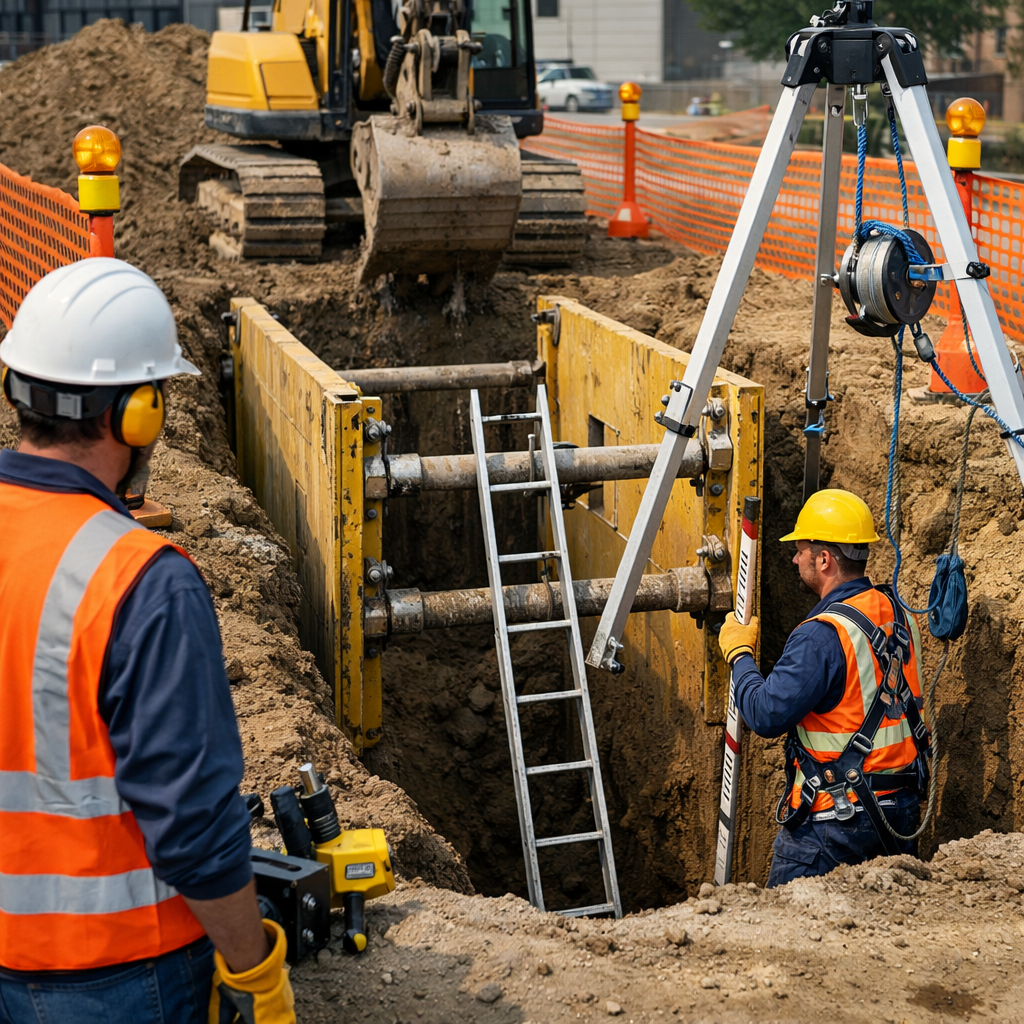
Excavation safety controls are essential for trenching work because a trench can become deadly in seconds if the ground shifts, equipment moves too close to the edge, or workers enter without proper protection.
Whether the job involves utility installation, drainage, foundation work, or repairs, trenching creates a high-risk environment that demands planning, supervision, and site-specific controls.
According to guidance from OSHA and CCOHS, cave-ins, falls, hazardous atmospheres, and contact with underground services are among the most serious excavation hazards. Effective controls do not rely on one action alone. They combine engineering solutions, administrative procedures, worker training, and disciplined inspections before and during the workday.
- Why excavation safety controls matter in trenching work
- Excavation safety controls for cave-in prevention and protective systems
- Safe access, egress, and work zone management
- Inspections, competent supervision, and daily control checks
- Building a trenching culture that supports excavation safety controls
Why excavation safety controls matter in trenching work
Trenches may look stable at first glance, but soil behavior can be unpredictable. Vibration from nearby traffic, recent rain, spoil piles at the edge, or previously disturbed ground can all weaken trench walls without much warning.
A cave-in can bury a worker under thousands of pounds of soil, causing crushing injuries, suffocation, or fatal trauma. Even a relatively shallow trench can become a life-threatening space if the walls fail.
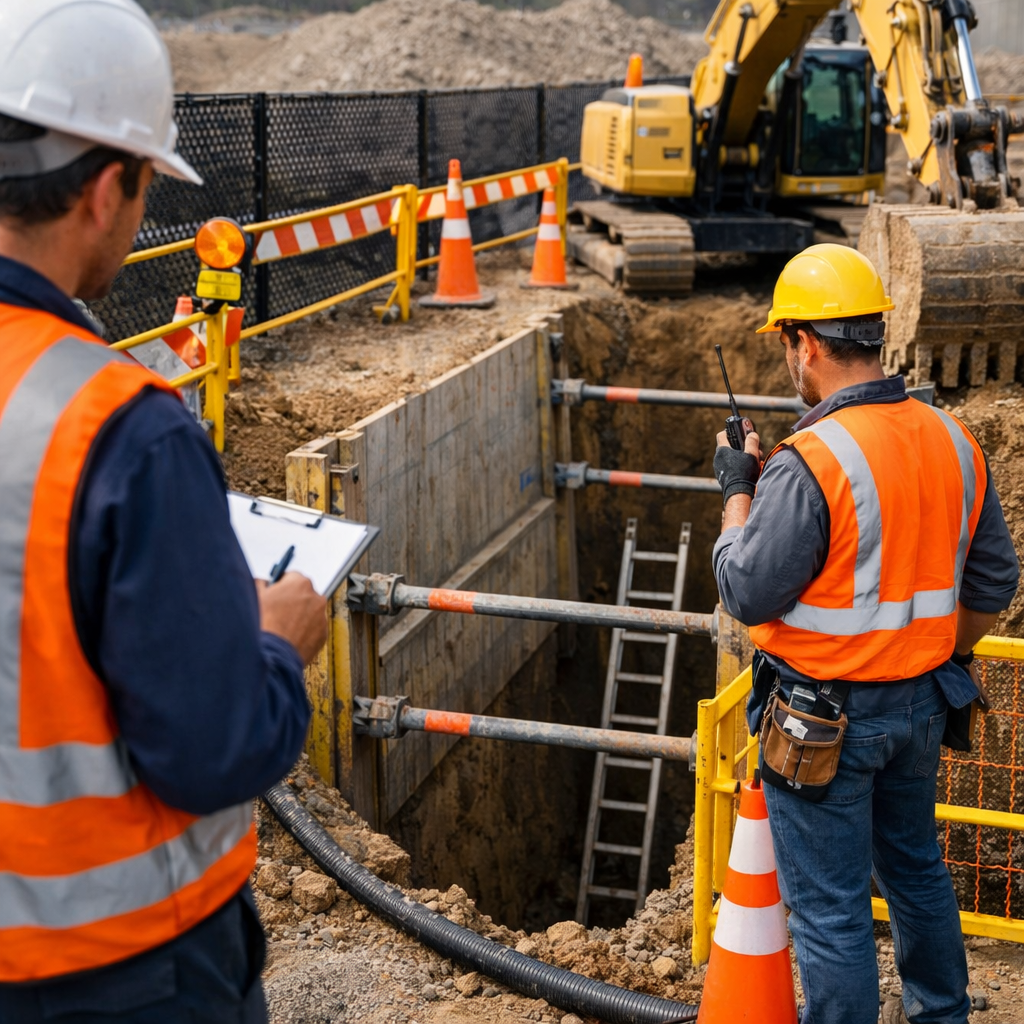
That is why excavation safety controls must begin before digging starts. A pre-job review should identify soil type, trench depth, nearby structures, underground utilities, groundwater concerns, vehicle routes, and emergency response arrangements. Employers should also appoint a competent person, as required by OSHA, to assess hazards and authorize protective measures.
Using the Hierarchy of Controls helps keep trench safety practical and systematic. Elimination may include redesigning the work to reduce trench depth or using trenchless methods where feasible. Engineering controls include shoring, shielding, and sloping. Administrative controls include permits, inspections, exclusion zones, and clear communication. Personal protective equipment supports these measures, but it should never be the primary defense against collapse.
Common trenching hazards to control
- Cave-ins caused by unstable soil, vibration, surcharge loads, or water infiltration
- Falls into the trench from unprotected edges or poor housekeeping
- Struck-by incidents involving excavators, trucks, tools, or falling materials
- Underground utility contact with gas, electric, water, or communications lines
- Hazardous atmospheres in deeper or confined excavations
- Water accumulation that weakens trench walls and creates drowning or slip hazards
Excavation safety controls for cave-in prevention and protective systems
The most important protection in trenching work is preventing wall collapse. Protective systems must match the trench depth, soil conditions, and work being performed. Choosing the right system should never be guesswork.
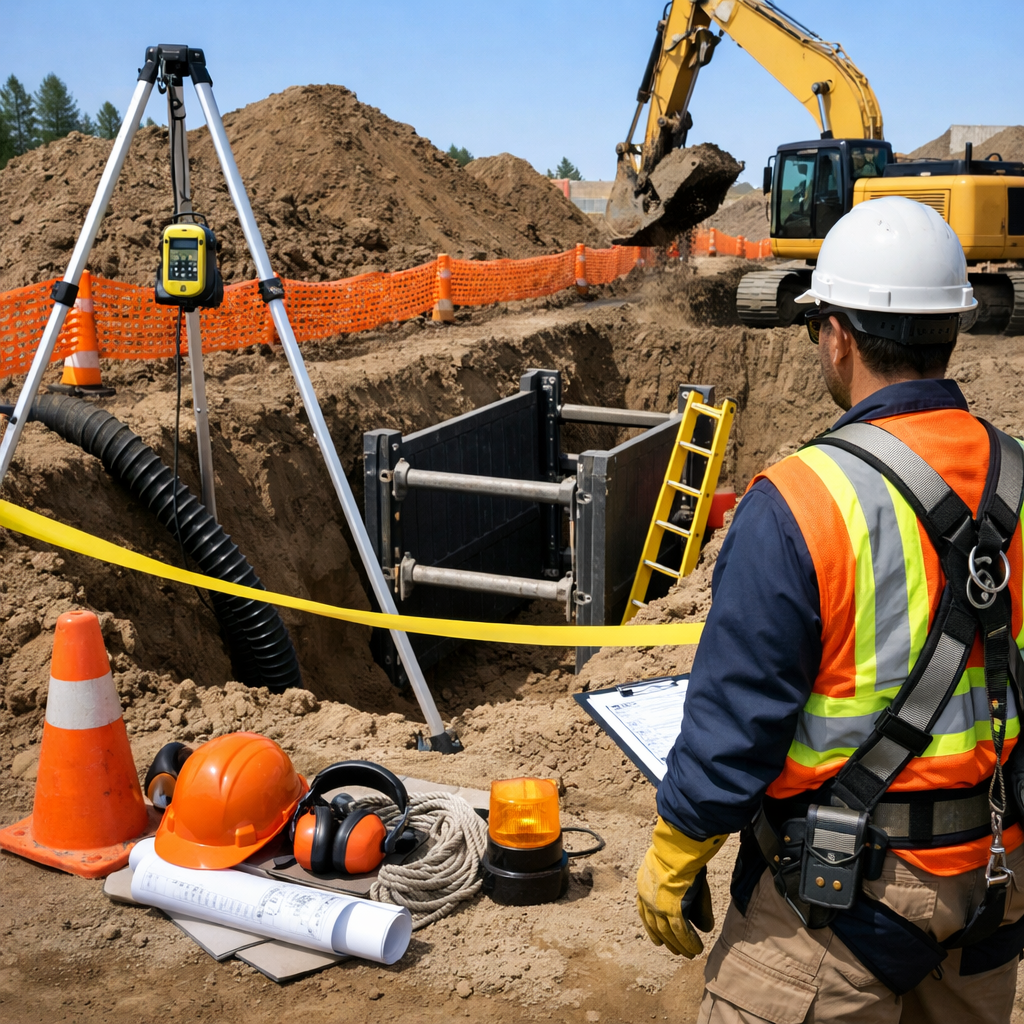
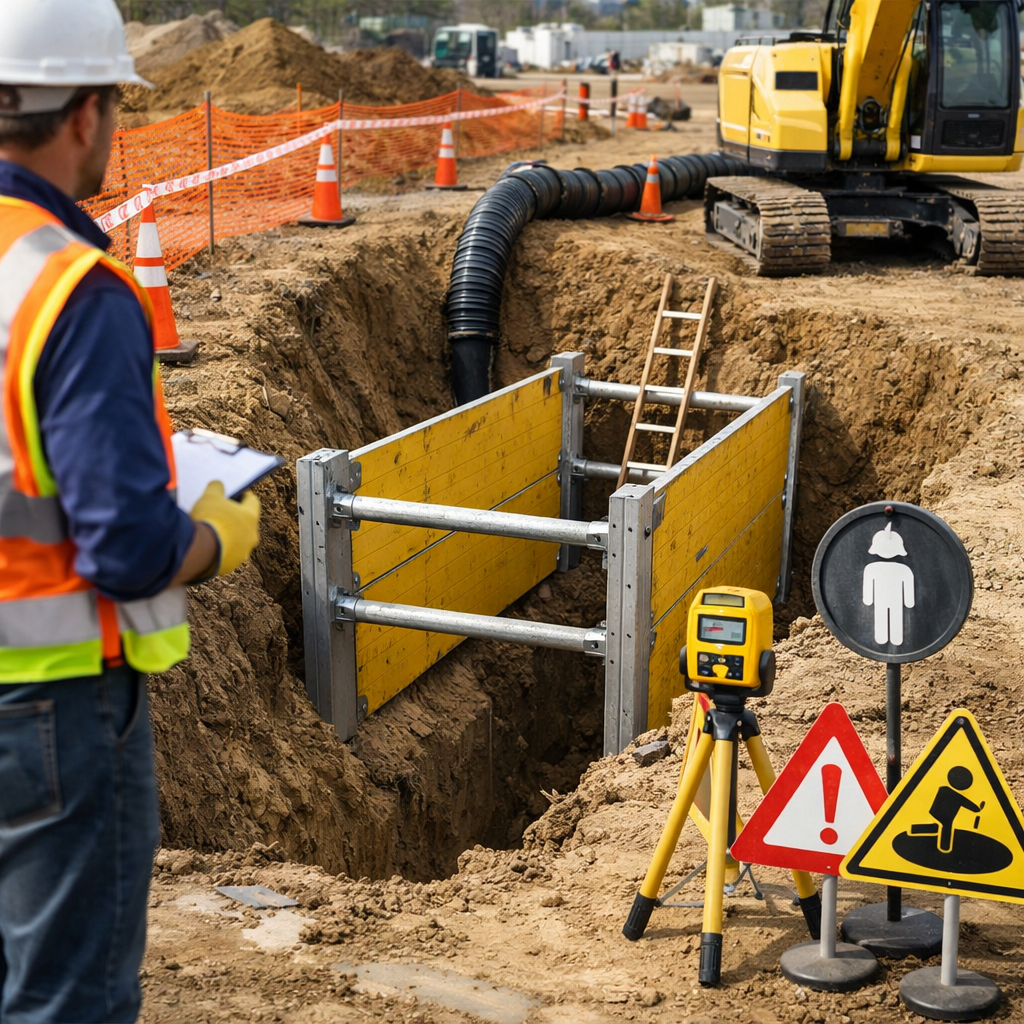
Three standard protective systems are commonly used: sloping, shoring, and shielding. Sloping cuts the trench walls back at an angle appropriate for the soil type. Shoring uses hydraulic, timber, or mechanical supports to hold the walls in place. Shielding, often with trench boxes, protects workers inside the trench if a collapse occurs outside the shielded area.
These excavation safety controls must be selected and installed based on competent assessment. Soil classification matters because stable rock, Type A, Type B, and Type C soils behave differently. Wet, granular, previously disturbed, or layered soils often require more conservative protection.
Comparing common protective systems
| Protective system | Best use | Main advantage | Key limitation |
|---|---|---|---|
| Sloping | Open areas with enough space | Simple and effective when soil is suitable | Needs more room and may not fit tight sites |
| Shoring | Urban or restricted work zones | Supports trench walls directly | Requires proper design, installation, and monitoring |
| Shielding | Utility and linear trench work | Protects workers inside a trench box | Does not prevent collapse outside the shield |
In practice, a utility contractor installing pipe in a narrow roadway may use a trench box because sloping would block traffic lanes and affect nearby services. On a wider rural site, sloping may be more practical if the soil is stable and the excavation footprint allows it.
Other cave-in controls are just as important. Keep spoil piles, materials, and heavy equipment back from the trench edge to reduce surcharge pressure. Control water with pumps or drainage where needed. Stop work after rain, freezing and thawing, or any event that could change soil stability until the trench is reassessed.
Safe access, egress, and work zone management
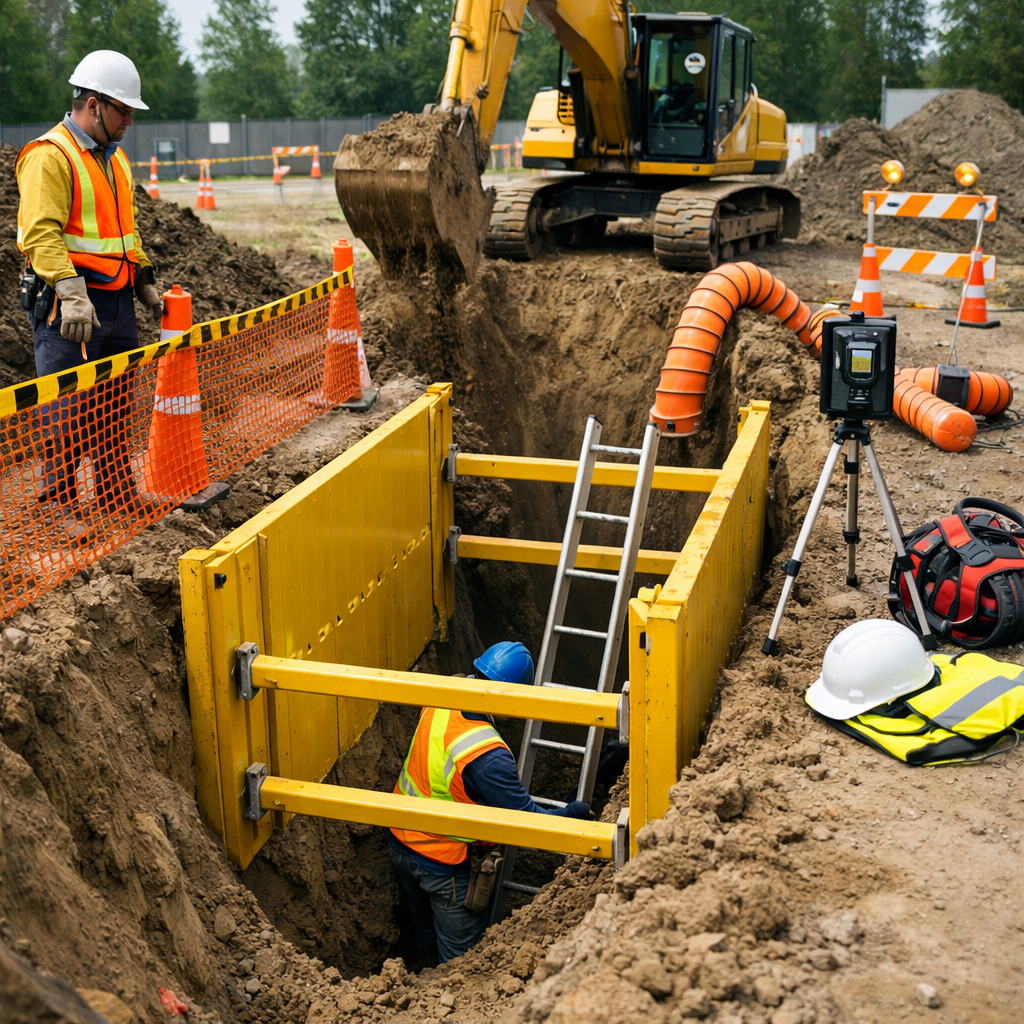
Workers must be able to enter and leave the trench quickly and safely. A common requirement is to provide ladders, ramps, or stairs so that no worker has to travel an excessive distance to reach a safe exit. Ladders should extend above the landing area and be secured where necessary.
Access points should be kept clear at all times. If hoses, pipes, or tools block the route, an emergency escape becomes much harder during a collapse, gas release, or flooding event.
Strong excavation safety controls also include separating people from mobile plant and trench edges. Use barriers, cones, guardrails, or fencing around the opening where appropriate. Spotters can help manage reversing vehicles and blind spots, especially on busy sites.
Practical access and edge protection measures
- Install ladders within safe reach of workers in the trench
- Keep walkways and exits free of mud, debris, and stored materials
- Use barricades or edge protection where pedestrians may approach the trench
- Maintain safe setback distances for spoil piles and heavy equipment
- Control traffic with signage, spotters, and exclusion zones
Good work zone management also means coordinating trenching with utility locating, public protection, and nearby operations. Before excavation begins, verify underground services through locating and marking processes. If your team needs broader site planning guidance, it helps to align trench controls with your construction safety plan and daily field procedures such as excavation hazard briefings.
Inspections, competent supervision, and daily control checks
Inspections are one of the most effective excavation safety controls because trench conditions can change rapidly. A trench that appeared safe in the morning may be unstable by midday after equipment vibration, rainfall, or soil drying.
A competent person should inspect the excavation before each shift, after any condition change, and as often as needed during active work. The inspection should cover soil conditions, protective systems, access points, adjacent loads, water accumulation, atmospheric hazards, and signs of movement such as cracking, sloughing, bulging, or settlement near the edge.
When hazards are found, workers should be removed until corrections are made. This is where many incidents can be prevented. If the trench box has shifted, if water is pooling, or if spoil piles have been placed too close, the fix must happen before re-entry.
What a daily trench inspection should verify
- Protective system is installed correctly and appropriate for the current depth and soil
- Ladders and access routes are in place, stable, and unobstructed
- Spoil piles and equipment remain far enough from the trench edge
- No new cracks, bulges, or loose material are visible on trench walls
- Water, seepage, or changing weather has not undermined stability
- Underground utility controls and permits remain current
- Workers understand emergency procedures and stay inside protected areas
Documentation helps as well. Inspection records, corrective actions, and briefing notes provide consistency across shifts and improve accountability. They also support compliance with regulatory expectations and contractor due diligence.
For deeper excavations or where hazardous atmospheres may be possible, air testing and ventilation may be necessary. This is especially relevant when trenches are near landfills, sewers, tanks, or industrial processes. Guidance from the NIOSH and local regulators can help determine suitable atmospheric precautions.
Building a trenching culture that supports excavation safety controls
The best trenching programs do more than check boxes. They create a culture where crews expect hazards to be identified early, controls to be installed correctly, and work to stop when conditions change.
That culture starts with planning, training, and supervision. Workers should know how to recognize warning signs of collapse, understand why they must never enter an unprotected trench, and feel confident raising concerns. Supervisors should reinforce that speed never outweighs protection.
In real workplace terms, effective trench safety means the trench is designed, protected, inspected, and managed every day it is open. It means access is provided, spoil is kept back, utilities are confirmed, and no one enters unless the protective system is in place and the competent person is satisfied.
Ultimately, excavation safety controls are what turn trenching from a high-risk task into a controlled operation. When employers apply protective systems properly, maintain safe access, perform thorough inspections, and respond quickly to changing conditions, they greatly reduce the chance of cave-ins and serious injuries. For any trenching job, strong excavation safety controls are not optional—they are the foundation of safe work.
No comments yet