
racking inspection tips: Safe Ways to Prevent Warehouse Collapse
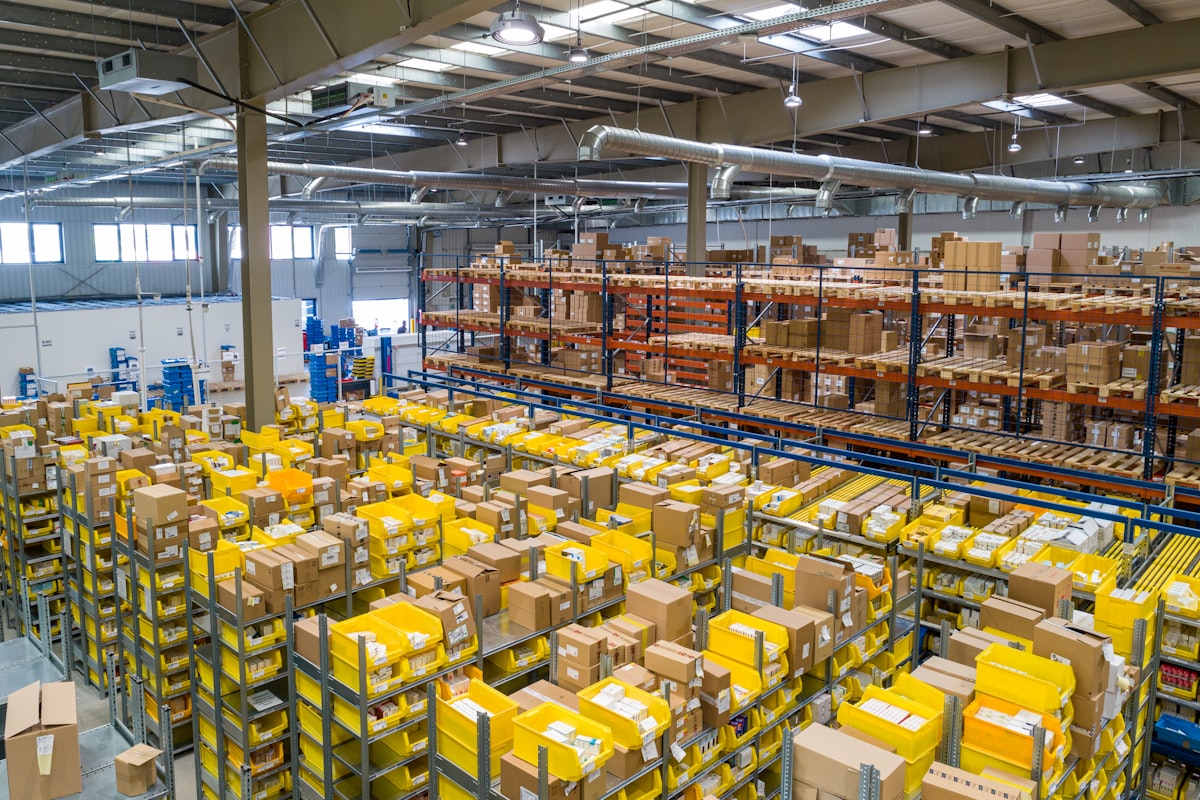
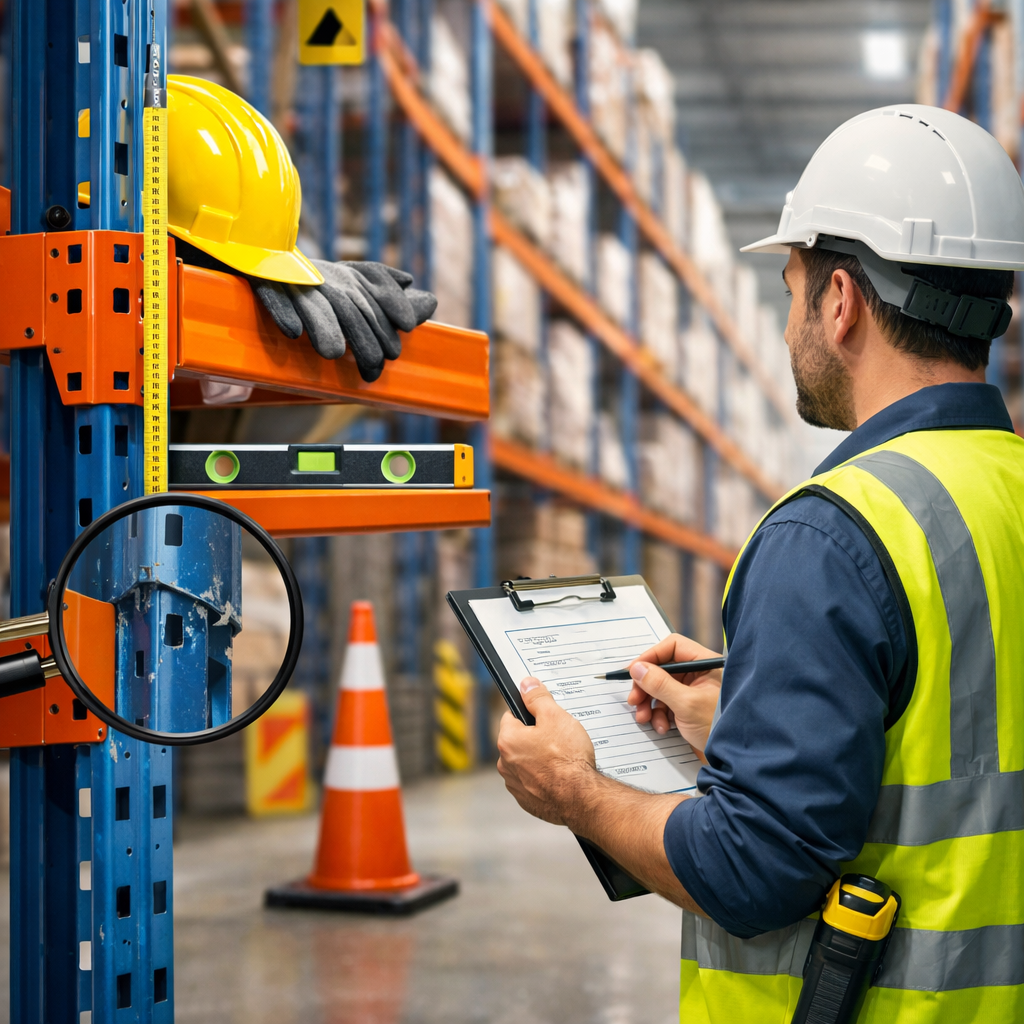
Racking inspection tips are one of the most effective ways to prevent warehouse collapse, protect workers, and avoid costly stock losses.
In busy facilities, pallet racking is under constant pressure from forklifts, heavy loads, vibration, and daily wear. When damage goes unnoticed or load limits are ignored, a single weak point can trigger a dangerous chain reaction across an entire aisle.
A safe warehouse relies on more than strong steel. It depends on regular checks, clear responsibilities, proper training, and fast action when problems are found.
This guide covers practical racking inspection tips focused on impact damage, load capacity, and inspection responsibilities so your team can spot risks early and keep storage systems stable.
Why racking inspection tips matter in every warehouse
Pallet racking failures rarely happen without warning. In most cases, there are visible signs such as bent uprights, dislodged beams, missing safety clips, overhanging pallets, or cracked floor fixings.
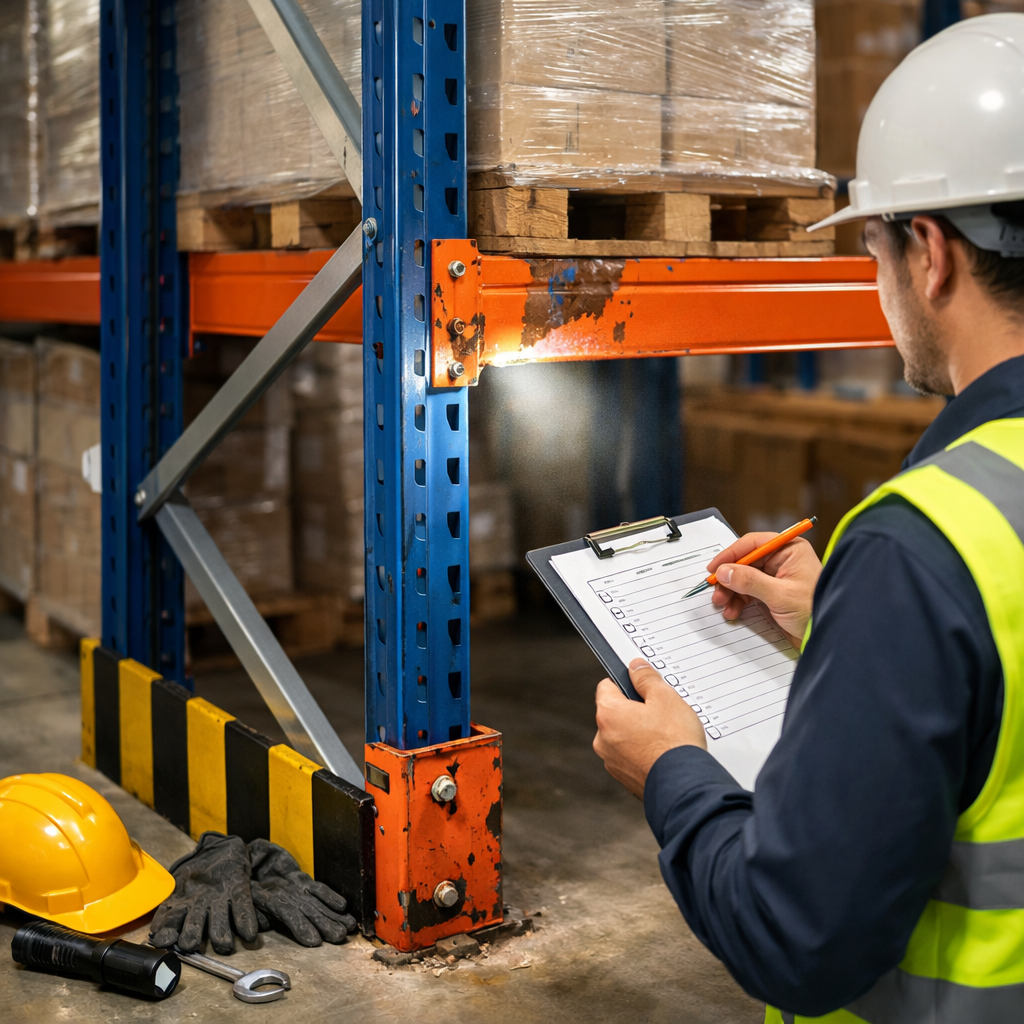
These issues may seem small in isolation, but warehouse collapse often begins with a minor defect that worsens under load. A forklift strike at the base of an upright, for example, can reduce structural strength enough to put an entire bay at risk.
According to workplace safety guidance from OSHA and practical storage safety resources from the CCOHS, employers should inspect storage systems regularly, control hazards, and ensure workers know how to report defects.
Good racking inspection tips also support the Hierarchy of Controls. The safest approach is to eliminate hazards where possible, such as removing damaged racks from service. Engineering controls may include rack guards and column protectors. Administrative controls include inspections, traffic rules, and load signage. PPE has a role, but it should never be the main control for rack collapse risks.
Racking inspection tips for spotting impact damage early
Impact damage is one of the most common causes of rack instability. Forklifts, pallet jacks, and even poorly handled pallets can strike frames and beams during loading or unloading.
Because warehouses move fast, these incidents are not always reported. That is why visual checks must focus heavily on collision points, especially at ground level.
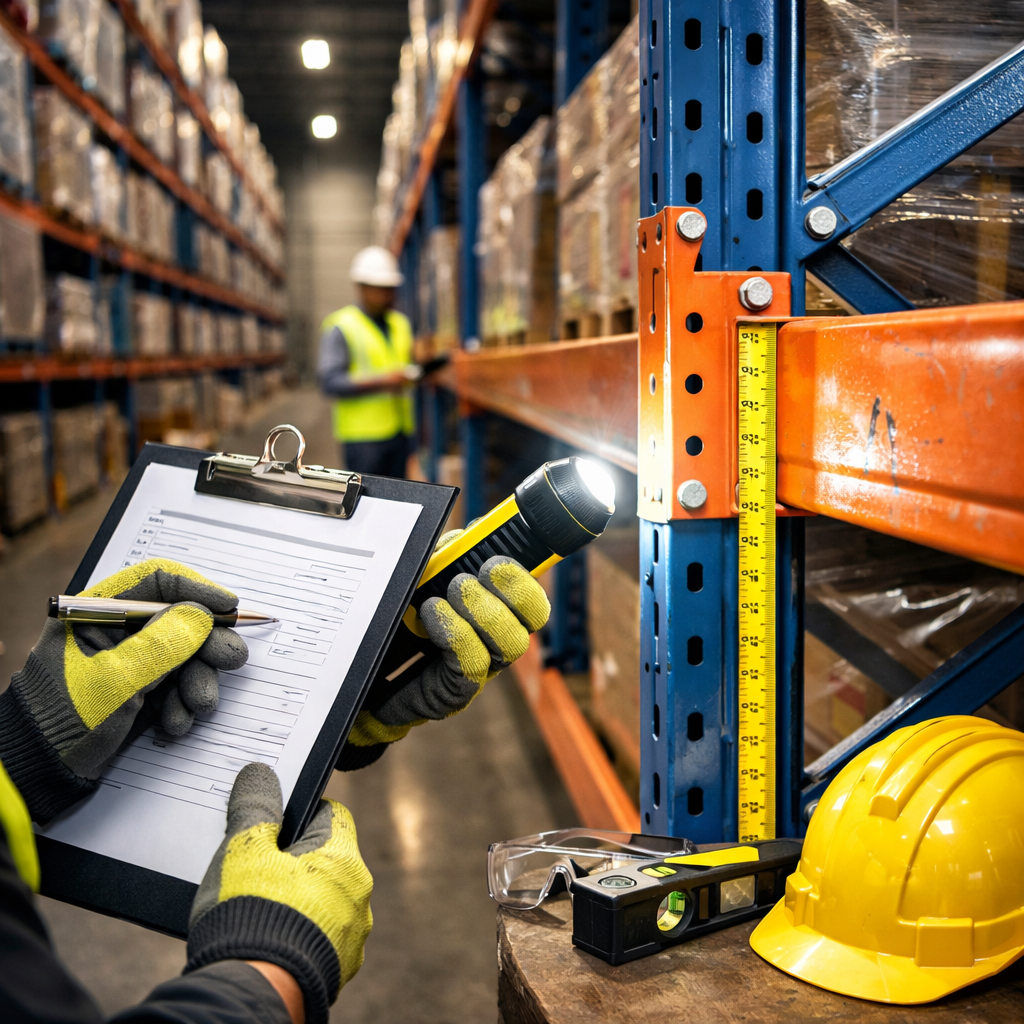
What impact damage looks like
Train supervisors and operators to look for signs such as twisted uprights, dents, scraped paint, bent braces, displaced beams, and damaged base plates.
Even chipped paint can matter. Fresh scrapes may indicate recent forklift contact, which should trigger a closer inspection before the rack is used again.
- Check uprights for bends, buckling, or leaning
- Inspect base plates and anchors for cracks, looseness, or pull-out
- Confirm beam connectors are fully seated and not distorted
- Look for missing locking pins or safety clips
- Review column protectors and end-of-aisle barriers for damage
- Inspect the floor around rack feet for cracking or movement
A practical example is a receiving area where forklifts turn tightly into lower rack bays. Repeated low-level impacts may not drop the rack immediately, but over weeks or months the steel can deform enough to compromise load paths.
When that happens, the correct response is not to “watch it for now.” Isolate the bay, unload it safely, and have a competent person assess whether repair or replacement is required.
If your site has high traffic around storage lanes, adding rack protection is a useful engineering control. You can also reduce exposure by improving aisle width, travel routes, and driver training. For broader warehouse safety planning, many businesses also maintain internal resources such as warehouse safety checklists and forklift traffic management plans.

Load limits and weight distribution are critical racking inspection tips
Another major cause of collapse is overloading. Racking systems are designed for specific pallet weights, beam capacities, bay loads, and frame loads.
If these limits are exceeded, or if loads are unevenly distributed, the structure may fail even when no visible damage is present.
Verify load notices and pallet condition
Every rack should have a clear load notice showing safe working limits. If signs are missing, unreadable, or out of date after a layout change, the risk increases immediately.
Inspectors should compare what is actually stored on the rack with what the system was designed to hold. Heavy products placed in the wrong bay, mixed pallet weights, or oversized pallets hanging over the beam level can all create instability.
| Inspection point | What to check | Why it matters |
|---|---|---|
| Load signage | Visible, accurate, current safe load limits | Prevents overloading and misuse |
| Pallet condition | Broken boards, split runners, unstable loads | Reduces risk of dropped stock and uneven loading |
| Beam levels | No sagging, secure connectors, proper locking pins | Maintains structural support |
| Load placement | Even distribution, no dangerous overhang | Protects frames and avoids tipping stresses |
One of the simplest racking inspection tips is to check whether staff are storing pallets as intended. A rack may be rated for a certain total load, but that rating assumes the load is evenly placed and the pallet is in good condition.
Damaged pallets can shift weight suddenly onto one beam connector or one upright. In a high-bay environment, that can lead to dislodged beams, dropped goods, and progressive collapse.
Where heavy or unusual stock is introduced, review the original rack design with a qualified supplier or engineer. The guidance available through the UK HSE warehousing resources reinforces the need to match storage systems to actual operating conditions.
Inspection responsibilities should be clear and documented
Strong safety systems depend on people knowing exactly what they are responsible for. One common failure in warehouse operations is assuming that “someone else” is checking the racks.
To avoid this gap, inspection duties should be assigned at several levels, from operators to supervisors to competent external inspectors.
Who should inspect what
Forklift operators and pickers should carry out informal visual checks during normal work. They are the first to notice impact damage, loose components, or unsafe pallets.
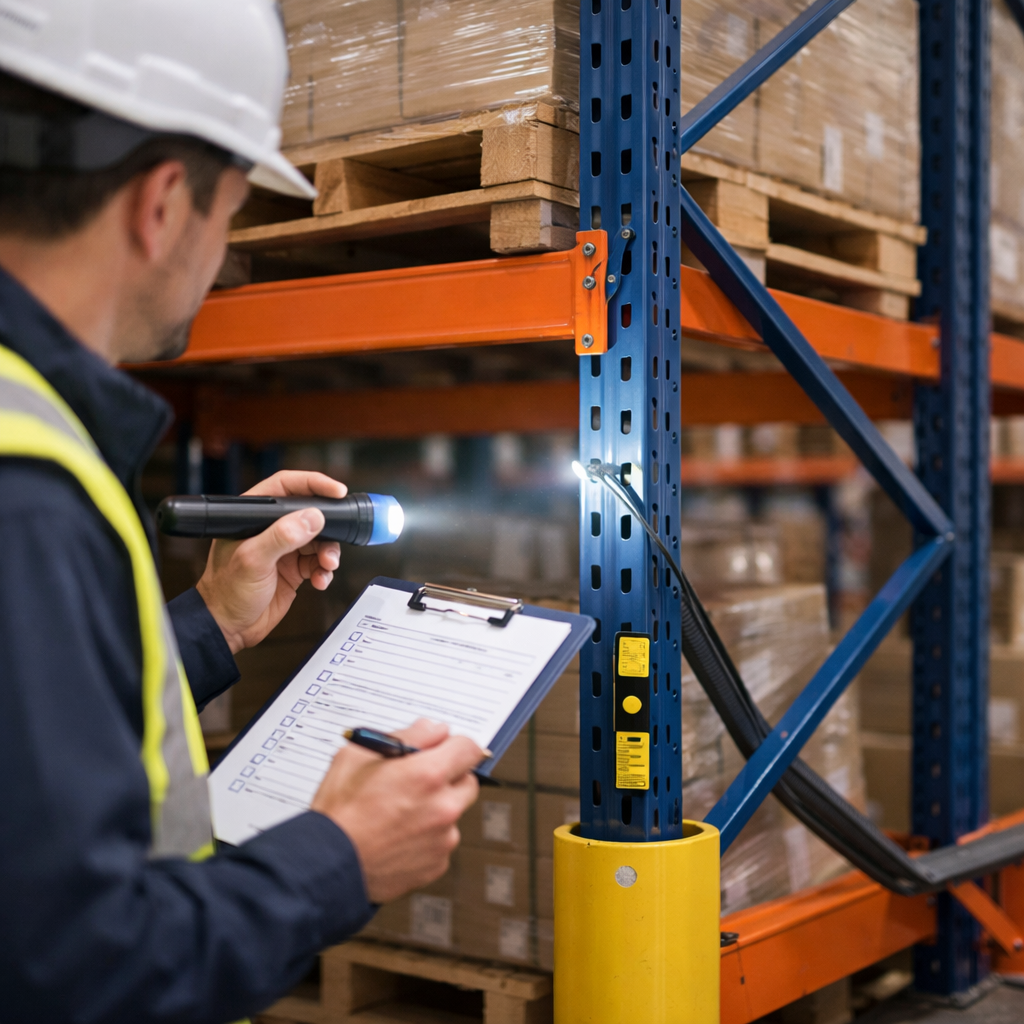
Supervisors should complete scheduled in-house inspections, document findings, and ensure defects are acted on quickly. In addition, a competent person should perform formal periodic inspections based on the risk profile of the site.
- Operators: report damage immediately and stop using unsafe bays
- Supervisors: conduct routine inspections and maintain records
- Managers: allocate resources, enforce repairs, and review trends
- Competent inspectors: perform detailed periodic assessments and recommend corrective actions
A simple reporting process matters. If staff need multiple approvals just to flag a bent upright, damage may go unreported. Make reporting easy, visible, and supported by management.
Use tags, barriers, or lockout-style controls to prevent use of damaged sections until they are assessed. Near misses should be recorded too, especially repeated forklift contact in the same location, as this often reveals a layout or traffic issue rather than just driver error.
Build a safer inspection program that prevents collapse
The best racking inspection tips are not one-time actions. They work when built into a wider warehouse safety program that combines inspection, maintenance, traffic control, and training.
Start with a documented schedule for daily visual checks, weekly supervisor reviews, and formal periodic inspections. Keep records of damage, repairs, and recurring problem areas so trends can be identified before they become major failures.
Practical controls may include repainting high-impact zones to make new damage obvious, improving lighting, marking pedestrian and forklift routes, and reviewing aisle clearances where collisions happen most often.
It is also wise to verify that repairs are completed with approved components and by qualified personnel. Improvised fixes, mixed rack parts, or unauthorized modifications can reduce structural integrity and create hidden hazards.
In the end, preventing warehouse collapse comes down to discipline and consistency. Racking inspection tips help teams catch impact damage early, respect load limits, and assign inspection responsibilities clearly. When these checks become part of daily operations, warehouses are far better protected against structural failure, downtime, and serious injury.
No comments yet