
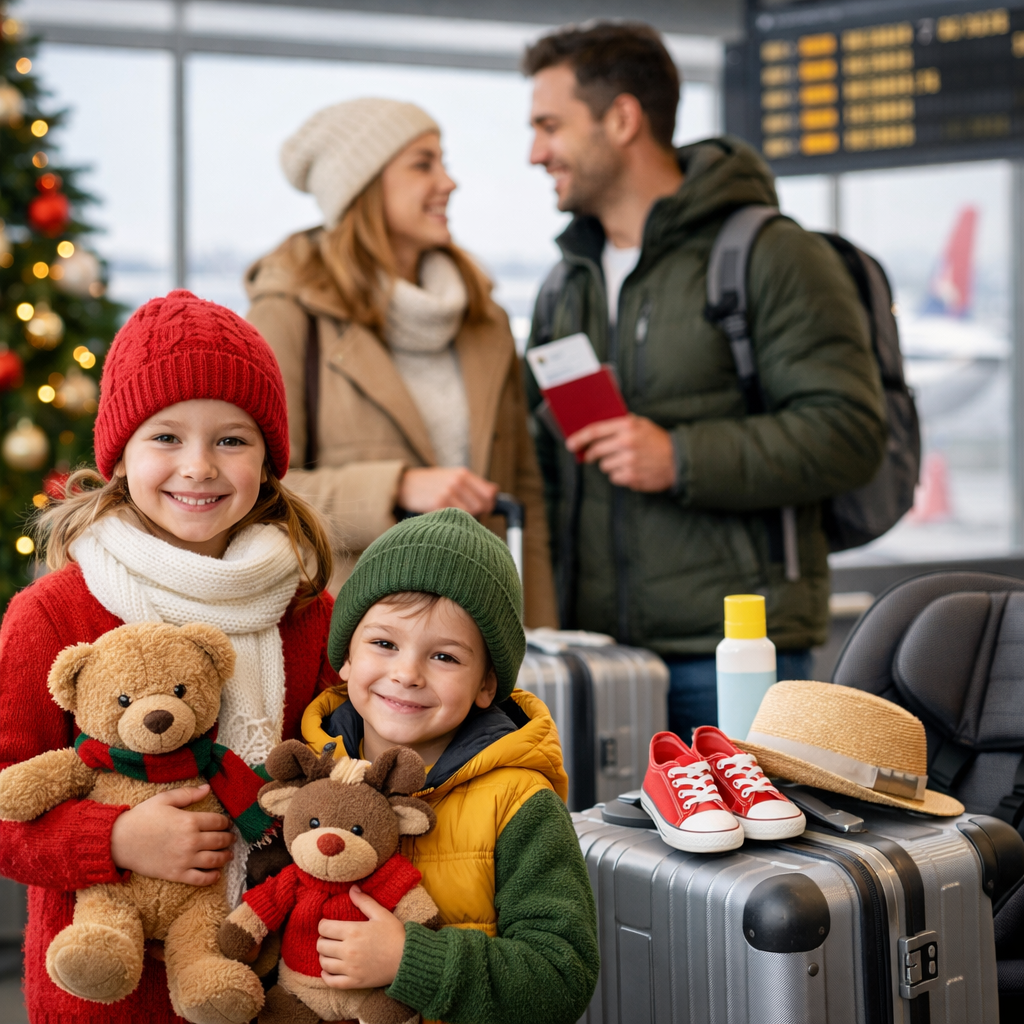

Holiday travel safety with kids starts long before you load the car or head to the airport. Winter weather, busy schedules, crowded terminals, and changes in routine can all increase risk for children, parents, caregivers, and even student or young workers helping with seasonal travel or school trips.
A practical plan helps families reduce stress and make better safety decisions. Whether you are travelling across Ontario, visiting relatives in another province, or managing a short local trip during the holidays, the goal is the same: prevent predictable problems, prepare for delays, and keep children supervised, warm, and secure.
This guide offers calm, prevention-focused advice for Canadian families. It also highlights simple ways to apply basic safety principles at home, on the road, and in public spaces, while following manufacturer instructions and any local school, workplace, transportation, or emergency guidance that applies.
Holiday travel safety with kids begins with practical planning
The safest holiday trip is usually the one that is well planned. Winter conditions can affect roads, sidewalks, parking lots, transit schedules, and travel times, so build flexibility into your day. Rushing increases the chance of missed supervision, slips and falls, forgotten medication, and unsafe decisions such as removing a child from a proper restraint too early.
Start by reviewing the full trip from departure to arrival. Think about who is travelling, how long children will be sitting, where washroom and meal breaks will happen, and what each child needs based on age, mobility, and tolerance for noise, crowds, and schedule changes.
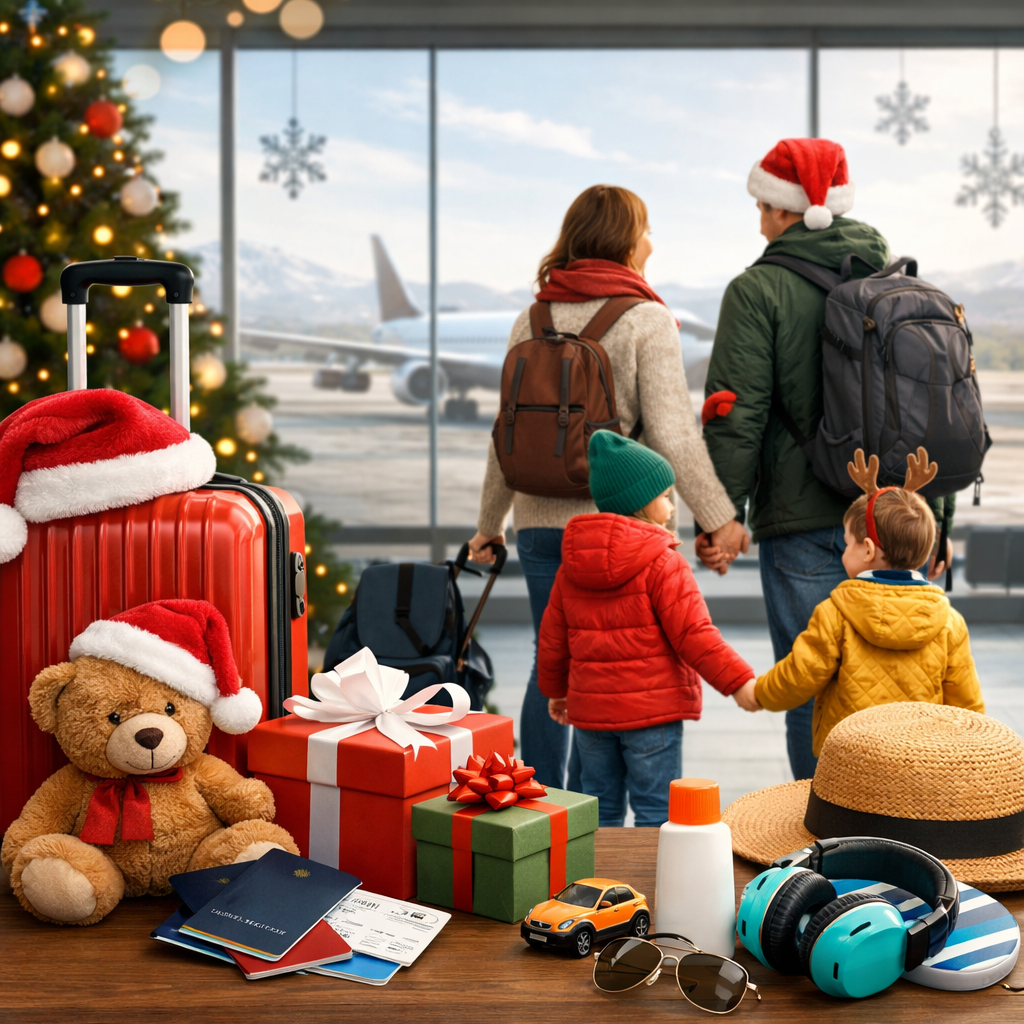
Key planning steps for families
- Check weather and route conditions before leaving and again if conditions may change.
- Allow extra time for snow, ice, lineups, parking, and rest breaks.
- Dress in layers so children can adjust safely between outdoor cold and heated indoor spaces.
- Pack essentials in an easy-to-reach bag, including water, snacks, extra clothing, wipes, tissues, comfort items, and charged devices if used.
- Review supervision roles so one adult is always clearly responsible during transitions.
- Confirm child restraint needs using the seat manufacturer instructions and applicable provincial guidance.
For general Canadian health and safety information, families may find it helpful to review resources from CCOHS, Ontario.ca, and Parachute. More family and workplace safety articles are also available at OHSE.ca.
Road trip safety: winter driving, child restraints, and cold-weather basics
For many families, holiday travel safety with kids is mainly about road travel. Winter driving adds hazards such as poor visibility, slippery roads, long stopping distances, and roadside delays. These risks affect adults and children differently because children rely entirely on adults for restraint, warmth, hydration, and supervision.
One useful way to think about prevention is the hierarchy of controls. Families cannot eliminate every hazard, but they can reduce risk in layers. For example, if conditions are severe, delaying travel removes exposure. If travel is necessary, safer route choices, winter-ready vehicles, correct restraints, and supervised rest stops all help lower risk.
Vehicle and restraint checks
Before departure, make sure the vehicle is fuelled, windows are clear, lights are working, and winter equipment is accessible. Child seats and booster seats should be installed according to manufacturer directions. Thick winter coats can interfere with proper harness fit, so adjust clothing and restraints carefully.
Children should stay buckled correctly for the full trip, even on short drives. Remind older children not to unbuckle early in parking lots or drop-off zones, where drivers, snowbanks, and reduced visibility can create additional danger.
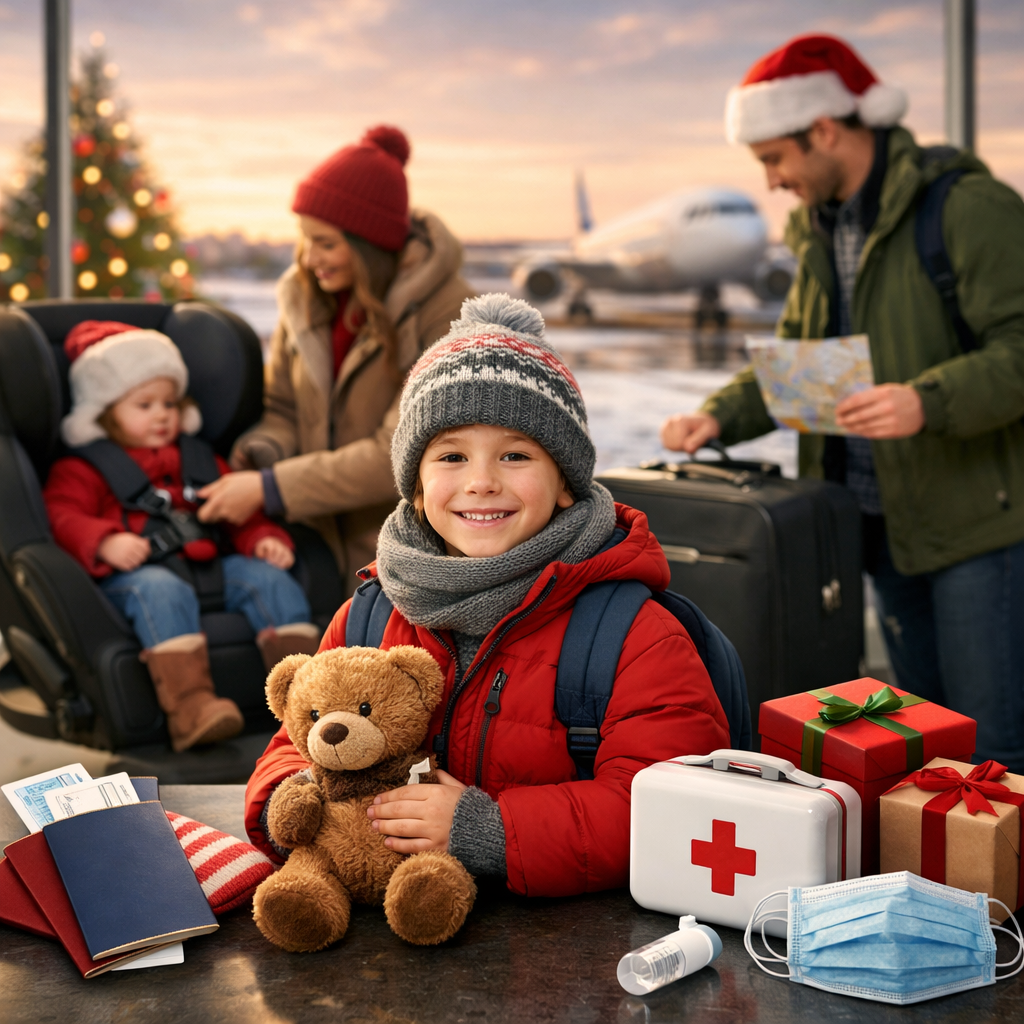
Cold-weather travel essentials
| Travel area | What to prepare | Why it matters |
|---|---|---|
| Vehicle safety | Fuel, clear windows, working lights, winter-ready tires, emergency supplies | Reduces breakdown and roadside risk in winter conditions |
| Child comfort | Layers, blankets for use outside the harness, snacks, water, activities | Helps prevent distress, dehydration, and unsafe distractions |
| Stops and transitions | Planned rest breaks, hand-holding rules, visible meeting point | Improves supervision in busy or slippery areas |
| Health needs | Required medication, tissues, wipes, extra clothing | Helps manage routine needs without rushed decisions |
If your plans involve school transportation, youth programs, or student travel, follow the organization’s procedures as well as family safety practices. Consistency helps children understand expectations in different settings.
Holiday travel safety with kids in airports, stations, hotels, and public spaces
Public travel spaces can be overwhelming for children, especially during the holidays. Crowds, noise, unfamiliar layouts, and long waits can lead to wandering, fatigue, and emotional overload. Prevention is easier when adults set clear rules before arriving.
Explain what children should do if they become separated: stay where they are if safe, look for a uniformed staff member or a family with children if appropriate, and use the agreed family contact information. Younger children may benefit from a contact card placed securely in a pocket or bag.
Supervision during high-risk moments
Transitions are often the highest-risk parts of a trip. Parking lots, curbside drop-offs, washroom breaks, escalators, baggage collection areas, and hotel lobbies all require close attention. If more than one adult is present, assign one person to lead and one to watch the children rather than assuming someone else is already doing it.
Inside hotels or family accommodations, do a quick safety check. Note exits, secure hazards that are within reach, and review simple rules around elevators, pools, balconies, ice, and parking areas. If children are staying with relatives, explain any house-specific hazards such as fireplaces, pets, medications, cleaning products, or uncleared walkways.
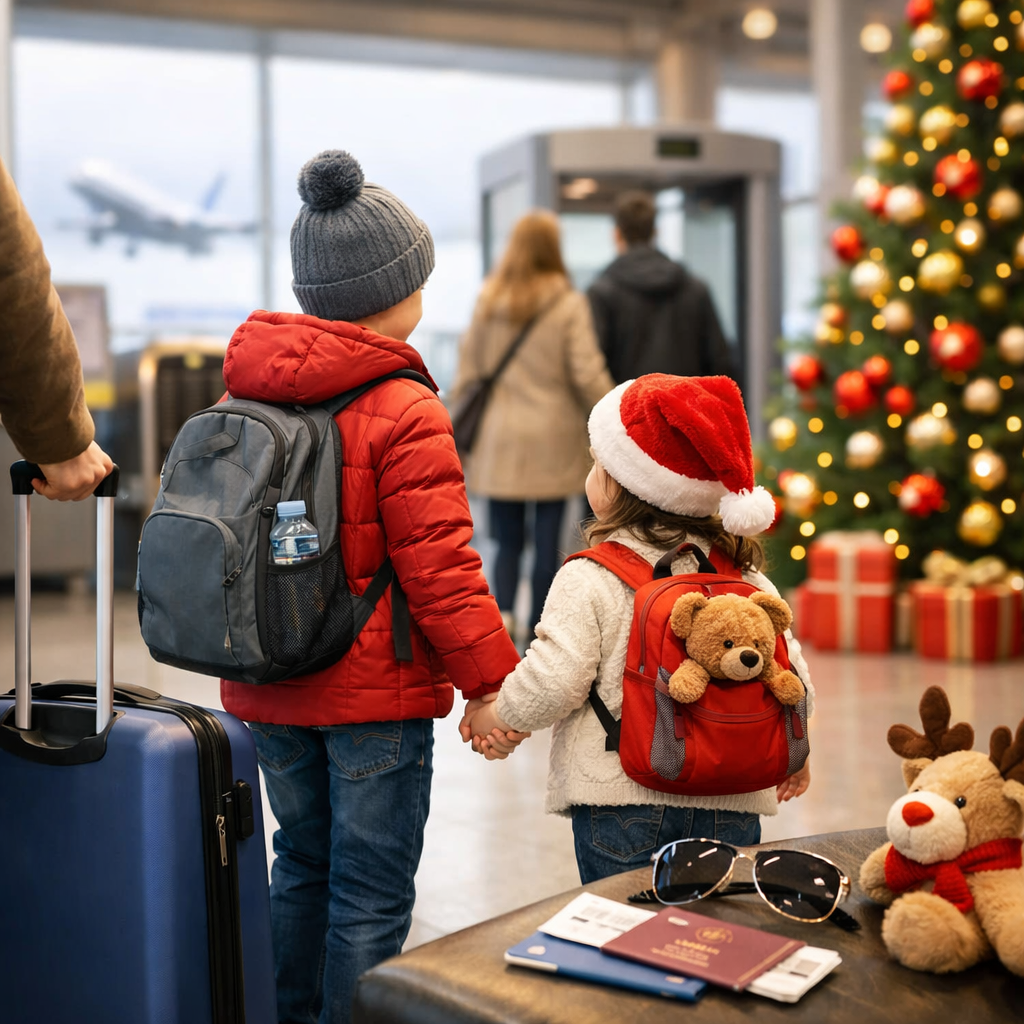
Healthy routines while travelling
- Keep regular meals and hydration as close to normal as possible.
- Plan quiet breaks for younger children who become overstimulated.
- Encourage hand hygiene after public contact and before eating.
- Use footwear with good traction for snow, slush, and wet floors.
- Choose age-appropriate bags so children are not carrying loads that affect balance.
General public health and family wellness guidance can also be reviewed through Health Canada. If a school, workplace, or event organizer has additional requirements, follow those instructions first.
Practical checklist for holiday travel safety with kids
A short checklist can help busy families remember the basics without overcomplicating the trip. It can also support teens, babysitters, school volunteers, and young workers who may help supervise children during seasonal events.
Pre-departure checklist
- Weather, route, and timing checked
- Vehicle, tickets, or travel documents ready
- Child seats or boosters installed and checked
- Layers, hats, mitts, and dry spare clothing packed
- Snacks, water, medications, and comfort items accessible
- Phone charged and key contacts available
- Meeting plan reviewed with children
- Supervision roles clearly assigned
During the trip
- Keep children within sight and reach in busy areas
- Take breaks before children become overtired or upset
- Watch for slippery surfaces near entrances and parking lots
- Use child restraints and seatbelts correctly every time
- Adjust plans if weather or road conditions become unsafe
Families looking for broader prevention resources, including training and workplace-relevant safety education, can visit Learn.OHSE.ca. This can be especially useful for school staff, program leaders, and young workers supporting group activities during the holiday season.
Holiday travel safety with kids is not about making trips complicated. It is about noticing common winter hazards, planning for transitions, and using simple controls that protect children before problems start. With realistic preparation, clear supervision, and flexible timing, families can reduce risk and focus more on a calm, safer holiday experience. In every setting, from highways to hotel lobbies, holiday travel safety with kids works best when adults stay organized, follow instructions for seats and equipment, and adapt to changing conditions without rushing.
No comments yet