
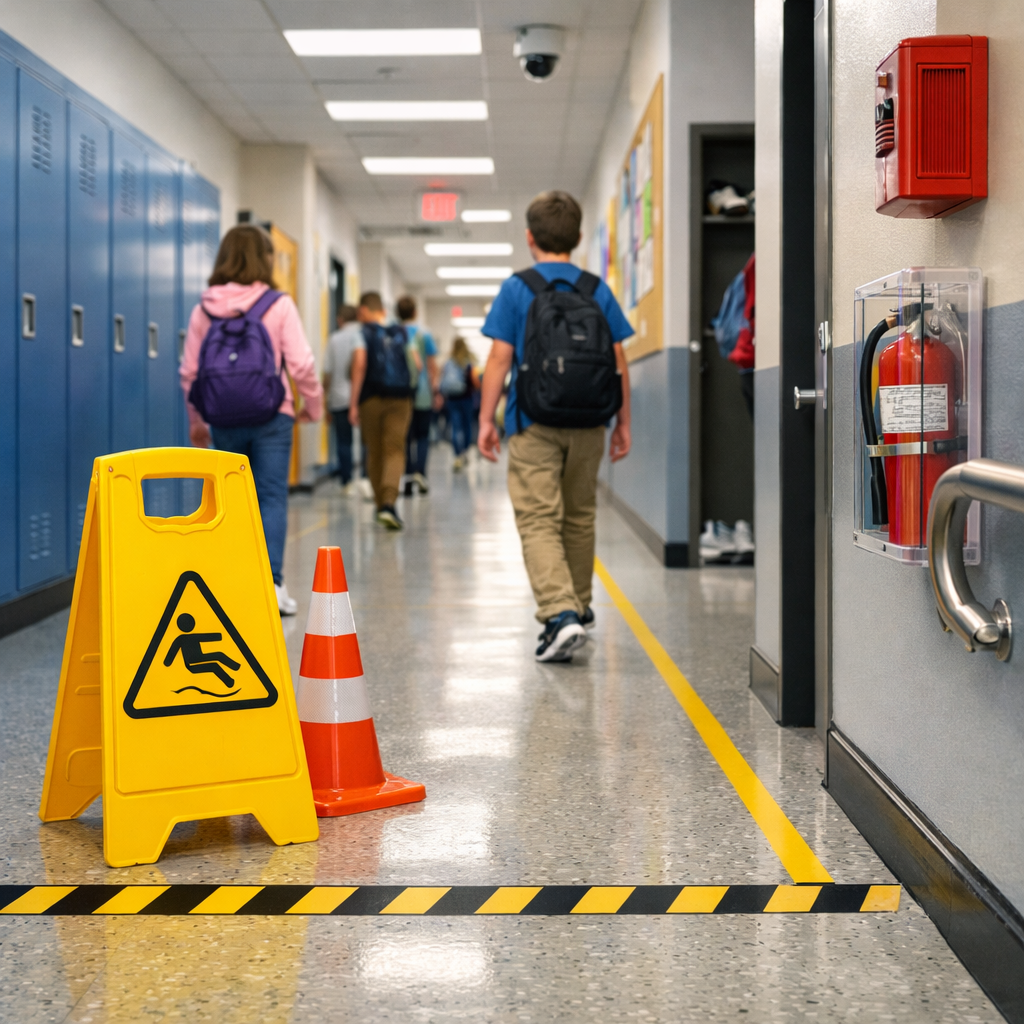

Hallway safety at school matters every day because busy corridors, changing classes, wet floors, backpacks, and distractions can quickly lead to trips, slips, and collisions.
For students, parents, and school staff in Canada, the goal is simple: keep hallways predictable, clear, calm, and easy to move through. Good prevention does not require complicated systems. It starts with housekeeping, clear expectations, supervision, and age-appropriate safety habits that reduce risk before someone gets hurt.
In Ontario and across Canada, schools are expected to provide a safe learning environment. While each school board and building may have its own procedures, the basics are consistent: keep walking routes free of hazards, manage congestion, respond quickly to spills, and teach safe movement as part of everyday school culture. Trusted safety information from CCOHS, Ontario, and Parachute supports this practical prevention-focused approach.
Why hallway safety at school deserves daily attention
Hallways are shared spaces used by students of different ages, staff, visitors, and sometimes volunteers or contractors. That means traffic patterns can change quickly. A safe hallway in the morning can become crowded and harder to navigate during class changes, lunch periods, indoor recess, or special events.
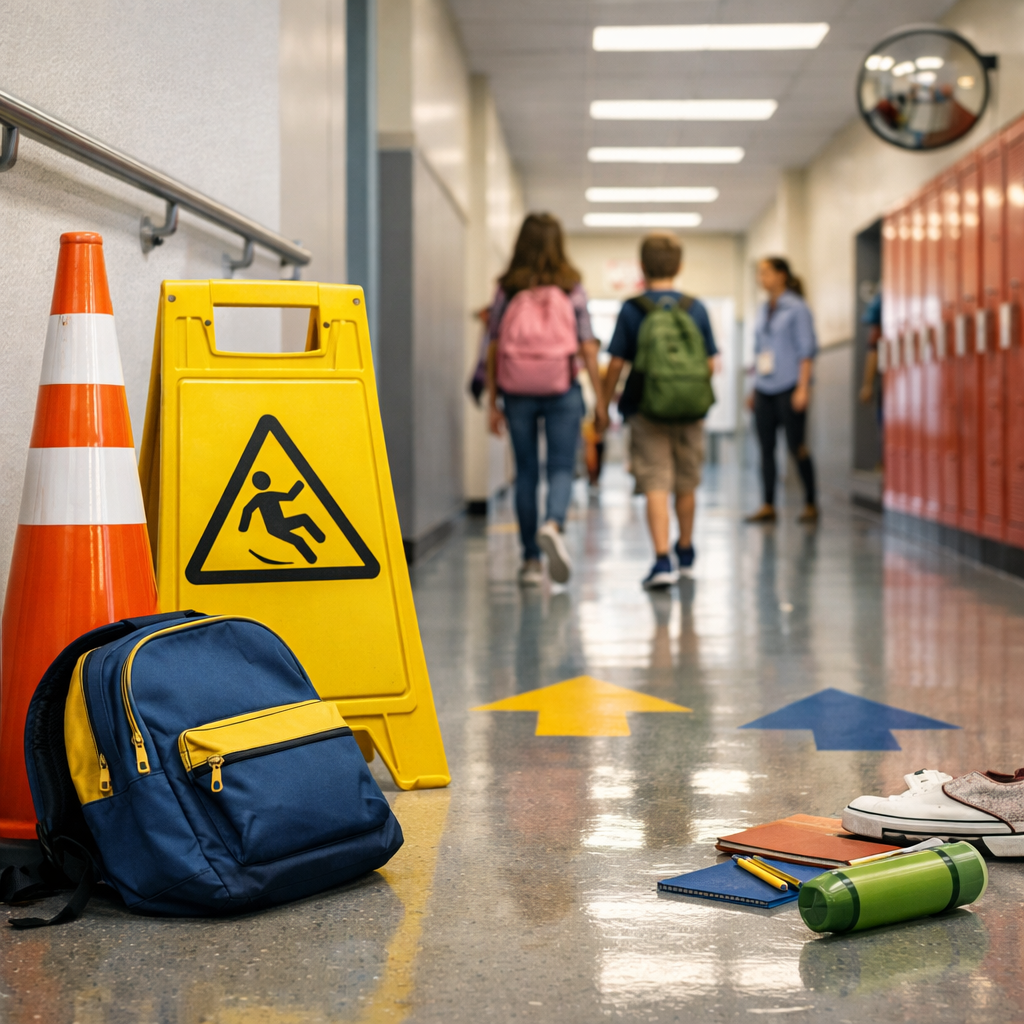
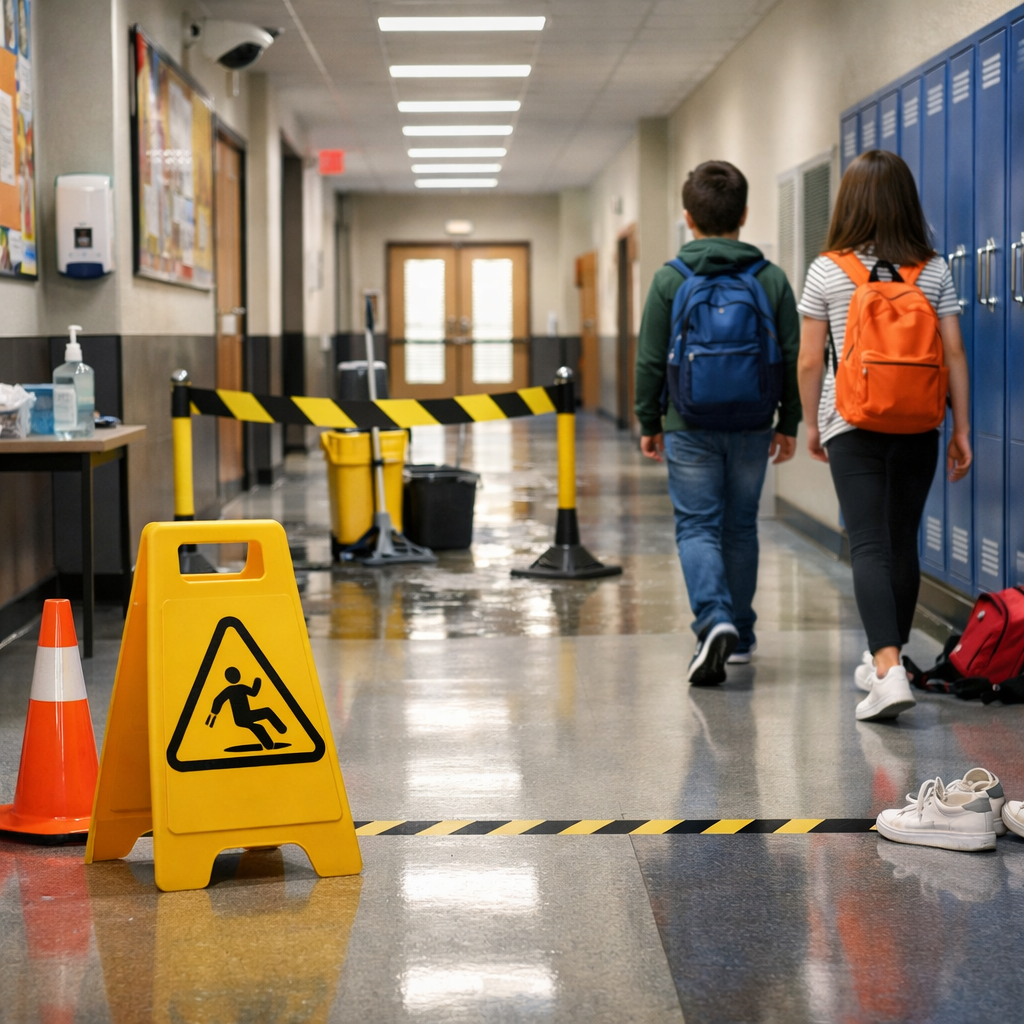
Common hazards include bags left on the floor, boots and water near entrances, loose mats, open locker doors, poor visibility around corners, horseplay, running, and students looking at phones instead of where they are going. In elementary schools, younger children may stop suddenly or walk side by side. In secondary schools, faster movement and heavier bags can increase the chance of shoulder bumps, falls, and dropped items.
When schools treat hallway safety at school as part of overall health and safety, they can reduce minor injuries and prevent more serious incidents. This also supports accessibility, since clear corridors help students and staff who use mobility devices, carry materials, or need extra space and time to move safely.
Common causes of trips and collisions in school hallways
Slip, trip, and obstruction hazards
The most preventable problems are often the simplest. Items placed in travel paths create immediate risks. A lunch bag beside a wall may seem harmless until a student turns a corner quickly and catches a foot on it. Water tracked in from snow or rain can make tile floors slippery, especially near entrances and washrooms.
- Backpacks, instrument cases, sports gear, and lunch bags left in walkways
- Wet floors from weather, spills, or recent cleaning
- Loose mats, curled edges, cords, or damaged flooring
- Open locker or classroom doors narrowing the path
- Poor lighting or blocked sightlines near corners and stair entrances
Behaviour and traffic flow issues
Not all hallway incidents come from physical hazards. Movement behaviour matters too. Running, pushing, sudden stopping, crowding around lockers, and walking while distracted can all lead to collisions. Noise and congestion may also make it harder for staff to give instructions or for students to notice hazards ahead.
Schools can reduce these risks by setting simple rules that are easy to remember and enforce: walk on the right where appropriate, keep moving, respect personal space, close lockers promptly, and save rough play for supervised activity areas. For older students, reminders about carrying loads safely and staying aware of others can make a noticeable difference.
Practical controls that improve hallway safety at school
The best prevention plans use layers of control. In school settings, this often means combining environmental fixes, administrative procedures, and student habits. The principle is similar to the Hierarchy of Controls used in occupational health and safety: remove hazards where possible, improve the space, and support safe behaviour with training and supervision.
Environmental and housekeeping controls
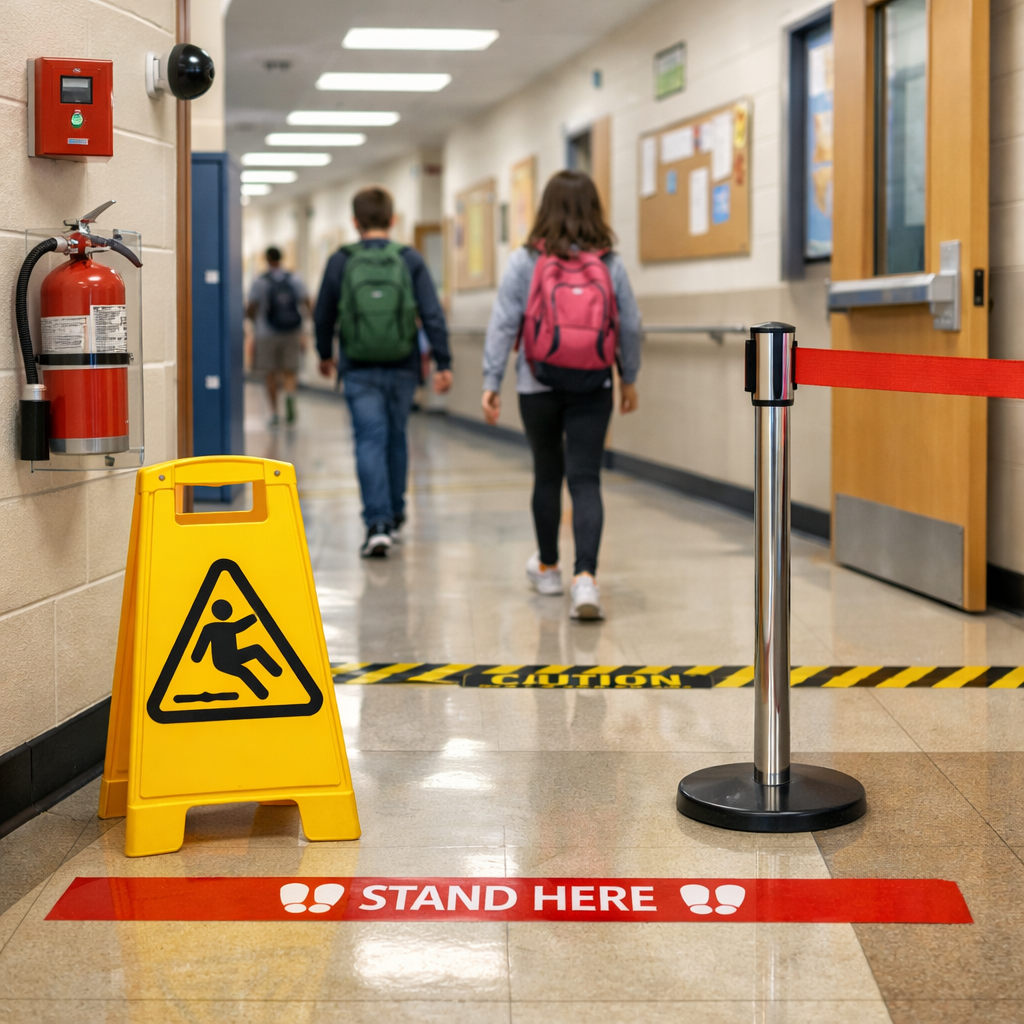
Good housekeeping is one of the strongest tools for hallway safety at school. Clear routes should be maintained throughout the day, not only at opening time. Entrances need extra attention during Ontario winters and wet weather, when water, slush, and salt can create slippery surfaces.
- Keep hallways, exits, and doorways free of stored items
- Use secure entrance mats and replace damaged mats promptly
- Clean spills right away and mark wet areas until dry
- Repair uneven flooring, loose transitions, or broken tiles
- Make sure lighting is adequate in corridors, corners, and stair approaches
- Reduce visual clutter so signs, hazards, and travel paths remain easy to see
Administrative rules and supervision
Clear expectations help students know what safe movement looks like. Schools may use staggered transitions, designated directions in wider corridors, staff presence at busy times, and reminders before dismissal or indoor recess. Consistency matters. Rules work best when students hear and see the same message from classroom teachers, office staff, educational assistants, and administrators.
Training also plays a role. Staff responsible for safety planning can benefit from practical resources through OHSE.ca, and where broader workplace-style safety learning is useful, schools and related organizations may explore learn.ohse.ca. In a school context, training should remain age-appropriate and tied to daily routines.
| Hazard | Likely Cause | Practical Control |
|---|---|---|
| Wet entrance floor | Rain, snow, slush, cleaning | Mats, prompt mopping, signs, frequent checks |
| Trip over bags | Items left in walkway | Storage rules, routine checks, student reminders |
| Collision at corners | Speed, congestion, poor visibility | Slow movement, supervision, keep corners clear |
| Bumping at lockers | Crowding, open doors, stopping suddenly | Stagger access, close doors, keep moving |
Age-appropriate habits students can use every day
Students are more likely to follow safety expectations when the advice is specific and realistic. Younger children may need visual reminders and repeated practice, while teens often respond better when expectations are linked to respect, independence, and preventing injuries to others as well as themselves.
Simple student checklist
- Walk, do not run, in hallways and near stairs
- Keep to the usual side of the corridor if your school uses that system
- Watch ahead, especially near corners, doors, and stairs
- Keep backpacks, sports gear, and lunch bags out of walking paths
- Close locker doors right away
- Wipe boots where mats are provided and report slippery spots
- Do not push, shove, or stop suddenly in busy areas
- Follow staff directions during class changes, arrivals, and dismissal
Parents can support hallway safety at school by helping children choose backpacks that fit properly, avoiding overloaded bags, and reinforcing routines such as putting belongings away promptly. Footwear also matters. Shoes or boots with good traction are especially helpful during wet or icy seasons.
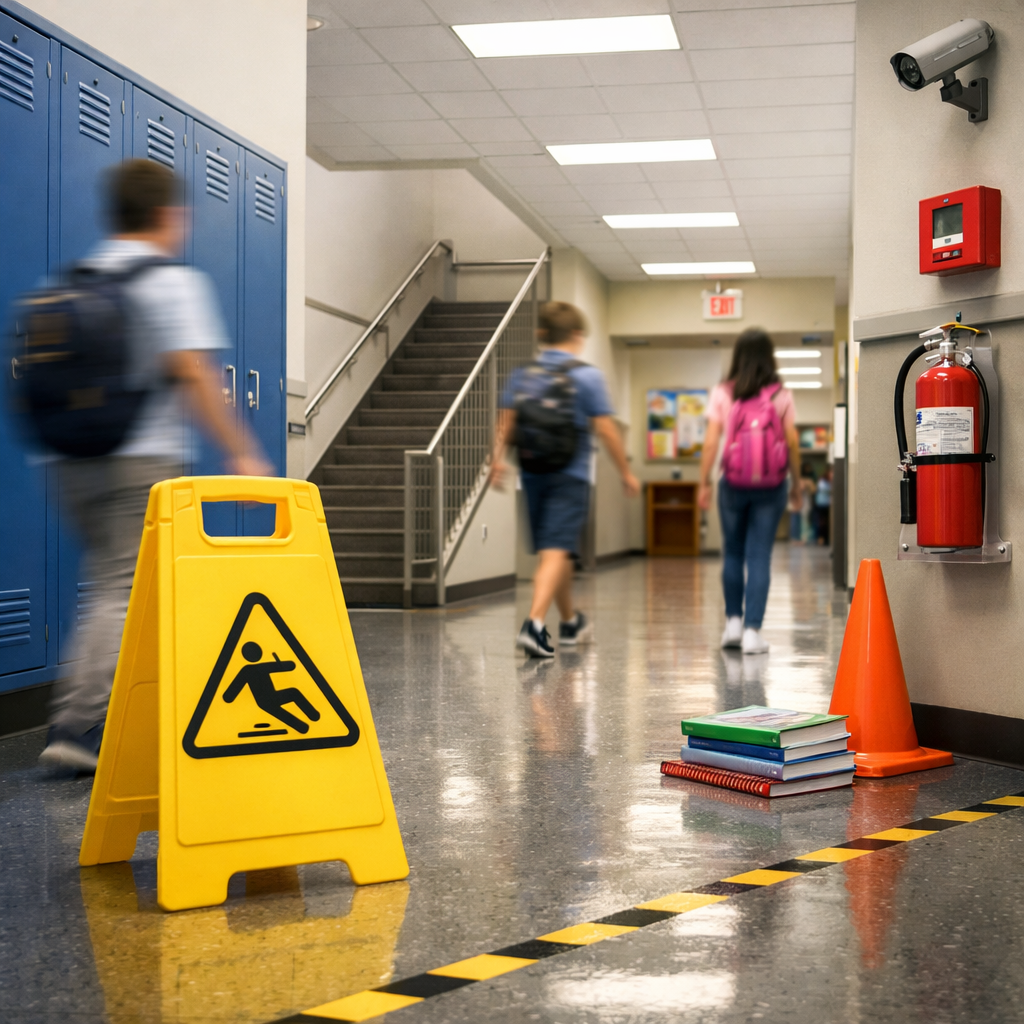
For school staff, prevention includes noticing patterns. If one corner is always crowded, if a mat keeps shifting, or if a particular class transition leads to congestion, that is useful information. Small changes in timing, layout, or supervision can reduce repeat problems. If an incident does happen, follow local school reporting procedures and emergency guidance where applicable.
Building a safer school culture in hallways
Strong hallway safety at school is not only about rules on the wall. It is about creating a culture where clear pathways, calm movement, and respect for shared space become normal. Students notice what adults reinforce. When staff respond quickly to clutter, correct unsafe behaviour calmly, and model safe movement themselves, expectations become easier to maintain.
Schools may also connect hallway safety with broader health and safety topics such as emergency egress, accessibility, visitor management, cleaning procedures, and seasonal slip prevention. In Ontario and across Canada, local policies should always guide implementation. Follow your school board, employer, manufacturer, and emergency procedures where applicable, especially for maintenance issues, cleaning products, or incident response.
In the end, hallway safety at school comes down to practical prevention: keep routes clear, manage wet floors, reduce congestion, supervise busy periods, and teach students how to move safely in shared spaces. These small daily actions help prevent trips and collisions, protect learning time, and make the school environment safer for everyone.
No comments yet