
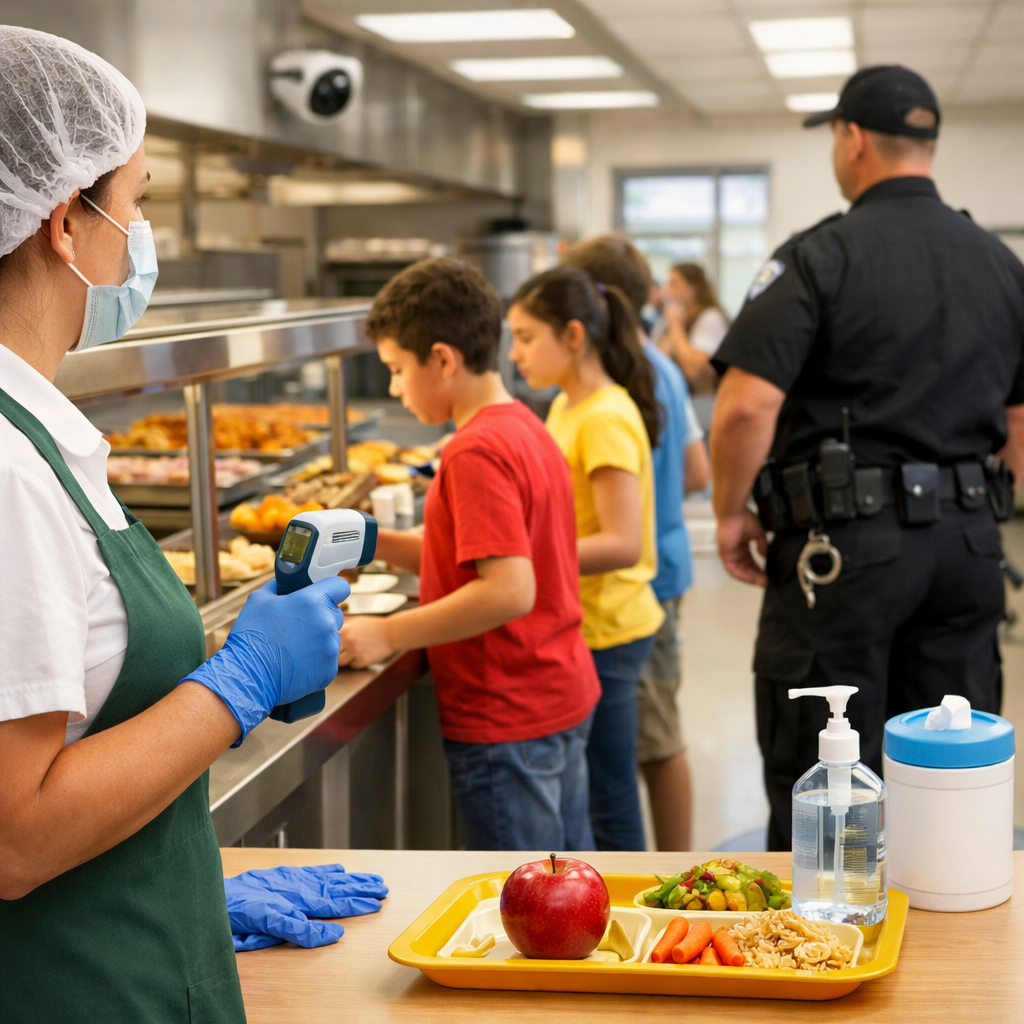

School cafeteria safety matters every day because lunchrooms are busy spaces where food handling, walking with trays, and hot items all happen at once.
For students, parents, and school staff in Canada, simple prevention steps can reduce common risks such as food contamination, slip hazards, and contact burns while helping everyone enjoy a safer meal break.
A practical approach starts with supervision, clear routines, clean surfaces, and age-appropriate expectations. It also means teaching students how to carry food carefully, report hazards quickly, and respect cafeteria rules. In Ontario and across Canada, schools should follow local board policies and public guidance while using trusted safety resources such as CCOHS, Ontario.ca, and Health Canada. For general workplace and school safety support, schools and families can also visit OHSE.ca.
Why school cafeteria safety needs daily attention
Lunchrooms combine many small hazards that can become injuries if routines are weak. Floors may get wet, food can be served at unsafe temperatures, and crowded lineups can lead to pushing, dropped trays, or contact with hot liquids.
Students may also have different levels of awareness depending on age. Younger children often need direct reminders about walking instead of running, keeping hands clean, and avoiding horseplay near tables, serving areas, and waste stations.
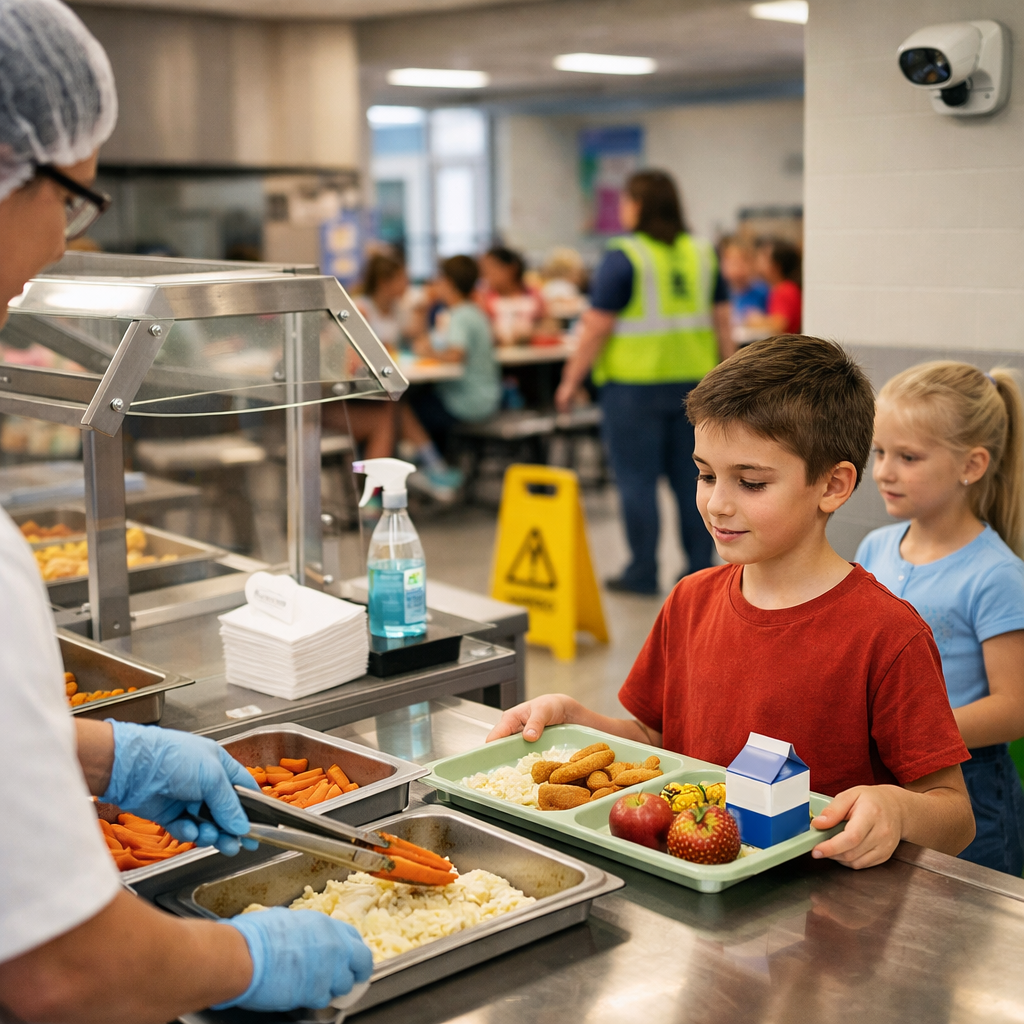
Good school cafeteria safety depends on prevention rather than reaction. That includes housekeeping, supervision, signage, training for workers and volunteers, and clear expectations for student behaviour. If older students work or volunteer in food service areas, basic safety instruction is especially important. Where training is needed, schools may wish to review options through OHSE training resources.
Common cafeteria hazards
- Spilled drinks, soup, or melting snow near entrances
- Hot foods, heated containers, and steam from serving equipment
- Food contamination from poor hand hygiene or dirty surfaces
- Sharp utensils or broken dishware
- Overcrowded aisles, backpacks, and trays creating trip hazards
- Allergen exposure from shared tables, surfaces, or food swapping
School cafeteria safety for food handling and hygiene
Food safety in schools starts before students sit down to eat. Cafeteria workers, supervisors, and anyone handling food should follow local procedures for storage, preparation, cleaning, and serving. Students also play a role by washing hands before meals, keeping personal items off eating surfaces where possible, and not sharing food when allergies are a concern.
For practical school cafeteria safety, schools should focus on time, temperature, cleanliness, and separation. Cold foods should stay cold, hot foods should stay hot, and cleaning schedules should be consistent. Serving utensils should be used properly, and waste should be removed often enough to avoid leaks, odours, and pests.
Age-appropriate food safety habits for students
- Wash hands with soap and water before eating and after using the washroom
- Keep lunches closed until it is time to eat
- Do not eat food that looks spoiled, damaged, or contaminated
- Never swap food if allergies are a concern in the classroom or cafeteria
- Tell an adult if milk, yogurt, or other lunch items seem warm when they should be cold
- Report broken containers, leaks, or messes right away
Schools should also consider allergen management as part of school cafeteria safety. This may include designated rules, cleaning procedures, and communication with families. Students should be taught not to tease, pressure, or distract classmates about food restrictions. For broader injury prevention information relevant to children and youth, Parachute offers useful Canadian safety resources.
Preventing slips, trips, and falls in cafeteria spaces
Spills are one of the most frequent cafeteria hazards. Juice, water, soup, and dropped food can turn smooth floors into slip zones within seconds. Entrance areas are also higher risk during wet weather because boots can track in water, salt, and slush.
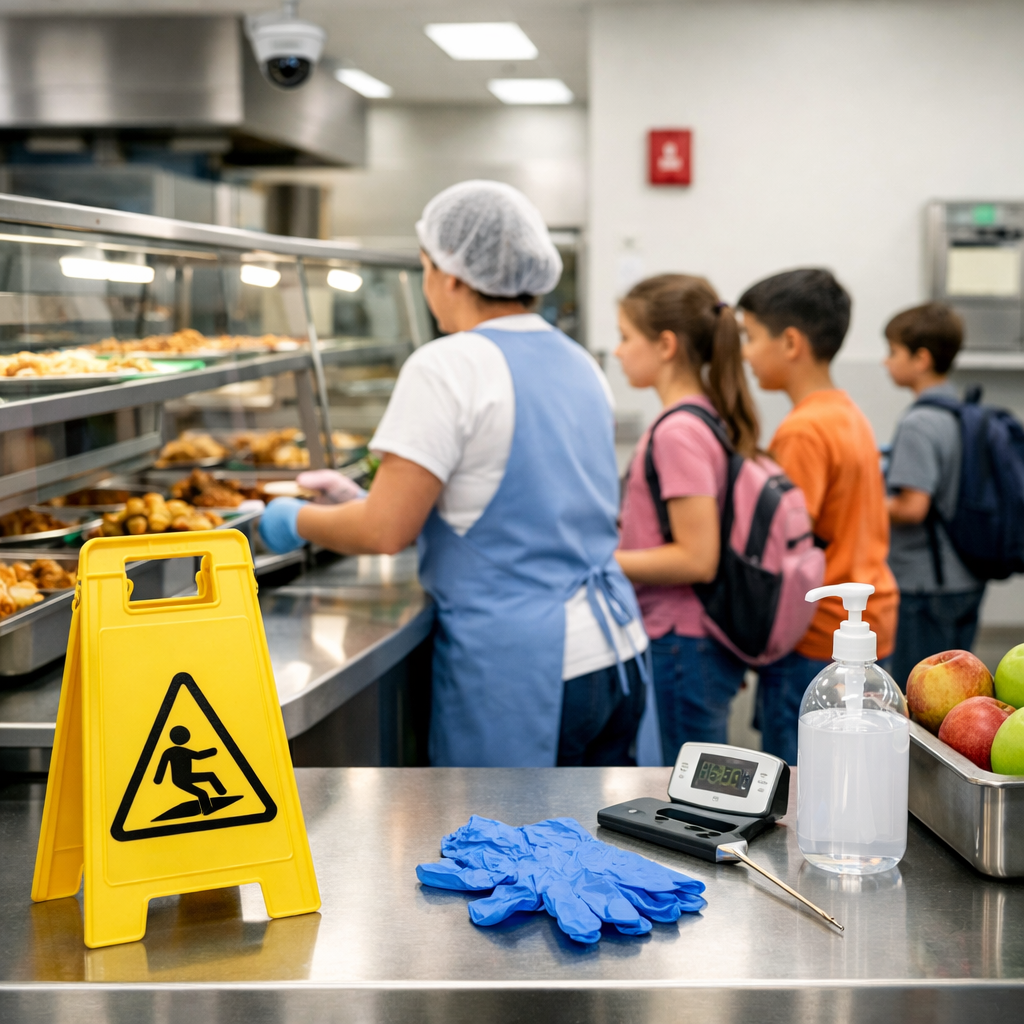
The best control is fast action. Students should know that reporting a spill immediately is part of school cafeteria safety, not tattling or overreacting. Staff should have a clear process for blocking off the area, cleaning it promptly, and checking whether the floor remains slippery after mopping.
Spill prevention and response basics
Using the hierarchy of controls can help schools think through safer cafeteria design and routines.
| Control level | Cafeteria example | Safety benefit |
|---|---|---|
| Elimination | Repair leaking dispensers or remove damaged trays | Removes a recurring source of spills |
| Engineering | Install entry mats and use stable tables | Reduces slippery surfaces and instability |
| Administrative | Assign cleanup procedures and stagger lunch flow | Improves response time and reduces crowding |
| PPE | Slip-resistant footwear for cafeteria workers where required | Helps protect workers in food service areas |
Students can support safer floors by walking, keeping aisles clear, and carrying trays with both hands when needed. Backpacks should not block walkways, and chairs should be pushed in when students leave tables. These are small habits, but they are central to practical school cafeteria safety.
Reducing burn risks from hot food and equipment
Burn prevention is especially important in cafeterias that serve soup, pasta, hot drinks, or foods heated in ovens, steam tables, or microwaves. Even a minor bump in a crowded lineup can cause a splash or spill.
For most students, the safest approach is to keep distance from food preparation equipment and to carry hot items slowly and steadily. Younger students may need help with lids, trays, and finding a seat before opening hot containers.
Practical burn prevention steps
- Serve hot foods in stable containers with secure lids where appropriate
- Avoid overfilling bowls, cups, or trays
- Keep handles and cords from appliances out of reach in supervised staff areas
- Separate student traffic from kitchen or serving equipment where possible
- Teach students to set hot items down before opening packages or adjusting trays
- Require staff and student helpers to follow manufacturer instructions and local school procedures
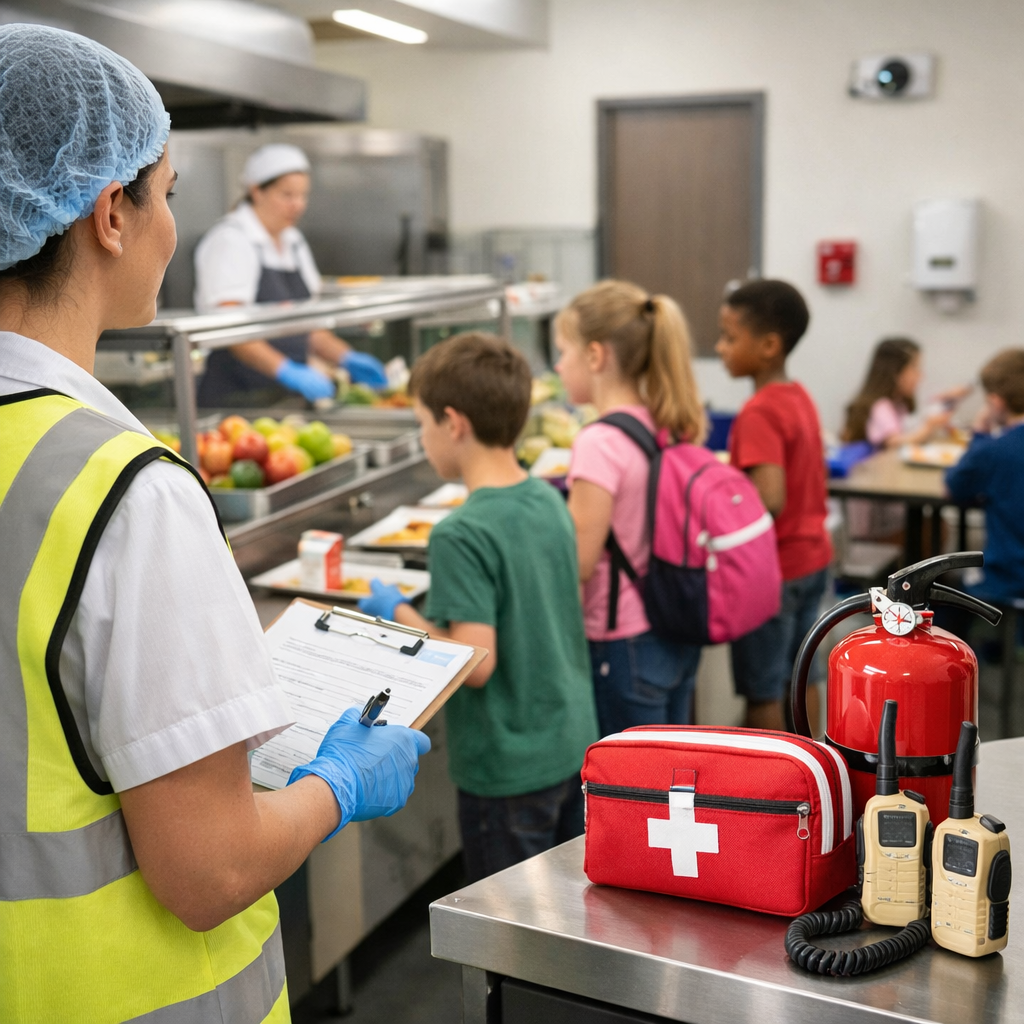
If a burn or other injury happens, staff should follow school emergency procedures, first aid processes, and local reporting requirements. Students should never be encouraged to self-treat beyond what school policy allows. Always follow local school, workplace, manufacturer, or emergency guidance where applicable.
A short school cafeteria safety checklist for students and schools
A simple checklist can make routines easier to remember and reinforce. Schools can adapt this to their own layout, age group, and policies.
Daily checklist
- Floors checked before lunch and spills cleaned quickly
- Entry mats in place during wet or snowy weather
- Handwashing encouraged before eating
- Tables and high-touch surfaces cleaned on schedule
- Hot food service monitored to reduce splash and contact risks
- Allergy rules communicated clearly to students and families
- Walkways kept clear of bags, chairs, and garbage
- Students reminded to walk, report hazards, and avoid horseplay
Strong school cafeteria safety is built through daily habits, not just rules posted on a wall. When schools combine good housekeeping, food hygiene, supervision, and student awareness, cafeteria spaces become safer and more welcoming for everyone. For Canadian schools and families, the most effective approach is calm, consistent prevention supported by trusted guidance and local procedures. By treating food, spill, and burn prevention as shared responsibilities, school cafeteria safety becomes part of a healthy school culture.
No comments yet