
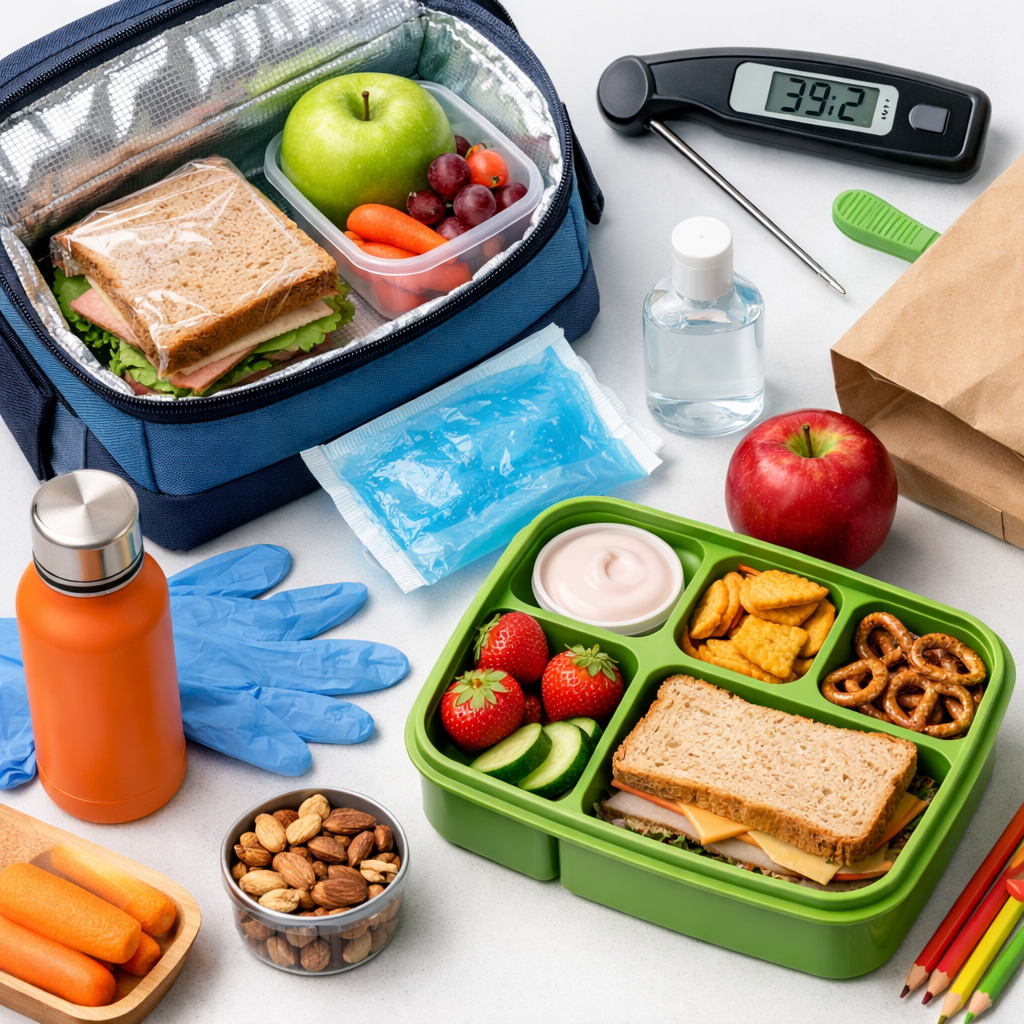

School lunch food safety starts at home and continues all the way to the lunch table. For Canadian families, a safe lunch is not just about nutrition and convenience. It is also about preventing food spoilage, limiting the growth of harmful bacteria, and helping children build good daily habits that can carry into school, work, and life.
Whether a student brings a lunch from home, helps pack it, or stores food in a shared classroom space, small steps matter. Clean hands, the right containers, safe temperatures, and careful packing can all reduce risk. Parents, students, and schools each have a role to play in making school lunch food safety part of the routine.
This practical guide explains the main risks, simple controls, and a short checklist families can use every school day. Where needed, always follow local school rules, manufacturer instructions, and emergency guidance. For broader Canadian safety information, families can also review resources from CCOHS, Health Canada, and the Ontario government.
Why school lunch food safety matters every day
Lunches often spend hours between packing and eating. During that time, food may sit in backpacks, lockers, classrooms, buses, or gym areas. If food that needs refrigeration gets too warm, bacteria can grow. If containers leak, food can become contaminated. If students forget handwashing, germs can spread from surfaces to meals.
Young children may not notice when food has been stored poorly. Older students may rush through lunch or leave food in warm spaces for too long. That is why school lunch food safety depends on simple, repeatable steps that fit the school day.
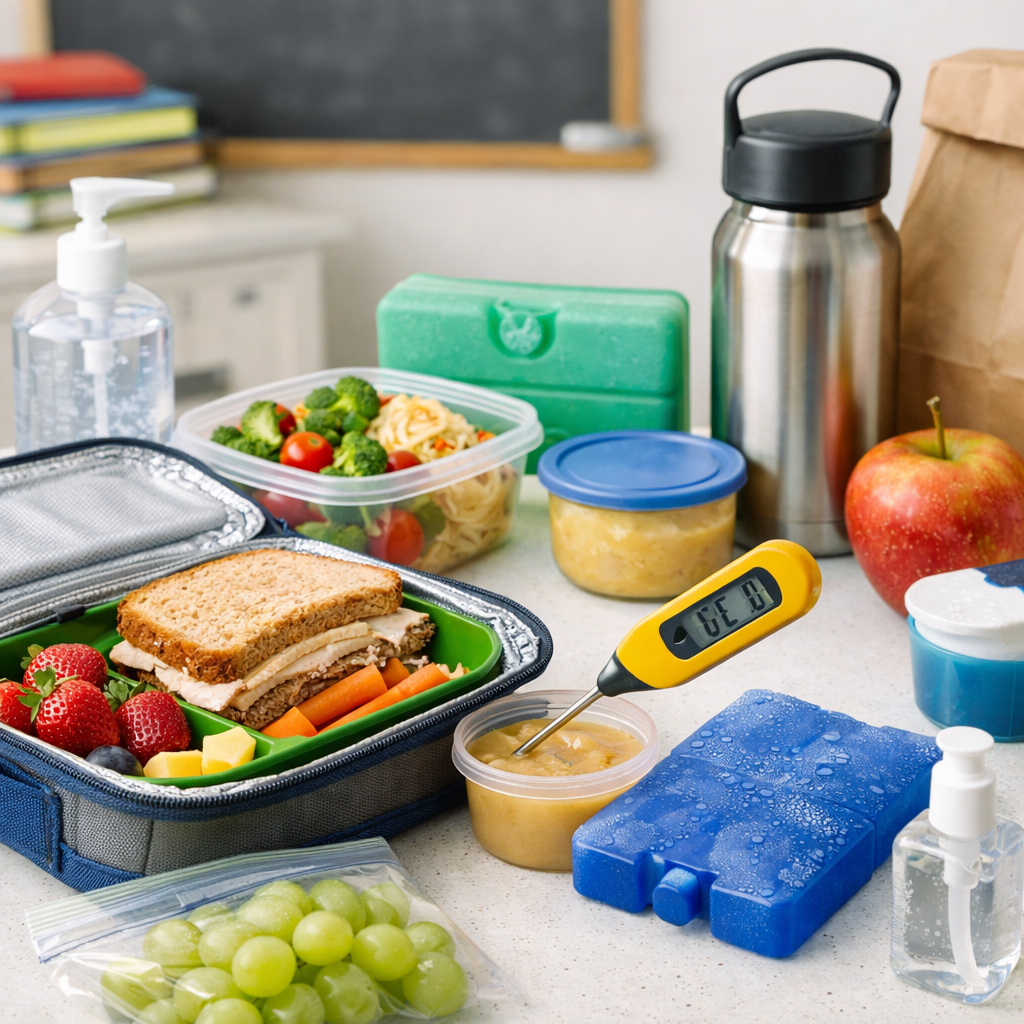
Common lunch risks
- Perishable foods warming up for too long
- Unwashed hands before eating
- Cross-contamination from raw or dirty items during packing
- Leaky containers inside crowded bags
- Using damaged lunch bags, bottles, or food containers
- Forgetting ice packs or insulated storage
- Food allergies and mix-ups between students
In an Ontario or broader Canadian school context, schools may also have food allergy rules, nut-aware policies, or classroom restrictions. Families should check those requirements regularly and label containers clearly.
Smart packing habits for better school lunch food safety
The best control is prevention. Before food goes into a lunch bag, hands, counters, cutting boards, and containers should be clean. This is a basic but important part of the hierarchy of controls in everyday practice: remove avoidable hazards where possible, separate risky items, and use proper equipment such as insulated bags and ice packs to reduce exposure.
Start with clean preparation
Wash hands before preparing food and after handling items that could spread germs. Use clean utensils and wipe down food preparation surfaces. Fruits and vegetables should be rinsed as appropriate before packing.
If you are preparing lunch while also making breakfast or dinner, keep ready-to-eat foods separate from raw meat, eggs, or seafood. Cross-contamination in the kitchen can follow a student to school if safe packing steps are skipped.
Choose foods that travel well
Some foods are easier to keep safe through the school day. Whole fruit, hard cheeses, wraps packed cold, cut vegetables, crackers, and shelf-stable items may be practical choices when packed correctly. Foods such as yogurt, meat, milk, egg dishes, and leftovers usually need colder storage support.
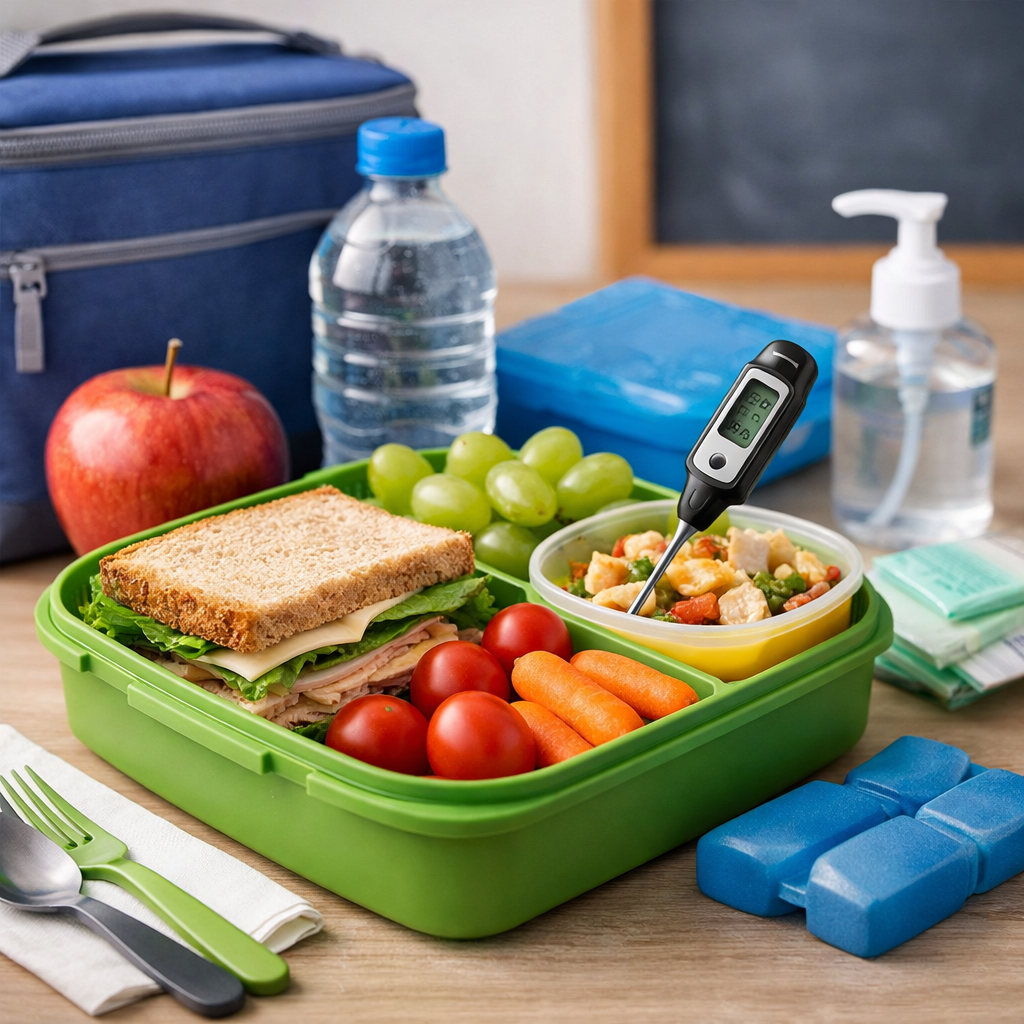
When sending leftovers, cool them promptly in the fridge before packing them the next day. Do not pack hot leftovers into a lunch bag and assume they will stay safe for hours.
Use the right lunch gear
Insulated lunch bags, freezer packs, and tightly sealed containers support school lunch food safety. A sturdy lunch bag helps maintain temperature longer and protects food from being crushed. Leak-resistant containers also reduce mess and contamination.
Reusable water bottles, thermoses, and containers should be washed and dried well between uses. Damaged items with cracks, broken lids, or odours should be replaced.
| Lunch item | Safer packing approach |
|---|---|
| Sandwiches with meat or cheese | Pack cold with an ice pack in an insulated bag |
| Cut fruit and vegetables | Use a clean sealed container and keep cool if prepared ahead |
| Yogurt or milk | Keep cold with freezer packs until lunch |
| Soup or hot pasta | Use a preheated thermos and close it tightly |
| Leftovers | Chill fully before packing and avoid long unrefrigerated periods |
Temperature control and storage at school
Temperature is one of the biggest factors in school lunch food safety. If a school has access to a refrigerator, confirm whether students are actually allowed to use it and whether food should be labelled. In many cases, families should assume lunch will stay with the student until eating time.
Keeping cold foods cold
Pack perishable items straight from the fridge. Add at least one frozen gel pack, or more if the day is long or the lunch is large. Placing the whole lunch bag in the fridge overnight can also help start the day colder.
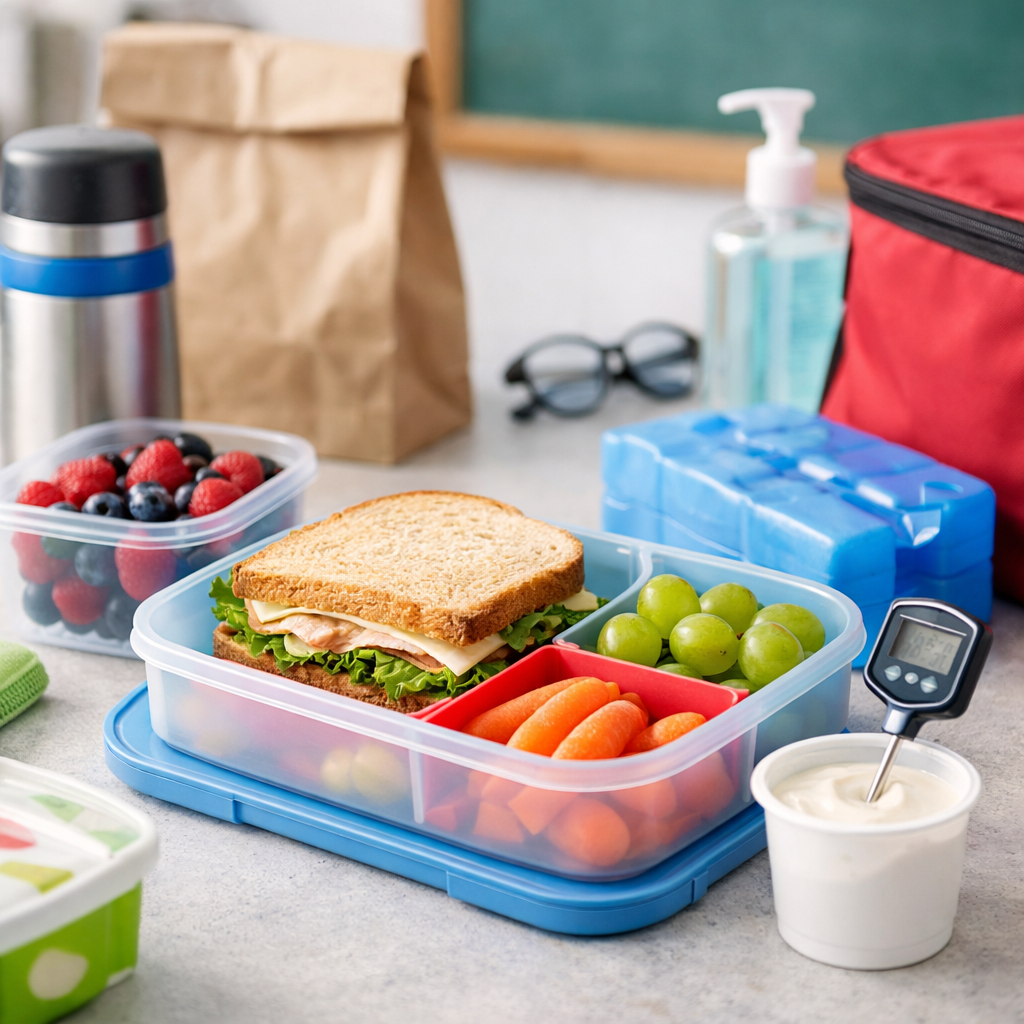
Students should keep lunches out of direct sun and away from radiators, vents, or hot bus areas whenever possible. If lunch is stored in a locker, choosing lower-risk foods becomes even more important.
Keeping hot foods hot
For hot meals, warm the food thoroughly first. Then fill a clean thermos that has been preheated with hot water for a few minutes and emptied before use. Close the lid tightly. Students should open the thermos only when ready to eat.
Do not rely on “warm enough” as a food safety plan. A proper thermos is a practical control, especially during winter months when some families prefer hot lunches.
When in doubt, throw it out
If food smells unusual, looks spoiled, has leaked badly, or has been left in a hot area for too long, it is safer not to eat it. Children should be taught that they will not get in trouble for bringing home uneaten food or telling an adult that something seems off.
Practical school lunch food safety tips for students, parents, and schools
School lunch food safety works best when everyone knows their role. Parents can set up the lunch safely. Students can keep it stored properly and wash their hands. Schools can support safe eating areas and reinforce hygiene expectations.
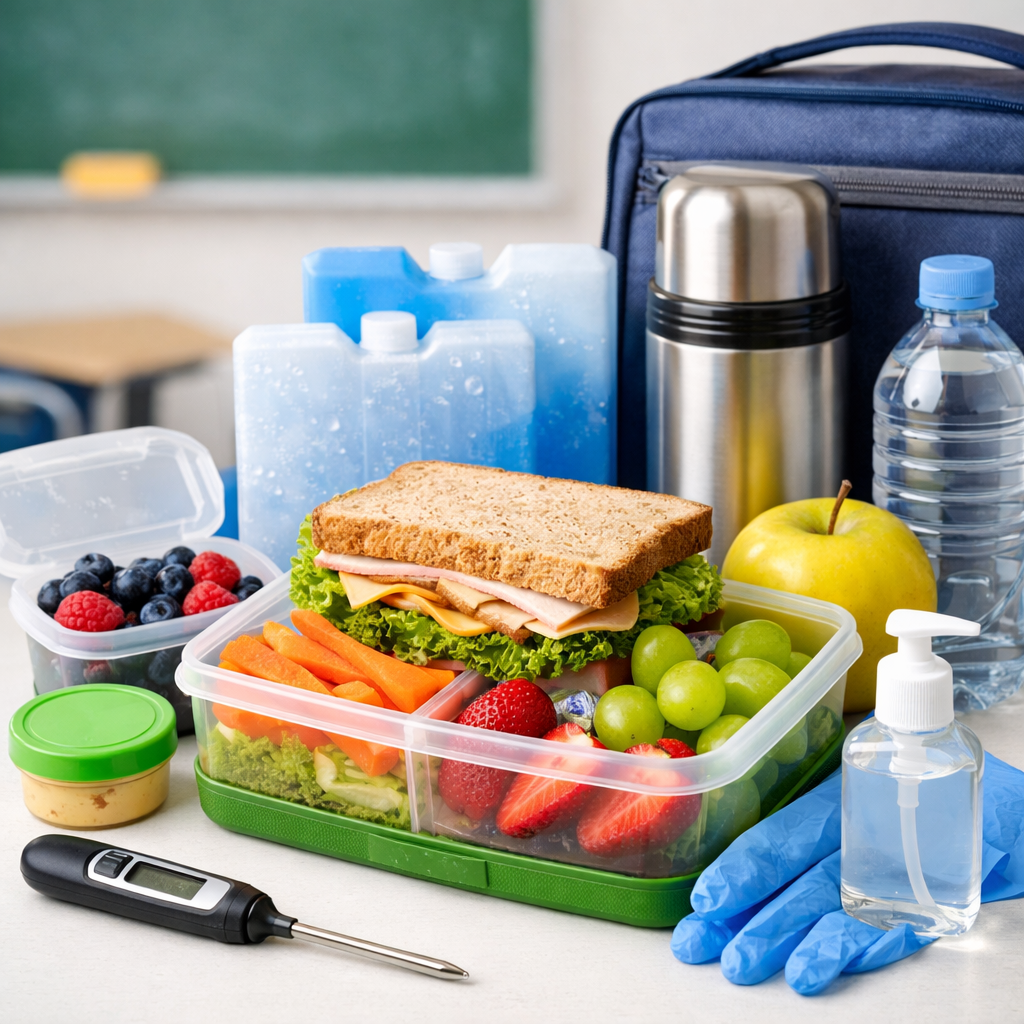
Actionable daily checklist
- Wash hands before packing lunch
- Use clean containers, bottles, and utensils
- Pack cold foods cold and hot foods in a proper thermos
- Add freezer packs to perishable lunches
- Label lunches clearly, especially where allergy policies apply
- Keep lunch out of heat and direct sunlight
- Wash hands before eating
- Throw out food that seems unsafe
Tips for students
Students should know how to carry lunch upright, keep containers closed, and avoid sharing food when allergies may be a concern. They should also wash or sanitize hands before eating if facilities or school rules permit.
For teens in co-op placements, part-time jobs, or after-school activities, these same habits apply in workplace lunchrooms too. Safe food handling is part of broader health and safety awareness. Families looking for practical safety education can explore resources at OHSE.ca and training information at learn.ohse.ca.
Tips for schools and caregivers
Schools can support prevention by reminding students to wash hands, maintain clean eating spaces, and follow allergy-related procedures. Caregivers and educators should provide calm, age-appropriate reminders rather than assume children will remember every step on their own.
It is also helpful to build lunch packing into the evening routine. A rushed morning increases the chance of forgotten ice packs, poorly sealed lids, and unsafe substitutes.
School lunch food safety is a simple but important part of protecting children during the school day. By combining clean preparation, temperature control, safe storage, and good hand hygiene, families can lower everyday risks without making lunch complicated. For parents and students in Canada, the goal is practical prevention: pack food safely, store it carefully, and speak up when something does not seem right. With a few steady habits, school lunch food safety can become an easy part of every healthy school routine.
No comments yet