
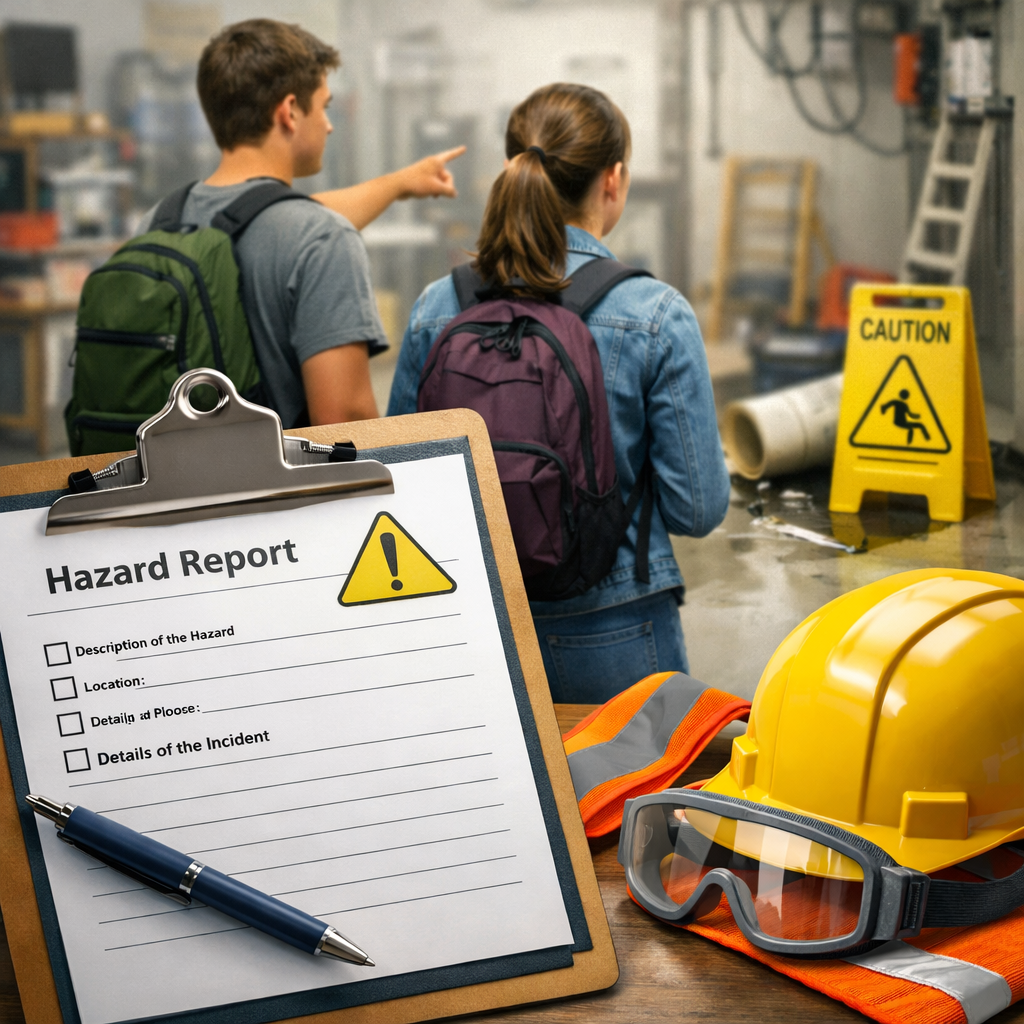

Workplace hazard reporting for students is one of the most important safety skills a young worker can learn. Whether a student is in a co-op placement, part-time job, summer position, apprenticeship, or volunteer role, knowing when and how to report a hazard can help prevent injuries, confusion, and unnecessary risk.
For Canadian students and families, the goal is not to create conflict at work. It is to recognize a problem early, speak up clearly, and help the workplace fix it before someone gets hurt. In Ontario and across Canada, students have a right to basic workplace health and safety information, training, and supervision appropriate to their tasks.
A hazard can be anything that may cause harm. That includes wet floors, unsafe lifting, blocked exits, faulty tools, missing guards, chemical exposure, bullying, violence, extreme heat, poor housekeeping, or being asked to do work without proper instruction. If something feels unsafe, rushed, or unclear, it deserves attention.
Resources from CCOHS and Ontario can help students and employers understand safety duties. For general workplace safety guidance and student-friendly resources, families can also visit OHSE.ca. If a student needs basic safety training for work readiness, OHSE training may also be useful where relevant.
Why workplace hazard reporting for students matters
Students are often new to the workplace, unfamiliar with equipment, and eager to do well. That can make it harder to question instructions or admit they do not understand a task. Unfortunately, inexperience can increase the chance of injury if concerns are kept quiet.

Workplace hazard reporting for students matters because small warning signs often come before serious incidents. A frayed extension cord, a slippery stockroom floor, or pressure to skip personal protective equipment may seem minor at first. Reporting these issues early supports prevention.
Speaking up also helps supervisors improve training, fix unsafe conditions, and confirm what work a student should or should not be doing. In many workplaces, hazards can be controlled by following the hierarchy of controls:
- Elimination: remove the hazard completely if possible.
- Substitution: replace a hazardous product, tool, or process with a safer one.
- Engineering controls: use guards, ventilation, barriers, or safer equipment.
- Administrative controls: improve procedures, scheduling, signage, training, and supervision.
- Personal protective equipment: use the right gloves, eye protection, footwear, or other PPE when required.
Students do not need to solve every safety problem themselves. Their role is to recognize hazards, report them promptly, and follow workplace, school, manufacturer, and emergency guidance where applicable.
When students should report a workplace hazard
Workplace hazard reporting for students should happen as soon as a concern is noticed. It is better to raise a question early than to wait until something goes wrong. If a task seems unsafe, if training is missing, or if a student is unsure how to proceed, that is the right time to speak up.
Common situations that should be reported
- Equipment is damaged, missing parts, or working unpredictably.
- A student has not been trained or supervised for the task.
- Spills, clutter, or blocked walkways create slip, trip, or fire risks.
- Chemicals are unlabeled or handled without instructions.
- Required PPE is missing, damaged, or not the right fit.
- The work feels too heavy, too fast, or too physically demanding.
- A supervisor asks for work beyond the student’s training or comfort level.
- There are signs of bullying, harassment, violence, or unsafe behaviour.
- Weather, heat, cold, noise, or poor ventilation are affecting safe work.
Students in co-op or school-supported placements should also tell their teacher, placement coordinator, or school contact if a concern is not being addressed. Parents or guardians may need to be informed depending on the student’s age and the situation.

If there is immediate danger, the first priority is to move to safety and follow local workplace or school emergency procedures. Students should not continue a task that places them or others at serious risk.
How workplace hazard reporting for students should work
The best approach is calm, direct, and specific. Workplace hazard reporting for students does not need to be dramatic. A simple, respectful report often works well, especially when it focuses on what was observed, where it happened, and why help is needed.
A practical reporting process
| Step | What to do | Example |
|---|---|---|
| 1. Pause | Stop and assess the risk before continuing the task. | Do not use a ladder that looks damaged. |
| 2. Tell the right person | Report the concern to a supervisor, trainer, teacher, or placement contact. | “The floor in the back room is wet and there is no sign.” |
| 3. Be specific | Describe what you saw, where it is, and who could be affected. | “The guard is missing on this machine, and I was asked to use it.” |
| 4. Ask for direction | Request training, safer equipment, or another task if needed. | “Can you show me the safe way to do this first?” |
| 5. Follow up | Check whether the issue was corrected and escalate if it was not. | Tell the school contact if the concern continues. |
Students may find it helpful to use clear language such as:
- “I have not been trained for this task yet.”
- “I do not think this is safe to do without the right equipment.”
- “Can we stop and check the proper procedure first?”
- “I reported this issue earlier, but it still has not been fixed.”
If the workplace has a hazard report form, incident log, safety app, or supervisor checklist, students should use it. If not, a simple written note with the date, time, location, concern, and person notified can be useful. Keep the record factual and professional.
Support, follow-up, and a student safety checklist
Workplace hazard reporting for students works best when schools, families, and employers all support it. Students should know who their workplace supervisor is, who their school contact is, what tasks they are allowed to do, and what to do if something changes during the shift.

For example, a grocery store student worker might report a spill in an aisle, ask for proper cleanup supplies, and wait until the area is controlled before restocking nearby shelves. A co-op student in a shop class placement might stop work if eye protection is unavailable or if a machine guard is missing. A restaurant student may need to report a burn risk, slippery kitchen floor, or unsafe knife storage. These are practical examples of prevention, not overreaction.
Students should also understand that reporting a hazard is different from diagnosing a health condition or making legal conclusions. The focus is on describing unsafe conditions, asking for guidance, and following local school, workplace, manufacturer, or emergency instructions. For broader public health and safety information, families can review materials from Health Canada when relevant.
Short actionable checklist
- Know your supervisor and school contact before the first shift.
- Ask what hazards are present in your work area.
- Confirm training before using tools, equipment, or chemicals.
- Wear the required PPE and ask for the correct fit.
- Stop and report any task that seems unsafe or unclear.
- Record what happened, who you told, and what action was taken.
- Follow up if the hazard remains.
- Use trusted safety resources such as CCOHS and OHSE for guidance.
In the end, workplace hazard reporting for students is about prevention, communication, and confidence. Young workers do not need to know everything on day one, but they do need to know that speaking up is part of working safely. When students report hazards early, ask questions clearly, and involve the right adults when needed, they help create a safer workplace for themselves and everyone around them.
No comments yet