
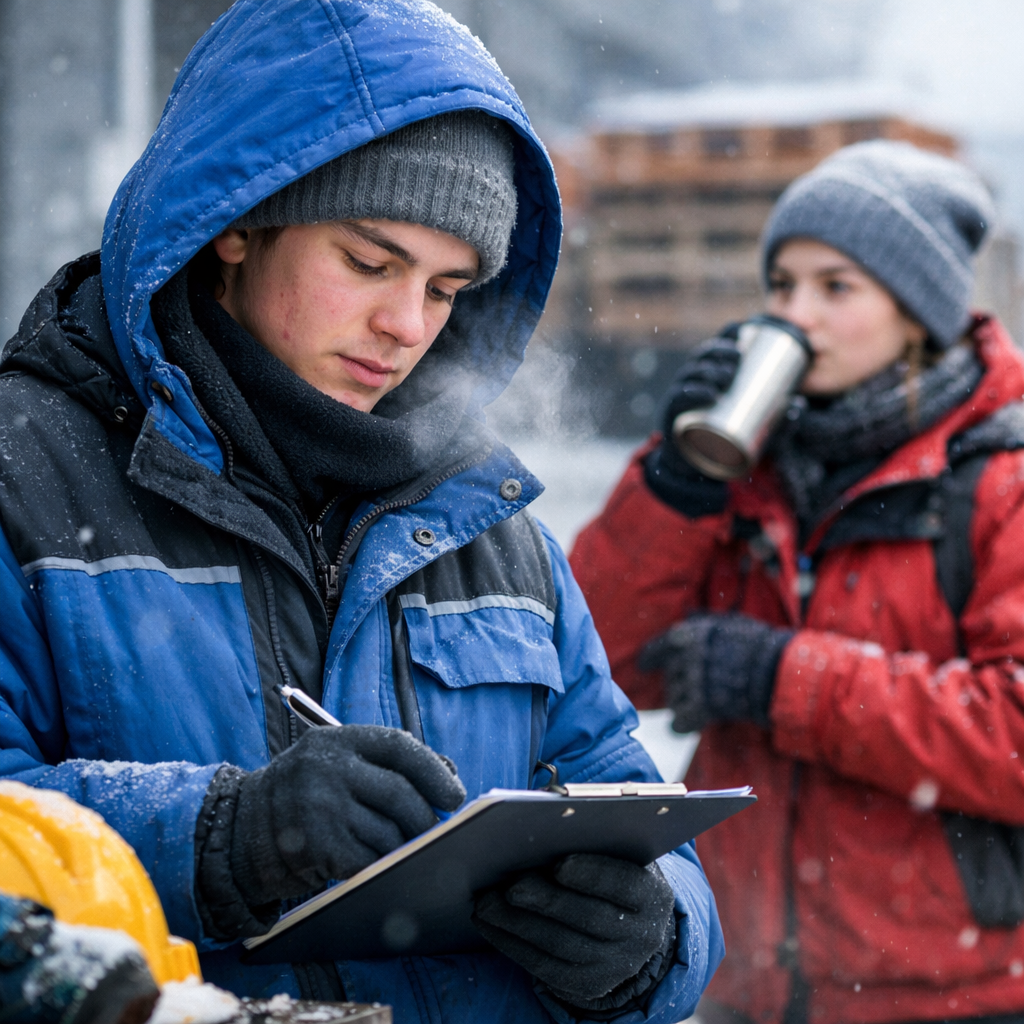

Cold stress safety for young workers matters every time a student, teen, or new worker heads outside for a winter shift. Whether the job involves snow clearing, deliveries, farm work, construction support, parking duties, outdoor recreation, or school co-op tasks, cold conditions can affect comfort, focus, and safety very quickly.
Young workers may be eager to prove themselves, but winter hazards are not something to push through. In Canada, cold, wind, wet clothing, and long outdoor exposure can raise the risk of shivering, numbness, frostbite, and more serious cold-related illness. A practical prevention plan helps families, schools, and employers support safer work habits from the start.
Why cold stress safety for young workers needs special attention
Young workers are often new to the job, unfamiliar with their rights, and less likely to speak up when conditions feel unsafe. They may not recognize early warning signs of cold stress, or they may keep working because they do not want to disappoint a supervisor.
This is why cold stress safety for young workers should be taught clearly before the shift begins. Employers should explain the task, the weather-related risks, the proper clothing, how breaks work, and when to stop and report symptoms. Parents and schools can reinforce the same message: being cold is not just uncomfortable; it can become a real workplace hazard.
Useful Canadian guidance on workplace health and safety is available from CCOHS and the Government of Ontario. For general health information, readers can also refer to Health Canada. For workplace safety resources and articles, OHSE can be part of a broader prevention approach.

Common winter job risks and signs of trouble
Cold stress does not only happen during extreme weather. It can also develop during routine shifts when a worker is outside too long, wears the wrong gear, gets wet, or stands still for long periods. Wind chill can make a cold day more dangerous, and icy surfaces can add slip and fall hazards at the same time.
Jobs and conditions that increase risk
- Snow shovelling or property maintenance
- Outdoor retail, curbside pickup, or lot attendant work
- Construction, landscaping, and farm tasks
- Walking or cycling deliveries
- School placements or volunteer duties outside
- Work near water, slush, or freezing rain
Early warning signs young workers should report
- Shivering that does not stop
- Numb fingers, toes, ears, or nose
- Wet clothing or boots
- Tingling, pale skin, or loss of feeling
- Clumsiness, poor grip, or slower reactions
- Unusual fatigue, confusion, or trouble speaking clearly
These signs should never be ignored. A worker who cannot feel their hands properly may also be at greater risk around tools, vehicles, ladders, and traffic. Cold can reduce concentration and make simple tasks less safe.
Cold stress safety for young workers: practical prevention steps
The best approach to cold stress safety for young workers is prevention. That starts before the shift with planning, training, and the right equipment. In many workplaces, a simple winter safety talk can make a major difference.
Use the hierarchy of controls
Winter safety should not rely only on telling workers to dress warmly. Employers should think through the hierarchy of controls and reduce exposure where possible.
- Elimination: postpone non-urgent outdoor tasks during severe conditions when possible.
- Substitution: move some duties indoors or use equipment that reduces time spent outside.
- Engineering controls: provide heated shelters, wind barriers, vehicle warm-up access, or dry storage for spare clothing.
- Administrative controls: shorten outdoor exposure, rotate tasks, schedule more warm-up breaks, and monitor weather conditions.
- Personal protective equipment: require suitable winter clothing, gloves, hats, and footwear for the conditions.
Dress for the conditions
Layering is a practical way to stay warm and dry. A base layer should help manage moisture, a middle layer should provide insulation, and an outer layer should block wind and wet conditions. Cotton can stay wet and cold, so workers should use clothing that is better suited to winter work where possible.

Hands, feet, head, and face need special attention. Insulated gloves or mitts, warm socks, and footwear with good traction help reduce both cold injury and slip risk. If a worker gets wet, they should change into dry clothing as soon as possible.
Plan breaks, supervision, and communication
Young workers should know when and where they can warm up. Break areas should be easy to access, and supervisors should check in regularly during cold or changing weather. New workers should never feel that asking for a warm-up break is a sign of weakness.
If training is part of the workplace orientation, employers may also support seasonal learning through resources such as OHSE training. Clear instruction should cover reporting procedures, buddy systems where appropriate, and what to do if a co-worker seems affected by cold.
A short checklist for safer outdoor shifts
This quick checklist can support cold stress safety for young workers before and during a winter shift.
- Check the forecast and expected wind, snow, and wet conditions.
- Wear layers and bring extra dry gloves or socks if needed.
- Use winter footwear with good grip.
- Know where warm-up breaks happen and how often.
- Report shivering, numbness, wet clothing, or dizziness right away.
- Watch co-workers for signs of cold stress.
- Use the right tools and take care on icy surfaces.
- Follow school, workplace, and supervisor instructions at all times.
Simple cold stress safety table
| Situation | Why it matters | Safer action |
|---|---|---|
| Clothing becomes wet | Wet layers lose warmth quickly | Change into dry clothing and warm up |
| Hands feel numb | Grip and tool control may be affected | Stop, warm hands, and report the issue |
| Worker is shivering heavily | Body is struggling to stay warm | Take a break in a warm place and tell a supervisor |
| Ground is icy | Slip and fall risk increases | Slow down, use proper footwear, and follow site controls |
What parents, schools, and employers can do
Cold stress safety works best when adults around young workers take it seriously. Employers should provide orientation, supervision, suitable scheduling, and proper protective equipment expectations. Schools arranging placements should confirm that winter hazards are part of the safety discussion. Parents can help by checking that a young person has the right clothing and understands that they can speak up if conditions feel unsafe.

Young workers should also be reminded that safety rights still apply in winter. They should ask questions if instructions are unclear, if they were not shown the correct procedure, or if they do not have the proper gear for the task. Calm reporting and early action are key parts of prevention.
In the end, cold stress safety for young workers is about preparation, communication, and sensible limits. Winter jobs can be a positive way to build experience and confidence, but no shift is worth risking a preventable cold-related injury. By planning ahead, dressing properly, using warm-up breaks, and following local school, workplace, manufacturer, and emergency guidance where applicable, young workers can stay safer and more comfortable throughout the winter season.

No comments yet