
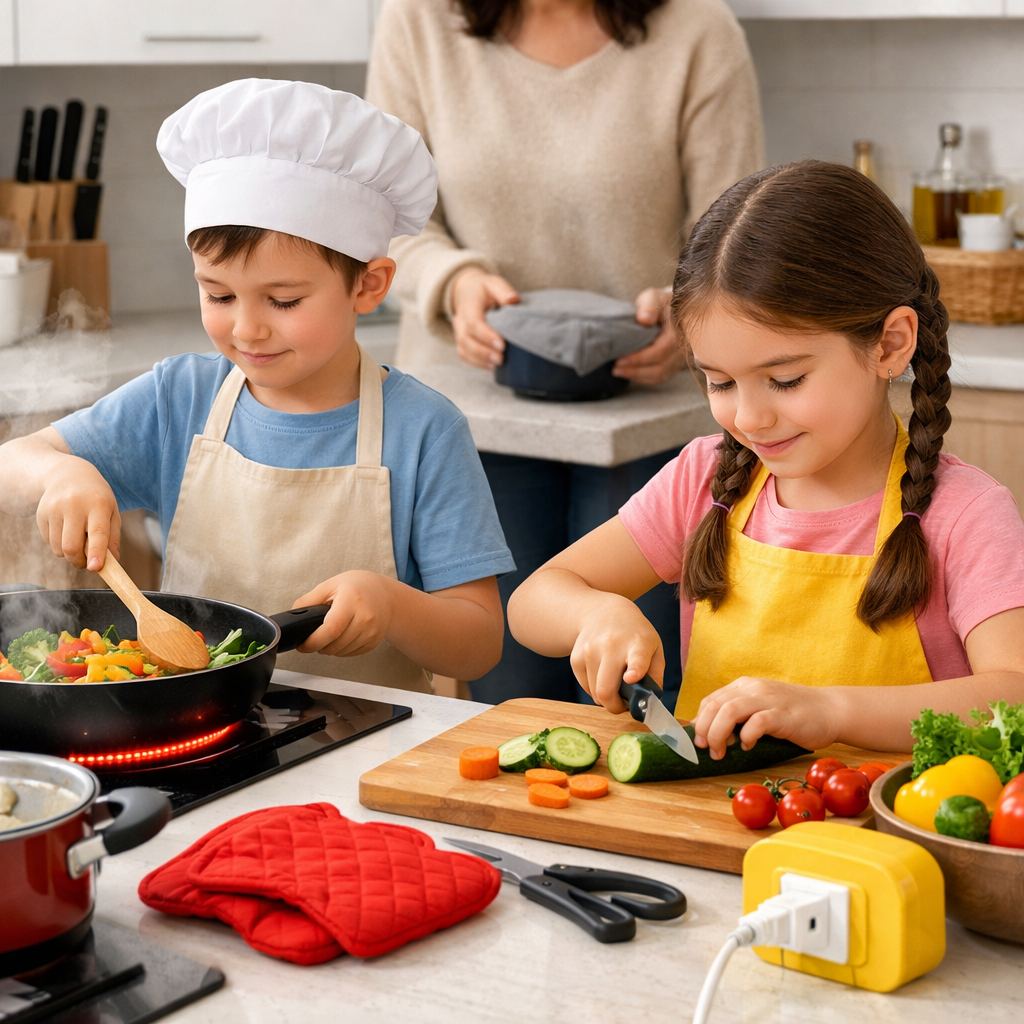

Kitchen safety for kids starts with clear rules, close supervision, and age-appropriate tasks. Kitchens are busy spaces with hot surfaces, sharp tools, electrical appliances, slippery floors, and cleaning products, so children need practical guidance before they help prepare food.
For Canadian families, schools, and student programs, the goal is not to keep kids away from learning. It is to teach safe habits step by step so children can build confidence without taking unnecessary risks. Whether a child is helping pack lunches, stir batter, or learn early food skills, prevention should always come first.
A simple approach works best: set boundaries, choose safe tasks, and model calm behaviour. If your household, classroom, or youth program includes cooking activities, it also helps to follow general safety guidance from organizations such as CCOHS, Ontario.ca, and Parachute. For more practical health and safety resources, families and educators can also visit OHSE.ca.
Kitchen safety for kids begins with simple ground rules
The safest kitchens are predictable. Children do better when they know exactly what is allowed, what requires help, and which areas are off-limits. Before cooking starts, explain the rules in plain language and review them often.
Core safety rules every child should learn
- Ask an adult before using the stove, oven, microwave, toaster, blender, or sharp tools.
- Wash hands before and after handling food.
- Tie back long hair and avoid loose sleeves or dangling jewelry.
- Wear closed-toe shoes to protect feet from spills and dropped items.
- Keep handles turned inward on pots and pans.
- Walk, do not run, in the kitchen.
- Clean spills right away to prevent slips.
- Never touch cleaning products, matches, lighters, or medication.
- Stay back from hot steam, hot oil, and open oven doors.
These rules support a prevention-focused mindset. In Ontario homes, schools, and community programs, adults should also think about the space itself. Good lighting, dry floors, uncluttered counters, and safe storage all reduce risk before a child even starts a task. That reflects the basic idea behind the hierarchy of controls: remove hazards where possible, improve the environment, and then rely on instruction and supervision.
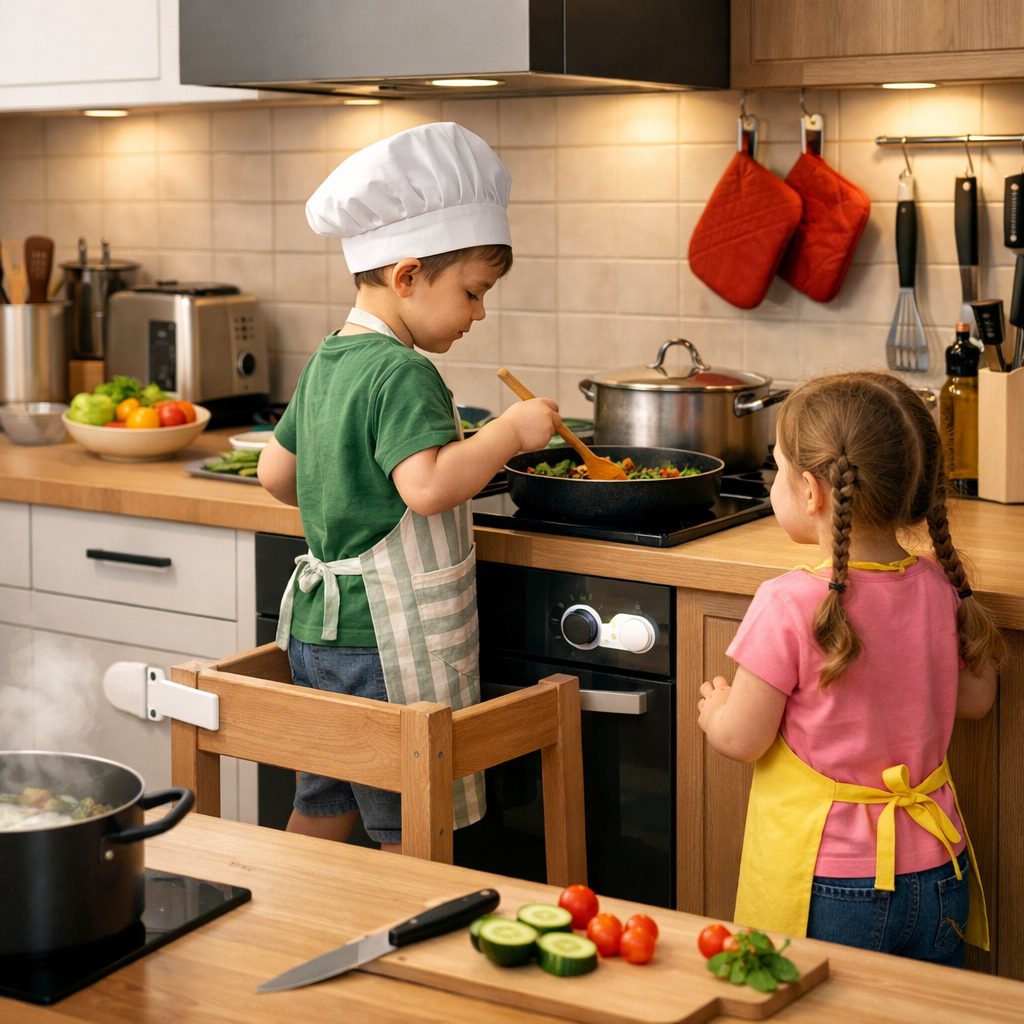
Cooking tasks by age and ability
Kitchen safety for kids is more effective when tasks match the child’s maturity, coordination, and attention span. Age is only a guide. Some children are ready for more responsibility sooner, while others need more time and hands-on support.
Safer starter tasks
Young children can help with lower-risk jobs such as washing produce, tearing lettuce, stirring cold ingredients, setting the table, or measuring dry items. These tasks build confidence and routine without exposing them to major hazards.
Older children may be ready to crack eggs, use a peeler with close supervision, read recipe steps, portion ingredients, or help load and unload the dishwasher safely. As skills improve, adults can gradually introduce more responsibility.
Tasks that need direct adult supervision
Using the stove, oven, air fryer, kettle, microwave for hot foods, blender, food processor, or any sharp knife should involve direct supervision. If a child is distracted, tired, upset, or rushing, pause the activity. Safe cooking depends as much on focus as it does on skill.
| Task | Lower Risk | Higher Risk | Adult Role |
|---|---|---|---|
| Food prep | Washing fruit, mixing cold ingredients | Cutting hard foods with sharp knives | Demonstrate and supervise closely |
| Heat use | None | Stove, oven, hot microwave dishes | Control access and guide each step |
| Cleaning | Wiping table, putting away dry items | Handling chemical cleaners or broken glass | Keep hazardous items out of reach |
| Appliances | Simple non-heated tools if approved | Blenders, toasters, kettles, processors | Teach safe use and unplug when done |
For student programs, camps, and school kitchens, staff should follow local board, workplace, or facility procedures. Young workers in food settings may also need orientation or formal instruction. Where training is part of a program, resources from OHSE training can support safer learning habits.
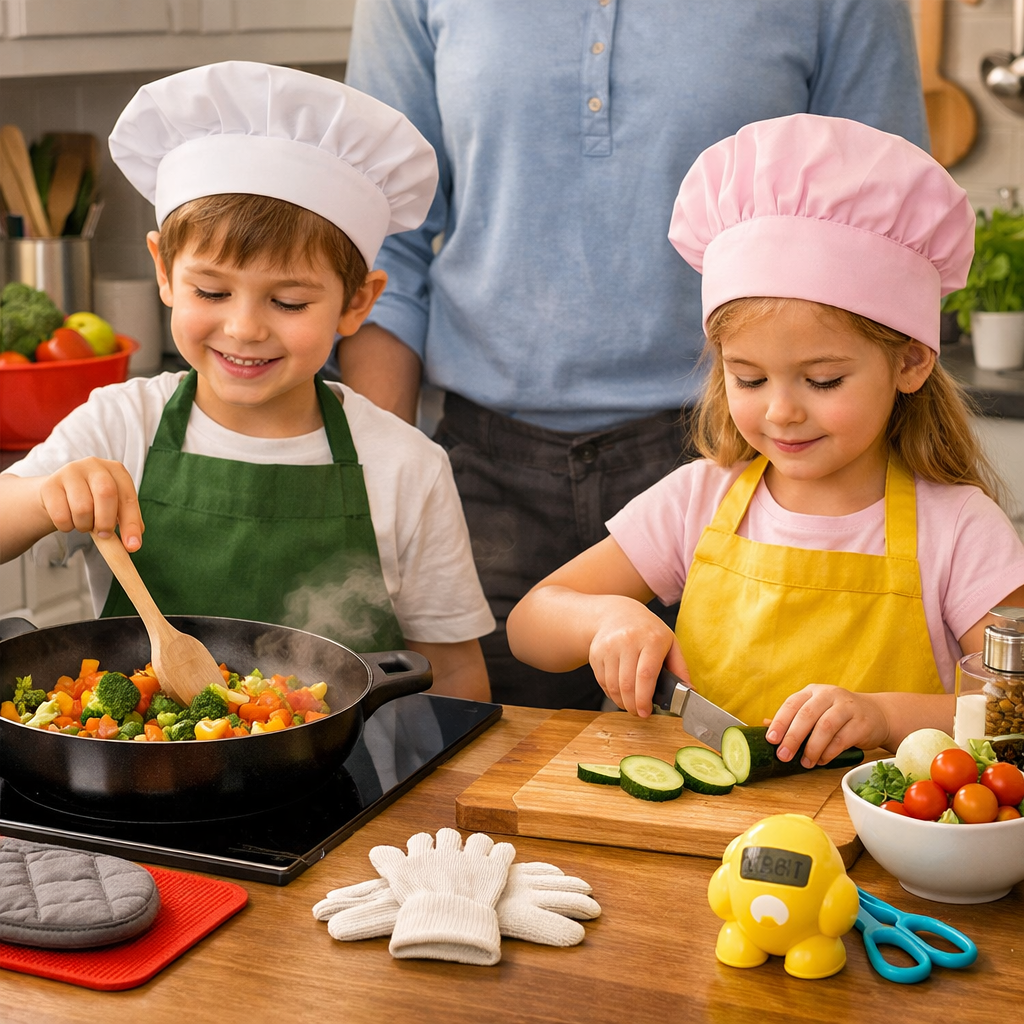
Kitchen safety for kids around knives and sharp tools
Knives are useful, but they are never toys. One of the most important lessons in kitchen safety for kids is that sharp tools must be treated with respect every time they are handled, passed, cleaned, or stored.
How to teach safer knife habits
Start with the right tool for the task. A small, appropriate knife used properly is often safer than a dull or oversized one. Adults should demonstrate how to cut on a stable board, keep fingers tucked back, and focus on one movement at a time.
Children should never cut while holding food in their hand or while talking and looking away. The cutting board should sit on a damp cloth or non-slip surface so it does not slide. If a knife drops, the rule is simple: step back and let it fall.
- Use a stable cutting board on a clear counter.
- Cut slowly and keep fingertips curled inward.
- Carry a knife with the point facing down.
- Set knives down flat when not in use.
- Do not try to catch a falling knife.
- Wash knives carefully and store them safely after use.
Some families choose child-friendly knives for soft foods as a starting point. That can help children learn positioning, control, and respect for tools before moving to sharper equipment. Even then, supervision matters. A safer tool reduces risk, but it does not remove it completely.
Hot surfaces, steam, and burn prevention
Burn hazards are one of the biggest concerns in any discussion of kitchen safety for kids. Stovetops, oven doors, baking trays, toaster slots, microwave-heated containers, boiling water, and steam can all cause injury quickly.
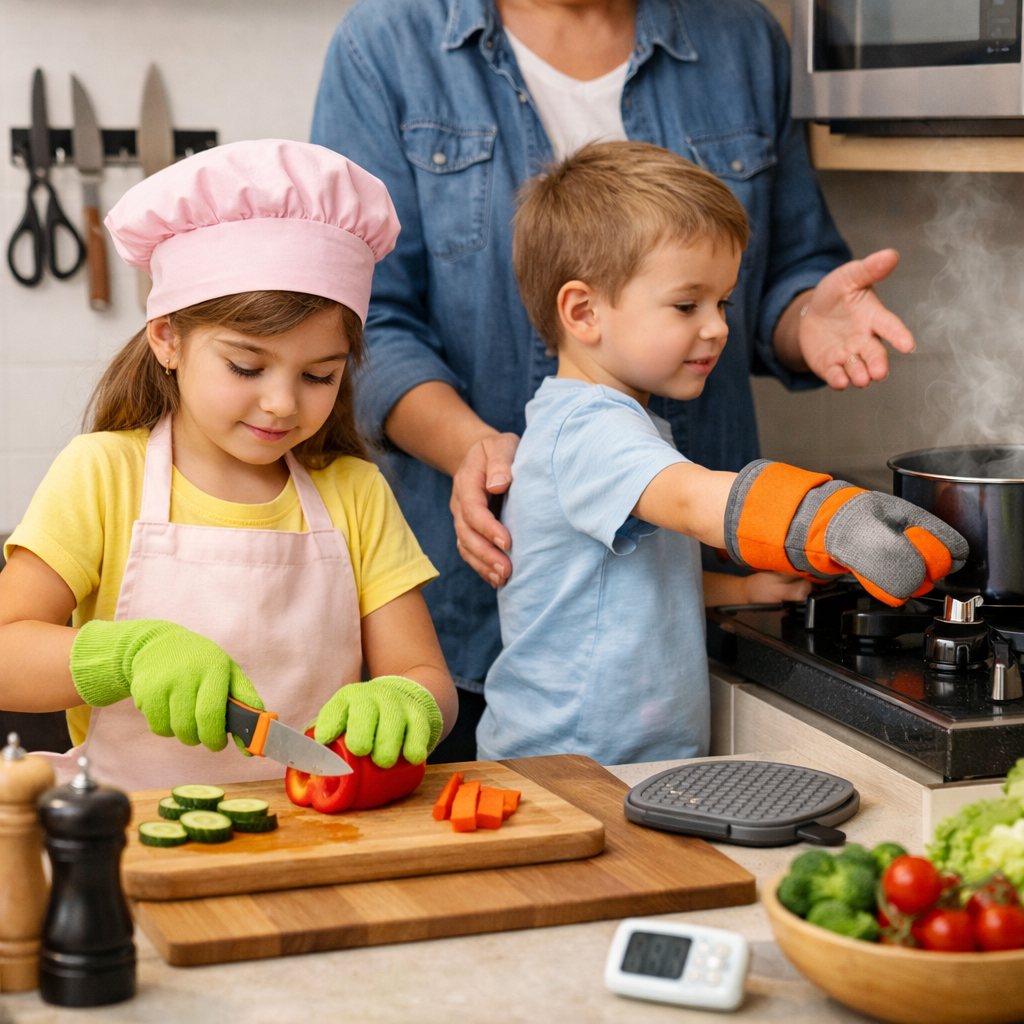
Smart rules for hot surfaces
Create a “hot zone” around the stove and oven where children do not enter unless an adult invites them in for a supervised task. Pot handles should face inward, cords should stay away from edges, and hot drinks should never sit where a child can pull them down.
Microwaves deserve caution too. A dish may look safe but still be very hot, and steam can escape suddenly when a lid is lifted. Adults should teach children to open containers away from the face and use oven mitts when needed. It is also wise to test stability before moving hot food from one surface to another.
Preventing fires and contact burns
Keep towels, paper, packaging, and oven mitts away from burners. Children should learn that metal pans, baking sheets, and even appliance surfaces may stay hot after cooking ends. Use visual reminders such as a designated cooling area on the counter to separate hot items from safe ones.
If your child is helping in a classroom, school event, or community kitchen, follow the site’s emergency and supervision procedures. Manufacturer instructions for appliances also matter and should always be followed.
A practical kitchen safety for kids checklist
A short checklist helps turn safety from a lecture into a routine. Review these steps before each cooking activity:
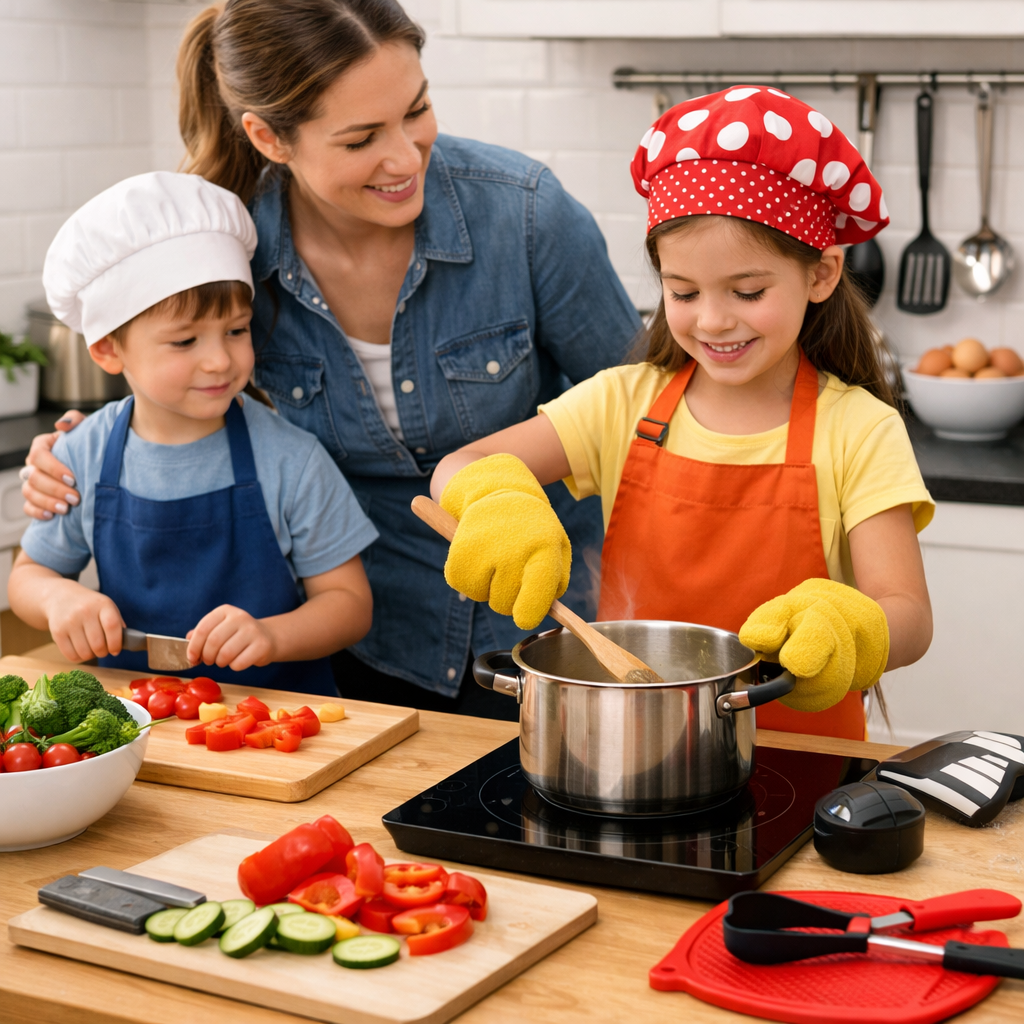
- Wash hands and clear the workspace.
- Check for loose clothing, long hair, and unsafe footwear.
- Identify which tools are allowed and which need adult help.
- Point out hot zones, sharp tools, and spill risks.
- Use the right step stool if a child needs height, never a chair with wheels.
- Keep raw food, hot food, and cleaning products separate.
- Clean as you go and wipe spills immediately.
- Put knives, appliances, and hot items away safely when finished.
In the end, kitchen safety for kids is about building lifelong habits, not creating fear. With patient supervision, age-appropriate tasks, and a well-organized space, children can learn useful cooking skills while staying safer around knives, hot surfaces, and everyday kitchen hazards. Parents, educators, and young workers should always follow local school, workplace, manufacturer, or emergency guidance where applicable, and use trusted Canadian resources when questions come up.
No comments yet