
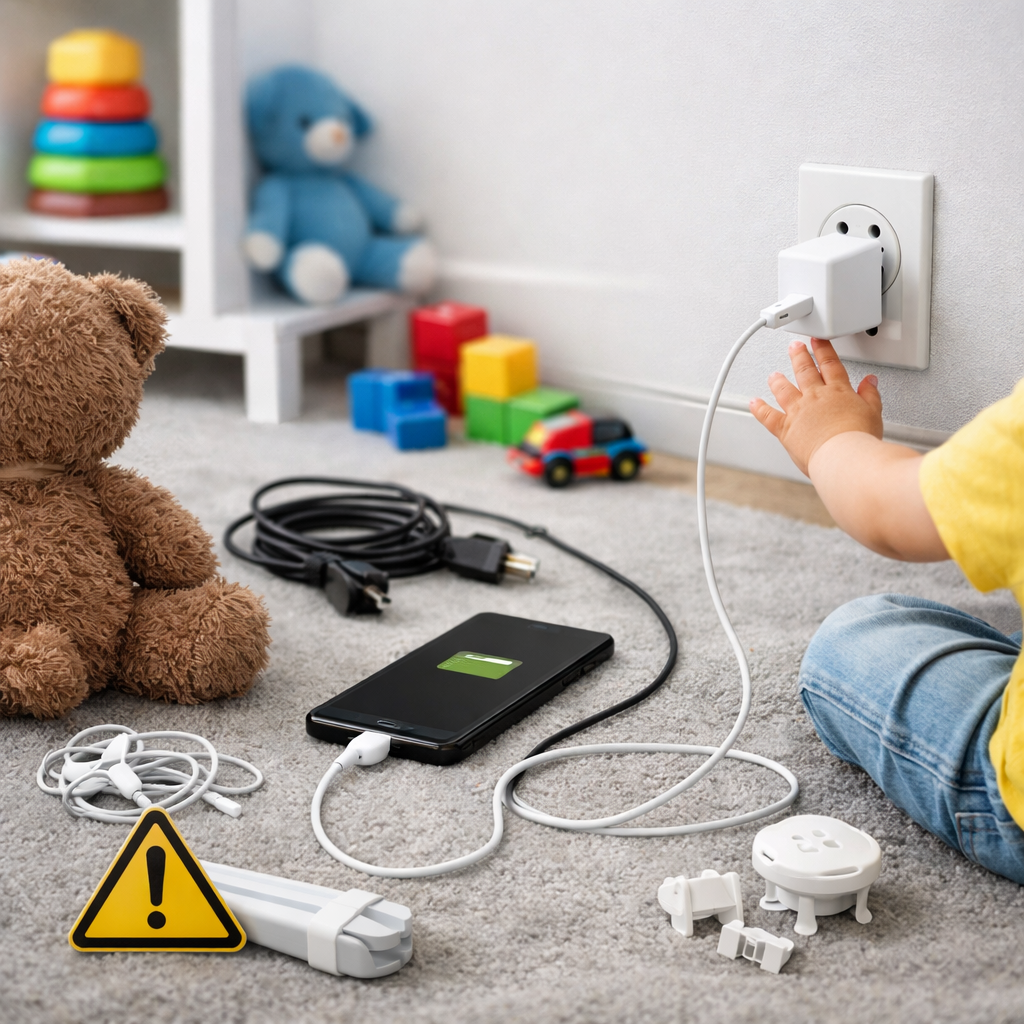

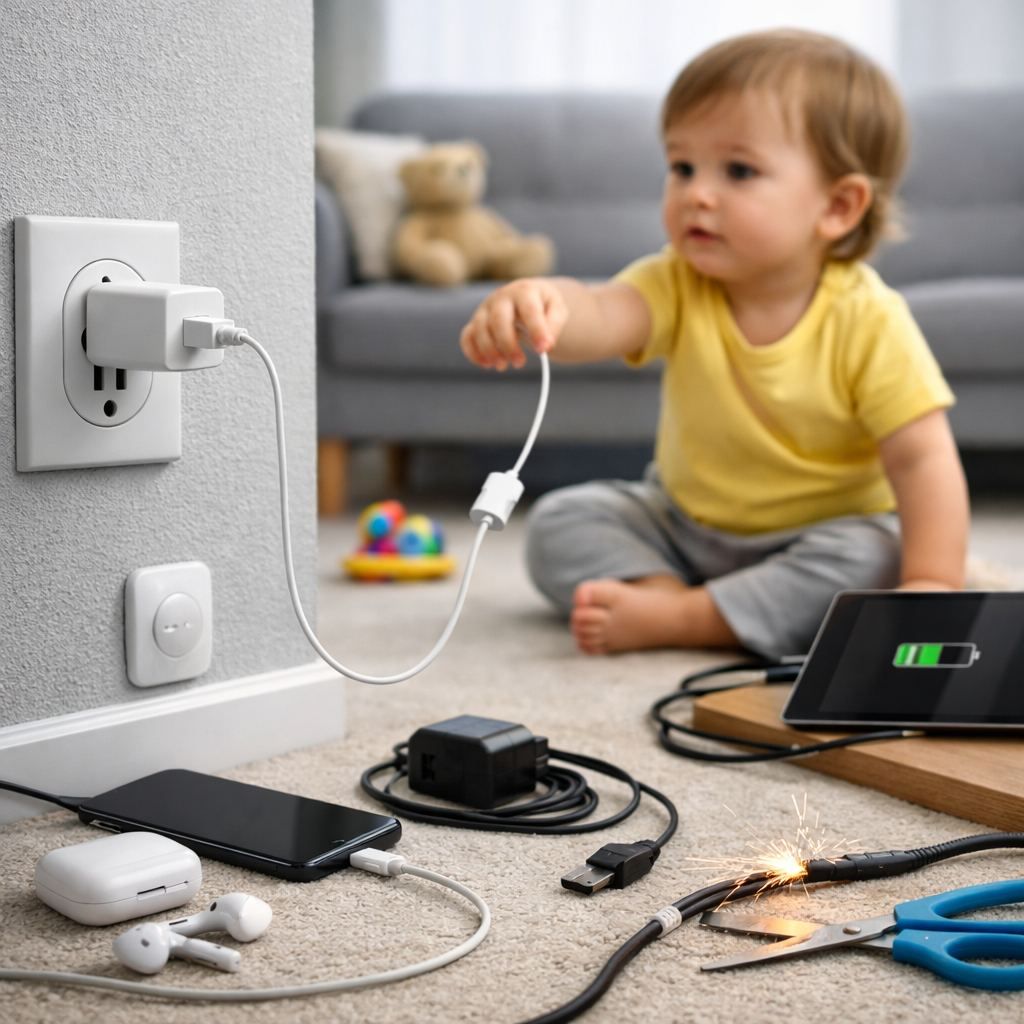
Cord and charger safety for kids starts with noticing how often charging cables, extension cords, and device chargers become part of everyday life at home, at school, and in shared family spaces. Phones, tablets, laptops, gaming devices, night lights, and wearable chargers can all create preventable risks when cords are left loose, damaged, overloaded, or within reach of curious children.
For Canadian families, schools, and young workers, the goal is not to fear electronics but to use them safely. Good setup, supervision, and age-appropriate rules can reduce electrical shock, overheating, trip hazards, and strangulation risks. A prevention-focused approach also helps children build safe habits early, whether they are charging a school Chromebook, using a bedside lamp, or helping tidy a classroom technology cart.
Why cord and charger safety for kids matters at home and school
Children interact with cords differently depending on age. Babies and toddlers may chew, pull, wrap, or tug on cables. Preschool and school-age children may plug in devices without understanding heat, damage, or overload risks. Teens may use multiple chargers at once, charge devices on soft bedding, or carry frayed cables in backpacks.
The main hazards usually fall into a few practical categories:
- Electrical hazards from damaged insulation, exposed wires, liquid near chargers, or unsafe outlets.
- Strangulation hazards from long cords near cribs, beds, play areas, or furniture.
- Trip and fall hazards when charging cables cross walking paths, stairs, or classroom aisles.
- Overheating and fire risks when chargers are covered, used with damaged cords, or plugged into overloaded power bars.
In Ontario and across Canada, families and educators can support safer spaces by following product instructions, school rules, and public guidance from organizations such as CCOHS, Health Canada, and Parachute. Safety also depends on routine inspections and simple housekeeping, especially in bedrooms, classrooms, study areas, and after-school spaces.
Common cord and charger hazards children face
Loose cords near sleep and play areas
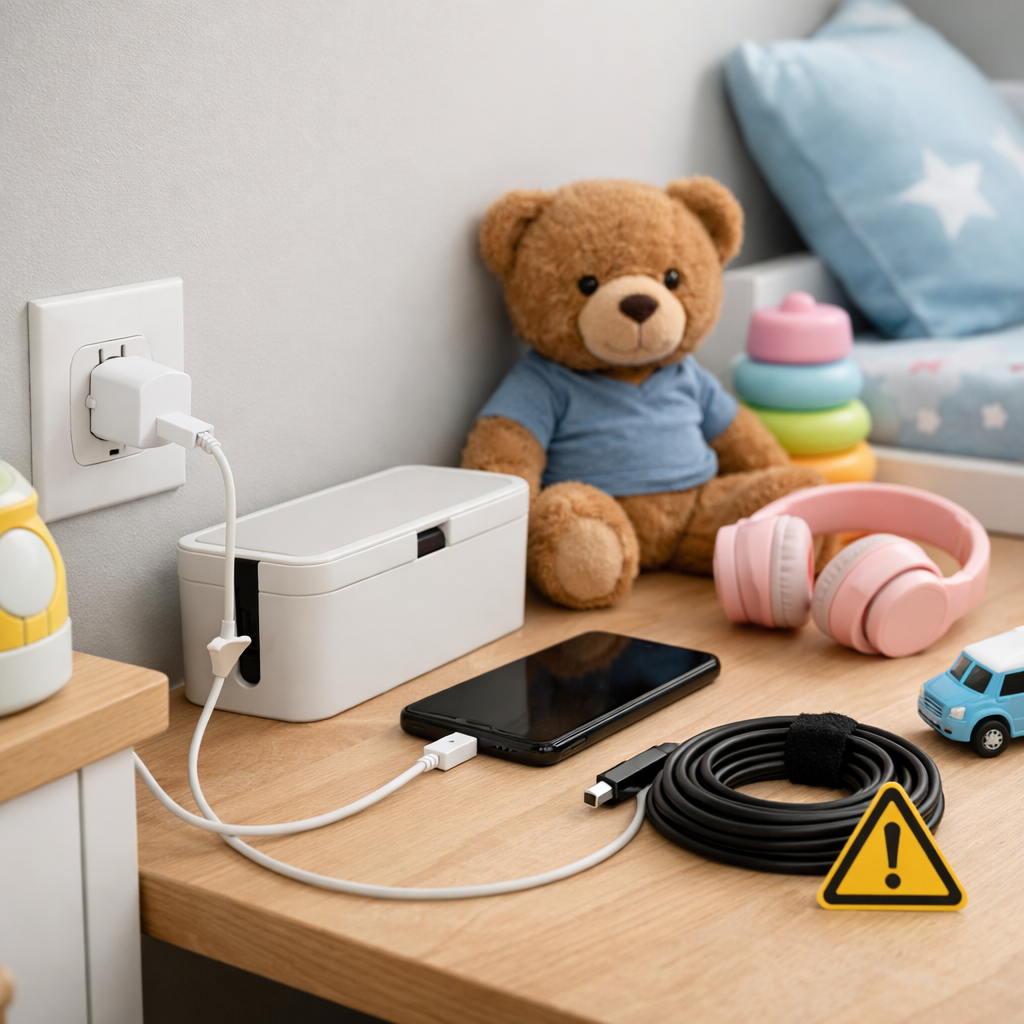
One of the most important parts of cord and charger safety for kids is keeping cords away from cribs, bunk beds, playpens, and sleeping areas. Long charging cables can loop around a child’s neck, become tangled in limbs, or get pulled into a sleep space. Window-covering cords are a separate hazard, but device chargers can create similar entanglement concerns when left hanging beside furniture.
Keep charging stations in adult-observed areas rather than on bed frames, under pillows, or beside a child’s sleeping surface. If a device charges overnight, place it on a stable, hard surface with the cord routed neatly and out of reach.
Damaged chargers and off-brand replacements
Cracked plugs, bent prongs, frayed cable sheathing, loose charging heads, and scorch marks are all signs that a charger should be removed from use. Children may not recognize this damage, so adults should inspect cords regularly. If a charger feels unusually hot, works only when bent a certain way, or sparks when plugged in, stop using it.
It is safer to use manufacturer-recommended or properly compatible products and to follow the instructions that come with the device. In schools and youth programs, staff should label shared chargers and remove damaged items right away instead of leaving them in circulation.
Unsafe charging habits
Charging devices on couches, beds, and blankets can trap heat. Running cords under rugs or across doorways can damage insulation over time. Plugging several high-use chargers and devices into one outlet or power bar can also create risk, especially where families add lamps, heaters, or other appliances to the same circuit.
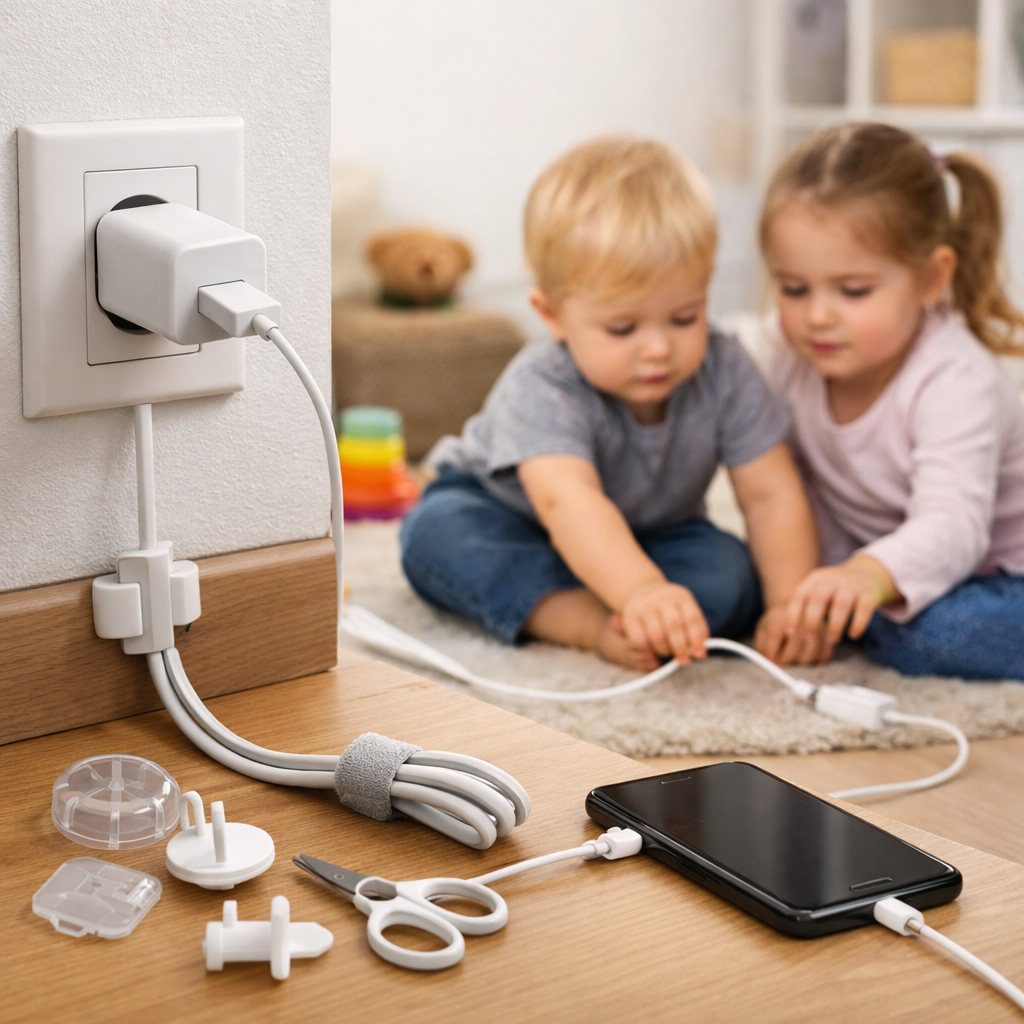
Young workers and students should also understand that chargers are not toys. Swinging cords, chewing cable ends, wrapping chargers around wrists, or yanking plugs from the wall can quickly turn normal equipment into a hazard.
Practical prevention: setting up safer spaces
A strong approach to cord and charger safety for kids combines supervision, safer equipment choices, and better layout. In OHSE terms, this reflects the hierarchy of controls: first remove hazards where possible, then improve the setup, then use rules and supervision to support safer behaviour.
Use the hierarchy of controls at home or school
| Control level | How it applies | Example |
|---|---|---|
| Elimination | Remove unnecessary cords from child areas | Take unused chargers out of bedrooms and playrooms |
| Substitution | Choose safer products or shorter cables where appropriate | Use the correct charger length for a desk station instead of a long loose cable |
| Engineering controls | Improve physical setup | Use cord organizers, outlet covers, and furniture placement that keeps cables out of reach |
| Administrative controls | Create rules, inspections, and supervision | Teach children not to charge devices on beds and check cords weekly |
Safer setup tips for families and educators
- Place charging stations on stable, hard surfaces away from bedding, pillows, curtains, and soft furniture.
- Keep cords short, tidy, and secured so they do not dangle beside cribs, chairs, or bunks.
- Route cords along walls where possible, not across walkways.
- Unplug and replace chargers that are damaged, hot, loose, or unreliable.
- Keep drinks and water sources away from outlets, power bars, and charging devices.
- Use power bars and extension cords only as intended, and avoid overloading them.
- Store spare cords out of reach of babies and toddlers.
- Teach children to pull from the plug, not the cable, when unplugging a charger.
For classrooms, libraries, and youth spaces, staff can improve safety by assigning specific charging locations, inspecting shared equipment, and keeping floor areas clear. Schools may also refer to local board procedures and provincial guidance through Ontario.ca where applicable.
Age-appropriate rules and a simple safety checklist
What to teach by age group
Toddlers need physical protection more than verbal instruction. Keep cords fully out of reach, cover accessible outlets as appropriate, and avoid leaving charging devices unattended in child spaces.
School-age children can begin learning simple rules: do not touch damaged cords, do not plug in wet hands, do not charge under blankets, and tell an adult if something smells hot or looks broken. Teens and young workers can take on more responsibility, including checking their own chargers, using approved equipment, and reporting hazards in schools, part-time jobs, or community settings.
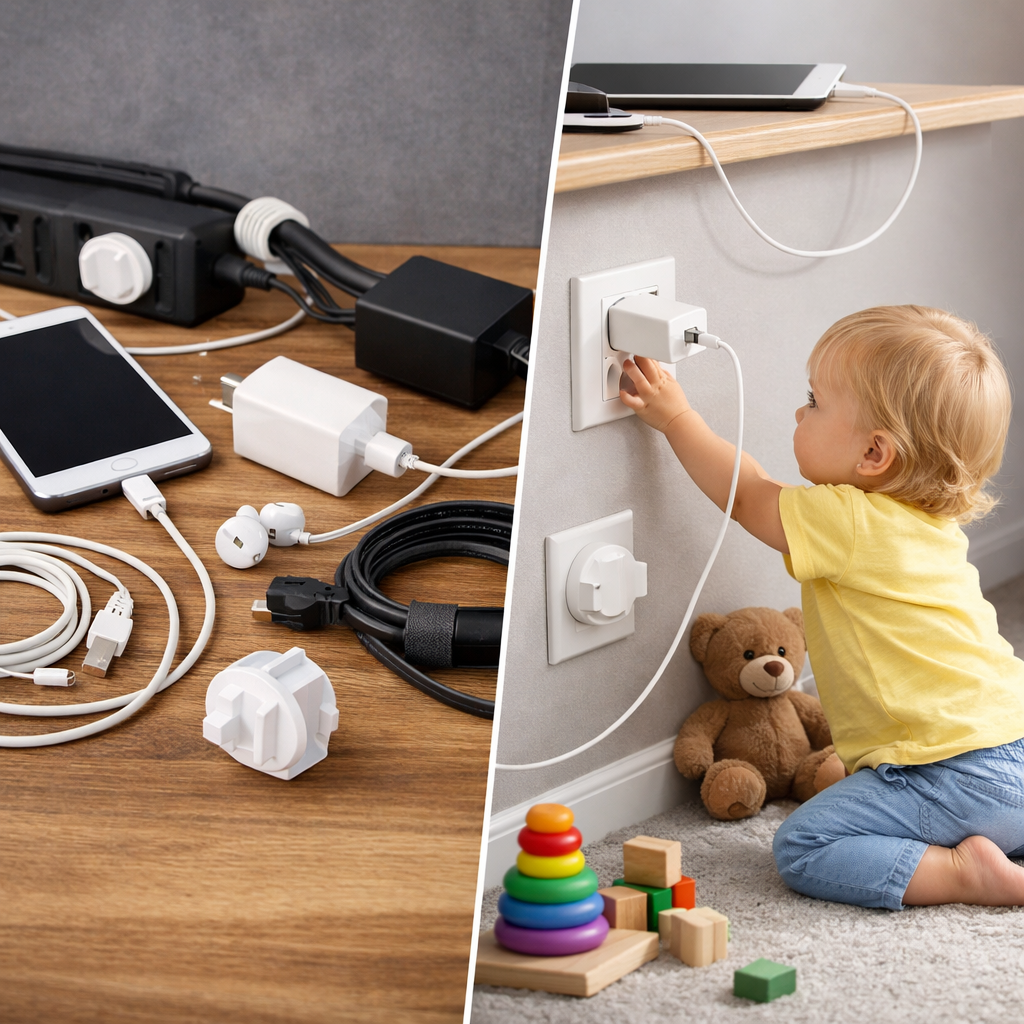
If children use devices for learning, explain that safe charging is part of responsible technology use. This can fit naturally into digital safety, homework routines, or workplace orientation. Families looking for broader workplace and home safety learning can also explore resources at OHSE.ca and training options at learn.ohse.ca.
Short actionable checklist
- Check every cord and charger for cracks, frays, bent prongs, or heat.
- Keep chargers away from beds, cribs, couches, and blankets.
- Do not let cords hang where children can pull or wrap them.
- Keep walkways clear of charging cables.
- Use the right charger for the device and follow manufacturer instructions.
- Remove damaged or questionable chargers from use immediately.
- Follow local school, workplace, manufacturer, or emergency guidance if a device overheats, sparks, or is involved in an incident.
Cord and charger safety for kids is most effective when adults make the safe choice the easy choice. A tidy charging station, regular inspections, and calm reminders can prevent both electrical and strangulation hazards before they develop. At home, at school, or in a first job, children and teens are safer when cords are controlled, chargers are in good condition, and everyone knows the basic rules for safe use.
No comments yet