
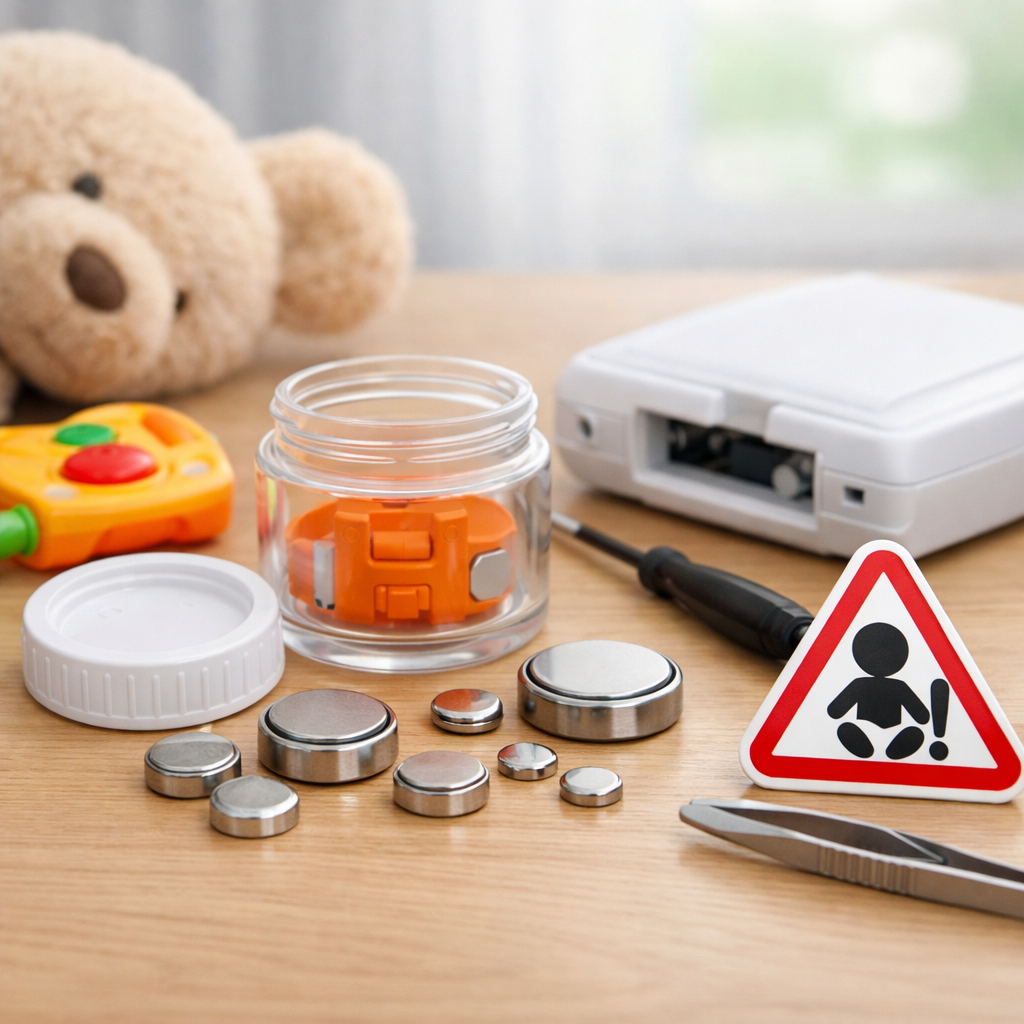

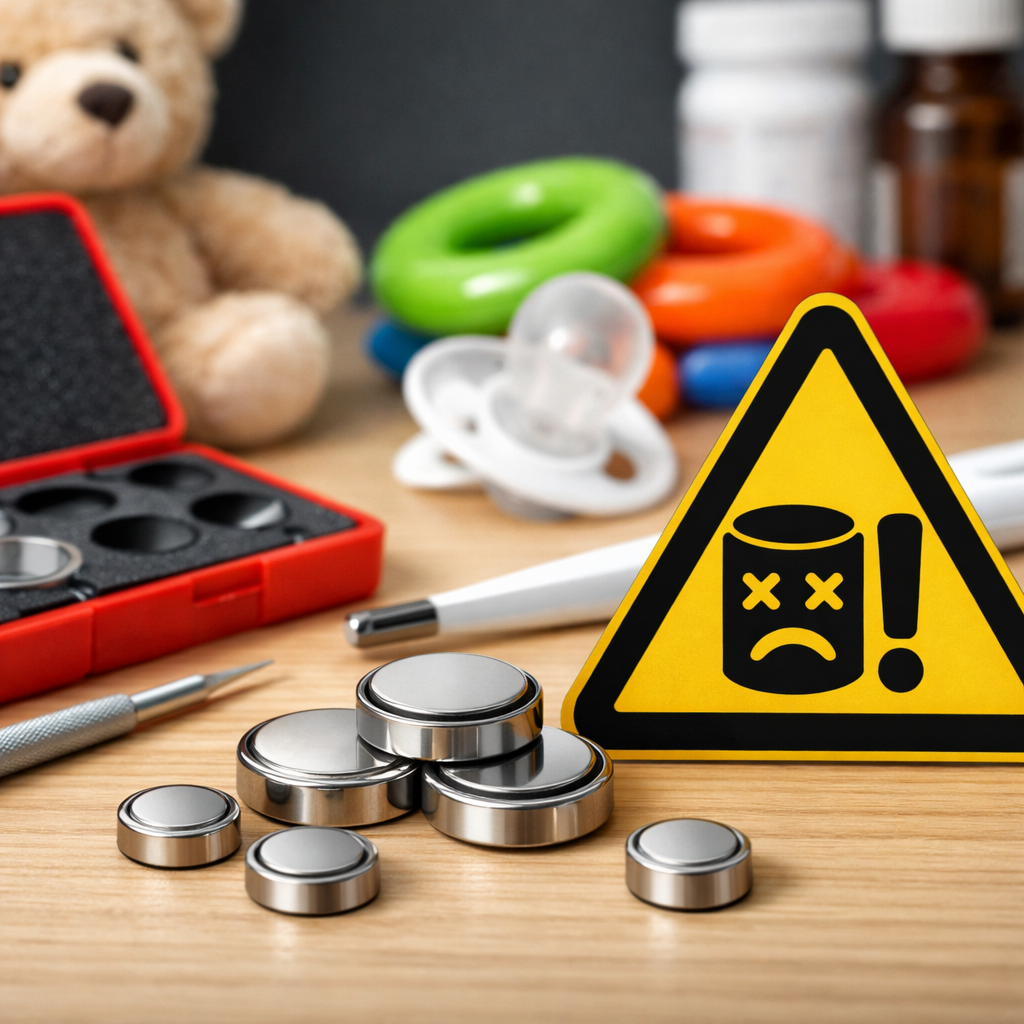
Button battery safety is one of the most important hidden-in-the-home safety topics for parents, caregivers, schools, and anyone supervising young children. These small, shiny batteries are easy for babies and children to pick up, hold, mouth, and swallow, and that can create a serious emergency very quickly.
In Canadian homes, classrooms, and child care settings, button batteries may be found in remote controls, key fobs, flameless candles, hearing devices, bathroom scales, toys, greeting cards, watches, thermometers, and other small electronics. Because they are common and easy to overlook, practical prevention matters. The goal of button battery safety is simple: keep batteries secure, keep loose batteries out of reach, and act fast if there is a concern.
For families, educators, and young workers who may help supervise children, a calm prevention-focused approach works best. Good habits at home, clear storage rules, routine checks on battery-powered items, and age-appropriate teaching can all reduce risk. For broader health and safety guidance in Canada, readers may also find useful information through CCOHS, Health Canada, and Parachute.
Why button battery safety matters so much
Button batteries are small enough to be mistaken for candy, especially by babies and toddlers who explore with their hands and mouths. Their smooth, bright appearance can also attract older siblings or children who are curious about how gadgets work. In many cases, the danger is not obvious until after a battery has already been handled, swallowed, or placed in the nose or ear.
That is why button battery safety should be treated as both a home safety issue and a shared community responsibility. Parents, grandparents, babysitters, schools, after-school programs, and workplaces where families gather all have a role to play. In Ontario and across Canada, the safest approach is prevention first, supported by manufacturer instructions and local emergency guidance if an incident is suspected.
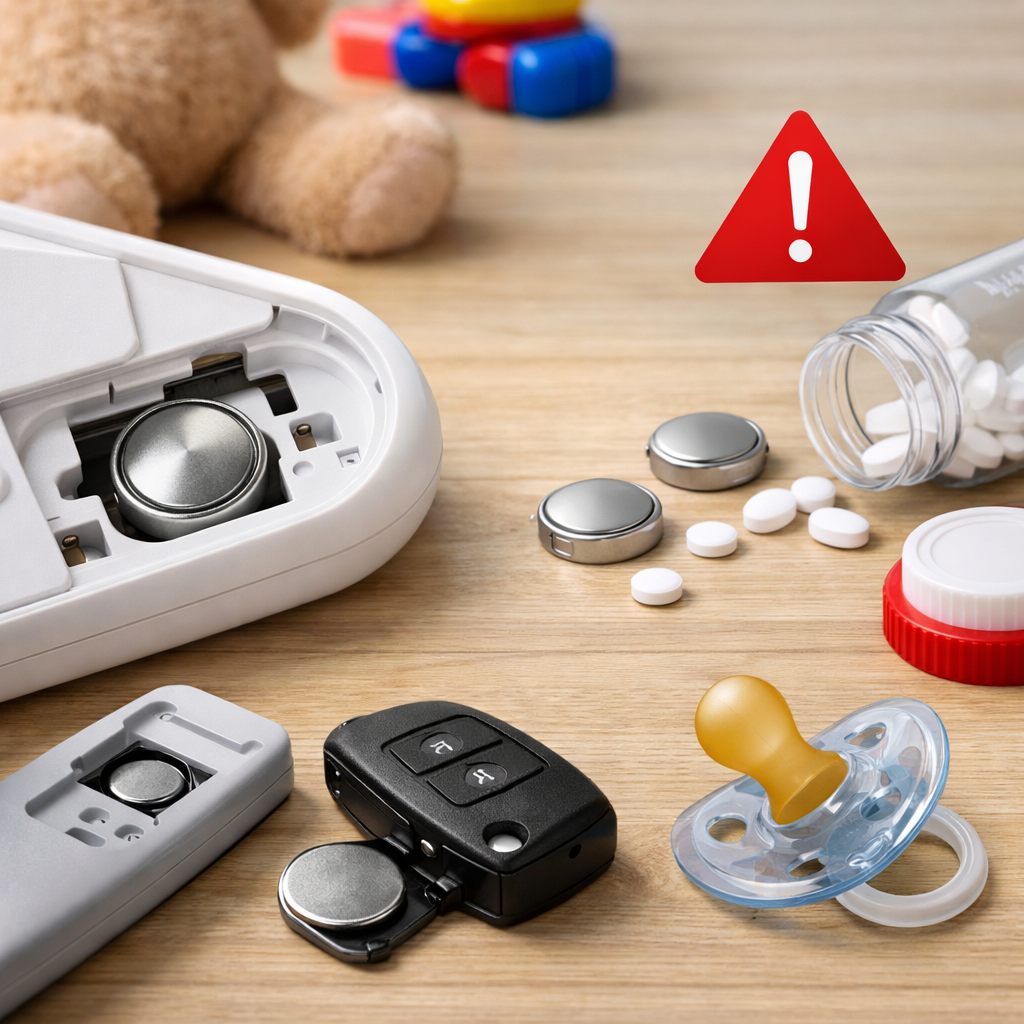
Common places button batteries may be found
- Remote controls and car key fobs
- Bathroom scales and thermometers
- Toys, novelty items, and flashing accessories
- Watches, calculators, and small timers
- Flameless candles and decorative lights
- Hearing devices and some health-related equipment
- Musical greeting cards and small electronic gifts
Many of these items do not look hazardous. That is one reason button battery safety needs to be built into everyday routines rather than left to memory alone.
Button battery safety at home, school, and child care
The most effective way to improve button battery safety is to reduce access. This follows a practical version of the Hierarchy of Controls: remove the hazard where possible, choose safer products when available, use secure storage and handling rules, and supervise children closely around battery-powered items.
Practical prevention steps
Start by checking devices that use button batteries and making sure the battery compartment is secure. If the cover is loose, damaged, or easy for a child to open, stop using that item until it is repaired, secured, or replaced. Loose batteries should never be left on counters, in purses, on bedside tables, or in junk drawers where children may reach them.
At school or in child care settings, staff can include button battery safety in regular hazard inspections. Any battery-powered teaching aid, timer, toy, or light-up item should be checked before use with younger children. Where school events involve donated electronics, decorations, or novelty items, adults should inspect them before children handle them.
Young workers who babysit or work around children can also help by learning basic hazard recognition. A quick room scan for small electronics, spare batteries, or damaged battery compartments is a simple but valuable safety habit. Families interested in broader prevention training can explore resources through OHSE training and general workplace and home safety information at OHSE.ca.
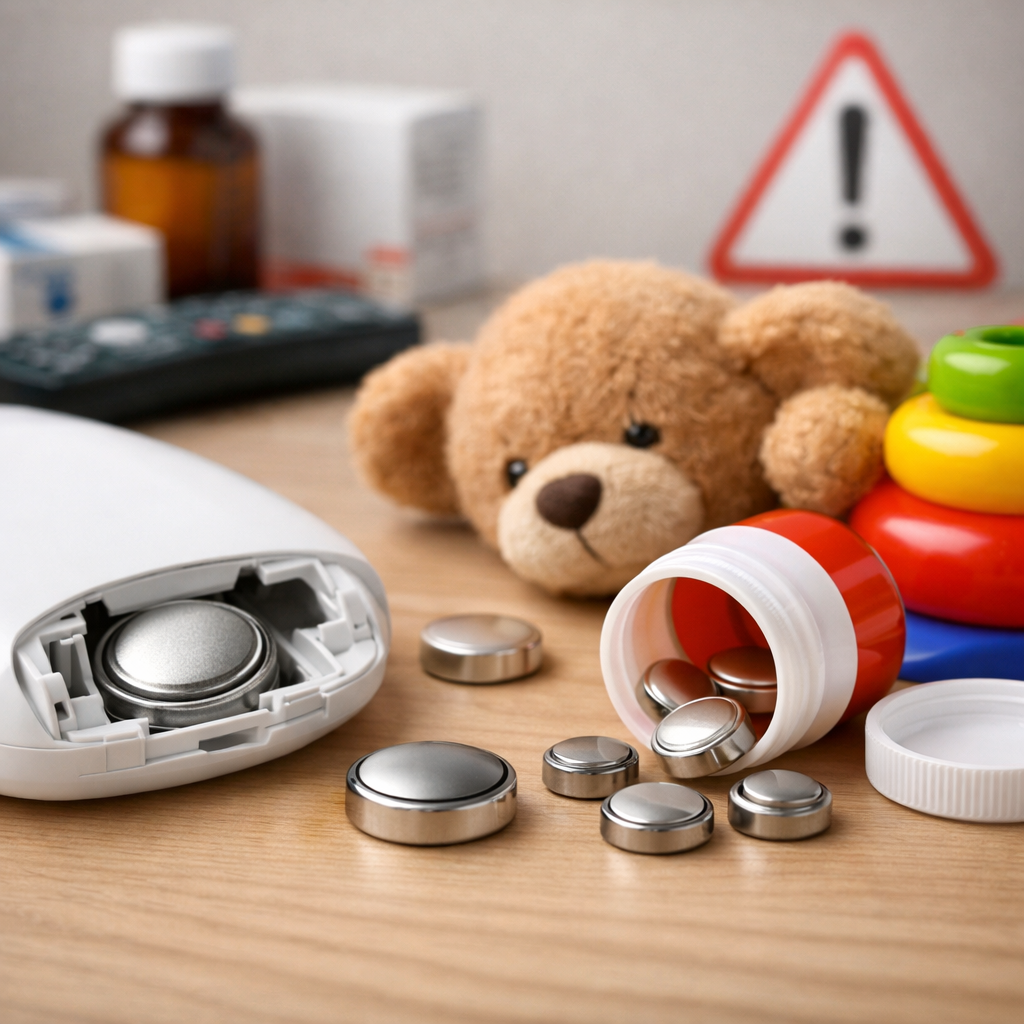
Short actionable checklist
- Store spare button batteries in a locked or high location.
- Recycle or dispose of used batteries promptly and safely according to local guidance.
- Check that battery compartments close tightly and stay closed.
- Keep products with loose or missing battery covers away from children.
- Inspect gifts, novelty items, and household devices before children use them.
- Teach older children not to handle or play with loose batteries.
- Follow manufacturer instructions and local school or workplace safety procedures.
Signs of concern and what adults should do
Button battery safety also means being ready to respond if something may have gone wrong. A swallowed battery or a battery placed in the nose or ear may not always be witnessed. A child may be too young to explain what happened, or an older child may be embarrassed to say they were playing with one.
If a battery is missing and a child may have had access to it, treat that as an urgent situation and follow local emergency guidance right away. Do not wait for symptoms to become obvious. It is also important not to guess or try home remedies. Follow instructions from emergency responders, your local health system, the product manufacturer, and applicable school or workplace procedures.
Situations that require immediate attention
- A child is seen swallowing a button battery.
- A battery is missing and a child may have had access to it.
- A child may have placed a battery in the nose or ear.
- A battery compartment is broken and the battery cannot be accounted for.
For schools and organizations, this is also a reporting and supervision issue. Staff should notify the appropriate supervisor, document the concern according to policy, and follow emergency procedures without delay. In Ontario settings, always use the local school board, employer, or site emergency process where applicable.
| Setting | Common Risk | Practical Control |
|---|---|---|
| Home | Loose batteries in drawers or on counters | Store batteries locked up and out of reach |
| School | Classroom devices with weak battery covers | Inspect devices and remove damaged items from use |
| Child care | Toys or novelty items with accessible batteries | Approve only secure products for supervised use |
| Babysitting or youth work | Missed hazards during supervision | Do a quick environment check before activities begin |
Building long-term button battery safety habits
Strong button battery safety habits are built through routine, not fear. Families can add battery checks to regular home safety tasks such as testing smoke alarms, tidying toy areas, or checking cleaning product storage. Schools and child care providers can include button batteries in seasonal inspections, classroom setup reviews, and staff orientation.
Older children can also be taught simple safety rules in age-appropriate language: batteries are not toys, they are never for the mouth, nose, or ears, and an adult must be told right away if one is found. This supports both injury prevention and responsible behaviour around electronics.
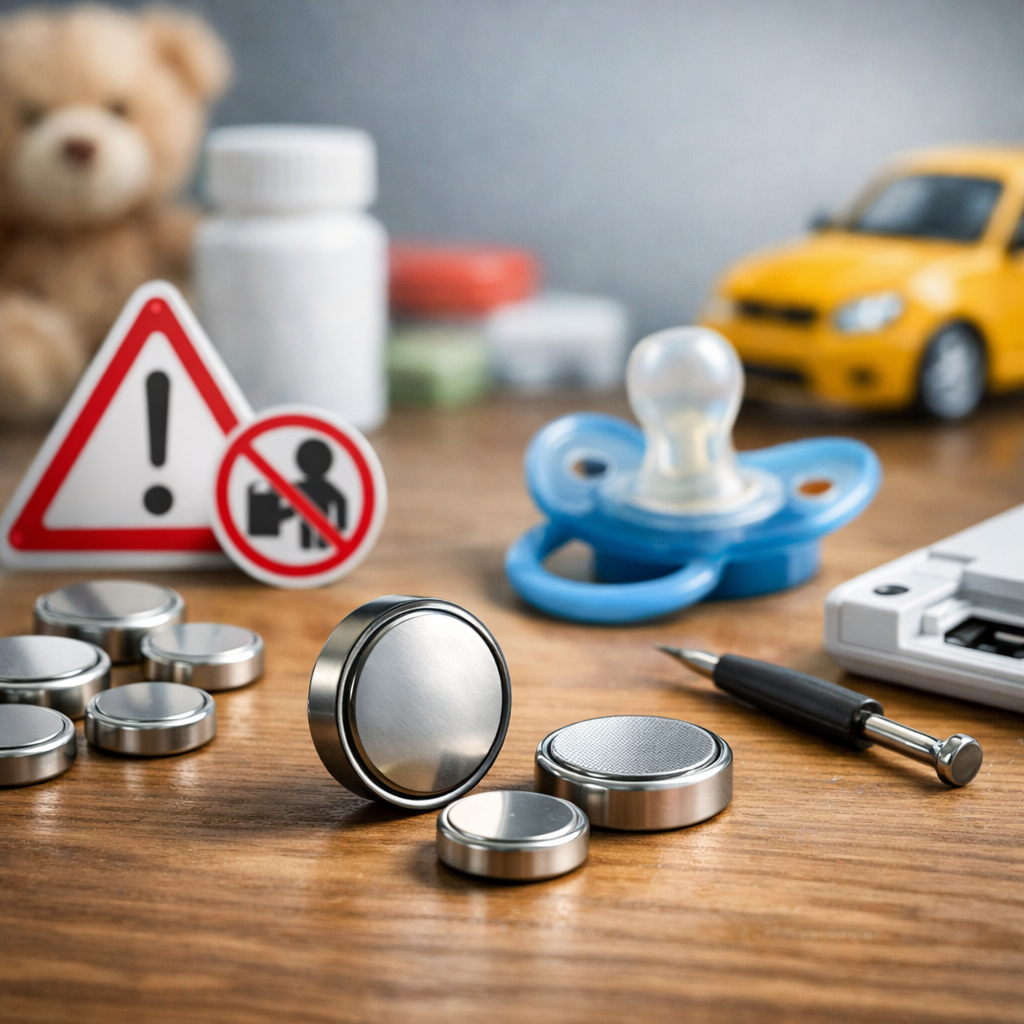
When buying products, look for designs with secure battery compartments and clear instructions. When replacing batteries, do the task away from children, return the device to a safe place immediately, and make sure used batteries are not left behind. These small actions can make a big difference over time.
Button battery safety is ultimately about awareness, storage, supervision, and fast action when something seems wrong. For Canadian families, schools, and caregivers, the safest plan is to prevent access whenever possible and follow local emergency, workplace, school, or manufacturer guidance if there is any concern. By making button battery safety part of everyday home and community safety practice, adults can provide critical protection for babies and children.
No comments yet